
The first time it happens, it can be a shock. You’re standing in a supermarket aisle, maybe in Namba or Tennoji, just trying to decide between two brands of soy sauce. Suddenly, a woman in her sixties, with a perm that defies gravity and a leopard-print blouse that radiates confidence, taps you on the shoulder. “Not that one,” she says, pointing a determined finger. “This one’s on sale, and it tastes better. Trust me.” She winks, grabs her own bottle, and is gone before you can fully process the interaction. You’re left holding a bottle of soy sauce you didn’t choose, feeling a strange mix of confusion and gratitude. Welcome to Osaka. This is your crash course in the local dialect of human connection, a language that can feel jarringly direct, wonderfully efficient, and utterly different from the Japan you see on postcards. For anyone moving here, or just trying to understand the pulse of this city, cracking this code is essential. It’s the key to understanding why life here feels so vibrant, so real, and so unlike anywhere else in the country, especially its elegant, enigmatic neighbor just up the tracks, Kyoto. Forget what you think you know about Japanese subtlety. In Osaka, the soul of the city isn’t hidden behind layers of polite ambiguity; it’s right there on the surface, ready to talk business, share a laugh, and tell you exactly which soy sauce to buy.
This vivid local character extends beyond supermarket aisles, as even the ever-curious nosy neighbors in Osaka add their own unique flavor to everyday encounters.
The Merchant’s DNA: Why Osaka Talks Different
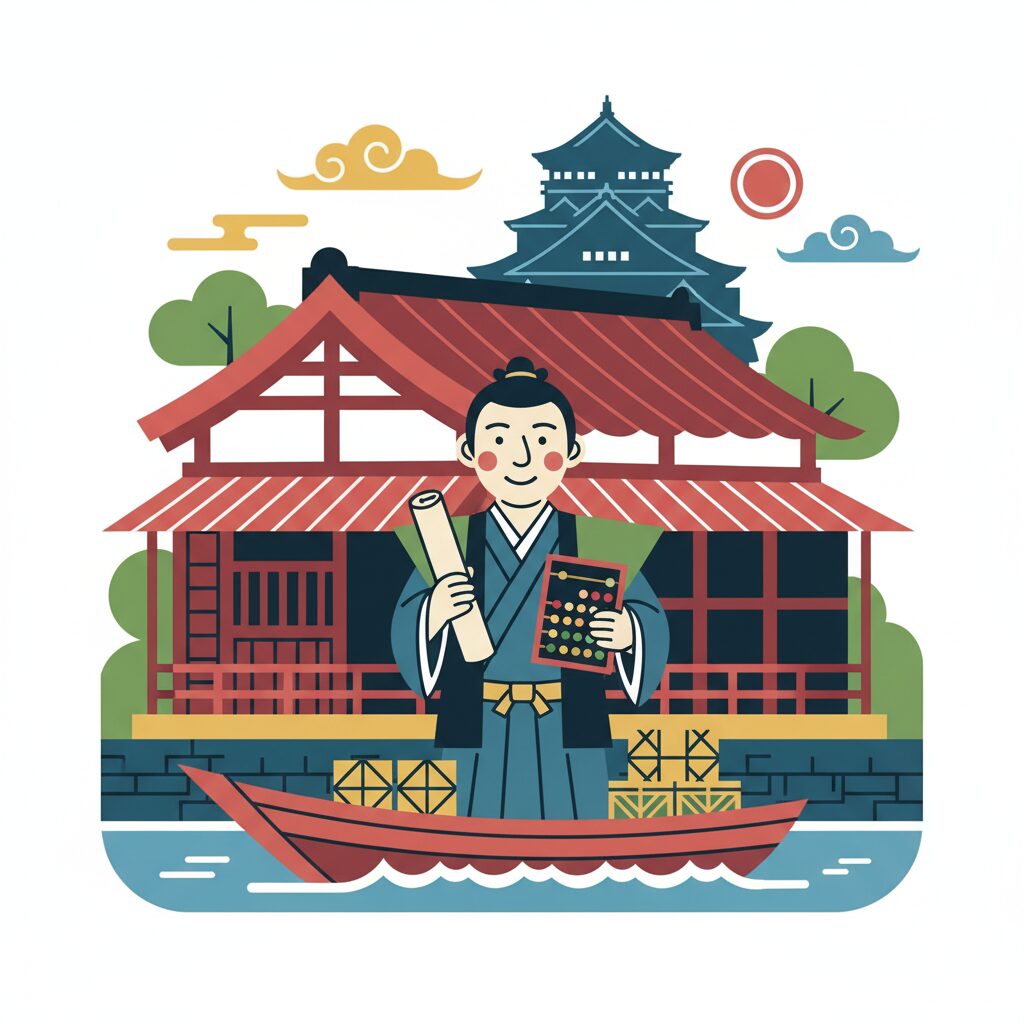
To truly understand Osaka, you need to grasp its history. This isn’t mere trivia; it’s the city’s fundamental essence. While Tokyo, then known as Edo, was flourishing as Japan’s political center—a strict world of samurai, shoguns, and rigid social ranks—Osaka was forging a distinctly different character. It served as the nation’s warehouse, the commercial hub, affectionately called tenka no daidokoro, or “The Nation’s Kitchen.” For centuries, rice, sake, textiles, and wealth from across Japan flowed through the ports and warehouses along its canals. This was not a city of warriors and nobility but of merchants, artisans, and negotiators. In that realm, modes of communication were shaped not by the silent corridors of power but by the lively fires of the marketplace.
A City Built on Business, Not Bureaucracy
In Edo, your social rank defined you. You showed deference to those above and spoke in meticulously measured tones of politeness. Formality was paramount. In contrast, in Osaka, your worth was judged by your business acumen, dependability, and ability to make a profit. Status was flexible, earned through intelligence and effort. This core difference fostered a pragmatic culture that still pulses through the city today. When your survival hinges on bargaining the price of thousands of bales of rice before the next shipment arrives, vague niceties have no place. You require clarity. You require speed. You need to know your position immediately. Time wasn’t just an abstract idea; it was literally money. This mindset infused daily life itself. Conversations became exchanges of information and intent, optimized for maximum efficiency. The aim wasn’t to flawlessly enact a social custom but to achieve mutual understanding as swiftly as possible, whether sealing a deal or simply choosing where to eat lunch.
The Language of the Deal: Honne and Tatemae in Osaka
Anyone studying Japanese culture learns about honne, one’s true feelings, and tatemae, the public face or facade presented to preserve social harmony. Throughout much of Japan, particularly in formal or business contexts in Tokyo, managing the delicate balance between the two is essential. Expressing what you truly think (honne) can be considered disruptive or self-centered. The emphasis is on the group, harmony (wa), and smooth societal functioning. However, in Osaka, the divide between honne and tatemae is famously, and refreshingly, narrow. Merchant culture demanded it. To succeed as a trader, you had to trust your partners. You needed to believe the price they quoted was a genuine starting point for negotiation, not mere politeness. You had to know if the quality was truly good, not just “acceptable.” Insincerity harmed business. Consequently, Osakans gained a reputation for straightforwardness. When a shopkeeper in the Shinsaibashi-suji shopping arcade says, “Ah, that color doesn’t really work for you, how about this one?” it’s not an insult. It’s expert advice given under the assumption that you want the best outcome, not empty praise. They’re not just trying to sell a product; they’re aiming to sell you the right product, cultivating a bit of trust that might bring you back. This is honne in practice—a means to build relationships, not destroy them.
Osaka-ben in Action: What Directness Looks and Sounds Like
The city’s merchant spirit isn’t merely an abstract idea; you can hear it buzzing on every street corner. It’s woven into the local dialect, Osaka-ben—a faster, more expressive form of Japanese rich with words that emphasize rhythm and impact over formality. This language is crafted for lively exchanges, laughter, and getting straight to the point. To outsiders, it might sound almost confrontational, but if you listen closely, you’ll catch the melody of connection.
More Than Just an Accent: The Rhythm of Conversation
In Osaka, conversations are interactive affairs. People frequently interrupt, talk over each other, and complete one another’s sentences. Rather than being rude, this is a sign of keen listening and engagement. Silence isn’t a pause for reflection; it’s a space waiting to be filled with a joke, question, or opposing view. The dialect is peppered with expressions that fuel this rapid back-and-forth. The most iconic is 「なんでやねん!」 (Nande ya nen!), literally “Why?!” or “What the heck?!” but serving a much subtler role. It’s the classic comeback in a manzai comedy duo, a playful way to call out absurdity. When a friend shares a ridiculous tale, you don’t just respond politely—you hit them with a nande ya nen! to show you’re fully engaged. Another staple phrase is the merchant’s greeting: 「もうかりまっか?」 (Mokarimakka?), meaning “Are you making a profit?” The typical reply is 「ぼちぼちでんな」 (Bochi bochi denna), or “So-so, getting by.” This verbal handshake reflects commerce’s central role in the city’s identity. Then there’s the charming suffix 「知らんけど」 (Shiran kedo), meaning “…but I don’t really know.” Osakans often express a strong, confident opinion and then add shiran kedo at the end. It’s a clever conversational tool that lets them speak freely while deflecting full responsibility, inviting either challenge or agreement. It keeps the dialogue flowing.
The “Auntie” Archetype: Masters of Communication
The Osaka communication style is best personified by the Osaka no obachan, the city’s middle-aged and older women. They are the high priestesses of directness and the guardians of community spirit. Often caricatured by their love of leopard print and their practical, swift bicycles, they are the social glue of their neighborhoods. An obachan lives by the idea that a stranger is just a friend she hasn’t yet given unsolicited advice to. She’ll comment on the weather, your heavy-looking bags, or the adorable dog you’re walking. She might even press a piece of hard candy into your hand simply because you’re nearby. This can be surprising for foreigners used to urban anonymity, but her actions stem from a sense of communal belonging and warmth. In a city of millions, she crafts a small-town atmosphere, one encounter at a time. Her directness is a form of care. By talking to you, she acknowledges your presence, breaking down the invisible barriers that separate people in a big city. She treats you not as an outsider but as part of the neighborhood fabric, whether you’ve lived there for ten years or ten minutes.
The Kyoto Contrast: A Tale of Two Cities
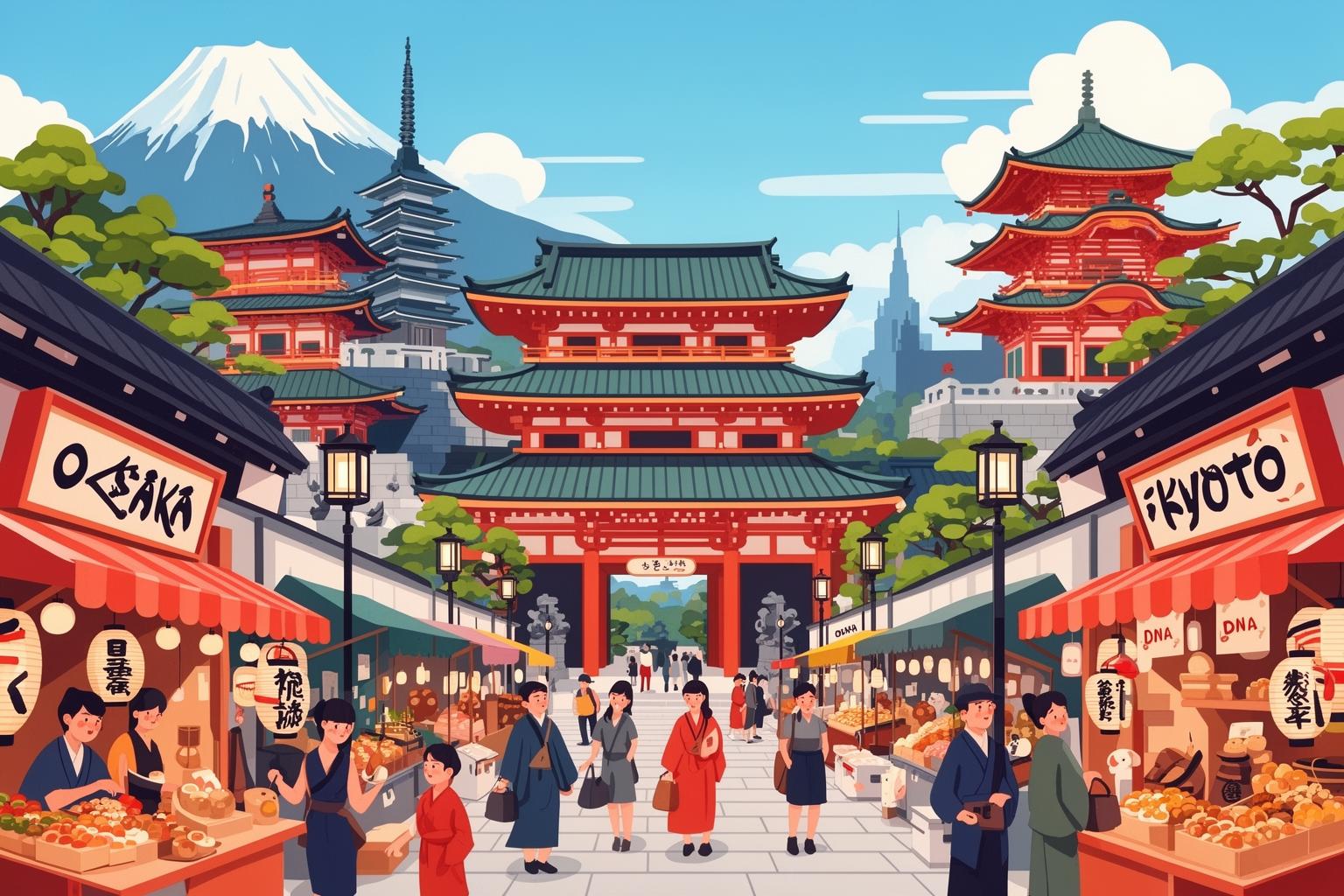
To truly grasp the distinctive flavor of Osaka’s straightforwardness, one only needs to take a 30-minute train ride northeast to Kyoto. Though the two cities are neighbors geographically, they are vastly different in their social languages. While Osaka is known as a city of merchants, Kyoto is a city of nobles and priests. Its communication style has been shaped over a thousand years as the imperial capital, where power was maintained through subtlety, aesthetics, and a complex network of social obligations. In Kyoto, what isn’t said often carries more weight than what is spoken.
Reading Between the Lines in the Ancient Capital
In Kyoto, conversation is an artful dance of indirectness. The main aim is to preserve harmony and save face. Direct refusals are considered rude. Instead, a sophisticated system of polite expressions and nuanced cues is employed to deliver negative responses. For example, if you suggest an idea and a Kyoto native replies with 「考えときます」 (Kangaetokimasu – “I’ll think about it”), it usually means a polite but firm “no.” A straightforward “no” would be viewed as confrontational. Compliments can also carry hidden meanings. If you are invited to a Kyoto home and the host comments on your “beautiful watch,” they might be hinting that you have stayed too long and it’s getting late. The most iconic example is the offer of bubuzuke (also called ochazuke, a simple dish of rice with tea poured over it). Traditionally, if a host offers you bubuzuke, it signals that it’s time for you to leave. In contrast, an Osakan in the same scenario would likely just pat you on the back and say, “Alright, it’s getting late! Let’s drink again soon!” The contrast is clear: Kyoto speaks in codes, while Osaka speaks in headlines.
When Worlds Collide: The Osaka-Kyoto Dynamic
This communication divide fuels a friendly yet genuine rivalry between the two cities. Osakans often see Kyotoites as pretentious, distant, and difficult to read (hontou no kimochi ga wakaranai – “you can’t tell what they’re really feeling”). To them, Kyoto’s indirectness can be a frustrating waste of time. On the other hand, people from Kyoto might view Osakans as loud, brash, and lacking subtlety. For foreigners living in the Kansai region, understanding this dynamic is essential for everyday life and work. In a business meeting in Osaka, one can expect direct questions about price, deadlines, and potential issues. The goal is to pinpoint and address problems openly. In Kyoto, the same meeting might begin with polite chatter about the weather or seasons before slowly approaching the main topic. Negative points might be expressed so subtly that non-native speakers may miss them entirely. Navigating both cities requires tuning your social radar accordingly. In Osaka, you listen to the words. In Kyoto, you listen to the silences between them.
Navigating Osaka’s Social Landscape: A Foreigner’s Guide
For a newcomer, Osaka’s communication style can be both rewarding and challenging. It can create moments of genuine, heartwarming connection, but it might also come across as abrasive or even rude if you’re unprepared. The key is to shift your perspective on what counts as politeness and personal space. The social norms you’re used to back home may not apply here, and that’s all part of the experience.
Misinterpreting Directness as Rudeness
A common mistake foreigners make is taking Osaka’s directness personally. When a stranger asks a seemingly too-personal question—”Are you married? How much is your rent?”—it’s seldom meant to be malicious or judgmental. More often, it reflects straightforward curiosity, a quicker way to understand who you are and find common ground. The soy-sauce-recommending obachan wasn’t criticizing your taste; she was offering a better deal, showing the same practical care she’d give a family member. It’s an act of inclusion. In many Western cultures, urban life follows an unspoken rule of polite indifference: avoiding eye contact on the subway, not commenting on someone’s shopping cart, and maintaining personal space. In Osaka, that bubble is much more permeable. The local etiquette favors engagement over avoidance. Recognizing this can turn what seems like an insult into a meaningful connection.
How to Embrace the Flow
So, how do you adjust? First, don’t be intimidated. A smile and a simple answer usually suffice. You don’t need to master Osaka-ben to join in. If someone starts a conversation, see it as an opportunity. This directness also means people are very forthright when offering help. If you stand on a street corner looking confused with a map, someone will likely approach and ask, “Where are you going?” They probably won’t just point; they might walk with you several blocks, chatting along the way. Second, try to join the banter. Banter is the heartbeat of Osaka—it’s how friendships develop and affection is shown. If a vendor at a local shotengai (covered shopping street) teases you, they’re not being unkind; they’re inviting you into their community. Playfully teasing back shows you understand. This spirit extends even into commerce. While Japan generally isn’t a haggling culture, Osaka is one of the few places where some friendly price negotiation is sometimes possible, especially in smaller shops or electronics areas like Den Den Town. It’s a performance, part of the merchant’s dance.
The Upside: What You See Is What You Get
Once you adjust, you might find Osaka’s directness incredibly freeing. There’s a refreshing absence of pretense. People tend to be open about their thoughts and feelings, meaning you spend less time trying to interpret hidden meanings or social cues. Friendships can feel more stable because they are based on honest exchanges rather than mere pleasantries. If an Osakan likes you, you’ll know it. If there’s an issue, they’re likely to tell you outright, letting you address it instead of letting resentment build. It’s a social atmosphere that values authenticity over performance. In a world that often feels increasingly filtered and indirect, Osaka is a city that embraces straightforwardness. It’s a place where a clear answer and a shared laugh are the most valuable currency.
Beyond the Stereotype: Nuance in the Concrete Jungle
Of course, it’s important to keep in mind that this is a city of nearly three million people. Not everyone you encounter will be a loud, joke-cracking, leopard-print-wearing stereotype. There are shy Osakans, quiet intellectuals, and reserved artists. Like any major city, Osaka is a mosaic of personalities. Younger generations, raised on a steady diet of Tokyo-centric television and internet culture, may speak a more standardized, less dialect-heavy form of Japanese. And in the gleaming office towers of Umeda, you’ll find the same formal business etiquette observed throughout the country. Yet, the merchant’s spirit persists. It’s the city’s cultural gravity—an invisible force that shapes interactions in subtle and profound ways. It shows in how a taxi driver will strike up a conversation as if you’re an old friend, how a restaurant owner will recommend a dish with passionate certainty, and how strangers will come together to help someone who has fallen on the street. The “merchant spirit” is less about a literal profession and more about a worldview. It’s a belief in pragmatism, a deep appreciation for humor as a tool of resilience, and a fundamental focus on human-to-human connection as the foundation for a functioning society. Living in Osaka is an education in a different kind of etiquette, one built on the boisterous warmth of the marketplace rather than the quiet deference of the court. To thrive here is to understand that directness is not a lack of politeness, but a different, more efficient, and often more heartfelt form of it. This isn’t a flaw in the city’s character; it is, and always has been, its greatest strength.








