
You feel it before you see it. The energy of an Osaka shotengai—a covered shopping arcade—is a full-body experience. It’s not the polished, serene retail therapy of a Tokyo department store. This is something raw, something vital. The air hangs thick with the scent of sizzling takoyaki, sweet soy sauce from a dango stand, and the faint, briny smell of fresh fish on ice. The noise is a symphony of chaos: vendors shouting out daily deals in a gravelly dialect, the clatter of pachinko balls from a nearby parlor, the squeak of bicycle brakes, and the overlapping chatter of a hundred different conversations. It’s here, in this vibrant, messy heart of daily Osaka life, that you will inevitably have your first encounter with the city’s most formidable and fascinating character: the Osaka Obachan.
Now, the word “obachan” simply means “aunt” or “middle-aged woman” in standard Japanese. But in Osaka, it’s a title. It’s a species. It’s a phenomenon. You’ve probably heard the stereotypes: the permed hair, often dyed a shade of purple or bronze not found in nature; the love for anything leopard print; the bicycle ridden with a speed and aggression that would make a New York bike messenger blush. And, of course, the famous bag of “ame-chan,” or hard candies, ready to be dispensed at a moment’s notice. These women are the unofficial queens of the city, and their friendliness is legendary. But here’s the question that no travel guide will answer, the one you’ll ask yourself after your first bewildering interaction: Is this legendary friendliness a warm embrace or a headlock? Is the Osaka Obachan a guardian angel who will guide you through the complexities of life in a new city, or a relentless critic who will publicly comment on everything from your grocery choices to your love life? The answer, like Osaka itself, is complicated, loud, and utterly unforgettable. For anyone truly wanting to understand what it means to live here, learning to navigate the world of the obachan is not just a skill—it’s the entire game. This isn’t about sightseeing; this is about survival and, eventually, about belonging.
Amidst the urban symphony of Osaka, locals often tune in to the daily 5 PM song, a familiar soundscape that mirrors the city’s lively spirit as much as its famed obachan do.
Who Exactly is the ‘Osaka Obachan’?
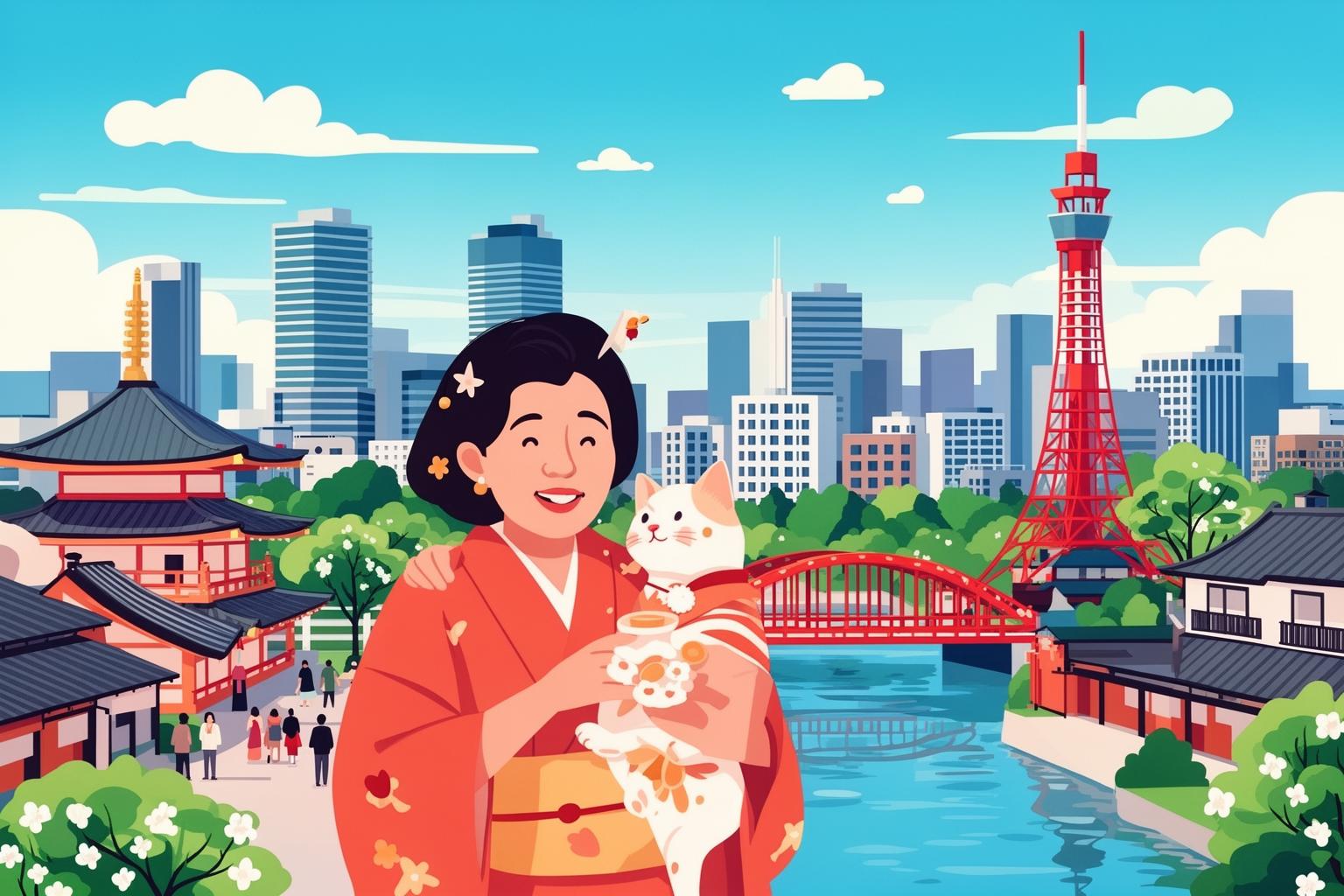
Before you can grasp the pros and cons of interacting with them, you first need to adjust your understanding of what an obachan truly is. This isn’t about age; it’s an attitude. A 45-year-old shopkeeper with a strong sense of community and a booming voice can embody the spirit of an obachan more than a quiet, reserved 70-year-old. They act as the social glue and the enforcers of unwritten rules within Osaka’s neighborhoods.
More Than Just an ‘Auntie’
In most parts of Japan, an older woman you don’t know is a stranger. You show her respect and might offer your seat on the train, but the interaction is governed by a polite, formal distance. In Osaka, that distance disappears. The typical obachan assumes everyone belongs to one big, slightly dysfunctional family called “the neighborhood.” This fundamental difference in perspective is the source of both their most endearing and most challenging traits.
Let’s unpack the classic image, since the stereotypes, though broad, have a kernel of truth. The vibrant fashion—the animal prints, bright colors, and glittery visors—isn’t simply a cry for attention. It’s a projection of energy, a refusal to blend into the background. In a city founded on merchants and performers, being memorable is a virtue. This is not the subtle, wabi-sabi aesthetic you find in Kyoto; it’s a practical, powerful declaration of presence. Their uniform says, “I am here, I am not invisible, and I have an opinion.”
However, their true defining trait is a blend of deep pragmatism and a strong sense of communal responsibility. They are fiercely protective of their turf, which includes the people living there. When a foreigner struggles to read a utility bill or find the right train platform, they don’t see it as an inconvenience but as a problem within their domain that must be solved promptly and loudly. They serve as neighborhood watch, welcome wagon, and unsolicited advice columnist all rolled into one.
The Shotengai: Their Natural Habitat
The shotengai is the stage for the obachan’s daily performance. These shopping arcades are the lifeblood of Osaka’s communities, standing in stark contrast to sterile, impersonal mega-malls. Here, commerce is personal. The obachan running the vegetable stand has known many customers since their childhood. She’s aware of who recently had a baby, who has been ill, and whose son is struggling with university exams. The transaction is never merely about exchanging money for goods; it’s an exchange of information, gossip, and genuine care.
This is where the famous culture of bargaining and “omake” (getting a little something extra) thrives. An obachan won’t just sell you three tomatoes; she’ll critique your dinner plans, tell you these tomatoes are the best you’ll find all week, and then toss in an extra one with a “Here, service!” This isn’t a calculated business tactic; it’s a way to reinforce the relationship. It signals that this is more than a transaction; it’s a connection. For a foreigner, entering this environment can feel like walking into a private party you weren’t invited to. But stay awhile, and you’ll soon realize everyone is invited, as long as you’re willing to participate.
The Pros: The Bright Side of Obachan Power
Living under the watchful eye of the neighborhood obachan can be an incredible blessing, especially when navigating the challenges of life in a foreign country. Their brand of intrusive friendliness is often what transforms Osaka from merely a place you live into a true home.
Instant Community and a Safety Net
In Tokyo, you can live in an apartment building for years without ever learning your neighbors’ names. The city’s vast size encourages a culture of polite anonymity. While efficient, it can also feel profoundly isolating. Osaka is the complete opposite. The obachan community creates an invisible yet highly effective social safety net.
Picture this: you’ve just moved into your new apartment, struggling with an oversized IKEA box at the door when an obachan you don’t know stops her bicycle, comes over, and begins directing you. “No, no, pivot it! Like this! You’ll scratch the floor!” She doesn’t ask if you need help; she just starts assisting. Within five minutes, she’s called another neighbor, and the three of you are maneuvering the box inside. Afterwards, she’ll likely ask where you’re from, what you do, and if you’re eating properly. The next day, she might show up with a small plate of simmered daikon radish to make sure you have something “healthy” to eat.
This isn’t a made-up story; it’s a typical Tuesday in Osaka. They remember your face after one encounter. They greet you on the street. They’ll notice if your lights haven’t been on for days and might check to see if you’re okay. For a foreigner living alone, this sense of being “watched over” can be incredibly reassuring. It’s the difference between feeling like a mere visitor and a member of a community. They are like a neighborhood watch app—only with more snacks and scolding.
The “Ame-chan” Culture: A Symbol of Connection
Outsiders often chuckle at the obachan and her endless stash of candy. But the “ame-chan” is one of Osaka’s most important social tools. It’s a pocket-sized peace offering, a conversation starter, and a gesture of pure, unconditional goodwill.
The ritual is simple. You might be sitting next to one on the train or waiting in line at the post office. She’ll turn to you, rummage in her handbag, and offer a small, brightly wrapped candy. “Ame-chan, iru?” or “Ame-chan taberu?” (“Want a candy?”). This is about much more than just a sweet treat. It’s a social test. Your reaction tells her everything she needs to know.
If you decline politely but rigidly, the gate stays closed. If you accept with a smile and a thank you, the gate creaks open. A conversation usually follows. Where are you from? How long have you been in Japan? Is your mother worried about you? The candy is the key that opens the interaction. It’s a small, non-threatening gesture that says, “I see you. Let’s connect for a moment.” In a culture that can be formal and reserved, the ame-chan is a lovely, simple way to break down social barriers. It perfectly embodies Osaka’s philosophy: human connection should be straightforward, gentle, and a little sweet.
Practical, No-Nonsense Advice
While much of Japan operates on the principles of “tatemae” (public facade) and “honne” (true feelings), where people avoid direct opinions to maintain harmony, the Osaka obachan doesn’t bother with these subtleties. She deals exclusively in honne, often brutally honest but always extremely helpful.
She’s a walking encyclopedia of practical life tips. At the supermarket, she’ll glance at your basket and declare, “Not that brand of soy sauce! This one is cheaper and tastes better. Are you an idiot?” It’s jarring at first, but she’s almost always right. She’ll tell you which butcher has the freshest mince, when the local drugstore holds its 10% off sales, and the fastest way to remove a stubborn stain from a shirt.
Her bluntness isn’t limited to shopping. She gives unsolicited life advice with equal passion. “You look pale. Are you sleeping enough? You should eat more liver.” Or, “Still single? My friend has a nephew who works at a bank. He’s not handsome, but he’s reliable.” While it can feel intrusive, it comes from a genuine, albeit misguided, desire to help. In a society where people often hesitate to speak openly, the obachan’s straightforward advice can be a refreshingly valuable resource. You just have to develop a thick skin and learn to sift the gems from the noise.
The Cons: When Friendliness Crosses the Line
For all the warmth and sense of community they offer, there is a notable downside to the obachan phenomenon. Their worldview, which treats the neighborhood as one large family, often leads them to overlook the personal boundaries that many foreigners expect. What they perceive as caring may come across to you as a complete invasion of your privacy.
The Disappearing Notion of Personal Space
In many Western cultures, and even in Tokyo, individuals maintain a bubble of personal space. You don’t stand too close, avoid touching without permission, and certainly don’t ask strangers overly personal questions. The Osaka obachan’s personal space bubble, to put it mildly, is much smaller—if it exists at all.
Physical closeness is commonplace. An obachan might grab your arm to get your attention while telling a story, or reach out to adjust your collar or brush lint off your jacket without hesitation. This is not meant to be aggressive; it’s a sign of familiarity, similar to how she would treat her own grandchild. However, if you’re unaccustomed to it, this can feel startling and invasive. The absence of physical distance can be unsettling.
This extends to conversational boundaries as well. An obachan’s go-to topics are often considered highly private. “How much is your rent?” “Are you married?” “Why not?” “You’re putting on a bit of weight, aren’t you?” These questions are asked as casually as talking about the weather. For them, this is how they build intimacy and show concern—it’s a way to gather information to better situate you within their community map. But for the person on the receiving end, it can feel like a rapid-fire interrogation under a harsh spotlight. Although the intention is not harmful, the effect can be deeply uncomfortable.
Unsolicited Advice and Public Scrutiny
The same directness that offers helpful shopping tips can quickly turn into public criticism. The obachan’s role as a guardian of community standards means she feels obliged to correct behaviors she finds inappropriate, often loudly and in public.
Imagine this: You’re waiting for the train on a chilly autumn day, sporting a new jacket you love. An obachan a few feet away catches your eye, looks you over, frowns, and loudly announces, “Young lady, you’ll catch a cold dressed like that! Where’s your scarf? Your neck is completely exposed!” Before you know it, you become the subject of a public lecture on proper seasonal attire. Your cheeks burn with a mix of embarrassment and indignation. You wish the ground would swallow you whole.
This public scrutiny can extend to anything: your parenting style (“You should put a hat on that baby!”), how you sort your recycling (“That plastic bottle belongs in the other bag!”), or your Japanese pronunciation. Again, the aim is rarely to shame. In her mind, she’s helping you, offering guidance to better navigate life and avoid mistakes. It’s a tough-love mentorship you never asked for. But understanding her intentions doesn’t always ease the sting of being singled out and critiqued publicly by a complete stranger.
The Language Barrier Intensifies Misunderstandings
The difficulty of these encounters is greatly amplified by the language barrier. The Osaka dialect, or Osaka-ben, is vastly different from the standard Japanese taught in textbooks. It’s faster, more guttural, and has its own unique vocabulary and grammar. To an untrained ear, it can sound harsh or aggressive, even when the speaker means to be friendly.
An obachan might approach you, speaking rapidly in thick dialect and gesturing animatedly toward your bag. Panic sets in. Is she yelling? Is she telling you you’ve done something wrong? Your mind races to make sense of it. “Nani yatten no!” might sound like an accusation, but could simply mean “What are you doing?” The word “ahondara” is a well-known Osaka insult, yet among friends, it can be used affectionately.
This ambiguity is stressful. You find yourself constantly trying to interpret not just the words, but the tone and intent, all while a formidable woman speaks urgently, making it feel like an emergency. You might smile and nod, hoping it’s the right response, only to discover you’ve unwittingly agreed to something you don’t understand. The potential for misunderstanding is enormous, turning what might be a warm interaction into a confusing and intimidating experience.
Navigating the Obachan Encounter: A Foreigner’s Survival Guide
So, how do you manage to survive—and even thrive—in this environment? You can’t change the obachan, so you need to adapt your own reactions and mindset. It’s a delicate balance between embracing their warmth and protecting your own sanity.
Embrace the Chaos, But Set Gentle Boundaries
The most important rule is not to take it personally. The intrusive questions and public critiques aren’t meant as personal attacks; they reflect a different cultural norm. Once you internalize this, it becomes much easier to handle.
With overly personal questions, a direct refusal can seem cold and may shut down the relationship. A polite deflection accompanied by a smile is often the best approach. When asked about your salary or rent, vague, lighthearted replies like, “Iyaaa, I wish it were more!” or “It’s a secret!” usually work. These responses indicate you prefer not to answer without causing awkwardness. For unsolicited advice, a simple “Arigatou gozaimasu, ki o tsukemasu” (“Thank you, I’ll be careful”) shows appreciation without obliging you to follow it. This validates their role as a caring elder, which is often all they seek.
Learn to Love the “Ame-chan”
This is non-negotiable. If an obachan offers you candy, you take it. Always. Refusing is rejecting a gesture of connection and can be seen as an insult. Accept it with a smile and a clear “Arigatou gozaimasu.” This small act creates an instant bond.
To reach pro-level status, carry a few candies yourself. After a few encounters with the same obachan, try the reverse-ame-chan. Offering her a candy will likely both delight and surprise her. It shows you understand the social rules and that you’re actively participating in the community rather than just observing. It’s a powerful gesture that says, “I see you, and I appreciate the culture you represent.”
See Them as a Cultural Resource
Instead of seeing the obachan as a source of stress, try shifting your perspective. View her as a key—a walking, talking guide to the real Osaka. She holds the city’s unwritten history, best-kept secrets, and authentic spirit.
Approach them with curiosity. If you’re brave enough, ask for their opinion: “Where is the best okonomiyaki around here?” or “Do you know a good, cheap tailor?” They’ll be thrilled to share. You’ll get honest, expert answers and validate their role as a local sage. By valuing their knowledge, you turn the dynamic from one of imposition to one of mutual exchange. This is how you build trust and genuine relationships, transforming bewildering encounters with strangers into treasured conversations with neighbors.
Why This Doesn’t Happen in Tokyo
To truly grasp the uniqueness of the Osaka obachan, it’s important to compare her with the social environment of Tokyo. The distinction goes beyond accents or cuisine; it reflects a fundamental difference in the social dynamics of everyday life.
Community vs. Anonymity
Tokyo is a metropolis defined by its immense scale. It consists of interconnected yet separate hubs. The dominant social value is efficiency and the seamless, frictionless movement of millions. To facilitate this, a certain degree of anonymity is not merely a side effect; it is essential. Keeping to yourself is the unwritten rule. You avoid eye contact on the train, don’t converse with strangers unless absolutely necessary, and maintain personal boundaries. This fosters a predictable, orderly, and calm atmosphere but one that can seem cold and isolating to outsiders. Neighbors are simply those who live next door, not part of a community.
Conversely, Osaka resembles a cluster of villages tightly packed together. Identity is anchored in your local neighborhood and your shotengai. The social currency is connection rather than anonymity. Your affairs are everyone’s concern because the community’s well-being depends on its members. The obachan acts as the chief operating officer of this system. She upholds the communal spirit, ensures no one is overlooked, and sustains the network of relationships that binds everything. Ignoring a neighbor who appears to be in trouble would be seen as a failure in her duty.
The Merchant City Legacy
This contrast has deep historical origins. Tokyo (formerly Edo) was the city of samurai and bureaucracy. It was a hierarchical society built on formality, strict protocols, and the importance of maintaining face. Social interactions were, and partly still are, governed by these rigid rules.
Osaka has long been the city of merchants (“shonin no machi”). Its power arose from the grassroots. Success in commerce demanded different abilities: building quick relationships, direct negotiation, pragmatism, and a sharp sense of humor to smooth transactions. It was a culture that prized substance over form and results over politeness. The Osaka obachan embodies this merchant legacy today. She is practical, values a good bargain, communicates frankly, and recognizes that a bit of human connection (and a timely ame-chan) can make all the difference. Unlike Tokyo’s samurai-derived formalities, she is guided by the common-sense, people-first spirit of the marketplace.
The Final Verdict: An Essential Part of the Osaka Experience
So, is the Osaka obachan your greatest supporter or your harshest critic? In truth, she is both, often within the same conversation. She will help you carry your groceries up the stairs and then scold you for forgetting an umbrella on a cloudy day. She will offer you free oranges from her garden and simultaneously express profound disappointment about why you’re still unmarried.
You can’t have the warmth without the intrusion. You can’t have the community without the scrutiny. The two are inseparably connected. The Osaka obachan is a complete package.
For anyone aiming to build a life in this vibrant, chaotic city, accepting the obachan is the ultimate challenge of cultural integration. At first, you’ll likely feel confused, intimidated, and maybe a bit annoyed. But over time, if you remain open and learn the unspoken rules, something extraordinary happens. You start to realize their meddling is a form of love. Their loudness is a sign of passion. Their constant presence is a gesture of protection.
They are the fierce, untamed, and generous heart of Osaka. They are why this enormous city can still feel like a small town. They guard its authentic culture, and gaining their trust—or at least their amused tolerance—is the clearest sign that you don’t just live in Osaka, but that you truly belong. And one day, you might catch yourself stopping a confused tourist on the street, pulling a candy from your bag, and asking, “Ame-chan, iru?” That’s when you’ll know you’ve genuinely arrived.