
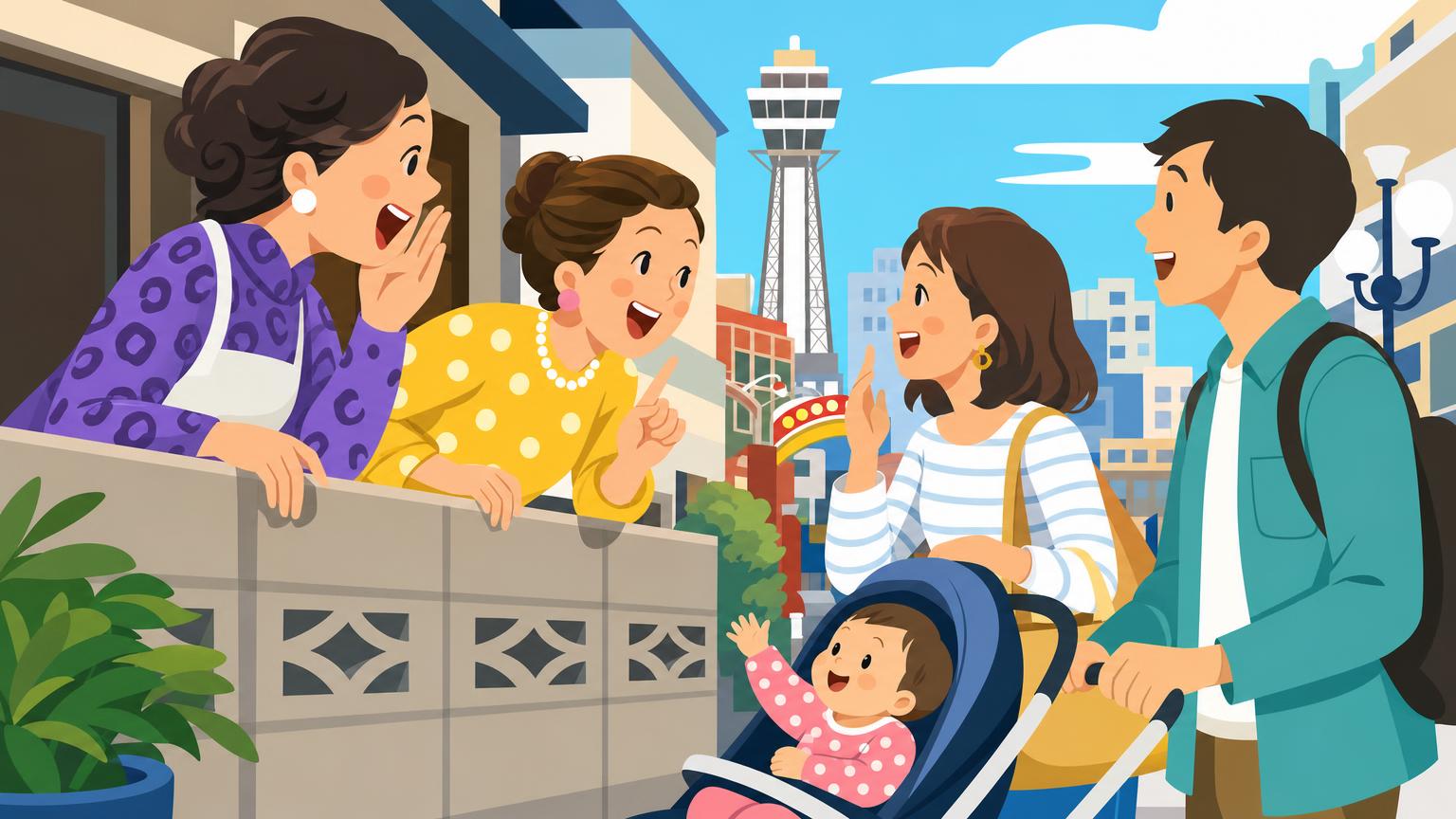
You step off the Shinkansen bullet train at Shin-Osaka Station. The air immediately feels different. The escalators suddenly demand that you stand on the right, not the left. The quiet, organized hum of Tokyo melts away in an instant. You hear loud laughter echoing down the platforms. You see bright, contrasting colors adorning the shop signs. You feel a sudden, undeniable push of kinetic energy. Welcome to Osaka. As an event planner who spent her early twenties organizing traditional festivals in the polished, rule-bound neighborhoods of Tokyo, moving my work down to the Kansai region was a profound culture shock. I went from planning events where attendees stood in perfectly straight, silent lines to coordinating street festivals where local shop owners would grab my clipboard, tell me my layout was wrong, and then hand me a hot octopus ball to soften the blow. This relentless, boundary-pushing, overwhelmingly warm human interaction is the beating heart of the city. Locals call it osekkai.
For foreign residents settling into life in Japan, this concept can be the source of deep confusion. You are repeatedly told that Japanese culture revolves around silence, keeping a respectful distance, and never being a burden to others. Then you move to Osaka, and a stranger at the supermarket tells you that the brand of soy sauce you are buying is a rip-off. Is this rude? Is it intrusive? Or is it the deepest, most genuine form of community care you will ever experience? Understanding osekkai is the ultimate key to unlocking a happy, fulfilling life in Japan’s most vibrant city. It challenges everything you thought you knew about Japanese social etiquette. It demands your participation. It forces you to drop your guard. By the time you truly understand it, you will likely realize that you have fallen deeply in love with the meddlesome, loud, and incredibly big-hearted people of this concrete jungle.
What is Osekkai? Understanding Osaka’s Unique Culture of Kindness
If you open a standard Japanese-English dictionary and look up the word osekkai, you will probably find translations with a distinctly negative tone. The dictionary will define it as meddling, suggesting terms like officiousness, nosiness, or unwanted interference. In a traditionally conservative Japanese context, being called osekkai is not necessarily flattering. It implies crossing invisible boundaries that govern polite society. However, language is dynamic, and its emotional connotations vary by region. In Osaka, the word sheds its negative connotation and becomes a badge of honor.
To grasp this, you first need to understand the core Japanese concept of meiwaku, which roughly means a nuisance or bother. In cities such as Tokyo, the highest moral priority in daily life is to avoid causing meiwaku at all costs. You don’t talk on the train because it might disturb someone. You don’t ask strangers for directions, as it takes up their valuable time. You silently endure your confusion to maintain public harmony. Leaving people alone is seen as the ultimate kindness.
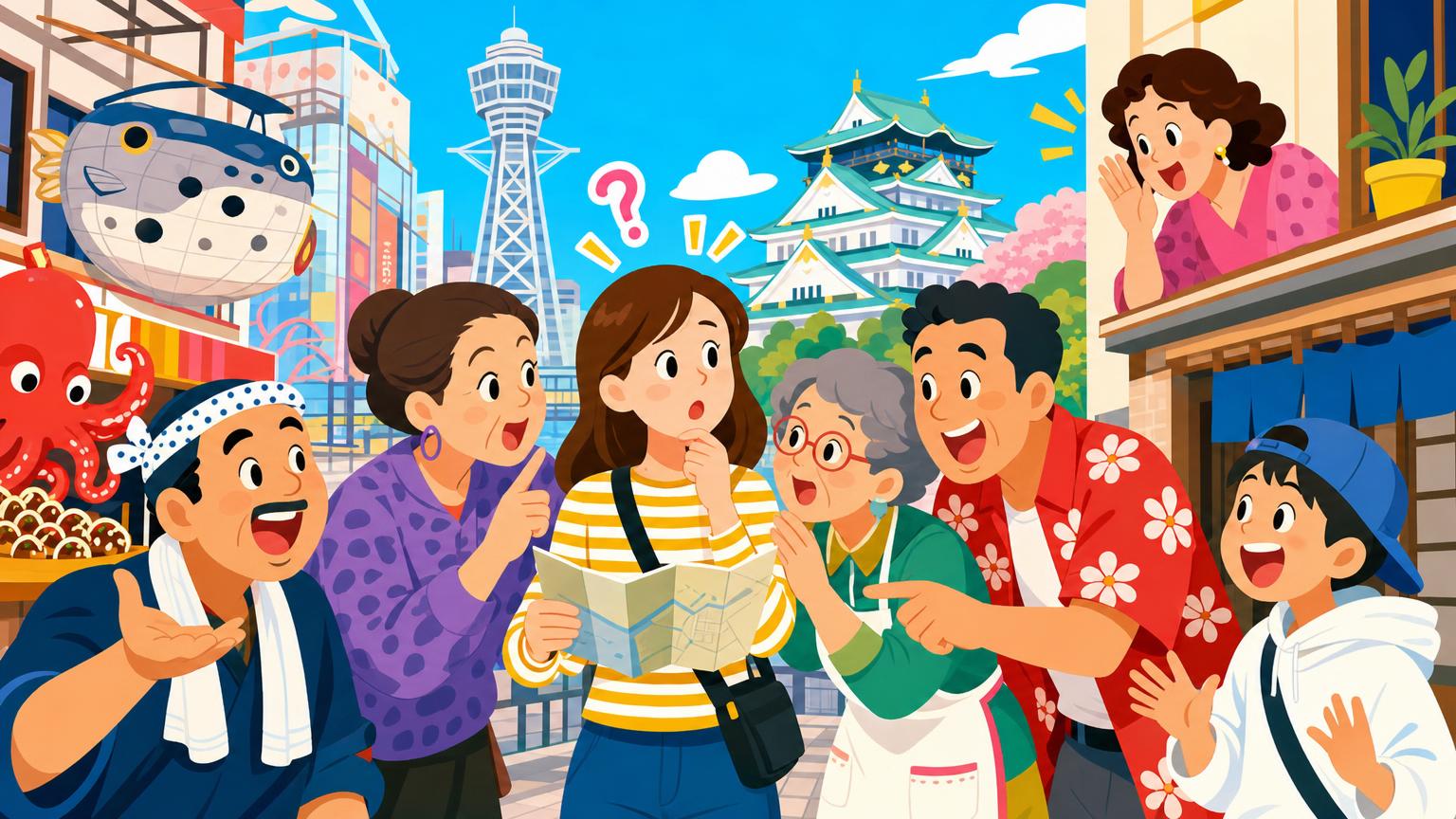
Osaka, however, completely reverses this mindset. There, leaving someone alone when they clearly need help is considered cold, heartless, and fundamentally wrong. If you’re standing on a street corner, staring blankly at a digital map on your phone, you’re clearly in distress. For an Osaka local, walking past without offering help would be a moral failure. They will approach you, point at your screen, and speak rapidly in the regional dialect, unfazed if you don’t understand a word of Japanese. They will grab your elbow and physically guide you to the train platform you’re trying to find. This is Osaka osekkai: a proactive, assertive kind of helpfulness that refuses to let anyone struggle alone. It embodies the belief that shared embarrassment or awkwardness is a small price to pay for genuine human connection.
Tokyo vs. Osaka: Why Osekkai Thrives in the Kansai Region
The cultural divide between Tokyo and Osaka is not merely a modern peculiarity. It is a deeply rooted historical fact that has shaped the mindset of these two metropolises for centuries. Tokyo, historically called Edo, was the center of samurai power. It was a city ruled by strict hierarchies, formal protocol, and the ever-present, unspoken threat of stepping out of line. In a samurai city, speaking out of turn or meddling in someone else’s affairs could literally cost you your life. Politeness was a form of survival. Distance meant safety.
Osaka, conversely, was known as the kitchen of the nation. It was a fiercely independent merchant city, built not by warlords but by traders, shopkeepers, and street vendors. In a merchant city, communication is currency. If you don’t speak, you don’t sell. If you fail to connect with your customer, you don’t eat. The merchants of Osaka had to be quick-witted, engaging, and utterly fearless when it came to striking up conversations with complete strangers. They needed to read people quickly, break the ice instantly, and build trust in mere seconds.
This historical mercantile spirit still flows through modern Osaka’s veins. You can sense it in the way people walk, talk, and occupy space. My work as a festival planner perfectly illustrates this contrast. When I organize a neighborhood summer festival in Tokyo, the locals expect a detailed itinerary. They want clear signage, designated queuing areas, and the event to run with the precision of a Swiss watch. But when I apply those same organizational skills to a festival in Osaka, the locals immediately dismantle my carefully crafted plans. They do not want to stand in neat lines. They prefer crowding around food stalls, shouting their orders to the cooks, and haggling over the price of a skewer of grilled chicken.
At one of my first events in the Kansai region, I was struggling to fix a broken microphone stand near the main stage. In Tokyo, people would have politely ignored my trouble, pretending not to notice to spare my embarrassment. In Osaka, three older men stepped out of the crowd without asking for permission. They approached, grabbed the stand, debated loudly among themselves about the best way to fix it, borrowed tape from a nearby vendor, and resolved the issue within two minutes. Then they patted me on the shoulder, told me I needed to smile more, and melted back into the crowd. That is the essence of the merchant spirit: you see a problem, you fix it together, and you move on without waiting for a formal invitation.
The Osaka Osekkai Lab: Locals Volunteering to Help Foreign Tourists
This inherent cultural trait is so strong and deeply cherished that locals have begun formalizing it to help accommodate the large influx of international residents and visitors. If you spend enough time navigating the maze-like corridors of major transit hubs such as Namba Station or Umeda Station, you might notice groups of locals actively scanning the crowds for confused faces. These individuals are part of grassroots efforts like the Osaka Osekkai Lab.
This movement emerged from a simple, heartwarming realization: Osaka’s natural tendency to meddle is its greatest tourism asset. As Japan expanded its doors to international tourists and foreign workers, the city recognized that millions were flooding its streets without understanding the language or local systems. Instead of relying solely on digital kiosks or multilingual signs, the people of Osaka chose to lean on what they excel at: engaging personally with others.
Volunteers involved in these osekkai movements do not remain behind information desks waiting to be approached. That is too passive and not the Osaka way. Instead, they patrol the streets and stations, looking for the classic signs of a lost traveler: a heavy sigh, repeated glances at a smartphone map, or a frantic search for a specific exit number. When they identify someone in need, they move in. Using translation apps, broken English, expressive hand gestures, and sheer determination, they ensure the person finds their way.
For newly arrived foreign residents trying to open a bank account or locate the local ward office, this proactive help is invaluable. It bridges the intimidating gap between being an outsider and feeling accepted as part of the community. The volunteers do this not for pay or corporate duty, but because the idea of a guest in their city feeling lost is personally unacceptable. It is neighborly meddling elevated to a civic responsibility.
Where to Experience Authentic Osekkai Culture in Osaka
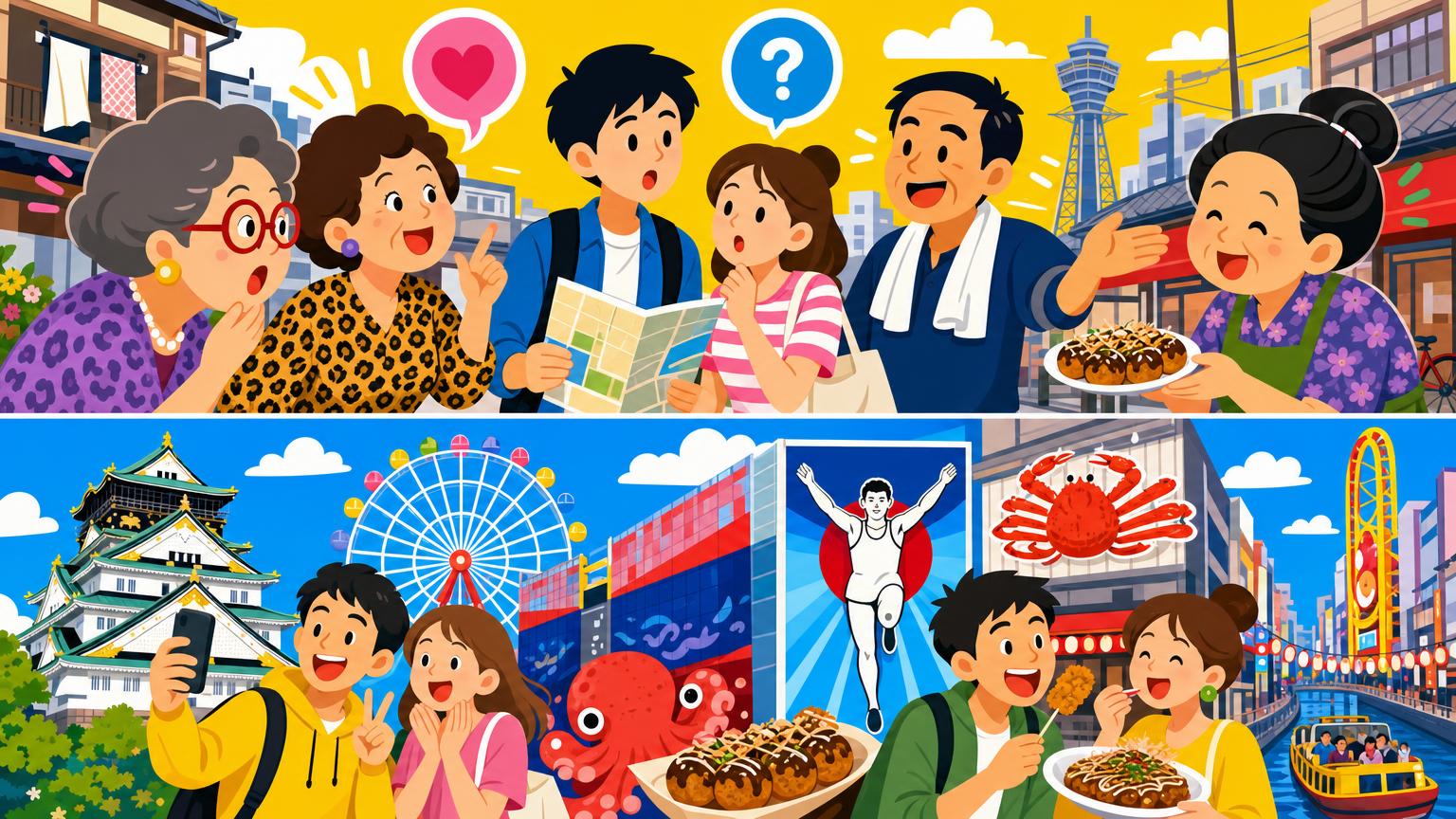
While you might encounter this warm hospitality throughout the city, there are particular settings where the culture of osekkai is not only present but profoundly intensified. If you live in the city or are planning to move here, knowing where to go to experience this social dynamic is essential for integrating into local life. You need to place yourself in environments where physical and social barriers are deliberately lowered.
Chatting with Locals in Shinsekai and Retro Izakayas
There is no better place to understand the local mindset than a tachinomi, a traditional standing bar. These spots are found all over the city but are especially concentrated in retro neighborhoods like Shinsekai, Kyobashi, and Tennoji. A standing bar removes all dining formalities. There are no private booths or menus presented in elegant leather binders. Instead, there is only a long wooden counter, a few overturned beer crates if you’re lucky, and the unavoidable necessity of standing shoulder-to-shoulder with your neighbors.
When you enter a tachinomi as a foreigner, the music might continue playing, but the attention will certainly turn toward you. In Tokyo, patrons tend to focus solely on their own drinks. In Osaka, you have about three minutes before the person next to you strikes up a conversation. They will comment on your order, ask where you are from, and inquire why you chose to move to Japan. Before you finish your first glass of draft beer, they will likely order a plate of kushikatsu (deep-fried skewers) and push it across the counter to you, insisting you can’t drink on an empty stomach.
Conversations here are quick, direct, and deeply inquisitive. Locals will ask about your job, your rent, your marital status, and if you aren’t married, why not. For someone raised in a Western culture where questions about finances and marital status are off-limits in casual chats, this can feel like an intense interrogation. It takes time to understand that they are not judging you—they are simply gathering information to find common ground. They are eagerly searching for a hook, a shared experience, or a funny story to keep the dialogue alive. Offering you a cheap skewer of fried lotus root is their way of paying the admission fee to enter your personal space.
Exploring Traditional Shotengai
Another stronghold of osekkai is the shotengai, the covered shopping arcades that serve as the commercial hubs of nearly every neighborhood. Places like the sprawling Tenjinbashisuji Shopping Street or the lively Kuromon Market are more than just grocery destinations—they are lively stages of everyday life.
Here you will meet the most iconic figure of local meddling: the Osaka Obachan. The Obachan is the middle-aged or elderly local woman, a cultural symbol. She rides a bicycle fitted with a clamp to hold her umbrella, protecting her from sun or rain as she speeds through busy streets. She dresses in fierce leopard or tiger prints. Most importantly, she is the undisputed queen of osekkai.
If you stand hesitantly in front of a vegetable stall in a shotengai, unsure which daikon radish to pick, an Obachan will inevitably step in. She will squeeze past you, select the best radish from the pile, drop it into your basket, and lecture you in thick local dialect on how to cook it properly. There’s no chance to argue—you simply accept the radish and say thank you.
The most famous expression of her relentless care is the ame-chan phenomenon. “Ame” means candy, and the diminutive “chan” makes it sound like a sweet little friend. Obachans always carry hard candies in their purses. If you help them pick up something they dropped, give up your seat on the subway, or even just look a bit tired while waiting at a crosswalk, they will reach into their bag and insistently place a piece of hard candy in your hand. It’s a non-negotiable exchange— a tiny, sweet, tangible sign of their desire to care for everyone around them.
Navigating Daily Life: When Osekkai Crosses into Personal Space
While this culture is undeniably charming and heartwarming, it is crucial to honestly address the reality of living within it every single day. For foreign residents, the relentless attention and frequent crossing of personal boundaries can sometimes result in cultural fatigue. Some days, you simply want to buy your groceries in complete silence. Other days, you don’t want to explain to the dry cleaner why you are still single.
The directness of local communication can occasionally come across as harsh. Since people here prioritize honesty and straightforwardness over superficial politeness, they will mention things that others might tactfully overlook. If you appear exhausted, a local shopkeeper might bluntly tell you that you look awful and urge you to get some rest. If you’ve gained a little weight, the owner of your favorite lunch spot might loudly comment on it while handing you your meal.
The most difficult mental hurdle for newcomers is understanding that no harm is intended by these remarks. In many Western cultures, pointing out a flaw is considered rude. In Osaka, however, it’s an invitation to engage in playful banter. It demonstrates that they are paying attention to you, that you are a regular, a familiar face, someone worthy of teasing. If they didn’t care, they would treat you with the cold, polite distance reserved for strangers. The teasing is a sign of acceptance.
Navigating this requires developing a thick skin and mastering the art of deflection. You can’t afford to be offended. You can’t retreat into your shell. Instead, you must learn to respond to their jabs with a smile and a quick comeback. This brings us to the most essential tool in your survival kit: humor.
The Role of Comedy: Why Humor is the Shield and Sword of Osaka
You cannot talk about the local mindset without mentioning comedy. This city stands as the undisputed capital of Japanese stand-up comedy, known as manzai. The rhythm of manzai depends on two roles: the boke (the funny, foolish one who makes mistakes) and the tsukkomi (the straight man who points out the absurdity and smacks the boke with a paper fan).
This comedic format goes beyond television. It forms the fundamental framework of everyday conversation in the Kansai region. Daily life resembles an ongoing, improvised comedy act. When a local directs their osekkai at you—by asking an intrusive question or making a blunt observation—they are often playing the boke. They toss a conversational ball into the air, hoping you will catch it and respond.
If the man at the standing bar asks why you pay so much for rent, he doesn’t really expect to see your lease agreement. He is setting up a joke. If you reply with polite, awkward silence, the joke falls flat and the interaction becomes uncomfortable. But if you respond by rolling your eyes and saying, “Because I like living in a shoebox, obviously,” you have successfully played the tsukkomi. You have acknowledged their effort to connect.
For foreign residents, mastering this conversational rhythm makes all the difference. You don’t need to be fluent in Japanese to join in. You just have to show that you understand the game. A dramatic sigh, a laugh, or a playful wave to brush off their comment often suffices to show you appreciate their meddling. It eases the tension and transforms an invasive question into a shared moment of joy.
How to Embrace Local Hospitality: Simple Tips and Kansai Phrases
Language shapes culture, and the Kansai-ben dialect spoken here is naturally more emotive, musical, and expressive than standard Japanese. It’s a language designed for haggling, joking, and breaking down barriers. As a foreign resident, incorporating a few local phrases into your everyday conversations is the quickest way to welcome and receive local hospitality. It shows locals that you’re not just a passing tourist but someone genuinely trying to understand their world.
First, you need to learn the word ookini. While in standard Japanese you say arigatou to thank someone, in Osaka, ookini reigns supreme. It’s warm, historical, and instantly brings a smile to any local shopkeeper’s face. When an Obachan insists on giving you a piece of candy, you don’t bow stiffly and say arigatou gozaimasu. Instead, you smile brightly and say, “Ookini!”
Next is the word honma, meaning “really” or “very.” When the bartender shares an unbelievable story about the neighborhood, you lean in and say, “Honma?!” This encourages them to keep talking and shows you’re an engaged, active listener.
Finally, the ultimate tsukkomi phrase: nande ya nen. It roughly translates to “Why the hell would you say that?” or “No way!” It’s the region’s classic punchline. If the vegetable vendor jokes that a single cabbage costs one million yen, you don’t look confused—you laugh and shout, “Nande ya nen!” It’s the perfect, culturally approved way to deflect awkward questions or respond to outrageous claims. Using this phrase correctly acts like a secret handshake, instantly granting you insider status.
Making Unforgettable Memories with the People of Osaka
Living in a new country is naturally challenging. It’s easy to feel isolated when surrounded by unwritten rules and unfamiliar customs. In many parts of Japan, that sense of isolation can linger for years, hidden beneath a surface of flawless, impenetrable politeness. People will bow to you and offer impeccable customer service, but they seldom invite you into their real lives.
Osaka shatters that isolation with a sledgehammer. The culture of osekkai ensures you will not be overlooked. You will be questioned. You will be teased. You will receive unsolicited advice about your groceries, fashion choices, and love life. You will be force-fed hard candies by elderly women in leopard print.
At first, it can be overwhelming. As an event planner familiar with the clean, predictable rhythms of Tokyo, it took me months to stop resisting the chaos and start going with the flow. But once you relinquish your need for perfect personal space, something magical occurs. You come to realize you’re living in a city that truly notices you. The friction of daily life—the loud voices, the shoulder brushes at the standing bar, the intrusive questions—creates a deep sense of warmth.
Osekkai is not nosiness. It is the wholehearted refusal to let a neighbor feel alone. It is a proactive, messy, loud, and beautiful form of love. If you’re willing to step out of your comfort zone, answer the ridiculous questions, and learn to laugh at yourself, you’ll find that the people of this city open their hearts to you completely. You will stop feeling like a foreign resident and simply become a local. And honma, there’s no better feeling in the world.








