Walk through any bustling Osaka shotengai, those covered shopping arcades that pulse with the city’s true rhythm, and you’ll eventually see her. She moves with a purpose that defies her age, a flash of leopard print cutting through the crowd. Her hair, a magnificent, gravity-defying perm, is a work of structural art. In her hand, a worn but trusty handbag, and you just know, with an almost mystical certainty, that it’s stocked with small, hard candies wrapped in crinkling plastic. This is the Osaka Obachan, a figure as iconic to this city as the Glico Running Man or the clatter of a takoyaki grill. For outsiders, especially those of us from the more muted landscapes of Tokyo, she can seem like a caricature, a walking, talking stereotype of a loud, nosy, and gaudily dressed middle-aged woman. But here’s the secret, the thing you only learn after living here, after watching and listening on the Midosuji subway line and in the queues at the local supermarket: the Obachan is not a stereotype. She is the key. To decode her—the fashion, the candy, the unapologetic directness—is to decode the very soul of Osaka, a city that operates on a completely different frequency from the rest of Japan. She is the living embodiment of a culture shaped by merchants, comedians, and a fierce, unyielding pragmatism. Forget what you think you know about the quiet, reserved Japanese elder. We’re about to unravel the real story.
Osaka’s unique spirit not only defines a city’s heartbeat but also mirrors a broader trend across Japan, as seen in Kyoto’s breakthrough international hotel project that boosts inbound travel confidence.
Beyond the Leopard Print: Fashion as a Statement
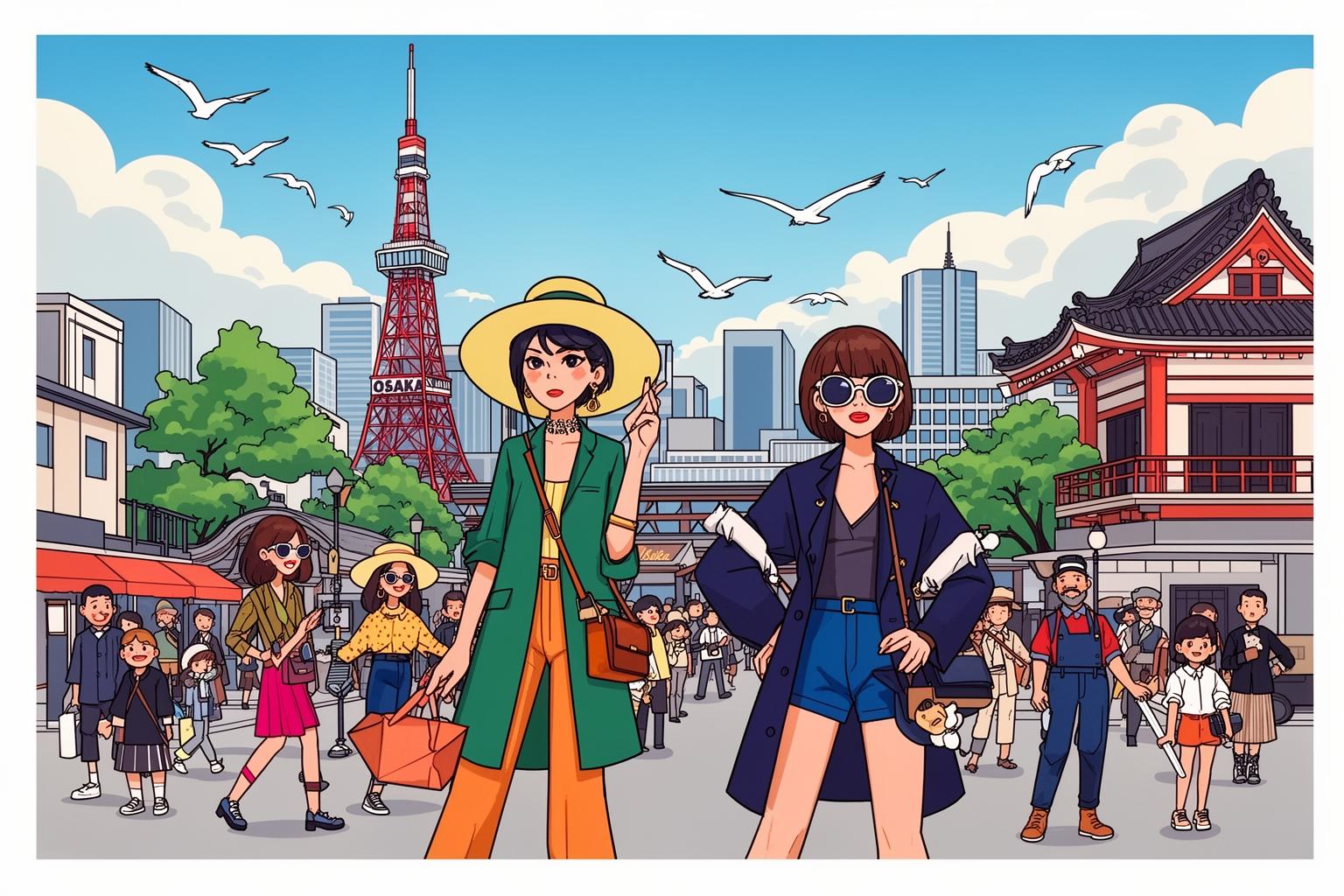
To grasp the visual language of the Osaka Obachan, you first need to unlearn Tokyo. In Tokyo, the aesthetic aim often centers on blending in, projecting a quiet sophistication. The color palette is subdued—beiges, navies, grays. The prevailing sentiment quietly urges, “don’t make a scene.” In Osaka, however, the guiding principle is the complete opposite. It’s about making a statement, about being seen and heard. This embodies the culture of hade, a word that translates to flashy or gaudy, but in Osaka, it loses its negative implications. Here, hade means vibrant, energetic, and full of life.
The Aesthetic of Hade
The Obachan’s affinity for animal prints and bold colors is not a lapse in taste; it is a deliberate choice. It is a visual declaration of presence. In a city built on commerce, where merchants for centuries had to shout to attract customers, blending into the background is a critical mistake. This spirit is woven into the city’s DNA. The Obachan’s style is the modern equivalent of a merchant’s loud call. She advertises her own vitality. A leopard-print coat is not just a coat; it is a power suit. It conveys confidence, a refusal to become invisible due to age or social convention. It says, “I am here. I am important. And I am not to be trifled with.” Witness her navigating the crowd at Umeda Station, a blaze of gold jewelry and bright purple blouse, and you see this isn’t about following trends. It is about projecting an aura—a personal brand of unapologetic existence. It serves as armor, both practical and psychological, for navigating the urban landscape with authority.
Animal Print as Armor and Identity
But why leopard print? Why tiger stripes? Because they are the patterns of predators, creatures at the top of the food chain. The Osaka Obachan sees herself not as a frail, gentle grandmother, but as the matriarch of her domain—whether that be her family, her street, or her favorite seat on the train. The animal print becomes her chosen crest. It rejects the yamato nadeshiko ideal of the demure, quietly enduring Japanese woman. That ideal holds little sway here. Osaka values strength, resilience, and a healthy dose of assertiveness. The Obachan’s fashion perfectly and non-verbally expresses this ethos. It is fierce, somewhat wild, and delivers a clear message: she is a survivor, a force to be reckoned with. Her aesthetic choices are deeply connected to her identity as a powerful, central figure in her community.
The Candy in the Purse: A Social Currency
If the leopard print is the Obachan’s armor, the candy in her purse serves as her primary tool of diplomacy. This is not just any candy; it’s ame-chan, the affectionate, diminutive term that elevates a simple piece of hard candy into a nuanced social instrument. Offering an ame-chan is a ritual, a small performance art unfolding thousands of times each day across the city.
Ame-chan Culture Explained
The gesture is straightforward. A child starts crying on the train. A stranger looks lost or tired. You’re waiting in a long line at the bank. Suddenly, a hand appears, offering a small, brightly wrapped candy. No lengthy speech, perhaps just a gruff, “Hai, douzo” (“Here, you go”) or merely a nod. This is the ame-chan in action. In Tokyo, a stranger initiating contact is rare and sometimes unsettling. Social walls are high and thick. In Osaka, the ame-chan functions as a wrecking ball against those barriers. It’s a universal icebreaker, instantly creating a fleeting, low-stakes human connection. It conveys, “I see you. We share this public space. Let’s make it a little warmer.” It’s a piece of shared humanity, wrapped in cellophane.
Communication, Not Charity
A foreigner might misinterpret the gesture. Is she implying I look pitiful? Does she think I’m a child? The answer is almost certainly no. The ame-chan is not an act of pity. It’s a conversational overture. Accepting the candy opens a door. It might lead to a full conversation about where you’re from and what you’re doing in Osaka, or it might simply be a shared smile and nod. The point is the connection itself. It encapsulates Osaka’s social philosophy: barriers between people exist to be broken down—and quickly. This pragmatism extends to kindness. The Obachan observes a small problem—a crying child, a tired face—and offers a small, immediate solution. There’s no overthinking, no hesitation. It is the most efficient form of empathy imaginable, a pure, unembellished act of community care. It smooths the wheels of daily life, making the city feel less like a collection of anonymous strangers and more like a sprawling, chaotic, and ultimately caring neighborhood.
The Voice of Osaka: Directness, Humor, and Haggling
The Osaka Obachan is often labeled as “loud.” However, this isn’t really about volume—it’s about straightforwardness. The communication style here is worlds apart from Tokyo’s nuanced, indirect interactions. In Osaka, what you see is what you get, and what you hear is exactly what is meant. This can be startling at first, but once you grasp the underlying principles, it feels refreshingly sincere.
No Filter, Just Honesty
Throughout much of Japan, social harmony is preserved through a delicate web of subtext and unspoken conventions—the well-known contrast between honne (one’s true feelings) and tatemae (public facade). The Osaka Obachan largely ignores this. If she thinks the shirt you’re trying on doesn’t suit you, she won’t hesitate to say so. “Oh no, that makes you look washed out! Try the red one!” This isn’t meant as an insult. From her viewpoint, it’s a genuine gesture of help. Why let you waste money on something unflattering? Withholding that opinion would seem cold and uncaring. This bluntness also extends to personal questions that might feel intrusive elsewhere. She’s not prying; she’s showing interest. She treats you not as a distant stranger, but as someone to connect with. It’s a form of practical intimacy, a shortcut to genuine conversation.
The Art of the Bargain
This frankness reaches its peak in Osaka’s merchant culture, with the Obachan as its foremost practitioner. Watch her at a shotengai or a market like Kuromon Ichiba. The listed price is more of a suggestion, an opening offer for friendly haggling. This isn’t about stinginess. The negotiation, the give-and-take with the vendor, is a crucial part of the social experience. It’s a performance, a battle of wits, and a chance to build rapport. An Obachan might say, “A little pricey for these old cucumbers, isn’t it?” followed by a laugh. The vendor will laugh in return, make a counteroffer, and maybe toss in an extra green onion as a “service.” This ritual is expected and enjoyed. Simply paying the sticker price without comment misses the point. The exchange itself is the true reward. This sharply contrasts with Tokyo, where questioning a price often seems rude. In Osaka, it signals a savvy, engaged customer who values human connection as much as the goods.
The Punchline is Everything
Importantly, this directness is almost always softened with humor. Osaka is the birthplace of manzai, a style of stand-up comedy featuring rapid-fire banter between two performers. This comedic spirit permeates everyday interaction. A conversation, even a transactional one, should entertain. It needs an ochi, a punchline. The Obachan’s blunt remark is frequently followed by a self-mocking joke or a playful wink. This humor acts as a social cushion, smoothing the edges of her frank communication. She’ll tease the shopkeeper, tease you, and even tease herself. This ensures her honesty feels like an invitation into a shared, lighthearted world where no one takes themselves too seriously.
The Obachan as the Heart of the Community
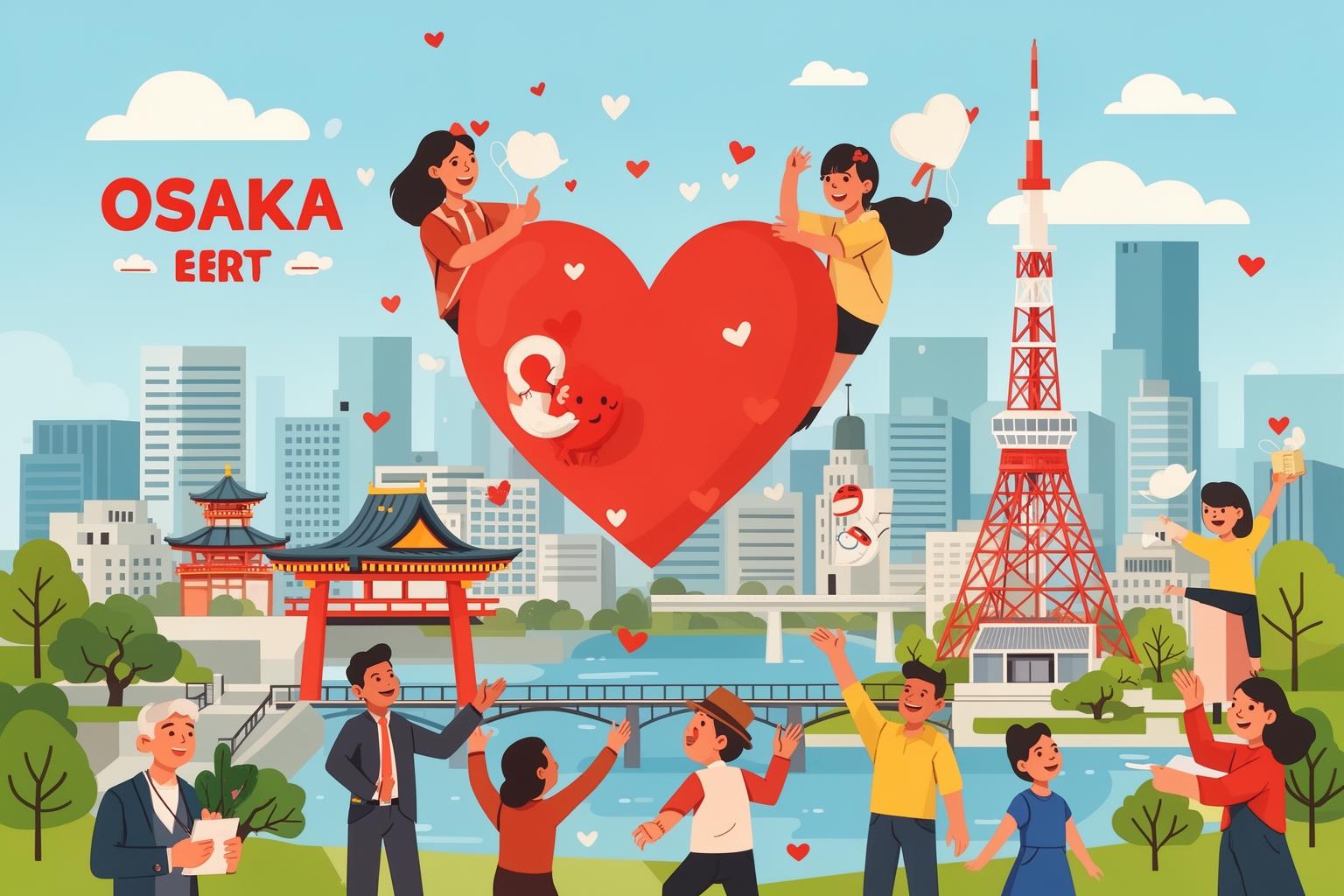
It’s easy to fixate on the individual quirks of the Osaka Obachan, but doing so overlooks her most vital role: serving as the linchpin of her local community. She functions as the unofficial network, the guardian, and the living memory of her neighborhood.
The Neighborhood Guardian
In the quiet residential streets of Osaka, away from the neon lights of Namba, the Obachan remains a constant presence. She’s the one sweeping the pavement in front of her home, caring for her potted plants, and watching the daily comings and goings. She knows which kids are skipping school, who recently had a baby, and which elderly neighbor hasn’t been seen for a day or two. What is often called “gossip” is, in fact, a highly effective, analog information network. It’s how the community regulates itself and looks after its members. In an increasingly anonymous and transient Japan, especially in mega-cities like Tokyo, this kind of hyper-local, high-context community is becoming rare. In many parts of Osaka, the Obachan keeps it alive through sheer determination and a genuine, if occasionally meddlesome, concern for her surroundings.
A Different Kind of Power
Ultimately, the leopard print, the ame-chan, and the loud, straightforward talk are all expressions of a distinct form of informal power. The Osaka Obachan is a matriarch who has earned her status through decades of navigating life with grit, humor, and deep-rooted practicality. She is the keeper of social norms, the broker of small acts of kindness, and the fierce protector of her territory. She refuses to be marginalized, ignored, or silenced. She embodies the spirit of a city that has always defined itself in contrast to the polished, formal capital in the east. She represents a different way of being Japanese—one that is louder, warmer, more pragmatic, and far more direct. To view the Obachan as a mere caricature is the greatest misunderstanding. She is not a sideshow; she is the main event, the true, beating, leopard-print heart of Osaka.