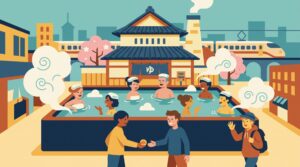
When you first arrive in Japan, you hear about the baths. The stories paint a picture of serene, silent reflection. You imagine cedar tubs overlooking misty mountains, the gentle clack of bamboo, and the hushed reverence of an onsen, a natural hot spring resort. That is a beautiful, and very real, part of Japan. But it has almost nothing to do with how most people in Osaka actually get clean, stay warm, and connect with their neighbors on a random Tuesday night. To understand the rhythm of daily life here, you have to look past the onsen and find its grittier, louder, and arguably more vital cousin: the neighborhood sento, the public bathhouse.
The sento isn’t a destination; it’s a utility. It’s not a retreat; it’s a routine. For decades, it was the city’s shared bathroom, a necessity in a landscape of small apartments built without private baths. While many homes now have their own facilities, the sento endures, not as a nostalgic relic, but as a thrumming, steaming hub of community life. Forget the tranquil flute music of the onsen brochure. The soundtrack of an Osaka sento is the echo of booming conversations in the local dialect, the clatter of plastic stools on tiled floors, and the triumphant gulp of a cold bottle of milk after a hot soak. This is where the city’s unpretentious, practical, and deeply social character is on full display, stripped of all formalities. It’s a window into the real Osaka, one that you can only access by shedding your clothes and your preconceptions at the door.
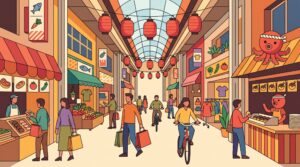
The noisy chatter and unfiltered conversations in Osaka extend well beyond the sento, capturing a social energy that can also be seen in the spirited shotengai banter of local markets.
The Sento Is Not a Spa, It’s a Living Room
First, let’s reset expectations. A trip to the sento isn’t about indulgence. It’s a routine task, like stopping by the supermarket or post office, but much more social. In Tokyo, you might encounter sleek, minimalist “designer sento” resembling modern art galleries, attracting a younger crowd seeking an aesthetic experience. Osaka, for the most part, avoids such pretenses. The city’s sento are functional relics of the Showa era—often old, sometimes a bit worn, and completely indifferent to modern design trends.
Tokyo’s Polish vs. Osaka’s Raw Functionality
A typical Osaka sento greets you with a familiar, straightforward aesthetic. You’ll find tiled floors, often wet and slippery. The walls might boast a large, slightly faded mural of Mount Fuji—an iconic image that feels amusingly out of place in the Kansai region, a quiet nod to a shared national identity that transcends local rivalries. The air is thick with steam and the sharp, clean scent of inexpensive bar soap and shampoo. The dominant sounds—running water and human chatter—echo off the hard surfaces, creating a constant, lively hum. There’s no effort to craft a soothing atmosphere. The intent isn’t to help you escape the city, but to immerse you in the heart of your neighborhood.
This contrast reveals much about the two cities. Tokyo often offers a polished, curated image of itself to the world. Osaka, by contrast, presents itself as-is, take it or leave it. The sento exemplifies this perfectly. It’s not designed to impress, but to efficiently and affordably get you clean, while providing a space to catch up on local gossip. It’s a place built for function, not for show.
The Economics of the Everyday Bath
The sento’s persistence in Osaka is deeply practical and economic. The entrance fee, regulated by the prefectural government, keeps it affordable for everyone, usually just a few hundred yen. For that price, you gain access to abundant steaming hot water, multiple pools, and often a sauna. During Osaka’s damp, cold winters, spending an hour in a hot bath is a luxury costing less than heating an entire apartment. For many pensioners and young people living in small flats, the sento isn’t just tradition—it’s a wise financial choice.
This economic basis shapes the culture of the sento. It’s a transactional space, but one that’s simple and straightforward. You pay your fee and enjoy your bath—no hidden charges, no upsells, no tiered memberships. This no-nonsense approach is classic Osaka. Why complicate things? The sento serves as a great equalizer: company presidents and construction workers alike are just people in towels, paying the same price for the same hot water.
Decoding the Unspoken Rules of the Neighborhood Bath
For someone new, the sento can seem intimidating. It’s a place with a set of rituals that everyone else appears to know instinctively. However, the rules are straightforward, centered entirely on the core principles of hygiene and mutual respect in a shared space. Learning this etiquette is your entryway into the community.
“Maido” and the Art of Minimalist Greeting
When you walk in, you’ll usually pay at a front desk called a bandai. Sometimes it’s a modern counter, but in older bathhouses, it’s a tall, imposing wooden perch from which the owner surveys their domain. You won’t be met with the overly enthusiastic “Irasshaimase!” (Welcome!) that you hear in every convenience store. Instead, you’ll probably receive a nod, a grunt, or a quick, understated “Maido.” This is classic Osaka-ben for “Thanks, as always” or simply “Hi.” It’s a greeting that assumes you’re a regular, even if it’s your first visit. It’s not cold; it’s efficient. It conveys a sense of belonging without the need for elaborate language. The greeting implies that everyone is here for the same purpose, so let’s proceed.
The Locker Room: A Zone of Benign Indifference
The changing room, or datsuijo, is where any remaining self-consciousness fades away. It’s a scene of casual, functional nudity. Older men might be stretching, weighing themselves on vintage scales, or chatting loudly about the day’s news. The mood is not one of awkward silence but of busy, matter-of-fact activity. No one is staring at you. No one is judging you. Everyone is focused on their own routine.
This can be one of the biggest cultural challenges for foreigners, but it also highlights Osaka’s renowned lack of pretense in its purest form. People simply don’t concern themselves with appearances here. The emphasis is on comfort and community. The best way to fit in is to adopt the same benign indifference. Find your locker, undress, and head to the baths. This relaxed approach to the body, free from aesthetic judgment, is a liberating aspect of Japanese bathing culture, especially pronounced in the unpretentious atmosphere of an Osaka sento.
The Cardinal Rule: Wash Before You Soak
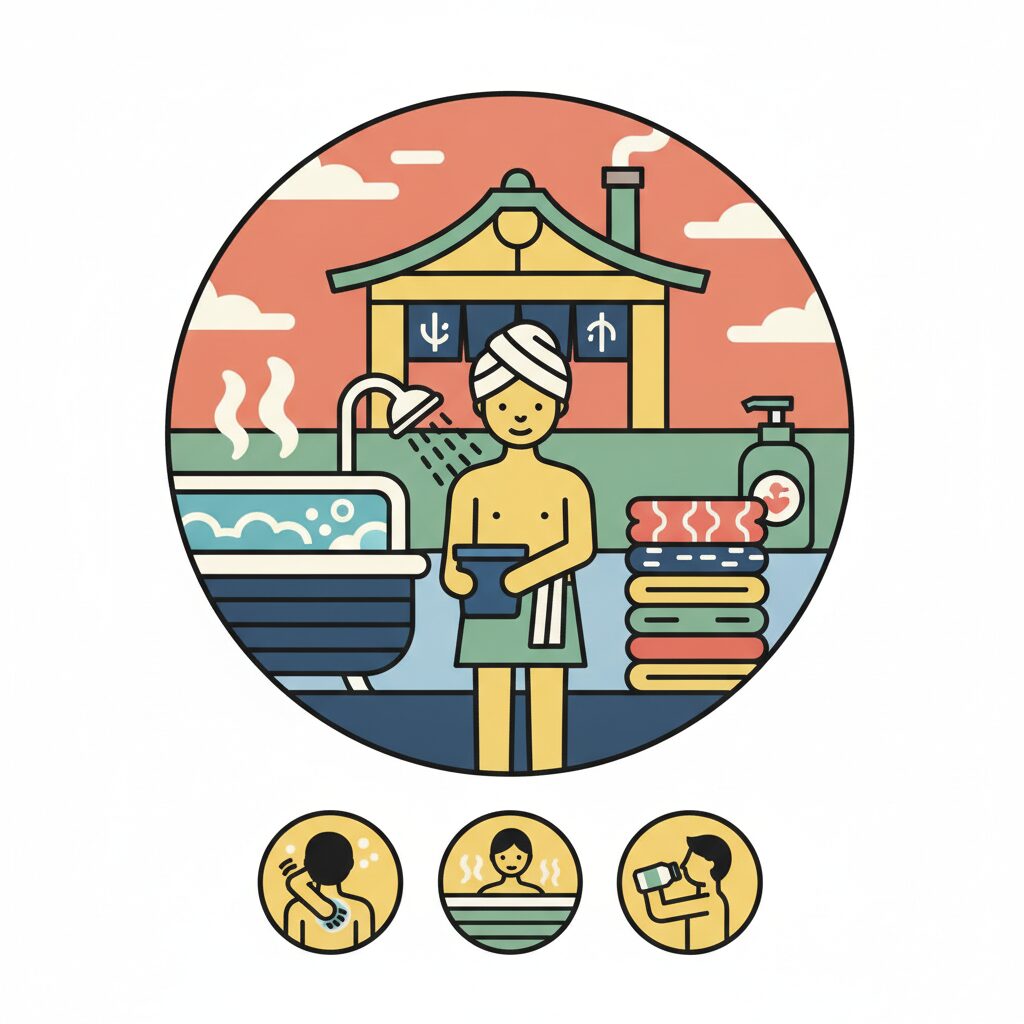
This is the most crucial rule of any Japanese bath, and it bears repeating. The large tubs are for soaking and relaxing, not for cleaning. Before you even consider entering the water, you must wash your whole body thoroughly. You’ll find rows of washing stations, each equipped with a stool, faucet, and shower head. This is where the actual cleansing takes place. Most regulars bring their own small baskets, called kago, filled with their preferred soap, shampoo, and sometimes razors. You sit on the stool, scrub yourself, and make sure to rinse off all the soap before heading to the tubs. This isn’t just about courtesy; it’s a fundamental principle of sharing a communal facility. The tub water is for everyone, so everyone has a responsibility to keep it clean. In Osaka, this rule is upheld not by signs but by a strong, collective understanding.
The Social Fabric of the Hot Water
Once you’re clean, the sento shifts from a place of hygiene to a hub of social connection. The tubs themselves act as the neighborhood’s communal couch, where conversations flow as freely as the hot water. This is where the stereotype of the quiet, reserved Japanese person completely dissolves.
Eavesdropping on Osaka-ben
The bath offers a perfect setting to catch an unfiltered lesson in Osaka-ben, the city’s unique and colorful dialect. The acoustics of the tiled room amplify every voice, creating a vibrant symphony of local life. You’ll hear heated debates about the Hanshin Tigers, Osaka’s consistently underperforming yet passionately beloved baseball team. You’ll hear grandmothers grumbling about the price of daikon radish at the local market. You’ll hear friends making weekend plans, their language dotted with the frankness and humor characteristic of the local speech. It’s loud, direct, and often hilarious. In the onsen, silence is golden. In the Osaka sento, conversation is the currency of community.
The “Atsu-yu” and the “Nuru-yu”: A Metaphor for Osaka Life
Most sento feature several different baths, each with its own temperature or characteristic. There’s usually a main tub with a moderate temperature, a nuru-yu (lukewarm bath) for those who prefer long soaks, and, inevitably, an atsu-yu—a blisteringly hot bath. The atsu-yu is where the old-timers congregate, those seemingly impervious to heat. Their ability to endure the near-boiling water is a point of pride, a subtle testament to their resilience. It reflects a kind of toughness highly respected in this city.
Then there is the denki-buro, or electric bath. This uniquely Japanese invention channels a low-voltage electric current through the water between two plates. As you sit between them, your muscles tingle and contract. It’s a strange, slightly uncomfortable sensation that some people swear by to soothe sore muscles. The denki-buro perfectly embodies Osaka’s spirit. It’s not gentle or refined. It’s weird, intense, and delivers a jolt. It’s for those who want to feel something, seeking a rush rather than a calm soak. It mirrors a culture that embraces the strange and strong over the delicate and subdued.
What Foreigners Get Wrong: It’s Not About Being “Friendly”
The most common cliché about Osaka is that its people are “friendly.” While this isn’t untrue, the term can be misleading. It implies a kind of cheerful, service-oriented politeness typical of a tourist town. Osaka’s style of social interaction, however, is different. It’s not about being friendly; it’s about being open and direct. There’s a low barrier between strangers.
From “Gaijin” to “Tonari no Hito” (The Person Next Door)
In a Tokyo sento, you might encounter polite silence. In Osaka, there’s a good chance someone will strike up a conversation. An old man might ask where you’re from, not as a formal interrogation, but simply out of curiosity to start a chat. He may then offer his unsolicited opinion on your home country’s politics or most famous foods. This isn’t an attempt to perform “friendliness” for a foreigner; it’s the same way he’d speak to anyone else. In the sento, your status as a gaijin (foreigner) takes a backseat to your status as tonari no hito (the person next to you). By joining this shared daily ritual, you stop being an outsider and become, for that hour, part of the neighborhood fabric.
This directness can feel startling at first, but it ultimately expresses acceptance. People aren’t putting on a special face for you. They treat you as they would anyone else—with a blend of curiosity, bluntness, and humor. It’s an honesty far more meaningful than a thousand polite but distant smiles.
The Post-Bath Ritual: Milk and Conversation
The sento experience doesn’t end when you get out of the water. The post-bath ritual is just as significant. After drying off, many head to the rest area, a lounge featuring old couches, a television, and a selection of vending machines or vintage coolers. The drink of choice is almost always milk, served in an old-fashioned glass bottle with a paper cap. Varieties include coffee milk, fruit milk, and plain milk. Downing one in a few quick gulps is a classic, deeply satisfying part of the routine.
This is where the community spirit of the sento is solidified. People, now dressed in comfortable clothes or a simple yukata, linger. They watch the baseball game on TV, read sports newspapers, or continue conversations begun in the bath. This space acts as a low-cost community center, a “third place” that is neither home nor work. It serves as a vital hub that keeps people connected in an increasingly isolating world. It demonstrates that in Osaka, community is not an abstract ideal but a physical practice, renewed every evening over hot water and cold milk.
The Sento as a Barometer of Osaka’s Soul
The neighborhood sento is much more than a simple public bath. It is a living, breathing institution that perfectly captures the essence of Osaka. It is practical, prioritizing function over decorative flourishes. It is genuinely unpretentious, a place where social status is left behind in the locker with your clothes. It is lively, social, and deeply communal, valuing human connection over quiet reflection.
Visiting a sento means realizing that Osaka’s vibrancy isn’t only found in its busy markets and neon-lit entertainment areas. It’s also present in these quiet backstreets, in steamy rooms where the day’s stress is washed away and the ties of community are strengthened. It reveals a city that is fiercely local, deeply practical, and unapologetically human. For anyone wanting to grasp the true experience of life in Osaka, beyond the tourist spots, there is no better place to begin. Forget the guidebooks. Just bring a small towel, a bar of soap, and a few hundred yen, and go take a bath. You’ll discover more about the soul of this city in an hour than in a week of sightseeing.