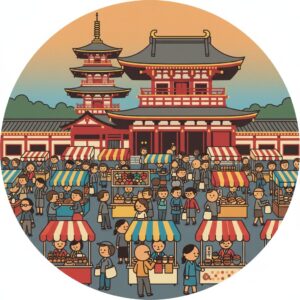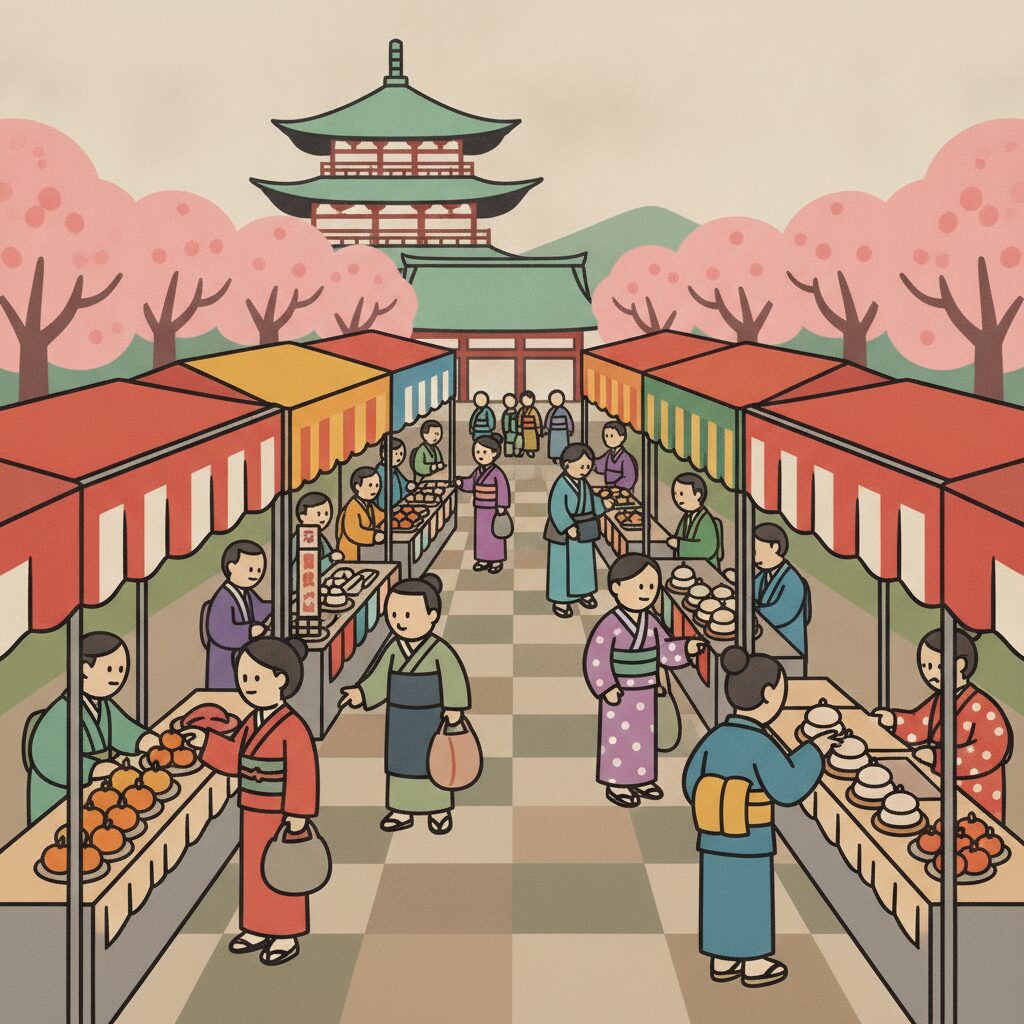
Ever wonder what Osaka is really like? Not the polished, picture-perfect version you see on travel blogs, but the loud, chaotic, and deeply human city that hums just beneath the surface. Forget the gleaming facades of Umeda for a moment. Forget the curated tourist experience of the castle. If you want to understand the soul of this city—what makes its people tick, why they talk the way they do, and how they find joy in the everyday hustle—you need to go to a place where the past and present collide on a dusty, crowded temple ground. You need to go to the Shitennōji Temple Market.
This isn’t your typical farmers market. It’s not a quaint, artsy craft fair. Held on the 21st and 22nd of every month on the sacred grounds of Japan’s oldest officially administered Buddhist temple, this market is a sprawling, glorious mess. It’s a microcosm of Osaka itself: pragmatic, unpretentious, a little bit weird, and absolutely brimming with life. For a newcomer, the sheer sensory overload can be overwhelming. The clatter of old porcelain, the sizzle of street food, the rapid-fire Kansai dialect bouncing between vendors and shoppers, the smell of incense mixing with old wood and dust. It’s a lot. But hidden within this chaos is a masterclass in Osaka culture. This is where you learn that in Osaka, a price tag is merely a suggestion, a conversation with a stranger is an opportunity for a laugh, and a piece of forgotten junk is always just one good story away from becoming a treasure. This isn’t just about shopping; it’s about participating in a ritual as old and essential to Osaka as the temple itself. It’s a treasure hunt for bargains, for history, and for a genuine connection to the city you now call home.
Beyond the Shitennōji Temple Market’s vibrant chaos, you can dive even deeper into local culture by exploring how Osaka’s concrete flea market scene embodies the city’s raw, authentic spirit.
More Than a Market: The Unspoken Rules of Osaka Commerce

Step into a department store in Tokyo, and you’re greeted with quiet reverence. Products are arranged with surgical precision. Prices are fixed, absolute, and non-negotiable. The interaction is polite, formal, and efficient. Now, forget all of that. The Shitennōji market follows an entirely different set of rules—one embedded in the city’s DNA. Grasping this code is the first step from being a bewildered onlooker to becoming an active participant.
The Art of the Haggle: Why “How Much?” is Just the Beginning
In most of Japan, haggling is a social taboo. Trying to negotiate in a regular shop would be met with confusion and embarrassment. But here, on the temple grounds, it’s not only accepted; it’s expected. It’s the language of the market. Paying the first price asked for a non-food item means missing the point entirely. It’s like attending a concert and not listening to the music.
The Osaka haggle, or nebiki, isn’t aggressive or confrontational. It’s a dance, a game, a form of communication. It shows that you’re engaged, that you recognize the item’s value, and that you’re part of the community—not just a tourist passing through. The vendor’s initial price is often a feeler, a starting point for conversation. They’re testing you. Are you a serious buyer? Do you know the game?
So, how do you play? First, show genuine interest. Pick up the item, examine it, ask a question about it. Then, ask the price. The classic phrase is simple: “Kore,なんぼ?” (Kore, nanbo? – How much for this?). Once they tell you, don’t immediately counter with a lowball offer—that’s too aggressive. Instead, take a softer approach. Pause briefly, hum thoughtfully, then say the magic words: “もうちょっと安くならへん?” (Mou chotto yasuku narahen? – Can you make it a little cheaper?). This friendly, almost pleading tone is essential. You’re not demanding a discount; you’re inviting them to collaborate on a fair price. The vendor might laugh, share a story about the item, then knock off a hundred or two hundred yen. It might not be a big discount, but you’ve earned it. You’ve participated. You’ve connected. You’ve shopped like an Osakan.
Reading the Room: When and How to Negotiate
Of course, there are nuances. You don’t haggle for a 100-yen chicken skewer. Food prices are generally fixed. Nor do you haggle over items with clearly marked, firm price tags. The game is reserved for piles of unpriced goods, antiques, and curiosities spread out on blue tarps. The best targets are items with subjective value: an old vase, a stack of records, a vintage film camera. The vendor knows what they paid and has a target price in mind, but there’s always a middle ground.
Body language matters. Smile. Be friendly. Limited Japanese is no problem. A bit of humor goes a long way. Point at an item and say “So expensive!” with a big, theatrical sigh and a grin—it works wonders. The vendor will laugh, you’ll laugh, and the negotiation becomes a shared moment of fun rather than a battle of wills. Always be ready to walk away. If the price feels off, a simple “ありがとう” (Arigatou – Thank you) and a polite exit is a valid move. Sometimes they’ll call you back with a better offer; sometimes they won’t. It’s all part of the dance.
Cash is King: The Unwritten Financial Code
This is a cash-only world. Don’t expect a single credit card machine. Come prepared with a wallet full of yen, especially 1000-yen bills and plenty of coins. Trying to haggle down a few hundred yen and then handing over a 10,000-yen bill is a rookie mistake. It’s inconvenient for the vendor and marks you as unprepared. Having exact or close change makes the transaction smooth and shows respect for the fast-paced, cash-based market ecosystem. This cash-only culture is a hallmark of older, traditional commerce in Osaka. It’s direct, final, and simple — no transaction fees, no digital trails, just a straightforward exchange of goods for money.
“Ichi-go Ichi-e” with a Twist: Fleeting, Frank Interactions
The famous Japanese concept of ichi-go ichi-e means treasuring a once-in-a-lifetime encounter. In a formal tea ceremony, it’s a quiet, profound moment. At the Shitennōji market, it’s that same concept filtered through Osaka’s direct, no-nonsense personality. These exchanges are brief but deeply genuine. A vendor will look you in the eye and tell you exactly what they think. They might tease your Japanese, ask where you’re from, or give a brutally honest assessment of your item. “That thing? It’s junk, but fun junk,” they might say with a shrug. This isn’t rudeness; it’s intimacy—a rejection of polite fictions and surface-level pleasantries that can define interactions in Japan. Here, you get the unvarnished truth, often delivered with a wry smile. It can be jarring at first but soon reveals acceptance. They treat you not as a delicate foreign guest but as one of their own.
Decoding the Chaos: A Field Guide to the Stalls and Their Keepers
Navigating the market is like venturing through a dense, unfamiliar forest. At first glance, it appears as a chaotic jumble of items. But as your eyes adjust, you begin to notice the patterns, the ecosystems, and the distinct territories of various vendors. Each stall, no matter how cluttered, follows its own logic and is tended by its own guardian, each representing a character study in the art of Osaka commerce.
The Kimono Piles: A Lesson in Recognizing Value
From afar, you’ll spot them: towering, colorful mounds of fabric stacked high on tarps. These are the kimono stalls. For a few hundred yen, you can purchase a vintage silk haori jacket, or for a few thousand, a full kimono. But you’ll need to put in the effort. This isn’t a boutique experience. You dive in, hands first, and rummage through. You sift through layers of silk, cotton, and wool, uncovering forgotten patterns and exquisite craftsmanship. The vendors, often sharp-eyed grandmothers, observe with detached amusement. They know their stock well. They understand there are treasures hidden in those heaps, but also know that finding them demands patience and a keen eye. This embodies a classic Osaka business model: low overhead, high volume, and relying on the customer’s skill to spot a diamond in the rough. They offer the opportunity; the discovery is yours.
The “Garakuta” Stalls: Where Junk Transforms into Treasure
Garakuta roughly translates to “junk,” “clutter,” or “odds and ends,” and these stalls form the heart and soul of the market. They are glorious, sprawling messes containing everything imaginable and many things you wouldn’t expect. Picture your grandfather’s garage, multiplied by a hundred and spread out under the open sky. Rusty hand tools, mismatched teacups, rotary phones, dolls missing eyes, unidentifiable electronic parts, old magazines, go stones, fishing lures. It’s a graveyard of the Showa era (1926-1989), a tangible history of Japan’s post-war boom and decades of domestic life.
The men and women running these stalls are archivists of the everyday. They aren’t selling pristine antiques; they’re offering memories, nostalgia, and potential. That rusty wrench might be exactly what a collector seeks. That chipped teacup could complete someone’s set. For outdoor enthusiasts like me, these stalls are a goldmine. I’ve found old camping lanterns, durable cooking gear, and vintage fishing equipment for a fraction of their new cost. You learn to look beyond dirt and rust and appreciate the quality of materials and the story behind each object. The vendors value this. If you can explain why you want a particular item, what you intend to do with it, they often warm up, share a story, and become more open to friendly bargaining.
Tools, Toys, and Time Capsules from the Showa Era
Exploring the garakuta is a form of urban archaeology. You find items that narrate how Osaka’s residents once lived. Old wooden abacuses (soroban) recall a time before calculators. Intricately designed bento boxes reflect daily lunch rituals. Wind-up tin toys and classic manga offer glimpses into the childhoods of a bygone generation. For anyone living in Japan, these objects provide valuable context. They help you understand the aesthetic and material culture that shaped the parents and grandparents of the people you meet every day. Purchasing a small, curious item from a garakuta stall is more than just acquiring a souvenir; it’s claiming a piece of the local story.
The Food Stalls: Nourishing the Hunt with Osaka Soul Food
No Osaka gathering is complete without food, and Shitennōji is no exception. Interspersed among the antique stalls are vendors selling the staples that fuel the city. The air is thick with the savory scent of takoyaki, the sweet aroma of castella cakes, and the smoky fragrance of grilled squid. This isn’t haute cuisine. It’s fast, affordable, and delicious sustenance for the hunt. Grabbing a paper boat of takoyaki and eating it while leaning against a temple wall is a quintessential market experience. It’s communal, unpretentious, and deeply satisfying. Watch how the locals order: swiftly, decisively, and often with a warm rapport with the vendors. It’s another small performance in a day full of them. This is food by the people, for the people, served without any pretense.
Osaka vs. Everywhere Else: Why This Market Wouldn’t Work in Tokyo
To truly appreciate the Shitennōji market, it helps to grasp what makes it distinctly Osaka. If you attempted to recreate this exact event in Tokyo, it wouldn’t succeed. The cultural framework is entirely different. The market thrives on a set of attitudes and assumptions deeply embedded here but which might seem chaotic or even rude elsewhere.
Pragmatism Over Polish: The Aesthetic of “As Is”
In cities like Tokyo or Kyoto, there’s an aesthetic philosophy that prioritizes presentation, perfection, and curated beauty. Items are carefully wrapped, artfully arranged, and presented to signal quality. Osaka, however, functions on a different principle: pragmatism. At Shitennōji, the display is a simple blue tarp on the ground. Wrapping is done with a flimsy plastic bag. The emphasis isn’t on the elegance of the sale but on the quality and price of the item itself. An Osakan would prefer a high-quality item at a great price on a messy blanket rather than a mediocre item beautifully displayed and sold at a premium. This pragmatism is a city-wide trait. People are straightforward, results-focused, and less concerned with superficial appearances. The market perfectly embodies this mindset. It’s not attractive, but it works—and it works wonderfully.
The Sound of Commerce: Noise, Laughter, and Kansai-ben
Many public spaces in Japan, especially Tokyo, are quiet, governed by an unspoken rule of keeping noise to a minimum. Shitennōji market defies this rule. It is loud. Vendors call out to passersby, friends shout greetings across the crowded laneways, and the constant hum of haggling creates a vibrant energy. This noise isn’t viewed as disruptive; it’s the soundtrack of a healthy, active community. The language you hear is almost exclusively Kansai-ben, the regional dialect. It’s faster, more direct, and more expressive than standard Japanese. The unique sentence-ending particles and vocabulary all contribute to a sense of being somewhere with its own distinct identity. Foreigners often mistake this loudness for aggression, but it’s usually the opposite—a sign of lively engagement and people connecting warmly and openly.
Community in the Clutter: More Than Just a Transaction
Although the market is undoubtedly a place of commerce, it also serves as a large social gathering. For many elderly vendors and shoppers, it’s a key event in their monthly routine. Old friends catch up, share gossip, and check on each other. Sales are often preceded by extended conversations about the weather, family, or the Hanshin Tigers baseball team. This is something many outsiders overlook. They see only the buying and selling but miss the dense network of relationships that support the entire event. People aren’t just here to make money or find deals; they come to be part of something. It’s this sense of community—this shared, chaotic, and vibrant energy—that makes the market a true reflection of Osaka’s spirit. This is a city that has always valued human connection, often expressed in loud, unpretentious, and wonderfully messy ways.
How to Tackle Shitennōji Like You’ve Lived Here for Years
Alright, you’re convinced and ready to jump in. But how do you transform from a hesitant onlooker to a confident treasure hunter? It’s less about following a specific strategy and more about embracing the right mindset. Think of it as hiking through a wild, unpredictable national park—you need the right gear, a positive attitude, and a willingness to get a little lost.
Your Mental Toolkit: Patience, Humor, and an Open Mind
First, bring patience. You won’t find what you’re after in the first five minutes. The best treasures are usually tucked away deep in a stall or hidden in a dusty corner. The joy lies in the search itself. Allow yourself to explore without a fixed goal. Let your gaze wander. Notice what catches your eye.
Second, pack a sense of humor. It can get crowded. You’ll get bumped around. You might attempt to haggle and get a firm refusal with a wave of the hand. Laugh it off. It’s all part of the experience. Vendors appreciate those who don’t take themselves too seriously. A smile is your best currency here.
Finally, keep an open mind. You might enter hoping to find vintage ceramics and leave with a 1970s fishing reel and a bag of sweet potatoes. That’s a win. Don’t be too strict in your search. The market will present unexpected treasures. Embrace that serendipity.
Practical Tips: Go Early, Go Late, Know What You’re Looking For (or Not)
Two main timing strategies exist for your visit. Arrive early—around 8 or 9 AM as vendors set up. This is when serious collectors and professional dealers are out. The rarest and best items disappear quickly, giving you first pick of the day’s offerings.
The other option is to arrive late, an hour or two before vendors start packing up around 4 PM. This is prime time for bargains. Vendors are tired and prefer selling at a low price over packing and carrying items home. They’re more open to aggressive (but friendly!) haggling. The selection will be picked over, but the deals can be outstanding.
What to bring? Wear comfortable shoes; you’ll be on your feet for hours. Bring a sturdy bag or even a small rolling cart if you expect to buy heavy items. Bring cash, as mentioned earlier. And bring your curiosity—that’s your most essential tool.
Beyond the Bargain: What You’re Really Taking Home
You might leave the Shitennōji market with a beautiful old plate, a quirky piece of art, or nothing at all. But what you really take away isn’t a physical object. It’s the experience. The confidence gained from successfully negotiating in a foreign language. A small, funny exchange with a vendor who reminded you of your grandfather. The vivid realization that Osaka isn’t a monolith, but a city of individuals—hustlers, storytellers, and those who find beauty and value in forgotten corners. You’ll depart with a clearer sense of the city—its pragmatism, humor, warmth, and its wonderful, unapologetic chaos. And that is a treasure no amount of money can buy.