
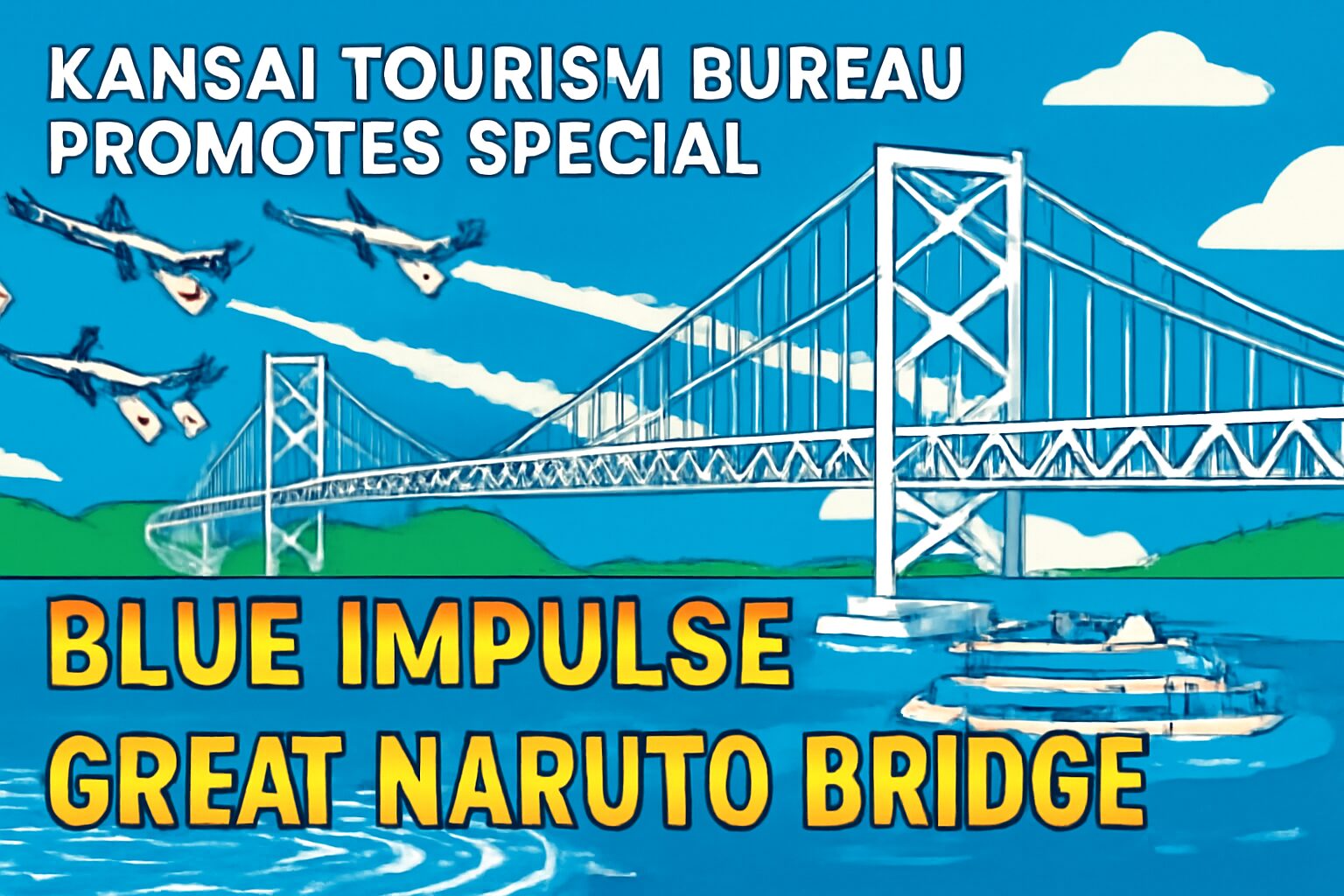
Exclusive Aerial Spectacle Set for Tomorrow
On July 15, 2026, the KANSAI Tourism Bureau highlighted an exceptional, limited-time viewing cruise to witness the Japan Air Self-Defense Force’s elite aerobatic demonstration team, the Blue Impulse. Scheduled to take place tomorrow, July 19, between 12:20 PM and 12:40 PM, this unique event will unfold over the scenic waters of the Naruto Strait.
Organized by Joy Port Awajishima, a local company celebrated for its popular Uzushio whirlpool cruises, the special itinerary offers tourists an exclusive vantage point. Passengers will enjoy an unobstructed, close-up view of the breathtaking flight maneuvers, watching the Blue Impulse jets trail their signature smoke against the monumental backdrop of the Great Naruto Bridge.
Dispersing the Tourism Boom Beyond Urban Centers
This new cruising initiative reflects a strategic effort by regional authorities to capitalize on Kansai’s current inbound tourism boom. Building on the momentum and global legacy of last year’s Expo 2025 Osaka, the broader Kansai area has experienced a historic influx of international travelers. In the first quarter of this year alone, inbound tourist spending in the Osaka-Kansai region reached a record-breaking 580 billion yen, marking a 30 percent increase from pre-pandemic benchmark figures in 2019.
Despite these record-setting numbers, a vast majority of visitors tend to concentrate their stays in major urban centers like Osaka, Kyoto, and Kobe. By heavily promoting large-scale, localized experiences such as the Blue Impulse flight near Awaji Island, the KANSAI Tourism Bureau aims to actively decentralize tourist foot traffic. Creating compelling reasons to venture outside the cities encourages both domestic and international travelers to extend their itineraries and explore the diverse natural and cultural attractions the wider region has to offer.
Future Impacts on the Awaji Island Economy
The integration of high-profile public events with local marine tourism is predicted to bring substantial economic revitalization to more rural communities. For Awaji Island, an influx of spectators looking to witness the rare aerial exhibition will immediately translate into increased revenue for local hospitality sectors, including nearby roadside stations, restaurants, and accommodation facilities.
Looking toward the future, this approach is expected to set a sustainable precedent for regional tourism. As global travelers increasingly seek out specialized, less-crowded destinations, Awaji Island is positioning itself to capture a much larger share of the inbound market. If regional authorities continue to combine existing natural and architectural assets—like the Great Naruto Bridge—with spectacular limited-time events, it will likely drive long-term infrastructure investment, stabilize seasonal local employment, and ensure that the immense economic windfall of Kansai’s post-Expo tourism boom is equitably distributed across the entire region.








