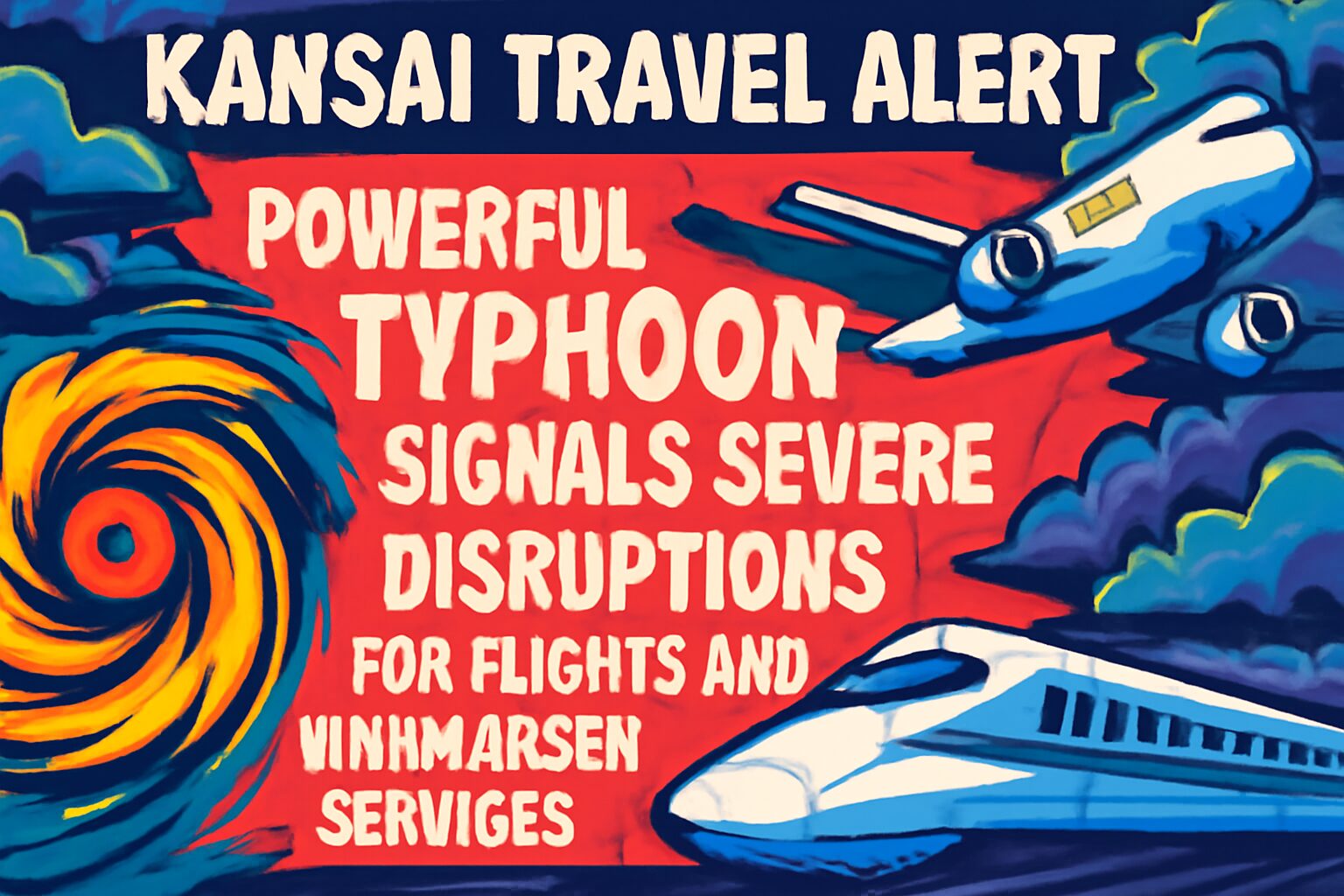
As of July 20, 2026, a powerful typhoon is steadily approaching the Kansai region, prompting regional weather advisories and warnings of widespread travel disruptions. Over the next 72 hours, travelers in major urban centers including Osaka, Kyoto, and Kobe should prepare for substantial logistical challenges as the storm system brings heavy rainfall and severe wind gusts to western Japan.
Immediate Transport Warnings for Kansai Airports
Airlines operating out of Kansai International Airport (KIX) and Osaka International Airport (Itami, ITM) are urging travelers to stay highly vigilant. Carriers have issued advance warnings of potential flight delays, schedule modifications, and outright cancellations extending through the next three days.
Kansai International Airport serves as a major international gateway, typically handling upwards of 80,000 passengers daily. With the projected path of the typhoon directly threatening coastal infrastructure, airlines often preemptively cancel flights when crosswinds exceed 30 to 40 knots. Travelers with scheduled flights between July 20 and July 23 are strongly advised to check flight status portals frequently and consider rebooking options, which many carriers are currently offering without penalty fees.
Shinkansen and Local Railway Suspensions
The Japan Railways (JR) Group has indicated that both the Tokaido and Sanyo Shinkansen lines may face reduced schedules or complete operational suspensions depending on the severity of the storm. The Tokaido Shinkansen, a critical artery connecting Tokyo to Osaka, facilitates the movement of nearly 450,000 passengers on a standard day. A suspension on this route will cause significant cascading delays across the nationwide rail network.
Local train services connecting Osaka to neighboring Kyoto, Kobe, and Nara are also at high risk of disruption. JR West and private railway operators conventionally halt operations when sustained wind speeds exceed 20 to 25 meters per second (approximately 72 to 90 kilometers per hour) to ensure passenger safety.
Background: An Unusually Active 2026 Season
The current weather threat aligns with broader meteorological trends observed earlier this year. Forecasters predicted an above-average 2026 typhoon season, estimating around 27 to 29 storm formations throughout the year, with up to 14 expected to directly approach the Japanese archipelago. The heightened activity is largely driven by a developing El Niño and a northward-extending Pacific high, which steers storms directly toward Japan rather than further west. This latest system underscores the need for proactive travel planning during the peak summer and early autumn storm months.
Predicted Impacts and Tourist Advice
If the typhoon maintains its current trajectory and intensity, the Kansai region could experience localized flooding, temporary power outages, and widespread closures of popular tourist attractions in Osaka and Kyoto over the next 48 to 72 hours.
Tourists and business travelers are advised to take the following precautions:
- Consult directly with airlines, JR West, and local transportation providers for real-time updates.
- Secure alternative accommodations early, as stranded passengers quickly saturate hotel availability near major transport hubs like Shin-Osaka and KIX.
- Prepare a flexible itinerary with buffer days to accommodate unexpected transport standstills.
- Stock up on basic provisions, including water and non-perishable food, in case local convenience stores and restaurants close temporarily.
Navigating the Kansai region during a major weather event requires patience and rapid adaptation. While modern Japanese infrastructure is highly resilient to typhoons, prioritizing safety over sightseeing is essential during the storm’s peak impact window.