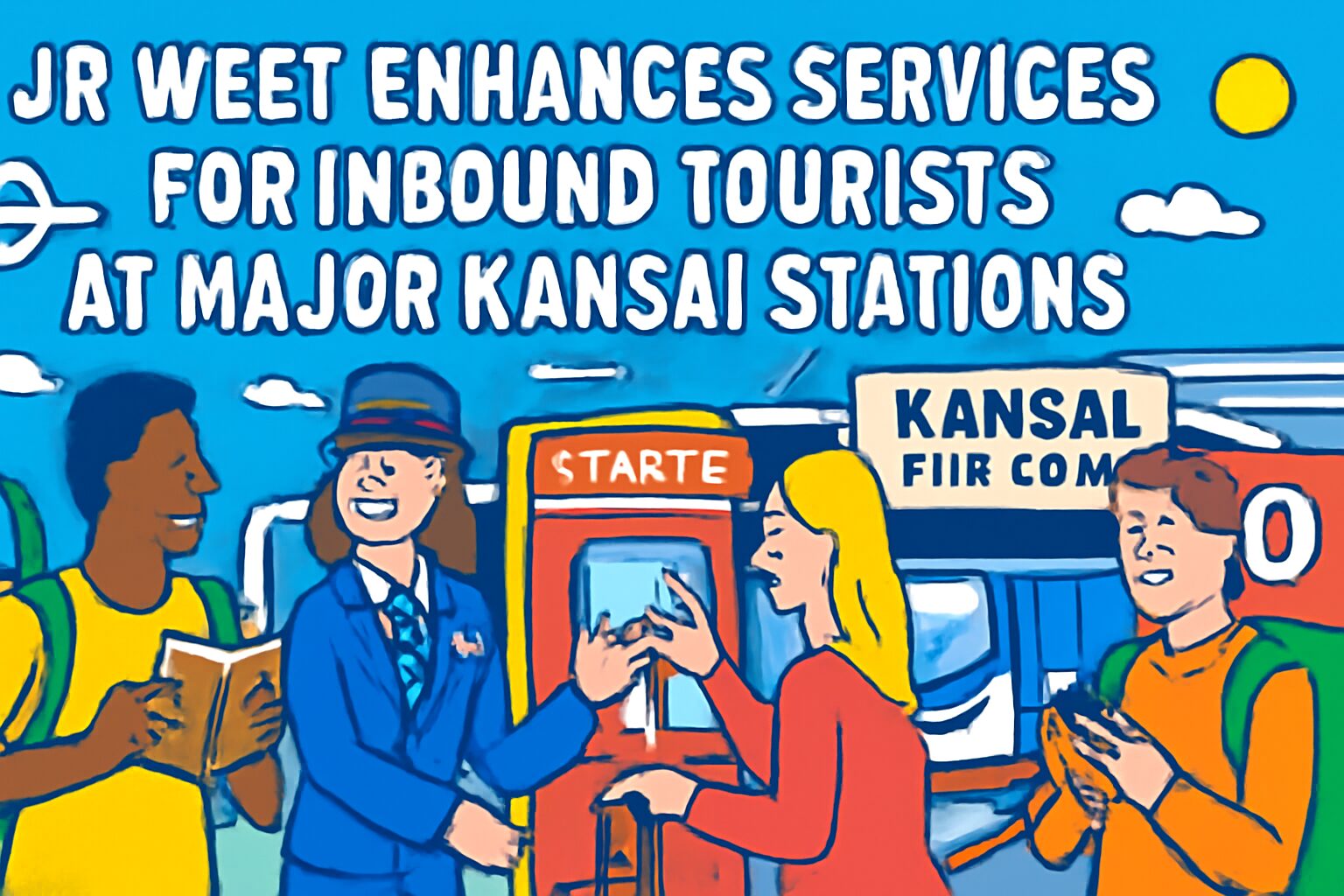
As international travel to Japan reaches unprecedented heights, West Japan Railway Company (JR West) has announced a major upgrade to its multilingual services and facilities at key regional transport hubs, including Osaka, Kyoto, and Shin-Osaka stations. The comprehensive initiative aims to streamline the travel experience for overseas visitors, introducing advanced translation technologies at ticket offices, deploying more multilingual personnel, and significantly expanding baggage storage and forwarding solutions.
The Background: Navigating Record-Breaking Tourist Numbers
The enhancements come at a critical time for the Kansai region. Following a landmark year in 2025 that saw a record-breaking 42.7 million international visitors arrive in Japan, inbound tourism has continued its robust momentum throughout 2026. According to the Japan National Tourism Organization (JNTO), the first half of 2026 alone recorded approximately 21.08 million arrivals, with the Kansai area remaining a primary destination for travelers exploring the country’s diverse cultural heritage. Managing this immense volume of tourists has posed logistical challenges, particularly at complex transit hubs where language barriers and large volumes of luggage can lead to congestion.
Next-Generation Translation and Multilingual Support
To alleviate these bottlenecks, JR West is rolling out state-of-the-art communication tools at its ticket offices and customer service centers. Advanced display-based translation devices have been installed, enabling real-time, highly accurate translated conversations between international travelers and station staff. These screens instantly convert spoken words into text in multiple languages, including English and Chinese, dramatically reducing wait times for tourists finalizing complex itineraries or redeeming regional rail passes. In addition to the technological upgrades, JR West is increasing the presence of dedicated English and Chinese-speaking support staff on the station concourses to assist visitors with ticketing machines and platform navigation.
Expanding Hands-Free Travel with Enhanced Baggage Services
Another major focus of the initiative is solving the persistent issue of oversized luggage on crowded commuter trains. JR West is substantially expanding its baggage storage capacity at Osaka, Kyoto, and Shin-Osaka stations. More importantly, the railway operator is bolstering its luggage forwarding services. Travelers can now seamlessly send their heavy suitcases directly to their hotels, regional airports, or onward destinations straight from the station upon arrival. This push for hands-free travel not only improves comfort for inbound tourists but also eases congestion on local trains and buses, creating a smoother transit environment for local Kansai residents.
Future Outlook and Regional Impact
Looking ahead, these infrastructural improvements are set to cement the Kansai rail network’s position as the most convenient and accessible option for exploring Western Japan. By smoothing out the friction points of international travel, JR West is actively mitigating the effects of overtourism, encouraging visitors to venture beyond the major hubs into wider regional attractions. As we progress through the latter half of 2026, the success of these enhanced services at Osaka, Kyoto, and Shin-Osaka is expected to set a new standard for railway operators nationwide, paving the way for a more sustainable and welcoming tourism ecosystem in Japan. For our readers at Osakaa planning their next Kansai adventure, navigating the region’s railways is rapidly becoming smoother and more intuitive than ever before.