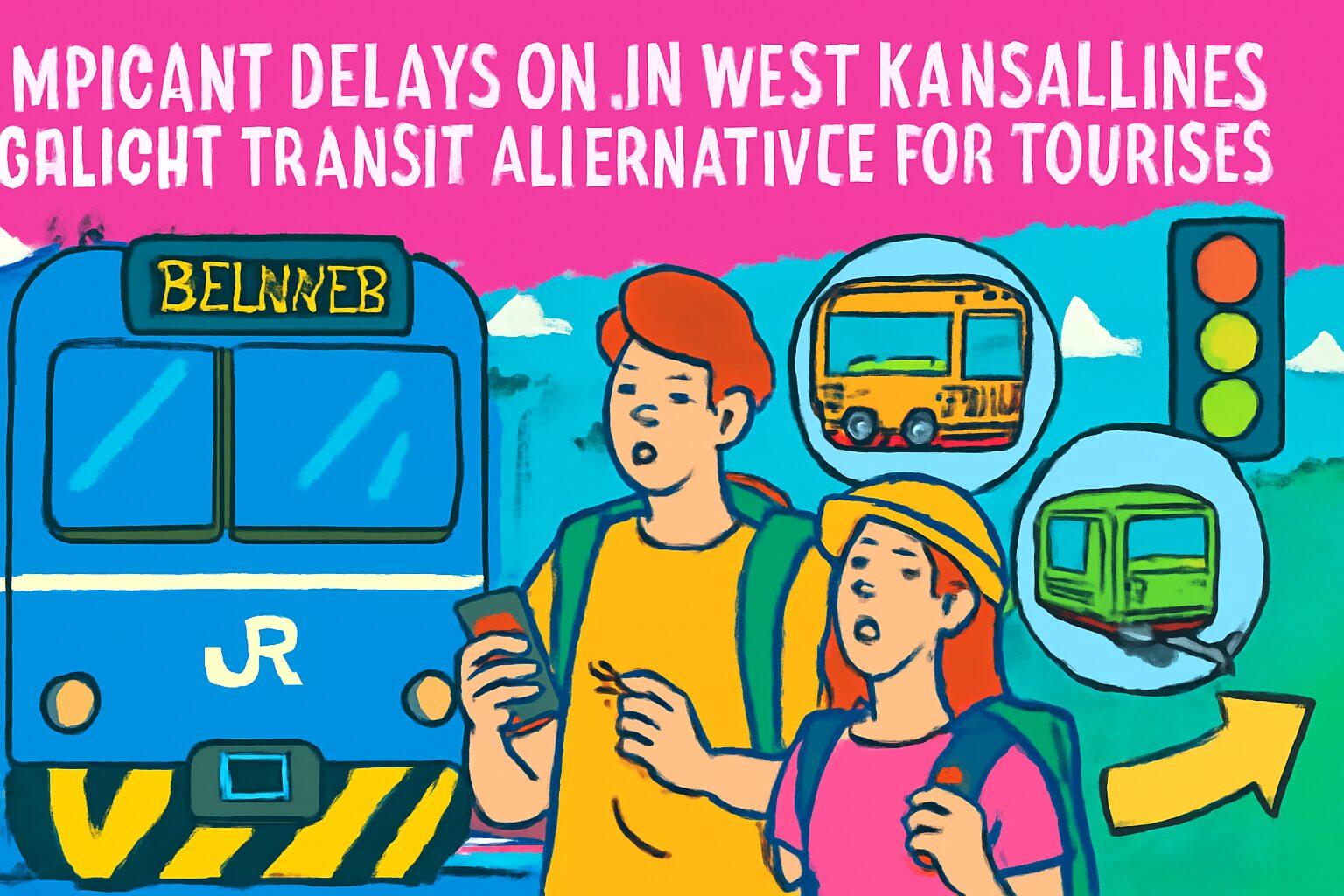
On August 27, 2026, the West Japan Railway Company (JR West) reported substantial delays across several primary routes in the Kansai region, including the Biwako Line, JR Kyoto Line, and JR Kobe Line. Triggered by an overhead wire inspection, the disruption caused widespread schedule alterations and missed connections. The incident significantly impacted movement between major regional hubs such as Kyoto, Osaka, and Kobe, underscoring the importance of transit flexibility for travelers navigating the area.
Background of JR West’s Urban Network
The JR Kyoto and Kobe lines are central arteries of JR West’s “Urban Network,” an expansive commuter rail system servicing the Kyoto-Osaka-Kobe metropolitan area. This high-frequency rail corridor is a crucial infrastructure asset, handling roughly 3.9 million passengers daily. Because these lines operate as a continuous transit spine—with trains often running directly from the Biwako Line in Shiga Prefecture, through the JR Kyoto Line, and seamlessly onto the JR Kobe Line—an infrastructure issue in one sector quickly causes cascading delays across the entire network.
For tourists, this network is highly favored due to its speed. The special rapid services can connect Kyoto and Osaka in approximately 30 minutes, making it an essential route for visitors maximizing their sightseeing time.
Impact on Commuters and Travelers
The disruption a few days ago stranded a large volume of passengers at major terminals like Osaka Station and Kyoto Station. Sudden overhead wire inspections necessitate temporary halts in service to ensure passenger safety, but they can severely disrupt carefully planned travel itineraries. Many international tourists who rely exclusively on JR passes found themselves facing unexpected delays and missed connections to other crucial services, including Shinkansen lines and airport express trains.
Despite the heavy congestion on JR West lines, the broader Kansai transit ecosystem demonstrated its resilience. Private railway networks operating parallel routes, such as the Kintetsu Railway, reported normal operations throughout the day. This stark contrast highlighted a critical vulnerability for visitors who plan their routes without considering alternative carriers.
Future Outlook and Travel Advice
As tourism continues to surge across Osaka and the wider Kansai region in 2026, the demand on local transit infrastructure remains at an all-time high. While JR West maintains strict safety and inspection protocols to prevent accidents, periodic maintenance disruptions remain a possibility. Future travelers must account for these potential transit interruptions to avoid stressful delays.
To navigate the region efficiently, visitors are advised to monitor real-time transit information through digital applications before beginning their daily journeys. Furthermore, travelers should diversify their transit options. Relying solely on a single rail operator can limit flexibility during service suspensions. Utilizing an IC card allows immediate access to Kansai’s extensive private railway systems. If the JR Kyoto Line experiences delays, the Hankyu or Keihan lines offer excellent alternatives between Osaka and Kyoto. Similarly, the Hanshin and Hankyu lines provide direct, reliable connections between Osaka and Kobe. Understanding these parallel networks is essential for ensuring a smooth and uninterrupted travel experience in Kansai.