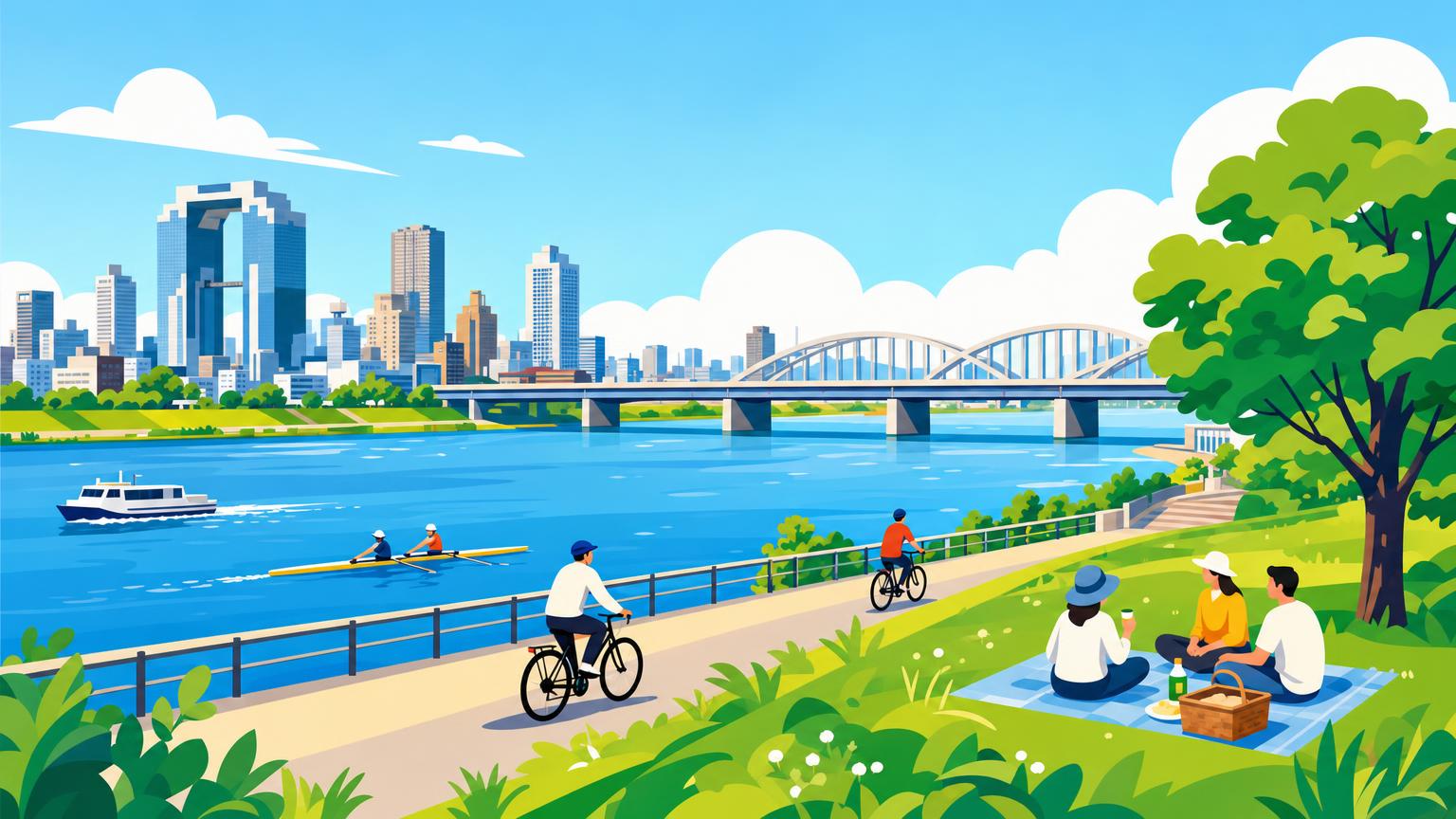
Cities are often defined by their concrete, their skylines, and the speed of their transit systems. But if you want to understand the true rhythm of an East Asian metropolis, you must look at its water. In my early twenties, moving through the vibrant chaos of urban Japan, I began searching for the spaces where the city exhales. For tourists and short-term visitors, Osaka is a fortress of neon, deep-fried street food, and endless covered shopping arcades. It feels loud. It feels dense. It feels like a city that never stops moving, trading, and talking. But for the people who actually live here, the foreign residents building a life, and the locals who have called this place home for generations, there is a different focal point to daily existence. That focal point is the Yodo River.
The concept of Kawaberi no Machi, or riverside towns, is fundamental to the psychology of Osaka. While Tokyo often organizes its leisure around carefully manicured parks and historically significant imperial gardens, Osaka relies on the raw, utilitarian beauty of its riverbanks. The Yodo River is not just a geographic feature; it is the shared living room of the city. In East Asian culture, there is a deep understanding of harmony between density and emptiness, a balance of energy or Qi. The intense, crowded grid of central Osaka necessitates a massive void to balance it out. The Yodo provides that void. It is a place where the unwritten rules of Japanese society soften, where the volume of conversation can rise, and where the sky finally opens up. To understand how Osaka people think, speak, and act, you must step away from the commercial districts and spend time on these grassy banks. You must observe the quiet patience of the morning fishermen, the boisterous laughter of weekend barbecue groups, and the steady pedal strokes of twilight commuters. This is where the city drops its commercial mask.
Discovering the Yodo River: Osaka’s Local Oasis
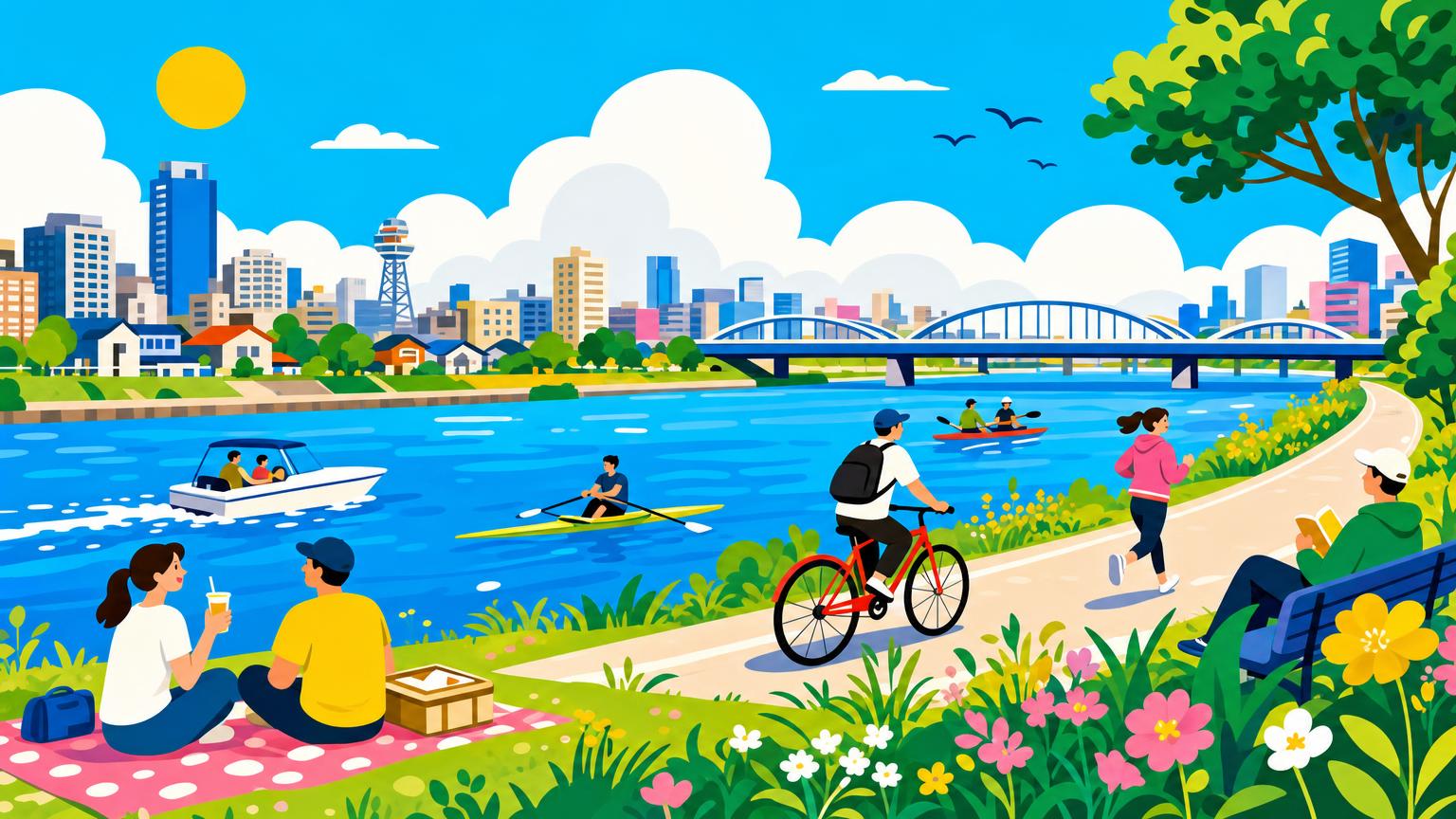
When a foreigner first moves to Osaka, the vastness of the urban sprawl can feel overwhelming. The architecture is dense, the streets are narrow, and the lines between private and public spaces feel tightly drawn. Japanese houses and apartments are famously compact. Walls are thin. Hosting large groups of friends at home is almost unheard of. Consequently, public spaces take on immense significance. The Yodo River acts as the great equalizer. It is a wide, democratic space that requires no admission fee and has very few restrictions. Here, you witness the city’s true character. You see solitary trumpet players practicing against the wind because their apartments ban musical instruments. You see amateur baseball teams covered in dirt, shouting encouragements in thick Kansai dialect. You see elderly couples sitting on folding chairs, simply watching the water flow toward Osaka Bay.
Yodo River vs. Dotonbori: What’s the Difference?
There is a common misconception among international visitors about Osaka’s waterways. If you ask a tourist about the river in Osaka, they will almost certainly mention Dotonbori. They imagine the glowing Glico running man, the mechanized crab signs, and the sightseeing boats cruising through a narrow channel bordered by concrete walls. But Dotonbori is not a river in the natural sense; it is a canal. It was dug centuries ago for commerce, intended to transport theatrical props, merchants, and goods through the entertainment district. Today, it remains an entertainment ditch. It is artificial, narrow, and heavily commercialized. Dotonbori is the place to spend money. It is a stage designed for consumption.
The Yodo River, by contrast, is nature’s bold stroke across the Kansai region. It is wide, powerful, and largely indifferent to the commercial frenzy of the city it passes through. While Dotonbori is lit by neon, the Yodo is bordered by miles of green floodplains. When locals say they are going to the river, they mean the Yodo. Understanding this difference is the first step in grasping the local mindset. People in Osaka are incredibly pragmatic. They know Dotonbori is a tourist trap, a spot to take visiting friends for a quick photo before retreating to more genuine spaces. The Yodo River is their real lifeline. It is where they go to rejuvenate after a tough work week. Recognizing the Yodo as the true heart of Osaka’s outdoor life changes your view from being a consumer of the city to becoming a participant in it.
Top Things to Do at the Yodo River in Osaka
Living in a riverside town in Osaka shifts the pace of your weekends. Instead of searching for things to buy, you begin seeking moments to simply exist. The activities along the Yodo River aren’t tourist attractions; they form the core of local leisure. For foreign residents aiming to weave themselves into the city’s fabric, engaging in these simple daily routines is essential. You don’t need a tour guide—just a bicycle, a few friends, and a readiness to embrace the outdoors.
Relaxing at the Vast Yodogawa River Park
Yodogawa River Park isn’t a park in the conventional, manicured sense. It doesn’t resemble Tokyo’s Shinjuku Gyoen with its meticulously pruned pines and strict regulations forbidding almost all fun. Instead, Yodogawa is a sprawling, rugged floodplain stretching for miles along both sides of the river. It’s raw and functional. Designed mainly for flood control, the park transforms into a vast playground when water levels are low, which is most of the time. The sheer expanse of grassy fields is striking given how densely packed the buildings are just beyond the embankment.
This absence of rigid curation perfectly reflects Osaka’s character. Tokyo is a city defined by rules, compartments, and designated functions. Osaka is a city of flexible spaces and pragmatic freedom. At Yodogawa River Park, you’ll witness a beautifully chaotic mix of human activity. A group of university students rehearsing a synchronized dance may be just ten yards from a family flying a kite, who stand next to an elderly man fiercely practicing his golf swing without a ball. No one complains; no authorities are called to enforce zoning laws. There’s an unspoken rule of mutual tolerance here. As long as you aren’t harming others, you’re free to use the space as you wish. For foreigners navigating Japan’s occasionally rigid social structures, this park offers profound psychological relief.
Cycling and Jogging Along the Scenic Riverbanks
To truly feel the pulse of these riverside towns, you need to get on a bike. The paved paths along the Yodo River serve as the veins of local movement. Unlike the stop-and-go frustration of cycling through city streets, weaving between delivery trucks and pedestrians, the river path allows for continuous momentum. You can pedal all the way to Kyoto in one direction or head down to the industrial grandeur of Osaka Bay in the other.
The cycling culture says a lot about the locals. While athletes in full spandex on carbon-fiber road bikes speed by, they represent only a small fraction of traffic. The real heroes of the Yodo cycling path are the locals on their mamachari—heavy, single-speed city bikes with large baskets. You’ll see mothers skillfully balancing two children and bags of groceries, pedaling against strong headwinds with determined expressions. High school students ride side-by-side in their uniforms, laughing loudly as the sun dips below the skyline.
Jogging here has its own character. Tokyo’s Imperial Palace loop is famous for runners but often feels like a fashion show, a place to flaunt the latest gear. Yodo River runners are tougher. They wear faded t-shirts and endure the brutal Osaka summer humidity or the biting winds of winter. The backdrop isn’t an ancient castle but the steel grid of Umeda’s skyscrapers looming in the distance. This striking contrast—surrounded by nature with the mechanical heart of Western Japan towering nearby—captures the essence of daily life in Osaka.
Urban Camping and Riverside BBQ Experiences
Osaka is famously known as the city of kuidaore, a phrase roughly meaning to ruin oneself through extravagant eating. This passion for food doesn’t cease once people leave the city center; it simply moves outdoors. Barbecue culture along the Yodo River is a widespread phenomenon. On sunny weekends in spring or autumn, designated park areas become engulfed in a fragrant haze of charcoal smoke.
Elsewhere in Japan, a picnic might mean a quiet bento on a blanket. In Osaka, it means hauling a massive wheeled cooler full of cheap beer and hefty cuts of beef across the grass. Groups set up elaborate camps with tarps, folding tables, and heavy-duty grills. The atmosphere is loud, lively, and deeply communal. Friends, coworkers, and extended families gather to drink, cook, and laugh at volumes that would be frowned upon in a regular Japanese restaurant.
For a foreign resident, joining or hosting a riverside BBQ is a rite of passage. It reveals the warmth and openness of Osaka’s people. Neighboring BBQ groups often share food, exchange lighters, or strike up conversations. This casual interaction with strangers is rare in Tokyo but common in Osaka. That said, practical rules apply: the city strictly limits where fires can be lit, restricting BBQs to certain zones to protect the grass and manage waste. You must bring your own charcoal disposal containers or use designated ash bins, and leaving trash behind is a serious cultural taboo. Within these basic boundaries of respect, the riverside BBQ is Osaka’s ultimate expression of its joyous, food-loving spirit.
Fishing Spots and Local Rules
Amid the brass bands, cyclists, and roaring BBQs exists a quieter subculture along the river: the fishermen. Usually older men, they line the concrete embankments early in the morning or late into the evening. They are a fixture of Kawaberi no Machi’s landscape. Fishing for carp, bass, and sometimes river eels, they wield massive nets and display endless patience.
These fishermen embody Osaka’s quieter side. While the city is known for its loudness and humor, it is also a place of steadfast blue-collar endurance. Watching them at work reveals much about the unspoken etiquette of public space. They quietly claim their spots and set up without encroaching on neighbors. They converse in low voices, often exchanging nods or grunts of acknowledgment with regular passersby.
For expats interested in fishing, the Yodo River offers an easily accessible urban challenge. No boat or expensive excursion is necessary; you simply walk down to the water. However, learning local customs is essential. You must know which areas are restricted due to boat traffic and respect the catch-and-release culture many bass anglers follow. The fishing community is insular but respectful. If you arrive consistently, keep to yourself, and honor the river, you’ll eventually earn a nod of approval. It’s a slow, quiet way to integrate into a city otherwise running at full speed.
The Spectacular Naniwa Yodogawa Fireworks Festival
To truly understand the community spirit of Osaka, you need to observe how the city celebrates. Japanese summer festivals, or matsuri, are renowned worldwide, but many of the major ones have become heavily commercialized, top-down events managed by large corporate sponsors or city governments. The Naniwa Yodogawa Fireworks Festival stands apart, and its history perfectly embodies the rebellious, do-it-yourself spirit of Osaka residents.
What to Expect at the Summer Festival
Held every August, this festival is more than just a display of beautiful lights; it represents a proud expression of local identity. It was initiated in 1989 by a group of local volunteers determined to rejuvenate the Juso neighborhood. They didn’t wait for government involvement. Instead, they raised donations, coordinated the logistics, and launched the fireworks themselves. Today, it has grown into one of the country’s largest and most impressive fireworks displays, drawing hundreds of thousands of spectators to the riverbanks. Still, it remains largely powered by local volunteers and neighborhood contributions.
The atmosphere is electric. The Osaka summer humidity is palpable, and the air is filled with the scents of takoyaki, grilled squid, and the slight sulfur of fireworks. People from across the Kansai region arrive wearing brightly colored yukata (summer kimonos). But since this is Osaka, the refinement of traditional dress blends with the gritty reality of navigating massive crowds. People sit on blue plastic tarps, sweating, sipping cold beer, and fanning themselves vigorously. When the first massive firework explodes with a booming echo against the Umeda skyline, the crowd doesn’t just watch quietly. They roar. They applaud. They shout their appreciation. The experience is raw and loud, much like the city itself.
Best Viewing Areas and Practical Tips
For a foreign resident attending for the first time, the overwhelming number of people can be intimidating. Navigating the Naniwa Yodogawa Fireworks demands strategy and a solid grasp of local crowd behavior. Paid seating areas guarantee a good view and a bit of space, but the authentic cultural experience happens in the free zones along the Juso and Nakatsu sides of the river.
To endure the free areas, you have to adopt the local attitude. Arrive hours beforehand. Secure your small patch of grass with a plastic sheet. Don’t complain about the heat or the closeness of neighbors, as sharing the discomfort is part of the communal experience. The unspoken rule is polite compression. People will sit inches from you but take care not to spill your drink or block your view.
When the festival ends, the exit strategy tests the true character of the crowd. Hundreds of thousands heading to a handful of small train stations could easily cause panic. However, the crowd moves with a slow, shuffling grace. Police with megaphones guide everyone, often adding a touch of Osaka humor to keep tempers calm. As an expat, the best advice is to go with the flow. Don’t rush to catch the train immediately. Instead, find a local izakaya in the riverside towns of Juso or Tsukamoto, step inside, order some skewers, and wait for the crowd to thin. This is how locals do it—turning the hassle of the crowd into an excuse for another drink.
How to Get to the Yodo River from Central Osaka
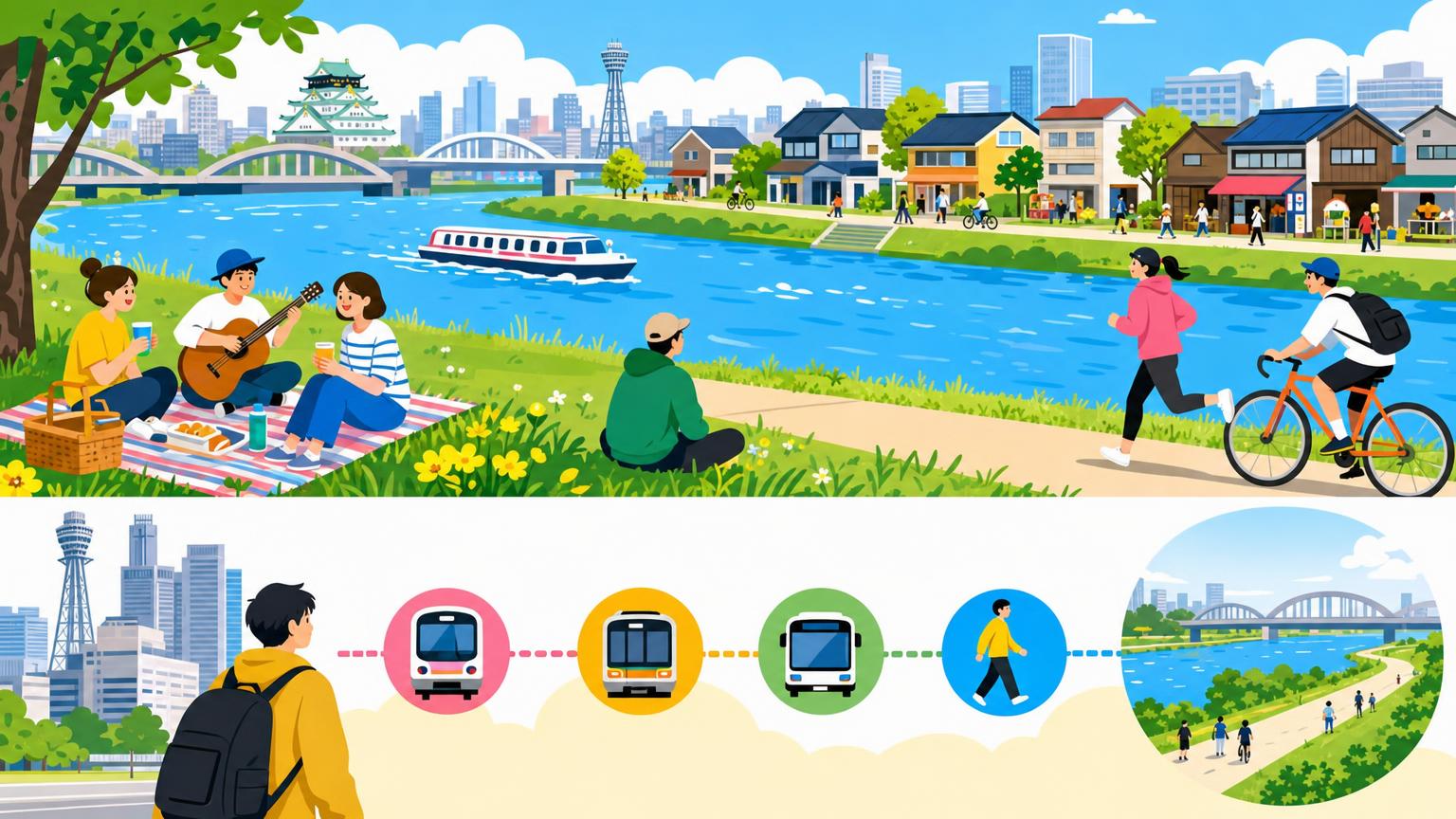
One of the most captivating architectural and psychological features of Osaka is how abruptly the city shifts into nature. You don’t need to take a lengthy, winding train ride to the suburbs to find open space. The Yodo River serves as a vast boundary just north of the city’s main commercial district. Knowing how to cross this boundary is crucial for anyone navigating daily life here.
Access from Umeda and Osaka Station
Umeda is the ultra-dense, futuristic heart of northern Osaka. It’s a labyrinth of underground malls, towering department stores, and hectic intersections. Yet if you walk just ten to fifteen minutes north from central Osaka Station, the concrete jungle suddenly ends. You pass through the somewhat older, retro neighborhood of Nakatsu, walk under elevated train tracks, and climb a concrete ramp. Suddenly, the sky fills your entire field of vision. The wind hits you. You have arrived at the Yodo River.
This walk is a daily routine for many local commuters and weekend visitors. The contrast is striking and beautiful. You can literally buy a high-end espresso in a glowing underground mall, and fifteen minutes later, be sitting in wild grass watching a heron hunt for fish. This easy access is why the river plays such a huge role in the local lifestyle. You don’t need to plan a full day trip to experience nature. You can finish your office shift in Umeda, loosen your tie, and walk to the riverbank to watch the sunset before taking the train home. It makes the city’s intense density more bearable.
Getting to Key Park Areas and Cycling Routes
For those wanting to explore further along the riverbanks, the train networks provide ideal access points. The Hankyu Railway lines crossing the river from Umeda into Juso offer one of the most iconic views of the city. Crossing that massive steel bridge is a psychological landmark for locals. Heading south over the bridge means entering the stress and excitement of the city. Heading north means going home, towards the quieter riverside towns and residential suburbs.
To reach the prime BBQ spots and the wider stretches of Yodogawa River Park, taking the Midosuji Subway Line to Nishinakajima-Minamigata station is the usual route. From there, it’s a five-minute walk to the grassy areas. You’ll see crowds of young people carrying coolers and tents along this same path every Saturday morning. For cyclists, entry points are plentiful. Ramps lead down from nearly every major bridge, enabling a smooth transition from the bustling city streets to the uninterrupted cycling paths.
Life in Osaka is a constant balancing act between space and people. It’s a city that demands your energy, loudly and aggressively. But it also offers a perfect escape valve. The riverside towns along the Yodo, with their wind-swept parks, smoky BBQs, and quiet fishermen, embody the genuine, unpolished soul of Osaka. They aren’t designed for tourists. They are built for living. Once you grasp the rhythm of the river, you finally understand the rhythm of the people who call this city home.