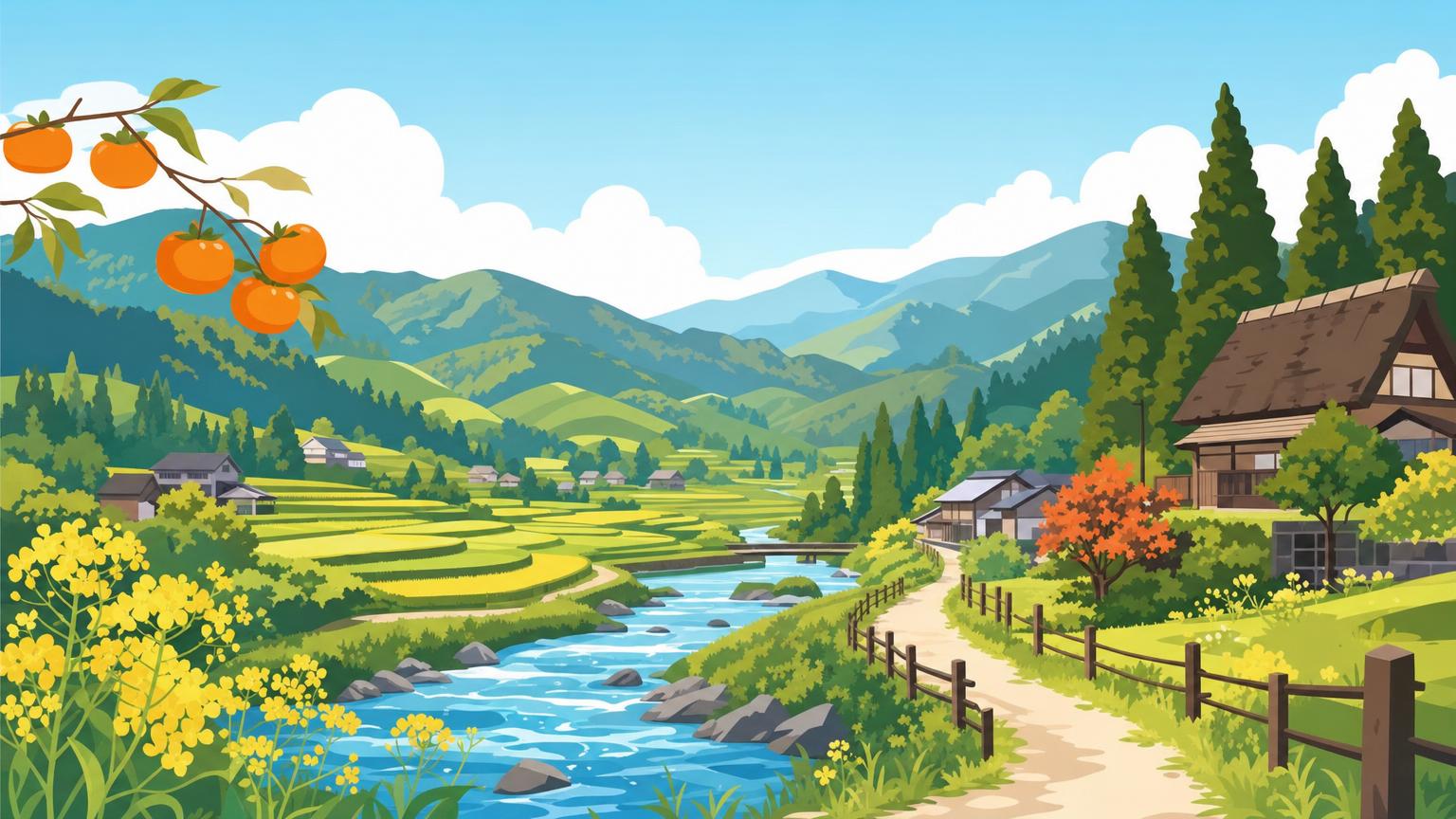
If you live in Osaka, you may already know the city’s familiar rhythm: the last train, the crowded platform, the quick meal at a counter, the neighbour who notices when your rubbish has been put out on the wrong day, and the small negotiations that make everyday life work. Yet Osaka Prefecture is larger and more varied than the urban image suggests. At its northern edge, Nose offers a useful way to understand what Osaka becomes when the high-rise skyline disappears.
The real question is not simply, “What can I see in Nose?” It is, “What does Nose tell me about Osaka?” The answer lies in the contrast. Nose is not an escape from Osaka so much as another expression of it: practical, relationship-based, locally proud, suspicious of unnecessary formality, and shaped by the need to make daily life function with limited resources.
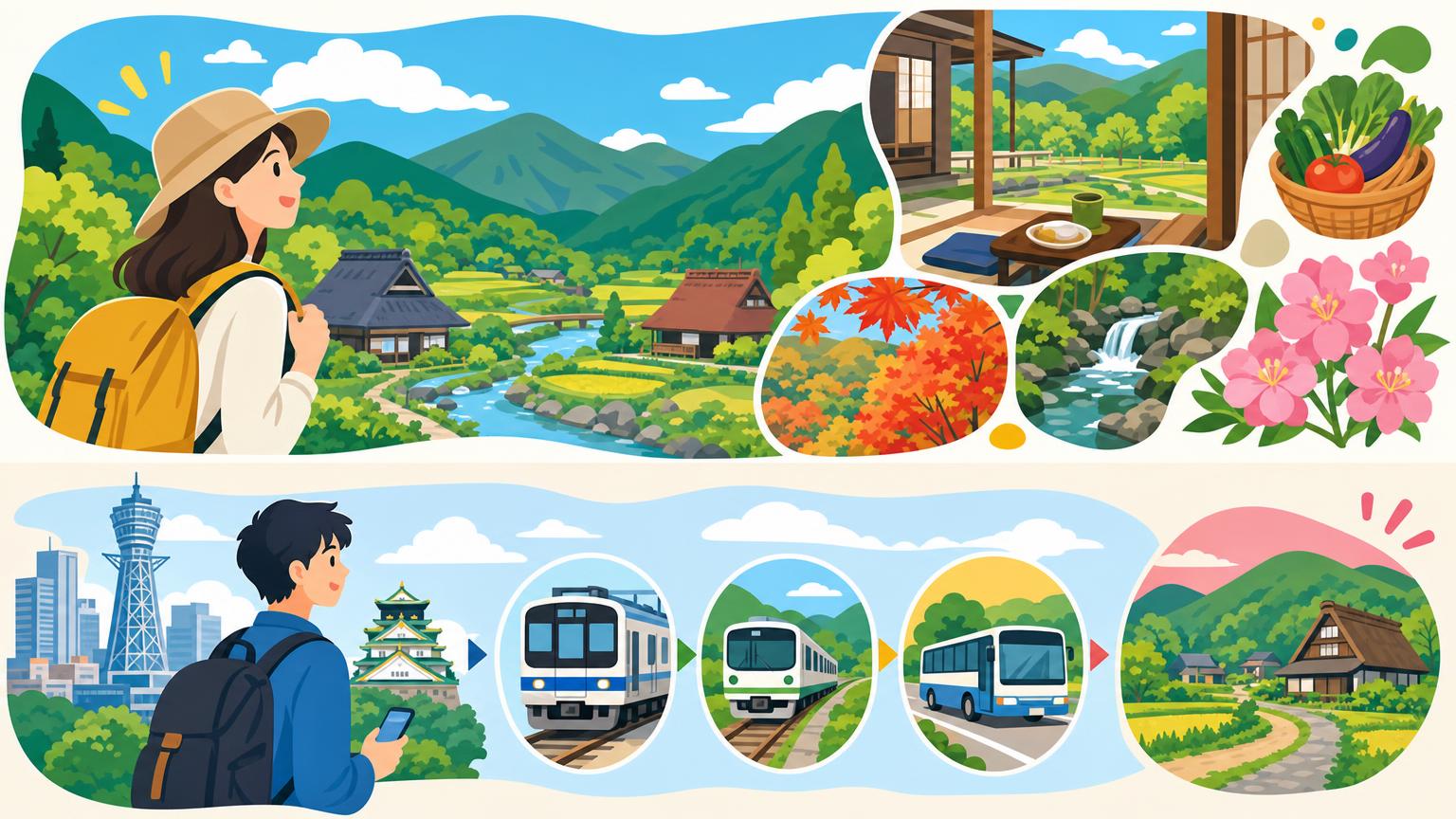
Nose-cho sits in the northern part of Osaka Prefecture, within Toyono District, in a mountainous area reached from the urban region by road, railway, and local bus. Official local information describes the journey from Osaka City as roughly one hour by train followed by around thirty minutes by bus, although actual travel depends on the connection and the destination inside Nose.
For a foreign resident, a weekend in Nose can therefore be more revealing than a checklist of attractions. You begin to notice how rural communities depend on timing, trust, seasonal food, local shops, cars, buses, and informal cooperation. You also see why “living in Osaka” cannot be understood only through Umeda, Namba, or the Osaka Loop Line.
Discovering Nose: Osaka’s Hidden Rural Gem
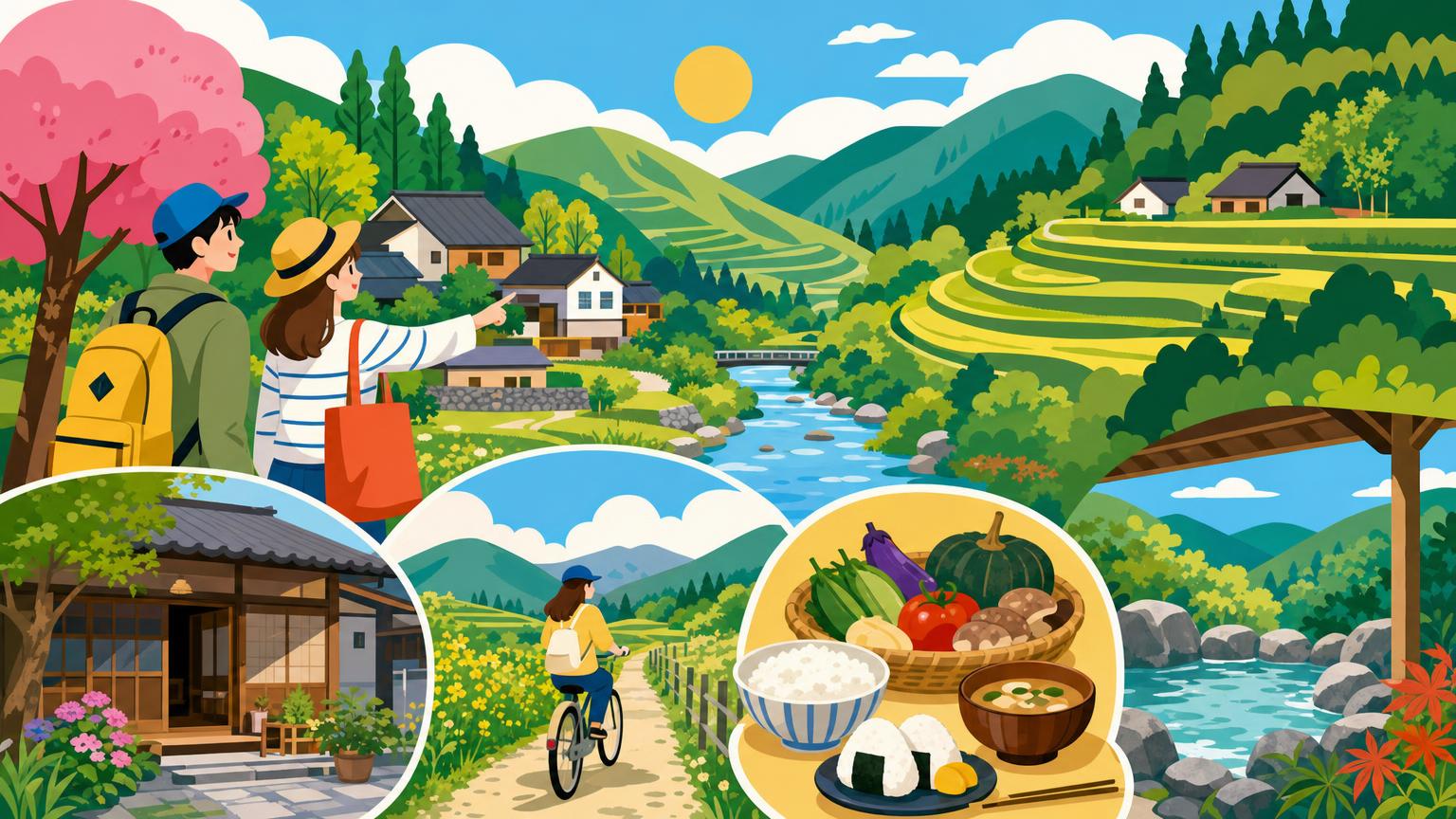
Nose is part of Osaka, but it does not feel urban
Many foreigners first experience Osaka through the city centre. They learn the language of Osaka from restaurant staff, station announcements, comedy programmes, shopkeepers, and people speaking loudly over meals. They begin to associate Osaka with density, convenience, and fast-paced social contact.
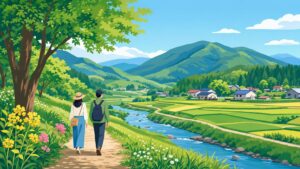
Nose complicates that image. Although it belongs administratively to Osaka Prefecture, the experience there is rural. Mountains, woodland, fields, small settlements, shrines, farm roads, and scattered homes define the landscape. The distance between places matters. A shop may not be within walking distance. A bus may run only at certain times. Having a car can completely change the practical shape of a weekend.
This distinction is important for anyone considering life in Osaka. “Osaka” does not represent a single lifestyle. Someone living near Umeda, a family in Sakai, a commuter in Toyono, and an older resident in Nose may all use the same prefectural name while living according to very different assumptions.
In central Osaka, convenience is often regarded as a basic part of life. You expect a supermarket, pharmacy, convenience store, clinic, station, and restaurant to be close by. In Nose, convenience is something you plan for. You check opening hours, buy enough food, consider the return journey, and pay attention to the weather. You do not assume that a missed bus will be followed by another one ten minutes later.
This is more than a simple inconvenience. It changes behaviour. Rural life encourages people to prepare, remember, and maintain relationships. An urban resident can solve a problem with money and a quick trip to a shop. A rural resident may solve it through a neighbour, a local producer, a shared vehicle, or a phone call made before the problem becomes urgent.
What “satoyama” means in everyday life
Nose is often described using the idea of satoyama. The term does not refer to untouched wilderness. It describes a lived landscape in which people, agriculture, woodland, water, roads, shrines, and seasonal work exist together. A satoyama is shaped by human use, but it is neither fully urbanised nor industrialised.
For an international reader, the easiest mistake is to translate satoyama as “countryside” and leave it at that. Its deeper meaning concerns management and relationships. A wooded area may provide firewood, shade, water retention, mushrooms, wild plants, or habitat. A field is not simply a view; it forms part of food production and local memory. A shrine is not merely a building; it may be connected to a settlement’s history, festivals, protection, and sense of belonging.
This helps explain a key difference between urban Osaka and Nose. In the city, public space often consists of streets, stations, parks, shopping arcades, and riverside paths. In Nose, public life may be spread across roads, agricultural boundaries, community facilities, markets, shrines, bus stops, and private land that must be treated respectfully.
Foreign residents sometimes misunderstand rural Japan because they see quietness and assume emptiness. Nose is quiet, but it is not socially empty. People may not speak to strangers as spontaneously as a shopkeeper in a busy Osaka neighbourhood might. Yet local life can be closely connected. Those connections are simply less visible to an outsider.
A weekend retreat works best when you accept this difference. Do not arrive expecting the countryside to perform for you. Instead, arrive ready to observe how people use the landscape and how that landscape both limits and supports them.
Why Nose matters to people considering life in Osaka
People who ask, “Is Osaka a good place to live?” often compare rent, commuting times, salaries, schools, nightlife, and access to Kansai International Airport. These are reasonable questions, but they do not fully explain the region’s emotional geography.
Nose demonstrates that Osaka can offer proximity to a major metropolitan area without requiring every resident to live an urban lifestyle. You can remain connected to Osaka City while living among forests and fields. This appeals to people who want more space, slower weekends, or a stronger connection with seasonal food. It also requires compromises: longer journeys, fewer services, greater dependence on cars, and a stronger need to participate in local routines.
For foreigners, the most useful lesson is that Osaka’s practical culture continues beyond the city centre. People still value directness, usefulness, and reliability. They may not spend time on elaborate presentation. If you need help, explain the actual problem. If you promise to do something, follow through. If a local person offers advice about roads, weather, rubbish, or parking, listen carefully instead of treating it as casual conversation.
This is one way Osaka differs from the stereotype of a formal, anonymous metropolis. The region is not free from hierarchy or indirect communication, but everyday interactions often become easier when people see that you are making a genuine effort to be practical.
Top Things to Do in Nose, Osaka
A weekend in Nose should not be organised as a race between attractions. The most valuable experiences are often small: buying something seasonal, walking along a quiet road without blocking it, eating food made with ingredients from nearby, listening to the rhythm of a local conversation, or noticing how far apart homes and services are.
The following places matter because they reveal the connections between nature, belief, local business, and everyday life.
Explore the Sacred Mount Myoken
Mount Myoken is associated with the religious and cultural landscape around Nose and the wider northern Osaka area. The mountain is more than a scenic elevation. It helps demonstrate how Japanese rural places are structured around mountains, temples, shrines, routes, and communities rather than a single downtown centre.
The approach via Nose Electric Railway and local bus connections highlights an important practical fact: a rural destination may be close in kilometres but not straightforward to reach. Local information recommends routes through Yamashita Station or Myoken-guchi Station, followed by Hankyu Bus services into Nose. Services may be limited, so relying on one perfect connection is risky.
For a foreign resident, the mountain offers a lesson in behaviour. Keep your voice low in religious spaces. Do not assume that every gate, path, or wooded area is an invitation to explore. Follow the signs, remain on marked routes, and remember that the surrounding landscape may include working land rather than a public park.
A common misunderstanding about Japan is that rules are always displayed in full English. In rural areas, they may not be. The absence of an English sign does not mean there is no boundary. Observe how local visitors behave. If people remove their shoes, wait, bow, avoid a path, or keep away from a building, there is probably a reason.
Mount Myoken can also help you understand the difference between sightseeing and belonging. A visitor may come for a view or a walk. A local person may approach the same mountain through family memory, worship, seasonal events, or long-established routes. Both perspectives can coexist, but they are not the same.
Marvel at Noma’s Great Keyaki Tree
Noma no Okeyaki, often translated as Noma’s Great Keyaki Tree, is one of Nose’s best-known natural and cultural landmarks. A giant tree can seem like a simple photo stop, especially to visitors accustomed to building-based attractions. In a rural community, however, an old tree can represent time in a more tangible form.
It has survived changes to roads, homes, farming patterns, transport, and generations of residents. The tree’s significance comes not only from its size but also from the fact that people have continued to recognise it as part of the local landscape.
This offers a useful way to understand heritage in Osaka. In the city, heritage is often presented through castles, temples, museums, merchant houses, or preserved streets. In Nose, heritage may be embedded in a tree, a field boundary, an old road, a shrine forest, or a food tradition. The preservation may seem less theatrical, but it can be deeply practical.
When visiting a site such as Noma no Okeyaki, do not climb, touch, or lean against the tree unless this is clearly permitted. Avoid obstructing access roads, and do not leave rubbish behind. Rural residents are often patient with visitors, but that patience should not be mistaken for approval of careless behaviour.
The tree also raises an uncomfortable issue for anyone interested in rural Japan. Preserving a landscape requires money, labour, and local agreement. A visitor may see an attractive old tree and leave after ten minutes. Residents must maintain the road, manage parking, deal with litter, and address safety concerns. Responsible behaviour is therefore part of respecting the heritage itself.
Experience Local Culture at Michi-no-Eki Nose (Kurinosato)
Michi-no-Eki Nose, also known as Nose “Kuri no Sato,” serves as more than a stopping point. The official tourism information describes it as a place where visitors can ask about the town, learn about local products, and receive guidance. It is located along National Route 173 and functions as an entry point to Nose.
For foreigners, this kind of facility provides one of the clearest windows into regional life. A michi-no-eki is not the equivalent of a Western motorway service station. Depending on the location, it may combine local produce, food, tourism information, community activity, and practical rest facilities.
At Kurinosato, pay attention to what is being sold and how it is presented. Seasonal vegetables, rice, chestnuts, preserved foods, sweets, drinks, and locally made products reveal what the area produces and what residents take pride in. The selection may change with the season, and that change is part of the point.
If you live in Osaka and want to understand food culture, this is more useful than memorising the names of fashionable restaurants. Osaka’s food identity is often associated with eating out, but regional food culture also depends on agriculture, distribution, preservation, and the trust placed in local producers.
The centre’s listed hours are limited, and according to the official tourism listing, it is closed on Tuesdays and during a New Year holiday period. Check before travelling, particularly if your weekend plans depend on one facility.
Walk without turning the countryside into a stage
The most revealing activity in Nose may be a simple walk. Choose a route near your accommodation, a local facility, or a bus stop. Walk slowly enough to notice how houses face the roads, where fields begin, how waterways are managed, and where people have placed signs or barriers.
Do not enter fields, private driveways, forest tracks, or temple grounds simply because they appear to be open. Rural Japan contains many spaces that look public but are not. An unmarked path may be used by farmers. A narrow road may be needed by emergency vehicles. A quiet area may be someone’s workplace.
This is where Osaka’s practical mindset becomes especially clear. The question is not, “Can I technically go there?” The better question is, “Will my presence create work or trouble for someone?” That distinction is central to living well in Japan, particularly outside the city.
Best Restaurants and Local Food in Nose
Taste the Famous Nose Chestnuts
Nose is closely associated with chestnuts, and the name “Kuri no Sato” reflects that local identity. Chestnuts are not simply a souvenir flavour. They connect agriculture, seasonal timing, regional branding, and the expectation that food should have a traceable relationship to its place.
You may find chestnuts in sweets, rice dishes, baked goods, and other seasonal products. Availability varies, and the most popular items may sell out. That is normal. Rural food is often less about permanent menu certainty and more about a limited seasonal window.
For someone accustomed to Osaka City, this can feel inconvenient. In central Osaka, you can often find a substitute restaurant immediately. In Nose, an item being unavailable may indicate that it is genuinely seasonal or locally limited. Do not pressure shop staff to produce something that is out of stock. Ask what is available instead.
Chestnuts also illustrate how local pride works. Osaka people are often comfortable praising their own neighbourhoods, foods, or institutions. This does not necessarily mean that a product is objectively superior by universal standards. Rather, it means the product carries local meaning. When someone recommends Nose chestnuts, they may be offering you a connection to the area instead of making a scientific claim about taste.
Farm-to-table dining and traditional cuisine
The phrase “farm-to-table” is useful, but it can sound like a marketing label. In Nose, the relationship between farms and meals may be more ordinary. Vegetables, rice, meat, mushrooms, chestnuts, miso, pickles, and other ingredients may appear in restaurants because they are part of the surrounding food economy.
One example of the area’s contemporary dining culture is Arata, a Japanese restaurant in Nose that describes its cuisine as centred on vegetables from Nose and the surrounding satoyama, along with fish and locally raised black wagyu beef.
This type of restaurant can help foreign residents understand an important distinction. Traditional Japanese food is not frozen in the past. A restaurant may use old techniques, local ingredients, and seasonal ideas while presenting a modern meal. Rural identity is not always expressed through an old-fashioned interior or a fixed menu.
Nose is also associated with wild boar cuisine. If you eat wild boar, ask what the restaurant actually serves, whether the dish is seasonal, and how it is prepared. The flavour and texture may differ from the pork familiar to many Western diners. The dish can also raise questions about hunting, land management, and the changing relationship between forests and farming communities.
Local sake is another way to consider regional food culture. A bottle labelled with a place name does not automatically mean that every ingredient came from that place, so ask politely if the origin matters to you. Japanese food culture values detail, but those details are not always explained in English. A simple question, asked patiently, is usually more effective than making assumptions.
How to behave in a small local restaurant
In a rural restaurant, your behaviour is noticed more easily because the room is smaller and the staff may know many customers personally. That does not mean you need to perform Japanese etiquette perfectly. It simply means that ordinary consideration matters.
Make a reservation when requested. Arrive close to the agreed time. Tell the restaurant clearly and in advance about any allergies. Do not assume that a vegetarian request will be understood as vegan. Do not treat a rural restaurant as a flexible picnic space where you can bring outside food, take extended video calls, or rearrange furniture for photographs.
If the menu is limited, that may reflect the available ingredients and the kitchen’s capacity. If service is slower than in a chain restaurant, the meal may be prepared by a small team. If the owner speaks directly, it may be an attempt to communicate efficiently rather than a sign of rudeness.
This is one area where comparisons with Osaka and Tokyo can be misleading. Visitors sometimes expect Tokyo-style service to be polished, restrained, and highly scripted. Osaka service can feel more conversational, practical, or openly evaluative. In Nose, the interaction may be even more personal because the scale is smaller. Do not confuse informality with permission to ignore local boundaries.
Buying food for the weekend
A weekend in Nose is easier if you buy food according to the area’s rhythm. Pick up breakfast items, drinks, snacks, and emergency supplies before reaching remote accommodation. If you plan to cook, confirm that the property has a working kitchen, utensils, fuel, and rubbish arrangements.
Buy local produce when it is clearly being sold for public purchase, but do not pick crops from fields or take anything from a roadside display without paying. Some unmanned stalls operate through an honesty-box system; follow the instructions exactly. If there is no clear price or payment method, leave the item or ask.
This may seem obvious, but misunderstandings occur because visitors see rural spaces as informal. Informal does not mean ownerless. A roadside vegetable stand may depend on trust. A small act of carelessness can damage the system for the next person.
How to Get to Nose from Central Osaka
Traveling by car (Highly Recommended)
For a weekend retreat, driving is generally the most convenient option because Nose is spread out, and many useful places are not located directly beside a railway station. Local tourism information indicates that driving from Osaka or Kobe takes about one hour, with routes involving the Hanshin Expressway Ikeda Line and National Route 173. Actual travel times vary depending on traffic, weather, roadworks, and your starting point.
A car gives you greater freedom, but it also comes with responsibility. Do not park on narrow roads, in front of gates, beside farm entrances, or in spaces that appear empty but may be needed later. Rural roads can be narrower than visitors expect, and some bends have poor visibility. In winter or during heavy rain, conditions can change quickly.
Do not assume that Google Maps’ shortest route is necessarily the best one. Digital navigation may direct drivers onto narrow local roads that are technically passable but unsuitable for a standard rental car. If a local sign directs you away from a narrow road, follow the sign. If accommodation staff recommend a particular approach, use it.
A car also affects how you approach alcohol. If you are driving, do not drink. If you would like to try local sake, arrange a designated driver, use a taxi where available, or choose accommodation and dining options that eliminate the need to drive afterwards.
For foreign residents, check your legal eligibility before renting a car. The relevant licence requirements depend on your nationality and the documents you hold. Carry the required licence or permit itself, not just a photograph of it. Keep the rental company’s emergency number readily accessible.
Navigating public transportation
Public transport is possible, but it requires a more deliberate approach. From Osaka City, a typical route involves taking the Hankyu Takarazuka Line toward the northern Osaka and Hyogo area, connecting with the Nose Electric Railway, and then using a Hankyu Bus service from stations such as Yamashita or Myoken-guchi. The Nose tourism information site describes a journey of approximately one hour by train and thirty minutes by bus from Osaka City, with one to two bus services per hour according to the relevant route information.
Treat this description as a planning framework rather than a guarantee of a door-to-door journey. You should check the exact bus stop, direction, timetable, last departure, and walking distance to your accommodation. Some services are intended for local residents and may not operate late at night.
A weekend using public transport can be rewarding because it allows you to notice how the area functions. You see who uses the bus, where people wait, what they carry, and which destinations appear important. A bus stop is not merely a transport point; it can also form part of the community’s social infrastructure.
Nose Town has also introduced information about local shared taxis as part of its transport policy, reflecting the need to support mobility in a geographically spread-out community. Availability, booking conditions, and service areas may change, so check current municipal information before relying on this option.
Why public transport can be socially revealing
In central Osaka, public transport is anonymous. You can ride several stops without anyone noticing you. In Nose, a bus may carry fewer passengers, making the practical needs of older residents and people without cars more visible.
This changes the meaning of convenience. A bus timetable is not simply a travel tool. It affects access to clinics, shopping, schools, work, social events, and government services. When a service is reduced, the impact is not merely that tourists have to wait longer. Residents may lose a basic connection to everyday life.
Foreigners living in Osaka often learn to complain about crowded trains, but rural transport reveals another side of the region: the challenge is sometimes not excessive demand but insufficient demand to sustain frequent service. Both issues are part of the same broader metropolitan system.
Planning your return journey before you arrive
The most important transport rule is simple: plan your return journey first. Check the final bus, the walking route, the location of taxi stands, and what will happen if you miss a connection. Save your accommodation’s address in Japanese characters as well as in English. Rural drivers, staff, and navigation systems may recognise the Japanese address more reliably.
Do not rely entirely on mobile reception in wooded or mountainous areas. Download or screenshot essential information, and carry a charged phone and a portable battery. If you are travelling with friends, make sure everyone knows the plan rather than assuming that one person will handle everything.
This level of preparation may feel excessive to a city resident. In Osaka City, a missed train can often be resolved by taking another one. In Nose, missing a bus can change the entire evening. Planning is not anxiety; it is a way of respecting the limits of the local system.
Is Nose, Osaka Worth Visiting?
Nose is worth visiting if you want to understand the part of Osaka that does not promote itself through crowds, neon, or convenience. It is especially valuable for people living in Osaka who have begun to wonder whether the city is only what they see during their commute.
It is not the right choice for everyone. If you want a packed schedule of restaurants, nightlife, museums, and late trains, Nose may feel inconvenient. If you dislike driving, advance planning, quiet evenings, or limited choices, you may prefer a more urban weekend. If you expect every rural area to offer English information, contactless payment, and flexible transportation, you may find the region demanding.
But that demand is part of the lesson.
Nose presents Osaka as a network rather than a single city centre. It reveals the connections between mountains and markets, farmers and restaurants, buses and social participation, and local pride and practical maintenance. It also clarifies why foreigners sometimes misunderstand Osaka people. The famous directness is not simply loudness; it is often a preference for useful communication. The famous warmth is not automatic friendliness. It may appear as advice, correction, a warning about the roads, a recommendation to buy something before the shop closes, or an insistence that you do not cause trouble for others.
In Tokyo, visitors often notice formality, scale, and anonymity. In Osaka, they may notice conversational energy, humour, and more visible negotiation. In Nose, the same regional character becomes quieter but no less practical. People may not immediately invite you into their world. They may first observe whether you are reliable, respectful, and willing to understand how the place works.
That is also a useful principle for living in Osaka. You do not need to imitate a local accent or force yourself to be outgoing. You need to pay attention. Learn the rubbish rules in your neighbourhood. Return greetings. Say when you do not understand. Ask before making assumptions. Keep your promises. Notice when a shopkeeper is offering useful information rather than merely making conversation.
A weekend retreat in Nose can therefore become a small education in Osaka life. You leave the city, but you do not leave Osaka behind. You see another version of the same regional culture: less compressed, more dependent on land and distance, and more visibly shaped by the people who maintain it.
If you return to Osaka City afterwards, the streets may feel even faster. The convenience stores may seem almost astonishing. The trains may feel more anonymous. Yet you may also notice the rural logic beneath the urban one: someone has stocked the shelves, maintained the roads, scheduled the buses, grown the food, and made a series of practical decisions so that daily life can continue.
That is why Nose matters. It is not simply Osaka’s hidden countryside; it is a reminder that Osaka is a relationship between places, and that understanding the city requires looking beyond the city centre.