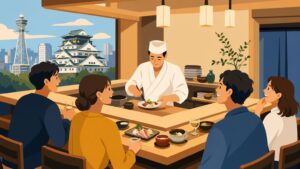
Step off the train at any major station in Osaka, and the city immediately begins communicating with you through food. The air carries the rich, savory scent of dashi broth simmering in corner udon shops, the sharp tang of okonomiyaki sauce caramelizing on hot iron griddles, and the sweet, irresistible aroma of freshly baked melon pan. Osaka is famously known as the city of Kuidaore, a phrase that translates somewhat dramatically to eating oneself to ruin. But for those of us who call this vibrant, chaotic, and endlessly fascinating city home, Kuidaore is not just a catchy tourism slogan. It is a daily philosophy, a way of life, and the beating heart of local culture. When you move to Osaka, or when you stay long enough to peel back the neon-soaked layers of Dotonbori and Namba, you quickly realize that the true essence of the city is not found in the crowded tourist traps. It is found in the everyday act of food shopping.
Navigating the food landscape of Osaka as a resident or a long-term visitor requires a fundamental shift in how you think about grocery shopping. In many Western countries, a trip to the supermarket is a weekly chore, an exercise in bulk buying and trunk-loading. You drive to a massive warehouse, fill an enormous metal cart with heavily processed goods, and drive home to pack your giant refrigerator. In Japan, and particularly in Osaka, food shopping is an entirely different rhythm. It is a daily or every-other-day ritual. It is intimately tied to the changing of the seasons, the size of your bicycle basket, the limited real estate in your tiny apartment kitchen, and the incredibly high standards of freshness demanded by Japanese consumers.
But here is the real secret to surviving and thriving in Osaka: you have to know when to seek out the polished convenience of the modern Japanese supermarket, and when to dive headfirst into the loud, proud, and unapologetically retro world of the local shotengai. The shotengai, or covered shopping arcade, is the traditional lifeblood of Osaka neighborhoods. While Tokyo neighborhoods can sometimes feel aggressively modern and detached, prioritizing sleekness and quiet efficiency, Osaka neighborhoods still hum with the loud banter, the unabashed haggling, and the raw human connection of the traditional market street. Understanding the delicate dance between these two shopping environments is the key to understanding the people of Osaka themselves.
This guide is designed to strip away the confusion and the intimidation of buying food in a foreign language. Whether you are an expat setting up your first apartment in Kansai, a budget-conscious traveler staying in an Airbnb with a modest kitchenette, or simply a culinary adventurer wanting to eat exactly like the locals do, this comprehensive breakdown will walk you through every aisle, every discount sticker, and every unspoken rule of Japanese grocery shopping. We will explore the psychological differences between Tokyo and Osaka shoppers, the art of reading the room at the butcher counter, and the precise, heavily choreographed ballet of the Japanese supermarket checkout process. By the time you finish reading, you will be ready to grab your reusable eco-bag, step out into the humid Osaka air, and shop with the confidence of a true local.
Why Grocery Shopping in Japan is a Must-Do for Tourists and Residents Alike

For most short-term visitors, the immediate response to hunger in Japan is to enter the nearest convenience store. And honestly, it’s easy to understand why. Japanese convenience stores are logistical marvels, offering surprisingly high-quality meals, immaculate restrooms, and endless rows of brightly colored snacks. However, relying solely on convenience stores is a rookie mistake that will quickly drain your wallet and limit your culinary experiences. The neighborhood supermarket is where the true magic happens.
For residents, the supermarket is the cornerstone of daily life. Although the cost of living in major Japanese cities can be high, groceries remain surprisingly affordable if you know how to shop. A bento box priced at seven hundred yen in a convenience store often has a larger, fresher, and tastier counterpart at the local supermarket for four hundred yen. For budget travelers or those staying in alternative accommodations like vacation rentals, discovering the local supermarket is like unlocking a cheat code for Japan. It completely alters the financial balance of your trip. You can enjoy spectacular sushi, highly marbled wagyu beef, and flawless seasonal fruit for a fraction of the restaurant price.
Beyond the obvious financial advantages, visiting a Japanese grocery store offers a profound, unfiltered glimpse into local culture. Supermarkets aren’t curated for tourists; they cater to the tired office worker grabbing dinner at eight in the evening, the meticulous grandmother selecting the perfect daikon radish, and the young parents trying to stretch their yen. Walking the aisles reveals exactly what the nation values. You witness the strong emphasis on seasonality, where entire endcaps are devoted to sweet potatoes and chestnuts in autumn, or cherry blossom-flavored items in spring. You see the cultural reliance on convenience, shown by the vast array of pre-washed, pre-cut vegetables and perfectly portioned single-serving meals.
In Osaka, the supermarket experience takes on an added intensity. People here are known for their straightforwardness, especially regarding value for money. There is a deeply rooted cultural concept in Kansai that emphasizes cost performance. An Osakan won’t blindly pay a premium just for a fancy brand name; the product must prove its worth. This creates a demand for high quality and competitive pricing from local retailers. If a supermarket in Osaka tries to sell subpar produce or overcharges for basic staples, the local aunties will simply take their business elsewhere and likely voice their displeasure on the way out. This relentless consumer expectation fosters fierce competition among supermarkets, leading to better prices and exceptional food quality for everyone.
The Heart of Osaka: Understanding the Shotengai
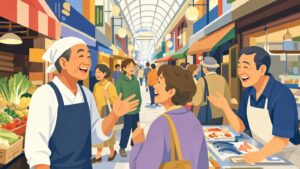
Before we explore the sterile, air-conditioned environment of modern supermarkets, we need to discuss the shotengai. A shotengai is a traditional Japanese shopping street, often sheltered by a long arcade roof to shield shoppers from the summer sun and heavy rain during the rainy season. These streets are lined with independent, family-run shops: greengrocers, fishmongers, butchers, tofu makers, tea merchants, and small hardware stores. While Tokyo still hosts a few well-known shotengai, many have evolved into polished tourist spots or have been gradually emptied by large redevelopment projects. In Osaka, however, the shotengai remains a lively, chaotic, and heavily frequented cornerstone of the community.
The longest shopping street in Japan is located right here in Osaka. Tenjinbashisuji Shotengai stretches nearly three kilometers and features hundreds of tiny storefronts. Walking through a busy Osaka shotengai is an intense sensory experience. Bicycles dodge dangerously close to pedestrians. Shop owners stand at their entrances, loudly advertising their daily specials. The aroma of roasted green tea leaves mixes with the metallic scent of fresh fish and the rich fragrance of fried croquettes.
To truly understand the shotengai is to grasp the essence of Osaka. Tokyo culture often values harmony through distance, where people try not to disturb each other, maintaining a polite, quiet coexistence. Osaka culture, on the other hand, emphasizes harmony through interaction. People seek connection, humor, and engagement. When you buy apples at a supermarket, you interact with a barcode scanner. But when you purchase apples from a shotengai greengrocer, you interact with a person who has likely been working at that exact spot for decades.
Foreigners often misinterpret the loudness of Osaka. They mistake the shopkeepers’ booming voices for hostility. It is not hostility; it is performance—a warm invitation to engage. If you look puzzled while examining an unfamiliar fish on ice, the fishmonger will probably try to explain how to cook it, regardless of your Japanese proficiency. They might mime grilling or even offer you a piece to inspect.
So, when should you choose the shotengai instead of the supermarket?
- For Hyper-Fresh, Specialty Ingredients: When cooking a special meal, the shotengai is unmatched. The butcher will cut meat to your exact specifications. The fishmonger offers catches from that morning’s market, never entering corporate supply chains.
- For the Concept of Omake: Omake loosely means a freebie or a small extra. This is a distinctly Kansai custom. If you become a regular at a shotengai vegetable stand, or even have a notably pleasant interaction, the owner might toss an extra mandarin orange into your bag at no charge. You won’t get omake at a corporate supermarket.
- For Street Food Snacking: The shotengai is ideal for grazing. You can buy a single hot minced meat cutlet from the butcher, a freshly grilled rice cracker from the senbei shop, and a cold cup of matcha from the tea vendor, savoring your way along the street.
- For Human Connection: If you feel isolated as a foreigner living in Japan, becoming a regular at your local shotengai is the quickest way to feel grounded. Shopkeepers will recognize your face, notice if you’ve changed your hairstyle, and inquire where you’ve been if you skip a visit.
However, the shotengai has its limitations. Operating hours are irregular, with many shops closing by six in the evening and taking random days off. You need to carry cash, as small vendors rarely accept credit cards. And the absence of clear price tags or English signs can be intimidating for newcomers. When you need convenience, reliability, and a one-stop shop open at nine o’clock at night, you should turn to the supermarket.
Top Japanese Supermarket Chains You Will See in Osaka and Beyond
Japanese supermarkets are far from uniform. They are distinctly categorized by price range, target customer base, and regional preferences. Understanding which sliding doors you enter will shape your expectations of what’s inside. Here’s an overview of the key supermarket chains you’re likely to encounter.
Everyday Supermarkets: The Dependable Staples
These are the typical mid-tier supermarkets, offering a blend of good quality, fair prices, and a broad range of fresh foods and household items. They form the foundation of daily life in suburban and urban areas.
- Aeon: Aeon is a retail giant, operating everything from enormous, multi-level shopping malls in the suburbs to small local grocery stores. Aeon is remarkably consistent. Their private label, Topvalu, recognized by its bright pink or yellow logo, provides much cheaper options for essentials like bread, milk, and snacks. Aeon stores are clean, well-lit, and conveniently accessible.
- Life: Life is widespread in the Kansai region. If you live in Osaka, you will almost certainly be within walking or biking distance of a Life supermarket. It strikes an ideal balance. The produce is fresh, the bakery section often smells delightful, and their ready-made bento selection is extensive and surprisingly high quality. Life is the quintessential everyday supermarket for the average Osaka resident.
- Ito-Yokado: Owned by the same parent company as 7-Eleven, Ito-Yokado stores are usually large and multi-storied, with groceries on the ground floor and clothing or household goods upstairs. The stores are a bit more premium than Aeon, with strict quality control on fresh produce.
- Hankyu Oasis: Concentrated mainly in the Kansai area, this chain caters to a slightly wealthier, quality-conscious clientele. The aisles are wider, lighting is softer, and the selection of imported cheeses, wines, and premium wagyu beef is excellent. It’s a pleasant place to shop if you want to elevate your daily meals slightly.
Budget and Discount Stores: Osaka’s Favorites
With a strong local culture focused on finding good deals, discount supermarkets thrive in Osaka. These stores reduce overhead to offer rock-bottom prices. The atmosphere may be hectic, but the savings are real.
- Gyomu Super: Literally translating to Business Supermarket, it’s open to all. Gyomu is well-known for bulk buying—you’ll find massive bags of frozen vegetables, kilogram blocks of cream cheese, and giant bottles of soy sauce. They import many foreign foods, making it a haven for expats seeking cheap pasta, halal meats, or familiar European snacks. The store layout is often cramped, and products are displayed in original cardboard shipping boxes, but prices are unbeatable.
- Don Quijote (Mega Donki): Primarily known as a chaotic discount variety store selling everything from cosmetics to cosplay costumes, Mega Don Quijote locations also include full grocery sections. The environment is loud, flashy, and overwhelming, with their manic theme song playing constantly. Still, they’re often open late, and offer exceptionally low prices on meat, snacks, and alcohol.
- Super Tamade: It’s impossible to discuss Osaka without mentioning Super Tamade. This discount chain is an Osaka icon and a visual overload. Its exterior is covered in blazing neon lights, resembling a retro pachinko parlor or casino more than a grocery store. Inside, the lighting is blindingly bright, and the décor is aggressively flashy. Super Tamade is famous for its one-yen sales, where specific items cost just a yen if you spend a certain amount elsewhere. Quality of fresh meat and fish can be hit or miss, but for packaged goods, drinks, and the unmistakable cultural experience of budget shopping in Osaka, Super Tamade is a must-visit.
- OK Store: Rapidly expanding, OK Store is a discount chain that breaks the usual mold. They don’t run weekly sales or special discount days but maintain an everyday low price guarantee. Their bento boxes and freshly baked pizzas are renowned among budget-conscious shoppers for being both extremely affordable and surprisingly tasty.
Premium and Upscale Markets: The Gourmet Experience
When budget is less of a concern, or when seeking specific luxury ingredients, fine imported wines, or elegant gifts, shoppers turn to premium markets. These are often located in the basements of major department stores (depachika) or upscale transit hubs.
- Seijo Ishii: Frequently found in major train stations like Osaka Station or Shin-Osaka, Seijo Ishii is a boutique supermarket serving affluent commuters and food enthusiasts. They specialize in high-quality imported goods, craft beers, artisanal cheeses, and premium domestic products. Their in-house deli salads, rich cheesecakes, and premium bentos are top-notch. It’s pricey, but perfect for treating yourself.
- Kinokuniya: Not to be confused with the well-known bookstore chain, Kinokuniya is an upscale grocery store originating from Tokyo with a Kansai presence. It focuses on imported luxury foods, organic vegetables, and high-end bakery items.
- Ikari Super: Ikari epitomizes luxury supermarkets in the Kansai region. While Hankyu Oasis is a step up, Ikari is the pinnacle. Known for elegant branding, impeccable customer service, and an exquisite selection of rare ingredients, Ikari is the place to impress dinner guests or purchase a flawless, outrageously expensive melon as a gift.
What to Expect: Unique Features of Japanese Supermarkets

If you are coming from North America or Europe, the layout, scale, and specific selections in a Japanese supermarket will initially seem confusing. The space is used in a completely different way, and the inventory is tailored to the everyday needs of Japanese life.
Incredible Ready-to-Eat Meals (Bento and Deli)
The most remarkable, lifesaving feature of any Japanese supermarket is the sozai (delicatessen) section. This is far from a sad salad bar with wilted lettuce. Instead, the ready-to-eat section is an extensive, constantly refreshed paradise of culinary delights. Because many Japanese people work long hours and live in apartments with very small kitchens, the demand for high-quality, pre-cooked meals is enormous.
You will find heaps of freshly fried tempura, perfectly crispy karaage (fried chicken), grilled mackerel, pork cutlets, and delicate potato croquettes. There are countless varieties of bento boxes, featuring rice paired perfectly with grilled salmon, ginger pork, or hamburger steak. The sushi section in a typical Japanese supermarket easily rivals, and often surpasses, mid-range sushi restaurants abroad. The fish is shiny, fresh, and correctly sourced.
For tourists staying in an Airbnb, this section is a revelation. You don’t need to spend thousands of yen every night at a restaurant. You can assemble a large, multi-course feast from the deli section, bring it back to your accommodation, heat it in the microwave, and eat like royalty for a fraction of the price.
Smaller Carts, Smaller Portions, and Impeccable Cleanliness
Everything in a Japanese supermarket is downsized. The shopping carts are small and lightweight. Actually, you don’t put your items directly into the cart; the cart is simply a rolling metal frame designed to hold the standard plastic shopping baskets provided by the store. You place a basket on the top tier and, if necessary, a second basket on the bottom tier.
This small scale extends to the food itself. Because Japanese kitchens often lack large refrigerators and extensive pantry space, and because freshness is crucial, people buy exactly what they need for the next day or two. Giant, family-sized bulk packages are rarely seen outside of Gyomu Super. Vegetables are often sold individually or in very small packs. You can purchase a quarter of a cabbage, half a daikon radish, or a single, perfectly wrapped apple.
Hygiene standards are impeccable. Produce is often washed, polished, and individually wrapped in plastic to prevent bruising. While the amount of plastic waste this generates often surprises environmentally conscious foreigners, it is a consequence of the high consumer demand for aesthetic perfection and cleanliness. You will never find a muddy potato rolling loosely on a shelf.
The Ultimate Souvenir Hunting Ground
Tourists frequently make the mistake of buying food souvenirs at the airport or in specialty gift shops, where items are heavily marked up and packaged in fancy boxes. The savvy traveler knows that everyday supermarkets are the ultimate souvenir hunting grounds.
If you want to bring the flavors of Japan home, skip the airport duty-free and visit a local Life or Aeon supermarket instead. The tea aisle offers an incredible range of high-quality matcha, sencha, and hojicha at domestic prices. The condiment aisle is a treasure trove: you can find authentic yuzu kosho (a spicy, citrusy chili paste), bottles of rich Kewpie mayonnaise, various regional soy sauces, and instant dashi powders that will enhance your cooking at home.
Don’t overlook the snack aisle. The vast variety of unique Japanese potato chip flavors (like seaweed and salt, or rich consommé), the fascinating and delightful seasonal KitKats, and the intricate, high-quality instant ramen bowls make for perfect, affordable gifts that people genuinely appreciate.
How to Navigate the Aisles Without Speaking Japanese
Shopping in a foreign language can be daunting, especially when the writing system provides no phonetic hints for English speakers. Nonetheless, Japanese supermarkets are extremely well-organized, and mastering just a few key characters and concepts will completely clarify the experience.
Decoding Meat, Fish, and Produce Labels
Japanese packaging is very informative, but you need to know where to focus your attention. The most important skill is recognizing your proteins. Meat is usually well-labeled, but understanding the basic Kanji is crucial to avoid accidentally buying pork when you intended to get beef.
- Beef (牛 – Ushi/Gyu): Japanese beef is renowned. Even standard supermarket cuts are often beautifully marbled. If you spot the characters for Wagyu (和牛), you are looking at premium domestic beef.
- Pork (豚 – Buta): Pork is extremely popular and widely used in daily cooking. It’s sold thinly sliced for hot pots, in thicker cuts for tonkatsu (breaded cutlets), as well as minced.
- Chicken (鶏 – Tori): Chicken is typically available as thigh meat (momo), breast meat (mune), or minced. Thigh meat is much more favored in Japan than breast meat due to its higher fat content and richer flavor.
When shopping in the seafood section, freshness is paramount. If a label reads Sashimi-yo (刺身用), it indicates the fish is fresh and safe to eat raw. If it says Kanetsu-yo (加熱用), the fish must be cooked before consumption. This distinction is vital for your health and safety.
Produce is generally simple to understand, but take note of where it is grown. Japanese consumers place great value on domestic agriculture. Items grown in Japan prominently display the characters for Domestic (国内産 – Kokunaisan). Imported products, while often cheaper, are commonly perceived as slightly inferior in quality.
Pro Tip: Hunting for Discount Stickers
If there is one cultural phenomenon that unites everyone in Osaka, it is the excitement of the discount sticker. In a city that values cost performance above all, paying full price when a discount is available is seen as foolish.
Because Japanese supermarkets emphasize ultimate freshness, they cannot keep highly perishable items like bento boxes, sushi, and baked goods on shelves for long. So, as evening approaches, staff emerge from the back rooms armed with label guns, sparking a quiet yet intense rush among shoppers.
Understanding these stickers is key to saving money. There are two main types of discounts you should memorize:
- Waribiki (割引): This indicates a percentage discount. The number before the characters tells you the amount off. For example, 1割引 means 10% off, 2割引 means 20% off, and 3割引 means 30% off.
- Hangaku (半額): This is the ultimate prize. Hangaku means exactly half price. When hangaku stickers appear, the store’s atmosphere shifts dramatically. Shoppers who were casually browsing suddenly become highly focused, swooping in to grab premium sushi platters or expensive cuts of meat for a fraction of the original price.
The timing of these discounts varies by store, but the first wave of smaller discounts (10% to 20%) usually starts in the late afternoon, around four or five o’clock. Bigger discounts, including the prized half-price stickers, typically arrive about two hours before closing. In stores that close at midnight, the prime discount-hunting window is between eight and nine p.m.
In Tokyo, people might casually grab a discounted item if they spot it. In Osaka, shoppers actively linger near the aisles, waiting for staff to place the sticker before pouncing. It’s a sport, and taking part in it helps you feel like a true local.
Surviving the Checkout Process (Step-by-Step)
The Japanese supermarket checkout process is a masterclass in efficiency and subtle choreography. It is also the moment when foreigners often feel the most anxious, as it involves rapid Japanese speech, specific physical movements, and strict procedural rules.
The biggest cultural surprise for newcomers is that the cashier does not bag your groceries. The bagging is completely separate from the scanning to ensure the line moves as quickly as possible.
Here is exactly how the process works from start to finish.
Step 1: Approaching the Register
When you approach the register, place your basket on the counter. The cashier will already have an empty, often differently colored basket ready next to the scanner. As they scan each item, they don’t slide it down a conveyor belt. Instead, they carefully and skillfully place them into the new empty basket. They arrange heavy items like milk cartons as a stable base and put delicate items such as eggs and bread on top.
Step 2: The Cashier Phrases You Need to Know
During scanning, the cashier will likely ask you two standard questions. The dialogue is quite predictable.
First, they will ask if you have the store’s loyalty point card.
- They might say: Pointo kaado wa omochi desu ka? (Do you have a point card?)
- Your response: Nai desu (I don’t have one) or Daijoubu desu (I’m fine without it).
Second, they will ask if you need a plastic bag. Japan now requires a fee for plastic bags to reduce waste, usually between three and five yen per bag.
- They will ask: Reji-bukuro wa go-riyou desu ka? (Will you use a plastic bag?)
- If you brought your own bag, say: Irimasen (I don’t need one).
- If you do need a bag, say: Hai, ichi mai onegaishimasu (Yes, one bag please).
Step 3: Payment (Semi-Self and Full-Self Checkouts)
Japan is quickly moving away from cashiers handling cash directly. You will likely encounter one of three payment systems.
- Traditional: You hand your cash or card to the cashier. If paying by cash, place the money in the small plastic tray provided instead of directly in the cashier’s hand.
- Semi-Self Checkout: This method is very common now. The cashier scans your items and a screen shows the total. Then, they press a button to send the transaction data to a payment machine located behind or beside them. You carry your scanned basket over to the machine, insert cash or tap your card, and collect your receipt. This allows the cashier to immediately begin scanning the next customer’s items.
- Full Self-Checkout: Many supermarkets have dedicated stations where you scan and bag your own groceries, similar to systems in the US or Europe. English is usually selectable on the touchscreen, making this an easy, stress-free option.
Step 4: The Bagging Table (Sakkadai)
After paying and collecting your basket, you do not pack your bags at the register. Instead, you take your basket to a designated bagging area called the sakkadai.
This is a long counter located beyond the registers near the exit. The sakkadai is equipped with everything you need to pack your groceries like a pro. You’ll find small plastic rolls for wrapping wet or leaking items such as condensation-covered tofu or raw meat packages. Often there is a damp sponge or wet towel available for moistening your fingertips to help separate the thin plastic bags with ease.
Take your time at the sakkadai. Pack heavy items at the bottom of your eco-bag, wrap meats securely, and return your empty shopping basket to the designated stack before leaving the store. You have successfully navigated the system.
Frequently Asked Questions About Japanese Supermarkets
Even with a step-by-step guide, the subtle nuances of daily life raise endless questions. Here are the practical answers you need to handle your food logistics smoothly.
Are groceries cheaper in Japan than in the US or Europe?
Generally, yes, though there are some important caveats. Eating out at casual restaurants is famously affordable in Japan, and grocery shopping can also be surprisingly inexpensive if you adjust your diet to local staples. Foods like tofu, seasonal domestic vegetables (cabbage, daikon, mushrooms), rice, pork, and local seafood are very cheap.
However, if you try to maintain a Western diet, your grocery expenses will soar. Fruits are notably expensive in Japan, often treated more like luxury gifts than everyday snacks. For example, a single apple can cost around two hundred yen, and a small box of strawberries might easily reach six hundred yen. Dairy products—especially cheese and butter—are also significantly pricier and sold in much smaller amounts than in Europe or America. To save money, eat like an Osakan: rely on local produce, buy domestic pork and chicken, and wait for discount stickers on bento boxes.
Can I pay with credit cards or Suica at supermarkets?
In almost all cases, yes. Although shotengai shopping streets remain mostly cash-based, modern supermarkets have widely adopted electronic payments. Major chains such as Aeon, Life, and Ito-Yokado accept all major international credit cards (Visa, Mastercard, Amex).
Additionally, most supermarkets accept IC transit cards like Suica, Pasmo, or Kansai’s own Icoca. Using your transit card is very quick and convenient, especially at semi-self-checkout machines where you can simply tap your phone or card on the glowing blue reader and go. However, some extreme discount chains like Super Tamade or smaller independent grocers may still operate on cash only, so it’s always smart to carry a few thousand yen just in case.
How do I deal with trash and recycling from supermarket packaging?
This is often a challenging issue for foreigners living in Japan. Japanese supermarkets use a tremendous amount of plastic packaging. When you bring your groceries home, you’ll quickly find yourself surrounded by plastic trays, wrappers, and bags.
Japan enforces very strict, municipality-specific recycling rules. You cannot throw everything into one bin. You must sort burnable trash, non-burnable trash, PET bottles, glass jars, aluminum cans, and clean plastic packaging separately.
To make this easier, nearly all supermarkets provide thorough recycling stations near the entrance or exit. Instead of taking all the packaging home, many locals unpack their groceries at the bagging table (sakkadai), remove meat or fish from bulky styrofoam trays, place the food into thin plastic bags, and immediately dispose of the clean styrofoam trays and cardboard boxes in the store’s recycling bins. This saves precious space in small apartment trash cans and ensures proper recycling.
What are the unwritten rules of etiquette in a Japanese supermarket?
Although the vibe in Osaka is more relaxed and friendly compared to Tokyo, basic supermarket etiquette is still clear.
First, never eat or drink while walking through the aisles—this is considered very inappropriate. Second, handle produce with great care. Japanese standards demand unblemished fruits and vegetables. Squeezing peaches or poking avocados aggressively will draw sharp, disapproving looks from staff and other customers. Finally, respect the flow of traffic. Aisles are narrow and space is limited. Don’t leave your cart in the middle of the aisle while you browse soy sauce. Keep your cart close to the shelves, be aware of people around you, and if you inadvertently block someone’s path, a quick “Sumimasen” (excuse me) keeps the atmosphere harmonious.
Navigating Osaka’s food scene is an adventure in itself. From the raw, bustling energy of the local shotengai to the pristine, meticulously organized aisles of a large supermarket, the city’s food culture reveals everything about its people. They are practical, protective of quality, obsessed with value, and undeniably passionate about good food. By mastering the aisles, learning to spot the discount stickers, and embracing Kansai’s distinct shopping culture, you stop being an outsider looking in. You become, in your own small way, part of the city’s daily rhythm. So grab your eco-bag, learn to recognize the hangaku sticker from a distance, and get ready to eat exceptionally well.