When you first start hunting for an apartment in Osaka, the real estate agent will hit you with a question that sounds simple but is loaded with a thousand unspoken implications. They won’t ask if you want a big kitchen or a south-facing balcony first. They’ll lean in, point to a map, and ask, “So, which train line are you thinking about?” To a newcomer, this feels like a question about logistics, a simple matter of getting from Point A to Point B. But for anyone who’s lived here for more than a few months, you understand the real question they’re asking: “Who do you want to be in this city?” In Osaka, you are where you live, and where you live is defined, almost entirely, by the color and character of the train you take every day. The two titans in this daily drama are the Midosuji Line and the Hankyu Railway. Choosing between them isn’t just about your commute; it’s about choosing your philosophy, your community, your weekend plans, and your entire relationship with the magnificent, chaotic beast that is Osaka. One is the city’s concrete central nervous system, pulsing with raw, unfiltered urban energy. The other is a private, curated empire, a vision of a calmer, more polished life built on the promise of escaping that very energy. This is the fundamental choice every resident makes: Do you want to live in the heart of the machine, or in the carefully manicured garden it powers?
Those eager to experience another layer of Osaka life might also appreciate how a market guide captures the spirited interplay of local commerce and community.
The Midosuji Line: The Concrete Heartbeat of the City
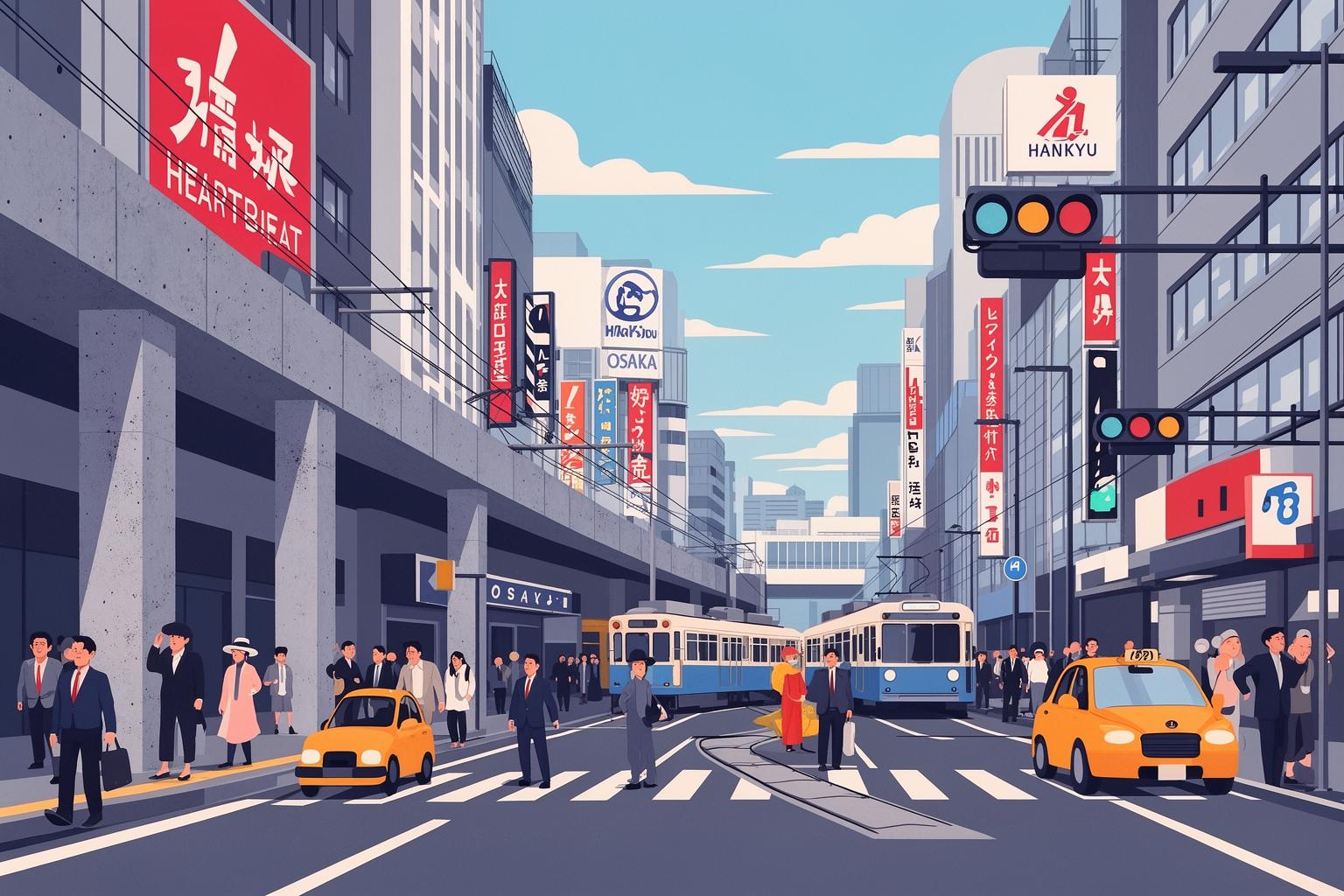
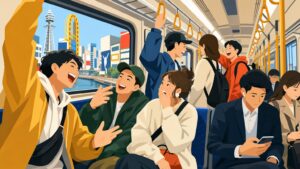
The Midosuji Line isn’t just an option; it’s a statement. It’s a commitment to connect directly with Osaka’s main artery, to feel its unstoppable pulse every single day. Painted a striking, unapologetic crimson, the Midosuji is unmistakably a public subway line. It’s practical, efficient, and invariably crowded. Riding the Midosuji offers a cross-section of humanity itself. You’ll find yourself pressed against a high schooler carrying a bass guitar, a grandmother headed to a department store in Umeda, a stern salaryman on his third meeting of the day, and a tourist with a camera trying to navigate the vibrant chaos of Namba. There’s no pretension here. This is mass transit at its purest—a human river flowing beneath the city’s most vital street.
The Vibe: Raw, Unfiltered, and Relentlessly Urban
Life on the Midosuji is all about concrete and convenience. The stations serve one purpose: to move millions of people as swiftly as possible. They are not beautiful. They are not quiet. They are vast underground labyrinths of grey tile and bright fluorescent lights, filled with the screech of train brakes and the hypnotic jingle signaling a departing train. This contrasts sharply with Tokyo’s Yamanote Line, which can feel almost sterile in its efficiency. The Midosuji pulses with a grittier, more visceral energy: the sound of a thousand conversations happening simultaneously, the scent of takoyaki from a nearby street vendor drifting down the stairs, the sight of people genuinely hustling. It’s the physical embodiment of the Osakan spirit: direct, pragmatic, and a bit loud. Living on the Midosuji means you value time and access above all else. You’ve made a trade-off: surrendering personal space for the certainty that you are never more than twenty minutes away from the absolute center of everything.
The Neighborhoods: A Cross-Section of Osaka Life
Living along this line means your neighborhood is defined by its role within the city’s grand ecosystem. Each stop is a distinct organ in the urban body.
Shin-Osaka and Nishinakajima-Minamigata
At the northern end lies Shin-Osaka, the city’s Shinkansen gateway. Living here is a choice rooted in pure practicality, a place for business travelers and those who need instant access to the bullet train. The area feels transient and somewhat sterile, dominated by office buildings and functional ramen shops. Just one stop south, Nishinakajima-Minamigata offers a somewhat more residential atmosphere, catering to company dormitories and affordable apartments for young professionals seeking a direct line to the office without the Umeda price tag.
Umeda
The northern giant. To live near Umeda is to live at the heart of corporate and commercial power. It’s a world of towering glass skyscrapers and sprawling, interconnected department stores like Hankyu, Hanshin, and Daimaru, complemented by an underground city so vast it seems to have its own weather system. Your local grocery store is the basement food hall of a luxury department store. Your evening walk takes you through a canyon of neon signs. It’s exciting, overwhelming, and the epitome of life at the center of the hustle.
Yodoyabashi and Hommachi
This is Osaka’s financial and administrative core. The vibe shifts from commercial to corporate. Crowds are filled with suited professionals, buildings house banks and corporate headquarters, and the atmosphere crackles with focused intensity. Living here often means residing in sleek, modern high-rises, overlooking the stream of commuters you belong to. It’s a life defined by sharp efficiency, where you can walk to your high-powered job amid the quiet hum of commerce.
Shinsaibashi and Namba
At the southern end lies the vibrant cultural and entertainment hub of Osaka—the city you see on postcards. Shinsaibashi buzzes with retail energy, from high-fashion boutiques to an endless covered shopping arcade. Namba explodes with sensory delights: the neon glow of the Glico Running Man sign, steam rising from countless food stalls in Dotonbori, and the roar of crowds at a Nankai Hawks baseball game. Living here means embracing chaos as a lifestyle. It’s for night owls, food lovers, artists—those who want the party right outside their front door. Quiet is rare here; life is loud, vivid, and unfiltered.
Tennoji
Further south, Tennoji embodies Osaka’s past, present, and future all in one place. You have Abeno Harukas, Japan’s tallest skyscraper—a shining symbol of modern commerce—standing alongside the gritty Showa-era nostalgia of Shinsekai and the Tsutenkaku Tower. Nearby is the ancient Shitennoji Temple, one of Japan’s oldest, just a short walk from a large modern park and zoo. Living in Tennoji suits those who appreciate the city’s contrasts, who find charm in the friction between old and new.
The Midosuji Mindset: Pragmatism Over Prestige
Choosing the Midosuji Line is an act of pure pragmatism. It’s a philosophy that says, “I want the city, all of it, right now.” Residents here aren’t seeking a quaint suburban atmosphere. They don’t need a garden or a quiet street—the city itself is their backyard. They prioritize the freedom to decide at 8 PM on a Tuesday to enjoy world-class okonomiyaki in Namba and be there by 8:20. Life is lived vertically, in high-rise apartments and compact condos where the view from your window is of other windows—a constant reminder that you are part of a vast, living organism. There’s honesty in this lifestyle, without pretension. It’s the Osaka of hardworking merchants, ambitious entrepreneurs, and students soaking it all in. A life defined not by calm within your four walls but by endless possibilities just an elevator ride and a train stop away.
The Hankyu Empire: A Curated Vision of the Good Life
To leave the Midosuji at Umeda and descend into the cavernous, cathedral-like terminus of the Hankyu Railway is to step into an entirely different world. This isn’t merely a different train line; it’s an entirely separate company, with a distinct history and a fundamentally different philosophy of living. The Hankyu is a private railway, and every aspect of it feels bespoke. The trains feature a distinctive deep maroon color, so iconic it’s known as “Hankyu Maroon.” The interiors are pristine, with plush, olive-green wool seats that resemble furniture more than public transport seating. The experience is smoother, quieter, and noticeably more polite. This is no coincidence. It reflects a century-old vision by founder Ichizo Kobayashi, who aimed to do more than just move people from one place to another. He sought to create a complete, aspirational lifestyle. He built the railway, then the department stores at the terminus, the immaculate residential neighborhoods along the tracks, and even the all-female Takarazuka Revue theater to entertain the residents. Riding the Hankyu is engaging with this grand, curated vision.
The Vibe: Polished, Planned, and Purposefully Pleasant
If the Midosuji is like a raw, powerful river, then the Hankyu is a network of carefully engineered canals, guiding you toward a more pleasant destination. The atmosphere on a Hankyu train is distinctly different. There’s a shared sense of identity among the passengers. You see families, university professors, and well-dressed shoppers. It’s a world apart from the chaotic jumble of the Midosuji. The stations themselves are cleaner, brighter, and often host small shops and bakeries that feel like part of the neighborhood, not just a transport hub. This captures the essence of the Hankyu brand: a promise of a controlled, comfortable, and civilized experience. It offers an escape from the city’s intensity, a daily retreat into a world that feels safer, cleaner, and more predictable.
The Neighborhoods: From Chic Cafes to Quiet Suburbia
The Hankyu lines spread out from Umeda like spokes on a wheel, each offering a slightly different flavor of this curated life, all defined by their distance from the downtown core.
The Hankyu Kobe Line
Often regarded as the crown jewel of the Hankyu empire, this line stretches west towards Kobe and is synonymous with affluence, culture, and understated prestige. Neighborhoods such as Ashiyagawa and Shukugawa nestle in the foothills between Osaka and Kobe, known for their leafy streets, elegant homes, and a high concentration of artisanal bakeries, chic cafes, and independent boutiques. Nishinomiya-Kitaguchi is a major hub on this line, home to the Hankyu Gardens shopping mall and a prime example of a perfectly planned suburban center. Living here is an aspirational choice. It’s a statement. It’s embracing a lifestyle inspired by the “Hanshin-kan Modernism” cultural movement of the early 20th century, which fused Western and Japanese aesthetics. It’s a life of quiet sophistication, where the city is a place you visit for work or special occasions, but your home remains a tranquil sanctuary.
The Hankyu Takarazuka Line
Heading northwest, the Takarazuka Line offers a slightly more accessible, family-oriented version of the Hankyu dream. It’s the original line, the one that started it all. Towns like Toyonaka and Ikeda are classic suburbs, celebrated for their excellent schools, spacious parks, and strong sense of community. Ikeda, in fact, is the birthplace of instant ramen, symbolizing the area’s identity as a center of mid-century suburban innovation. This line attracts families seeking more space, clean air, and neighborhoods where children can play outdoors. It’s less about chic cafes and more focused on community centers and local festivals. It’s a comfortable, stable lifestyle rooted in the vision of a family-friendly utopia that Kobayashi first imagined.
The Hankyu Kyoto Line
Stretching northeast toward Kyoto, this line serves as a vital link between Japan’s modern commercial hub and its ancient cultural capital. Cities like Ibaraki and Takatsuki are large commuter towns, but they embody the Hankyu DNA. They are cleaner, better organized, and feel more planned than neighborhoods on other, non-Hankyu lines. Living here is a practical choice for those who work in Osaka but want easy weekend access to Kyoto’s temples and gardens, or vice versa. It represents a blend of Hankyu’s pleasant suburbanism with the reality of residing between two major metropolitan centers. It’s the pragmatic wing of the Hankyu empire.
The Hankyu Mindset: Identity Through Association
Choosing a Hankyu line means choosing an identity. Residents don’t simply say, “I live in Toyonaka.” They say, “I live along the Hankyu Takarazuka Line.” The line itself becomes a part of their identity. This mindset values community, aesthetics, and a sense of order. It’s a deliberate decision to distance oneself from the daily grind and chaos of central Osaka. It’s a belief that home should be a refuge, not a continuation of the city’s hectic energy. Life here is lived more horizontally. People have gardens. They know their neighbors. Their social life revolves around local restaurants and community events. There’s a subtle but distinct pride in living within the world that Hankyu created. It’s the feeling of embracing a better, more thoughtful way of life—a quiet rebellion against the noise and grit of the merchant city just a short, comfortable train ride away.
The Head-to-Head: Daily Life Decisions
Your choice between these two arteries will shape the texture of your daily life in Osaka. This decision unfolds in the small moments: your morning commute, your grocery trips, your Saturday afternoons.
The Commute: The People’s Artery vs. The Private Carriage
Commuting on the Midosuji line is a challenge. You learn to navigate the crowds, pinpoint the exact spot on the platform where the doors will open, and hold your ground with polite yet firm resolve. It’s anonymous and efficient. You become a nameless face among a sea of commuters, all rushing toward the city’s core. A Hankyu commute, while still busy during rush hour, offers a different social experience. You start to recognize familiar faces every day. There’s a quiet sense of camaraderie. The journey itself feels more pleasant—the gentle rocking of the train, the clean windows looking out onto houses and green spaces. The arrival is the starkest contrast: Midosuji’s Umeda station is a chaotic, multi-level puzzle box of exits and transfers, while Hankyu’s Umeda is a grand, sweeping terminus with nine platforms side-by-side, a majestic gateway that makes you feel like you’re arriving somewhere special, not just being spat out by a machine.
Weekend Vibes: Diving In vs. Getting Away
For those living near Midosuji, weekends mean diving deeper into the city. Saturdays might include exploring the vintage clothing stores of Amerikamura, trying a new restaurant in Fukushima (just a short loop line ride from Umeda), or catching a comedy show in Namba. The city is your playground, and your default is to be out and about. For Hankyu residents, weekends often mean enjoying the local area or escaping it. It’s a leisurely brunch at a neighborhood cafe, a bike ride along the river, or taking advantage of the line’s excellent connections for a day trip. From the Kobe line, you can be hiking in the Rokko Mountains in less than an hour. From the Kyoto line, you’re ideally positioned for cultural excursions. The city becomes a destination, a place you visit intentionally, rather than the constant backdrop of your life.
Cost and Space: The Vertical Squeeze vs. The Horizontal Spread
This is the most practical difference. Along the Midosuji line, your rent buys location, not space. Apartments are notoriously compact. You might pay a premium for a tiny studio in Shinsaibashi simply because you can step out of bed and into the heart of the action. It’s a vertical life, stacked one on top of another. Along the Hankyu lines, that same rent money gets you square footage and tranquility. The farther you move from Umeda, the more space you find. You can get apartments with larger balconies, more rooms, and even single-family homes with small gardens. You trade minutes on the train for the luxury of space—a trade-off an increasing number of people are willing to make. It’s the classic urban dilemma: do you want a small home in a big world, or a big home in a smaller one?
What This Says About Osaka
The duality of the Midosuji and Hankyu lines perfectly symbolizes the dual identity of Osaka itself. This contrast goes beyond just public versus private transportation; it reflects the city’s historical soul versus its modern ambitions. The Midosuji Line embodies the raw, pulsating heart of the merchant city. It traces the route of Osaka’s main commercial artery, a corridor designed for business, efficiency, and the practical, straightforward, sometimes harsh mindset that transformed this city into an economic powerhouse. This is the Osaka of akindo—the merchant class that values a good deal and directness over polite formalities. It’s a spirit that foreigners often find refreshing and distinct from the rest of Japan. Conversely, the Hankyu empire represents a deliberately crafted alternative. It was a 20th-century vision offering a new way to be Osakan: cultured, comfortable, and suburban. It created a lifestyle where you could enjoy the economic advantages of the great merchant city without enduring its noise and bustle. It fostered an identity rooted in taste, leisure, and family life that felt almost European in aspiration, yet originated from the fierce entrepreneurial spirit unique to Osaka. This explains why the typical clichés about Osaka can be misleading. The loud, food-loving, joke-cracking Osakan exists, and their natural habitat is often the vibrant chaos of the Midosuji corridor. But the quiet, well-educated, elegantly dressed Osakan who prefers a classical concert over a comedy club is just as real, likely riding the Hankyu train home to their tranquil neighborhood in Nishinomiya. Grasping this divide is essential to understanding the city’s complexity. Osaka is not a monolith; it’s a dynamic tension between its pragmatic, merchant core and its aspirational, curated outskirts. The first and most important decision you make when choosing to live here is which side of that divide you want to call home.