When you picture a festival in Japan, what comes to mind? Chances are, it’s an image of overwhelming scale. Thousands of people packed shoulder-to-shoulder, watching a procession of immense, ornate floats. The air thick with the smoke of countless food stalls, the sky exploding with fireworks. You’re thinking of spectacles like Osaka’s Tenjin Matsuri or the raw, kinetic energy of the Kishiwada Danjiri Matsuri. These are incredible events, no question. They are powerful, historic, and visually stunning. But for someone trying to build a life here, they can also feel profoundly isolating. You are a spectator in a sea of spectators, an anonymous face in a crowd of millions. You watch the culture, but you don’t touch it. You see the community, but you aren’t part of it.
This is a common frustration for foreign residents. You move to Osaka, drawn by its reputation for being friendly and open, but find yourself on the outside looking in. The grand-scale events are for everyone, which means they are for no one in particular. But there’s another layer to festival life here, one that doesn’t make it into the travel guides. It’s smaller, messier, and infinitely more important for understanding this city. I’m talking about the neighborhood matsuri, the local shrine festival, the summer party in the park down the street. These are the events where Osaka’s soul truly resides. They are not performances to be consumed; they are gatherings to be joined. This is where you stop being a resident and start becoming a neighbor. This is your real invitation to the heart of Osaka.
Embracing the full spectrum of neighborhood culture means venturing beyond festivals to explore the everyday scene—consider our guide to Osaka’s local supermarkets to experience the unique Tamade way of life.
The Two Faces of Matsuri: Spectacle vs. Participation
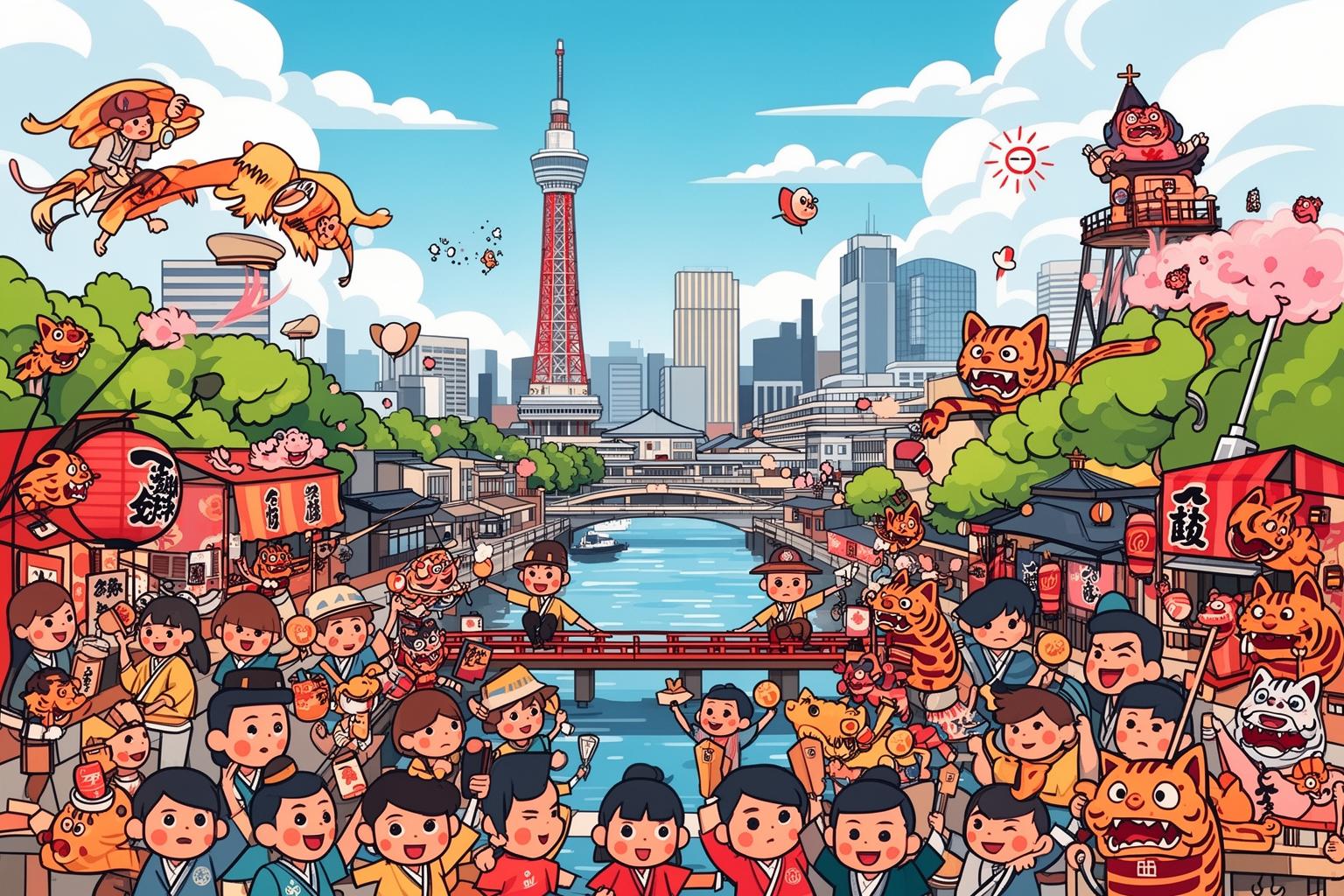
In Japan, especially in a lively city like Osaka, festivals unfold along two distinct paths. First, there’s the main track: the large, well-known, heavily promoted events. The Tenjin Matsuri serves as a perfect example. It’s a stunning river procession with bonfires and boats, rooted in over a thousand years of history. The city comes to a standstill. The media covers it for weeks. It’s a source of civic pride. Yet your participation is inherently passive. You find a spot, watch, take photos, navigate the crowds, and then leave. You’ve witnessed something extraordinary, but without making any real connection. The event is a product, and you are its consumer.
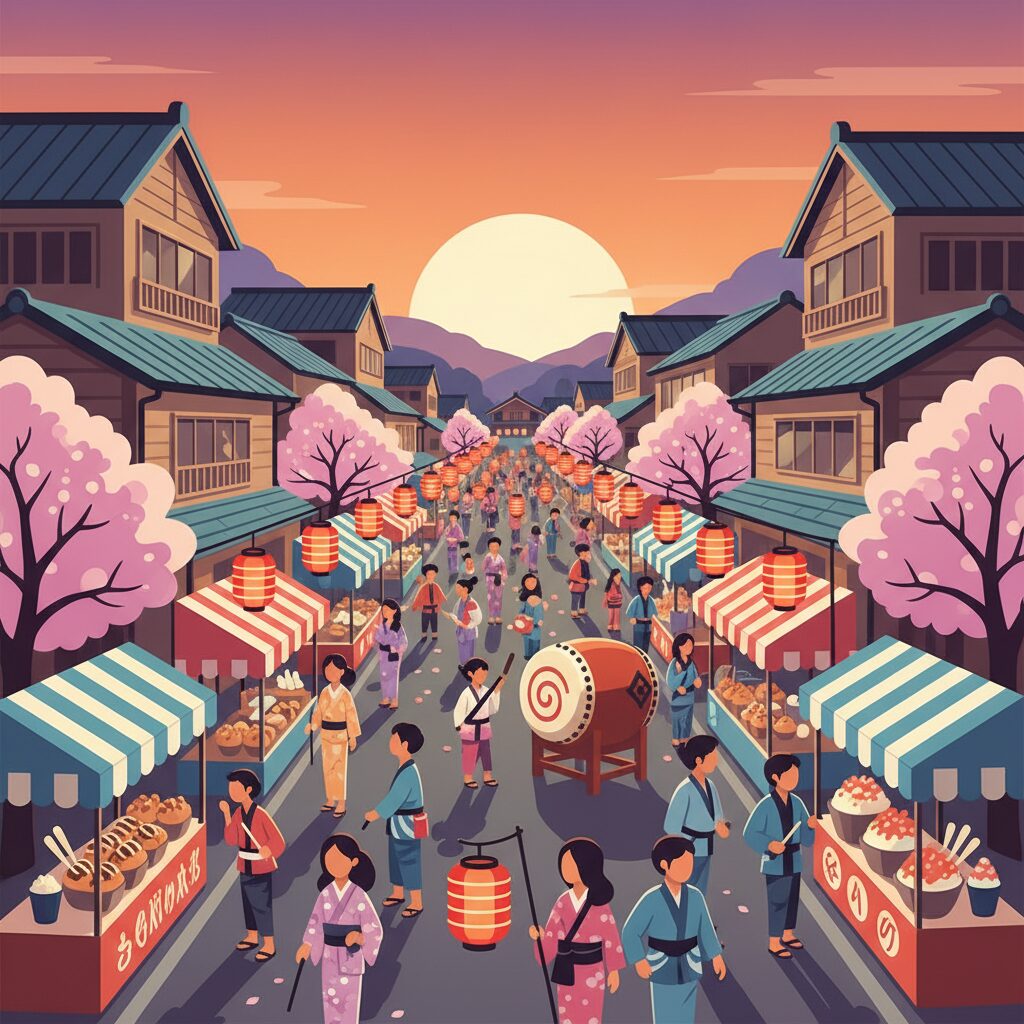
Then there’s the local track, running through every neighborhood and small cluster of streets. This is the world of community matsuri. They might take place at a tiny local Shinto shrine, in a public park, or even a cleared parking lot. There are no massive floats or city-halting parades. Entertainment might be a shaky karaoke stage or a group of local children practicing taiko drums. Food stalls are not operated by professional vendors but by your neighbors—the woman from the corner dry cleaner grilling yakisoba, the man from the barbershop pouring beers. The atmosphere is completely different. It’s not a performance; it’s an amplified block party.
Coming from Tokyo, this contrast is striking. In Tokyo, community events often feel formally organized. Volunteers wear matching vests, schedules are clear, and a polite distance is kept. It can feel like a corporate-sponsored event, even when it’s not. In Osaka, the boundary between organizer and attendee is wonderfully, chaotically blurred. The goal isn’t flawless execution; it’s for everyone to gather, share food, and enjoy themselves. It’s less about preserving tradition in a rigid, unchanging form and more about using tradition as an excuse for celebration. This shift from spectacle to participation is the crucial key to understanding social life in Osaka.
Cracking the Code: How Neighborhood Festivals Actually Happen
You won’t find these local festivals listed on TripAdvisor or featured in any English-language magazine. Their promotion is intensely local, assuming you’re already plugged into the community’s information network. Understanding how they come together is the first step to joining in.
The Unseen Engine: The Jichikai
At the core of every neighborhood matsuri is the jichikai, or local neighborhood association. In many regions of Japan, the jichikai acts as a quasi-governmental administrative group. It distributes newsletters, manages garbage collection points, and oversees other routine parts of daily life. Membership can feel like an obligation, just another box to tick. In Tokyo, jichikai meetings tend to be formal gatherings, conducted with procedural rigor.
In Osaka, however, the jichikai often resembles more of a social club. It’s the city’s connective fabric. While they do handle practical tasks, they also serve as the main drivers of community life. Organizing the annual summer festival is their biggest undertaking. The meetings to decide who will run the ring toss game and how many kilograms of noodles to order for the yakisoba stall are often accompanied by tea and snacks, sometimes even beer. There’s a strong sense of shared ownership and, frankly, enjoyment. They’re not merely fulfilling a civic responsibility; they’re planning a celebration for themselves and their neighbors. This is a vital distinction. The festival isn’t being organized for the neighborhood; it’s being organized by the neighborhood.
The Invitation You Didn’t Know You Received
So, how do you learn about these festivals? You have to pick up on the local signs. The invitation isn’t a personalized email; it’s the environment around you. It’s the slightly worn, photocopied flyer that appears in your mailbox, printed only in Japanese, with a hand-drawn map to the local park. It’s the colorful paper lanterns suddenly hung along the shopping street. It’s the sound of taiko drum practice drifting through the open windows of the community center on a weeknight. It’s the notice taped to the telephone pole you walk past every day.
This way of communicating reflects a key aspect of the Osaka mindset. The community assumes that if you live there, you are already part of it. There’s no separate track for foreigners or newcomers. You’re expected to access the same information channels as the grandmother who’s lived on the block for sixty years. At first, this can feel exclusive, as if you’re missing some secret. But the truth is quite the opposite. It’s profoundly inclusive. The community isn’t making a special effort to include you because it already assumes you belong. The door is wide open; you just need to see it and decide to step through.
From Stranger to Neighbor: Your Role in the Matsuri
Recognizing that the festival is taking place is the first step. Showing up is the second. But the third step, active participation, is what truly transforms everything. This is when you shift from being a passive spectator to becoming an engaged member of the community. And it’s much easier than you might expect.
Step One: Just Show Up
Set aside any worries about not having an invitation or feeling out of place. The barrier to entry for a neighborhood matsuri is nonexistent. If you live nearby, you’re welcome—no questions asked. So, put on your shoes and head over. Bring some cash for food and drinks. That’s all. The initial goal is simply to be present. Buy some fried chicken from a stall, find a spot to sit, and soak in the atmosphere. You’ll see families, elderly couples, teenagers, and children. You’ll witness the beautiful, unfiltered reality of your neighborhood in motion. This simple act of showing up signals your interest and willingness to be part of the local community.
The Universal Language of “Can I Help?”
Here is the single most effective tip for making connections at a local matsuri: offer to help. This is the ultimate icebreaker, a gesture that crosses language barriers and cultural differences. The lively, slightly under-resourced nature of an Osaka neighborhood festival is your greatest advantage. Unlike a polished Tokyo event, things tend to be a bit chaotic. Someone is always in need of assistance. And that’s your chance.
Look around. Do you see a few older men struggling to move a heavy table? Walk over and lend a hand. Is the drink stall overwhelmed, with one person trying to serve a dozen thirsty kids? Step forward and ask, “Tetsudaimashou ka?” (Shall I help?). Perfect grammar isn’t necessary—a simple “Help?” with a gesture toward the task works just fine. In Osaka, practical helpfulness is valued far more than formal politeness. People won’t doubt your intentions—they’ll be relieved to have extra help. This proactive attitude is deeply appreciated. It demonstrates you’re not just there to watch—you want to be part of the collective effort.
Practical Scenarios for Breaking the Ice
Let’s get specific. Your goal is to find a small task, lasting about five minutes, that lets you connect with your neighbors. You’re not trying to run the festival—you’re looking for a brief interaction.
Setup and Teardown: Arrive a bit early or stay a little late. This is when the real work gets done. Offering to help unfold chairs, carry a speaker, or wipe down a table is a golden opportunity. You’ll be working alongside the core group of organizers—the most connected people in the neighborhood. They’ll remember the foreigner who pitched in without being asked.
Game Stall Assist: Look for the simplest game stall, like ring toss (wanage) or super ball scooping (super ball sukui). These are often run by parents taking turns. If there’s a rush, offer to help pick up rings the kids have thrown or hand out prizes. It’s a low-pressure role that gets you positive, direct contact with families.
Trash Run: This is the least glamorous but most appreciated job. Neighborhood festivals produce a lot of trash. The bins fill quickly. Collecting a few overflowing bags and taking them to the designated spot is an act of service that won’t go unnoticed. The cleanup lead will be deeply grateful.
Join the Dance: If there’s a Bon Odori (traditional summer dance), jump in. Get into the circle. No one—absolutely no one—cares if you don’t know the steps. In fact, your awkward attempts will likely be seen as charming. An older woman will almost certainly come over and patiently teach you the hand movements. In that moment, you aren’t a foreigner; you’re just another person enjoying the dance and sharing a communal experience.
The Social Payoff: What Happens After the Festival
The magic of the matsuri goes beyond what occurs during the event itself. The true reward comes in the days and weeks afterward. The small interactions you experienced during the festival act as seeds that grow into daily acknowledgments. This explains how the notorious, and often misunderstood, “friendliness” of Osaka actually operates. It’s not about strangers randomly striking up conversations with you on the subway. Rather, it’s about creating a web of familiarity within your immediate surroundings.
The man you helped carry a cooler? He owns the local liquor store. Now, when you walk by, he’ll nod and say “doumo.” The woman you bought yakisoba from? She lives in the apartment building next door. The next time you see her in the hallway, she won’t just give a polite, silent bow; she’ll smile and say, “The other day was fun, wasn’t it?” The child you handed a prize to at the ring toss game will now greet you with a loud “Hello!” when they see you at the supermarket.
These aren’t deep, profound friendships made in a single evening. They are weak ties, the foundation of a healthy community. You have moved from being an anonymous face to a recognized individual. You now share a context. In a city as large as Osaka, your world can feel vast and impersonal. The neighborhood matsuri reduces that world to a human scale. It transforms the geography of your life from a collection of streets and buildings into a network of familiar faces. This is something that can take years to develop in other cities, but in Osaka, it can occur in just one afternoon.
Overcoming the Foreigner’s Hesitation
Even with the best intentions, feeling hesitant is natural. The inner voice of anxiety can be persistent, whispering doubts that hold you back. Let’s confront these fears directly, as they are the main barriers between you and a fuller life in this city.
“My Japanese isn’t good enough.” This is the most common fear and the least justified in this context. In Osaka, communication is known to rely less on formal language accuracy and more on conveying your intent. People excel at reading the situation (kuuki wo yomu), and your actions will speak louder than your words. A smile, a helpful gesture, and a simple “Ii tenki desu ne?” (Nice weather, isn’t it?) will suffice. They appreciate the effort, not grammar perfection. Enthusiasm is a universal language.
“I’ll be intruding on a private event.” This reflects a basic misunderstanding of what a community festival is. By definition, it is for the community. If you live there, you are the intended guest. Actually, avoiding it only creates the distance you want to bridge. Organizers are often excited to see new faces, especially foreigners. It signals their neighborhood is vibrant and welcoming. You are not an intruder; you are a valued guest.
“I don’t know the rules or the etiquette.” A neighborhood matsuri’s charm lies in its informal nature. The main etiquette is to be a good neighbor: be respectful, clean up after yourself, and avoid causing trouble. Beyond that, the best way is to observe and participate gently. Notice how others eat, drink, and interact. Follow their lead. There is no secret cultural code you need to know. The only unspoken rule, if any, is “don’t just stand there and watch.” Engage, even if just a little.
The Real Osaka Is in the Details
People move to Osaka for various reasons, but they stay because they discover a true sense of belonging. They find a community that feels genuine and welcoming. The large, famous festivals are Osaka’s striking facade, the image it presents to the world. While they are part of the city’s identity, they do not represent its core.
The core lies in the small parks and shrine grounds on humid summer evenings. It’s in the flavor of slightly charred yakisoba cooked by your neighbor. It’s in the sound of children’s laughter and the off-key karaoke of a local shop owner. It’s in the shared, simple joy of being together. This is the Osaka that doesn’t appear in guidebooks. It’s the Osaka that has to be experienced.
So next time you see a paper lantern hung on your street or find a crumpled flyer in your mailbox, don’t ignore it. Recognize it for what it truly is: an open invitation. Attend your local festival. Offer your help. Join the dance. You won’t just observe Osaka. You’ll become part of it. And you’ll finally understand what everyone means when they say this city is friendly.