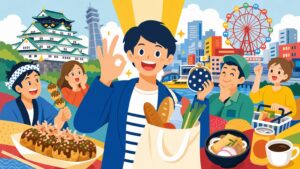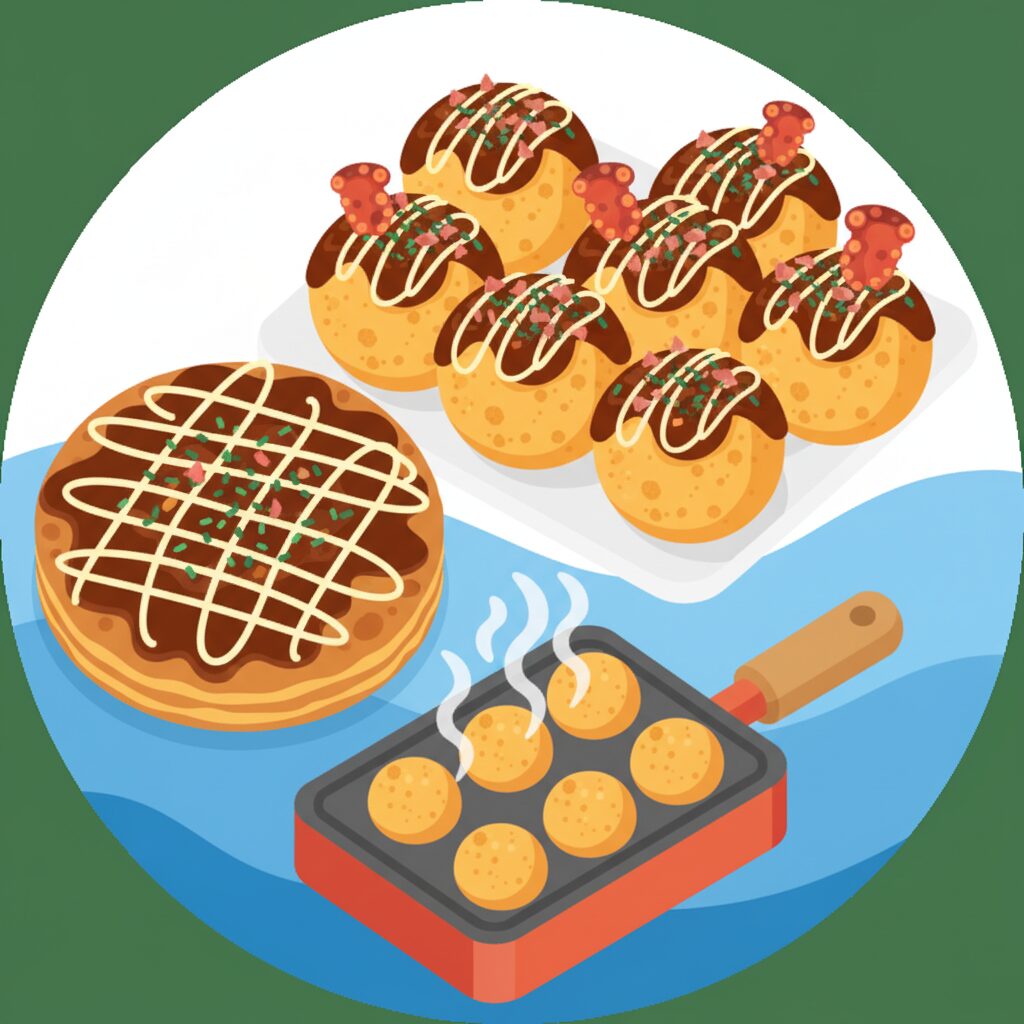
You see them first as a tourist, probably. Steam billowing from a street-side stall in Namba, the rhythmic clack-clack-clack of metal picks turning perfect spheres of batter in a cast-iron pan. You smell the savory sauce, the salty hint of seaweed, the smoky dance of bonito flakes. Takoyaki. You try okonomiyaki next, a dense, glorious pancake of cabbage and batter, slathered in that same sweet-savory sauce and a lattice of mayonnaise. This, you think, is Osaka food. Cheap, fast, delicious, and eaten on the go. And you’re not wrong, but you’re only seeing the opening act of a much deeper, more intimate play.
Living here tells a different story. The real story isn’t under the neon glare of Dotonbori; it’s in the quiet hum of a suburban kitchen on a Tuesday night. It’s in the boisterous laughter spilling from a third-floor apartment on a Saturday. The real tell isn’t the length of the line at a famous takoyaki stand; it’s the sprawling, dedicated aisle in every electronics store, showcasing dozens of home takoyaki makers. It’s the moment a neighbor, after a bit of small talk about the weather, casually asks, “We’re having a tako-pa this weekend, you wanna come?” A what? A takoyaki party. That’s when you realize this isn’t just street food. This is the scaffolding of social life. This is konamon culture, and in Osaka, it’s everything.
Konamon, the catch-all term for flour-based dishes, is the culinary soul of this city. But it’s more than a menu category. It’s a mindset. It’s a philosophy of practicality, community, and unpretentious joy that explains so much about how Osaka people think, act, and connect with each other. It’s one of the clearest, most tangible differences you’ll feel between life here and life in Tokyo. Forget the grand temples and shiny skyscrapers for a moment. To truly understand Osaka, you need to understand what’s happening around that sizzling hot plate.
Many locals, beyond savoring street food and neighborhood gatherings, also unwind through Osaka sentō traditions that solidify community bonds in their everyday lives.
The Konamon Kitchen: Why Every Osaka Household is a Potential Restaurant
One of the first culture shocks you may encounter as a resident of Osaka isn’t on a crowded train or in a bewildering government office. It’s inside a branch of Yodobashi Camera or Bic Camera. You’ll stroll past the refrigerators and washing machines only to find yourself in an aisle buzzing with domestic promise. And there they are: rows upon rows of takoyaki makers. Not just one or two novelty items, but an entire array of them. There are simple, round electric plates for beginners, square ones that make twenty-four balls at once—ideal for a party—and heavy-duty, gas-powered models for the serious enthusiast who demands a crispy exterior and a molten, gooey center. Some come with interchangeable plates for making ajillo or small pancake balls. This isn’t the kitschy souvenir section; it’s the heart of the small appliance department, nestled right next to the rice cookers and toaster ovens.
The Ubiquitous Takoyaki Maker
There’s a common belief here that every Osaka household owns at least one takoyaki maker. From my experience, this isn’t an exaggeration; it’s an understatement. Many families have two. It’s a typical wedding gift and a popular housewarming present. Owning one is an expression of identity. It declares, “We are an Osaka family. We’re always ready for a party. We are self-sufficient when it comes to our konamon cravings.”
This appliance is the key to understanding the difference between eating konamon and living konamon. A tourist buys takoyaki, but an Osakan makes takoyaki. The machine itself captures the city’s spirit: practical, designed for sharing, and a tool for creating cheap, fun experiences. In Tokyo, a typical home party might center around ordering sushi or making nabe (hot pot). Both are lovely, but socially different. With nabe, one person usually oversees the cooking. With takoyaki, the cooking is the event. The machine acts like the campfire around which the group gathers, each person poking at the sizzling batter with their own little pick.
Having one of these machines in your kitchen changes your entire approach to a casual weeknight meal. It turns a simple dinner into an interactive event. For my family, it transformed “what’s for dinner?” from a chore into a game. The kids love pouring the batter (with varying success and messiness) and attempting to turn the octopus balls. It’s a fantastic way to get them involved in cooking and, honestly, to get them to eat since they made it themselves.
The Pantry of an Osakan
Peek into a kitchen cupboard in Osaka, and you’ll find the essential lineup for the takoyaki maker. It’s a very specific arsenal of ingredients, always kept ready. This isn’t like having flour and sugar for the occasional batch of cookies; this is a state of constant preparedness.
You’ll discover a bag of takoyaki-ko or okonomiyaki-ko, a pre-mixed flour blend often containing dashi or yam powder for added flavor and texture. Trying to make it with plain flour is seen as amateur hour. Nearby, a bag of tenkasu—crunchy, savory bits of fried tempura batter adding critical texture and richness. A jar of bright red beni shoga (pickled ginger) provides a sharp, cleansing bite. And, of course, the holy trinity of toppings: a bottle of thick, sweet-and-savory okonomi sauce (often a specific brand like Otafuku or a local favorite), a shaker of powdered green aonori seaweed, and a rustling bag of paper-thin katsuobushi (bonito flakes) that appear to breathe and dance when they meet the hot food.
This pantry readiness is central to the culture. It means that when a friend drops by unexpectedly or when you don’t have the energy for a complicated meal, you can whip up a feast in minutes. It’s spontaneous, resourceful, and deeply social. The unspoken message of a well-stocked konamon pantry is, “My door is always open.”
Tako-Pa: The Social Glue of Osaka Neighborhoods
The presence of both hardware and software—the maker and the ingredients—naturally leads to the main event: the tako-pa, or Takoyaki Party. If you’re ever invited to one, say yes. It’s your genuine introduction to life in Osaka. A tako-pa is Osaka’s version of a backyard barbecue in Australia or a potluck dinner in the States, but it carries a distinctively collaborative and lively energy.
What is a “Tako-Pa”?
A tako-pa isn’t a formal dinner party. No one expects you to arrive dressed in your finest attire. The host doesn’t toil in the kitchen for hours beforehand to prepare a perfect meal. Instead, the “kitchen” is brought right to the living room table. The host usually provides the batter, octopus, and the basic setup. Guests typically bring drinks, snacks, or sometimes their favorite secret ingredients to contribute.
At the center is the takoyaki maker, plugged in and sizzling. A large bowl of batter is set beside it, along with small bowls of chopped octopus, green onions, tenkasu, and beni shoga. Everyone takes a seat around the table, grabs either long chopsticks or a metal pick, and the process begins. The host may pour the first batch, filling the small hemispherical molds to the brim. Then the fillings are sprinkled in. After a few minutes, the turning starts. This is the moment of truth, marked by both intense focus and lively commentary.
Unlike a typical dinner party where the host serves the guests, a tako-pa breaks down that hierarchy. Everyone becomes a cook. Everyone is a critic. Everyone is involved. Conversation flows alongside the rhythm of cooking: the pour, the fill, the turn, the sauce, the eat. Repeat. It’s a beautifully simple and effective social ritual.
The Unspoken Rules of the Party
Though wonderfully informal, the tako-pa has its own subtle etiquette and traditions. The most prominent is the friendly, ongoing debate about the “right” way to do things. Batter consistency is a frequent topic: should it be thin and runny for a crispier shell, or a bit thicker? The turning technique is another. A true master can flip the balls with one smooth, fluid motion. Amateurs poke and prod, often breaking the fragile spheres. Your technique will be watched closely, and you’ll receive plenty of unsolicited but well-meaning advice. Don’t take it as criticism; it’s a form of engagement and a way to share knowledge and passion.
Then there’s the art of customization. While octopus is the classic filling, the real excitement starts when guests bring their own variations. Cheese is hugely popular, creating a molten, stretchy center. Kimchi adds a spicy punch. Pieces of mochi rice cake, sausage, shrimp, corn—the possibilities are endless. This is where Osaka’s spirit of playful experimentation shines. There are no strict rules. If it tastes good, it’s a valid ingredient. This creative chaos is part of the enjoyment.
For families, the tako-pa is a multi-generational event. Grandparents teach grandchildren the wrist flick needed to turn the balls. As a parent, it’s one of the least stressful ways to host a gathering. The entertainment is built-in, and the kids are so busy trying to cook their own food that they hardly have time to cause trouble. It teaches cooperation, a bit of cooking science, and the simple joy of making and sharing food. Watching my child finally master the skill of turning a perfect takoyaki ball, his face a mask of intense concentration, was a proud moment that felt deeply connected to our life in this city.
Okonomiyaki: The “Whatever You Like” Philosophy on a Griddle
If takoyaki is the life of the party, okonomiyaki is its heartier, more contemplative sibling. It’s the comforting dish you prepare at home when you crave something truly satisfying. Its name reveals much about the Osaka mindset: okonomi means “what you like” or “how you like,” and yaki means “grilled.” Grilled just the way you want it. This dish is grounded in a foundation of delightful pragmatism.
More Than Just a Cabbage Pancake
A foreigner’s first encounter with okonomiyaki might prompt them to call it a “Japanese pizza” or a “cabbage pancake.” While not completely wrong, these descriptions miss the essence. Pizza follows a certain structure, with generally accepted rules. Okonomiyaki discards the rulebook entirely. At its base, it’s a batter of flour, eggs, and dashi, filled out with a generous amount of shredded cabbage, then combined with whatever proteins or ingredients are available.
This is where the well-known Osaka vs. Hiroshima debate arises. In Hiroshima, okonomiyaki is built in separate layers: a crepe of batter, a heap of cabbage, pork, noodles, and a fried egg, all stacked with careful precision. It’s a beautiful, intentional process. Osaka style? Toss everything into a bowl, mix it energetically, and pour it onto the griddle. It’s quicker. It’s messier. It’s a culinary democracy where every ingredient has an equal say from the start. This isn’t merely a regional cooking distinction; it perfectly symbolizes the characters of the two cities. Osaka is straightforward, efficient, and believes the whole is greater than the sum of its parts when blended from the beginning.
The Home vs. Restaurant Experience
Although excellent okonomiyaki can be found in restaurants throughout the city, the true essence of the dish lives in home kitchens. At home, okonomiyaki is the ultimate fridge-cleaning meal. A few leftover pork strips? In they go. Half an onion lurking in the vegetable drawer? Chop it up. A handful of frozen shrimp? Why not. A bit of cheese starting to look lonely? It’ll taste fantastic melted on top. This embodies the local aversion to waste, a concept called mottainai. Nothing is discarded if it can be folded into a savory pancake.
This approach stands in stark contrast to the more refined, aesthetically focused culinary traditions found in places like Kyoto. In Kyoto, there is often deep reverence for tradition and the purity of each ingredient. In Osaka, the highest respect goes to what works, what tastes good, and what makes practical sense. If mixing pork, squid, and cheese in a cabbage-and-batter base tastes incredible—and it does—that’s exactly what you do. This pragmatism, this emphasis on substance over style, is a hallmark of the Osaka spirit.
The Konamon Mindset: How Flour and Water Explain Osaka
So, it’s more than simply a meal. Konamon culture serves as a lens through which you can grasp the city’s merchant history, its social dynamics, and its essential distinction from the rest of Japan.
Cost-Performance and the Merchant Spirit
Osaka has always been a city of merchants, a practical, money-conscious place where value reigns supreme. Konamon is the ideal merchant food. Its main ingredients—flour and water—are inexpensive. You can bulk it up with affordable cabbage. It fills you up and leaves you satisfied. This obsession with kosupa (cost-performance) is woven into the city’s DNA. Osakans take great pride in finding a good deal, in eating well without overspending. Konamon is the ultimate embodiment of this: maximum satisfaction for minimum yen.
This is not about being “cheap” in a negative way. It’s about being savvy, smart, and resourceful. It reflects a deep appreciation for value. You see this mindset everywhere, from the covered shopping arcades where people haggle with good humor to the way business deals are made. It’s a practical, no-nonsense approach to life, and it all begins with a bowl of batter.
Communication Through Cooking
The collaborative nature of a tako-pa or making okonomiyaki on a griddle built into your table at a restaurant acts as a powerful social lubricant. It avoids the need for awkward small talk. When you’re engaged in a shared, tangible task—turning the takoyaki, flipping the okonomiyaki, deciding who gets the last piece—social barriers dissolve. You’re not merely sitting across from each other; you’re working together, creating something. The activity itself sparks conversation.
This helps explain why Osakans are often stereotyped as more open, friendly, and direct than people from other regions. Their social interactions frequently revolve around these participatory, informal events. A Tokyo social gathering might be a more structured nomikai (drinking party) at an izakaya, where seating arrangements and hierarchies subtly affect the dynamic. An Osaka tako-pa gathers everyone around the same hot plate, literally and figuratively. It’s a great equalizer. It’s communication through action, a bond formed in sizzling oil and savory sauce.
The Tokyo Contrast: A Monjayaki Mention
To truly highlight the contrast, it’s helpful to look at Tokyo’s own version of a savory pancake: monjayaki. If you’ve never tried it, imagine okonomiyaki batter that never fully cooks through. It’s much runnier, and you pour it onto the griddle, form a little wall with the solid ingredients, then pour the liquid batter into the center. You eat it not with chopsticks, but by scraping up little caramelized bits from the griddle with tiny metal spatulas. It’s a completely different experience. It’s more delicate, more drawn-out, and arguably less substantial. You could see it as a metaphor: Osaka’s okonomiyaki is a hearty, straightforward, get-the-job-done meal. Tokyo’s monjayaki is more of a deconstructed, interactive snack. It’s a subtle yet telling difference in approach to food, and perhaps life itself.
Living in Osaka, you soon realize that takoyaki and okonomiyaki are not just menu items. They are a way of life. They are the city’s answer to everything. Celebrating a birthday? Tako-pa. Friends coming over? Tako-pa. Unsure what to make for dinner? Okonomiyaki. They stand as a testament to a culture that values community, practicality, and the deep joy of sharing a simple, delicious meal. An invitation to a tako-pa isn’t just an invitation to dinner. It’s an invitation into a home, into a circle of friends, and into the warm, beating, flour-dusted heart of Osaka.