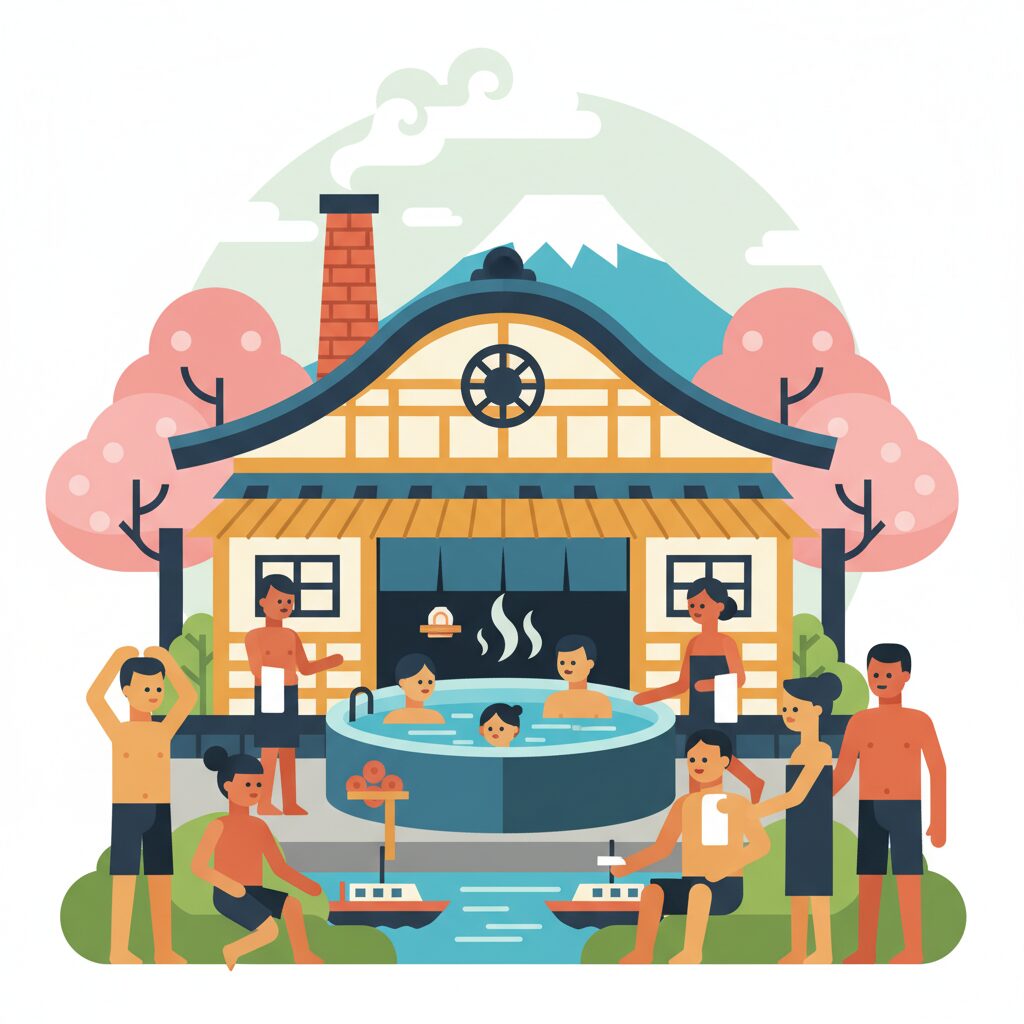
Hola, everyone! When you first picture Japan, you probably imagine a few key scenes. Cherry blossoms, maybe. Shrines and temples, for sure. And, of course, the iconic image of people soaking blissfully in a steaming hot spring, or onsen, with a view of Mount Fuji. It’s a beautiful picture, a perfect postcard moment. But when you move to Osaka, you quickly learn that the post-work reality isn’t a mountain retreat. It’s something far more raw, more real, and infinitely more interesting: the neighborhood sentō, or public bath.
For many tourists, a bathhouse is a one-time cultural novelty, a box to check on a whirlwind itinerary. For the people of Osaka, it’s the weekly reset button. It’s the community center, the gossip hub, and the therapist’s office all rolled into one steamy, tiled room. It’s where the city washes away the day’s grime and its social pretenses, all for the price of a couple of coins. This isn’t the quiet, meditative experience you might find in a refined Kyoto inn. Oh no. The Osaka sentō is loud, it’s lively, and it tells you more about the soul of this city than any guidebook ever could. It’s where you stop being a visitor and start understanding the rhythm of daily life. Forget the postcard—this is the real deal.
Many Osaka residents not only embrace their lively sentō culture but also apply savvy money management in their everyday lives, as seen in Osaka grocery budgeting insights that reveal the local approach to smart spending.
The Sentō Isn’t a Spa, It’s the Neighborhood Living Room
Let’s get one thing clear right away. A trip to a spa is a special occasion, a luxurious indulgence. A trip to the sentō is just Tuesday. It’s an everyday errand, like going to the grocery store, but infinitely more social. The moment you slide open the door, moving from the cool evening air into a wall of warm, humid steam, you’re not entering a place of business. You’re stepping into the collective living room of your neighborhood.
A Social Stage, Not a Silent Sanctuary
The sound hits you first. It’s not the gentle trickle of a bamboo fountain. It’s a roar. It’s the echoing chatter of a dozen conversations bouncing off wet tile. It’s the sound of Osaka in its natural habitat. In a Tokyo bathhouse, you might find a respectful, almost monastic silence. People keep to themselves, soaking in quiet contemplation. In Osaka, silence is suspicious. If you’re not talking, someone will happily start talking at you.
Here, the sentō is a stage for the daily drama of life. You’ll hear two obachan (older ladies) dissecting the latest Hanshin Tigers game with the passion of seasoned sports commentators. You’ll overhear a shopkeeper from the local shōtengai (shopping street) complaining about his lazy nephew while his friend offers unsolicited business advice. The bathhouse’s acoustics amplify everything, turning private murmurs into public proclamations. It’s where gossip is exchanged, deals are informally struck, and community ties are woven—one loud, steamy conversation at a time.
Generations in the Nude
The cast of characters is always changing but eternally familiar. You see fathers patiently teaching their toddlers how to properly rinse off, a tiny plastic bucket in hand. This is where the rules are learned—not from a sign on the wall, but from a parent’s gentle guidance. Teenagers try to act cool and detached, but they can’t escape the gravitational pull of a grandmother asking if they’re eating enough vegetables. Middle-aged men, their bodies softened by desk jobs and nightly beers, talk about stocks and golf swings in the sauna, sweating out the stresses of the week.
Then there are the elders, the sentō royalty. Their skin tells stories of decades of hard work; their movements are slow but deliberate. They’ve been coming to this very bathhouse since childhood and are the unofficial guardians of its culture. They know everyone, and everyone knows them. Watching these different generations interact, stripped of all status symbols, is a powerful reminder that in Osaka, community isn’t an abstract concept. It’s a physical, tangible thing you can see and hear every night at the sentō.
The Unspoken Rules of the Naked Commune
For someone new to the experience, the idea of undressing in front of strangers can be intimidating. The unwritten rules seem unclear, and the risk of making a social blunder feels high. However, the guidelines are actually straightforward and revolve around one key principle: respect for the shared environment. In Osaka, if you slip up, you won’t receive a cold glare—instead, you’ll get a loud, friendly, and very direct correction.
Wash Before You Dip: The Cardinal Rule
This is the most crucial rule of all. The large, welcoming baths are meant for soaking, not washing. Before you even think about dipping a toe into the hot water, you need to go to the washing area. You’ll find rows of low plastic stools, faucets, and handheld showerheads. This is where the actual cleaning takes place. Grab your small stool, find a spot, and thoroughly scrub yourself with soap and shampoo.
This is more than just basic hygiene—it’s a ritual. You’re cleansing away the dirt and stress of the outside world before entering the pure, communal bathwaters. It’s a mental shift, a sign that you respect the space everyone is about to share. Skipping this step is the biggest error you can make, and an ojisan (older man) will not hesitate to shout, “Hey! Wash first!” across the room. He’s not being rude; he’s simply enforcing the social contract.
The Tiny Towel’s Big Job
When you step into a sentō, you receive a small, thin towel. This little cloth serves several specific and important purposes. First, you use it to scrub yourself at the washing station. Second, it offers a bit of modesty as you walk between the washing area and the baths. It’s not meant to cover everything but is a gesture of decorum.
The most critical rule? The towel never, ever goes into the bathwater. It’s considered unclean. You’ll often see experienced bathers folding it neatly and placing it on their heads—a classic sentō look—or setting it on the bath’s tiled edge. Letting the towel drip into the water is a rookie mistake. Wringing it out into the tub is an even bigger faux pas. Mastering the head-towel technique is a rite of passage, signaling that you’re no longer a tourist but a regular.
Tattoos: The Osaka Approach
Research into Japanese bathhouses will inevitably bring up the controversial issue of tattoos. Historically linked to the yakuza, tattoos are frequently banned in gyms, pools, and onsen throughout Japan. “No Tattoos” signs can be intimidating for foreign visitors with ink.
However, this is where Osaka’s well-known pragmatism comes into play. As a city built by merchants, not samurai, Osaka prioritizes practicality over strict tradition. While the official rules might still be posted, the reality on the ground is often more relaxed, especially in older, neighborhood sentō. Owners have seen it all and tend to judge you by your behavior rather than your skin. As long as you’re respectful and follow the other rules, a small or medium tattoo on a foreigner is often overlooked. The attitude leans less toward rigid enforcement and more toward maintaining peace. If you’re not causing trouble, chances are no one will mind. High-end spas and super sentō tend to be stricter, but local spots are often places of quiet acceptance.
Navigating the Waters: Bath Hopping Etiquette
You don’t simply choose one tub and stay put. Visiting a sentō is a journey. You’ll discover various baths, each serving a different purpose. There’s the main bath, usually a large, simple hot water tub. Then you might find a jet bath, which uses powerful streams of water to massage your back. There could be an herbal or scented bath, a milky-white one, or the famous denki buro—the electric bath. This sends a low-level current through the water, causing muscle tingling and contraction. Approach with caution; it’s an unusual and uniquely Japanese sensation.
For enthusiasts, the full routine includes the sauna and the mizuburo, or cold plunge pool. The idea is to heat your body deeply in the dry heat of the sauna, then plunge into the shockingly cold water. This hot-and-cold cycle is believed to improve circulation and bring about a euphoric state called totonou. It feels as if every cell in your body is alive with energy. Moving smoothly between these different experiences is part of the art of the sentō.
Beyond the Bath: The Full Sentō Experience
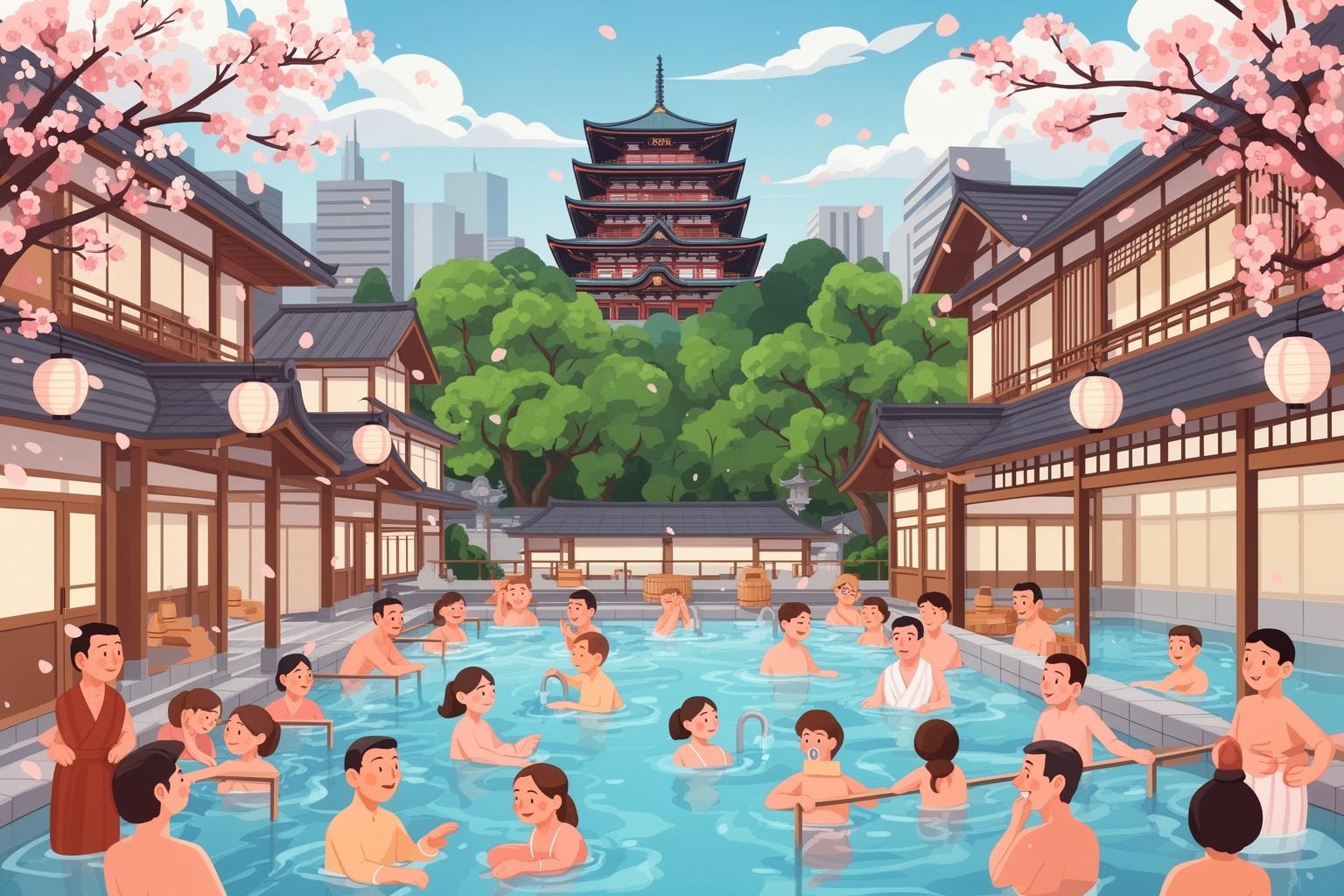
The ritual doesn’t end when you reluctantly pull yourself from the warm water. The post-bath experience, which unfolds in the communal changing and relaxation area, is just as essential as the soak itself.
The Sacred Trinity: Milk, Massage Chairs, and Manga
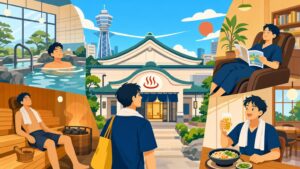
Once dried off, the first priority is rehydration. And there’s only one proper way to do it. You stroll over to the vintage-style refrigerator, drop in a few coins, and retrieve an ice-cold glass bottle of milk. Coffee milk is the classic favorite, with fruit milk as a close runner-up. The correct ritual involves placing one hand on your hip, tilting your head back, and downing the entire bottle in one smooth motion. It’s a universally recognized moment of post-bath bliss.
Next, you might settle your freshly relaxed body into one of the powerful, somewhat intense massage chairs. For 100 or 200 yen, these mechanical beasts knead, roll, and pummel your muscles into a deep state of relaxation. The final element is the relaxation area itself. You’ll often find a well-worn couch, a television broadcasting a baseball game or a variety show, and shelves stocked with old manga. Lounging there in your underwear, feeling warm, clean, and utterly relaxed while flipping through a comic, is the real reward. This is where you linger, letting the experience sink in before stepping back out into the world.
Super Sentō Splendor vs. Sentō Soul
It’s important to differentiate between the classic neighborhood sentō and its modern counterpart, the “super sentō.” Super sentō are large, resort-like complexes featuring dozens of indoor and outdoor baths, multiple saunas, restaurants, nap rooms, massage services, and more. They offer fantastic entertainment for a whole day at a reasonable price. You can easily spend five or six hours there.
But they lack one thing: soul. Often anonymous, filled with couples on dates and families on weekend outings, you won’t see the same faces regularly. The neighborhood sentō, in contrast, is all about soul. It might be a little aged, with peeling paint on the Mount Fuji mural and finicky lockers. But the owner at the front desk knows your name. The old man who always soaks in the corner nods to you when you arrive. It’s a place steeped in history and character. The super sentō is an amusement park; the neighborhood sentō is home.
Why the Sentō Explains Osaka
If you truly want to grasp what makes Osaka tick, spend a few evenings at a local sentō. This simple institution reveals the city’s core philosophies more clearly than any museum or historical site.
Kosupa King: Maximum Value for Minimum Yen
Osaka is a city obsessed with kosupa, or cost performance. People here dislike wasting money and love getting a great deal. The regulated fee for a basic sentō is around 520 yen. For that price, you get unlimited hot water (a luxury in Japanese homes where you pay for gas), access to a high-temperature sauna, and a place to socialize for hours. Compared to the cost of a single cup of coffee at a trendy cafe, the value is incredible. The sentō is the ultimate expression of Osaka’s pragmatic, value-driven mindset. It’s affordable, efficient, and offers maximum satisfaction.
The Disappearance of Tatemae
Japanese culture is often discussed in terms of tatemae (the public face or facade) and honne (one’s true feelings). In most parts of Japan, tatemae is the default mode of public life. But in the sentō, maintaining it is impossible. When everyone is naked, there are no uniforms, no business suits, no designer labels to hide behind. The CEO and the construction worker are simply two men in a tub. This physical vulnerability encourages emotional vulnerability. The direct, blunt, and honest communication style Osaka is known for thrives in this setting. The sentō is a honne-only zone, and that spirit of frankness extends out into the city’s streets. It’s why many foreigners feel they can connect more easily with people in Osaka—the honne is always bubbling just beneath the surface.
A Cure for Urban Loneliness
Living in a vast city can be incredibly isolating. It’s easy to go days without meaningful human interaction. The sentō is Osaka’s built-in remedy for urban loneliness. For the elderly living alone, it’s a vital social lifeline. For the single salaryman, it’s a point of connection after a long day in a quiet office. For a foreigner struggling to build a community, it’s a welcoming space where you’re accepted as you are.
It creates a network of casual familiarity. People notice when you’re there, and they notice when you’re not. It’s a low-pressure social environment that builds a subtle but strong safety net. So, if you’re living in Osaka, don’t just visit a sentō once for the experience. Try making it part of your routine. Pick a local spot, go every week, and simply be. It’s the fastest way to feel the warm, pragmatic, and deeply communal heart of this wonderful city.