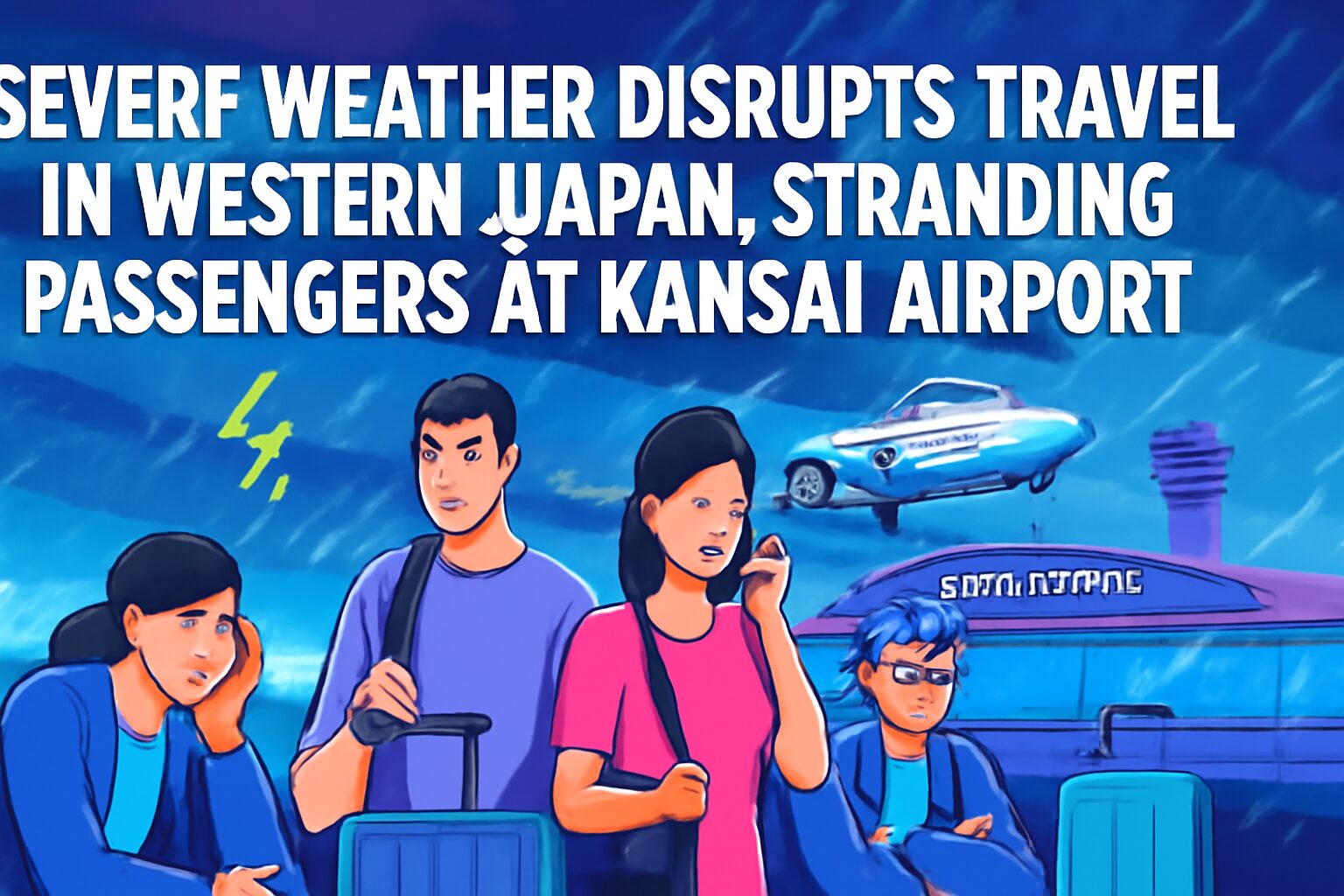
Unprecedented Storms Isolate KIX and Halt Regional Transit
As of September 1, 2026 [1], severe heavy rainfall and widespread flooding have triggered massive travel disruptions across Western Japan [1]. Kansai International Airport (KIX), the primary international gateway for Osaka, Kyoto, and the wider Kansai region, has become the epicenter of this logistical challenge [1]. With major transportation networks completely suspended, countless travelers find themselves stranded at the airport terminals [1].
Authorities have issued strong advisories against non-essential travel in the affected areas, warning that the severe weather patterns are causing dangerous conditions across multiple prefectures in the region [1].
Background: The Vulnerability of an Island Hub
Kansai International Airport is an engineering marvel located on an artificial island in Osaka Bay, connected to the mainland by a single 3.7-kilometer bridge known as the Sky Gate Bridge R. While this unique design minimizes noise pollution for mainland residents, it also creates a significant bottleneck during extreme weather events.
The airport handles a massive volume of traffic. Recent summer data indicated an average of over 66,500 international passengers passing through KIX on a daily basis [3]. When fierce winds and heavy rain force the closure of the connecting bridge, the island is effectively cut off from the rest of the country. Currently, both JR West and Nankai Electric Railway services connecting the airport to major transit hubs like Namba and Tennoji have been forced to suspend operations. Airport limousine buses have also canceled their routes due to unsafe highway conditions and flooded local roadways.
Current Impact on Tourists and Itineraries
The sudden suspension of all land access has left thousands of departing and arriving passengers stranded inside the airport’s Terminal 1 and Terminal 2. Airline operators, including major international carriers and domestic low-cost carriers, have grounded dozens of flights, creating a rapidly growing backlog of travelers.
For tourists currently exploring Western Japan, the heavy rainfall is severely impacting itineraries [1]. Popular destinations such as Universal Studios Japan in Osaka, the historical temples of Kyoto, and Nara Park are seeing massive drops in visitation as local transit lines suffer from preemptive safety shutdowns and regional flooding.
Future Predictions and Economic Toll
The ongoing weather crisis is expected to have a lingering effect on the Kansai region’s tourism sector as we move into the early autumn travel season.
Compounding Aviation Delays
Even after the rain subsides, the aviation network will take time to recover. Travelers should anticipate rolling delays and rescheduled flights for at least the next 48 to 72 hours as airlines scramble to reposition aircraft and crew that were grounded during the storm.
Accommodation Strain in Osaka
Hotels in mainland Osaka are experiencing sudden surges in demand from travelers who are unable to reach the airport for their outbound flights. Conversely, those stuck at KIX are heavily relying on airport facilities, convenience stores, and emergency provisions until safe passage is restored.
Extensive Infrastructure Checks
Before full train and bus services can safely resume, railway operators will need to conduct extensive safety checks on tracks, power lines, and bridges to ensure no structural damage or subsidence occurred during the intense flooding. This process will likely cause partial service reductions even after the weather clears.
Advice for Travelers in the Kansai Region
If you are currently visiting Osaka or planning to fly in or out of Kansai International Airport this week, your immediate priority should be safety.
Travelers are strongly urged to avoid any non-essential movement until local authorities lift the severe weather warnings [1]. Monitor the official websites or apps of your airline for real-time flight status updates, as the situation at KIX remains highly fluid [1]. Additionally, keep a close eye on official announcements from JR West and Nankai Railway regarding the resumption of mainland access [1].
By staying informed and flexible, visitors can better navigate the disruptions caused by this severe late-summer weather event.