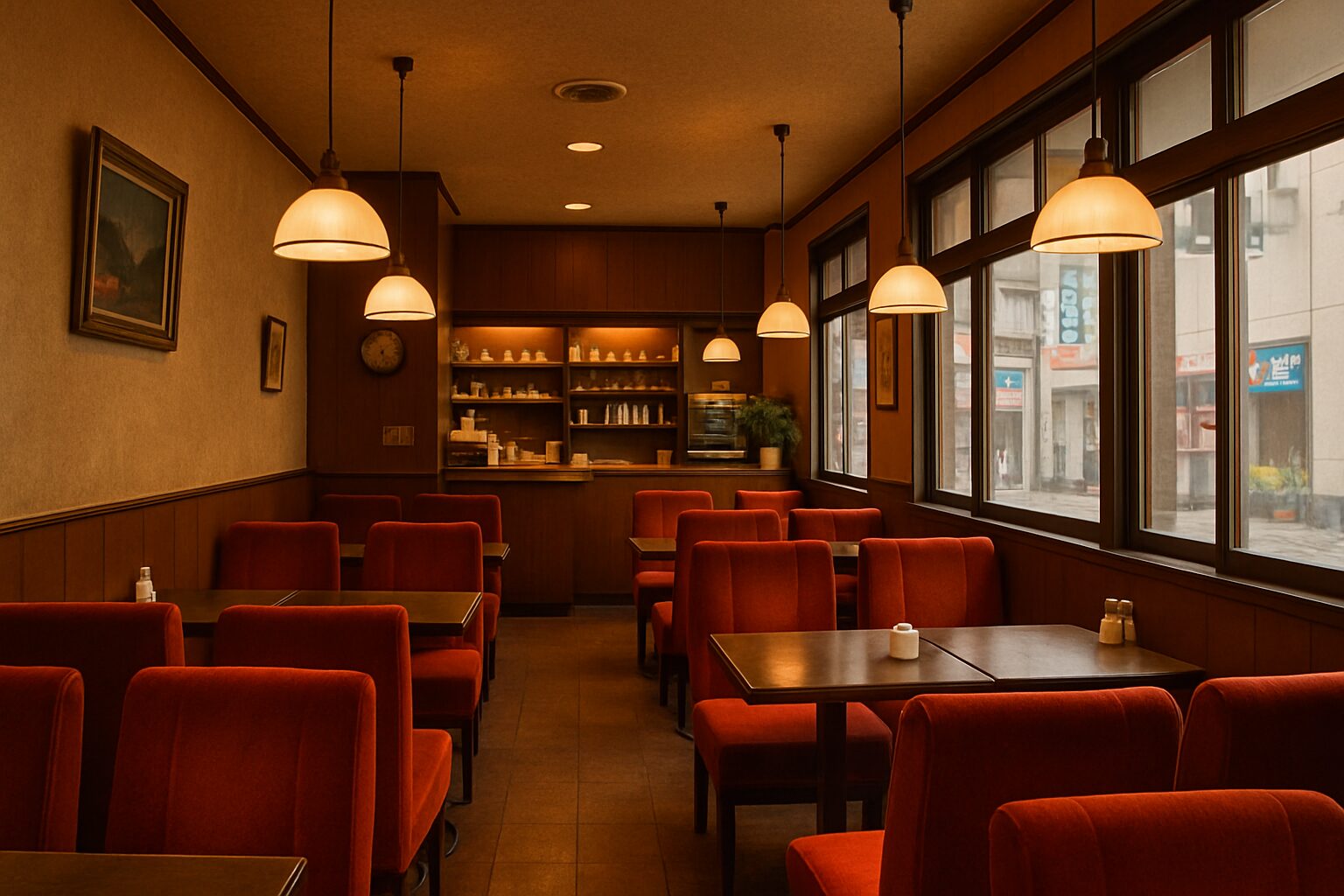
There’s a rhythm to Osaka that you feel deep in your bones, a beat that pulses from the neon heart of Dotonbori to the quiet hum of its oldest temples. It’s a city of bold flavors and even bolder personalities. But beneath the vibrant, modern surface lies another rhythm, a slower, more deliberate melody played out in the city’s Showa-era coffee shops, the traditional kissaten. These aren’t your grab-and-go espresso bars or minimalist third-wave cafes. Oh no, stepping into a kissaten is like stepping through a wrinkle in time, into a world of dark wood, velvet chairs, and the rich, comforting aroma of siphon-brewed coffee. These are living museums, quiet sanctuaries where the most profound conversations often happen without a single word being spoken. It’s here, in these cherished spaces, that a unique and beautiful culture of communication between the shop’s master and their regulars unfolds, a gentle dance of familiarity and respect that tells the true story of Osaka’s soul. Forget the fleeting trends; this is about a connection that has been brewing for decades, a warmth that lingers long after the last drop of coffee is gone.
This quiet, communal connection is a hallmark of Osaka’s soul, much like the unspoken rules and deep sense of community found in its traditional public baths.
The Soul of the Showa Kissaten: A Time Capsule of Taste and Texture
To truly grasp the silent language spoken within these revered halls of caffeine, you must first familiarize yourself with the space itself. An authentic Showa-era kissaten offers an immersive sensory experience, intentionally contrasting with the bright, sterile efficiency that characterizes much of modern life. The instant you push open the heavy wooden door, often accompanied by a softly tinkling bell, you are enveloped by the atmosphere. The air feels different here—thick with the echoes of countless conversations, the sweet, earthy aroma of carefully roasted beans, and often the faint, nostalgic trace of tobacco smoke, a relic of a time when life moved more slowly. For many, this scent embodies the very essence of Showa nostalgia.
Your eyes gradually adjust to the low, warm glow cast by ornate Tiffany-style lamps or brass sconces, polished smooth by years of use. The décor is a harmonious blend of textures: deep burgundy or forest green velvet, worn soft on the seats of plush chairs and booth benches; dark mahogany-stained wood paneling on the walls that absorbs sound, fostering intimacy and seclusion. The countertops, usually thick polished wood or cool veined marble, bear subtle rings left by countless coffee cups over the decades. Notice the details—the intricate wallpaper patterns, the whimsical yet refined sugar pots, the substantial feel of silver-plated cutlery in your hand. Every element has been carefully selected and lovingly maintained, contributing to an atmosphere that is both grand and deeply personal. This is far more than a place to drink coffee; it is a thoughtfully curated environment designed for reflection and connection.
Then there is the soundscape. You won’t hear the frantic hiss and grind of a super-automatic espresso machine or the jarring beats of Top 40 hits. The soundtrack of a kissaten is a deliberate part of its character. It might feature soaring, dramatic notes of a classical symphony, the cool, improvised melodies of a jazz trio, or the melancholic croons of Showa-era kayōkyoku (popular music). This music is not mere background noise; it is the establishment’s heartbeat, setting a mood of sophistication and contemplation. Over this musical foundation, you’ll notice the gentle, rhythmic sounds of the shop itself: the soft clinking of porcelain cups and saucers, the quiet rustle of newspaper pages turning, the low, respectful murmur of conversation, and most importantly, the hypnotic gurgle and hiss of the siphon brewer—a scientific-looking glass apparatus that transforms coffee-making into a performance. Together, these sounds create a cocooning ambiance that encourages you to slow down, listen, and simply be present in the moment.
The Master: Conductor of the Counter, Keeper of the Flame
The true heart and soul of any traditional kissaten is its master. Calling them merely a barista would be a significant understatement. The master is the shop’s conductor, its historian, its quiet guardian, and its central link to the community. Often, they have stood behind the same counter for thirty, forty, or even fifty years, having inherited the café from their parents or having invested their entire life’s savings and passion into building it from scratch. Their movements embody practiced economy and grace, refined over decades into a silent ballet.
Observe them at work. The way they carefully measure the coffee grounds, the intense focus as they watch the water heat in the siphon’s lower chamber, the exact, circular motion used to stir the slurry—it is a ritual, a ceremony repeated hundreds of times daily with unwavering commitment. This isn’t about speed; it’s about process. It’s about honoring the beans, the equipment, and the customer who seeks not just a drink, but a moment of tranquility. The master’s domain is the counter, a stage where the neighborhood’s daily life unfolds. From here, they see everything. They know who is celebrating a small success, who is nursing a quiet sorrow, and who simply needs a familiar place to gather their thoughts before facing the day.
Their role goes beyond that of a simple service provider. A great kissaten master is a keen observer and intuitive soul. They excel in the Japanese art of kuuki wo yomu, or “reading the air.” They understand when a customer wants to talk and when they prefer solitude. They sense the room’s mood and subtly adjust their interactions to preserve its delicate balance. For regulars, they are a confidant, a pillar of stability amid constant change. They recall not only your usual order but also the story you shared last week about your grandchild, the book you were reading, or the deal you hoped to close. This profound, personal knowledge forms the foundation of the kissaten’s unique culture of communication. It’s a relationship built on trust and time, not transactions. A simple nod, a cup of coffee set down without a word, a brief, knowing smile—these small gestures carry the weight of shared history and mutual understanding, more powerful than any lengthy conversation.
Once, I tried to understand this better by conversing with the master of a small, unnamed kissaten hidden in a shotengai near Tennoji. He was an elderly man with kind eyes and hands worn by a lifetime of work. Speaking slowly as he polished a glass with a soft cloth, he said, “This shop is older than many of its customers. I’ve watched them grow up. I served coffee to their parents on their first date. Now, I serve it to them as they bring their own children for a melon soda.” He explained that his job was more than making coffee. “My job is to maintain a space where people feel they belong. In a big city like Osaka, it’s easy to feel anonymous. Here, you are not. Here, someone knows your name, even if they use it only once a year. The coffee is important, of course. But the connection… that is the essential ingredient. It has no price.”
The Regulars: The Living Heartbeat of the Kissaten
If the master is the soul of the kissaten, then the regulars—the jōren-san—are its very heartbeat. They are the familiar faces who fill this space day after day, turning a simple coffee shop into a lively, living community. Their presence gives the place its distinctive character and rhythm. To sit quietly in a corner and observe this ecosystem is to witness a beautiful, unscripted play about life in Osaka.
There’s the elderly gentleman who arrives every morning at exactly nine o’clock, settles into the same chair, and orders the “Morning Set” with black coffee. He unfolds his newspaper with practiced precision and spends the next hour carefully reading every section, a silent ritual that has likely anchored his routine for decades. There’s the group of local business owners who hold their informal weekly meetings in a corner booth, their voices low and conspiratorial as they exchange neighborhood news and gossip over coffee and thick toast. You might spot a young art student, sketchbook open, capturing the unique play of light from the stained-glass window, drawing inspiration from the room’s quiet focus. Or the young couple, escaping the city’s hustle, sharing a piece of cheesecake and speaking in soft, intimate tones.
These regulars form an unspoken fraternity. While they may not be close friends outside the walls of the kissaten, within this space, they share a common bond. They belong to this quiet club. Communication among them is often as subtle as their interactions with the master: a raised eyebrow, a slight smile exchanged across the room, a knowing glance when a new, unfamiliar customer walks in. Occasionally, conversations ignite across the counter—casual exchanges between a regular and the master that gradually draw in others nearby. Topics range from the Hanshin Tigers baseball team’s performance to rising vegetable prices, to fond memories of how the neighborhood looked thirty years ago. This is how local history is passed down—not through books, but through stories shared over steaming cups of coffee.
Becoming a regular is not a status one claims easily; it is a distinction quietly earned over time. It requires patience and observation. On your first visit, you are a guest. By your fifth, you might be a familiar face. On your tenth, the master may greet you with a nod of recognition. And one day, perhaps months later, you’ll walk in and find your usual coffee being prepared before you even order. That is the moment you’ve crossed the threshold. You’ve become part of the fabric of the place. It’s a deeply satisfying feeling, a sense of belonging that is increasingly rare in our fast-paced, transient world. It is the reward for respecting the space, understanding its unwritten rules, and appreciating the quiet rhythm that the master and regulars have so thoughtfully nurtured over the years.
A Practical Guide to Stepping Through the Looking Glass
For a first-time visitor, stepping into such a well-established and cozy world can seem a bit intimidating. However, the charm of the kissaten lies in its hospitality, which is as warm as its coffee, as long as you approach it with the right attitude. The secret is to see it not just as a quick caffeine fix, but as a destination in its own right—a moment to be cherished.
So, how do you find one? Stay alert as you explore Osaka’s quieter streets. Seek out older, independent storefronts, often featuring beautifully handwritten signs in Japanese kanji. Neighborhoods like Nakazakicho, with its labyrinth of enchanting old buildings; the retro-futuristic district of Shinsekai, nestled beneath the Tsutenkaku Tower; or the covered shotengai (shopping arcades) branching from major areas like Namba and Tenjinbashisuji, are full of these vintage treasures. Look for faded velvet curtains hanging in windows, displays of meticulously crafted plastic food models (shokuhin sanpuru), and names that sound poetic or European, such as “Cafe de l’Ambre” or “Salon de The.” These are all reliable clues you’ve discovered an authentic establishment.
Once inside, take a moment to soak in the ambiance before picking a seat. The counter is often the best spot to see the master at work, but if you prefer privacy, a quiet booth in the back is ideal. The etiquette is straightforward and founded on respect. Speak softly, avoid loud phone conversations. While some places may be more casual, it’s generally not the setting to spread out your laptop and work for hours; these are spaces designed for relaxation and disconnection. The rhythm is deliberately slow, so don’t expect your order to appear within minutes. The preparation itself is part of the experience. Unwind, read a book, or simply watch the world drift by outside.
When it comes to the menu, you’re in for a treat. This is comfort food, Showa-style. For a full experience, order a “Morning Set” or mōningu sābisu. Served until about 11 a.m., it’s one of the best bargains in Japan: for the price of one cup of coffee, you’ll also get a thick slice of toast (commonly called bata tōsuto), a hard-boiled egg, and sometimes a small salad or yogurt. It’s a cultural staple. The coffee itself will likely be a “blend coffee” (burendo kōhī), a house-special mix that’s usually dark-roasted, rich, and full-bodied, often prepared using a siphon or a flannel drip filter (neru dorippu). Don’t hesitate to try other classic kissaten favorites. The tamago sando (egg salad sandwich) is legendary, typically made with soft, crustless white bread and a luscious, creamy egg filling. The Spaghetti Naporitan, a uniquely Japanese version of pasta with ketchup-based sauce, bell peppers, and sausage, is a nostalgic pleasure. And for something truly playful, order a cream soda—a bright green melon-flavored soda topped with a scoop of vanilla ice cream and a flashy red maraschino cherry. It’s pure, unfiltered Showa-era delight in a tall glass.
The Nuances of Kissaten Conversation
Now, to address the central question: how do you participate in this distinctive culture of communication? The key point to grasp is that silence is not uncomfortable here; it is recognized and respected as a legitimate form of engagement. In Japanese culture, there is a concept called aima, which refers to the space or pause between moments. In a kissaten, the silences between conversations hold as much significance as the words themselves. They foster a shared, comfortable atmosphere. You are not required to speak; simply being a quiet, respectful presence contributes to the overall ambiance of the shop.
If you want to interact with the master, wait for a calm moment when they are not occupied. A simple, sincere compliment is often the best way to start a conversation. You might comment on the deliciousness of the coffee or the beauty of the cup it was served in. Many masters take pride in collecting porcelain and will be pleased to share information about the piece you have. You could also ask a straightforward question about the shop’s history: “How long has this shop been here?” or “Is this building very old?” This demonstrates a sincere interest in them and their craft beyond just your purchase. Expect a brief, humble response, but sometimes it can lead to a wonderful story.
Pay attention to the rhythm of the language around you. If you hear regulars chatting with the master, you’ll probably notice the distinctive cadence of Osaka-ben, the local dialect. It is known for being more direct, expressive, and humorous than standard Japanese. You’ll hear the characteristic ~nen sentence endings and a more sing-song intonation. You don’t need to understand every word to appreciate the warmth and familiarity in the conversations. The friendly teasing between a regular and the master shows a deep, long-standing bond. Don’t feel you have to mimic this; it is something earned through years of shared experience. As a visitor, your role is to be a respectful listener, and by doing so, you will be warmly, though quietly, welcomed.
A Final Sip of Living History
In a city constantly reinventing itself—a city of dazzling skyscrapers and unstoppable innovation—the Showa-era kissaten stands as a quiet, defiant tribute to a different way of life. It is far more than just a spot to grab a cup of coffee. It serves as a community living room, a time capsule, and a guardian of memories. It’s a place where the simple act of preparing and serving a drink is elevated to an art form, and where human connection is valued above all else.
Unfortunately, these treasured establishments are gradually disappearing. As their masters grow older and the challenges of running a small, independent business intensify, many of these doors are closing permanently. Each loss chips away a small piece of Osaka’s soul. That’s why seeking them out matters so much. To sit at a well-worn wooden counter, watch a master carry out their daily ritual, and feel the quiet pulse of a community gathered in the same place for generations is a rare privilege. It invites you to slow down, step away from the digital noise of modern life, and reconnect with something more tangible and deeply human. So next time you’re in Osaka, bypass the gleaming new cafes and listen for the little bell on a heavy wooden door. Step inside, take a seat, and order a coffee. You’re not merely buying a drink; you’re savoring a sip of the city’s living history and, for a brief, wonderful moment, becoming part of its unspoken story.