There’s a rhythm to Osaka that you won’t find in any guidebook, a pulse that beats not in its glittering shopping arcades or towering landmarks, but in the quiet, steam-filled corners of its backstreet neighborhoods. This is the world of the sento, the local public bathhouse, a place that, for generations, has served as the communal heart of this vibrant city. As someone who spends much of their time seeking the raw, unfiltered beauty of nature on hiking trails, I’ve come to appreciate that the most profound cultural landscapes are often found in the most unassuming of places. The sento is one such landscape. It’s more than just a place to wash away the grime of the day; it’s a living museum, a social club, and a sanctuary of shared humanity, all rolled into one. Here, under the high, vented ceilings, the social hierarchies of the outside world melt away with the steam. Everyone is equal, stripped bare of pretension, participating in a ritual as old as the city itself. This experience stands in stark, beautiful contrast to the bathhouses of neighboring Kyoto, where the water often flows with a different purpose—to soothe the weary traveler, to present a curated vision of Japanese tranquility, to be an attraction in itself. While both offer warmth and water, they reveal two fundamentally different sides of the Kansai region’s soul. To understand Osaka, to truly feel its welcoming, unpretentious spirit, you must step through the noren curtain of a local sento. It’s an invitation into the city’s living room, and you’re always welcome.
For a deeper dive into how these communal spaces can become part of your daily life, explore our guide on weaving the neighborhood sentō into your urban rhythm.
The Echo of Community: Inside an Osaka Sento
Your journey begins on a quiet residential street, perhaps within the bustling maze of Tenjinbashisuji or the wonderfully gritty, human-scale neighborhoods of Nishinari. The first clue you’re in the right place is often the towering chimney, the entotsu, a proud remnant from an era when these bathhouses burned wood or coal to heat their waters. Then you’ll spot the entrance, marked by a gracefully draped noren curtain adorned with the iconic hiragana character ゆ (yu), meaning hot water, or occasionally the kanji 湯. There’s a certain reverence in pushing that curtain aside, a sensation of crossing into another time. You slide open a wooden door, and immediately the sounds and smells envelop you: the clatter of wooden shoe lockers (getabako), the warm, humid air thick with the scent of soap and minerals, and the distant, cheerful echoes of voices and splashing water.
The Gateway: Bandai and Datsuijo
Inside, you’re welcomed not by a sterile counter, but by the bandai, a raised platform where the owner, often an elderly man or woman who has managed the place for decades, oversees the entrance. This is the heart of the establishment. You pay your fee—a modest, government-regulated price, usually just a few hundred yen—and in return, you might receive a friendly nod or a brief chat about the weather. This small interaction is the first thread in the social fabric of the sento. The owner knows the regulars by name, inquires about their families, and keeps a gentle watch over the community’s elders. This is not a mere transaction; it’s a daily check-in.
You then move to the changing room, the datsuijo. The space often showcases a beautiful mosaic of Showa-era design. High ceilings with large, slowly rotating fans circulate the steamy air. The lockers may consist of aged wood with metal latticework, operated by chunky keys on elastic wristbands. Wicker baskets are frequently offered for your clothes, a more communal and trusting alternative to lockers. Along the walls, faded posters advertise old beverages, local acupuncture clinics, or neighborhood events. An old-fashioned scale, the kind with sliding weights, sits nearby, used with a sense of playful ritual. This room serves as a prelude to the bath, a transitional space. The easy chatter of neighbors undressing resonates—complaints about their bosses, celebrations of a grandchild’s achievement, or simply moments of quiet camaraderie. There’s an immediate sense of equality here. With bare skin, you are no longer a salaryman, a student, or a shopkeeper; you are simply a fellow bather, a member of the neighborhood.
The Ritual of Cleansing: Arai-ba
Before soaking your weary bones, a vital, non-negotiable step remains: washing. The washing area, or arai-ba, is lined with rows of low plastic stools and faucets, each fitted with a fixed-head shower and two taps for hot and cold water. At each station, you’ll find a bright yellow plastic bowl, a ubiquitous item known as a Kerorin oke, named after an old pain reliever brand that once sponsored them. These bowls are an emblem of sento culture. Here, you sit on the stool—a posture of humility—and thoroughly scrub yourself clean. This act shows respect for your fellow bathers, ensuring the communal bathwater stays pure. The soundscape of the arai-ba is a symphony of rushing water, soap lathering, and the quiet, focused energy of a personal ritual. It’s a meditative process, a literal and figurative cleansing of the day’s worries before entering the sanctuary of the tubs.
The Sanctuary of Water: The Baths Themselves
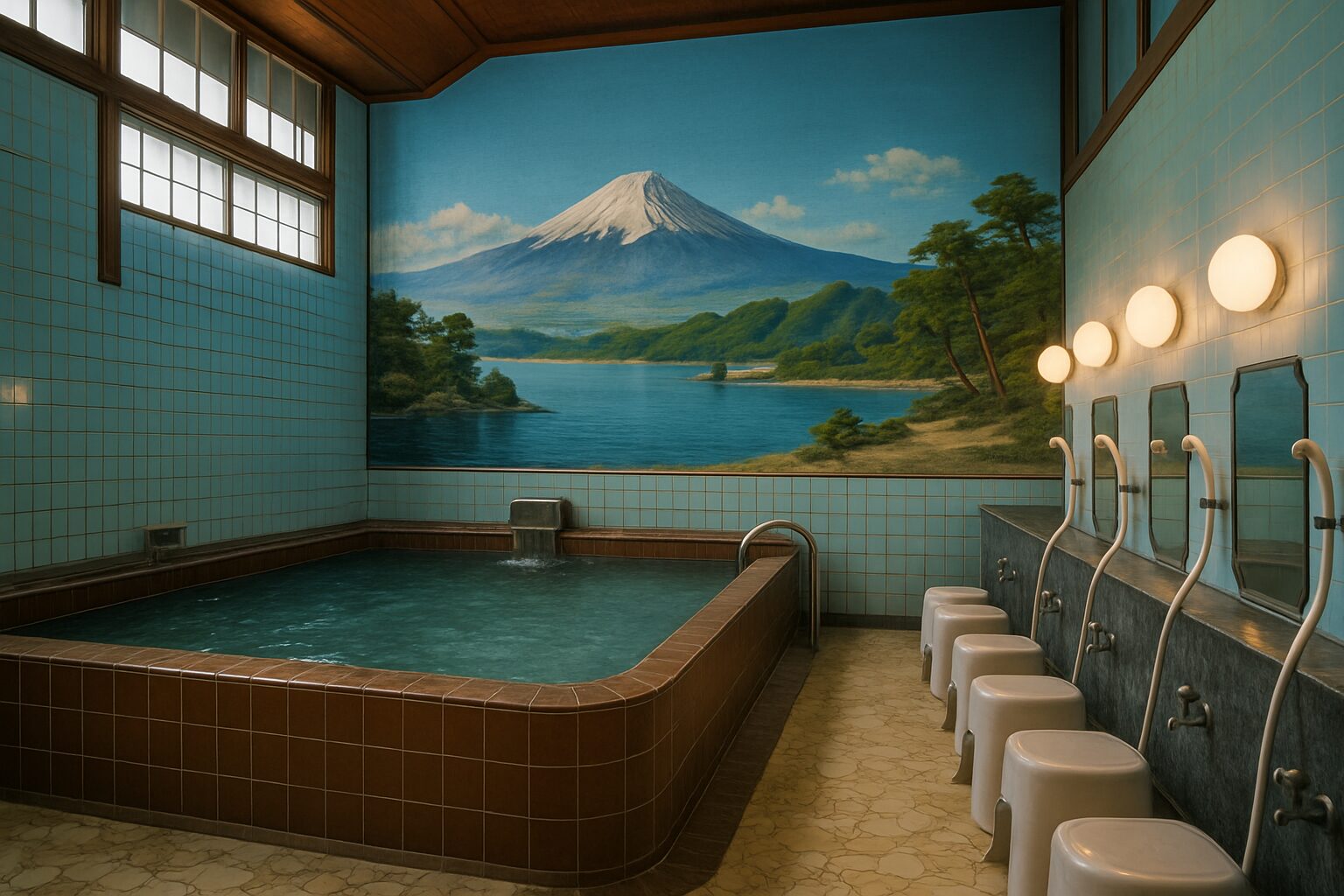
The main attraction is, naturally, the baths. An Osaka sento typically offers a variety of tubs, each providing a different experience. The centerpiece is the main deep tub, often filled with water heated to a scalding but therapeutic temperature, sometimes exceeding 42 degrees Celsius (108 Fahrenheit). Sliding into this water is both a challenge and a release, a shock to the system forcing every muscle to surrender. The initial sting gradually yields to profound, deep-seated relaxation that feels as if it’s melting your bones. As your body acclimates, you can admire the subtle art painted on the tiled wall above—often a majestic mural of Mount Fuji, a symbol of classic Japan, or perhaps a more local scene like Osaka Castle. These murals, or penki-e, are a fading art, and their presence adds a layer of nostalgic beauty to the experience.
But the journey does not end there. Venture deeper, and you’ll find a constellation of smaller, specialized baths. There might be a jet bath, the jetto-basu, featuring powerful streams designed to massage your lower back and shoulders. It’s a noisy, bubbling affair—a working-class hydrotherapy for aching bodies. Then there’s the famed denki-buro, or electric bath. This tub contains low-voltage electric currents flowing between two plates. Approaching it feels counterintuitive, but for those brave enough to sit between the plates, it delivers a tingling, muscle-stimulating sensation reputed to ease stiffness and nerve pain. It’s a uniquely Japanese experience and a conversation starter for any first-timer.
Many sento also offer a yakuyu, or medicinal bath. The water is infused with seasonal herbs, minerals, or traditional Chinese medicines, turning it a deep, opaque color and filling it with a fragrant, earthy aroma. These baths shift with the seasons—iris roots in May for health, yuzu citrus in winter for warmth and cold prevention. Lastly, for the true bathhouse enthusiast, there is the vital ritual of alternating hot and cold. After heating yourself thoroughly in the main tubs or an intensely hot sauna, the ritual calls for a plunge into the mizu-buro, the cold water bath. The shock is breathtaking, providing a full-body reset that closes your pores and sends a surge of pure energy through your veins. Repeating this cycle of hot and cold immersion is believed to boost circulation and invigorate the spirit. It’s a raw, primal sensation, a connection to the body that feels both ancient and vividly alive.
The Polished Serenity: Kyoto’s Tourist Bathhouse
Now, let’s embark on a brief journey along the Hankyu line to Kyoto. Here, the bathing culture often reveals a different aspect—one that is more refined, thoughtfully curated, and tailored to the expectations of visitors seeking a distinct “Japanese experience.” While Kyoto does have its share of diminishing local sento, the bathhouses that dominate its tourism scene are worlds apart from the lively community hubs found in Osaka.
An Aesthetic of Tranquility
Approaching a Kyoto bathhouse, especially one designated as an onsen (fed by natural hot spring water) or a ryokan (traditional inn) bath, often becomes an experience in itself. You might stroll through a carefully raked zen garden or along a lantern-lit stone pathway. The architecture is intentional, highlighting natural materials like dark wood, bamboo, and stone. The aim is to create a seamless transition from the outside world to a realm of peace and relaxation.
Inside, the reception feels more like a boutique hotel lobby. The staff are impeccably polite, often fluent in English, and the process is smooth and informative. You’re not merely paying an entrance fee; you’re checking in for an experience. High-quality amenities are typically included: fluffy towels, and a selection of premium shampoos, conditioners, and body lotions, removing the need to bring your own. The changing rooms are clean, minimalist, and serene. The emphasis is on personal comfort and privacy, with less focus on communal interaction. The atmosphere is hushed—the gentle murmur of a water feature, soft instrumental music, and the quiet rustling of clothing.
Curated Bathing, Contemplative Soaking
The bathing area is designed to delight the senses. The tubs are often crafted from fragrant cypress (hinoki) wood or smooth dark stone. A large window might frame a private garden, a mossy rock arrangement, or a bamboo grove. Bathing here is a form of meditation. The experience encourages quiet reflection and solitude. You’re invited to soak in silence, to appreciate the beauty surrounding you, and to let your mind wander. The other bathers are likely tourists speaking softly or remaining silent, each absorbed in their own relaxation. The lively conversation and casual camaraderie typical of an Osaka sento are noticeably absent.
The water itself may be marketed for its specific mineral properties, believed to benefit the skin or health. The post-bath experience is similarly elevated. Instead of a vintage vending machine dispensing coffee milk, you might find a peaceful lounge area where you can rest on tatami mats while sipping artisanal green tea or enjoying a locally brewed craft beer. There may also be a gift shop offering high-end soaps, bath salts, and elegant souvenirs. The entire experience, from beginning to end, is presented as a luxurious, restorative ritual. It is undeniably beautiful and deeply relaxing, yet it feels more like a performance of tranquility than a spontaneous expression of community.
A Tale of Two Cities, Told in Water
The contrast between these two bathing cultures reveals much about the character of each city. The Osaka sento is shaped by its environment: a lively, merchant city where life is boldly lived. It is practical, affordable, and strongly communal. It embodies hadaka no tsukiai, a uniquely Japanese concept meaning “naked communion.” This idea suggests that without the status symbols of clothing, people can connect on a more genuine, fundamental level. The sento is the ultimate expression of this philosophy. It’s where deals were once made, information exchanged, and where simply sharing a hot bath creates and strengthens community ties. It is raw, authentic, and unapologetically human.
In contrast, Kyoto’s tourist-oriented bathhouses reflect its history as the imperial capital and its current role as a global cultural destination. They are crafted to showcase an idealized version of Japanese aesthetics and hospitality. The experience centers on beauty, refinement, and personal tranquility. It offers visitors a wonderful way to engage with a key part of Japanese culture in a comfortable and accessible setting. It provides a beautiful and memorable service, but it remains a service nonetheless. In Osaka, you participate in a living culture; in Kyoto, you are often an audience to a carefully orchestrated one.
As a hiker, I see a similar parallel in nature. A Kyoto bathhouse resembles a perfectly manicured Japanese garden, where every rock and plant is deliberately placed to evoke a sense of peace. An Osaka sento, by contrast, is like a wild, rugged mountain trail—rough around the edges, occasionally challenging, but offering a deeper and more authentic sense of connection and discovery.
Your First Plunge: A Guide for the Sento-Curious in Osaka
For a first-time visitor, stepping into a local Osaka sento can feel overwhelming, but the experience is incredibly rewarding. Here’s some helpful advice to ensure your first visit goes smoothly and is thoroughly enjoyable.
What to Bring
While some larger “super sento” provide all the essentials, traditional neighborhood sento are more self-service. Bring a small towel for washing and a larger towel for drying off. Most sento sell these items for a modest fee if you forget, along with single-use shampoo and soap packets. Many regulars bring their own personalized baskets filled with their preferred toiletries. Bringing your own is completely acceptable.
The Entry and Changing Process
Remove your shoes before stepping up from the entrance and place them in a shoe locker. Pay the fee at the bandai or via a ticket machine. You’ll be directed to the appropriate changing room—男 for men (blue curtain) and 女 for women (red curtain). Find an empty locker or basket for your clothes. The key will likely be attached to a wristband; wear it to avoid losing it. It’s time to undress completely. Don’t be shy; nobody is watching, and it’s perfectly natural here.
The All-Important Wash
Bring only your small wash towel and toiletries into the bathing area. Locate an empty washing station, sit on the stool, and thoroughly scrub yourself from head to toe. Be sure to rinse off all soap completely. Your small towel, often called a “modesty towel,” is used both for scrubbing and for discreetly covering yourself while moving around the bathing area. However, never place it in the bathtub water. When soaking, put the folded, damp towel on your head (which helps regulate body temperature) or on the edge of the bath.
Soaking and Socializing
Once clean, you may enter any of the baths. Enter slowly, especially the hot ones. Avoid splashing or swimming. The tubs are meant for quiet soaking and relaxation. If someone offers a friendly nod or starts a conversation, feel free to respond. A simple “Atsui desu ne” (“It’s hot, isn’t it?”) is a great icebreaker. Don’t feel obligated to chat; many come for peaceful contemplation. Listen to your body and exit if you feel dizzy or overheated. Alternating between the hot tubs and cold plunge is key to the full experience.
The Post-Bath Glow
Before returning to the changing room, use your small towel to remove most of the water from your body. This courtesy helps keep the changing room floor dry. Back in the datsuijo, dry off completely with your large towel and get dressed. Now for one of the best parts of the ritual: the post-bath drink. Find the old-fashioned vending machine and treat yourself to an ice-cold bottle of fruit milk, coffee milk, or plain milk. There’s something uniquely satisfying about this simple pleasure after a hot soak. Take a seat on a bench, relax, and enjoy the feeling of being thoroughly clean, warm, and deeply relaxed. This is the sento glow, and it will stay with you long after you leave.
Where the Steam Rises
While classic sento are vanishing across Japan, Osaka still preserves a rich collection of these cherished neighborhood gems. You don’t need to seek out a famous one. The best experience often comes from simply wandering into the closest sento near where you are staying. Look for the ゆ symbol. In some areas, like the Shotengai (covered shopping arcade) of Tenjinbashi-suji, several sento are tucked away along side streets. Exploring different sento is a pleasure in itself; some are strikingly minimalist, while others are beautifully ornate, featuring colorful tilework and unique touches. Each has its own character, community, and story.
Stepping into an Osaka sento means more than just cleansing your body. It’s an immersion into the living, breathing culture of this vibrant city. It connects you to a simpler time, teaches you about community, and reminds you that the most meaningful experiences are often found in the most ordinary places. The polished tranquility of Kyoto provides a lovely escape, a picture-perfect moment of calm. But the warm, noisy, steamy embrace of an Osaka sento offers something deeper: a feeling of belonging. So, leave the tourist paths behind for an evening. Grab a small towel, find that noren curtain, and step inside. The water is hot, and the community awaits.