There’s a rhythm to Osaka mornings, a cadence that beats just beneath the surface of the city’s famous hustle. It’s a gentle, steady pulse, one that doesn’t start with the clatter of the first train at Umeda Station, but with the soft clink of a porcelain cup meeting its saucer, the rich, earthy aroma of dark roast coffee blooming in the air, and the quiet rustle of a newspaper’s pages turning. This is the world of the kissaten, the traditional Japanese coffee shop, and its most cherished daily ceremony: the “Morning Service,” or as it’s known in the delightful Japanese-English patois, mōningu sābisu. Forget the frantic grab-and-go culture you might be used to. Here in Osaka, the start of the day is an art form, a moment of profound, affordable luxury that nourishes the body and the soul. For the price of a single cup of coffee, a magical offering appears before you: a slice of impossibly thick, fluffy toast, golden and glistening with butter, accompanied by its faithful companion, a perfectly hard-boiled egg. This isn’t just breakfast; it’s an institution, a cultural cornerstone, and the most authentic way to plug directly into the heartbeat of a local neighborhood. It’s in these quiet, time-worn establishments, often run by the same family for generations, that you’ll find the true spirit of Osaka—a spirit of generosity, community, and the simple, profound joy of a day started right. It’s a ritual that transcends the transactional nature of a simple meal, offering a space to pause, to breathe, and to connect, even in solitude, with the city itself. These neighborhood kissaten are living museums, community living rooms, and sanctuaries of calm rolled into one, and understanding them is to understand a fundamental piece of Osaka’s character. They are the anchors of the community, the quiet stages upon which the small, daily dramas of life unfold, and they invite you in with a quiet promise of warmth, comfort, and the best breakfast deal you will ever find.
To truly understand this cherished daily rhythm, you can delve deeper into the specifics of the Osaka kissaten morning service.
The Heart of the Kissaten: Beyond Coffee and Toast
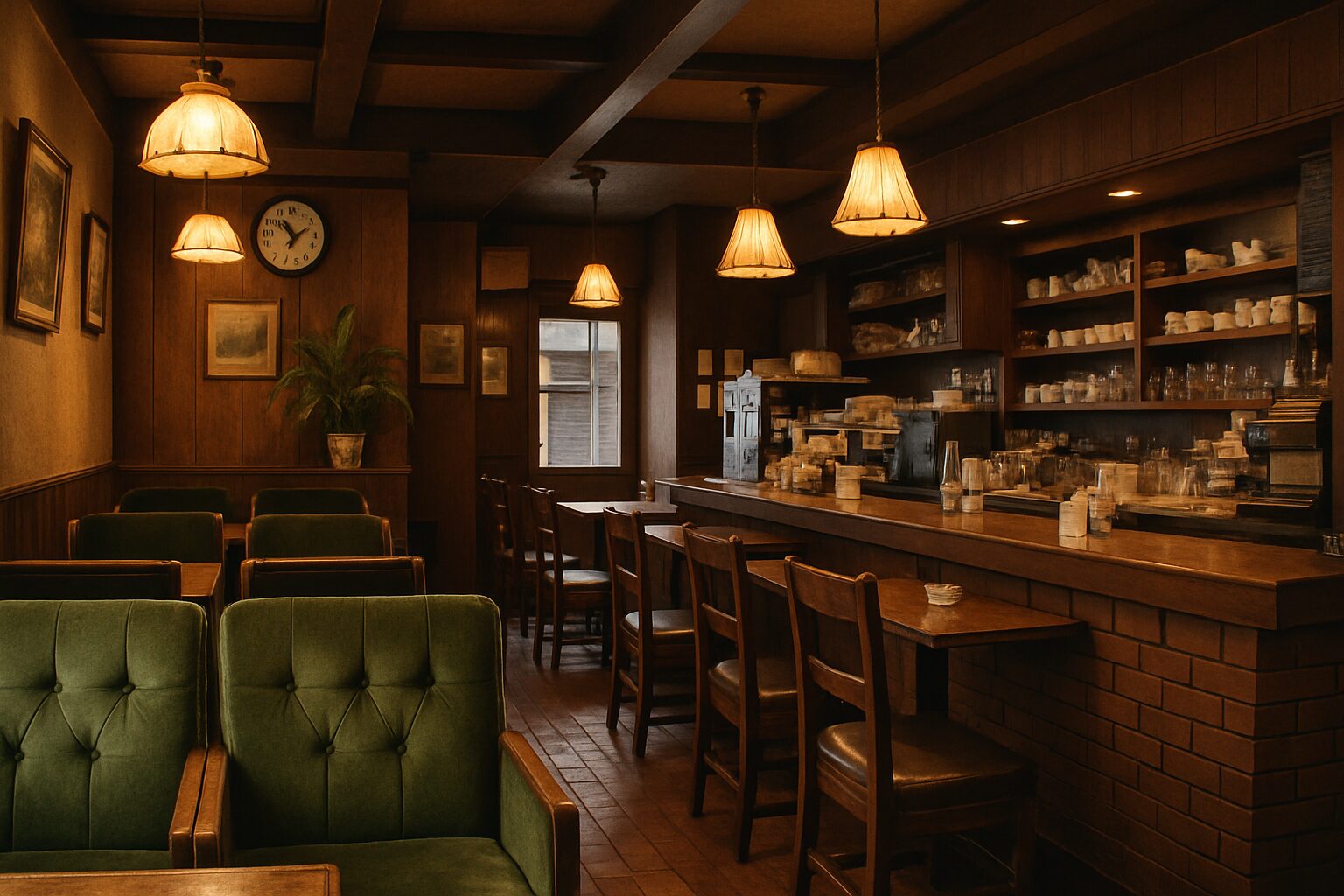
Entering a classic neighborhood kissaten feels like stepping through a portal into a different era. The frenetic energy of the modern city quickly fades away, replaced by a deep and soothing stillness. The atmosphere itself seems altered—denser, warmer, infused with the layered aromas of decades-old coffee brewing, a trace of toasted bread, and the subtle, sweet scent of aged wood and worn paper. Your senses are the first to notice the shift. Visually, everything softens. The lighting is consistently dim and golden, emanating from ornate, tulip-shaped lamps or heavy, shaded fixtures that seem to absorb sound as well as cast light. The palette is a harmonious blend of rich, comforting tones: the dark mahogany of tables and counters, polished smooth by countless elbows and coffee cups; deep burgundy or forest green velvet on chairs and booths, their fabric worn down in the most cherished spots. Your fingers might brush over the intricate designs of a stained-glass partition or the cool, solid surface of dark-wood paneling. This is a place meant for lingering, settling in, and escaping the relentless rush of time outside its doors.
At the heart of this world, both literally and symbolically, stands the “Master” (masutā). This title is not one of pretension but of profound respect, earned through years, often decades, of dedicated service. The Master embodies the spirit of the kissaten. They may be an elderly gentleman in a crisp white shirt and black vest, moving with practiced, deliberate grace behind the counter, or a kind-faced woman who knows every regular’s order before they even sit down. They are the conductors of this quiet symphony, overseeing the brewing of coffee, the toasting of bread, and the gentle rhythm of the space. Watching a Master at work is a lesson in mindfulness. Every gesture is precise and economical, born from deep expertise, especially when brewing coffee with a siphon. Seeing the water rise into the top chamber, the grounds steeping before the rich, dark liquid filters back down, is a performance in itself. There is a quiet dignity in their craft, a pride that is tangible but never boastful. They are more than proprietors; they are custodians of the space, keepers of the community’s warmth. They serve as silent confidantes, familiar faces providing stability and continuity in a constantly shifting world. A simple nod from the Master can make you feel as though you belong—a part of this carefully nurtured, intimate world.
The kissaten represents the quintessential “third place,” a term sociologists use for spaces that are neither home (the first place) nor work (the second). It is a crucial community anchor, a neutral ground where people gather, connect, and simply exist. In the morning, the familiar cast of neighborhood characters gathers. Elderly gentlemen, known as ojīsan, settle into their usual seats, reading newspapers methodically, sharing a comfortable silence. Groups of local women, the obāchan, exchange stories over coffee, their laughter a gentle melody woven into the room’s quiet hum. A salaryman might hold a discreet meeting in a corner booth, his low voice blending with the background. A university student might dive into a textbook, finding here the focus elusive in a library or noisy apartment. It is a profoundly inclusive space. Everyone—from local shop owners to visiting tourists—is met with the same quiet, respectful hospitality. It’s a place to be alone without feeling lonely, a public living room governed by an unspoken rule of mutual respect for each other’s peace. This communal quality is the invisible but vital ingredient that elevates the Morning Service beyond a simple meal—it’s a shared ritual that strengthens the neighborhood’s social fabric, one cup of coffee at a time.
Deconstructing the Morning Set: An Unbeatable Deal of Delicious Simplicity
The magic of the Morning Service lies in its elegant simplicity and remarkable value. For the cost of what is often just a single cup of coffee, or maybe a hundred yen more (less than a dollar), a beautifully arranged tray is presented to you. It exemplifies balance and reflects the Japanese aesthetic of finding beauty in the essential. At the core of this offering is what I like to call the holy trinity: the coffee, the toast, and the egg.
Starting with the coffee, this is not the light, acidic, fruit-forward brew typical of modern third-wave cafes. The coffee served in a traditional kissaten is an entirely different experience. It is deep, dark, and robust, with a comforting bitterness and a full-bodied richness intended to awaken the senses and prepare you for the day ahead. Often brewed using a siphon, a captivating and theatrical method involving vacuum and vapor pressure, it results in an exceptionally clean and smooth cup. Some places use the neru dorippu, or flannel drip method, a meticulous process where hot water is poured slowly in a circular motion over coffee grounds held in a cloth filter, producing coffee with a syrupy, velvety texture and profound depth of flavor. The coffee is almost always served in an exquisite porcelain cup and saucer, a small touch that elevates the entire experience. Many Masters are passionate collectors of ceramics, so you might be served in a new, beautiful cup each visit, perhaps a delicate floral-patterned piece from Noritake or an elegant hand-painted Arita-ware creation. Choosing a specific cup for each customer is a subtle expression of omotenashi, Japanese hospitality, making you feel truly seen and appreciated.
Next is the toast, where the experience becomes truly sublime. This is no ordinary slice from a plastic-wrapped loaf. This is shokupan, Japanese milk bread, celebrated for its incredible softness and slightly sweet flavor. The toast at a kissaten is always a heroic, thick-cut (atsugiri) slice, often over an inch thick. Toasted to perfection, it strikes an ideal contrast: a crisp, golden-brown crust envelops an interior that is astonishingly light, fluffy, and cloud-like. Served piping hot, a pat of butter melts into its porous surface, forming glistening pools of liquid gold. Occasionally, it comes with a small pitcher of syrup or a dish of jam, but most often the pure, unadulterated taste of bread and butter takes center stage. The first bite delivers a comforting wave of warmth and simple, satisfying flavor. For a classic Nagoya-style variation, some places offer ogura toast, where the buttery slice is topped with a generous spread of sweet, chunky red bean paste. The salty butter paired with the earthy sweetness of beans is a uniquely Japanese delight.
Completing the trio is the humble yude tamago, the hard-boiled egg. Though simple, it is an essential element. It provides a perfect, self-contained protein that grounds the meal, turning it from a light snack to a genuinely sustaining breakfast. Often served warm from the pot, it sits in a small dish alongside a salt shaker. The ritual of cracking the shell, peeling it to reveal the smooth, white orb, and sprinkling it with salt is a small yet satisfying act of mindfulness. The yolk is typically cooked to a creamy, just-set consistency, never dry or chalky. Simple, unpretentious, and deeply nourishing. While this classic trio forms the foundation of the Morning Service, many kissaten offer their own unique variations. Your tray might also include a small side salad of crisp lettuce and shredded cabbage, drizzled with a savory sesame-based Japanese dressing, or perhaps a tiny glass pot of plain yogurt, sometimes with a dollop of fruit compote at the bottom. These thoughtful extras reflect the generosity of the kissaten culture—small gestures inviting you to “Welcome, stay a while, and let us take care of you.”
A Journey Through Time: The Showa Era Aesthetic
To fully appreciate the neighborhood kissaten, one must recognize its origins in the Showa Era (1926-1989), a time of profound social and economic transformation in Japan. These coffee houses flourished in the post-war decades, becoming essential cultural hubs and gateways to the West. They were more than mere spots for a caffeine boost; they served as refined sanctuaries where patrons could enjoy the latest Western jazz records (jazu kissa), immerse themselves in the grandeur of classical music (meikyoku kissa), or engage in lively intellectual discussions. They were favored gathering places for artists, writers, students, and thinkers—a space where new ideas brewed alongside dark-roast coffee. The style of today’s neighborhood kissaten directly descends from this golden era, acting as a carefully preserved time capsule resisting the relentless allure of the new and flashy.
The interior design is a masterful exercise in nostalgic comfort. The extensive use of dark wood—on the walls, floors, sturdy tables, and ornate counters—creates a warm, womb-like ambiance that feels both grounded and intimate. This contrasts sharply with the light, airy Scandinavian minimalism popular in contemporary cafes; instead, it reflects an aesthetic rooted in substance, history, and a dignified gravity. Seating is crafted for comfort and prolonged stays. Plush, high-backed booths upholstered in crushed velvet or leatherette invite you to sink in and lose yourself in a book or a conversation. The chairs, often solid and surprisingly heavy, convey a sense of permanence. Each element appears chosen for its durability and its capacity to age gracefully, absorbing the stories of the countless patrons who have sat there before.
Lighting, as noted, plays a crucial role in setting the mood. It is always soft, indirect, and warm. Intricate chandeliers, which might seem out of place elsewhere, feel perfectly at home here, their brass or bronze fixtures glowing with a gentle patina. Small, shaded lamps on individual tables create intimate pools of light, allowing each group to exist in their own cozy world. This careful illumination fosters privacy and tranquility, making the space ideal for quiet reflection or intimate conversation. The small details truly transport you: a rotary-dial telephone on the counter, still operational in some locations; vintage posters on the walls, perhaps advertising a coffee brand or a long-forgotten film; coat racks fashioned from dark, carved wood; and intricate lace curtains adorning windows, gently filtering harsh morning sunlight into a soft, diffused glow.
The soundscape of the kissaten is as deliberately curated as its visual style. Background music, when present, is chosen to soothe rather than distract—often instrumental, such as the mellow melodies of a jazz piano trio, soaring classical strings, or gentle French chansons. In many places, however, the only soundtrack is the subtle ambient noise of the room itself: the soft hiss of the coffee siphon, the delicate clinking of spoons against ceramic, the rustling of newspaper pages, and the low, unobtrusive murmur of a television broadcasting morning news or a daytime drama. This audio environment stands in stark contrast to the loud, high-energy playlists typical of modern chain cafes. It’s a soundscape that encourages thought, conversation, and simple presence—a sonic expression of a community at rest, a collective pause before the day’s demands begin in earnest. The commitment to a distinct Showa-era atmosphere is intentional; it is a declaration that certain values—slowness, comfort, and continuity—are worth preserving in a world that often prizes speed, novelty, and disruption above all else.
How to Find Your Perfect Neighborhood Kissaten: A Guide for the Urban Explorer
Discovering an authentic neighborhood kissaten is a rewarding treasure hunt—an exercise in seeing beyond the bright lights and modern facades to uncover hidden gems that exist in plain sight. They seldom advertise or clamour for attention. Their presence quietly speaks of confidence, grounded in a loyal local clientele. Your first hint is often the sign. Look for the classic, stylized swirling coffee cup logo, a universal symbol of a traditional Japanese coffee house. The name may be written in elegant, old-fashioned kanji or the rounded, retro katakana script. The exterior is often modest, perhaps featuring dark brickwork, tiled entrances, or large picture windows framed in dark wood.
One of the most charming and reliable clues is a glass display case near the entrance, showcasing an assortment of plastic food models, or shokuhin sanpuru. These models, often slightly sun-faded, are a nostalgic art form in themselves, depicting Morning Service sets, signature spaghetti Napolitan, towering cream sodas, and jiggly fruit parfaits with captivating, hyper-realistic detail. A handwritten menu on a wooden A-frame board or taped to the window is another excellent sign, indicating a personal, unpretentious, hand-run establishment. Don’t be discouraged by a dimly lit interior or a door that seems imposing. Push it open, and you’ll almost certainly receive a warm welcome.
While these gems are scattered throughout Osaka, some neighborhoods are particularly rich hunting grounds. Explore Nakazakicho, a beautifully preserved enclave of pre-war buildings just a short walk from the Umeda skyscrapers. Its maze-like alleys are home to numerous independent shops, galleries, and charming kissaten nestled in old wooden houses. A morning spent wandering here feels like a genuine escape from the 21st century. For a livelier, down-to-earth experience, stroll through Tenjinbashisuji Shotengai, Japan’s longest covered shopping arcade. Amid the bustle of fishmongers, vegetable sellers, and discount clothing shops, you’ll find dozens of kissaten that have served the local merchant community for generations. These spots are lively, no-nonsense hubs perfect for people-watching.
For a deep dive into Showa-era nostalgia, the area around Shinsekai and Tsutenkaku Tower is essential. This part of town is gloriously, unabashedly old-school, and its kissaten embody that spirit, feeling as if nothing has changed since the 1960s. Even in business districts like Yodoyabashi and Honmachi, classic kissaten can be found in office basements or quiet side streets. These are the places that fuel Osaka’s corporate world, where salarymen start their day with coffee, a newspaper, and a moment of quiet focus before heading to work.
A few practical tips for your first visit will help you feel like a seasoned regular. The Morning Service is a limited-time offering, typically available from the shop’s opening (usually between 7 and 8 AM) until around 11 AM. Arriving before 10 AM is ideal. One important note for many visitors is that many of these older, traditional kissaten still allow smoking. It remains an integral part of the old-world atmosphere for many regulars. While some have designated non-smoking sections or have gone entirely smoke-free, many have not. If you’re sensitive to smoke, it’s worth peeking inside first to assess the situation. Lastly, although Japan is increasingly credit-card friendly, many small, family-run shops remain strictly cash-only. It’s always wise to carry some yen to settle your bill. These small details are part of the experience—minor adjustments that deepen your connection to the local way of life.
Embracing the Ritual: Your First Morning Service
There’s a beautiful, understated rhythm to experiencing the Morning Service. It’s a simple dance, and once you know the steps, you’ll move with the easy grace of a local. Let me guide you through it. Your journey starts the moment you push open the door, often accompanied by a soft chime that marks your arrival. As you enter, a straightforward greeting of “Ohayō gozaimasu” (Good morning) will be warmly met with “Irasshaimase” (Welcome) from the Master or staff. There’s no need to wait to be seated; you can usually choose any open table that appeals to you—perhaps a cozy booth in the corner or a spot at the counter where you can watch the Master at work.
After you’ve settled in, a staff member will bring you a glass of ice water (omizu) and an oshibori, a small damp towel. It will be steaming hot during the colder months and refreshingly cool in summer. This moment invites you to pause, wipe your hands, and fully arrive in the space. Next comes the main event: ordering. This is the simplest part. You only need one magic word: “Mōningu.” If you want to be more polite, say “Mōningu o kudasai” (Morning, please). The staff will understand immediately. Some kissaten offer different sets, like “Set A” with a boiled egg or “Set B” with a small salad. In these cases, menus usually have pictures or the letters A and B clearly marked, so you just point to your choice. You’ll probably be asked about your drink: “Kōhī de ii desu ka?” (Is coffee okay?). A simple nod and “Hai” (Yes) suffice, or if you prefer tea, say “Kōcha.”
Now, the most important part of the ritual: relax. This is not a place for rushing. The time between ordering and your food’s arrival is a gift. Use it to observe the room, listen to the soft murmur of conversations, read the book you brought, or simply gaze out the window. This is the purpose of the kissaten: a sanctuary of slowness. Your tray will arrive—a perfect harmony of color and texture. Take a moment to appreciate it before you begin. Enjoy the satisfying crack of the eggshell, the warmth of the toast, the rich aroma of the coffee. Eat slowly. Savor each bite. There’s no pressure to finish quickly and leave. The table is yours for as long as you wish. Many regulars linger long after their plates are cleared, sipping coffee while reading the entire newspaper.
When you’re finally ready to leave and face the day, you’ll find a small bill or chit waiting on your table. Take this to the cash register, usually near the entrance. Hand the chit and your payment to the Master or staff. Upon leaving, a simple “Gochisōsama deshita” (a polite way of saying “Thank you for the meal”) is a lovely way to show your gratitude. You will be sent off with a warm “Arigatō gozaimashita” (Thank you very much). Stepping back out into the bustling streets of Osaka, you’ll feel changed—calmer, more centered, and more connected to the city. You haven’t just eaten breakfast; you’ve taken part in a cherished local custom, a daily celebration of community and quiet joy—the true, hidden heart of this magnificent city.
Starting your day in a neighborhood kissaten is more than just a travel tip; it’s an invitation. An invitation to slow down, observe, and connect with Osaka on a more intimate, human level. It’s a chance to see the city not as a collection of tourist spots, but as a living, breathing place made up of neighborhoods, each with its own unique character and cherished morning rituals. So, next time you find yourself in Osaka with a morning to spare, resist the familiar chain coffee shops. Instead, wander down a quiet side street, look for that charming, old-fashioned sign, and push open the door. Inside, you’ll find more than just coffee and toast—you’ll find a taste of history, a sense of belonging, and one of the most authentic, heartwarming experiences this amazing city offers. You will discover the gentle, steady rhythm of an Osaka morning—a rhythm that will stay with you long after your last sip of coffee.