They tell you Osaka is a concrete jungle, a whirlwind of neon lights that bleed into canals, a symphony of shouting vendors and clattering train cars. They’re not wrong. Spend enough time bouncing between the frenetic energy of Namba and the polished corporate canyons of Umeda, and you start to feel the city’s pulse thrumming in your own veins. It’s intoxicating, a non-stop hustle that powers a culture of quick wit, loud laughter, and a relentless pursuit of the next best meal. But nobody, not even the most hardened Naniwa-ko, can run on that energy forever. There comes a point when the concrete starts to feel less like a foundation and more like a cage. The noise stops being energetic and starts being just… noise. This is a feeling every urban dweller knows, but in Osaka, the cure isn’t about escaping the city’s identity; it’s about finding its source. You don’t go to a slick, pre-packaged resort. You go somewhere real. You go somewhere that smells like dirt and woodsmoke. You go to a place like Nose.
Nose Town, technically still within the borders of Osaka Prefecture, feels like another world entirely. It’s the deep breath you didn’t know you were desperate to take. It’s the quiet counter-melody to the city’s chaotic anthem. For foreigners living here, a trip to Nose is more than a simple weekend getaway. It’s a crucial lesson in understanding the Osaka psyche. It’s where you realize that the city’s famous kuidaore (eat ’til you drop) culture isn’t born in a sterile kitchen but in the rich, black soil of the surrounding farmland. It’s where you see that the Osakan pragmatism and directness have roots in the no-nonsense reality of agricultural life. To understand the heart of the frantic city, you have to venture out to its quiet, green lungs. You have to see where the real work gets done, far from the flashing billboards and crowded shotengai. You have to go to the countryside that feeds the beast.
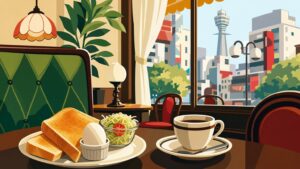
For a deeper dive into the city’s unique food culture that fuels its energy, explore the morning service ritual at a traditional Osaka kissaten.
The Great Escape: An Urbanite’s Necessary Pilgrimage
Decompression on the Nose Electric Railway
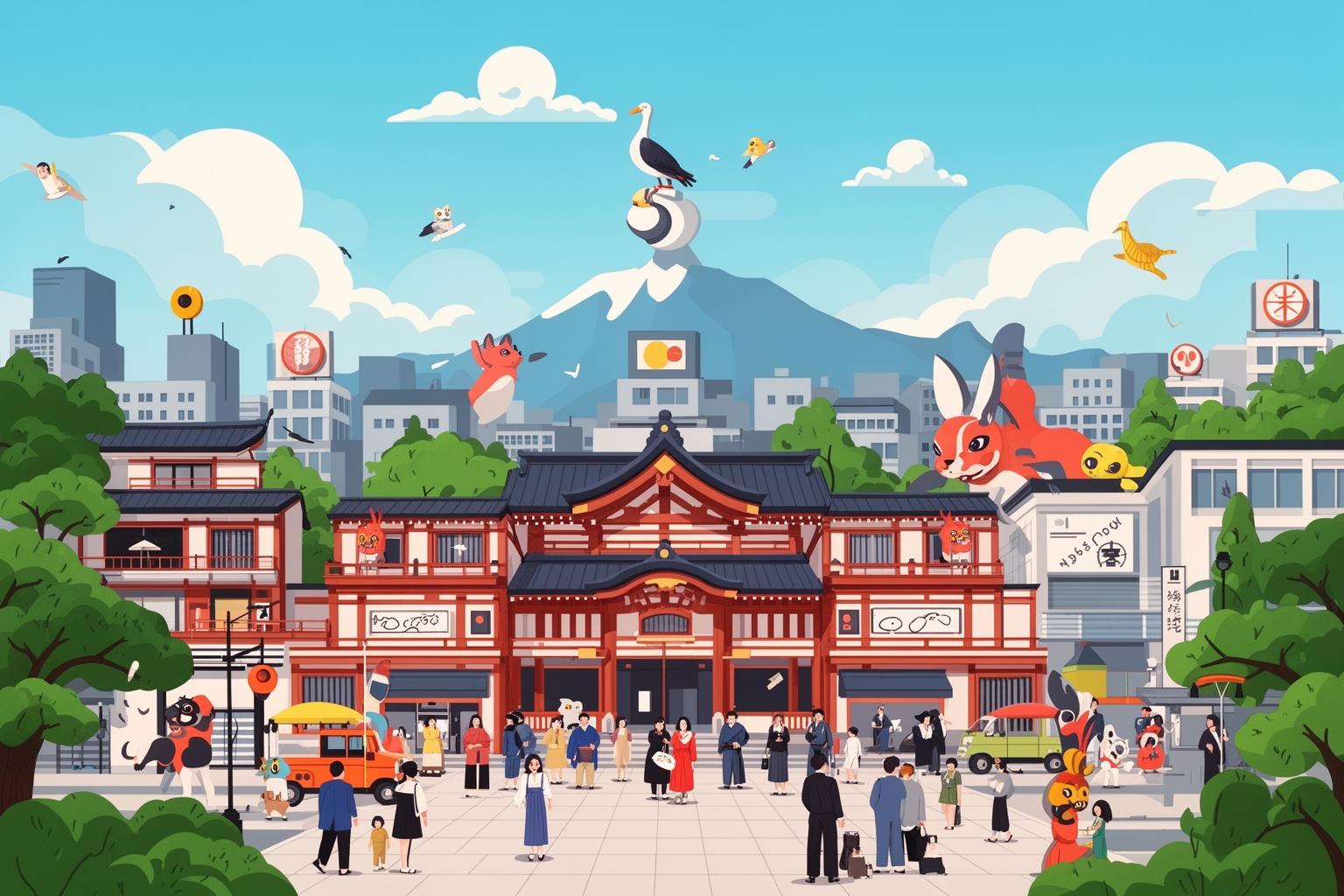
The journey itself marks the start of a transformation. You begin at the hectic hub of Hankyu Umeda Station, a maze of platforms and bustling crowds. But instead of boarding the sleek, futuristic express bound for Kyoto or Kobe, you make your way to the Takarazuka Line and then transfer to a smaller, humbler train: the Nose Electric Railway, affectionately called the Nose-den. This shift is more than just changing trains; it’s a shift in rhythm. The pace slows down. The train cars are shorter, the seats have a vintage charm, and the passengers change. The sharp suits and fashionable city attire are replaced by practical jackets and comfortable shoes. You spot grandparents with their grandchildren, hikers with walking sticks, and locals carrying bags of groceries. The train itself seems to exhale as it departs from the dense urban sprawl.
As you rumble northward, the view outside transforms into a time-lapse of Osaka’s landscape. The dense clusters of apartment buildings, or manshon, begin to thin out. The spaces between them widen, first filled by sprawling suburban houses with tiled roofs and small gardens, then by patches of green—wild bamboo groves and untended fields rather than manicured parks. The concrete banks of the Yodo River give way to the stony, natural shores of smaller tributaries. The air inside the train changes, shedding its underground, air-conditioned staleness and taking on a fresher, green aroma that drifts in at each stop. This gradual, thoughtful transition is crucial. It’s not the abrupt jolt of a bullet train or airplane. It’s a slow unwinding, a decompression chamber preparing your city-weary mind for the deep quiet ahead. For an Osakan, the journey to the countryside is not just about arriving; it’s about feeling the process, shedding layers of urban stress with every station.
The Satoyama Philosophy: Where Nature and Humanity Coexist
What you’re heading into is a landscape called satoyama. This important concept is often misunderstood by those who see Japan as a simple divide between mega-cities and untouched wilderness. Satoyama occupies the space in between. It’s a landscape where human activity—rice paddies, terraced fields, managed forests for charcoal and lumber—has coexisted with nature for centuries. It’s a mosaic of agriculture and wildness. For Osakans, whose city was originally built on marshland and has grown relentlessly, the satoyama of Nose symbolizes an ancestral memory. It recalls an era when life was governed by the seasons, not train timetables.
Unlike the grand, majestic national parks of Hokkaido or the dramatic peaks of the Japan Alps, satoyama is not about conquering nature. It’s about living in harmony with it. This philosophy is deeply embedded in the Osaka mindset, even if unconsciously so. The pragmatism of an Osaka merchant, who seeks the most efficient way to close a deal, stems from the practicality of a farmer choosing the best day to plant rice based on weather and lunar phases. It’s a practical, symbiotic relationship. When you see an elderly woman tending her small vegetable garden beside her home in Nose, you’re witnessing a living expression of a philosophy that values sustainable, small-scale productivity. This contrasts sharply with the Tokyo-centric perspective, which views nature either as something to be conquered through massive infrastructure projects or consumed as a luxury experience at an expensive ryokan in Hakone. For Osakans, nature in Nose is neither. It is a partner. It is the pantry. It is the workplace. It is home.
Arriving in a Different Osaka: The Sensory Shock of Silence
Beyond the Tourist Trail
Stepping off the train at Myokenguchi, the final station, delivers the first genuine surprise. The air is thick with the scent of damp earth and chlorophyll. The dominant sounds are not the roar of traffic but the chirping of unfamiliar birds and the distant hum of a small tractor. There are no convenience stores blaring jingles, no pachinko parlors, no towering video screens. Nose is not made for you, the visitor. It’s a working agricultural community that graciously allows you to witness its daily rhythm. This is a crucial distinction. Places like Kyoto are carefully staged for the tourist eye. Every temple, every garden is showcased as a flawless, consumable piece of culture. Nose, however, offers something far more sincere and, for many, more meaningful: authenticity.
You won’t find souvenir shops selling mass-produced trinkets. Instead, there’s a michinoeki (roadside station) where local farmers sell their imperfectly shaped but incredibly fresh produce. The vegetables still carry traces of dirt. The eggs come from chickens you can probably hear clucking down the road. This absence of commercial polish brings great comfort to Osakans. The city is a performance. You put on your work face, your social face. You’re always “on.” In Nose, that performance is unnecessary. The town isn’t trying to sell you an experience; it simply is the experience. This aligns with a core Osaka value: honesty. Osakans distrust pretense. They prefer things straightforward, unvarnished, and real. A lumpy, muddy daikon radish from a farm stand in Nose is, in many ways, more beautiful to the Osaka soul than a perfectly presented, plastic-wrapped specimen in a high-end department store in Umeda.
The Rhythm of the Land
Walking the winding roads of Nose, you begin to attune to a different rhythm. Life here moves at the pace of a tractor, not a bullet train. You’ll see farmers dressed in their distinctive blue work clothes and wide-brimmed hats, moving with a deliberate, unhurried gait. Their gestures are efficient, shaped by decades of repetition. No energy is wasted. This stands in sharp contrast to the city’s frantic, often chaotic hustle. In Osaka, people walk fast, talk fast, and eat fast. There’s a persistent, low-level anxiety about not falling behind. In Nose, the only clock that matters is the sun, and the only deadline is the changing of the seasons. This slower tempo can be jarring for a city dweller or even a foreigner used to the hyper-efficiency of Japanese urban life. You might find yourself growing impatient, waiting for a slow-moving vehicle or for a shopkeeper to finish a long chat with a neighbor. But that impatience is the city speaking. The lesson of Nose is to let it go. The true efficiency, the town seems to whisper, lies not in speed but in sustainability—in moving in harmony with your environment rather than resisting it. It’s a kind of wisdom the city has largely forgotten but urgently needs.
The Language of the Countryside: A Shift in Communication
From Banter to Practicality
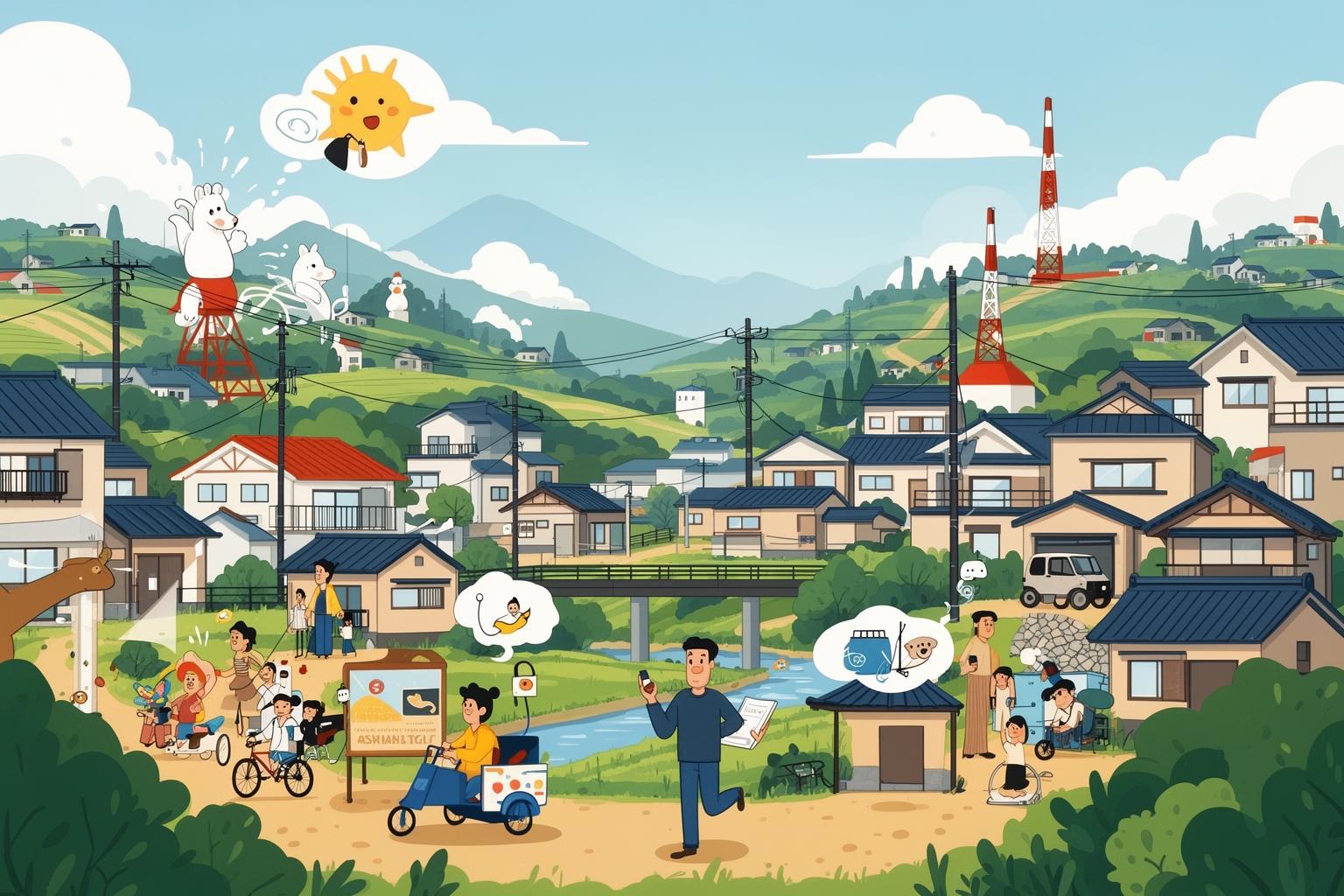
Osaka city is renowned for its distinctive way of speaking. Osaka-ben is quick, straightforward, and full of humor. It’s a language of business and comedy, crafted for rapid connections and efficient dealings, often softened by a mutual laugh. A simple market purchase in the city can turn into a friendly negotiation filled with jokes and playful jabs. It’s a transactional dance. In Nose, while the language remains a Kansai dialect, its tone is entirely different. The pace is slower, and the words are chosen more thoughtfully. A conversation with a farmer at a roadside stand isn’t about witty banter; it’s focused on the matter at hand.
A Tale of Two Radishes
Picture buying a daikon radish. At a Kuromon Market stall in Osaka city, the vendor might say, “O-niichan, kore mecha umasou ya de! Kinou no to wa chigau, shinsen ya! Maketoku wa!” (Hey, buddy, this one looks incredibly delicious! It’s not like yesterday’s; it’s fresh! I’ll give you a discount!). It’s a performance. It’s salesmanship—friendly and effective.
In Nose, you point at a daikon. The elderly farmer might pick it up, feel its weight, and say, “Kesa no yatsu ya. Tsuchi, ee shimeri guaiやったさかい, amai to omou de.” (This one’s from this morning. The soil had just the right moisture, so I think it’ll be sweet.). The focus isn’t on making a sale; it’s about sharing the radish’s story. It’s a transfer of information, of knowledge. The communication is grounded in the earth and a shared understanding of what makes a good vegetable. There’s a quiet pride in the words, a confidence born of creation rather than commerce. For an Osakan from the city, this difference is striking. The expectation of a quick, humorous exchange is replaced by a more sincere, thoughtful interaction. It serves as a reminder that the city’s well-known communication style, while entertaining, is just one expression of the regional identity.
The Unspoken Language of Community
In the anonymity of the city, privacy is essential. You learn to ignore those around you on the train or the street. You build a bubble. In a small town like Nose, that bubble doesn’t exist. People make eye contact. They nod. They greet even strangers. The community is tangible. You see it in neighbors stopping to chat for twenty minutes, leaning on a pickup truck, or in the shared bulletin boards covered with local notices. This can feel overwhelming for both city-born Japanese and foreigners, accustomed to urban anonymity as a shield. You feel… noticed. But it’s not a judgmental stare; it’s a look of acknowledgement. You are here, part of this shared space. This highlights a fundamental difference in social structure. Osaka city is made up of millions of individuals coexisting in a crowded area. Nose is a community, a network of intertwined lives. Misunderstandings can occur when someone from the city, armored with indifference, overlooks a greeting or appears dismissive. The unspoken rule in the countryside is simple: recognize the humanity of those around you. It’s a rule the city might do well to remember.
The Onsen Experience: Soaking Away the Urban Armor
More Than Just a Hot Bath
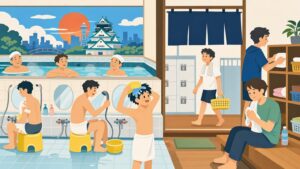
Almost every weekend trip from a Japanese city includes a visit to an onsen, or natural hot spring. For many foreigners, this is a highlight—a chance to experience a distinctive aspect of Japanese culture. However, it’s easy to misinterpret what truly takes place at an onsen. It’s not merely about hygiene or relaxation in the Western sense. Rather, it’s a deeply cultural, almost spiritual ritual of purification and connection. In a place like Nose, you won’t encounter the sprawling, theme-park-style “super sento” complexes popular in the suburbs. Instead, you’ll find a simpler, more rustic bathhouse that has served the local community for generations.
The ritual begins even before you enter the water. In the changing room, you remove your clothes—and with them, your identity. Your profession, your wealth, your nationality—all vanish along with your pants and shirt. This is the concept of hadaka no tsukiai, or “naked communion.” It conveys the idea that true, honest communication occurs when all social statuses are set aside. Inside the bathing area, the first stop is the washing stations, where you thoroughly scrub your entire body. This is more than just hygiene; it is an act of purification. You wash away the dirt and stress of the outside world, preparing yourself to enter the pure, natural water of the onsen. To enter the bath without washing first is the ultimate faux pas, signaling a lack of understanding or respect for the sanctity of the space.
The Water’s Embrace and Silent Communication
Slipping into the hot, mineral-rich water is a deeply moving experience. The water in Nose’s onsen is often abundant in radon and other minerals, believed to have therapeutic effects. It tingles on your skin, and the heat penetrates your muscles, releasing tensions you weren’t even aware of. The physical relaxation is immense, but the mental and social elements are equally important. In the bath, you might find yourself sitting beside an elderly farmer, his body marked by a lifetime of hard labor. Conversation may be minimal—perhaps just a nod or a quiet sigh of contentment. Yet in that shared silence, in that shared vulnerability, there is a profound sense of connection. You are all equals, stripped bare, finding comfort in the same warm embrace of the earth.
This form of communication is very different from the lively chatter of an Osaka izakaya. It’s a quiet understanding—a shared experience that requires no words. For foreigners, it offers insight into the Japanese appreciation for non-verbal communication and shared context. It also reveals another side of the Osakan character. Beneath their loud, extroverted exterior lies a yearning for genuine, unpretentious connection. The onsen provides a space for exactly that. It is a place to let the city’s mask fall away, to be silent, and simply exist. This ritual cleanses not only the body but also the spirit, preparing you to face the city again with renewed calm and perspective.
The Taste of the Land: Discovering the Roots of Kuidaore
From Farm Stand to Table
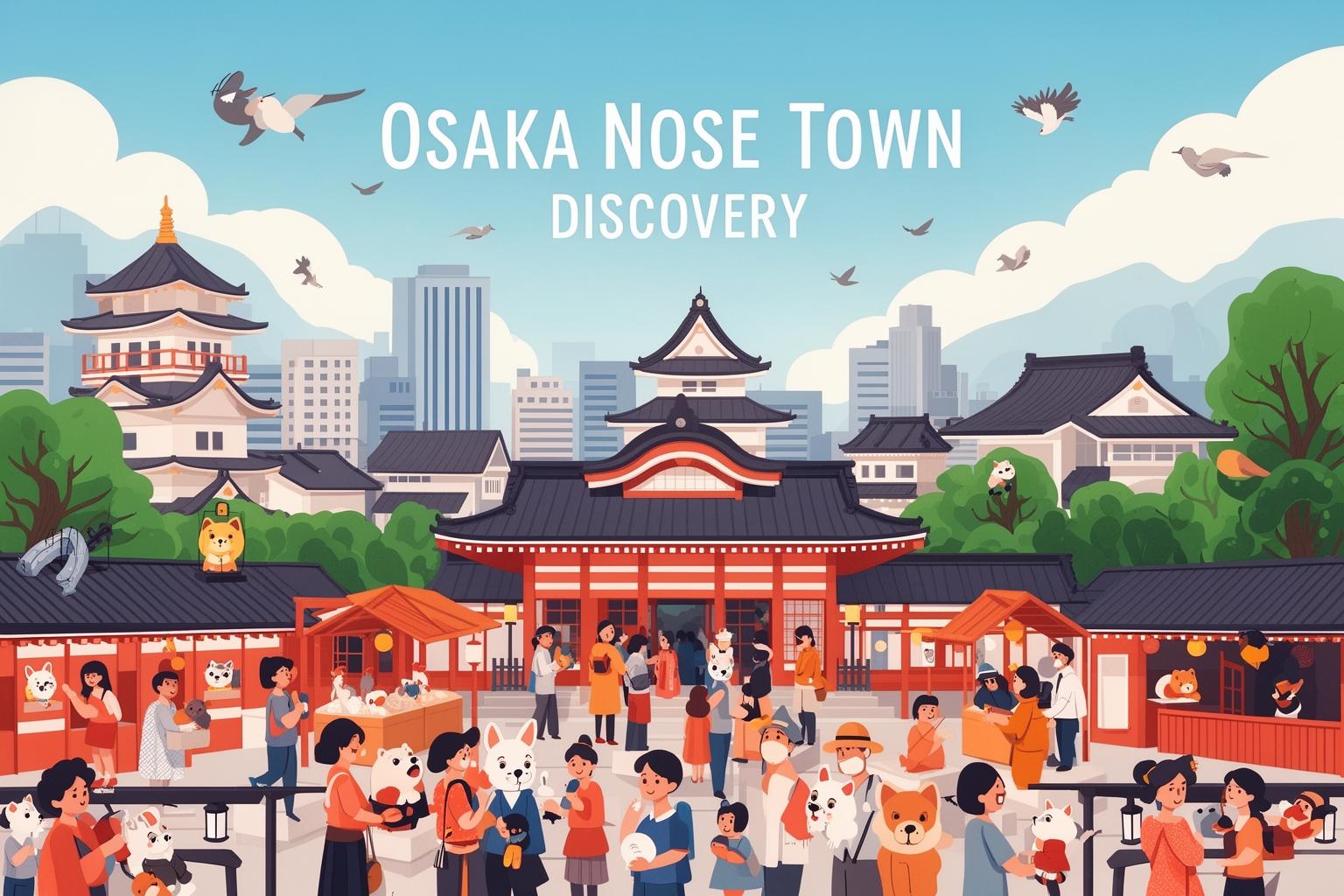
Osaka’s identity is deeply intertwined with its food culture. The term kuidaore, meaning to eat oneself into ruin, is embraced proudly. The city is a haven for takoyaki, okonomiyaki, kushikatsu, and many other culinary delights. But where does this passion originate? A visit to Nose reveals the answer: it comes from the land. For centuries, Osaka was known as the “nation’s kitchen” (tenka no daidokoro), serving as the central hub where rice and vegetables from the fertile surrounding plains were gathered and distributed. The city’s prosperity and rich food culture were founded on the productivity of its agricultural hinterland, places just like Nose.
Experiencing Nose’s food is therefore more than just eating—it’s about understanding its history. You don’t dine at an upscale restaurant; instead, you visit a humble soba shop run by an elderly couple, where the buckwheat is locally grown and milled. You stop by a café serving cakes made with chestnuts (kuri) harvested from the trees visible outside the window. The ultimate experience is visiting a local farm stand or market. Here, the connection between food and its source is immediate and undeniable. You can purchase shiitake mushrooms cultivated on logs rather than in factories. You can speak with the farmer who picked the tomatoes that very morning. For an Osakan, this is a pilgrimage to the root of their culture. They value the story behind the food, as a dish tastes richer when you know the effort and care involved in growing its ingredients. This stands in sharp contrast to Tokyo’s often abstract, trend-driven food culture, which focuses more on celebrity chefs and exotic ingredients from far-flung places. At its core, Osaka’s food culture is local, seasonal, and intimately connected to the soil.
The Seasonal Bounty
In the city, the changing seasons are marked by new department store displays and limited-edition Starbucks drinks. In Nose, the seasons are genuine, tangible, and delicious. In spring, you find sansai, wild mountain vegetables like bamboo shoots (takenoko) and fiddlehead ferns (kogomi), foraged from the nearby hills. Their slightly bitter flavor is believed to cleanse the body after winter. In summer, farm stands overflow with shiny eggplants, cucumbers, and tomatoes, bursting with flavor from the summer sun. Autumn brings the rice harvest, filling the air with the scent of drying hay. It’s also the season for chestnuts and persimmons. Winter delivers hardy root vegetables such as daikon and gobō (burdock root), perfect for comforting hot pots (nabe) that warm you from within.
Living in harmony with these seasons defines life in Nose, a wisdom longed for by city dwellers. An Osakan might drive to Nose just to purchase a bag of freshly harvested koshihikari rice directly from the farmer, knowing its taste and texture far surpass anything from a supermarket. This is not food snobbery but a profound, almost instinctive appreciation of freshness and seasonality. It’s understanding that food is not a static commodity but a living product rooted in a specific time and place. By enjoying the seasonal bounty of Nose, you nourish your body while participating in the ancient, unbroken rhythm of the land that sustains Osaka. This is the truest expression of kuidaore.
The Foreigner’s Place: Navigating the Insider’s World
Breaking the “Gaijin” Bubble
For a non-Japanese resident, traveling to a rural area like Nose can feel intimidating. There’s a worry about standing out, about being the awkward gaijin (outsider) in a close-knit community where everyone knows each other. In some regions of Japan, this concern can be justified. There may be a polite yet firm distance, a feeling of being watched from behind a curtain. However, the Kansai region, including Nose, often feels different. The renowned Osakan openness and curiosity can sometimes break through the usual reserve. While interactions might be less lively than in the city, there is a sincere curiosity.
The key to bridging this gap is to show genuine interest and humility. Don’t treat the town like a theme park or its residents as mere photo subjects. This is their home and workplace. The best approach is to be a quiet, respectful observer who supports the local economy. Buy your vegetables from the elderly woman at the farm stand. Have lunch at the family-run diner. Try to use your best, even if broken, Japanese. A simple “Konnichiwa” (Hello) or “Arigatou gozaimasu” (Thank you) can go a long way. Unlike the tourist-heavy streets of Kyoto, where such greetings can feel scripted, in Nose they are genuine acts of communication. People are often pleasantly surprised and happy to engage.
Finding Acceptance Through Action
Acceptance in rural Japan is often earned not through words, but through actions. It’s about demonstrating that you understand and respect the local way of life. This could be as simple as sorting your garbage properly at a local guesthouse or removing your shoes where appropriate. It’s about patience. If the local bus runs a few minutes late, you don’t complain. You wait. You watch the clouds. You adapt to the local rhythm.
Foreigners often misinterpret the nature of Japanese communities. They are not exclusionary by design, but are built on a foundation of shared context, unspoken rules, and mutual obligations. As an outsider, you can’t be expected to know all the rules. But you can show you’re willing to learn and respect the fact that these rules exist. By visiting a place like Nose, you step outside the comfortable foreigner-friendly bubble of the city and enter a more authentic version of Japan. It can be challenging, but it is also deeply rewarding. It’s where you stop being a tourist and begin to become part of the wider cultural landscape. You learn that the heart of Osaka isn’t only in its bustling city center, but also in its quiet, green outskirts. A weekend in Nose doesn’t just recharge your energy; it enriches your understanding of your adopted home, making the city itself feel richer and more complex when you return.
The Return: Carrying the Countryside in Your Heart
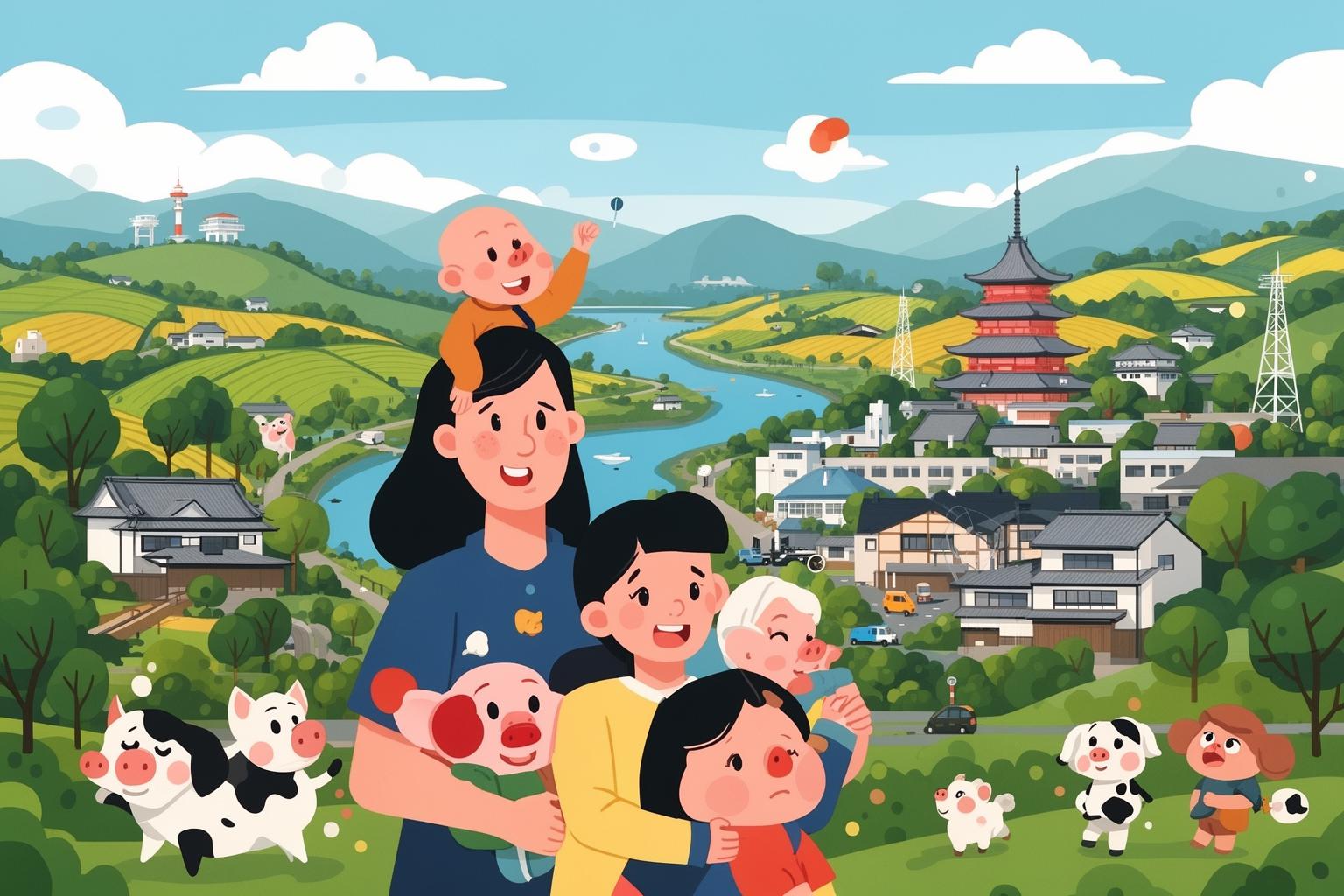
The journey back to Umeda on the Nose-den is the reverse of the decompression experienced on the way out. As rice paddies give way to suburbs, which then merge into a dense urban forest of steel and glass, you sense the city’s energy reasserting itself. The countryside’s quiet is replaced by the familiar clatter and hum. Yet something has shifted. The noise feels somewhat less oppressive. The crowds seem less anonymous. You carry the tranquility of Nose within you—the taste of its fresh vegetables and the memory of the hot spring’s warmth.
A trip to Nose reminds you that Osaka is not a monolith. It is a dynamic ecosystem, a bustling metropolis deeply intertwined with the quiet, productive land that surrounds it. Living in Osaka and knowing only the city is to read only half the story. You must understand its source, its pantry, its quiet soul. You need to recognize that the pragmatic, no-nonsense attitude of Osakans reflects that of farmers, and their passion for good food expresses the gratitude of a city aware of where its sustenance comes from. The neon glow of Dotonbori is born from the sunlight that shines on the fields of Nose. Grasping this connection is key to truly understanding what it means to live in Osaka. It’s not about escaping the city; it’s about comprehending it fully, from its concrete heart to its green, breathing soul.