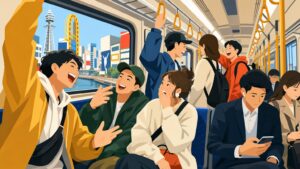
When you first arrive in Osaka, you might notice the volume. It’s a city that hums with a different frequency than the rest of Japan. Conversations are louder, faster, and seem to tumble over one another in a chaotic, yet somehow elegant, rush. You hear a sharp, percussive retort from across the street, followed by a burst of laughter, and you wonder if you’ve just witnessed an argument. You haven’t. You’ve just witnessed a conversation. In Tokyo, you learn the art of reading the air, of understanding the unspoken. In Osaka, you learn the art of the comeback. This city’s communication isn’t built on silence and subtlety; it’s built on the rhythm of comedy, specifically a style of stand-up known as Manzai. To live here, to truly understand the people, you don’t need a phrasebook as much as you need to understand a punchline. This isn’t just about jokes; it’s about connection. It’s the invisible framework for how people build relationships, conduct business, and move through their daily lives. Forget what you think you know about Japanese communication. We’re in Osaka now, and the rules are different. This is a place where a perfectly timed jab is a sign of affection, and where the most important conversations happen through a shared laugh.
If you’re looking to experience a different, more tranquil side of Osaka after immersing yourself in its comedic pulse, consider a rejuvenating weekend trip to the rural hot springs of Nose Town.
The Manzai Blueprint: Deconstructing Osaka’s Social Code
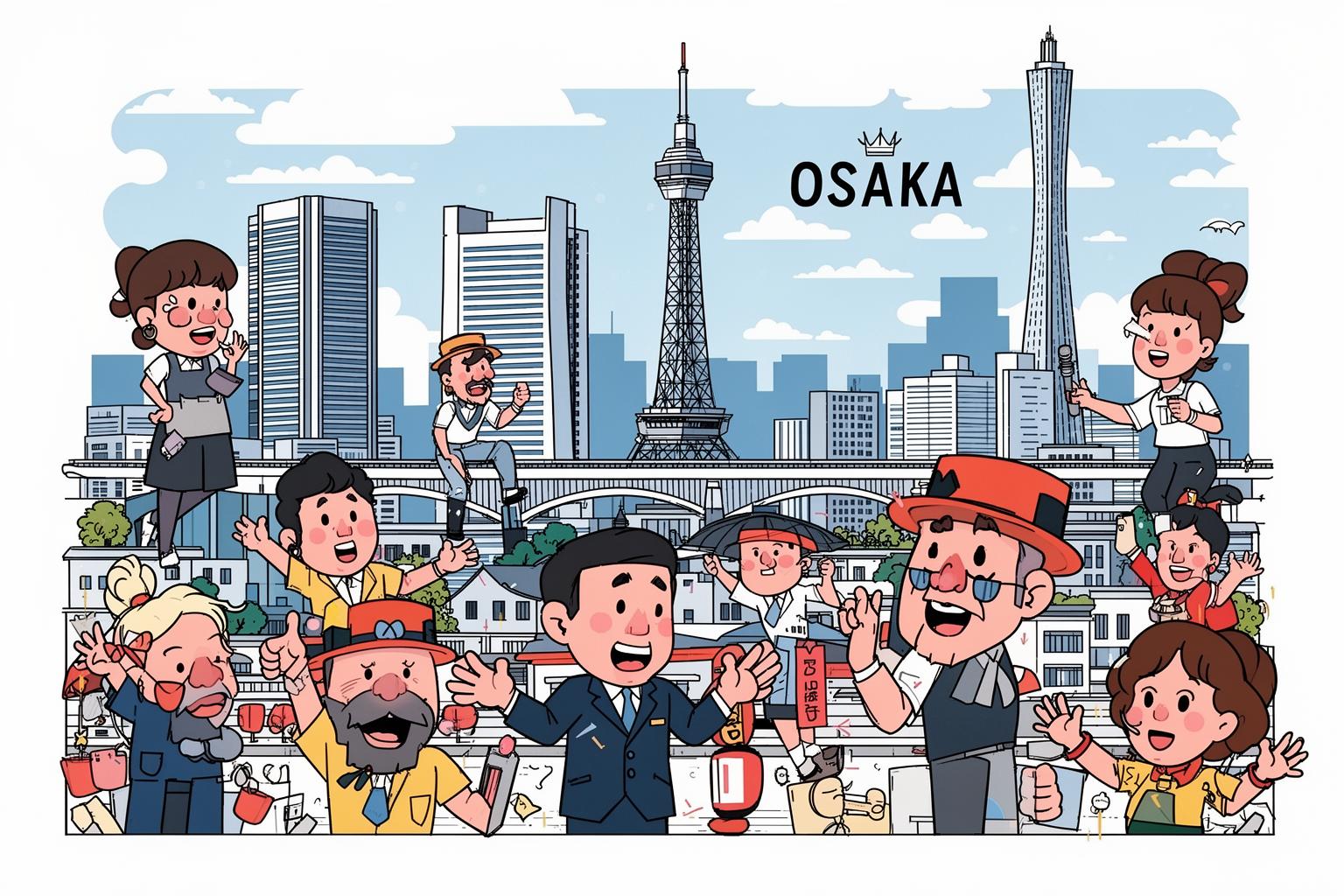
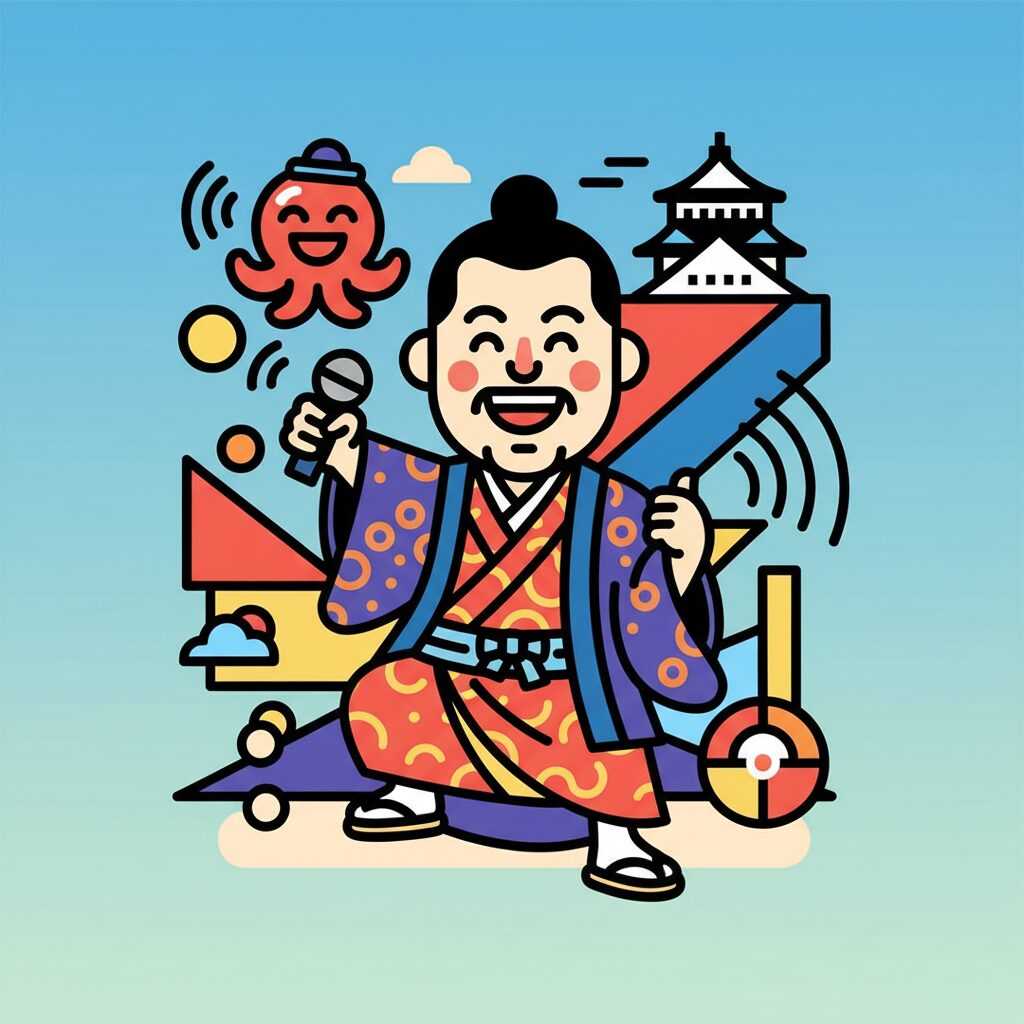
To understand Osaka, you must first understand Manzai. It’s more than just a comedy duo on stage; it encapsulates the city’s social dynamics. At its core, Manzai features two roles: the `boke` (ボケ) and the `tsukkomi` (ツッコミ). On the surface, it’s straightforward. The `boke` is the funny one—the airhead—who says or does something absurd, illogical, or simply foolish. The `tsukkomi` is the straight man who points out the absurdity, corrects mistakes, and brings the situation back to reality, often with a sharp retort or a light tap on the head. But these roles run deeper than a simple smart-guy-dumb-guy routine. They embody a key principle in Osakan communication: one person opens the conversation, and the other closes it. It’s a conversational dance, a verbal game of catch.
The Soul of the `Boke`: Beyond Being Just a Fool
The `boke` drives the conversation. This role involves intentionally disrupting everyday reality. The `boke` might misunderstand a simple phrase, make an exaggerated claim, or link two unrelated ideas. In a society like Japan’s, which often values conformity and procedure, the `boke` is a breath of fresh air—an authorized disruptor. This character symbolizes the freedom to be illogical, creative, and different. It’s a rebellion against the mundane.
In daily life, the spirit of the `boke` appears everywhere. It’s the butcher at Tenma market who, when asked about his ground beef, replies deadpan, “It’s terrible. Don’t buy it. Go next door.” He’s not being rude; he’s being a `boke`. He breaks the normal customer-shopkeeper script to create a shared moment of humor. He’s inviting you to join in the game. It’s the friend who, hearing your complaints about being broke, suggests, “Why don’t we just dig for gold in Osaka Castle park?” They know it’s ridiculous—the absurdity is the point. It’s a way to say, “I hear you, and I’m with you, so let’s escape reality briefly with a shared fantasy.”
Playing the `boke` also serves as social lubricant. By embracing the role of the fool, a person uses self-deprecation to immediately lower social barriers. In a Tokyo business meeting, admitting a mistake might trigger tension and a formal apology. In Osaka, it’s a `boke` moment. Someone might say, “I totally forgot to attach the file. My brain must be made of tofu today.” This isn’t incompetence; it’s humility wrapped in humor. It makes the person relatable and human, diffusing potential conflict before it begins. The `boke` grants everyone permission to be imperfect.
The Art of the `Tsukkomi`: The Anchor of Affection
If the `boke` is the kite, the `tsukkomi` holds the string. Without the `tsukkomi`, the `boke`’s absurdity would drift into nonsense. The `tsukkomi` grounds the conversation, delivering punchlines by calling out foolishness. This can confuse many foreigners because the `tsukkomi` often seems harsh. It’s quick, direct, and can sound critical. But in Osaka, a skilled `tsukkomi` shows deep engagement—it proves you were listening, understood the joke, and cared enough to respond perfectly.
Consider the butcher who said his meat was terrible. A weak response might be nervous laughter or confusion. A good `tsukkomi` reply would be, “Then why are you even open? Are you trying to poison the neighborhood?” This completes the routine. You’ve accepted the premise and volleyed back. You’re no longer just a customer—you’re a participant. The `tsukkomi` is not an insult; it’s a reward. It validates the `boke`’s humor attempt.
This dynamic makes conversations in Osaka feel highly interactive. People frequently interrupt—not out of rudeness, but to perform a `tsukkomi`. If a friend tells a long-winded story, another might interject, “Get to the point! I’ll be retired by the time you finish.” In Tokyo, this could be very impolite. In Osaka, it manages the conversational flow and shows investment. The classic `tsukkomi` phrase is “Nande ya nen!” (なんでやねん), roughly meaning “Why?!” or “What the heck?!” It’s a versatile expression used to show surprise, disbelief, or to call out a `boke`’s nonsense. Hearing it around a bar in Namba is like hearing the city’s theme music.
The `tsukkomi` can also be physical. In Manzai, the `tsukkomi` often taps the `boke` on the head or shoulder with a paper fan (`harisen`). In everyday life, this becomes a light, playful tap on the arm among friends. It serves as a punctuation mark—a physical exclamation point meaning, “You’re ridiculous, and I appreciate it.” For those unfamiliar with the culture, seeing friends lightly hitting each other may seem surprising, but understanding it as part of the `tsukkomi` tradition reveals it as a gesture of closeness and warmth.
The Rhythm of the City: Where Conversation Becomes Performance
Beyond the specific roles of `boke` and `tsukkomi`, the rhythm and tempo of Manzai truly characterize Osaka’s style of communication. The Japanese concept of `ma` (間), referring to the pause or negative space, is important in many art forms, but in Osaka Manzai, it is cleverly used for comedic effect. The timing of a joke—the duration of the silence before a `tsukkomi` responds—is everything. This acute sense of timing extends into everyday speech, making Osakan conversations feel highly dynamic.
The Rapid-Fire Exchange
Conversations here aren’t a series of monologues; they are a fast-paced back-and-forth. One person proposes an idea (usually the `boke`), the other quickly retorts (`tsukkomi`), and the cycle continues at a frenetic speed. This demands attentive listening and quick reflexes. You can’t afford to zone out even briefly, or you risk missing your moment. This is why Osakans sometimes appear impatient in conversation—they’re waiting for their chance to keep the flow going. What might be considered a thoughtful or polite pause in other cultures can here be seen as disinterest or falling behind.
This conversational style can be tiring for newcomers. It feels like constant verbal sparring. Yet once you become accustomed, you see it’s an exceptionally efficient method of communication. Ambiguity is minimized. People speak their minds, often with humor, and you almost always know where you stand. The aim isn’t to carefully choose words to avoid offense; it’s to keep the interaction lively. The energy of the exchange matters more than the politeness of individual remarks.
Every Tale Needs a Punchline (`Ochi`)
One distinctive aspect of Osakan conversation is the cultural expectation of an `ochi` (オチ), or punchline. When someone shares a story—whether about a rough day at work or a funny moment on the train—there’s an unspoken understanding that it’s leading somewhere, ideally to a laugh. A story that ends abruptly without a clear point or humorous twist often meets a friendly, yet disappointed, “So… what’s the `ochi`?”
This influences how people communicate. They structure their anecdotes like mini-Manzai performances: setting up a premise, building tension, and delivering a satisfying conclusion. This makes conversations not just entertaining but also somewhat performative. People aren’t simply exchanging information; they’re trying to entertain one another. This contrasts sharply with a more utilitarian style focused solely on conveying facts. In Osaka, presentation often matters as much as content. Recognizing the need for an `ochi` helps explain why small talk here rarely feels trivial; it’s a chance to test out stories and fulfill a social expectation to be an engaging conversationalist.
Why Here? The Merchant’s Legacy
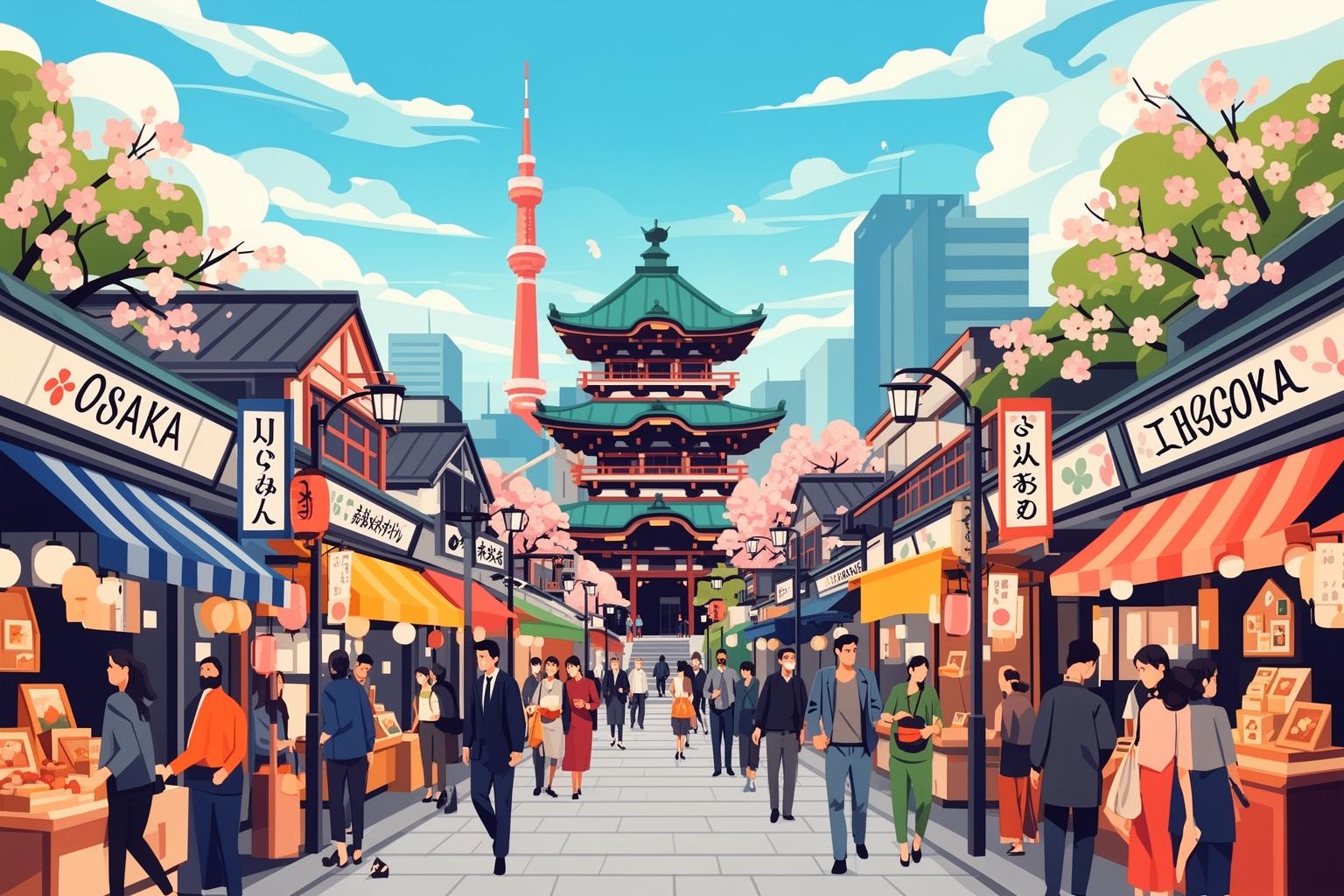
To understand why Osaka developed its distinctive conversational culture, one must look back at its history. For centuries, while Tokyo (then Edo) served as the austere capital of the samurai and the shogunate—a city founded on hierarchy, rules, and preserving face—Osaka was known as Japan’s kitchen, a vibrant center of commerce and trade. It was a city of merchants, not warriors.
A Culture Shaped in the Marketplace
The life of a merchant demanded a vastly different skill set than that of a samurai. Success relied not on strict adherence to protocol, but on adaptability, quick wit, and the ability to build rapport rapidly. In Osaka’s crowded markets, you had to be loud to be heard and clever to close a deal. Haggling was more than just negotiation; it was entertainment, a performance between buyer and seller. This environment cultivated a culture of directness, pragmatism, and a healthy dose of showmanship.
The `boke` and `tsukkomi` dynamic naturally evolved from this. A seller might make an exaggerated claim about a product (a `boke`) to capture a customer’s attention. The customer would then respond with a skeptical but witty retort (a `tsukkomi`), and through this exchange, a relationship was forged. This back-and-forth built trust and familiarity in ways that formal, stiff language never could. Humor became a tool for business: it broke down barriers, made people memorable, and sealed deals. The merchant spirit of `akindo` (商人) values resourcefulness and human connection over blind adherence to formality. This mindset still deeply influences Osaka today. People appreciate a good deal, but they also enjoy the process of making it happen.
The Tokyo-Osaka Contrast: Samurai vs. Merchant
The contrast between Osaka and Tokyo represents one of Japan’s major cultural divides, rooted in this history. Tokyo’s communication style is often defined by `tatemae` (建前)—the public facade or socially acceptable stance—and `honne` (本音), one’s true feelings, which are frequently kept private. This creates a communication style that can seem indirect, layered, and laden with subtlety, requiring considerable interpretation. It’s a language shaped in a capital where a single misstep within a strict hierarchy could have serious repercussions.
Osaka, by contrast, largely sets aside `tatemae`. Communication there is more direct and closer to `honne`. This doesn’t mean Osakans are rude; rather, their primary social tool is humor, not ambiguity. They’ll tell you what they think, but often with a joke to soften the impact. A friend in Tokyo might hint that your new haircut is “unique,” whereas a friend in Osaka is more likely to laugh and say, “What happened? Did you get into a fight with a lawnmower?” The first leaves you guessing; the second is so exaggerated that it’s impossible not to laugh along. This approach to communication is more straightforward and arguably more honest. This preference for clarity and efficiency, born from a merchant culture, explains why many find life in Osaka less stressful—there’s far less guesswork involved in social interactions.
A Foreigner’s Guide to Playing the Game
So, how do you manage to navigate this fast-paced world of quick-witted banter as a non-native? It can be intimidating. The fear of saying the wrong thing or not catching the joke is very real. But the good news is that Osakans are generally welcoming and appreciate any effort to engage. You don’t have to become a master comedian overnight. You just need to learn a few essential principles.
It’s Not an Insult, It’s an Invitation
The first and most important rule is to adjust your perception of teasing. In many Western cultures, persistent teasing or highlighting someone’s flaws can be viewed as bullying or passive-aggression. In Osaka, it’s often a sign of affection. When someone starts making fun of you, it signals they feel comfortable with you. It means you’re “in.” They are giving you a `boke` moment, offering you a chance to deliver a `tsukkomi` and join the conversation as an equal.
For example, if you’re struggling with chopsticks and a local jokingly says, “Are you trying to build a bird’s nest with those?” they aren’t mocking your inability. They are opening a door. A great response would be a self-deprecating `boke` like, “Yes, it’s a new style of modern art,” or a simple `tsukkomi` like, “Be quiet and pass the fork!” The worst thing you can do is become defensive or offended. That shuts the conversation down and signals you don’t get the game. Embrace the tease. It’s an open invitation.
Your First `Tsukkomi`: Mastering “Nande Ya Nen”
You don’t need a vast vocabulary to join in. Learning one phrase can take you surprisingly far: “Nande ya nen.” It’s the Swiss Army knife of Osakan `tsukkomi`. You can use it to respond to almost any ridiculous statement. Someone tells you it’s going to rain cats and dogs? “Nande ya nen!” Someone claims their takoyaki is the best in the universe? “Nande ya nen!” It’s a simple, effective way to show you’re in on the joke. Timing and tone matter. Say it with a bit of energy and a smile, and you’ll instantly earn respect. It’s a password that unlocks a deeper level of interaction.
Listen for the Setup
More important than speaking is listening. Notice how people set up their jokes. An Osakan conversation is full of `furi` (フリ), which are setups or feints. Someone might begin by complaining about how hard their job is, how tired they are, or how broke they are. This isn’t necessarily a genuine plea. It’s often a `furi` building toward a punchline. They’re setting the stage for a `boke`. Your role as a listener is to follow along, show empathy, and then be ready for the twist. For instance, after a long complaint, they might conclude with, “…so I decided to quit my job and become a professional street performer. What do you think of my juggling?” The shift from serious to silly is the heart of the humor. By recognizing the `furi`, you can better appreciate the `ochi`.
The Generosity of `Ame-chan`
Finally, understand the spirit of unsolicited generosity, often linked to humor. You’ll meet the famous “Osaka obachan” (おばちゃん), the middle-aged or elderly woman considered the city’s guardian spirit. They’re known for carrying `ame-chan` (candies) in their purses and handing them out to everyone—strangers, children, you. This small act symbolizes Osaka’s culture. It’s proactive, slightly intrusive, and breaks down barriers between strangers. The exchange rarely happens silently. She’ll hand you a candy and might comment on your clothes, hair, or the weather, usually with a humorous, `boke`-style twist: “You look cold! This candy will warm you up better than a coat!” It’s an offering not just of sugar, but of human connection. Accepting it with a thank you and a smile is accepting a piece of Osaka itself.
Living in Osaka means learning to let go of your social inhibitions. It’s about realizing communication can be a sport, a performance, and a source of joy all at once. The nonstop banter, the teasing, the expectation of a punchline—it’s not just noise. It’s the city saying, “I see you. I’m paying attention. Now, what’ve you got for me?” It can be jarring and confusing, but once you understand the rhythm behind it—the ancient, invisible beat of the Manzai duo—you realize you’re part of something warm, vibrant, and alive. You’re not just living in Osaka; you’re in on the joke. And that’s a wonderful place to be.