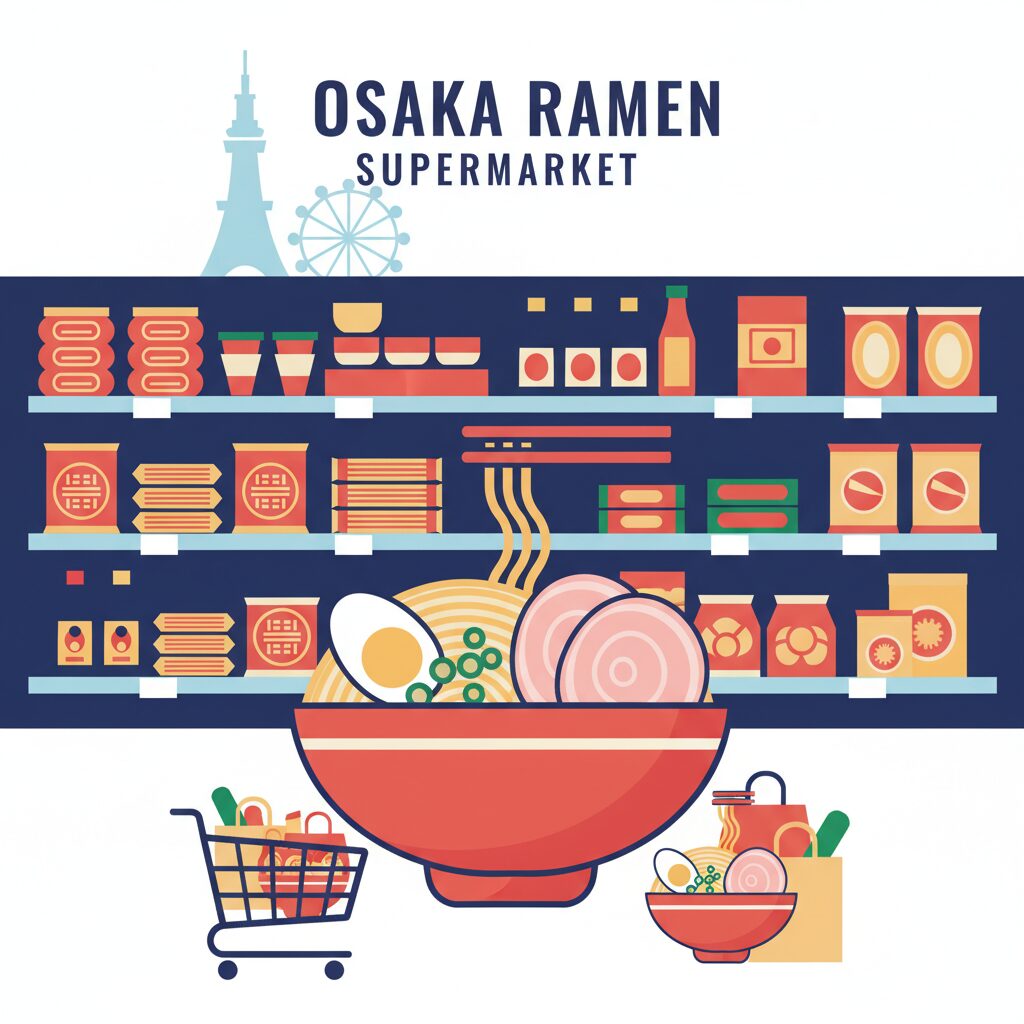
To the uninitiated, the instant ramen aisle of a Japanese supermarket can seem like a wall of cheerful noise. A riot of colourful packaging, bold typography, and smiling mascots all promising a hot, satisfying meal in three to five minutes. For many foreigners, myself included upon my arrival, it represents the ultimate in Japanese convenience culture—a quick fix for a lonely evening, a student’s salvation, a culinary last resort. In most places, that perception holds. You buy the packet, you follow the instructions, you eat. The transaction is one of simple necessity. But here in Osaka, that is a profound misreading of the situation. The instant ramen aisle is not an end point; it is a starting line. It is a gallery of blank canvases, and every Osakan shopper who walks down it is an artist, a pragmatist, and a quiet rebel, preparing to create a minor masterpiece that will never be judged by anyone but themselves. This isn’t about convenience; it’s about control, creativity, and the deeply ingrained Osakan philosophy of kuidaore—eating oneself into ruin—applied not to Michelin-starred establishments, but to a 100-yen packet of dehydrated noodles. To understand Osaka, you don’t need to start at the castle or in the neon-drenched streets of Dotonbori. You can start right here, in the humble, brightly-lit aisles of a supermarket, where the soul of the city reveals itself one topping at a time.
To truly immerse yourself in the local culture, consider extending your culinary adventure into the evening by exploring the vibrant bar-hopping scene in Osaka’s Tenma district.
The Philosophy of the Ramen Aisle: More Than Just Noodles
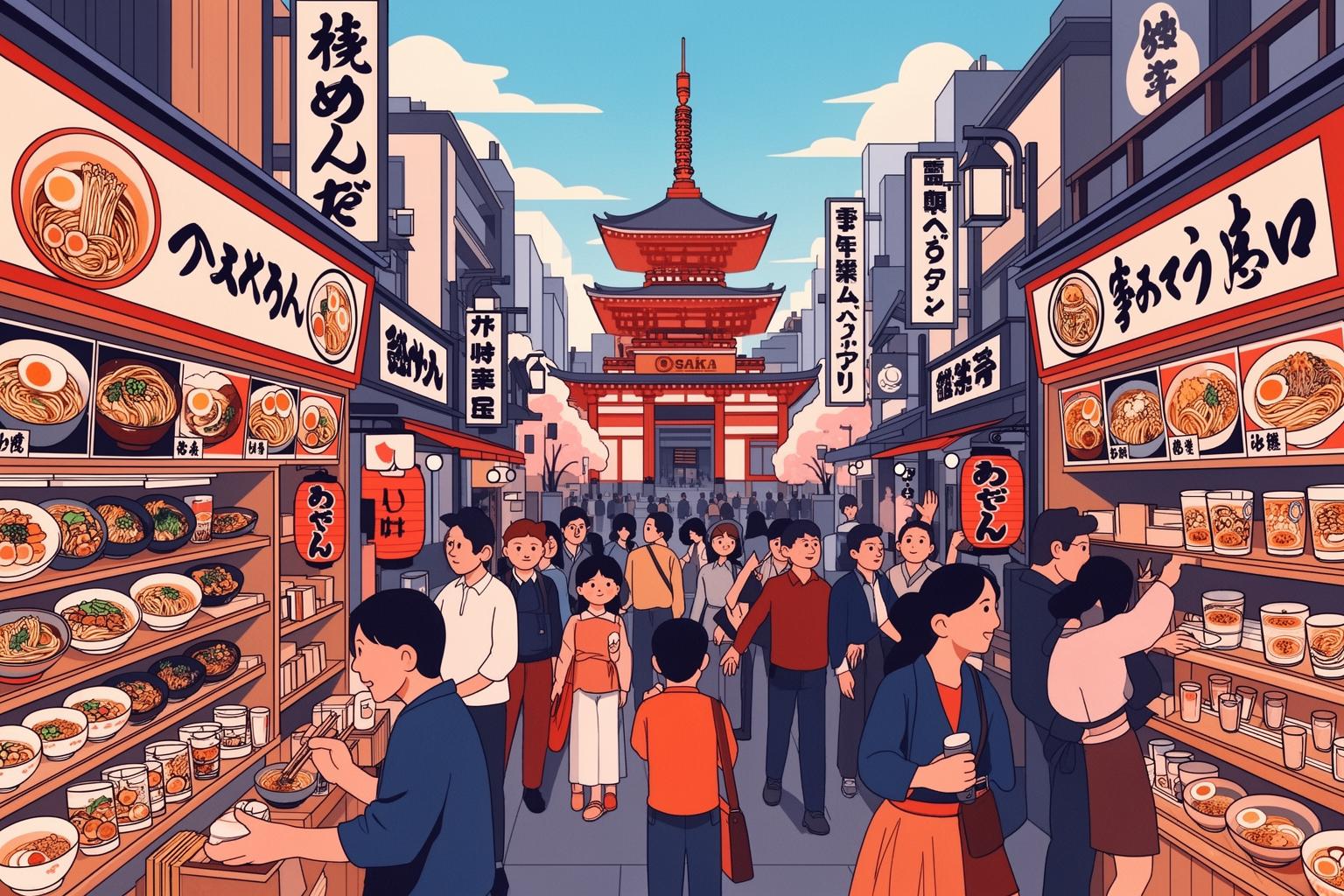
Step into a typical supermarket in Osaka—be it a Life, an Izumiya, or the notoriously vibrant Super Tamade—and the overwhelming size of the instant noodle section immediately grabs your attention. It’s not merely a few shelves; often, it’s an entire aisle, a vast collection of flavor varieties stacked from floor to ceiling. Naturally, you’ll find the national giants: Nissin, Maruchan, Sapporo Ichiban, Myojo. Yet beneath this corporate umbrella lies a bewildering assortment of sub-brands, limited-edition flavors, regional specialties, and premium, restaurant-style options. You’ll encounter thin Hakata-style tonkotsu noodles, thick Sapporo-style miso noodles, salt-based broths, soy-sauce-based broths, spicy tantanmen, soupless abura soba, and fried yakisoba. The packaging varies from the classic plastic-wrapped blocks (fukuro-men) to the ubiquitous styrofoam cups (kappu-men), bowls, and even upscale versions with multiple packets of liquid soup concentrate, flavored oils, and dehydrated toppings.
In Tokyo, this vast array might primarily be seen as a tribute to consumer choice—a reflection of a fast-paced lifestyle where each craving can be met with maximum efficiency. The choice itself is the centerpiece. But in Osaka, the mindset is fundamentally different. This incredible variety isn’t just a menu of ready-made dishes; it acts as a catalogue of ingredients. The packet is not the meal. It serves as the foundational element—the base broth and starch—upon which a proper meal is built. The instructions on the back aren’t viewed as strict guidelines, but rather gentle suggestions from a distant corporate chef, which any self-respecting Osakan home cook feels free to ignore, enhance, or completely transform.
This outlook directly reflects the core Osakan mindset, a powerful mix of relentless pragmatism and an obsession with value, locally known as kosupa (a blend of “cost performance”). An Osakan looks at a 98-yen ramen packet and doesn’t see a meal costing 98 yen. Instead, they see a 98-yen flavor foundation which, with the addition of a 30-yen bag of bean sprouts, a 20-yen egg, and a few scraps of pork from the fridge, can be turned into a meal worth 500 yen. It’s a small-scale act of economic alchemy. Why pay extra for a “deluxe” version that includes a sad little packet of dried corn and leeks when you can make something far superior and more filling for a fraction of the price? This isn’t about being cheap; it’s about being clever. It’s about refusing to accept the pre-packaged reality and actively improving upon it. This hands-on, value-adding approach to everyday life is quintessentially Osaka—a city shaped by merchants and artisans who have long understood that true value is not purchased, but created.
Deconstructing the Base: Choosing Your Canvas
The journey of a thousand toppings begins with a single packet. Choosing which instant ramen to use as your base is a critical decision, as it shapes the entire direction of your culinary endeavor. A light, salty broth calls for different accompaniments than a rich, pork-bone soup. This initial selection process reveals the depth of local knowledge and the subtle calculations behind what appears to be a simple purchase.
The Bagged Classics (Fukuro-men): The Foundation of Creativity
These are the veterans, the foundational staples of the instant ramen world. Packaged in simple plastic wrappers, usually in multi-packs of five, they are the preferred choice for serious customizers. Their very nature demands involvement. They require you to supply your own bowl, boil water in a pot, and behold the plain, unadorned noodles floating in broth—a sight that practically begs for enhancement.
Nissin’s Chicken Ramen, the progenitor of all instant noodles, exemplifies this. Created in Osaka prefecture by Momofuku Ando, its noodles are flash-fried with seasoning already infused. You simply place the block in a bowl, pour hot water over it, and cover. Its brilliance lies in its simplicity—a savory, chicken-and-soy flavor that is comforting yet somewhat one-dimensional. For the Osakan home cook, this is its greatest asset. It’s a neutral base, ideal for absorbing the flavors of whatever you add—a raw egg cracked into the center (the packaging even includes a small indentation in the noodle block for this purpose), a handful of chopped scallions, a drizzle of sesame oil.
Then there is the holy trinity from Sapporo Ichiban: Shio (salt), Miso, and Shoyu (soy sauce). The Shio Ramen is probably the most versatile. Its light, clean broth provides the perfect backdrop for fresh vegetables like cabbage and carrots, or delicate seafood. A packet of Sapporo Ichiban Shio promises a bright, vibrant meal. The Miso Ramen, on the other hand, is rich, funky, and full-bodied. It demands heartier toppings—stir-fried ground pork, corn, a pat of butter melting into a golden pool on the surface. Choosing the miso base signals a craving for something deeply warming and substantial. The Shoyu occupies a comfortable middle ground, a classic, well-rounded flavor pairing well with almost anything, from bamboo shoots to a slice of roasted pork.
The Cup Noodle Universe (Kappu-men): Convenience Redefined
At first glance, the cup noodle seems to contradict the spirit of customization. Its entire design is based on an all-in-one, just-add-water simplicity. Yet, Osakans find ways to personalize it. The iconic Nissin Cup Noodle in its familiar styrofoam cup often serves as a base camp for further flavor ventures. It’s common to see someone stir in a spoonful of chili oil, a dash of vinegar, or even a dollop of mayonnaise to enrich the broth. Even this pinnacle of convenience succumbs to the local drive for customization.
Customization truly shines with larger, more complex bowl and cup varieties, especially instant yakisoba. Products like Nissin’s U.F.O. or Myojo’s Ippei-chan Yomise no Yakisoba are classics. They come with packets of sauce, dried cabbage, and often a controversial but beloved packet of mayonnaise. The standard procedure is to drain the hot water, mix in the sauce, and eat. The Osakan method involves several additional, indispensable steps. Cracking a raw egg into the hot noodles and stirring vigorously to create a creamy, carbonara-like sauce is popular. Frying an egg sunny-side up and placing it on top, letting the yolk ooze into the noodles, is another. Adding a slice of processed cheese and allowing it to melt into a gooey blanket of savory goodness is almost a rite of passage. These additions elevate a simple snack into a decadent, nearly sinful meal. It’s a testament to the local belief that when it comes to flavor, there is no such thing as “too much.”
The Regional and the Premium: Exploring Japan from Your Kitchen
Beyond mainstream brands, the supermarket aisle serves as a culinary map of Japan. You’ll find packets of Kumamoto-style tonkotsu ramen, renowned for its black garlic oil, or spicy Taiwanese-style ramen from Nagoya. These offer a more complex starting point, semi-finished dishes that invite complementary, rather than transformative, additions. An Osakan might buy the Kumamoto ramen and aim to replicate the authentic experience by adding their own kikurage (wood ear mushrooms) and thinly sliced pork.
This is also where premium lines like Nissin’s Raoh or Maruchan’s Seimen series appear, featuring non-fried, fresh-style noodles and intricate liquid soup concentrates. Here, the Osakan calculus of kosupa (cost-performance) comes into play. These premium packets can cost two or three times more than a standard bag. A savvy shopper weighs the cost against the potential of a cheaper alternative. “Can I make a standard Sapporo Ichiban taste this good with my own additions for less money?” The answer is almost always yes. Premium brands are a nice indulgence, but true pride comes from elevating the humble and everyday. The act of transformation itself is a source of satisfaction.
The Arsenal of Upgrades: A Tour of the Supermarket Toppings

Once the noodle canvas is selected, the true artistry begins. The customizer’s journey proceeds through the supermarket’s other sections, which transform from mere aisles into an armoury of potential enhancements. Each department presents a new palette of textures, flavors, and aromas to layer onto the humble ramen base.
The Produce Aisle: Freshness Is Paramount
This is the first and most critical stop. Adding fresh vegetables is the primary way to elevate instant ramen from a processed snack to a proper meal. It brings nutrition, texture, and a sense of virtue to an otherwise indulgent dish.
At the top of the hierarchy are moyashi, or bean sprouts, the undisputed king of kosupa. A large bag, enough for several meals, can be purchased for as little as 30 yen. They are indispensable. Added to the pot in the last minute of cooking, they retain a satisfying crunch that provides essential textural contrast to the soft noodles. Piled high atop a finished bowl, they add volume and a fresh, clean flavor. A bowl of ramen without a mound of bean sprouts can feel incomplete—a missed chance for maximum satisfaction at minimal cost.
Next is the allium family, primarily negi (spring onions). A handful of finely chopped green onions sprinkled on top just before serving lends a sharp, aromatic bite and a splash of vibrant color. They serve as the finishing touch that signals the dish is complete. Some cooks prefer the thicker white parts of the onion, slicing them diagonally and simmering them in the broth to release a sweeter, deeper flavor.
Cabbage (kyabetsu) and garlic chives (nira) are often paired, especially with miso or tonkotsu broths. Roughly chopped cabbage, when stir-fried with a bit of pork before being added to the soup, wilts slightly but retains a pleasant bite, infusing its sweetness into the broth. Nira gives a pungent, garlicky kick that holds up to the richest soups. The combination of pork, cabbage, and nira forms a classic flavor base that can transform any instant ramen into a dish reminiscent of champon, the famous Nagasaki noodle soup.
Finally, mushrooms (kinoko) add another dimension. Enoki mushrooms, with their long, delicate stems, cook in seconds and offer a unique, slightly slippery texture. Shimeji or maitake mushrooms contribute a deeper, earthier umami note. They provide an easy way to inject sophistication and complexity.
The Meat and Deli Counter: The Protein Foundation
While vegetables add freshness, protein adds substance. It’s what transforms a noodle soup into a truly satisfying, fortifying meal. The meat counter offers a variety of options for the ramen customizer, ranging from quick additions to more involved preparations.
By far the most common choice is thinly sliced pork belly (butabara usugiri). This serves as the home cook’s shortcut to recreating the tender chashu pork found in ramen shops. The slices are so thin they cook almost instantly when dropped into boiling broth. They impart a rich, porky flavor to the soup while becoming meltingly tender themselves. It’s an incredibly efficient way to add a touch of luxury.
Then there is the humble egg (tamago), the most versatile and essential ramen topping. Preparation methods vary and are often fiercely debated. The simplest is the otoshi-tamago, where a raw egg is cracked directly into the pot of simmering noodles, gently poaching in the broth. The goal is a firm white with a perfectly runny yolk that can be broken and stirred into the soup, creating a rich, creamy emulsion. Others prefer a soft-boiled egg (hanjuku tamago), cooked separately and added at the end. For the truly dedicated, there is the ajitama, a soft-boiled egg marinated for hours in a mixture of soy sauce, mirin, and sake. Although time-consuming, many supermarkets cater to the aspirational but time-poor with surprisingly good pre-marinated ajitama in the deli section.
Beyond these classics, the Osakan spirit of improvisation shines. It’s not unusual to see coarsely ground pork (butaniku minchi) stir-fried with miso and chili bean paste to create a spicy topping for miso ramen. Western-style sausages or bacon, chopped and fried, are also common additions, reflecting the flexible, global pantry of the modern Japanese home. There are no rules of authenticity here; the only rule is that it must be delicious.
The Dairy and Processed Foods Aisle: The Unspoken Secrets
Here lie some of the most transformative, if unconventional, upgrades. These secret weapons add surprising levels of richness and umami, turning a simple broth into something decadently complex. This aisle best reflects the Osakan lack of culinary pretension.
Sliced processed cheese (suraisu chīzu) is a game-changer. A single slice, placed atop the hot noodles and allowed to melt, is revelatory. It works best with miso or tonkotsu broths, blending seamlessly into the soup to create a thick, creamy, and intensely savory liquid that clings to every noodle. It may sound strange, even wrong, to the uninitiated, but it is a deeply satisfying experience beloved across Japan, especially embraced with gusto in Osaka.
Another classic combination for miso ramen is butter and corn (bātā and kōn), popularized as a Hokkaido regional style and easily replicated at home. A can of sweet corn adds bursts of sweetness and texture, while a generous pat of butter, added at the very end, melts into the hot broth, lending incredible richness and a glossy sheen. The salty, funky miso, sweet corn, and rich butter form a holy trinity of flavor.
One cannot forget Japanese mayonnaise (mayonēzu), specifically Kewpie mayonnaise, known for its distinctive eggy richness and tang from rice vinegar. While indispensable for instant yakisoba, its use extends to soupy ramen as well. A squeeze into a spicy ramen broth can moderate the heat and add a creamy body, showcasing the playful and experimental nature of home cooking here.
The Pantry Staples: The Flavor Enhancers
Finally, the finishing touches come from small pantry additions that can completely transform the dish’s character. A clove of freshly grated garlic (ninniku) added to a bowl of tonkotsu ramen gives a pungent, aggressive kick that cuts through the pork broth’s richness. A drizzle of toasted sesame oil (goma-abura) adds a nutty aroma. A spoonful of chili oil (rāyu), especially varieties with crunchy garlic sediment, provides both heat and texture. A scoop of kimchi brings spice, acidity, and umami simultaneously, nodding to the significant Korean cultural influence in Osaka. For a touch of ramen-shop authenticity, jars of seasoned bamboo shoots (menma) and sheets of toasted seaweed (nori) are always at hand.
The Osaka Method: Recipes as Cultural Statements
Seeing how these elements come together is to experience a form of personal expression. The particular blend of base, vegetables, protein, and flavor boosters creates a unique dish, reflecting the creator’s mood, budget, and appetite. These are more than just recipes; they are philosophies in a bowl.
The “Kosupa King” Build
This represents the art of achieving maximum satisfaction with minimal cost. It is the everyday choice for students, young salarymen, and anyone who values the principles of kosupa. The base is typically the cheapest option, perhaps a generic store-brand shio ramen bought in a five-pack. The focus is on volume and texture. The main addition is a large handful of bean sprouts, cooked until tender-crisp. This significantly increases the meal’s size, making it more filling. A single egg, poached directly in the broth, adds the necessary protein. The finishing touch is a sprinkle of whatever green onions remain in the fridge. The total price might be under 150 yen, but the outcome is a hot, crunchy, savory, and deeply satisfying meal. This build is a testament to resourcefulness. It celebrates creating abundance from scarcity—a skill refined over generations in this merchant city.
The “Saturday Night Special” Build
This creation stands at the opposite end of the spectrum. It treats instant ramen as a deliberate, celebratory meal. The process might start on a Saturday afternoon with the choice of a premium base, such as Maruchan Seimen Miso, signaling intent. The preparation is more involved. Thinly sliced pork belly and chopped cabbage are stir-fried in a wok with garlic and ginger before adding water and soup base to the same pan, capturing all the browned, flavorful bits. The noodles are then cooked in this enriched broth. The bowl is assembled carefully: a generous helping of canned corn, a perfectly halved pre-marinated ajitama revealing its jammy yolk, a thick pat of butter that melts immediately into the soup, and a final sprinkle of shichimi togarashi (seven-spice blend). This is not a 3-minute meal; it is a 20-minute project. It proves that “instant” refers to the noodle, not the dish. It reflects the Osakan love for good food, and the belief that any meal, regardless of its humble origins, deserves time, effort, and respect.
The “Junk Food Juggernaut” Build
This build is a joyful, unapologetic celebration of pure indulgence. It sets aside any concerns about health or culinary refinement in favor of flavor at its most primal. The base is almost always a super-sized cup of instant yakisoba, like a Peyoung Chō-Ōmori. After draining the noodles and mixing in the sauce, a slice of American-style cheese is added on top to melt into a gooey layer. Then, a crispy-edged fried egg is placed atop. The final, essential step is a Jackson Pollock-like drizzle of Kewpie mayonnaise and a sprinkle of aonori (powdered seaweed) and katsuobushi (bonito flakes). This is a calorie-packed monster, a glorious mess of salty, sweet, tangy, and savory flavors. To an outsider, or perhaps someone from Tokyo’s more image-conscious circles, it might seem crude or unsophisticated. But in Osaka, there is no shame in this game. The Juggernaut is a declaration of anti-pretension. It follows the most fundamental Osakan culinary rule: if it tastes good, it is good. End of story.
Beyond the Bowl: Ramen, Osaka, and the Rejection of Purity
Ultimately, the everyday practice of customizing instant ramen perfectly encapsulates Osaka itself. It reflects the city’s defining cultural traits in a way that grand historical landmarks or polished tourist guides never could. Above all, it is an act of pure pragmatism. In a city that has always prized practicality and efficiency, instant noodles offer an ingenious solution to hunger: fast, affordable, and dependable.
Yet, it is also an expression of bold creativity. Osakans are not passive consumers. The city’s culture thrives on making, tinkering, and improving. There is a refusal to simply accept the world as it is presented. This mindset applies to business, comedy, and most certainly food. The pre-packaged meal becomes a challenge, an invitation to personalize. This impulse transforms a simple act of eating into one of creation, however modest. It is a democratic culinary expression, open to everyone regardless of skill or income. You don’t need formal training to know that adding a slice of cheese and a fried egg atop yakisoba is brilliant.
This sharply contrasts with the more rigid culinary traditions found elsewhere in Japan. In Kyoto, the emphasis might be on ingredient purity and the subtle, centuries-old kaiseki techniques. In Tokyo, ramen culture often revolves around the master chef’s cult, where patrons queue for hours to passively receive a bowl that embodies the chef’s singular, perfected vision—altering it would be disrespectful. In an Osaka kitchen, you are the master chef. Your vision is the only one that counts. This active, participatory food culture is the true essence of kuidaore. It transcends mere consumption; it embodies a deep, personal, and joyful engagement with every aspect of food.
Your Field Guide to the Osaka Supermarket
For any foreigner eager to truly grasp the rhythm of daily life in Osaka, my advice is straightforward: visit a supermarket in the late afternoon. Observe the shoppers in the instant noodle aisle. Notice what they add to their baskets alongside the ramen: a bag of bean sprouts, a carton of eggs, a small tray of sliced pork. You are witnessing the initial steps of countless small, creative endeavors.
Then, give it a try yourself. Don’t be daunted by the vast array of choices. Pick up a five-pack of something that catches your eye—Sapporo Ichiban Shio is a great and reliable option to start with. Next, take a stroll around the store. Grab a bag of bean sprouts and some green onions. Pick up half a dozen eggs. Maybe a small tray of thinly sliced pork belly. Head home and experiment. There are no rules. You cannot go wrong. Stir-fry the pork, add the sprouts during the final 30 seconds of cooking, poach an egg in the broth, and finish with the onions. The whole process will take you less than fifteen minutes.
As you sit down to your bowl—a bowl that is uniquely yours, a result of your selections and effort—you’ll come to understand something essential about this city. You’ll realize that in Osaka, value is created, not merely bought. You’ll see that practicality and creativity are not opposing forces, but two sides of the same coin. And you’ll recognize that the soul of a culture lies not only in its ancient temples or famous landmarks but in the simple, brilliant, and delicious ways its people get through an ordinary Tuesday night.