Life in Osaka is a full-contact sport for the senses. It’s the sizzle of okonomiyaki on a hot plate in Tsuruhashi, the percussive clang of a pachinko parlor door swinging open in Kyobashi, the roar of the crowd at a Hanshin Tigers game, and the relentless, cheerful call of “Irasshaimase!” from every shopkeeper in the Shinsaibashi-suji arcade. It’s a city that runs on high-octane energy, a place where conversations are loud, laughter is louder, and the pace of life feels like a bullet train pulling out of Shin-Osaka station. You get swept up in it, carried along by its vibrant, unapologetic current. And for the most part, it’s exhilarating. But then, a moment arrives. Maybe it’s on a packed Midosuji line train during the morning rush, or after a long week of navigating the beautiful, chaotic dance of business and pleasure. A quiet thought bubbles up: “I need a break. A real one.”
In Tokyo, that feeling might send you to the manicured hot springs of Hakone or the breezy coast of Kamakura. But in Osaka, when the soul asks for silence, the answer is often a place that feels like an entirely different dimension, a sacred realm floating above the clouds: Mount Koya, or Koyasan. This isn’t just a weekend trip; it’s a rite of passage for many Kansai residents, a way to hit the reset button on a spiritual and cellular level. It’s where the city’s boisterous, pragmatic, and fiercely commercial spirit goes to find its quiet center. Understanding why an Osakan chooses to trade the neon glow of Dotonbori for the lantern-lit paths of a thousand-year-old cemetery is to understand a fundamental, often overlooked, duality at the heart of the city’s character. This is the story of how to escape Osaka, not just physically, but mentally, and in doing so, discover a deeper truth about the city you left behind.
For another perspective on finding balance from Osaka’s energy, consider a local’s guide to a Kyoto weekend.
The Osaka Escape Velocity: Why Koyasan?

To understand the significance of Koyasan for someone living in Osaka, you first need to grasp the rhythm of the city itself. Osaka operates on a principle of ‘value.’ This goes beyond simply finding a good deal on electronics in Den Den Town or bargaining at a street market; it’s a deeply rooted philosophy. In Osaka’s way of life, value means getting the most out of everything: the most flavor, the most fun, the richest experience. An evening out isn’t just a meal; it’s a multi-phase adventure filled with food, drinks, and laughter. A shopping trip is a strategic quest for the best quality at the best price. This mindset—a continuous assessment of return on investment for time, money, and energy—fuels the city’s well-known entrepreneurial spirit.
So, when an Osakan decides to take a break, this value-driven calculation doesn’t simply switch off. The destination must deliver. It can’t be just a beautiful view or a relaxing bath; it needs to be an experience. It requires substance. And in this sense, Koyasan offers the ultimate value proposition. For the cost of a train ticket and a night’s stay, you get an almost unbelievable package: a journey through the clouds on a scenic mountain railway, a stay in an active Buddhist temple, a taste of ancient monastic cuisine, a walk through Japan’s most sacred and atmospheric cemetery, and a direct connection to over 1,200 years of history and spiritual tradition. It’s a cultural, historical, natural, and spiritual immersion all in one. It’s not merely an escape from the city; it’s a profound upgrade of your entire state of being for the weekend. This is why Koyasan holds a special place in the Kansai heart. It fulfills a deep-seated craving for something honma mon—the real deal. It’s authentic, profound, and deeply transformative, offering a return on investment measured not in yen, but in peace of mind.
This stands in sharp contrast to the getaways associated with Tokyo. While places like Hakone are lovely, they often feel like extensions of the city’s polished, brand-conscious culture, with their designer ryokans, celebrity-chef restaurants, and curated art museums. The experience can feel transactional—a luxury product to consume. Koyasan is different. It’s not a product; it’s a practice. You don’t just check in; you participate. You adapt to its ancient rhythms, not the other way around. This preference for substance over surface, for lived experience over branded luxury, is a defining trait that sets the Kansai region, and Osaka in particular, apart. Osakans maintain a healthy skepticism toward anything that feels overly polished or pretentious. Koyasan, with its rustic charm, its occasionally creaky wooden floors, and its profound, unvarnished authenticity, feels just right. It feels genuine.
The Journey is the Destination: From Namba’s Neon to Mountain Mist
The pilgrimage to Koyasan does not begin at a serene, contemplative shrine, but in the vibrant, pulsating core of southern Osaka: Nankai Namba Station. This station is the epicenter of Osaka’s Minami district, a vast urban playground filled with department stores, hidden bars, and countless arcades. The atmosphere buzzes with a myriad of sounds and scents. Stepping onto the Nankai Koya Line platform here feels like passing through a gateway. You are leaving behind a world of frenetic energy and consumerism, embarking on a journey toward one defined by silence and reflection. The journey itself plays a vital role in mental unwinding, a gradual shedding of the city’s outer layer.
The Nankai Koya Line: A Gateway to Another Realm
As the train departs Namba, the first twenty minutes reveal pure, unfiltered Osaka suburbia. The landscape is dotted with tightly packed houses, small factories, and local shopping streets. Passengers represent a typical cross-section of Osaka life: uniformed high school students, grandmothers running errands, and salarymen engrossed in their phones. Yet, as the train heads further south, a subtle change takes place. Buildings grow sparser. Green spaces, rice paddies, and bamboo groves begin to emerge amid the houses. The pace of the scenery slows.
The significant transformation occurs at Hashimoto Station, where passengers often transfer to a shorter, more specialized train designed for the steep ascent into the mountains. The atmosphere on this train is entirely different. Daily commuters give way to a blend of international tourists with backpacks, serious Japanese hikers with walking sticks and colorful gear, and quiet, elderly pilgrims clad in white. Conversations turn softer. Passengers gaze out the windows rather than at their phones. The train begins its winding climb, clinging to the mountainside. Outside, the view shifts to dizzying expanses of deep cedar-filled valleys and mist-covered peaks. The train rocks and creaks navigating sharp bends, its rhythmic clatter a calming mantra marking your departure from the flat, sprawling Osaka plain. This isn’t merely public transportation; it’s a carefully crafted transition, meant to prepare your mind for the sacred realm ahead.
The Final Climb: The Cable Car and Mountain Breeze
The train journey ends at Gokurakubashi Station, meaning “Paradise Bridge.” The name is no coincidence. From here, you take the final ascent to the mountaintop monastery complex via a cable car. This five-minute ride is stunningly steep, climbing over 300 meters at an almost vertical angle. As you ascend, the world below drops away. The air transforms—crisp, cool, and fresh, infused with the unmistakable scent of pine and moist earth. Upon disembarking at the summit, you have truly arrived. The ambient noise of the lower world vanishes, replaced by the whisper of wind through ancient cedars and the distant chime of a temple bell. The temperature is noticeably cooler than in the city—a tangible reminder that you have entered an entirely different place. This multi-stage journey—from the urban frenzy of Namba, through suburban neighborhoods, up the winding mountain tracks, and finally aboard the near-vertical cable car—serves as a masterful psychological setup. By the time you board the bus to the town of Koya, your city mindset has begun to dissolve, replaced by a growing sense of peace and anticipation.
Checking In to a Different Reality: The Shukubo (Temple Lodging) Experience
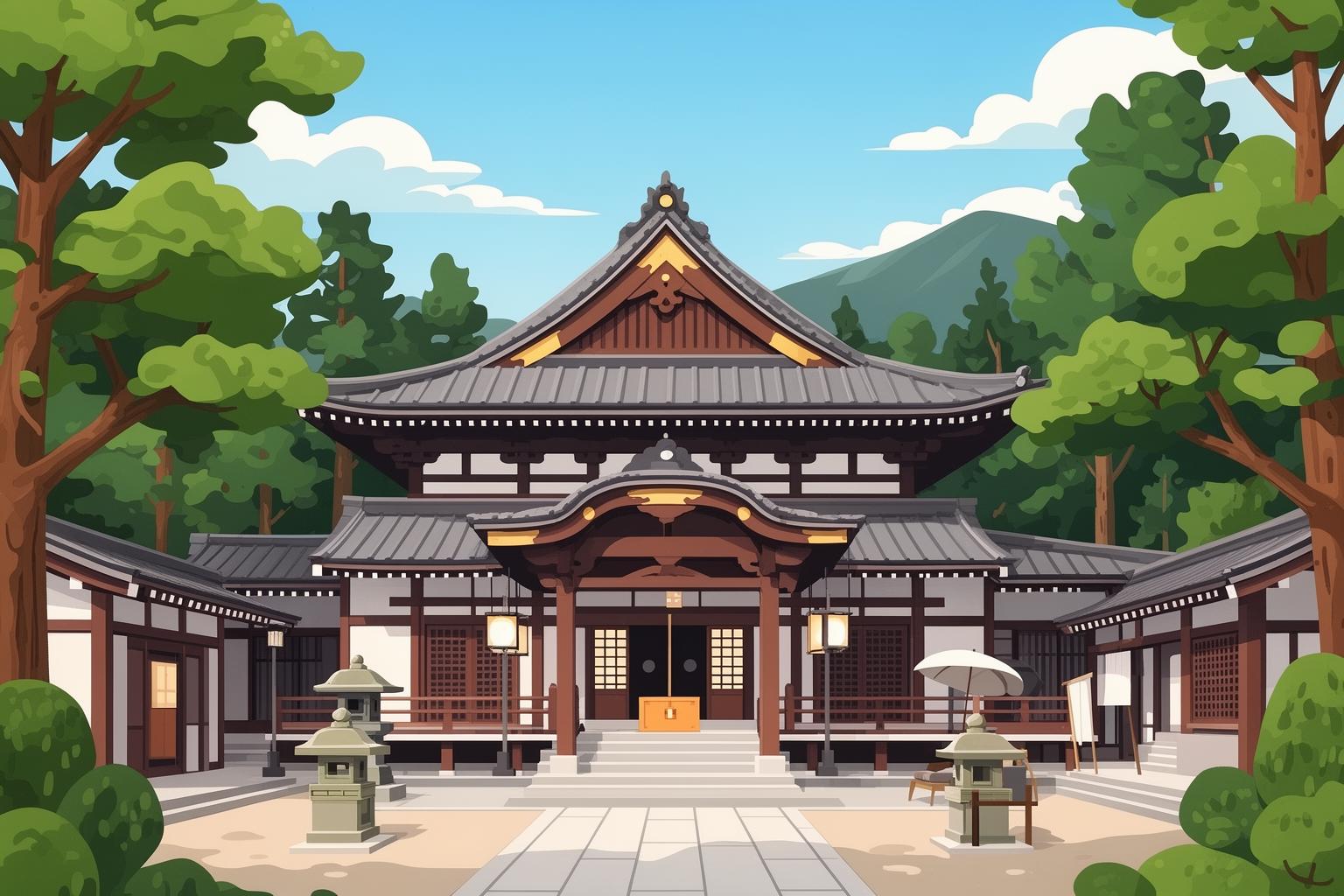
Staying in Koyasan isn’t simply about booking a hotel; it’s about experiencing a shukubo, a temple lodging that has welcomed pilgrims for centuries. More than fifty temples in Koyasan offer this unique accommodation, each boasting its own distinct character, history, and garden. This forms the heart of the Koyasan experience, and it’s important to approach it with the right mindset. A shukubo is, above all, a place of spiritual practice, with lodging as a secondary function. This distinction is well understood and respected by the practical Osakan mindset. As a guest in someone’s sacred home, the experience is one of engagement, not mere consumption.
More Monastery Than Hotel: Setting Expectations
Forget about bellhops, room service, and king-sized beds. A room in a shukubo is typically a simple, elegant space featuring tatami mat floors, a low table, and sliding paper screens (fusuma) as walls. Your bedding will be a futon, laid out for you in the evening by a monk or temple staff. Corridors might be long and unheated, especially in winter, and you’ll exchange your shoes at the entrance for basic slippers. Bathrooms and bathing facilities are often communal and separated by gender, though some temples now provide rooms with private amenities. Focusing on what a shukubo lacks misses the point entirely; what it offers is far more precious: a profound sense of peace and a connection to a timeless way of life.
The thin walls heighten your awareness of temple sounds: the soft shuffle of a monk’s footsteps in the hallway, the gentle dripping of water in a stone basin in the garden, and the pre-dawn ringing of a bell summoning the faithful to prayer. This setting fosters a quiet mindfulness that city life rarely allows. For typical Osakans, accustomed to constant noise and stimulation, this enforced calm might feel unsettling at first but soon becomes a soothing balm for the weary soul. There’s an unspoken understanding that modern comforts are traded for a rare spiritual luxury—an exchange that epitomizes a classic Osaka value trade-off: a little less comfort for an immensely richer authentic experience.
Shojin Ryori: A Feast for the Senses, a Challenge for the Palate
One of the most memorable parts of a shukubo stay is the food. Guests are served shojin ryori, traditional Buddhist vegetarian cuisine, either in their rooms or a communal dining hall. Calling it simply vegetarian, however, undersells its complexity and artistry. Shojin ryori is a refined culinary tradition that seeks to harmonize body, mind, and spirit. It follows Buddhist precepts by excluding meat, fish, and strong ingredients like onion and garlic. Instead, it highlights the subtle, natural flavors of seasonal vegetables, tofu, wild mountain plants, and staples such as rice and miso soup.
A typical shojin ryori dinner is a visual and gastronomic delight: small lacquer bowls and plates arranged on a tray, each holding a carefully prepared dish. You may encounter creamy sesame tofu (goma-dofu), a local specialty; light, crispy vegetable tempura; simmered daikon radish in a delicate broth; various pickled vegetables; and inventive mock-meat dishes made from gluten or konnyaku. For the Osaka palate, accustomed to bold, savory, and often rich flavors—the dashi, soy sauce, and sugar that define favorites like takoyaki and okonomiyaki—shojin ryori can be both a revelation and a challenge. Its flavors are subtle, clean, and nuanced, inviting you to slow down and savor each bite. Yet, despite their preference for hearty flavors, Osaka locals embrace it, recognizing the craftsmanship, artistry, and deep tradition behind the cuisine. It’s another form of honma mon: while it may not be soul food in the warm, hearty sense of kitsune udon, it nourishes the soul in a far more literal way.
The Rhythm of the Temple: Morning Chants and Quiet Contemplation
A day in a shukubo begins before sunrise, awakened by a soft knock on your fusuma or a gentle bell in the hallway. The morning’s focal event is the otsutome, or morning prayer service, held in the temple’s main hall. Guests aren’t only welcome to attend—they are warmly encouraged. You will be led into the sacred space, filled with the sweet, woody aroma of fine incense. Sitting on cushions on the tatami floor, facing the ornate altar, you’ll listen as the monks begin their morning chants. The sound is mesmerizing: a deep, resonant hum that seems to reach into your very bones. Understanding the ancient Sanskrit or Japanese sutras isn’t necessary to feel their power; it serves as a form of sound meditation that calms the restless mind.
Observing Osaka residents in this setting is fascinating. Those who, just the day before, were likely shouting over a lively izakaya or laughing boisterously with friends now sit in solemn, respectful silence. They follow the monks’ lead, bowing when appropriate and offering incense at the altar if invited. This ability to read the atmosphere (kuuki wo yomu) and adjust one’s behavior accordingly is a vital skill in Japan, and Osakans, despite their boisterous reputation, excel at it. They recognize this as a sacred space requiring a different energy. Their participation doesn’t necessarily stem from deep religious conviction in the Western sense but rather reflects profound cultural respect. It signifies their connection to something ancient and significant, which they honor by fully, quietly immersing themselves in the ritual.
Walking with Spirits: Okunoin, Japan’s Most Sacred Cemetery
The heart and soul of Koyasan is Okunoin, Japan’s largest cemetery and one of its most sacred sites. It serves as the final resting place of Kobo Daishi (also known as Kukai), the founder of Shingon Buddhism and one of Japan’s most revered historical figures. According to tradition, Kobo Daishi is not dead but remains in a state of eternal meditation within his mausoleum, awaiting the arrival of the Future Buddha. For over a thousand years, people have chosen to be buried here to remain close to him. The result is an expansive, mystical forest containing over 200,000 tombs and monuments, lining a two-kilometer path that meanders through towering, ancient cedar trees, some over a thousand years old.
A Forest of Tombs: History Beneath the Cedars
Strolling along the path to Kobo Daishi’s mausoleum during the daytime feels like entering a Studio Ghibli film. Sunlight filters through the dense canopy of the giant cedars, casting dappled light on the moss-covered stone tombs that line the route. The air is cool and still. The scale of history here is breathtaking. You pass the final resting places of some of Japan’s most famous and powerful figures: feudal lords (daimyo), legendary samurai warriors, members of the imperial family, and renowned artists. Their graves, known as gorinto, are distinctive five-tiered stone pagodas symbolizing the five elements: earth, water, fire, wind, and space. For a visitor from Osaka—a city that often feels relentlessly modern and continually replaces the old with the new—the permanence and immense age of Okunoin are deeply humbling. It offers a tangible connection to a past that feels both grand and deeply personal, reminding one of the long, unbroken chain of history of which their own life is but a small part.
The Corporate and the Celestial: A Distinctly Japanese Fusion
What makes Okunoin truly captivating, and what reveals much about the Japanese—and especially Kansai—mindset, is the seamless blending of the ancient with the modern. Nestled among the weathered tombs of samurai stand gleaming, contemporary monuments erected by some of Japan’s most renowned corporations. You’ll find a monument from a coffee company featuring a giant stone coffee cup, a pesticide company’s memorial honoring all the insects its products have eradicated, and a rocket-shaped monument from an aerospace firm commemorating its employees. From a Western viewpoint, this might seem strange or even irreverent. Yet from a Japanese, and particularly Osaka business, perspective, it makes perfect sense. Business is not merely a job; it’s a community, a surrogate family. These companies honor their founders and employees, ensuring their spirits are cared for in this most sacred place. This reflects a pragmatic and holistic view of life and death, where the secular world of commerce and the sacred world of spirit are intertwined rather than separate. It testifies to a worldview that embraces everything—a non-judgmental acceptance that a company, like a family, deserves a place in eternity.
The Night Tour: Stories, Silence, and a Different Kind of Light
While Okunoin is beautiful by day, it becomes utterly magical at night. Many temples offer guided night tours of the cemetery led by a young monk—an experience not to be missed. You walk the same path, but it is transformed. The only illumination comes from stone lanterns lining the walkway, casting long, flickering shadows. The forest is completely silent except for the crunch of gravel beneath your feet and the monk’s voice. The stories he shares are far from dry historical lectures; they blend history, Buddhist teachings, folklore, and even ghost stories. The monk might point out a well where, if you cannot see your reflection in the water, you are fated to die within three years. He explains the significance of small statues of Jizo Bodhisattva, often adorned with red bibs and hats, who protect the spirits of children and travelers.
The tour is a masterful piece of storytelling, and Osaka residents—known for their love of a good story and charismatic speaker (as shown by their fondness for manzai comedy)—make a captivated audience. The experience is a perfect mix of eerie, beautiful, and enlightening. Walking through this ancient, silent forest, lit only by stone lanterns and listening to tales of saints and spirits, is a powerful counterbalance to the bright, noisy, and rational world of the modern city. It reawakens a sense of mystery and wonder, a feeling often lost in the rush of daily urban life.
What Koyasan Reveals About the Osaka Soul
A weekend in Koyasan does more than simply recharge your energy. It offers a deep insight into the complex nature of the Osaka people and the city they call home. It strips away the layers of the loud, humorous, food-loving stereotype to reveal a more thoughtful, introspective core. It shows that beneath the surface of this merchant city lies a soul that values silence, history, and spiritual reflection.
Pragmatic Spirituality: Respect Without Dogma
The way an Osakan approaches a place like Koyasan perfectly reflects their general attitude toward spirituality. It’s less about strict religious observance and more about a profound respect for tradition, culture, and lived experience. They visit Koyasan not necessarily to embrace devout Buddhism, but to engage with cultural heritage, connect to history, and find personal peace. They bow at the temples, offer incense, and listen to the monks’ chants out of respect because that’s how one properly behaves in that setting. This practical reverence is often mistaken by outsiders for a lack of piety, but it’s better understood as a different kind of faith—one woven into daily life and culture rather than separated from it.
The Duality of a City: Hustle and Hush
Perhaps the greatest revelation is the confirmation that Osaka is a city of contrasts. It is both one of Japan’s most progressive, commercial hubs and a place deeply rooted in ancient traditions. The people can be lively, outspoken, and incredibly funny, yet they also possess a natural ability to appreciate profound stillness. The very existence of Koyasan as a popular, reachable retreat proves this. The ease of traveling from the bustling energy of Namba to the tranquil monastery on the mountaintop is more than just geographical—it’s a psychological necessity. It’s the balancing force that defines the city. The city’s hustle is sustained by the mountain’s hush. One cannot be fully understood without the other.
Beyond the Stereotypes: Finding the Honma Mon (The Real Deal)
In the end, a trip to Koyasan reveals an Osaka beyond common stereotypes. It moves past the image of the takoyaki-loving comedian and introduces someone who can appreciate the delicate beauty of a vegetarian meal, who can quietly reflect during a pre-dawn chant, and who can wander in awe among the tombs of their ancestors. It demonstrates that Osaka’s focus on ‘value’ extends beyond material things. They seek value in experience, authenticity, and connection. They pursue the honma mon, the real deal, in every aspect of life, whether it’s a perfectly grilled piece of octopus or a moment of complete silence in an ancient forest. Living in Osaka means navigating its vibrant, chaotic, and deeply human streets. But truly understanding Osaka means also knowing the way to the quiet mountain and recognizing that both are essential parts of one extraordinary whole.