It’s a scene I stumbled into, bleary-eyed and new to the city, a fresh resident still mentally converting yen to dollars and mistaking polite silence for disapproval. I walked into a small shop, drawn by the rich, almost burnt smell of coffee. The sign outside, hand-painted and faded, simply advertised “モーニングサービス” – mōningu sābisu. Morning service. It sounded vaguely ecclesiastical, which, given my need for caffeine-fueled salvation, felt about right. I ordered a coffee, and then the magic happened. Along with my cup, a thick slice of golden toast, a perfectly hard-boiled egg still warm in its shell, and a tiny, almost symbolic salad appeared. I hadn’t ordered them. I braced myself for the linguistic gymnastics of explaining the mistake. But there was no mistake. This, I would soon learn, wasn’t just breakfast. It was a cultural institution, a daily ritual, and one of the most honest windows into the soul of Osaka. In a city that runs on commerce, this act of near-giveaway generosity seemed completely baffling. It was my first lesson in understanding the intricate, pragmatic, and deeply human logic of Japan’s most misunderstood metropolis. This isn’t about a cheap meal; it’s about the rhythm of a city that values substance over style, community over corporate efficiency, and a good deal above all else. Forget the neon lights of Dotonbori for a moment; the real Osaka wakes up here, in the quiet, coffee-scented corners of its neighborhood kissaten.
If you’re intrigued by this city’s unique blend of the pragmatic and the profound, consider exploring a different side of its character by planning a spiritual weekend trip to Koyasan from Osaka.
What Exactly Is “Morning Service”? Deconstructing the Deal
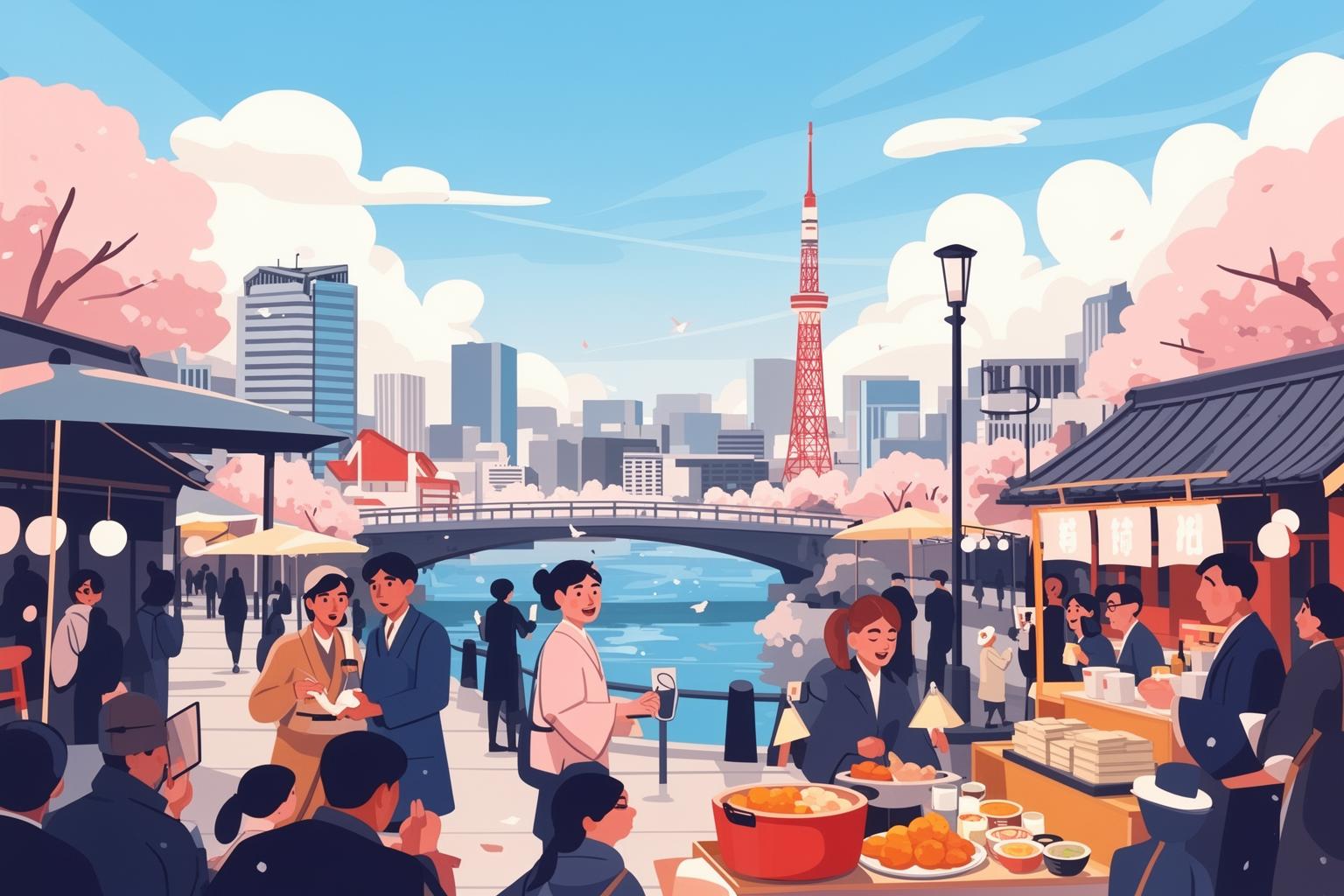
To someone unfamiliar, the idea of Morning Service might seem like a loophole, a glitch in the capitalist system. You mean to say I buy one item and get three others basically for free? Exactly, that’s the essence of it. It is the foundation of the Japanese coffee shop breakfast, a custom that emerged after the war and has persistently withstood inflation and the spread of global cafe chains. However, in Osaka, it transcends tradition; it is an art form, a philosophy, and a strong symbol of local pride.
The Unmatched Value Proposition
The basic concept is common throughout Japan but perfected in the Kansai region. For the price of a single cup of coffee, usually between 400 and 600 yen, you receive a complimentary breakfast set. The listed price is for the coffee; the food is the “service.” This is not a buy-one-get-one offer or a temporary deal. It is the standard, everyday practice from opening until about 11 a.m. This custom is born from Osaka’s distinctive mindset, which outsiders often mistake as mere “cheapness.” The truth is more subtle. Osaka residents are not cheap; they are fervently and almost religiously value-conscious. There’s a difference. Being cheap means spending as little as possible. Being value-conscious means maximizing the worth of your money. It’s a skill, a game, and the Morning Service is the grand prize. A local doesn’t see a 500-yen coffee that includes toast and an egg; they see a 500-yen breakfast with coffee as the appealing medium of transaction. This subtle but critical shift explains the city’s strong loyalty to independent shops that maintain this tradition. They reward merchants who grasp this core principle: offer an unmistakable deal, and you’ll earn steadfast customer loyalty.
The Components of a Classic Morning Set
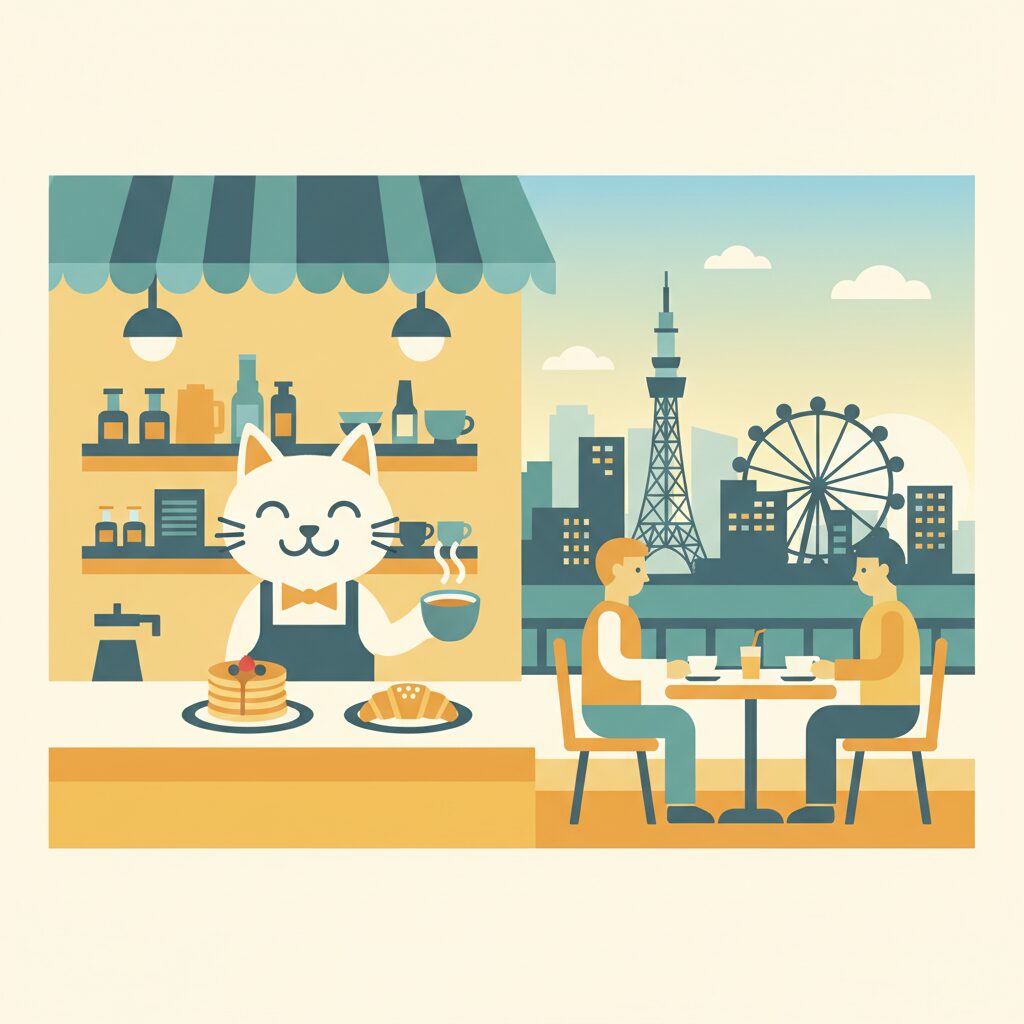
Though variations exist, the classic Morning Service is a holy trinity of toast, egg, and coffee. It’s a simple, comforting, and remarkably consistent meal. Each element receives humble reverence, showcasing the Japanese talent for transforming the ordinary into something quietly perfect. There is an art to this simplicity, intentionally rejecting the overwhelming options typical of a Western-style brunch.
The Toast: A Revered Canvas
The toast is not an afterthought; it is the hero. This is no flimsy, pre-sliced bread from a plastic bag. It is atsugiri toast, a thick slice—often over an inch—of Japanese milk bread called shokupan. When toasted, it reaches a magical state: a crisp, golden-brown exterior that yields to an impossibly soft, fluffy, and subtly sweet interior. It’s a masterpiece of texture. The toast comes pre-buttered, with melted butter pooling in every crevice, delivering shimmering flavor. Sometimes you can choose your topping, though “choice” is a strong word—usually butter or strawberry jam, the familiar sweet jam from a jar that tastes like childhood. Occasionally, a sweet red bean paste called ogura is offered, a nod to Nagoya’s breakfast customs warmly embraced in Osaka. The toast is a simple comfort, not a complex creation—an inviting blank canvas.
The Egg: Simple, Perfect, and Occasionally a Puzzle
The egg is almost always a yude tamago, a hard-boiled egg. It arrives warm, nestled in a small dish beside a tiny glass shaker of salt. There is a gentle ritual involved: the satisfying tap of the shell against the saucer or table, the careful peeling, and the sprinkle of salt on the pearly white surface. The yolk is reliably firm but never chalky, a bright yellow orb of pure protein. It’s not a runny poached egg or a fluffy omelet loaded with fillings. It’s simply an egg, perfectly and plainly prepared. Its role is to nourish, complement the meal, and balance the sweet jam on the toast. There is no showmanship here, just a humble, essential part of the morning ritual.
The Coffee: The Core of the Experience
Make no mistake: the coffee served at a traditional kissaten is not what you’d find at a third-wave, minimalist coffee shop. There are no tasting notes about bergamot or bean altitude here. The coffee is classic and nostalgic. Typically a dark roast, often a house blend used for decades by the owner, it is robust, low-acidity, and straightforwardly coffee-flavored. Many places still use siphon brewing, a piece of beautiful, mad-scientist-like apparatus that creates a clean, smooth cup. The standard offering is burrendo kōhī (blend coffee), a comforting, no-frills brew. Of course, you can get aisu kōhī (iced coffee), a summer blessing usually served with gum syrup and cream on the side. This coffee anchors the entire experience. It’s the entry ticket, the reason for being, and the warm, caffeinated embrace that jumpstarts the city.
The “Service” Extras
Beyond the core trio, many shops add a small extra. This is where the personality of the kissaten shines. It might be a tiny bowl with a few lettuce leaves, a slice of cucumber, and a tomato wedge, all dressed with the ubiquitous and delicious sesame dressing. It could be a slice of orange, a few banana wedges, or a small cup of yogurt. These extras—the omake, or little gifts—lift the experience from a mere transaction to an act of hospitality. They say, “We appreciate you; here is a little something extra.” This thoughtful touch is deeply rooted in Osaka’s merchant culture, where building a relationship with customers is vital.
The Kissaten: More Than Just a Coffee Shop
The setting for this daily ritual is the kissaten itself, a type of establishment that seems to be becoming a rare, endangered species amid the rise of globalized cafe culture. A kissaten is much more than just a place to buy coffee. It serves as a neighborhood institution, a time capsule, and an essential third space for the community it supports. Entering one is like stepping back in time, into a quieter, slower, and more deliberate version of Japan.
A Time Capsule of Showa-Era Charm
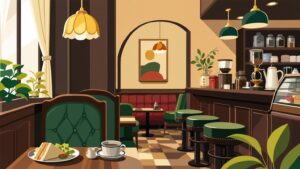
The look of a classic kissaten is unmistakable. It stands in stark contrast to the bright lights, pale woods, and minimalist designs of modern cafes. Imagine dark wood paneling worn smooth by decades of leaning shoulders. Booths upholstered in burgundy or forest green vinyl or velvet, cracked and softened over time. Low-hanging lamps, often made of stained glass, casting a warm amber glow throughout the room. The air itself is a relic, thick with mingling scents of dark-roast coffee, a hint of caramelizing sugar, old paper from stacked newspapers and manga, and often the faint, sweet trace of stale tobacco from a past era (or from a still-active smoking section). Instead of the latest pop hits, background music tends to be classical pieces, jazz standards, or simply the gentle clinking of ceramic on saucers alongside the low murmur of conversation. These spaces are not created to be Instagrammed; they are meant to be lived in, providing a refuge from the frantic pace of the outside world.
The “Master”: Keeper of the Flame
Overseeing this domain is the “Master,” or masutā. Usually an older man or woman who has managed the place for thirty, forty, or even fifty years, the Master is not a modern “barista.” They are the heart and soul of the establishment. Moving with an economy of motion born of decades of experience, they polish glasses, brew coffee, and plate toast with quiet, focused grace. Their demeanor might be misunderstood by foreigners; they are not effusively friendly in the way chain-restaurant staff are trained to be. Their greeting may be a simple nod or a curt “Irasshai.” But this is not unfriendliness—it reflects familiarity. They are a steady, reassuring presence, knowing regulars not just by name but by their preferred coffee, the newspaper they read, and their typical arrival time. The relationship between Master and customer is built on years of shared quiet mornings, forming a deeper, more meaningful connection than the brief, scripted politeness common in Tokyo. It is a bond of mutual recognition and respect.
The Clientele: A Cross-Section of Osaka Life
The people filling kissaten booths each morning create a living tableau of the city. Watching them offers a masterclass in Osaka sociology, with each group following its own rhythm and reason for being there.
The Salaryman Ritual
Every morning, men in dark suits appear, briefcases resting on the seat beside them. They are not grabbing coffee to go but sitting alone, a physical newspaper spread before them. The rustle of turning pages is one of the hallmark sounds of the morning kissaten. This space serves as a buffer zone between the hectic commute and the stresses of the office—a moment of calm, a chance to collect thoughts before the workday. Occasionally, pairs of them share hushed, informal business meetings, the low tables and cozy booths offering a more relaxed setting than a sterile conference room. For these salarymen, the kissaten is a practical and peaceful start to a demanding day.
The Neighborhood Elders
In another corner, a familiar cluster of local seniors—the obachan (aunties) and ojisan (uncles)—gathers. This is their social club, their community center. Their conversations are the lifeblood of the kissaten. Speaking in the distinctive, melodic, often blunt Osaka-ben dialect, their laughter is loud and uninhibited while their debates are passionate yet good-natured. They share gossip, discuss current events, complain about the weather, and check on one another’s health. This lively atmosphere sharply contrasts with the hushed reverence often found in Kyoto or Tokyo cafes. Outsiders might perceive it as noisy, but it is really the sound of a connected, comfortable, and unpretentious community. This is the source of the stereotype of the “friendly Osakan,” not about warmth to strangers, but about the clear, audible proof of strong social ties.
The Solitary Thinkers and Readers
Then there are the solitary visitors—students hunched over textbooks, aspiring writers scribbling notes, or individuals gazing out the window, lost in thought. The kissaten offers a unique kind of social solitude. Surrounded by the gentle buzz of human presence, one is nonetheless left entirely alone. There is no pressure to engage or perform. The Master silently refills water glasses, and patrons can nurse a single cup of coffee for an hour or more without a single disapproving glance. This space grants permission simply to be—a rare and precious gift in a world that constantly demands our attention and involvement.
Morning Service as a Reflection of Osaka Culture
The Morning Service ritual is much more than just an inexpensive breakfast; it serves as a daily referendum on the fundamental values of Osaka. It embodies an economic model, a social philosophy, and a style of communication all at once. Grasping its essence is essential to understanding why Osaka feels so inherently distinct from its eastern counterpart, Tokyo.
The Economics of Generosity: Why Give Food Away?
From a strictly modern, MBA-style business viewpoint, the Morning Service seems illogical. Profit margins must be razor-thin. Yet this is where Osaka’s merchant heritage shines through. The city was founded by merchants, not samurai. The spirit of commerce and deal-making runs deeply in its veins. The Morning Service isn’t a loss leader; it’s an investment in customer loyalty. It exemplifies the principle of omake, the small complimentary gift that accompanies a purchase. By offering such great value, the Master isn’t just selling coffee; they’re cultivating a relationship. They’re fostering a daily habit. The customer who visits for the Morning Service is likely the same one who returns for a plate of spaghetti napolitan at lunch or meets a friend for cake in the afternoon. It’s a long-term approach grounded in a keen understanding of human psychology. Give people a reason to feel clever about their choice, make them feel special, and they’ll become your most loyal patrons. This sharply contrasts with the Tokyo model, which often emphasizes efficiency, speed, and maximizing profit per transaction. In Tokyo, you get exactly what you pay for, no more, no less. In Osaka, you receive what you pay for—and a little something extra, just to show appreciation.
“Ma, Ikka”: The Philosophy of “Oh, Well” and Practicality
The atmosphere in an Osaka kissaten is noticeably more relaxed than in many other parts of Japan. There’s a prevailing attitude of “Ma, ikka,” a wonderfully pragmatic phrase roughly meaning “Oh, well,” or “It’s okay.” It reflects a philosophy of not fretting over minor issues. This is evident in how customers are allowed to linger. As long as the place isn’t packed with a line out the door, no one will rush you. The Master isn’t anxiously turning tables. The aim is to maintain a comfortable, stable atmosphere rather than optimize seating turnover. This mirrors a broader Osaka mindset: prioritizing the substance of the experience over strict adherence to abstract rules. The unwritten rule is simple: be a good neighbor. Don’t talk loudly on your phone, don’t take up more space than necessary, but feel free to relax and stay awhile. This practical flexibility can feel like a breath of fresh air compared to the sometimes-stifling formality found in other Japanese cities.
Communication, Osaka-Style: Direct, Warm, and Full of Banter
One of the first things a newcomer notices is the volume. Conversations in an Osaka kissaten are rarely whispered. People speak openly, laugh heartily, and engage in playful banter that is central to local communication. A foreigner might initially find this directness surprising. In Tokyo, conversations tend to be more subdued, and public spaces generally quieter. But in Osaka, this lively chatter signals a healthy, functioning community. It’s the sound of genuine interaction. Exchanges lack the multiple layers of politeness (keigo) that can make Tokyo’s conversations feel like navigating a minefield. A regular’s order might be a simple, straightforward “the usual,” met with a gruff acknowledgment. This communication style relies on shared context and familiarity rather than formal linguistic structures. It’s a warmth borne of authenticity, not scripted politeness.
How to Navigate Your First Morning Service Experience
For any non-Japanese resident seeking to connect more deeply with the city, participating in the Morning Service ritual is essential. Entering a place that feels so authentically local might seem daunting, but the experience is well worth overcoming that initial hesitation. Here’s a practical guide for your first visit.
Finding the Right Spot
First, you need to know what to look for. Step away from the main, glittering avenues and explore the side streets, especially the local shotengai (covered shopping arcades). These are the typical locations of classic kissaten. Watch for signs such as a swirling, vintage barber pole-like symbol, a display case outside featuring faded plastic food models of toast and coffee, a handwritten sign advertising the morning set, or a name ending in “-ten” (店) or “-kan” (館). The windows may be slightly fogged, obscuring the interior—a frequent good sign. Keep in mind that many of these older shops still have smoking sections or permit smoking throughout. If you’re sensitive to smoke, it’s worth checking inside first. The best places are those that look like they haven’t changed since 1975—that’s where you’ll find the genuine experience.
The Unspoken Etiquette
Once you’ve settled on your spot, the process is refreshingly straightforward. The rules are minimal, and the atmosphere is generally relaxed. Just follow a few simple steps to blend in like a local.
Ordering
Upon entering, the Master will greet you. Choose a seat—unless otherwise directed, seating is usually open. Someone will bring a glass of water and a menu, though often you won’t even need it. The magic phrase is simple: “Mōningu, kudasai” (“Morning service, please”). In many cases, there is only one option, the classic set. If there are choices (e.g., Set A, Set B), they will be clearly indicated. You might be asked about your coffee preference (hotto or aisu) or your toast topping, but the charm lies in the absence of overwhelming options. You’re there for the Morning Service, and its simplicity is part of the appeal.
Seating and Lingering
Make yourself at home. It’s perfectly acceptable—and even expected—that you will stay for a while. This is not a quick stop. Bring a book, a newspaper, or simply your thoughts. The only real faux pas is treating the space like your personal office. Taking loud phone calls is a major no-no, and spreading your laptop and work papers across a four-person table when alone is also discouraged. The key is to be considerate of the shared space. As long as you are a quiet, respectful presence, you’ve earned the right to occupy your seat for a reasonable length of time.
Paying the Bill
When your coffee is finished and you’re ready to leave, the bill will likely have been placed on your table in a small tray or on a clipboard. Do not leave cash on the table. The custom is to take the bill to the cash register, usually near the entrance. You pay the Master directly as you exit. A simple but meaningful gesture is to say “Gochisousama deshita” as you pay. This phrase means “Thank you for the meal” and expresses gratitude for both the food and the effort that went into preparing it. It’s a small acknowledgment that will be sincerely appreciated.
A Personal Reflection: Finding My Place at the Counter
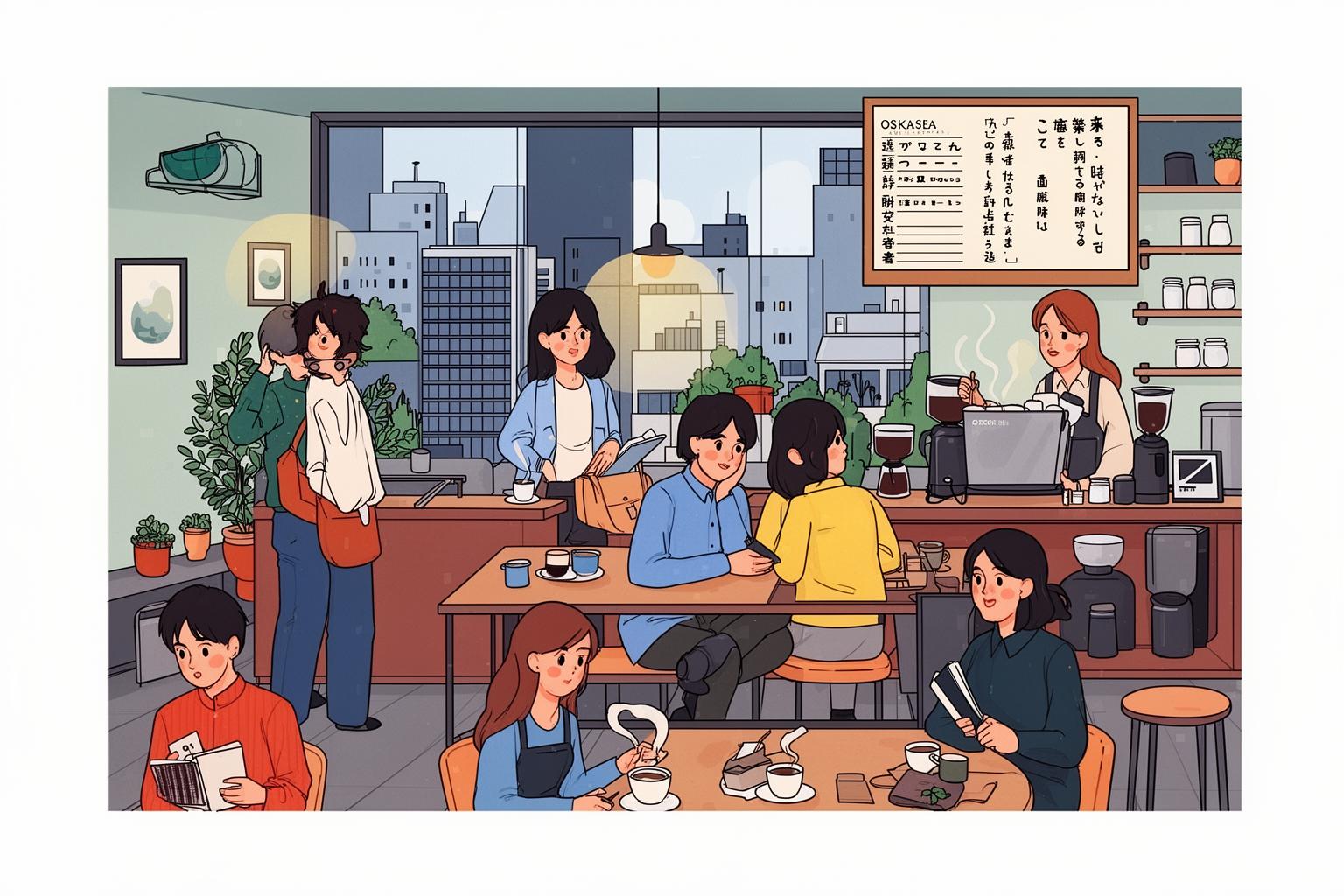
For me, the daily ritual of Morning Service became more than just an inexpensive and convenient breakfast. It was my gateway into the authentic, lived-in Osaka. During my first few months here, I felt like an outsider, merely observing through a window. The city’s energy was exhilarating yet intimidating. It was in the quiet consistency of my neighborhood kissaten that I began to feel a sense of belonging. It wasn’t a sudden moment of acceptance but a slow, gradual process, measured in cups of coffee. It was the day the Master stopped asking if I wanted hot or iced and simply brought me my usual. It was the subtle nod of recognition I received as I entered the door. It was learning to tune into the rhythm of the conversations around me, catching the nuances of Osaka-ben, and appreciating the humor in the blunt teasing among old friends. Here I realized that the famed “friendliness” of Osaka residents isn’t about surface-level cheerfulness but a deep-seated sense of community, a willingness to welcome you into their space, and a quiet, steady acknowledgment of your presence. It’s a city that values loyalty and cherishes routine. The kissaten taught me to appreciate the worth of things that are old, unchanging, and unapologetically themselves—a fitting metaphor for Osaka itself. It stands in proud, stubborn contrast to the relentless chase for the new and shiny that defines much of modern life, especially Tokyo. To find your local kissaten and become a regular is to discover a small anchor in this vast, ever-changing city. It means understanding that sometimes, the most meaningful cultural experiences don’t occur at famous temples or busy tourist spots. They happen on a Tuesday morning, over a simple slice of toast and a cup of coffee, in a room filled with ordinary people beginning their day, the Osaka way.