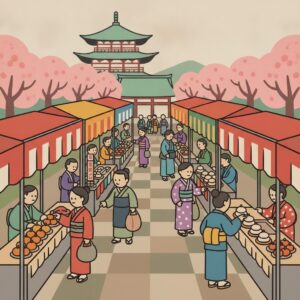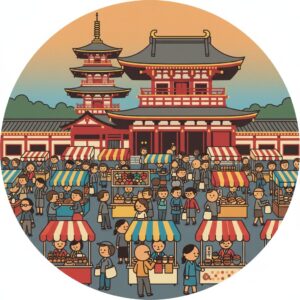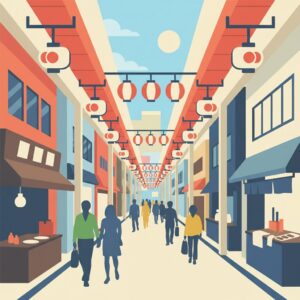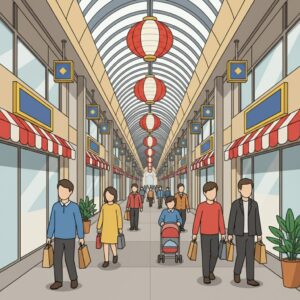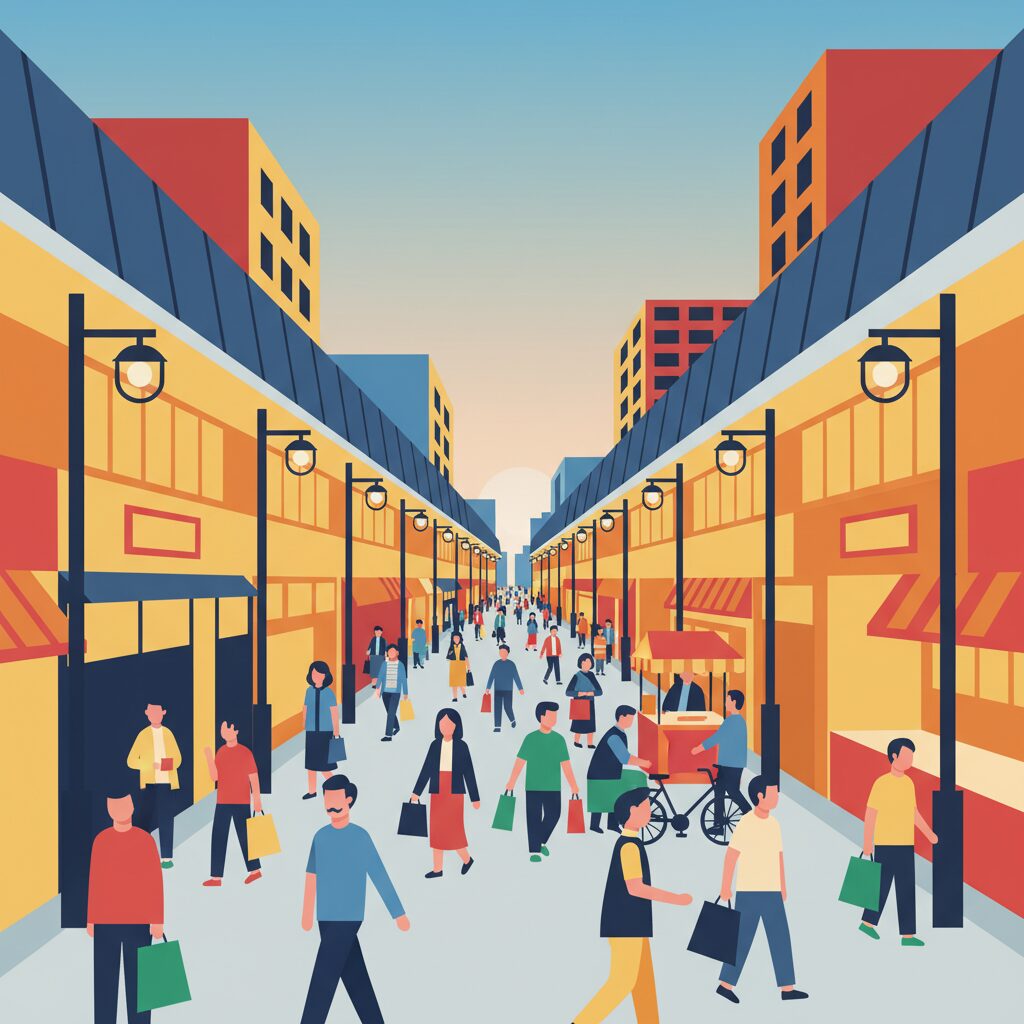
They call it the longest shopping street in Japan. A straight shot, 2.6 kilometers of covered arcade, a river of commerce and humanity flowing through the heart of northern Osaka. But to call Tenjinbashisuji a “shopping street” is like calling the Mississippi River a convenient way to get to the Gulf. It misses the entire point. This isn’t a destination; it’s an environment. It’s a raucous, overwhelming, utterly essential piece of urban machinery that reveals more about the soul of Osaka than any castle or skyscraper ever could. For anyone trying to build a life here, this isn’t a place you visit. It’s a place you must learn to navigate, to survive, and eventually, to understand. Because the unwritten rules of this sprawling arcade are the unwritten rules of Osaka itself. It’s a daily gauntlet that tests your patience, rewards your savvy, and ultimately teaches you the city’s unique, chaotic rhythm. Forget polite department stores and curated boutiques; this is life in its most unfiltered, bargain-basement, and beautifully human form. It’s the city’s central nervous system, constantly firing with signals you have to learn to decode.
To truly master this environment, you must first learn the unwritten rules of daily life in Tenjinbashisuji.
The Allure of the Arcade: Why Osaka Can’t Live Without It
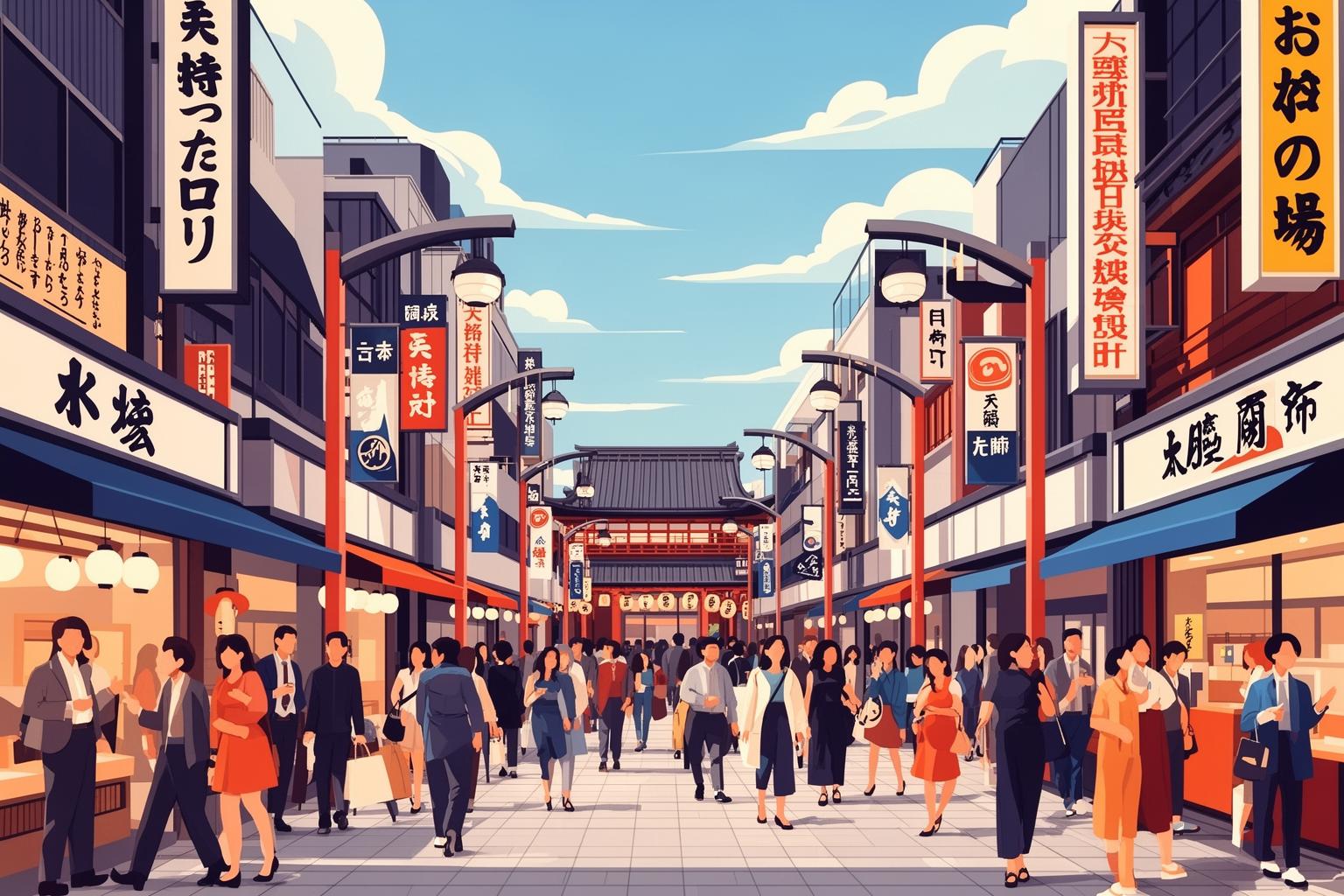
Before you can tackle its challenges, you first need to grasp its allure. What makes this seemingly endless stretch of shops exert such a magnetic pull on the city? It’s more than just convenience; it embodies a deeply rooted cultural philosophy that values affordability, community, and protection from the elements in a way that feels distinctly Osakan. The arcade is not merely a place; it’s a practical solution to the fundamental issues of urban living, presented without any pretense.
A Universe of Unbeatable Prices
Let’s start with money. While Tokyo thrives on brand prestige and the newest trends, Osaka operates on a more pragmatic currency: savvy deals. There is a term you’ll hear, sometimes muttered with a hint of embarrassment but more often worn with pride: kechi. It’s often mistranslated as stingy or cheap, but that misses the mark. In Osaka, kechi isn’t about hoarding money; it’s about refusing to be taken advantage of. It’s the thrill of the bargain hunt and the satisfaction of securing the best value possible. Tenjinbashisuji stands as the grand cathedral of this mindset. Prices here are not just low; they are aggressively, almost suspiciously low. Step into one of the many competing greengrocers and you’ll find mountains of cabbage priced like they belong to another era. You’ll witness elderly women vying for piles of onions sold at just 10 yen each. This isn’t poverty; it’s sport. Conversations between two Osakans often circle back to prices: “You bought a new coat? Where? How much?” The answer serves as a badge of honor. Overpaying means losing the game. The arcade is where everyone strives to win. You see it in butcher shops offering deep-fried croquettes for under a hundred yen—not as gourmet treats, but as cheap, tasty, and practical fuel. You see it in sprawling pharmacies locked in constant price wars, their windows plastered with handwritten signs in bright red ink advertising daily specials on laundry detergent and painkillers. It’s a raw, unapologetic form of capitalism that strips away marketing flair and focuses purely on getting the most yen for your money. This mentality can feel abrasive to many foreigners and even Japanese visitors from other regions. But it’s deeply rooted in Osaka’s merchant history. The city was built by traders, not samurai. Status here has always depended on commercial savvy, not aristocratic heritage. The arcade is the modern embodiment of that identity—a place where spotting a bargain is the highest social currency.
The Unfiltered Social Fabric
Step out of a quiet, orderly Tokyo subway car and into the Tenjinbashisuji arcade, and the contrast is immediate and striking. The first thing that hits you is the sound. It’s not a soft murmur; it’s a lively cacophony. There’s the gravelly call of the roasted chestnut vendor, the high-pitched jingle of a drugstore’s theme song, the rumble of countless bicycle tires, and beneath it all, a continuous, energetic stream of human chatter. This is not the reserved, polite Japan often portrayed in travel guides. This is a city that lives out loud, and the arcade is its communal living room. The social interactions here are fundamentally different. A shopkeeper in Tokyo epitomizes flawless, deferential service aimed at making your purchase smooth and efficient. A shopkeeper in Tenjinbashisuji is a character in your daily story. They’ll ask what you’re cooking for dinner as you pick out vegetables. They’ll comment on the weather, your haircut, or the bag you’re carrying. They might even gently tease you. A foreigner buying daikon radish might hear, “Oh, you know how to cook that? Impressive!” It’s not meant to intrude; it’s a way to connect, a method of drawing you into the city’s orbit. This is often what people mean when they say “Osaka is friendly.” It’s not about free hugs, but about the porous boundary between public and private, customer and vendor. Life is communal, and a simple transaction becomes a brief moment of human connection. You’ll see elderly locals who clearly aren’t shopping but sitting on benches, soaking in the atmosphere and exchanging greetings with vendors they’ve known for decades. The arcade acts as a crucial social safety net, where loneliness is kept at bay by the sheer density of everyday life. It’s messy and sometimes intrusive, but it’s also a powerful antidote to the anonymity of modern urban existence.
The Weatherproof Lifeline
On a practical note, the arcade’s most obvious advantage is its roof. This cannot be emphasized enough. Osaka’s weather is a character unto itself—often an antagonist. The summers are oppressively humid, with thick, suffocating air that turns a five-minute walk into a grueling trek. The rainy season, or tsuyu, delivers weeks of relentless downpours, and typhoons can unleash sudden torrential rains and fierce winds without warning. In a less prepared city, this would bring life to a halt. But in Osaka, life simply shifts beneath the shotengai. The arcade is a climate-controlled refuge. On a blazing August afternoon, its shaded interior feels ten degrees cooler than the sun-scorched streets outside. When thunderstorms strike unexpectedly, hundreds dash into its entrances, folding umbrellas and carrying on with their day uninterrupted. This changes the urban experience. It means you can plan your day without constantly monitoring weather reports. It means errands get done, friends meet for coffee, and shoppers browse without exposure to heat, rain, or wind. The arcade links subway stations, bus stops, and entire neighborhoods. It is not just a shopping street; it is a vital transportation artery. This practical design shapes daily life’s rhythm. It explains why so many elderly people remain active regardless of the weather. The arcade offers a safe, comfortable, and stimulating environment for walking, socializing, and shopping. It’s a piece of brilliant, if perhaps unintended, urban planning that makes the city more livable for all. It exemplifies Osaka’s practical approach to city-building: why fight the weather when you can simply put a roof over your life?
The Gauntlet of Daily Life: The Unspoken Rules of Survival
Despite its many attractions, the arcade is far from a peaceful haven. It is an unyielding, chaotic, and often exasperating environment that requires a distinctive set of skills to navigate. For a newcomer, wandering through Tenjinbashisuji can feel less like a leisurely shopping trip and more like a physical contest. The very elements that infuse the arcade with its vibrant energy—the crowds, the noise, and the sheer density—also present its biggest challenges. To survive and eventually thrive here, you must unlearn the usual rules of polite pedestrian movement and learn to master the art of controlled chaos.
The “Mamachari” Menace and the Unwritten Traffic Laws
Within the ecosystem of the Tenjinbashisuji arcade, an apex predator reigns supreme: the mamachari—the modest “mom-bike,” often outfitted with a child seat, an overflowing basket of groceries, and an electric-assist motor capable of a startlingly silent burst of speed. While the arcade is officially a pedestrian zone, in reality, it’s a lawless thoroughfare for cyclists who navigate with a bold impunity that is both astonishing and intimidating. They weave through the thickest crowds with mere inches to spare, materializing silently behind you, rarely, if ever, ringing a bell. The unwritten code of the arcade is that there are no rules. Pedestrians must maintain constant, 360-degree situational awareness. You learn to walk differently—you don’t merely look ahead; you listen for the faint hum of an electric motor, watch for the subtle splitting of the crowd that signals an oncoming cyclist, and develop an instinct for when to step aside. This can be highly stressful for those used to orderly, segregated lanes for pedestrians and vehicles. It feels aggressive—and, in many ways, it is. It reflects a particular Osaka impatience, a mentality that places personal efficiency above all else. “I need to get to the station; you’re in my way.” There is no malice intended, but there is a notable lack of consideration for shared space that can be unsettling. Tokyoites, accustomed to their city’s obsession with order and queuing, often show visible distress at the chaos—they stop, hesitate, and block the way. Osakans, and the foreigners who have learned to live like them, never break their stride. They learn to flow, anticipate, and become part of the chaos rather than an obstacle. The most formidable members of this group are the “Osaka Oba-chan” (middle-aged and elderly women) on their bikes. They move with grim determination and an immaculate disregard for any hindrance, human or otherwise. Being brushed by an Oba-chan’s grocery basket is a rite of passage for any local.
The Overload of the Senses
Navigating the arcade is not only a physical challenge but a sensory one as well. From the moment you step inside, you are overwhelmed from every direction. Visually, it’s a chaotic spectacle. There are no zoning laws or design standards here. Every storefront is a desperate shout for attention. Flashing LED signs promise astonishing discounts. Hand-drawn posters in gaudy colors promote the day’s specials. Towering pachinko parlors unleash a barrage of strobing lights and deafening noise into the arcade. Products are not neatly displayed; they are heaped in piles spilling into the walkway, creating a dense, overwhelming visual texture. Then comes the sound: not a single noise but dozens layered atop each other. Each shop blares its own soundtrack, from traditional enka ballads to sugary J-pop. The rhythmic clatter of pachinko balls blends with vendors’ shouts and the incessant jingles of pharmacy chains. Silence does not exist; there is no relief. The air itself is heavy with a mix of scents—the sweet, savory aroma of grilling takoyaki, the greasy fragrance of fried chicken from a bento shop, the sharp tang of pickled vegetables, the faint whiff of incense from a tiny shrine, and the lingering notes of cheap perfume and cigarette smoke. For some, this sensory feast is the smell of life itself—it’s thrilling, vibrant, and proof that you are in the heart of a living city. For others, especially those sensitive to noise and clutter, it is utterly exhausting. It can cause a distinctive kind of fatigue where your brain simply shuts down from the overwhelming input. This “more is more” ethos is quintessentially Osaka, starkly contrasting the minimalist, refined aesthetic of nearby Kyoto. Osaka doesn’t whisper; it shouts. And in Tenjinbashisuji, the shouting never ceases.
The Labyrinthine Layout and the Illusion of Progress
One of the arcade’s most straightforward challenges is its staggering length. Covering 2.6 kilometers on foot, especially while constantly dodging obstacles and maneuvering through the crowds, is no small feat. But the physical challenge is compounded by a psychological one: the illusion of going nowhere. The arcade is divided into numbered sections, from 1-chome to 7-chome, yet the scenery seldom changes in any meaningful way. Each block appears to hold the same mix of shops: a drugstore, a 100-yen shop, a mobile phone store, a bakery, and a croquette stand. You can walk for twenty minutes without feeling like you’ve made progress, caught in a strange loop of repeating storefronts. This disorientation is easy without the sun or other external landmarks, making it simple to lose all sense of time and direction. Moreover, the arcade’s main artery is fed by a dense web of narrow side streets and covered markets—such as the Ogimachi Kids Street or the maze of tiny bars and eateries near Temma Station. It’s incredibly easy to take a wrong turn and find yourself utterly lost in a tangle of alleyways. While this can be part of the adventure, when you’re simply trying to complete your grocery shopping after a long day, the labyrinthine layout can be deeply frustrating. It demands a mental map that can take months or years to develop. For a newcomer, the arcade isn’t a straight path; it’s a sprawling, confusing network seemingly designed to enmesh you forever in its commercial embrace.
Decoding the Arcade: What Tenjinbashisuji Really Teaches You
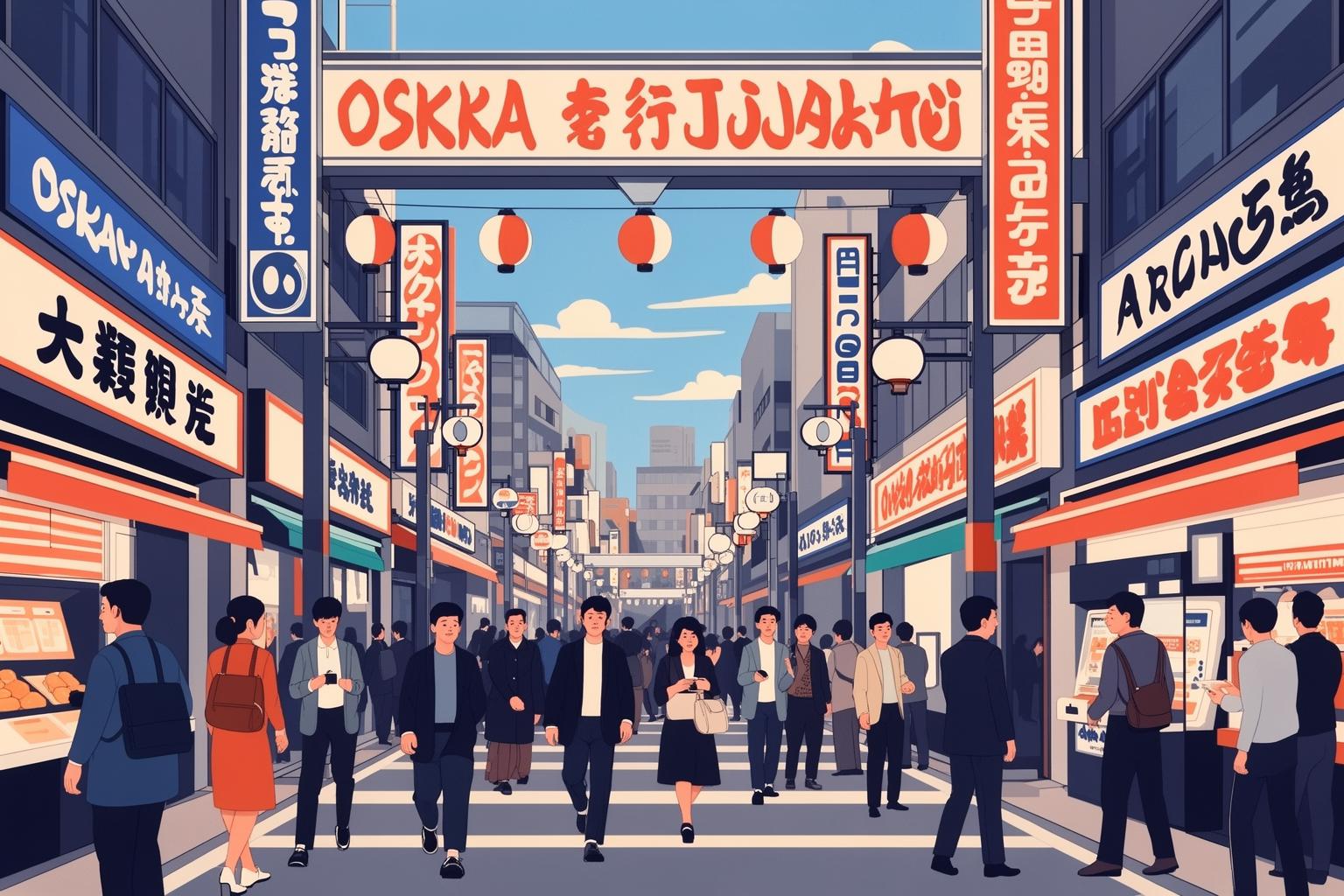
Viewing Tenjinbashisuji as simply a list of pros and cons overlooks the deeper insight it provides. This arcade is far more than just a shopping spot or a hectic passage to endure. It serves as a living textbook of Osaka’s culture. By paying close attention, you’ll discover that its rhythms, textures, and unspoken rules reveal everything about how the city functions and how its people think. It challenges you to adapt, and through that adaptation, it integrates you. Mastering the arcade means learning to be an Osakan.
Pragmatism Over Polish
The first lesson the arcade imparts is that Osaka prizes function over form, practicality over polish. The street is not conventionally beautiful. Many buildings are aged and somewhat grimy. The signage is a chaotic jumble. It lacks the sleek, curated design found on Tokyo’s Omotesando or in modern malls. Yet, everything in the arcade works. It fulfills its purpose with raw efficiency. The inexpensive vegetables feed local neighborhoods. The covered roof offers shelter. The dense cluster of shops lets you complete errands in one trip. This embodies a core Osaka value: focus on results without wasting time or money on needless frills. This is a merchant city, where merchants prioritize the bottom line. Why invest heavily in elegant interiors when a handwritten sign and a loud voice will sell more? For foreigners expecting Japan to embody minimalist aesthetics and meticulous detail, Osaka is a notable exception. It embraces a “good enough is good enough” mindset that can be refreshing. There is honesty in the arcade’s unpretentiousness; it aims only to be a vast, practical public market. It doesn’t put on a show. This pragmatic spirit is mirrored in its people, often described as direct and straightforward. They say what they mean and value efficiency in both business and conversation. The arcade is a physical reflection of this mentality.
The Art of the “Aima”: Finding Your Rhythm in the Chaos
Navigating the arcade’s pedestrian and cyclist mayhem teaches you a subtle but vital skill: the art of finding the aima. Aima means a gap, an interval, or a space between. Successfully moving through Tenjinbashisuji isn’t about forcefully pushing through the crowd—that’s the mistake of amateurs. Instead, it requires observation and timing. It means spotting gaps before they appear, predicting the path of an oncoming bike, and adjusting your pace and direction to flow smoothly amid the human traffic. You learn to read body language: a slight shoulder turn or a glance can signal movement. This skill extends beyond the arcade, influencing how you secure a seat on a crowded train, catch the attention of a busy bartender, or slip into a rapid conversation. It’s about being assertive without aggression. Unlike Tokyo, where one might wait politely for an opening, here you actively seek and seize the aima at the right moment. Foreigners often misunderstand Osaka’s chaos as rudeness, feeling jostled or ignored. But it’s not personal. The city uses a different social navigation system, one based on everyone taking responsibility for finding their way. Mastering the arcade’s aima is a major step toward feeling less like a tourist and more like a local. It’s when you stop resisting the current and begin to flow with it.
Community in Close Quarters
Lastly, despite the sensory overload and apparent impersonal frenzy, the arcade reveals Osaka’s distinctive sense of community. This isn’t a quiet suburban neighborhood with manicured parks and organized social events, but a community shaped by constant, inescapable proximity. Here, you literally rub shoulders with people from all walks of life: the elderly pensioner buying a single piece of fish, the young mother wrangling toddlers, the salaryman grabbing a quick beer and yakitori on his way home, the student hunting for a cheap textbook. Social boundaries dissolve; everyone is a consumer, pedestrian, and fellow navigator of this chaos. This ongoing, gentle friction in daily life forms a strong social glue. Brief, casual chats with shopkeepers, a shared grimace after a near miss with a bicycle, or simply sheltering together under the covered arcade during rain—all these moments create a shared identity. This is why Osaka feels vibrant and, in its own way, intimate. The city demands interaction, resisting the isolation that can afflict other large cities. The arcade exemplifies this perfectly. It is a sprawling public square where the city’s collective life unfolds openly—in all its noisy, messy, and magnificent reality.
So, Is It Worth the Walk?
Ultimately, your personal connection with Tenjinbashisuji Shopping Street will likely reflect your overall relationship with Osaka. It acts as a perfect gauge for how well you resonate with the city. If you navigate its bustling passages and feel exhilarated by the energy, satisfied by discovering a great deal, and warmed by the straightforward, casual interactions with its people, then you have probably found a place to call home. The chaos will seem less threatening and more like a vibrant dance, where you find your own rhythm. This city’s unyielding vitality will energize you instead of depleting you. Conversely, if the constant noise overwhelms you, the crowded streets and reckless cyclists cause continual anxiety, and the lack of personal space and refined manners grates on you, then Osaka’s essence may not suit you. The very qualities that its fans adore—its loudness, directness, and practicality—may feel like unrelenting assaults. There is no right or wrong answer; it depends on personality and preference. Tenjinbashisuji reveals Osaka’s true nature. It offers a concentrated version of the city that demands your full engagement, awareness, and adaptability. It is not a passive experience—you can’t simply walk through it; you must actively participate. It is a daily immersion into the heart and soul of a city that refuses to be ignored—a city that is loud, practical, impatient, and ultimately, deeply and unapologetically human.