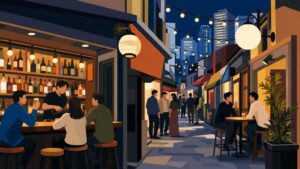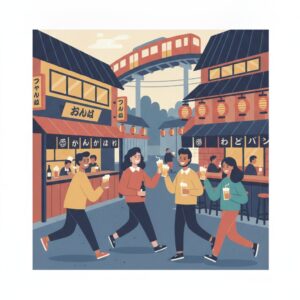
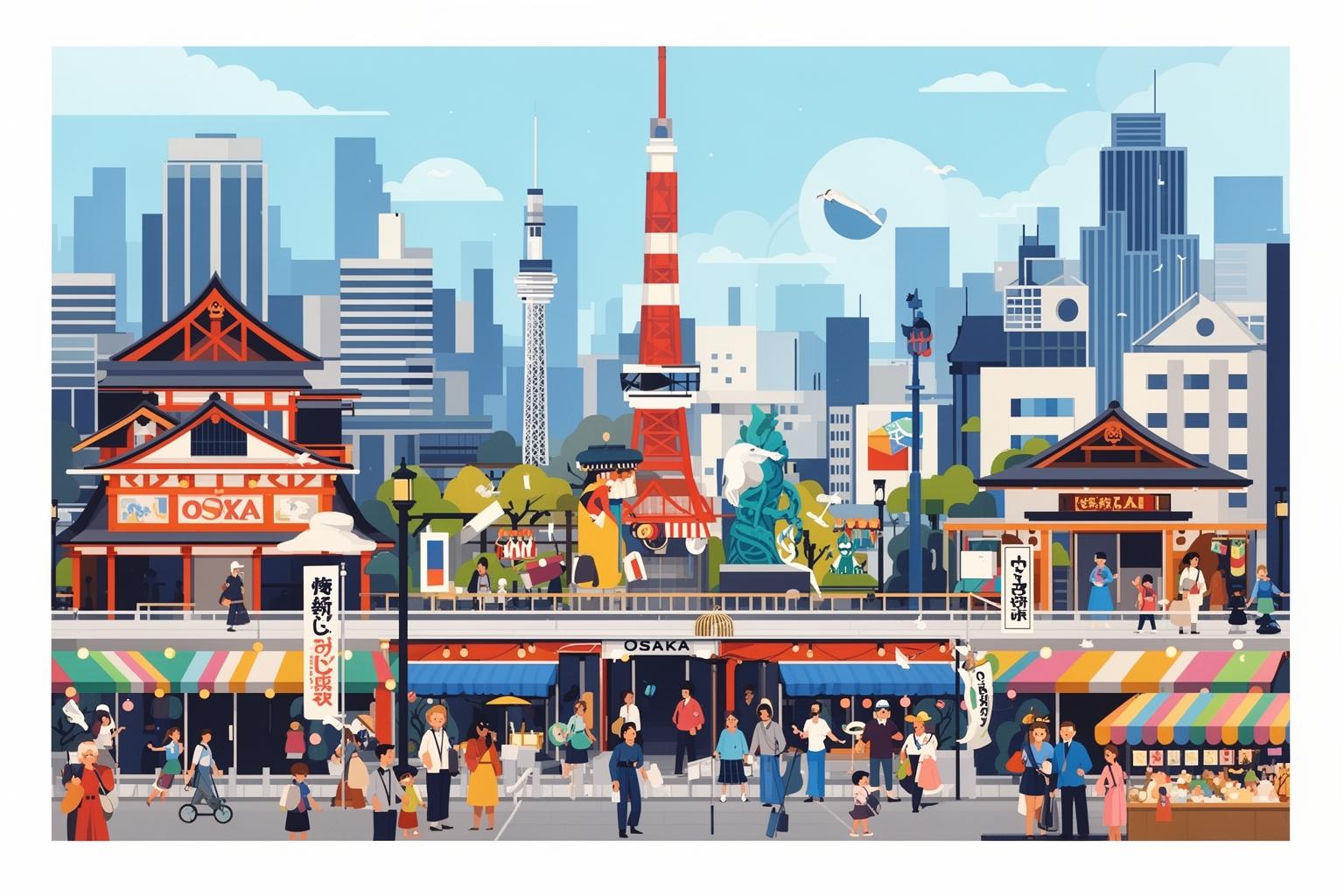
So you’ve moved to Osaka. You’ve done the tourist circuit—the glowing Glico Man, the castle, the big red octopus signs. But now you’re living here, and the real question hits you on a Tuesday night: Where do actual Osaka people go? Where’s the pulse of the city, away from the selfie sticks and the curated experiences? You’re looking for the place that explains why Osaka feels so fundamentally different from Tokyo, a place that’s less about quiet perfection and more about loud, glorious, delicious chaos. The answer isn’t a single spot. It’s a neighborhood, a mindset, a ritual. It’s Tenma. And the ritual is called hashigo-zake—bar hopping, the Osaka way. Forget everything you know about a quiet pint at the pub. We’re not here for a relaxing evening. We’re here to dive headfirst into the noisy, crowded, and ridiculously fun heart of Osaka’s social ecosystem. This isn’t just a guide to drinking; it’s a survival manual for understanding the city’s soul, one skewer and one highball at a time. This is where you learn the unwritten rules, the local dialect of laughter, and why in Osaka, being shoulder-to-shoulder with a stranger is the beginning of a conversation, not an invasion of personal space.
For a different perspective on the city’s character, consider what a cocktail in Umeda can reveal about the Osaka experience.
Welcome to the Labyrinth: Why Tenma is Osaka in a Nutshell
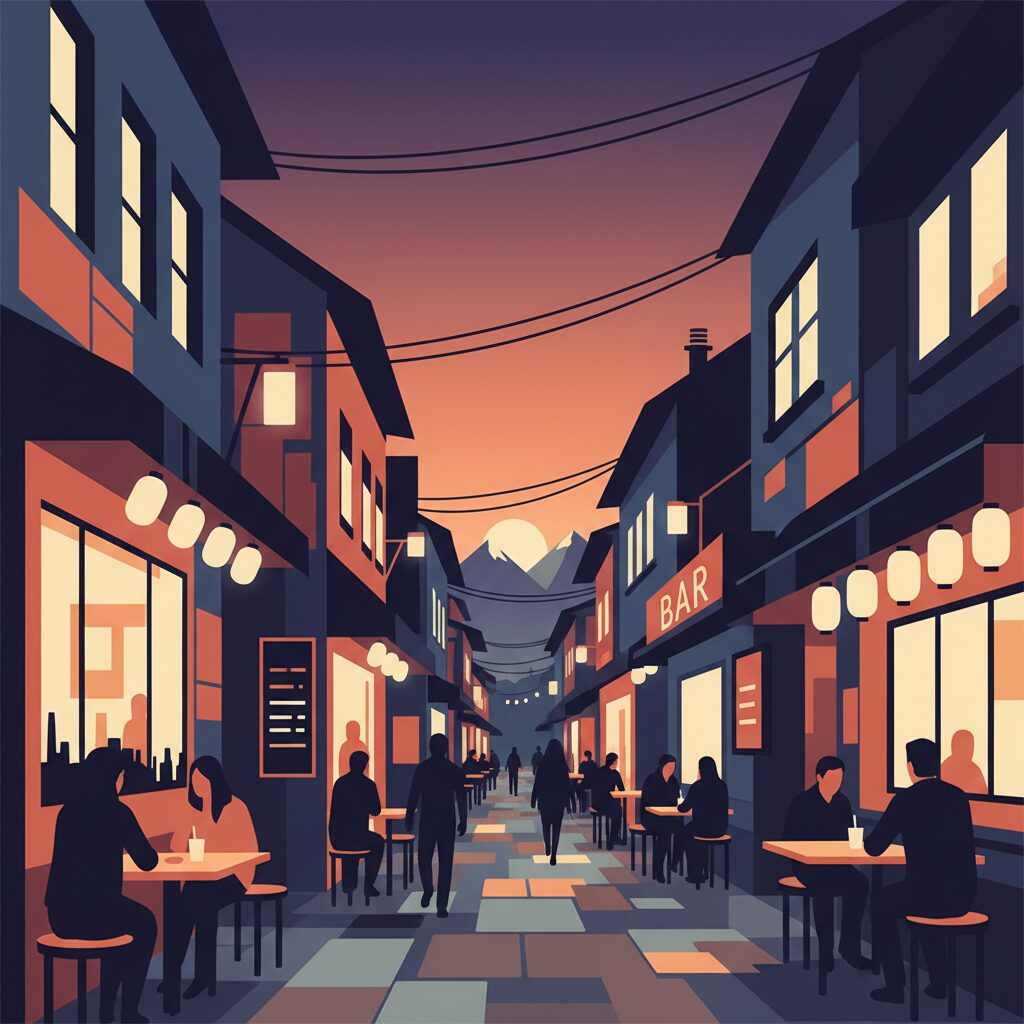
Step out of JR Tenma Station, and the city strikes you like a physical force. It’s not the futuristic shine of Shinjuku or the refined elegance of Ginza. Rather, it’s a sensory onslaught in the most delightful way. The air is thick with scents of grilled meat, sizzling oil, and sweet soy glaze. The soundscape is a constant, lively hum—the clatter of plates, bursts of laughter from open-front bars, vendors’ rhythmic calls, and the rumble of the train on the loop line overhead. Visually, it’s a captivating chaos: a dense tangle of glowing red lanterns, hand-painted signs boldly listing prices, and a web of electrical wires crisscrossing alleys so narrow you could shake hands with someone across the way.
This isn’t a carefully planned urban area; it’s an organism that has grown, evolved, and thrived for decades. Tenma’s roots run deep, centered around the ancient Tenmangu Shrine, a spiritual anchor amid worldly pleasures. For centuries, this spot has been a market, a gathering place for everyday people. It’s not a trendy district crafted by developers; it’s a living museum of Osaka’s commercial soul. It feels gritty, lived-in, and unapologetically authentic. In Tokyo, a neighborhood’s worth is often measured by sleekness and order. In Tenma, value lies in its density and joyful disorder. The labyrinthine layout isn’t a flaw; it’s the point. It urges you to get lost, to stumble upon hidden treasures, to make spontaneous choices inspired by a tempting smell or lively sound. It’s a physical embodiment of the Osaka mindset: don’t stick to the main road. The best discoveries are always tucked away on side streets, waiting for those curious enough to find them.
The Unspoken Rules of the ‘Hashigo-zake’ Ritual
In Osaka, bar hopping, or hashigo-zake (literally “ladder drinking”), is far more than just a night of drinking. It’s a refined art form and a social strategy governed by unwritten rules. The goal isn’t to get drunk in one spot; it’s to craft an evening filled with varied flavors, ambiances, and encounters. To master the hashigo-zake flow means tuning into the local rhythm—a rhythm defined by movement, diversity, and a healthy dose of spontaneity. It’s an inherently restless activity perfectly matched to the Osakan spirit, which is always eager for something new, better, or more intriguing just around the corner.
Rule One: Never Get Too Comfortable
The first rule of Tenma bar hopping is to resist settling down. Your objective, especially during the first hour or two, is to stay nimble. Think of yourself as a culinary hummingbird, darting from one blossom to the next. The unspoken rule is usually “one drink, one or two signature dishes, and then off you go.” Find a standing bar, wedge yourself in, order a highball and their famous doteyaki (slow-cooked beef sinew). Enjoy it, soak in the vibe for fifteen to twenty minutes, pay your 800 yen, and move along. The aim is to build momentum. Lingering too long in one place kills the spirit of discovery that defines the hashigo-zake experience. This isn’t about being disrespectful to the establishment; rather, it’s the expected etiquette. The owners understand you’re on a journey. This continuous motion embodies a key aspect of the Osaka character: a love of variety paired with a touch of impatience. Why stick to one flavor when countless others await just a few steps away? It’s a delicious form of social and culinary ADHD.
Rule Two: Follow Your Senses, Not a Schedule
No matter how many blogs or guides you consult, a true Tenma veteran trusts their nose, ears, and eyes. A detailed itinerary is the enemy of a great night here. The best way to pick your next stop is simply to roam. Let the rich, savory smoke of yakitori draw you down an alley. Is that the scent of grilled scallops with butter and soy sauce? Follow it. Listen for the sound of genuine, hearty laughter. A bar bursting with energy is a bar with good nori, or vibe. Peer through the steamy windows. Is it packed with joyful locals? That’s your destination. This instinctual approach over planning is quintessentially Osaka. While a Tokyoite may meticulously research and book the perfect restaurant weeks ahead, an Osakan prefers to trust their gut and dive into a place that just feels right in the moment. It’s about being present and adaptable, letting the night unfold naturally rather than forcing it into a set plan. The excitement lies in the pursuit, not just the prize.
Rule Three: Cash is King in the Realm of ‘Kosupa’
While much of the world shifts toward cashless payments, Tenma’s backstreets remain steadfastly loyal to cash. Entering one of these tiny, family-run spots and attempting to pay by credit card is a rookie error. Many don’t accept cards, and even those that do find paying for a 500-yen beer with plastic awkward and out of place. This is not due to technological backwardness but reflects Osaka’s cherished value of kosupa, or cost performance. Small businesses operate on tight margins, and credit card fees, however small, chip away at those profits. By remaining cash-only, they keep overhead minimal, passing the savings directly to you through cheaper drinks and food. An Osakan seeing a “cash only” sign doesn’t think “inconvenient.” They think, “This place is serious about keeping prices low. I respect that.” It’s a silent agreement between owner and customer: you bring cash, and they deliver maximum value. Before you even leave the train at Tenma station, make sure your wallet is stocked with a good balance of 1,000-yen notes and some coins. This is the key that unlocks the entire maze.
Decoding the Tenma Social Code: From Stranger to Neighbor in 30 Minutes
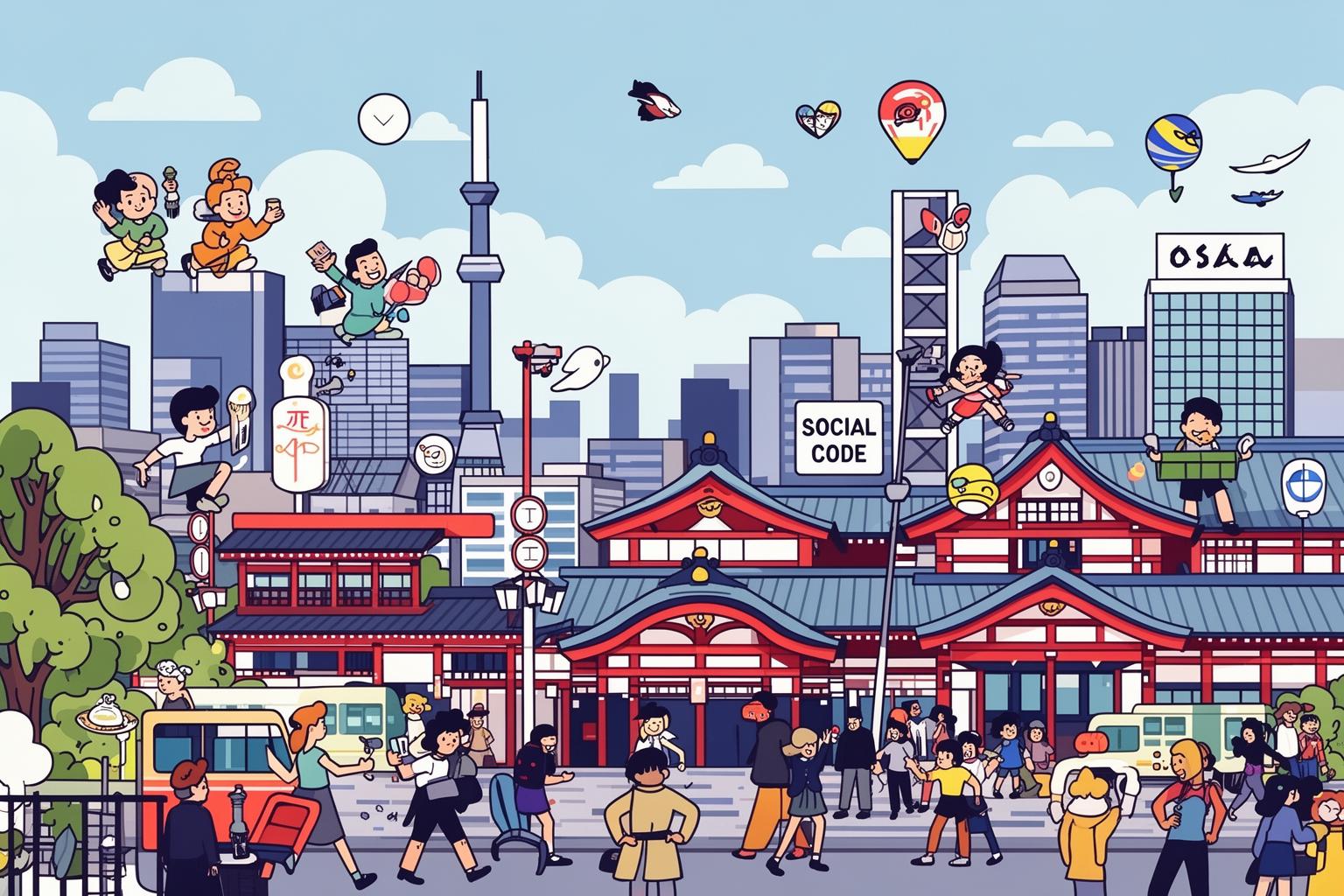
Navigating Tenma is less about understanding geography and more about grasping sociology. The cramped, chaotic setting acts as a social incubator, designed to break down barriers and encourage interaction. Here, you encounter the renowned “friendliness” of Osaka people in its purest form. But it’s not the polite, reserved friendliness typical of other parts of Japan. Instead, it’s a loud, engaging, and sometimes intrusive warmth that demands active participation. To fully enjoy Tenma, you must abandon any thoughts of personal space and quiet observation. You are not merely an onlooker; you are part of the experience.
The Art of the Squeeze: Personal Space is a Tokyo Luxury
The most common establishment in Tenma is the tachinomi, or standing bar. These spots often consist of little more than a narrow counter, fitting about eight to ten people standing shoulder-to-shoulder. To claim a place, you often need to politely but firmly find a gap and slide in. Your elbows will touch, you’ll overhear every word of your neighbor’s conversation, and you’ll pass plates and drinks along the line. In Tokyo, this kind of proximity with strangers might cause mild anxiety and be silently endured. In Tenma, it’s the whole point. The physical closeness immediately breaks down social formalities—it’s an icebreaker by design. When standing that close to someone, ignoring them feels more awkward than starting a conversation. This shared experience of being squeezed into a tiny, lively space creates an instant, if fleeting, sense of camaraderie. It’s a stark contrast to the quiet, partitioned solo-dining booths common elsewhere. In Tenma, eating and drinking are fundamentally communal acts.
Mastering ‘Nori’: The Rhythm of Osaka Banter
To truly understand Osaka, you need to grasp the concept of nori. While it has no perfect English equivalent, it relates to “vibe,” “rhythm,” or “being on the same wavelength.” In a Tenma bar, the nori represents the collective energy of the room, and everyone is expected to add to it. If the old man beside you cracks a terrible pun, the right response isn’t polite silence; it’s a loud groan and a playful “Omonnai wa!” (That’s not funny!). If the bartender theatrically suggests a dish, you match that enthusiasm with an eager “Ja, sore morau wa!” (Alright, I’ll have that!). Being quiet and reserved, often seen as polite in Tokyo, can be mistaken in Osaka for aloofness, boredom, or arrogance. You don’t have to be a comedian, but you must be willing to join in. This usually involves a lighthearted dance between the boke (funny man) and tsukkomi (straight man) roles that define Japanese comedy, which originated in Osaka. It’s a conversational dance filled with gentle teasing, self-deprecation, and shared laughter. Don’t hesitate to ask your neighbor what they’re eating or compliment their choice. Engaging with those around you isn’t just accepted; it’s expected. Mastering the nori is the key to truly enjoying Tenma.
“Okyaku-san wa Kamisama janai”: The Customer is Not God Here
A common phrase in Japan is Okyaku-san wa kamisama desu, meaning “The customer is god.” This saying underpins the nation’s famed customer service. However, in the backstreets of Tenma, the rules differ. Here, the relationship between owner (taisho) and customer is far more equal. You aren’t a god to be worshipped; you’re a guest in their home and expected to behave accordingly. The taisho is often a character—grizzled, talkative, opinionated, and deeply proud of their food. They might tease you, ask where you’re from, or insist on what you should order. This isn’t poor service; it’s genuine human interaction. Osakans prefer this raw authenticity over the sometimes sterile, scripted politeness found elsewhere. They want to connect with the person preparing their food. This style can confuse foreigners and even Japanese from other regions, who might perceive the directness as rude. But it stems from honesty. In Tenma, you get excellent food, great value, and real conversation—not a performance. Respect the taisho, engage with them, and you’ll be treated not as a customer, but as a regular.
A Practical Tour Through the Tenma Foodscape
While culture serves as the main course, food acts as the delicious vehicle delivering it. The incredible variety packed into Tenma’s small area is truly astounding. To survive and prosper, a restaurant must excel at one specialty and offer it at a price that satisfies Osaka’s famously discerning, kosupa-savvy diners. A typical hashigo-zake night will take you through several distinct culinary worlds in a single evening.
The Standing Bar (‘Tachinomi’): Your Starting Point
Your night should almost always start at a tachinomi. These spots are social hubs and perfect launchpads. Menus are usually simple, displayed on wooden plaques or paper strips on the walls. The holy trinity of first orders includes beer, highball, or chuhai (shochu highball). Begin with something quick and classic, like doteyaki—the rich, savory beef sinew and konjac stewed in miso—or a small plate of fresh otsukuri (sashimi). Many places have a case of pre-prepared cold dishes (obanzai) right on the counter; just point to whatever looks good. The tachinomi epitomizes low-commitment, high-reward dining: fast, affordable, and instantly immersing you in the local vibe. You’ll be surrounded by salarymen loosening their ties after work, local shopkeepers grabbing a quick bite, and young couples starting their night. It’s the ideal place to get your social bearings and plan your next move—or more accurately, to decide which enticing aroma you’re going to follow next.
The Skewer Experts: Yakitori and Kushikatsu
From the tachinomi, you’ll likely graduate to a skewer shop, the heart of Tenma. The air is perpetually hazy with smoke from countless grills. You have two main options. Yakitori joints focus on grilling every imaginable part of the chicken over charcoal, from thigh (momo) to heart (hatsu) and crispy skin (kawa). The trick is to order a few skewers at a time, ensuring they come hot and fresh off the grill. Alternatively, there’s kushikatsu, Osaka’s quintessential soul food. Here, everything—meat, seafood, vegetables, even cheese—is skewered, breaded, and deep-fried to a golden crisp. This is where you’ll encounter Osaka’s most famous culinary rule: NO DOUBLE-DIPPING THE SAUCE! The communal pot of thin, savory dipping sauce on the counter is shared by all. Dipping your kushikatsu once is fine; biting it and then dipping again is a cardinal sin. This rule isn’t just a quirky tradition—it’s a straightforward social contract. It reflects the Osakan skill of maintaining order and hygiene in a lively, communal setting based on mutual trust and respect. It’s a small gesture that reveals a lot about how the city operates.
Beyond the Obvious: Seafood, Sushi, and More
Don’t be fooled by all the smoke and sizzling; Tenma’s culinary scene is remarkably rich. Nestled between yakitori and kushikatsu spots are fantastic specialty restaurants. You’ll find lively seafood bars (kaisenyaki) where you grill clams and squid on small barbecues at your table. There are surprisingly high-quality sushi bars, some standing-only, offering excellent tuna and sea urchin at a fraction of the price you’d pay in more formal settings. There are Italian barus, Spanish tapas bars, and Okinawan eateries, all adapted to Tenma’s style: small, lively, and value-focused. The competition is fierce, so only the best survive. If a restaurant has been open in Tenma for more than a year, it’s a safe bet they’re doing something very well. This diversity lets you hop from a Japanese stew to Italian pizza to Spanish-style octopus within a few hours, all within a few hundred feet. It’s a global food tour compressed into a handful of city blocks.
Life in the Labyrinth: What Tenma Tells You About Living in Osaka

After a night spent eating, drinking, and laughing your way through Tenma’s alleys, you leave with more than just a full stomach. You depart with a deeper insight into Osaka’s operating system. Tenma is a microcosm of the city’s spirit. It teaches you that in Osaka, community isn’t built in quiet, orderly spaces; it’s forged in the loud, messy, joyful friction of close quarters. It’s found in the shared laugh with a stranger over a dropped skewer, the collective groan at a bad joke, the simple act of passing a bottle of soy sauce down the counter. Life here rests on a foundation of countless small, fleeting yet genuine human interactions.
This is the city’s response to Tokyo’s cool reserve. Osaka prioritizes honne, the honest truth, over tatemae, the polite facade. It values substance over style. A perfectly grilled chicken heart served on a cheap plate in a noisy, cramped bar is preferred over a mediocre dish served in a beautifully designed, minimalist restaurant. This philosophy of kosupa goes beyond food. It’s about making the most out of life, whether it’s a bargain at the shotengai or a night out with friends. It’s a practical, no-nonsense approach that defines daily life here.
For a foreigner learning to live in Osaka, embracing the spirit of Tenma is essential. It means learning to appreciate the beautiful chaos. It means lowering your personal guard, being open to spontaneous conversation, and not hesitating to ask, “What’s that you’re eating? It looks amazing!” The “friendliness” of Osaka’s people isn’t passive; it’s an active invitation to join in. They’re not just being nice; they’re inviting you to join the nori, to become part of the collective energy for a little while. Tenma shows you that living in Osaka is about finding your place within the labyrinth, navigating its twists and turns not with a map, but with an open mind and a ready appetite. It’s about understanding that in this city, the best things in life are rarely neat and tidy. They’re loud, a little messy, and meant to be shared.