You’ve made it to Osaka. You’ve navigated the train system, you’ve eaten takoyaki so hot it rearranged your understanding of physics, and you’ve mastered the polite nod-and-smile combo. But now, a silence descends. You’re surrounded by 2.7 million people, yet the prospect of making genuine friends can feel like trying to catch an eel with chopsticks. This is a common story for newcomers in Japan, a country where social circles can seem as tightly woven as a tatami mat. The question echoes in every international dorm and shared apartment: How do you break through the pleasantries and build real connections?
Many will point you toward language exchange events. It’s the logical first step, a transactional arrangement where you trade your linguistic skills for theirs. But here’s the secret, the part that doesn’t fit on a flyer: in Osaka, language exchange is not a sterile classroom exercise. It’s a full-contact cultural immersion. It’s less about conjugating verbs and more about catching the rhythm of a conversation that bounces back and forth like a game of conversational ping-pong. Forget the quiet, reserved image of Japan you might have in your head. In Osaka, communication is performance, it’s comedy, it’s connection. The goal isn’t just to be understood; it’s to be engaged. To participate. This is where the city’s soul truly reveals itself, not in its castles or its neon-drenched streets, but in the loud, laughing, and unapologetically direct interactions between its people. To find your friends here, you must first find your voice, and there’s no better training ground than the city’s vibrant, chaotic, and endlessly rewarding language exchange scene.
To truly understand this vibrant communication style, it helps to first appreciate the city’s love for its iconic soul food like takoyaki and okonomiyaki.
The Osaka Method: More Manzai than Monologue
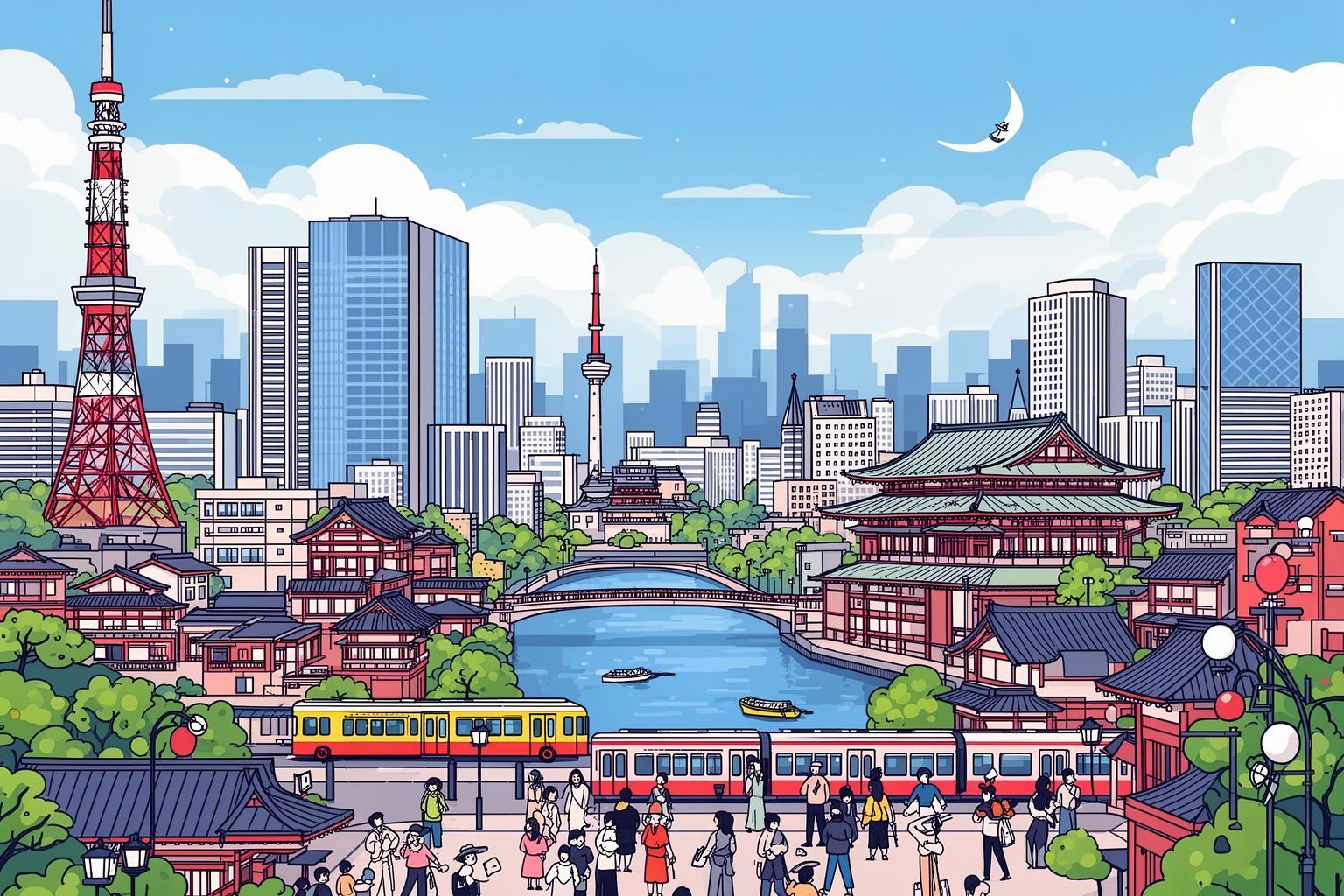
Before you even enter a café or bar, it’s important to grasp the fundamental difference in conversational style. In Tokyo, conversation often feels like a carefully designed piece of architecture. Various levels of politeness (keigo) serve as pillars, personal space is respected, and interruptions are generally avoided. The aim is harmony—a smooth exchange of information without causing friction. It’s elegant, respectful, and for outsiders, often completely impenetrable.
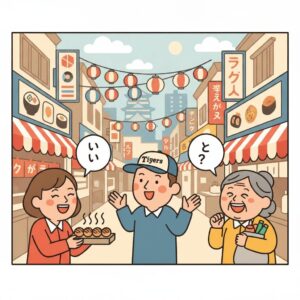
Osaka, however, discards that blueprint. Conversations there resemble manzai, the traditional Japanese stand-up comedy style. It’s a fast-paced duet between a boke (the funny, somewhat dim-witted character) and a tsukkomi (the sharp, straight man who corrects them). This dynamic is not limited to the stage; it forms the foundation of everyday interaction. Someone says something a bit absurd, and their friend immediately fires back with a witty reply or a playful retort. This tsukkomi culture is at the heart of communication in Osaka.
What does this mean for you at a language exchange? While a perfect, grammatically correct sentence delivered with a polite smile might earn you a nod, a slightly flawed but humorous remark will get you a laugh, a follow-up question, and an instant connection. Osakans aren’t seeking a perfect student; they want a sparring partner. They appreciate someone willing to try, unafraid to make mistakes, and who understands that a bit of self-deprecation is a powerful social tool. This straightforwardness can be surprising at first. People may ask questions that seem blunt in other cultures: “Why’d you come to Japan?” “How much is your rent?” “You like natto? Seriously?” This isn’t rudeness—it’s a shortcut. It reflects the spirit of the Osaka merchant, a mindset shaped by centuries of commerce that aims to quickly understand who you are, what drives you, and how you fit into their world. They’re seeking common ground fast. Embrace it. Be honest, be funny, and don’t be afraid to joke about yourself. Once you stop treating the conversation as a test and start seeing it as a game, you’ll have begun to truly understand Osaka.
The Currency of Conversation: Jokes, Stories, and Opinions
In many parts of Japan, the safest conversational route is a neutral one: weather, food, and hobbies. But in Osaka, neutrality can come off as disinterest. People trade in a different currency: strong opinions, funny stories, and a healthy dose of playful complaining. Expressing a passionate (even slightly negative) view on something trivial—the humidity, the crowded trains, or the underwhelming convenience store sandwich you had for lunch—is a way to show personality. It invites responses, sympathy, or friendly debate.
This approach is rooted in Osaka’s history as Japan’s kitchen and commercial center. It was a city of doers, merchants who had to haggle, persuade, and forge relationships to survive. There was no time for ambiguity. This legacy lives on in social interactions. People value authenticity and clear opinions. At a language exchange, don’t just say you like Japanese food; share the time you tried fugu and felt terrified, or how you think the takoyaki from a particular street vendor is far superior to all the rest. This gives others something to latch onto and makes you memorable among a crowd of faces all saying “Hajimemashite.” Your stories and personality are your greatest assets—don’t hide them behind a wall of politeness.
Choosing Your Arena: From Structured Study to Social Chaos
Osaka’s language exchange scene is far from uniform. It’s a vibrant mix of venues and formats, each suited to different personalities and goals. Finding the right environment is essential not only for improving your Japanese but also for discovering your community. Consider it less a simple venue choice and more a strategic decision about the kind of interactions you want to have.
The Structured Meetup: Efficiency and Exposure
These events are the ones you’ll most frequently see advertised online. They usually take place in cafés or community halls, often with a small entrance fee that includes a drink. The format is typically well-organized, featuring timed table rotations. You might find yourself at a table of four—two Japanese speakers and two non-Japanese speakers—chatting for 15 minutes before a bell signals you to switch partners. Think of it as speed-dating but for language practice.
Venues like WhyNot!? or various meetups promoted on apps excel in this format. The atmosphere is focused and purposeful. The main advantage is guaranteed practice—you will speak and listen. It’s an excellent environment for beginners who may feel too shy to initiate conversations in a less structured setting. The format offers a safety net, and topics are often guided to keep dialogue flowing. This approach perfectly embodies Osaka’s practical, no-nonsense mentality: “We’re here with a purpose, so let’s get it done.”
However, this very structure that ensures effectiveness can also be limiting. The constant rotating makes it hard to form deep connections with any one person. Conversations can sometimes become repetitive as you introduce yourself repeatedly. It’s a great place to build confidence and meet a broad variety of people, but turning these brief 15-minute chats into lasting friendships requires effort. The key is to find someone you connect with and make sure to exchange contact details before the final bell rings, suggesting a more casual meetup later.
The International Bar: Social Lubrication and Serendipity
This represents the opposite end from structured meetups. These are regular bars favored by both the international community and Japanese locals curious about the world. Think of places like The Blarney Stone in Shinsaibashi or Coolabah in Namba. There’s no bell, no table rotation, and no set agenda beyond socializing over drinks. Language exchange happens naturally, sparked by proximity and a shared desire to have a good time.
This setting allows Osaka’s lively, fun-loving side to truly emerge. The social barriers here are much lower than in a typical Japanese izakaya. It’s perfectly acceptable—and even expected—to approach a group and introduce yourself. The bar’s noise and energy create a sense of collective experience, and the alcohol helps dissolve lingering shyness. Conversations here focus less on textbook grammar and more on shared interests—music, travel, sports, and the universal challenge of living in a foreign city.
To thrive in this environment, you need a different skill set. It’s less about linguistic accuracy and more about social intuition. You must read the room, approach others confidently, and sustain conversations beyond the basics. Here, you’ll witness tsukkomi culture in its natural setting. The banter is quicker, the jokes sharper, and the laughter louder. For many, this is where the most genuine friendships are formed. These connections aren’t rooted in language practice but in shared vibes and genuine chemistry. It’s unpredictable and messy, but it’s also where you’re most likely to find yourself invited to a weekend barbecue or a music festival.
The Community Hub: Authenticity and Integration
For those looking to steer clear of nightlife and structured study, there’s a third, often overlooked option: local community centers. Nearly every ward (ku) in Osaka has a Kokusai Kouryu (International Exchange) Center or similar municipal facility. These centers offer Japanese classes taught by volunteers, host cultural events, and run language exchange programs deeply embedded in the local community.
These places aren’t trendy hangouts. The crowd often includes university students, retirees wanting to stay active, and local families. The pace is slower, and interactions tend to be more intentional and heartfelt. Volunteers genuinely interested in other cultures want to help foreigners adapt to life in Japan. This embodies a wonderful aspect of Osaka’s character called sewazuki—a fondness for looking after others, sometimes to the point of being a bit nosy. Here, that quality is a blessing. Your volunteer language partner won’t just correct your particles; they’ll give tips on where to find cheap furniture, explain the complexities of garbage sorting, and invite you to local festivals.
Building relationships here takes time. It’s less about one-off fun nights and more about steady attendance and a genuine interest in the community. But friendships that grow in this environment are often the most meaningful and rewarding. You’re not just a temporary foreign face; you become part of the neighborhood fabric. You might gain a surrogate Japanese grandmother who brings snacks or a university student friend who helps you decipher official-looking mail. This path leads to truly living in Osaka rather than simply visiting.
The Unwritten Rulebook: How to Speak Osaka-ben Without Saying a Word
Success in Osaka’s social scene, whether during a language exchange or in everyday life, hinges on understanding the city’s unspoken rules of engagement. This social grammar is just as vital as the linguistic one. Mastering it will shift you from a passive onlooker to an active participant.
The Art of the Interjection: Your Role in the Duet
A conversation in Osaka is seldom a monologue. It’s a dynamic exchange that demands active listening and, importantly, active responding. The key tools in your repertoire are aizuchi—the interjections that demonstrate you’re paying attention. But in Osaka, the standard “hai,” “ee,” and “un” are only the starting point. You need to expand your toolkit.
- “Honma ni?” (Really? / For real?) – The workhorse phrase. It conveys surprise and invites the speaker to elaborate. Use it with wide eyes for full effect.
- “Uso!” (No way! / You’re kidding!) – A playful expression of disbelief. It’s not an accusation but a compliment, suggesting the story is so outrageous and entertaining.
- “Eeeh?!” – The classic sound of shock. The secret is to stretch the vowel sound. A short “eh?” signals mild surprise, while a long, drawn-out “Eeeeeeeeeh?!” shows your mind has been blown.
These are much more than filler words; they’re your lines in the conversational play. Using them lets your partner know you’re not just hearing the words, but feeling the story. It turns you from an audience member into a co-star.
The Ultimate Weapon: “Nande ya nen!”
If you learn only one Osaka-ben phrase, let it be this. On the surface, “Nande ya nen!” translates to “Why?” or “What the hell?” Yet its functional meaning runs much deeper. It’s the quintessential tsukkomi phrase—a verbal jab you use when someone says something absurd, obvious, or downright silly.
- Your friend points to a dog and says, “Look, a cat.” You reply, “Nande ya nen!”
- Someone complains about the heat on a sweltering August day. You say, “Nande ya nen!” (Obviously it’s hot!)
- You share a story, and your friend reacts in an exaggeratedly comedic way. You respond with a playful “Nande ya nen!”
Using this phrase skillfully is a rite of passage. It shows you understand not only the language but also the humor and rhythm of the city. The first time you use it and get a genuine laugh from a native Osakan, it will feel like you’ve been handed a key to the city. Don’t hesitate to try. Even a clumsy attempt is appreciated as a sign that you’re making an effort to connect on their terms.
The Offer and the Follow-Through
A common piece of advice for foreigners in Japan is to be cautious of non-committal invitations. In Tokyo, when someone says, “Kondo nomimashou” (“Let’s go for a drink sometime”), it’s often a polite way to end a conversation without any real intention to follow up. It serves as social lubrication, not a concrete plan.
True to form, Osaka is more direct. While polite brush-offs do exist, invitations, especially specific ones, are more likely to be sincere here. If someone you’ve met at a language exchange says, “I know a great ramen shop near my station. We should go next Friday,” they probably mean it. The merchant city mindset comes into play: they see value in the potential relationship and are willing to invest time in it.
This means the initiative is yours. The follow-through is essential. Don’t wait for them to bring it up again. The next day, send a message: “It was great talking to you! Are you still free for ramen next Friday?” This shows you’re serious and appreciate their offer. This proactive approach is valued and often the key step that turns a pleasant chat into a genuine friendship. In Osaka, social momentum is everything—don’t let it slip away.
From a Table to a Takoyaki Stand: Escalating the Friendship
The language exchange event marks the beginning, not the conclusion. It’s just the introductory chapter. The true story of your friendship starts once you leave that structured setting and step into the real world of Osaka. This transition demands deliberate effort to find common interests beyond the shared aim of language learning.
Discovering the Niche
In your conversations, pay attention to the sparks. Does their face brighten when they mention a particular band? Are they sporting a Hanshin Tigers jersey? Do they say they spend weekends browsing vintage clothing stores in Amerikamura? These moments are your openings. The objective is to shift the foundation of your relationship from a generic “language partner” to a specific “concert buddy,” “fellow baseball fan,” or “shopping companion.”
Proposing an activity based on a mutual interest is the most natural way to deepen the friendship. “You like that band? They’re playing in Umeda next month; we should go!” This invitation is far more engaging than a vague “Let’s hang out sometime.” It shows you were paying attention, remembered, and want to share an experience. These shared moments are the real glue of friendship—much stronger than any shared vocabulary list.
The Social Proving Ground: The Izakaya and the Shotengai
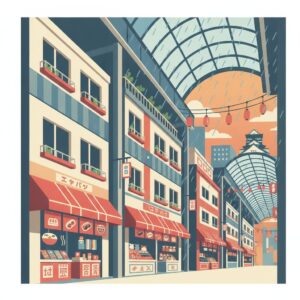
To experience the true Osaka and reveal your authentic self, invite your new acquaintance to a classic Osaka spot. A rowdy, smoky, no-frills izakaya or a stroll through a local shotengai (shopping arcade) are ideal choices. These places are the core of Osaka’s community life.
Sharing a plate of kushikatsu (deep-fried skewers) while following the “no double-dipping” rule, or grabbing a hot tray of takoyaki from a street vendor and eating it standing up, are quintessential Osaka bonding rituals. Here, language practice takes a backseat to the shared experience. You’ll pick up a different kind of Japanese—the colloquialisms shouted over the counter, the slang between friends, the specialized vocabulary for ordering food and joking around. This is when you shift from learning a language to living it. It’s also where you’ll meet their circle of friends. Once accepted by one person, you’re often soon welcomed into their group—a whirlwind of introductions that can feel overwhelming but is a clear sign you’ve been embraced as one of their own.
Ultimately, finding your people in Osaka is much like learning the local dialect. At first, it sounds fast, a bit harsh, and confusing. You try to apply the standard rules you learned, but they don’t quite fit. Then you listen more closely. You start to catch the rhythm, the melody, the humor. You learn when to jump in, when to laugh, and when to shout “Nande ya nen!” The language exchange is your first lesson—an invitation to stop being a polite visitor and begin becoming an active, engaged participant in the loud, chaotic, and wonderfully human comedy of Osaka life. Dive in. The water’s fine.