There’s a rhythm to life in Osaka that you start to feel deep in your bones after a while. It’s not the frantic, metronomic pulse of Tokyo, where every beat feels scheduled and every silence is intentional. Osaka’s rhythm is more like a free-form jazz session. It’s loud, it’s improvisational, it’s full of unexpected solos, but somehow, everyone is playing the same tune. It’s the rhythm of a city that works hard, plays harder, and values a hearty laugh over a polite nod. And when the week’s crescendo fades and the cymbals crash on a Friday afternoon, that rhythm doesn’t stop; it just changes key. It shifts into the insistent, exciting beat of a getaway. For many living in Osaka, that getaway has a name: Kinosaki Onsen. A friend from Tokyo once showed me her travel planner. It was a leather-bound book with color-coded tabs, detailing a trip to Kyoto she was planning for ten months in the future. Every train was timed to the minute, every meal was reserved, every temple’s opening hours were cross-referenced. I looked at it with a kind of anthropological wonder. Later that week, I was having kushikatsu with a friend from Namba. It was a Tuesday. “Ah, I’m tired,” she said, juggling a deep-fried quail egg. “Let’s go to Kinosaki this weekend.” This weekend? My mind raced. We have no hotel, no train tickets, no plan. I started to voice my concerns, but she just waved her hand, a gesture that universally means “don’t worry about the details.” She pulled out her phone, made two quick calls, and declared, “Okay, done. We’ll take the 9:00 train on Saturday.” That, right there, is the soul of Osaka. It’s the belief that things will work out, the confidence in one’s ability to improvise, and the burning desire to not let a good mood go to waste. Planning a trip to Kinosaki from Osaka isn’t a logistical challenge to be solved; it’s a cultural ritual. It’s an exercise in the city’s core values: spontaneity, community, and above all, an unwavering quest for supreme value, or kosupa. This journey to the steamy, willow-lined streets of Kinosaki is more than just a dip in hot water; it’s a deep dive into the very heart of what makes Osaka tick. It reveals the unspoken philosophies that govern daily life here, from how people view money and time to how they connect with each other. It’s in the boisterous train ride there, the shrewd selection of a ryokan, the communal chatter in a steaming bath, and the stories shared back at the office on Monday. Forget the tourist guides. If you really want to understand the people of this city, just watch how they escape it for a weekend.
This spontaneous, improvisational spirit is also what makes it so rewarding to find your community in Osaka’s vibrant language exchange scene.
The “When” and “Why”: Timing Your Escape, Osaka-Style
In many regions across the globe, particularly Tokyo, travel is governed by a strict calendar of celebrated occasions. There’s the sakura season, the autumn foliage season, Golden Week, Obon. These fixed points shape the tourism calendar, and people schedule their lives, savings, and vacation time months, sometimes even years, ahead to coincide with them. The process is marked by precision and optimization, aiming to secure the ideal room with the perfect view during the perfect week. However, in Osaka, planning a trip—such as one to Kinosaki—typically follows a very different set of principles, which feel far more spontaneous and immediate. It’s less about syncing with an external schedule and more about responding to an internal impulse.
Beyond Peak Seasons: Embracing the Spontaneous Plan
The Osaka mindset is firmly anchored in the present moment. A common and pragmatic phrase, nantoka naru, meaning “it’ll work out somehow,” reflects this outlook. This doesn’t indicate laziness or poor planning but instead expresses a strong confidence in one’s ability to adapt and solve problems on the go. This philosophy significantly shapes travel habits. The idea of booking a Kinosaki trip months in advance, like next spring, often seems abstract and overly complicated to many Osakans. Why delay? The urge to go exists now. The fatigue from the workweek is felt now. The craving for a hot bath and fresh crab is an immediate desire.
This approach embodies the spirit of ima-chan, or “right now.” It frequently manifests in social settings: a group of friends enjoying highballs at a standing bar in Tenma may suddenly decide they need a coastal getaway. Phones come out—not to browse for dates months away, but to check train schedules for the upcoming weekend. A quick call goes to a familiar ryokan: “Moshi moshi, Tanaka-san? It’s Suzuki. Do you have a room for two this Saturday? Ah, really? Lucky! Ja, onegai shimasu!” It’s personal, direct, and immediate. This behavior traces back to Osaka’s merchant heritage, where waiting for perfect conditions was not an option; opportunities had to be seized immediately. Deals were struck on a handshake, products sold when demand was high. This opportunistic, transactional mindset has woven itself into social interactions. A good mood, a free weekend, a sudden craving—they represent opportunities to be acted upon, not postponed.
This can be surprising to foreigners or those used to the Tokyo lifestyle, where spontaneity may disrupt a carefully balanced system. In Tokyo, an invitation for “this weekend” might cause real anxiety, whereas in Osaka, it’s the norm. The assumption is that plans remain flexible and people adapt easily. This isn’t to say Osakans don’t plan for major holidays, but for a quick regional trip like Kinosaki, the planning window is significantly shorter. The excitement lies in the impromptu nature, in the thrilling break from routine on a whim.
The “Off-Season” Logic: Maximizing Value
If spontaneity is one pillar of Osaka’s travel planning, the other—arguably more important—is kosupa, or cost performance. This concept is often misunderstood as merely seeking cheap options, but it is a nuanced art, almost a philosophy devoted to maximizing satisfaction from every yen spent. It focuses on achieving the highest possible quality—whether in taste, quantity, or experience—at the lowest price. This mindset shines most brightly during trip planning.
An Osakan might listen politely to a friend’s peak-season trip story to Kinosaki during crab season, but their eyes truly brighten when another friend says, “I went in June, during the rainy season. It was quiet; the ryokan gave us a 40% discount and included a free drink with dinner. Plus, the onsen feels amazing in the rain!” This is the tale that earns admiration. The first is about consumption; the second celebrates cleverness. It’s a win. The traveler didn’t just pay for a trip; they outwitted the system, uncovering hidden value and timing others overlook.
This value-driven mindset defines Osaka life. It’s visible in the covered shopping streets (shotengai), where housewives may walk an extra ten minutes to a butcher selling minced pork ten yen cheaper per 100 grams. It’s heard in proud boasts about savings at the discount supermarket Tamade. This is a game of wit, where the prize is both money saved and the pride of making a smart choice. Whereas Tokyo often associates status with exclusivity and premium prices—like a restaurant with a six-month waitlist or a limited-edition designer bag—in Osaka, status is often linked to savvy consumerism. The tale of a fantastic all-you-can-eat lunch for 980 yen is shared with the same pride a Tokyoite might reserve for a Michelin-star meal.
When planning a trip to Kinosaki, an Osakan’s mind constantly calculates value. Is it better to visit in the cold of February, when rooms are cheap but the walk between baths is harsh? Or smarter to pick an unremarkable weekend in May, after Golden Week but before summer crowds? They consider train fare versus gas and tolls. They scrutinize the ryokan’s dinner menu, mentally pricing dishes to judge if half-board is truly worthwhile. This isn’t stinginess but an ingrained cultural trait reflecting Osaka’s mercantile roots, where every deal required careful evaluation. For an Osakan, a trip isn’t just relaxing unless it’s also a smart bargain. The enjoyment doubles.
Getting There: More Than Just a Train Ride
The journey from Osaka to Kinosaki is relatively brief—just a couple of hours on a direct train. Yet, this transitional space, the train car capsule racing across the Kansai plains toward the Sea of Japan, acts as a compelling microcosm of Osaka’s social dynamics. The mode of travel chosen, and the behavior displayed during the trip, reveals another layer of the city’s character, exposing attitudes toward public space, social interaction, and efficiency that sharply contrast with those encountered on a journey beginning in Tokyo.
The Limited Express Kounotori: A Social Microcosm
Boarding the Limited Express Kounotori from Osaka Station on a Saturday morning is an experience in itself. Compare it to the quiet, almost reverential atmosphere of the Tokaido Shinkansen heading east. On the Shinkansen, the space is atomized: each passenger is isolated in their own bubble, laptops open, headphones on, conversations reduced to murmurs. The shared goal is silent, efficient transit. The Kounotori, bound for Kinosaki, feels like an entirely different world. It’s not a library; it’s a living room on wheels. The holiday has already begun.
You’ll observe groups of friends, often coordinated in color, laughing and animatedly planning their onsen-hopping strategy. Multi-generational families fill the car, with grandmothers handing out homemade onigiri as children excitedly gaze out the window. And you’ll hear the unmistakable psssht of cans opening—beer, chuhai, highballs. Drinking on the train isn’t an act of rebellious taboo; it’s a customary and celebrated part of the journey, the official starting signal for the weekend’s festivities. Snacks are shared communally as well. Bags of potato chips and boxes of Pocky circulate across the aisle. Someone might offer you a piece of candy. This simple gesture—a modest breach of personal space that would be nearly unthinkable on a Tokyo train—perfectly exemplifies the Osaka spirit.
This fluid blending of public and private space is a hallmark of the city. In Tokyo, public space is generally treated as a neutral passage zone for individuals. In Osaka, it becomes a potential stage for social interaction, the boundaries blurred. This is why strangers are more likely to strike up conversations in Osaka—the cashier at the market, the elderly man at the bus stop, the woman sitting beside you on the train to Kinosaki. This is not seen as intrusive or nosy; it is considered human. The silence of a Tokyo train may feel peaceful to some, but to an Osakan, it can come across as cold and lonely. The low, pleasant hum of conversation on the Kounotori is the sound of a community in motion. It reflects a culture that values human connection, viewing a shared journey as a chance to form temporary bonds. Foreigners often misinterpret this friendliness, mistaking the directness and chatter for a lack of manners. But it springs from warmth, the assumption that we’re all in this together, so why not chat?
To Drive or Not to Drive: The Pragmatism of the Kansai Driver
The alternative to the train, of course, is driving. The decision here also reveals a distinctly Osaka way of thinking. The car provides freedom—the ability to stop at roadside michi-no-eki, pack generously, and follow your own schedule. Yet the Osakan’s internal kosupa calculator will be busy. They’ll carefully tally highway tolls (notoriously costly in Japan) and gas prices, weighing these against the per-person cost of train tickets. They’ll factor in the hassle and fees for parking in a compact town like Kinosaki. Frequently, the train wins on pure financial and logistical grounds.
If they do choose to drive, you get a firsthand look at the much-discussed, often-maligned Kansai driving style. To outsiders, especially those accustomed to Tokyo’s cautious, by-the-book driving, Osaka drivers can seem aggressive. They change lanes with confident assertiveness, use their horn liberally, and treat yellow lights as an invitation to speed up. But labeling it merely “aggressive” misses the point. It’s better understood as a highly efficient, communicative, and pragmatic approach to driving. It’s a rolling conversation—fast and direct.
Tokyo’s driving philosophy is one of passive avoidance: wait, yield, keep distance. Osaka’s philosophy is active negotiation. A quick double-flash of hazard lights isn’t a distress signal; it’s a common “thank you” for being let into a lane. A short, sharp honk isn’t an angry “move aside,” but a simple, informational “hey, I’m in your blind spot.” Drivers clearly signal their intentions and expect the same from others. There’s an unspoken agreement to keep traffic flowing smoothly, with a bit of assertive communication needed to make that happen. This style mirrors Osaka’s communication overall. People say what they mean, get straight to the point, and prioritize efficiency over roundabout politeness. The unwritten rules of the Osaka road are a perfect metaphor for its social rules: be direct, clear, communicate intentions, and avoid wasting time with unnecessary formalities. It may seem rough around the edges, but it’s a highly functional system with its own logic and, yes, its own form of courtesy.
Choosing Your Nest: The Ryokan and the Osaka Gaze
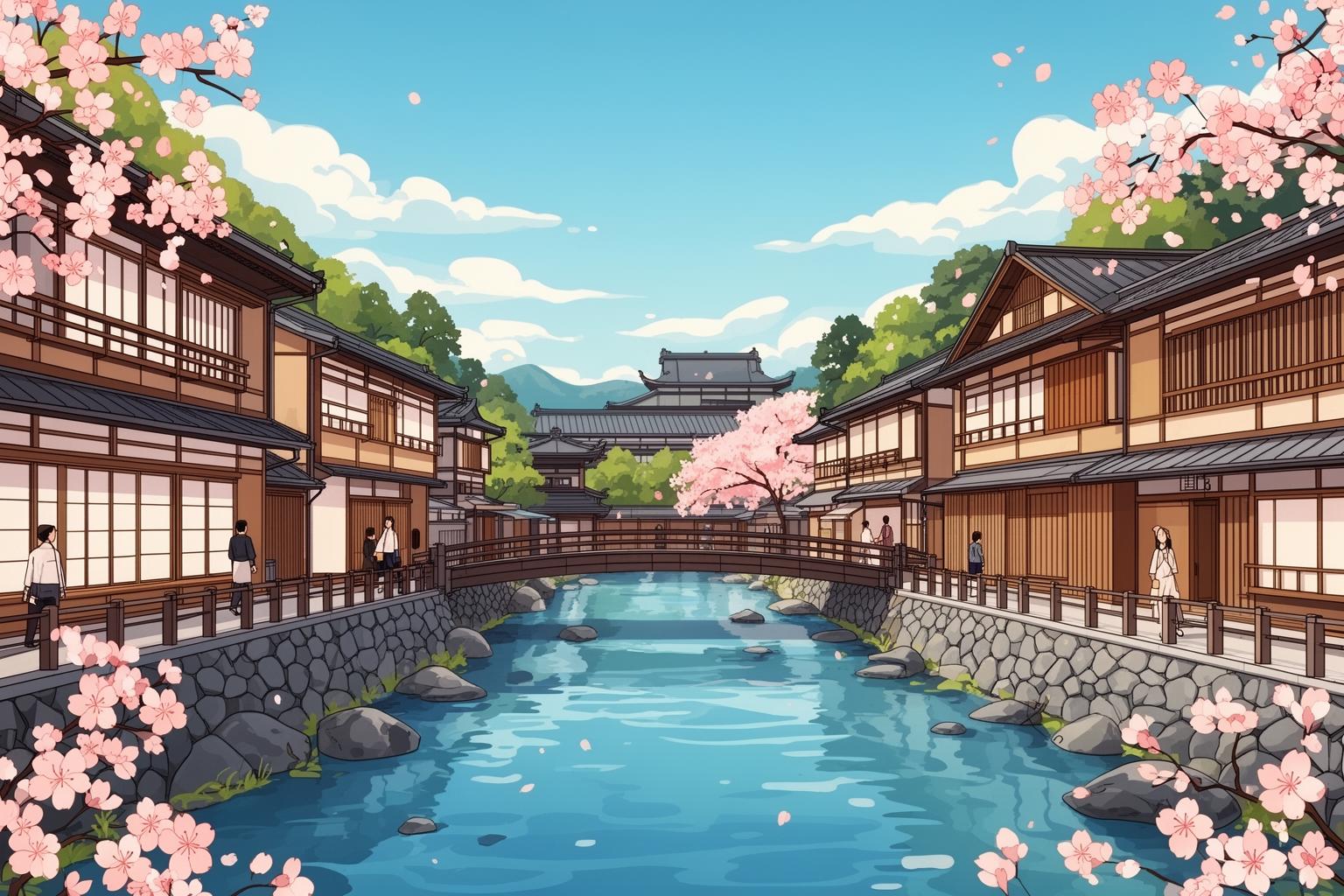
Choosing accommodation for a Kinosaki trip is when the Osaka value system faces its most rigorous challenge. A ryokan is far more than just a place to sleep; it’s an all-encompassing experience package, usually including a room, dinner, breakfast, and onsen access. It represents a considerable financial investment, and for travelers from Osaka, the decision involves a complex assessment of cost, quality, and distinctly Osakan priorities. How they evaluate a traditional inn’s offerings reveals their deeply rooted attitudes toward food, service, and the true meaning of “luxury.”
The “Kaiseki” Question: Is It Worth the Price?
At the heart of any luxurious ryokan stay is the kaiseki dinner, a multi-course artistic creation that highlights seasonal ingredients with exquisite presentation. Each dish is a tiny, flawless composition arranged on a carefully selected plate. For many, especially in Tokyo’s more aesthetic-driven culture, kaiseki is the main attraction. It’s a cultural experience to be admired, photographed, and savored for its delicate beauty and subtle tastes.
The Osaka traveler, however, approaches kaiseki with a more pragmatic and skeptical outlook. Their initial question isn’t “Is it beautiful?” but rather “Umai ka?” (Is it tasty?). The follow-up is “Otokuyade?” (Is it a good deal?). They scrutinize the menu like a stock market analyst. A small, artfully arranged piece of sashimi might be visually stunning, but if it vanishes in one bite, their kosupa (cost-performance) alarms start ringing. They are less impressed by presentation alone. In Osaka, food is primarily meant to fuel enjoyment. It should be satisfying, flavorful, and ample. This embodies the spirit of kuidaore, the city’s unofficial motto, meaning “eat until you drop” or more accurately, “eat yourself into bankruptcy.”
During Kinosaki’s winter crab season, this culinary mindset shines fully. A Tokyo visitor might choose a ryokan promising an elegant “crab kaiseki,” featuring crab in refined forms: a small sashimi portion, crab-infused chawanmushi, a single grilled claw. An Osakan, by contrast, is more likely to be drawn to the ryokan boldly advertising “Kani Tabehoudai!” (All-You-Can-Eat Crab!). They want to see a mountain of crab legs on the table, the joy of cracking shells non-stop for hours until they are utterly full. The glory is not in refinement, but in abundance. Upon returning to Osaka, they boast not about flavor finesse, but the sheer number of crabs consumed and the excellent deal they secured. This is not a lack of sophistication, but a different definition of it. For them, true luxury lies not in restraint and subtlety, but in generous, uninhibited, delicious satisfaction.
As a result, many Osaka travelers might choose a ryokan offering a simpler, heartier dinner or even no meals at all (sudomari). This lets them freely explore local restaurants and izakayas, hunt for the best value, savor the tastiest local specialties, and enjoy their favorite pastime: the quest for the ultimate kosupa meal. The ryokan serves merely as a base camp for a larger culinary adventure.
“Service” vs. “Omotenashi”: A Subtle Distinction
Japanese hospitality is often captured by the term omotenashi, denoting a deep, intuitive, often silent service where a guest’s needs are anticipated before they are voiced. It is delivered with flawless professionalism and a graceful distance. This gold standard typifies many upscale Tokyo establishments. Service is perfect, invisible, and impersonal.
However, many people from Osaka do not seek omotenashi; they desire saabisu. This English loanword is crucial. Though it broadly means “service,” in Kansai dialect it often implies something extra, a freebie, a personal touch, a small bonus beyond the formal transaction. It represents the human element. An Osakan at a Kinosaki ryokan doesn’t necessarily want an invisible host. They want to chat with the okami (proprietress), to be asked where they’re from, to joke about the weather, to receive tips on which of the seven public baths is least crowded at the moment. They want her to slip them an extra rice cracker upon checkout.
This personal engagement isn’t viewed as unprofessional; it is the essence of good hospitality. A silent, perfectly formal service, though flawless, can feel cold, sterile, even suspicious to someone from Osaka. It lacks warmth and human connection. This again reflects the merchant city heritage: good business relationships are personal ones. People buy from those they know and like. The local culture’s maido, ookini! (“thanks for your business!”) ethos is exactly what they seek in their ryokan experience.
This can cause cultural misunderstandings. Outsiders might find a chatty okami somewhat unprofessional or intrusive. But for the Osakan, this signals a good place. It means they are treated not merely as paying customers, but as welcomed guests, temporary community members. “Service” lies in the relationship, not just in task execution. A friendly chat, local advice, a complimentary orange—these form the five-star experience in Osaka’s playbook, often valued more than perfectly folded towels or impeccably quiet hosts.
The Main Event: Onsen-Hopping with an Osaka Attitude
With the journey complete and the ryokan selected, the trip’s main purpose begins: the ritual of visiting Kinosaki’s seven public onsen. Here, the town’s distinctive charm comes alive, as visitors dressed in traditional yukata and geta fill the streets, their wooden clogs resonating along the willow-lined canal. This is also where the Osaka approach to leisure—unpretentious, communal, and centered on the tangible experience—reveals a culture that values participation over performance.
The Yukata Stroll: A Uniform, Not a Performance
In many popular Japanese tourist spots like Kyoto or Asakusa, renting a kimono or yukata often feels like putting on a costume for a photoshoot. Visitors, often tourists, walk cautiously, pose against traditional backdrops, and seem highly aware they are part of a cultural display. The experience can sometimes focus more on creating an image for social media than on personal ease or enjoyment.
By contrast, Kinosaki offers a completely different atmosphere. The yukata is not a costume; it’s the town’s practical and universally worn uniform. When you check into your ryokan, you receive a yukata and a pass to the public baths. From that point forward, it’s your standard attire—to the onsen, the souvenir shops, the ice cream stand, and even some casual eateries. There is no self-consciousness about wearing it. You’ll see elderly couples, university groups, and young families with toddlers—all clomping along in their geta and yukata with purpose.
This shared adoption of the “onsen uniform” reveals much about the Osaka mindset. There is a genuine lack of pretension. People aren’t there to look like they’re enjoying a traditional, relaxing time. They’re there to actually have one. The yukata is simply the most practical and comfortable clothing for the task: repeatedly getting in and out of hot water. It’s function over fashion. The sound of Kinosaki isn’t a gentle, curated ambiance; it’s the lively, cheerful, and somewhat chaotic karan-koron of hundreds of wooden geta on pavement. People aren’t gliding gracefully—they’re striding, laughing, and moving with the energy of a group on a mission. That mission is relaxation, but in Osaka, even relaxation is active, social, and a bit noisy. They fully embrace the experience without pretense, embodying a core trait of the city: be genuine, be practical, and don’t fret over appearances.
Inside the Bathhouse: Unspoken Norms and Friendly Chats
Though the basic rules of onsen etiquette—such as washing thoroughly before entering and not putting your towel in the water—are consistent throughout Japan, the social atmosphere inside the bathhouse can differ greatly. In more reserved, upscale resorts, the onsen is often a place of quiet, solemn reflection. Visitors soak silently, respecting the meditative calm.
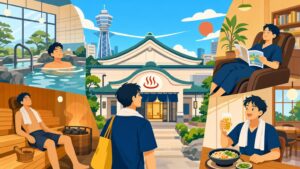
In Kinosaki, heavily frequented by Kansai locals, the mood is noticeably more communal and conversational. It’s not a quiet sanctuary. While not rowdy, silence is often and pleasantly interrupted by chatter. You’re far more likely to strike up a spontaneous conversation with a stranger. An older woman (obachan) might remark, “Atsui na, koko wa!” (This one’s hot, isn’t it!), sparking a chat about which of the seven baths is best. Groups of friends might discuss dinner plans or laugh over a funny story from work. The water serves as a social lubricant, breaking down barriers that might exist outside.
This is the aji, the unique flavor, of Osaka life playing out in its simplest setting. The usual social distance between strangers is less rigid here; there’s an implicit sense of community, a shared experience binding everyone in the space. For many Osakans, a completely silent onsen would feel cold and unwelcoming. The human element—the talk, the shared remarks, the laughter—is part of the warmth. This behavior may initially surprise visitors from more reserved cultures or even other parts of Japan, but it springs from genuine friendliness and open-hearted curiosity. In the onsen, as in local shopping streets or izakayas, life is a shared experience. Sitting silently next to someone for twenty minutes without at least commenting on the water’s temperature feels, to many Osakans, deeply unnatural.
Beyond the Baths: Eating, Drinking, and the “Kuidaore” Spirit Abroad
The Kinosaki experience doesn’t conclude at the bathhouse exit. In fact, for travelers from Osaka, the moments immediately after the onsen are just as important as the soak itself. This is when the kuidaore spirit, briefly refreshed by the hot springs, makes a strong comeback. The cycle of pleasure-seeking continues endlessly, and the post-bath ritual of eating and drinking is an essential part of the process—a way to fully savor the sensory rewards of the getaway.
The Post-Onsen Beer: A Necessity, Not a Choice
Step out of any of Kinosaki’s seven public baths, and you’ll undoubtedly find a vending machine or small shop offering drinks. You’ll also see a crowd of people, fresh from the steam and towels draped around their necks, engaged in a sacred tradition: the post-onsen beer. The sensation of emerging from a steaming hot bath, your skin tingling and body deeply relaxed, and then taking the first sip of an ice-cold beer is a distinct kind of Japanese bliss. For the Osaka visitor, however, this is less a luxury and more a required part of the ritual. It’s not just a beer; it’s the punctuation at the end of the onsen experience. Without it, the experience feels unfinished.
This reflects a very tangible, almost transactional approach to enjoyment. Relaxation is not merely a passive state but an active sequence of satisfying moments. One completes one pleasurable event (the onsen) and immediately moves on to the next (the cold beer). Often, another follows: post-onsen, post-beer ice cream or onsen tamago (eggs slow-cooked in the hot spring water). It’s a chain of simple yet powerful pleasures. This mindset is about maximizing the experience, extracting every bit of enjoyment from the time and money invested. An Osakan might sum up their Kinosaki trip as a series of these rewarding moments: the train highball, the first onsen, the cold beer, the crab dinner, the second onsen, the bottle of fresh milk, and so forth. They gauge the success of their trip by these concrete, sensory wins. It’s a grounded, physical way of experiencing leisure, standing in stark contrast to a more abstract, aesthetic appreciation of atmosphere or scenery.
Souvenir Strategy: Practical, Tasty, and Meant for Sharing
The final stage of any trip is souvenir shopping, and the Osaka approach to omiyage is, unsurprisingly, practical and community-oriented. As they browse the shops along Kinosaki’s main street, their criteria are clear. First, the souvenir must be food. Second, it must be delicious. Third, it should come in a large box with individually wrapped items, making it easy to share with a big group. Fourth, it must offer good kosupa (cost-performance).
Contrast this with souvenir shops at a place like Tokyo Station, where you’ll find exquisitely crafted sweets in elegantly minimalist packaging. The boxes are small, and the contents are precious. The gift is as much about the aesthetic and brand as about the flavor. It is intended as a symbol of refined taste.
The Osaka traveler seeks a different kind of value. They might pick up a box of crab-flavored senbei (rice crackers) thinking, “There are 30 crackers here. That’s enough for the whole work team. And it’s only 1,000 yen. A good deal.” The packaging takes a backseat to the contents. The main purpose of the omiyage is not to impress but to be shared and enjoyed by their community—their colleagues, family, and neighbors. Giving the souvenir is an integral part of the travel experience itself. It’s a way to include their community in their personal leisure time. When they hand out the crackers at work on Monday, they’re not just presenting a gift; they’re sharing a piece of their trip, sparking conversation, and strengthening social ties. The story behind the souvenir matters: “I went to Kinosaki. The crab was incredible. I found a great deal on this ryokan—you should go. Here, try one of these.”
This act of sharing is central to the Osaka identity. Life here isn’t so neatly compartmentalized. Work, social life, and personal life blend together. Colleagues aren’t just coworkers; they’re part of a wider social circle, people with whom you share experiences (and snacks). The souvenir embodies this communal spirit, a tasty token that says, “I had a wonderful time, and I was thinking of all of you.”
The Journey Home: Bringing Kinosaki Back to Osaka
The return journey signals the end of the physical trip, yet for the Osaka traveler, the experience is far from finished. The trip’s real conclusion doesn’t occur upon arrival at Osaka Station but unfolds in the days afterward, as stories are shared, souvenirs exchanged, and memories woven into the fabric of everyday social life. The trip enjoys an afterlife—a social currency continually spent long after the soothing effects of the onsen have faded.
The Sunday Evening Train: Re-entering the Urban Rhythm
The atmosphere on the Limited Express Kounotori returning to Osaka on a Sunday evening is a gentle descent from the outbound journey’s lively fanfare. The boisterous energy has mellowed into a warm, contented hum. Passengers are quieter, somewhat tired after two days of hot baths and good food, but the social vibe lingers. Friends quietly scroll through photos on their phones, laughing at a particularly good shot. Couples lean on each other, dozing. Families pack away the last of their snacks. The air is thick with a shared, pleasant fatigue.
This marks a gradual re-entry into the urban rhythm. The conversation shifts from immediate onsen pleasures to the upcoming week’s realities. “I’ve got that big meeting on Tuesday,” someone might sigh. “Did you finish that report?” another asks. But it’s softened by the collective glow of the weekend. The trip has fulfilled its purpose: recharging batteries, providing a brief yet potent escape, and creating a fresh stock of shared experiences. As the train glides into the vast, bright cavern of Osaka Station, passengers step off not merely as individuals returning home but as a loose tribe of weekend warriors, ready to rejoin the city’s relentless pace, equipped with the restorative power of their Kinosaki adventure.
Monday Morning at the Office: The Trip’s Afterlife
This is the final, and perhaps most significant, phase of the Kinosaki getaway. The trip truly culminates on Monday morning amid the desks and coffee machines of Osaka’s offices. Physical souvenirs are exchanged, but the real treasure is the story. Recounting the trip is a performance, a social ritual with its own set of rules and expectations.
The ensuing conversation is a masterclass in Osaka values. Simply saying, “I went to Kinosaki. It was nice,” wouldn’t suffice—it would be a missed opportunity. The story requires details, drama, and above all, proof of shrewd decision-making. The questioning begins: “Where did you stay? How much did it cost per person? Was dinner included? What was the crab like? Was it fresh? How many did you eat?” Questions are direct, specific, and often centered on financial aspects.
This isn’t rude; it’s a form of information exchange and communal benchmarking. The storyteller then proudly recounts their triumphs. “We stayed at this small place, not in any guidebook. The okami was hilarious. We paid only X yen, but got three whole snow crabs per person! Unbelievable deal—way better than that famous spot down the street.” This is the moment of victory. Not only did they have a relaxing weekend, but they also won the game of kosupa. They discovered a hidden gem, secured an unbeatable bargain, and their tale now serves as valuable intel for colleagues’ future travel plans. It’s a way to demonstrate cleverness and contribute practical value to one’s social circle, traits highly prized.
This public retelling cements the trip’s significance. It wasn’t merely a personal escape; it was a quest for value and satisfaction, and now its rewards are shared with the community. Bringing the box of senbei serves as physical proof—the tangible closing argument of a successful presentation. Through this ritual, the personal becomes communal, and the individual weekend experience in Kinosaki is woven into the collective narrative of the office, the friend group, and the city itself. It reinforces the idea that in Osaka, your life is your story—and a story is worthless without an audience to share it with.