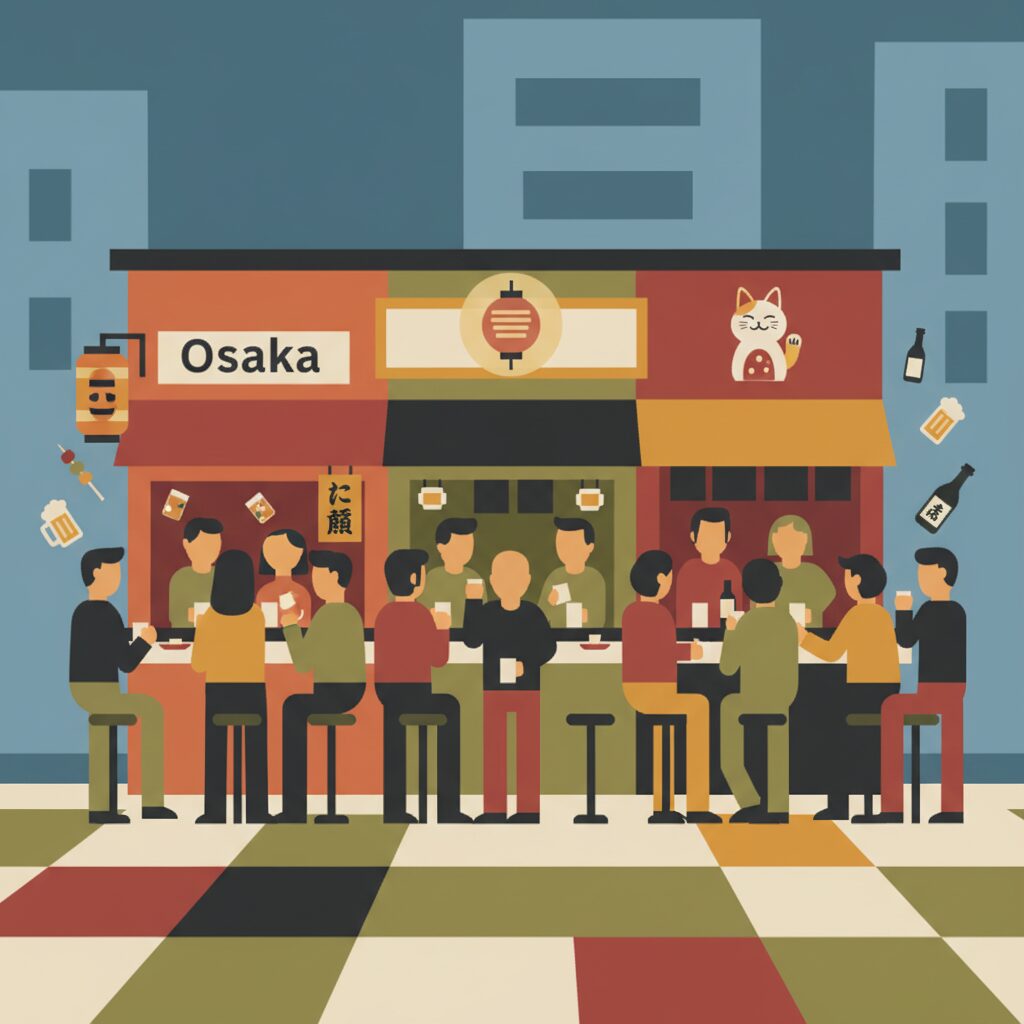
You’ve seen them. Crammed into the brightly-lit underpasses of Umeda station, tucked away in the labyrinthine alleys of Namba, spilling out onto the covered sidewalks of the Tenjinbashisuji Shotengai. They are the tachinomi, Osaka’s standing bars. Through clouds of steam from simmering oden and the sizzle of kushikatsu hitting hot oil, you see a flurry of motion: salarymen loosening their ties, old-timers nursing glasses of shochu, young couples sharing a plate of sashimi. It’s loud, it’s crowded, and from the outside, it looks like an impenetrable fortress of local culture. You might wonder, how do you even get in there? And once you’re in, what are you supposed to do? Talk? Not talk? Is there a secret handshake? This isn’t just about ordering a beer; it’s about plugging into the very electrical current that powers this city’s social life. For anyone trying to truly live in Osaka, to understand its rhythm beyond the castle walls and tourist traps, the tachinomi is your classroom. But be warned: the curriculum is unwritten, the lessons are learned in real-time, and the social codes are wildly different from the reserved, orderly interactions you might find in Tokyo. This is your guide to navigating that beautiful, chaotic, and rewarding world. It’s your key to unlocking the conversations that happen when Osaka stands together.
To truly grasp the city’s unique social fabric, understanding the importance of its hyper-local festivals is just as crucial as mastering the tachinomi.
What a Tachinomi Is—And What It Isn’t
First, let’s dispel a common misunderstanding. A tachinomi isn’t merely a bar without seats. That’s like saying a concert is just music without a roof. The lack of chairs is intentional; it fundamentally shifts the social dynamics of the environment. It fosters transience, promotes interaction, and maintains a lively atmosphere. It’s a place built for movement, for brief but meaningful encounters among people from diverse backgrounds. Treating it like a typical sit-down izakaya is a common mistake many foreigners make. You don’t settle in for a long, deep conversation here. You drop by, plug in, recharge your social energy, and then move on.
More Than Just a Bar: The Tachinomi as a ‘Social Third Place’
Sociologists describe the ‘third place’ as a vital community hub beyond home (the first place) and work (the second place). In many Western societies, this might be a café, pub, or community center. In Osaka, the tachinomi stands out as one of the liveliest and most important third places. It serves as the decompression zone between the stresses of the office and the demands of home life. It’s where a construction worker can stand beside a programmer, or a shop owner next to a retiree, and for the length of a drink and a plate of doteyaki, all are simply Osakans sharing a counter. The close quarters, with elbows nearly touching, dissolve the personal space bubbles that typically define Japanese social interactions. By default, you are part of a shared experience. The space is designed around impermanence. People flow in and out like the tide. This ongoing turnover is what makes it so vibrant and inviting once you grasp the unwritten rules. You’re not committing to an evening; you’re just dropping by for a scene in a larger story.
The Tokyo vs. Osaka Tachinomi Mindset
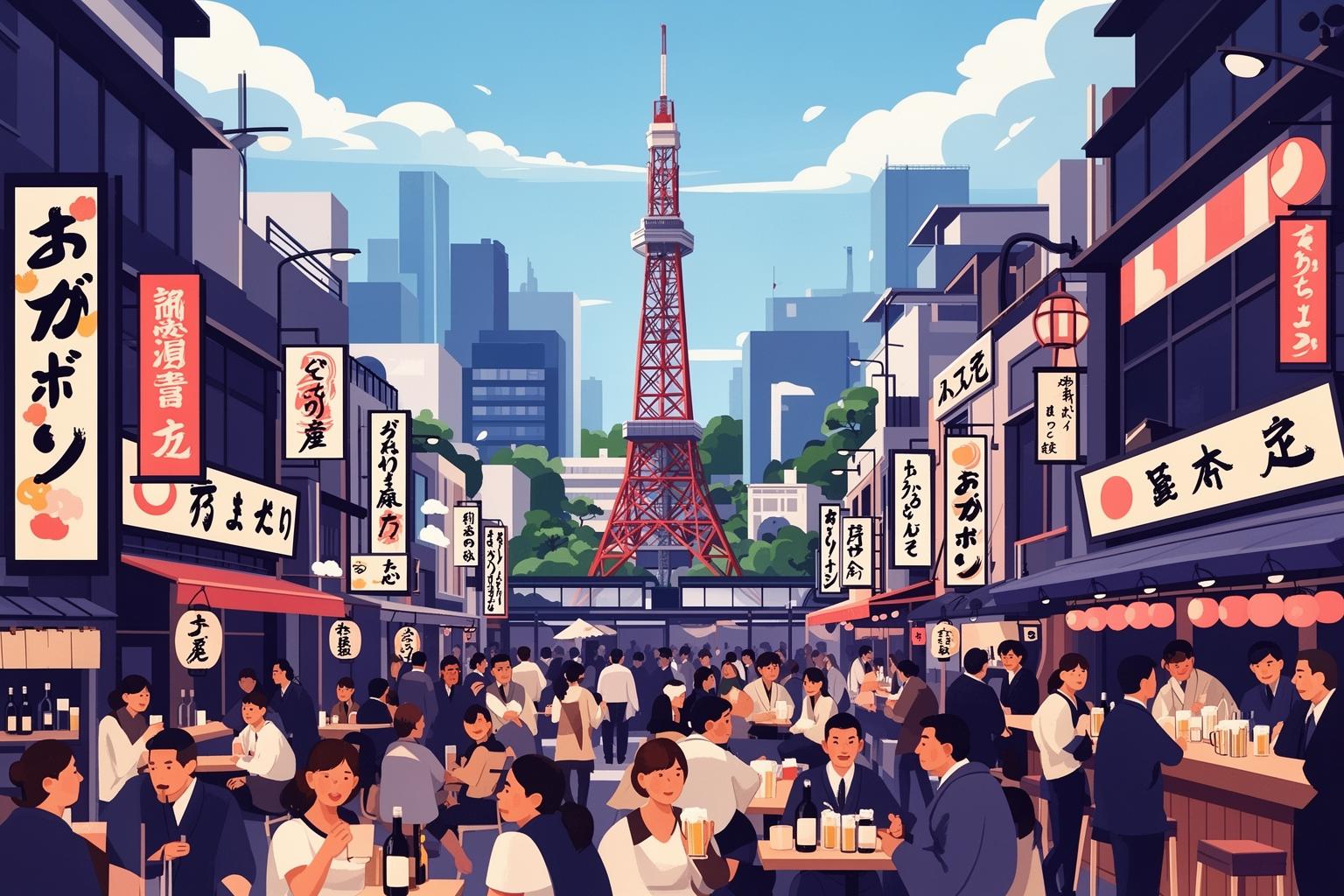
Here, the contrast is striking. A standing bar in Tokyo, such as in Shimbashi or Shinjuku, often feels like an extension of the office. It’s relentlessly efficient. You grab your drink, have a quick bite, perhaps stand quietly, or hold a low-key, work-related conversation with a colleague. Drinking alone is not only accepted; it’s frequently the norm. The space functions as a pit stop to refuel before a lengthy train journey home. Starting a conversation with a stranger is a risky move, requiring careful social calculation and often resulting in polite but firm disinterest.
Now, enter a tachinomi in Osaka’s Temma or Kyobashi. The vibe hits you like a wave. It’s theatrical. It’s communal. The default here is not quiet solitude, but an underlying readiness to engage. Silence isn’t golden; it’s a missed chance for a good joke. While you can stand alone and enjoy your drink, you’ll soon realize you’re in the minority. The air hums with a dozen overlapping conversations, punctuated by loud laughter. The key difference is this: in Tokyo, a tachinomi is a place for individual transactions. In Osaka, it’s a space for collective experience. The expectation is that you’re at least willing to be part of the room’s chaotic, lively symphony.
The Golden Rules of Engagement: Reading the Air
Before you say a single word, the first five minutes inside an Osaka tachinomi are the most crucial. This is when you gather information. Osakans are experts at ‘kuuki wo yomu,’ or ‘reading the air,’ and expect you to have at least a basic understanding. Bursting in with loud English and a big smile can be just as off-putting as standing silently in a corner facing the wall. You need to find the right balance.
The ‘One Drink, One Glance’ Entry Protocol
When you walk in, don’t just rush to the first open spot. The flow of a tachinomi is a delicate rhythm. Scan the counter and look for a natural opening—not one you have to create by pushing people aside. Slide in smoothly. If it’s really crowded, a polite ‘Sumimasen, iidesu ka?’ (Excuse me, is this okay?) to those nearby works wonders. Once you’ve claimed your small piece of the counter, catch the eye of the ‘taisho’ (the master or owner). Order your first drink—a ‘toriaezu biiru’ (a beer for now) is the classic choice—and maybe a quick dish from the counter display. Now, your mission starts. This is the ‘One Drink, One Glance’ phase. During this first drink, your task is to observe. Who is the loud one holding court? Who is the quiet couple? Are the people next to you deeply involved in private conversation, or are they scanning the room? What’s the general mood? Is it a lively, post-baseball-game crowd, or a more subdued, after-work wind-down? This initial assessment is key. It shows you where the conversational entry points are, and more importantly, which are off-limits. Interrupting a serious chat is a fatal mistake. Missing the old man clearly trying to make eye contact with you is a lost opportunity.
The Art of the ‘Nod’: Acknowledging Your Neighbors
As you sip that first beer, there’s a small, almost unnoticed gesture that divides insiders from outsiders. It’s the nod. Or a very slight ‘eshaku’ (a small bow from the neck). You make brief eye contact with the person immediately to your left and right and give a small, subtle nod. That’s all. It’s a silent agreement. It says, ‘Hello. We share this tiny slice of the universe for the next thirty minutes. I acknowledge your presence. I mean you no harm.’ It’s incredibly powerful. In many Western cultures, this might seem awkward or unnecessary. In Tokyo, it could even be mistaken for the start of an unwanted conversation. But in an Osaka tachinomi, not offering this small gesture is what stands out. Skipping it can make you come across as ‘tsumetai’ (cold) or arrogant, as if you think you’re above the communal spirit of the bar. This simple nod doesn’t force a conversation, but it leaves the door wide open for one to start naturally.
Initiating Contact: The Osaka Approach to Breaking the Ice
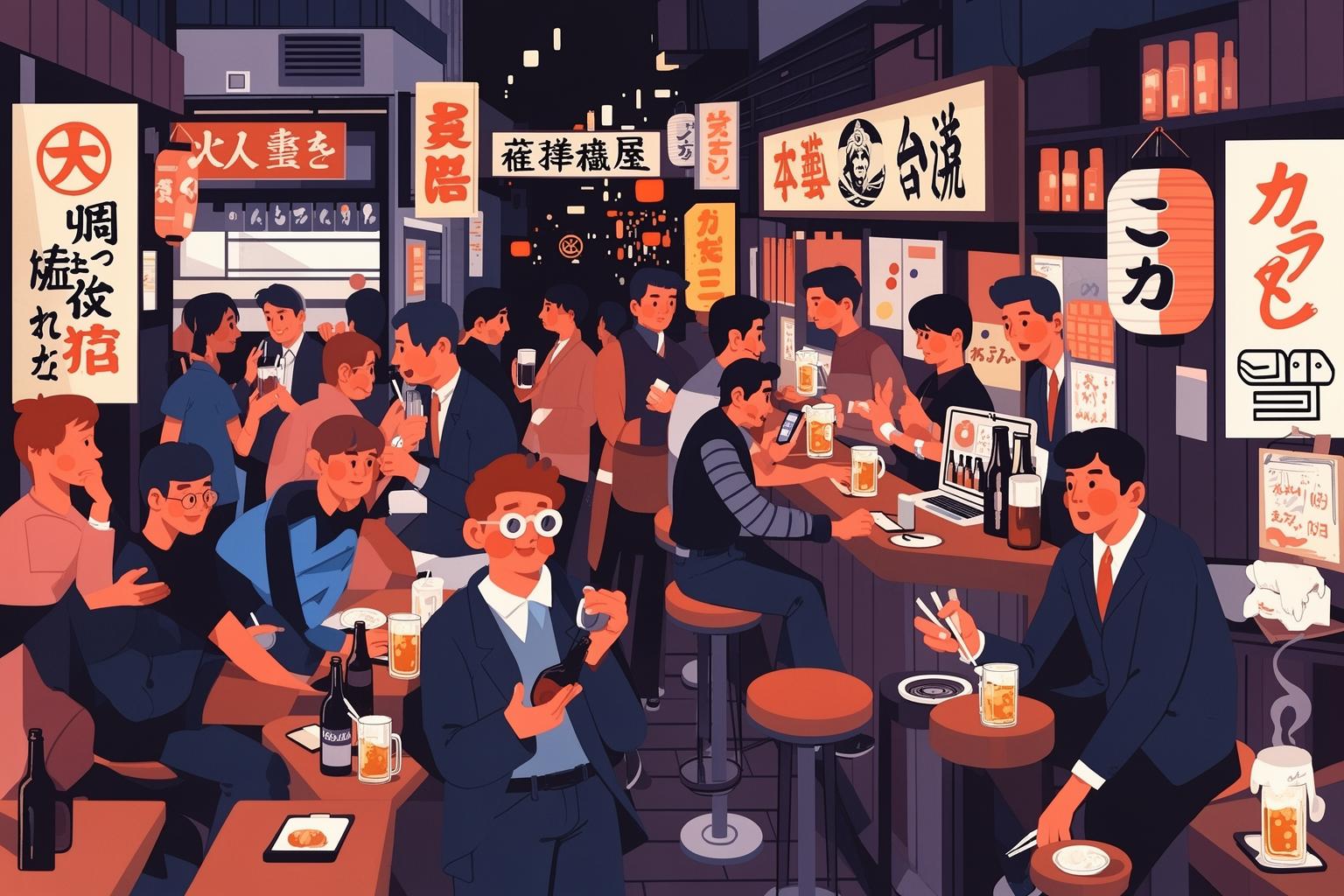
After gauging the atmosphere and acknowledging those around you, you might feel the desire to start a conversation. This is when the unique rules of engagement in Osaka come into play. The focus is less on witty pick-up lines and more on identifying a shared, immediate experience to comment on. It’s about anchoring the discussion in the present moment.
The ‘Shared Experience’ Opener
This is your safest and most effective tool. The entire tachinomi setting is a shared experience, so use it to your advantage. The easiest topic is the food. Slightly lean toward your neighbor and, referring to their plate, say, ‘Sore, mecha oishisou desu ne. Nan desu ka?’ (That looks incredibly delicious. What is it?). Food is Osaka’s unofficial religion, and asking about it shows respect and genuine interest. No Osakan can resist a chance to talk about food. They’ll not only explain what it is but also how it’s made, where to find the best version, and why it surpasses the Tokyo equivalent. Another classic opener is commenting on something everyone’s watching, like a Hanshin Tigers baseball game on the small TV above the bar. A simple ‘Ah,惜しい!’ (Oshii! – ‘So close!’) after a near-miss can instantly create a bond with those around you. You become less of a stranger and more of a fellow long-suffering Tigers fan. The key is that these openers are low-pressure and observational. You’re not asking a personal question, but inviting someone to share their opinion on a neutral, common topic.
‘Nani shitenno?’: The Direct but Friendly Inquiry
Don’t be surprised if an Osakan beats you to the punch. The threshold for personal questions is much lower and quicker here. You might have just taken your first sip of sake when the person next to you turns and asks directly, ‘Doko kara kitan?’ (Where are you from?) or ‘Kono hen ni sunderun?’ (Do you live around here?). This can feel sudden for those used to more indirect communication, but it’s important to understand the intention. This is not an interrogation. In Osaka dialect and culture, such directness is a way of showing friendliness. It’s a shortcut to building rapport. They’re genuinely curious, wanting to place you on their mental map of the world. The best way to respond is warmly and simply, such as ‘I’m from America, living in Nishi-ku.’ This will usually be followed by a string of follow-up questions, signaling that they’ve accepted you into the conversation. They’re not being intrusive; they’re welcoming you in their own distinctly direct manner.
The Role of the ‘Taisho’ (Master/Owner)
The taisho is the sun around which the miniature solar system of the tachinomi revolves. They’re more than just a bartender; they’re a conductor, a social director, and a community hub. The taisho knows the regulars, remembers their drinks, and often sparks conversations. If you’re shy, your best approach is to engage with the owner. Compliment the food or ask about a specific bottle of sake. This puts you on their radar. A good taisho will notice a new face and try to include you. They might turn to the regular on your other side and say, ‘Tanaka-san, this person is from Canada! You went to see Niagara Falls, right?’ And just like that, you’re in. The owner offers you social validation. Building a good rapport with the taisho is the first step on the long, rewarding path to becoming a regular.
Navigating the Flow: Topics, Taboos, and Timing
Once a conversation begins, it’s crucial to grasp its unique rhythm. Osaka conversation moves quickly, resembling a fast-paced verbal ping-pong match rather than a slow, deliberate game of chess. It values wit, humor, and energy over deep philosophical discussions. To keep up, you need to understand which topics to embrace and which to steer clear of.
Safe Harbors: Recommended Conversation Topics
To maintain a positive atmosphere, stick to the golden trio of Osaka small talk. First and foremost, food. Talking about food is always a safe bet. Ask for suggestions, swap takoyaki experiences, or debate the best style of okonomiyaki. This topic offers endless variety and sparks passionate opinions from everyone in the bar. Second, sports—especially the Hanshin Tigers. The city’s relationship with its perpetually underperforming baseball team blends fierce loyalty with a sense of comedic tragedy. Showing sympathy for the Tigers is an instant way to bond. Third, local pride. Osakans take immense pride in their city, often contrasting it with Tokyo. Complimenting Osaka is always appreciated. Praise the energy of the people, affordability, and the superior food culture. Saying something like, “Tokyo is interesting, but Osaka is so much more fun,” will be music to their ears. Lastly, be ready to share about yourself. They’ll be intrigued by your story. Why did you choose Osaka? What do you find strange or wonderful about it? Honest answers laced with humor will make you an instant favorite.
The Unspoken No-Go Zones
Equally important is knowing what topics to avoid. While Osakans are open, certain subjects kill the mood in a tachinomi setting. First, avoid detailed complaints about work. The bar is an escape from the office, not an extension of it. It’s fine to vaguely mention your industry, but no one wants to hear about TPS reports or a difficult boss. It’s just too heavy. The same applies to complex political or religious debates. A tachinomi is meant for lightness and laughter, not world problem-solving. Perhaps the biggest taboo is bragging, especially about money, status, or importance. Osaka culture, rooted in the merchant class, values humor, authenticity, and humility above all. Any trace of arrogance or a “holier-than-thou” attitude—often associated with Tokyo elites—will be met with social rejection. Self-deprecating humor goes much further than self-praise.
The Rhythm of Conversation: It’s Comedy, Not Debate
This is the most crucial, and often the hardest, concept to master. Osaka conversation often follows the structure of a “manzai” comedy routine, involving a ‘boke’ (the silly, humorous character) and a ‘tsukkomi’ (the sharp straight-man who points out absurdities). People often playfully assume these roles. It’s a performance meant to provoke laughter. The goal is not to be right but to entertain. It’s about the back-and-forth, the banter, the quick comebacks. If you make a small mistake, like mispronouncing a word, someone might loudly exclaim, “Nani yutten nen!” (What are you even saying!), with a grin. This isn’t an insult; it’s a ‘tsukkomi.’ They’re playing their role and inviting you to join in. The best response isn’t to get defensive but to laugh at yourself and embrace the ‘boke.’ This is a major cultural hurdle for many foreigners used to logical, linear, information-based conversations. In an Osaka tachinomi, the goal isn’t to win an argument but to keep the comedic volley going. Leaning into this, even if you’re not a natural comedian, shows you get it—that you’re tuned into their wavelength.
The Graceful Exit: Leaving Without Killing the Vibe
Just as there is an art to entering and engaging, there is also an art to leaving. The transient nature of the tachinomi means departures should be as smooth and seamless as arrivals. Lingering too long or making a dramatic exit disrupts the natural rhythm of the space.
‘O-aiso’: The Art of Settling the Bill
Every tachinomi has its own payment system. Some operate on a ‘cash on delivery’ basis, where you pay for each item as you receive it, placing your coins in a small tray in front of you. Others keep a tab, settled at the end. One of the first things you should quietly observe is how others are paying. When you’re ready to leave, don’t shout across the bar. Catch the owner’s eye and say ‘O-kanjo onegaishimasu’ (The bill, please) or the more casual ‘O-aiso.’ Have your cash ready. Fumbling for your wallet and counting out small change while the taisho is busy is a rookie mistake. Be efficient. Be prepared. The entire process should take less than thirty seconds.
The ‘Sassato’ Exit
‘Sassato’ means to do something quickly and without fuss. An Osaka tachinomi departure should be ‘sassato.’ There are no long, drawn-out farewells. You don’t need to announce your departure to the whole bar. The essential steps are simple. First, a clear ‘Gochisousama deshita!’ (Thank you for the meal/drinks!) to the owner—this is non-negotiable, showing respect for their work. Second, if you were engaged in good conversation with those next to you, turn to them, give a slight nod, and say ‘Ja, osaki ni shitsurei shimasu’ (Well then, excuse me for leaving before you) or simply ‘Osaki ni.’ This is the polite, standard way to exit a shared social setting. And that’s it. There’s no need to exchange contact details or make vague promises to meet again. The beauty of the tachinomi experience lies in its ephemerality. You shared a moment in time, and now it’s over. Turn and leave cleanly. Don’t hesitate at the door. The performance has ended—it’s time to leave the stage.
Special Considerations for Women and Solo Visitors
Navigating any bar scene alone can be intimidating, and doing so as a woman in an unfamiliar culture adds an extra layer of complexity. Fortunately, tachinomi are generally very safe spaces, but it’s wise to stay aware of the specific social dynamics involved.
Is it Safe? A Woman’s Perspective
Based on my experience, the answer is overwhelmingly yes. The public, open layout of a tachinomi, along with the ever-watchful eye of the taisho, creates a sense of collective accountability. Everyone sees everyone else, which discourages inappropriate behavior. That said, it’s smart to choose your first few spots carefully. Opt for well-lit bars in busy areas or inside train stations instead of dark, isolated alleyways. As a solo foreign woman, you will almost certainly attract attention—usually from genuine, friendly curiosity. People are simply surprised and intrigued to see you there. Still, it’s attention, and it’s important to be mentally prepared for it. If a conversation ever feels uncomfortable, you are under no obligation to continue it. The transient nature of the bar works to your advantage; it’s perfectly acceptable to finish your drink, pay, and leave.
Setting Boundaries with Osaka Humor
Sometimes the friendly attention, especially from older men (‘oji-san’), can feel a little excessive. They might engage in what they consider playful teasing or shower you with compliments. Ninety-nine percent of the time, this is harmless, a typical part of the Osaka ‘oji-san’ style of interaction. The best way to handle this isn’t silence or anger but by adopting their own style: humor. A witty comeback, a playful eye-roll, or a laugh while saying ‘Mō, joudan bakkari!’ (You’re just full of jokes!) shows you’re not a passive target. It demonstrates that you understand the banter and can hold your own. Paradoxically, this often earns you more respect than showing visible irritation. Of course, there’s a clear line between playful banter and real harassment. Trust your instincts. If someone truly makes you uncomfortable, a firm, unsmiling ‘Sumimasen, chotto…’ (Excuse me, but…) while turning your body away is a clear, universally understood signal in Japan to back off. Don’t hesitate to use it.
Beyond the Rules: Finding Your Own Tachinomi
Once you’ve grasped the basic code, an entire universe opens up before you. You’ll begin to understand that not all tachinomi bars are the same. Each neighborhood, and each bar within it, has its own distinct personality and unique micro-culture. The final stage of your journey is discovering the one that feels like your own.
From Umeda’s Salaryman Retreats to Namba’s Gritty Treasures
The tachinomi scene is a vibrant mosaic. Around the shining office towers of Umeda, you’ll encounter sleek, modern standing bars serving the after-work salaryman crowd. The conversations here tend to be more restrained, and the pace somewhat calmer. Head north to Tenma’s expansive, covered market street, and you’ll find a haven of affordable, lively, and bustling bars, packed from mid-afternoon onward. Venture into the gritty, neon-lit alleys of Namba or the retro-futuristic district of Shinsekai, where the characters become even more vivid and the rules more relaxed. Beyond these lie true local treasures, tucked away in neighborhood shotengai (shopping arcades) far off any tourist trail. These are the spots where everyone knows each other, and a new face is a real event.
Becoming a ‘Jouren’: The Road to Regular Status
This is the ultimate goal. This is what it means to truly belong. A ‘jouren’ is a regular customer, but the term carries deeper meaning. It suggests a sense of connection and inclusion. Becoming a jouren isn’t about how much you spend or how often you visit. It’s about forming a sincere rapport. It’s about consistency—frequenting the same spot, even just once every couple of weeks. Greeting the taisho. Chatting with the other regulars. Gradually, you shift from being ‘the foreigner’ to ‘Ami-san.’ The owner starts to remember your favorite drink. The other regulars welcome you with a familiar ‘Ah, maido!’ (Osaka’s traditional greeting for regulars). The day you enter and the taisho silently places your preferred shochu on the counter with a knowing nod is the day you can say you’ve truly cracked the code. You’re no longer merely an observer of Osaka life; you become an active participant. You’ve found your third place. You’ve found your community. And that feeling surpasses any drink you could ever order.