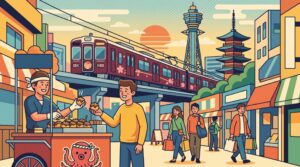
Osaka. Say the name and a certain image sparks to life. It’s the flash of neon on the Dotonbori canal, the sizzle of oil hitting a takoyaki griddle, the roar of a Hanshin Tigers crowd. It’s the fast-talking merchant who’ll sell you a battery-powered dancing octopus and make you feel like you got the deal of a lifetime. It’s a city that moves at the speed of a punchline, a place relentlessly, unapologetically grounded in the material world of commerce, comedy, and earthly delights. So, what happens when you take that raw, unfiltered Osaka energy and point it towards a place like Koyasan? What happens when the city of ‘kuidaore’—of eating until you drop—goes on a diet of vegetarian Buddhist cuisine? It’s a question that gets to the very heart of what it means to live here, to understand the rhythm that beats beneath the city’s concrete skin. This isn’t about escaping Osaka. It’s about finding it in the last place you’d expect. A weekend trip to the sacred, misty peaks of Mount Koya isn’t just a change of scenery from the urban sprawl; it’s a journey into the dual nature of the Osaka soul, a soul that holds a deep capacity for stillness right alongside its famous love for chaos. Forget the tourist guides for a moment. Let’s look at how Osakans themselves bridge the gap between the sacred and the profane, the ancient and the immediate. Because understanding that journey, from the frantic pulse of Namba station to the serene silence of a thousand-year-old cedar forest, is one of the best ways to truly understand what makes this city tick. It reveals a pragmatism so profound it circles back around to a unique form of spirituality, one that’s honest, unpretentious, and deeply human.
This journey from the city’s vibrant energy to Koyasan’s tranquility mirrors the same duality found in understanding the unspoken rules of Osaka’s tachinomi standing bars.
The Great Escape: Namba Station as the Portal
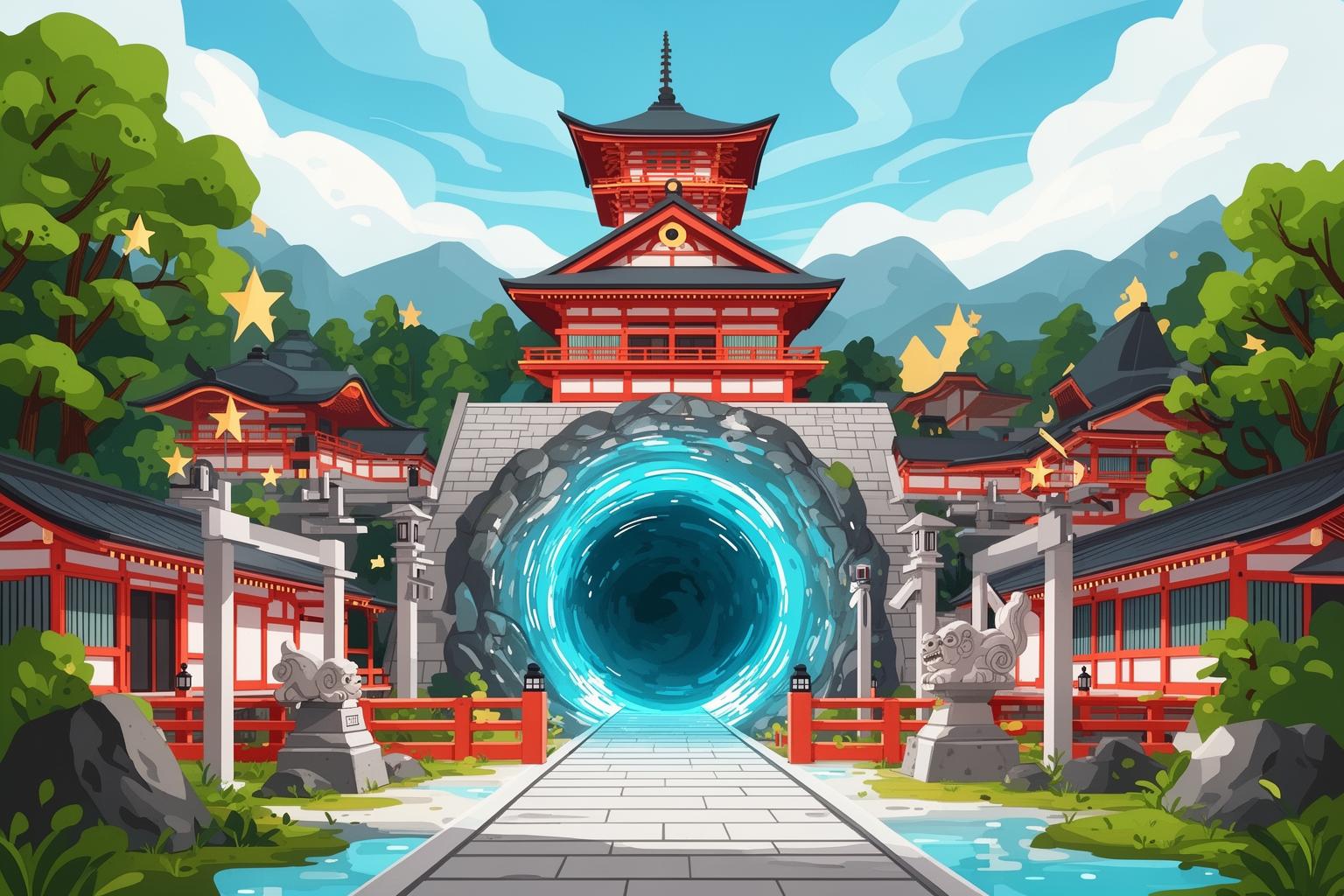
Every pilgrimage requires a starting point, a gateway between the ordinary world and the spiritual one. In Osaka, that gateway isn’t a quiet temple gate or a tranquil garden—it’s Nankai Namba Station. To grasp the Osakan approach to spirituality, you begin here, in this vibrant, chaotic, bustling heart of commerce and transit. The air is heavy with the sweet aroma of station-side bakeries, the savory scent of dashi from a standing udon bar, and the faint, electric buzz of a thousand pachinko machines filtering in from the street. It’s a sensory onslaught, but for an Osakan, it’s simply the baseline of daily life. This isn’t the cold, almost clinical precision of Tokyo Station, where people move like silent atoms along prescribed paths. Namba is a living entity. People aren’t merely passing through; they stop, shop, laugh, and live life loudly. The journey to the sacred mountain begins, quite literally, by pushing past a crowd gathered around a limited-time cheesecake stand—and no one finds this contradictory.
The Nankai Namba Vibe: Organized Chaos with Purpose
Observe how people navigate this space. There’s a unique rhythm, an unspoken code. A Tokyo crowd might be orderly but distant. An Osaka crowd swirls and eddies in a mass that somehow never collides. People make eye contact, offer quick nods, or utter a mumbled “sumimasen” that sounds more like a friendly “excuse me.” They are acutely aware of each other—not as obstacles, but as fellow players in the daily hustle. The ticket counter for the Nankai Koya Line, which will whisk you away to the mountains, is tucked inside a department store. You can buy a ticket to a sacred pilgrimage and a new pair of socks in the same building, and this perfectly fits the local mindset. Why separate the spiritual from the practical? Life is a blend of both. You need sturdy socks for walking around a temple, right? This is the first lesson: in Osaka, spirituality isn’t a separate, elevated realm. It’s woven into everyday life, bought, sold, and planned with the same practical considerations as anything else. There’s no pretense. You’re not expected to adopt a solemn demeanor just because you’re buying a ticket to a holy site. You are who you are: someone needing to get to Koyasan, and maybe also craving some pork buns for the train ride. This seamless fusion is something outsiders often overlook. They see commercialism and assume a lack of depth, when in fact it’s the opposite. It’s an admission that life is whole, and you can’t simply isolate the “spiritual” parts and place them on a pedestal.
The Koyasan Express: A Rolling Transition of Mindset
Boarding the Limited Express Koya feels like entering a transitional space. The train itself is comfortable, clean, and efficient—a hallmark of Japanese engineering. Yet, inside, the atmosphere is pure Kansai. It’s not quiet or subdued. You’ll hear the distinctive rhythm of the Osaka-ben dialect, a lively, musical flow throughout the carriage. An elderly couple might be debating loudly about the best lunch spot once they arrive. A group of young women may compare different temple lodging options with the same enthusiasm they’d apply to a new hotel. This isn’t viewed as disruptive; it’s communal. The journey is part of the experience, and that experience is meant to be shared. As the train pulls away from Osaka’s dense, gray urban maze, the scenery softens. Clusters of buildings yield to suburbs, then to fields, and finally to the deep, cinematic greens of the mountains. As the view changes, so does the tone of conversation. Talk of bargains and work troubles fades, replaced by remarks on the scenery. “Kirei ya naa,” someone might say—“It’s beautiful, isn’t it?”—not just to themselves but to a companion, or sometimes to the entire carriage. This is the Osakan way of acknowledging a shift in environment: a verbal, outward expression. They don’t merely internalize the beauty; they announce it, sharing the observation and inviting agreement. This contrasts strongly with the more reserved Kanto sensibility, where such openness might feel intrusive. In Osaka, it’s an act of connection. The ability to switch modes is also crucial. At one moment, they’re the quintessential city dweller, phone in hand, handling a complex deal. The next, they’re fully present in the mountain scenery, pointing out a waterfall or a particularly striking tree. It’s not a profound, philosophical shift; it’s simply a practical response to new surroundings. The mindset is: “We were in the city; now we’re in the countryside. Let’s enjoy it.” Simple, direct, and entirely genuine.
Arriving in a Different World: The Koyasan State of Mind
The final ascent to Koyasan is by cable car, which feels as if it’s being pulled straight up into the sky. The journey is short, steep, and lasts about five minutes, yet it is the most crucial part of the trip. As you rise above the treeline, leaving the world below behind, a noticeable transformation takes place. The air becomes cooler and crisper, and the sounds of the valley floor—the distant train, the birds—fade into a profound, enveloping silence. This is the true gateway. When the cable car doors slide open at the summit, you step into a different reality. The humidity and noise of Osaka become a distant memory, replaced by the scent of damp earth and cedar and a quiet so deep it feels almost like a presence. This moment can be genuinely startling, and observing how Osaka visitors respond is quite revealing.
From Cable Car to Sacred Ground: The Air Changes
Almost immediately, you’ll hear people commenting on the change. “Uwa, suzushii!”—Wow, it’s cool!—or “Shizuka ya ne”—It’s so quiet, isn’t it?—are common remarks. This verbal acknowledgment is important; they are anchoring themselves in the new environment by naming it aloud. It’s a shared experience, a collective recognition that they have crossed a threshold. For many, this is the essence of the trip—a sensory reset. Life in Osaka is a constant flood of stimuli, and the sudden absence of it acts as a powerful tonic. But it’s approached with practicality. You’ll notice people immediately putting on a jacket they thoughtfully brought along. They came prepared for this shift. They expected the silence, the coolness, the change in atmosphere. The trip wasn’t a whimsical escape but a deliberate, necessary act of self-care. This is a common misconception about Osakans. Their practicality isn’t a lack of romance or spirituality; rather, they believe that for a spiritual experience to be meaningful, it needs to be well planned. You can’t find inner peace if you’re shivering because you forgot a sweater—that’s just common sense.
The Temple Stay (Shukubo): Pragmatism Meets Piety
Staying in a shukubo, or temple lodging, is the quintessential Koyasan experience. Guests sleep in traditional tatami rooms, eat the monks’ vegetarian meals, and are invited to join morning prayers. To outsiders, it may seem like a purely spiritual pursuit. But through an Osaka perspective, it’s also a transaction, one judged by its value.
Choosing a Shukubo: It’s Still About Value
Listen to a group of friends from Osaka planning their trip, and you’ll hear a distinct type of reasoning at work. They don’t simply seek the temple with the deepest history or the strongest spiritual aura. They look for the best overall package. The term kospa, short for “cost performance,” reigns supreme, even here. Their discussion is full of practical considerations: “Eko-in includes the night tour of Okunoin; that’s a good deal.” “Fudou-in’s garden is famous—you get a lot of aesthetic value for the price.” “Muryoko-in is a bit cheaper, but their shojin ryori is supposed to be incredible.” This isn’t sacrilegious; it’s the application of a core Osaka value—getting the most for your money—to a spiritual context. Why should spirituality be exempt from the same logic that governs the rest of life? To them, paying a fair price for a well-kept temple, excellent food, and a meaningful experience is a form of respect. It honors the work and craftsmanship of the monks. Overpaying for a lesser experience would be unwise, and among Osakans, foolishness is a cardinal sin. They carefully read online reviews, compare prices, and weigh pros and cons before booking. Their aim is to maximize the return on their investment, where the return includes peace, comfort, cultural enrichment, and a delicious meal.
Interacting with the Monks: Respectful but Not Reserved
Once settled in the shukubo, interactions with the resident monks offer another glimpse into the Osaka mindset. Visitors from other parts of Japan, especially Tokyo, might express deep, formal reverence. They may be hesitant to speak, maintaining a respectful distance and treating the monks as otherworldly figures. The Osaka approach differs. It is respectful, yes, but also grounded, curious, and deeply human. An Osakan is far more likely to strike up a casual conversation with a young monk sweeping the garden. They might ask questions that bridge the gap between the sacred and the everyday: “Is it tough getting up so early every day?” “Where do you buy the ingredients for this goma-dofu? It’s amazing!” “This temple is so old, the upkeep must be really challenging, right?” This attitude is not born of disrespect but a genuine desire to understand the person behind the robes. To them, a monk is not merely a spiritual guide but also a professional—someone carrying out a job—and they are interested in the details of that work. They connect through shared human experiences: early mornings, appreciating good food, managing the difficulties of upkeep. This approach breaks down the formal barrier, creating a more personal and memorable interaction. They see the monk not as a symbol, but as a person, often forming a more authentic connection as a result.
The Spiritual Routine Through an Osaka Lens
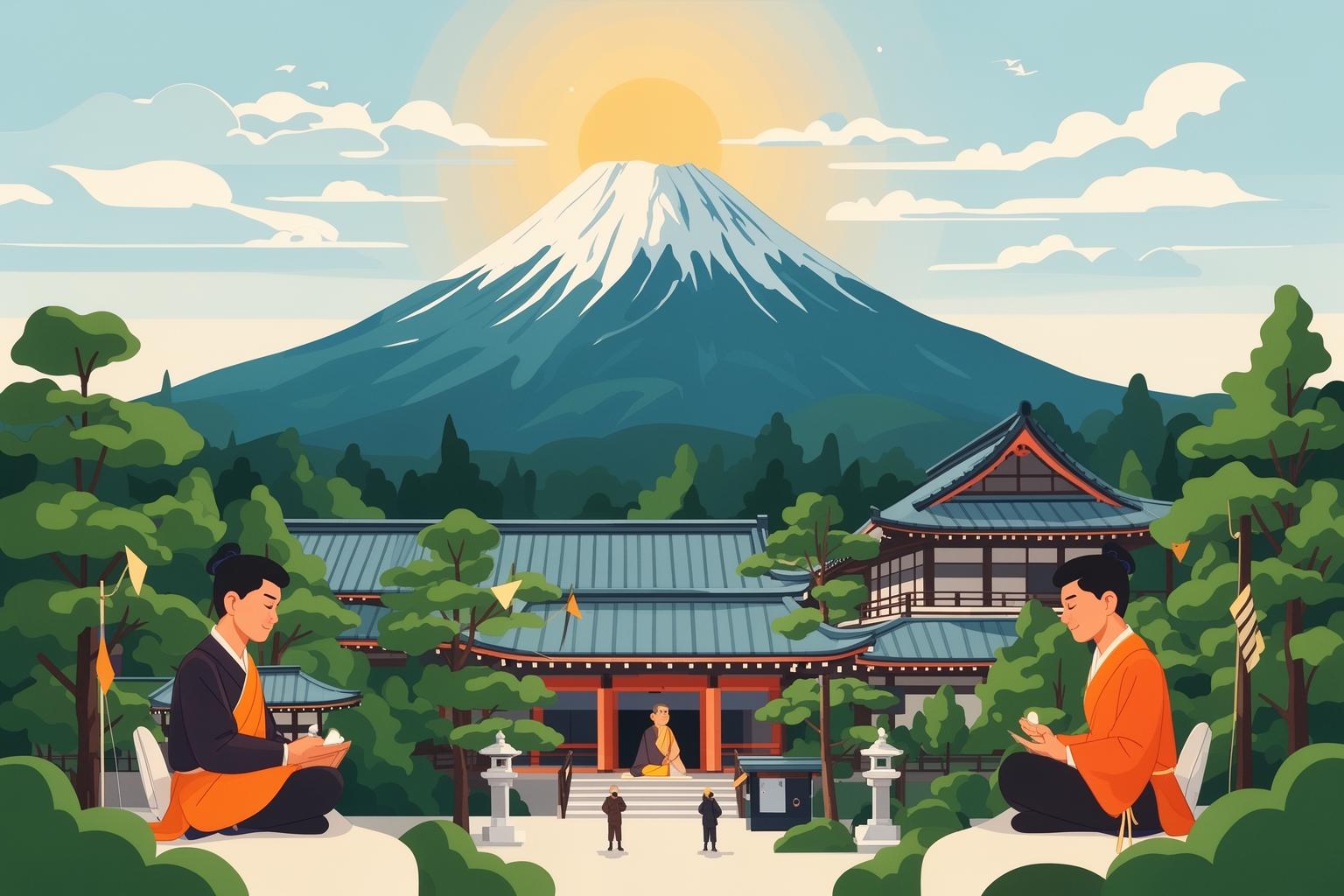
The structured activities of a temple stay—the early morning chanting, the vegetarian meals, the contemplative walks—form the heart of the Koyasan experience. Yet, each of these rituals is interpreted through the distinct cultural perspective of the visitors. Osakans don’t simply experience these customs passively; they engage with them actively, reflect on their meaning, and discover practical significance within the ancient traditions.
Morning Chanting (Otsutome): A Commitment Beyond Mere Experience
The morning prayer service, or otsutome, typically begins before sunrise. The temple’s main hall is cold, the air thick with incense, and the only illumination comes from flickering candles. It is an intensely atmospheric and meditative moment. It’s also incredibly early. You’ll hear some lighthearted complaints about the hour. “Meccha hayai wa,”—It’s crazy early—someone will whisper with a shiver. Still, they show up. They drag themselves out of their warm futons and sit in the chilly hall, prepared to participate. This demonstrates a certain Osakan persistence. Having paid for the experience, they are determined to follow it through and get their full value. It’s a matter of principle. Sleeping in would mean wasting the opportunity and, more importantly, the money spent. But it’s not just about finances. It’s about commitment. They chose to come here and undertake this, and they intend to see it through. There’s a personal responsibility tied to the act. During the ceremony, while some close their eyes in deep meditation, many Osakans remain observant and attentive. They appreciate the ritual as a performance, a work of ancient craftsmanship. They notice the head monk’s chanting skill and the precision of the movements. Their engagement comes from a perspective that honors the technical skill and labor involved. It’s a form of respect grounded in admiration for tangible effort rather than abstract faith alone.
Shojin Ryori: Valuing Both Craft and Cost
Shojin ryori, the traditional vegetarian cuisine served at the temple lodgings, is a vital part of the shukubo experience. It is an artful collection of small, beautiful dishes made from seasonal vegetables, tofu, and other plant-based ingredients. For a food culture like Osaka’s, famously devoted to rich, savory, meat-centric dishes like okonomiyaki and kushikatsu, this can be a challenge. Yet, they approach it with an open mind and a discerning taste. Their appreciation is twofold. First, they enjoy it as food. They comment on the flavors, textures, and surprising richness of a meal made without meat or fish. “This goma-dofu is creamier than cheese!” or “I can’t believe this is all vegetables.” The renowned kuidaore culture isn’t just about indulgence; it’s about a deep, democratic appreciation for good food in all its forms. They possess a sophisticated palate capable of recognizing quality and skill. Second, and perhaps more importantly, they value the craft. An Osakan sees an intricate dish of carved vegetables not just as food, but as the result of countless hours of painstaking labor. “Imagine the time it took to make this,” is a frequent remark. “The knife work is incredible.” This resonates strongly with Osaka’s history as a city of merchants and artisans. They understand what goes into making something well and hold that effort in high regard. The meal is not merely a spiritual exercise in simplicity; it’s a tribute to the dedication and skill of the monks, and the Osakans honor it on that level. They consume not just ingredients, but expertise. For that, they are willing to pay and offer sincere, enthusiastic praise.
Walking Through Okunoin: Engaging with History
The walk to Okunoin, Japan’s largest cemetery, is the spiritual highlight of any Koyasan visit. A two-kilometer path winds through a forest of towering cedar trees, some over a thousand years old. The path is lined with more than 200,000 tombstones and memorials, belonging to figures ranging from feudal lords to humble monks. It is a place of profound, almost overwhelming serenity. What makes it especially interesting from an Osaka viewpoint are the modern corporate memorials standing alongside ancient samurai graves. Monuments honor employees of companies like Panasonic (founded in Osaka), Glico (famous for the Dotonbori running man sign), and even a coffee company, with a memorial shaped like a giant coffee cup. A visitor from Tokyo, accustomed to a strict separation between commercial and sacred, might find this jarring or even tasteless. But an Osakan sees it as natural. To them, these companies are more than faceless corporations; they are foundational pillars of Kansai’s community. They provide livelihoods, identity, and regional pride. It’s perfectly logical that these institutions would want to pay respects and ensure a place for their employees near Kobo Daishi, Shingon Buddhism’s founder. It extends the idea of community beyond life itself. Business, life, and afterlife are parts of one continuous story. There’s also a practical side. These companies have made substantial donations to the temples for this privilege, helping maintain the sacred site for all. It’s a symbiotic relationship. Walking through Okunoin, an Osakan might point to the Panasonic memorial and say, “My uncle worked there for 40 years,” with heartfelt connection. The history here isn’t abstract or academic; it’s personal, commercial, and spiritual, all interwoven. That is a truly Osaka way of seeing the world.
The Return Journey: Bringing the Mountain Back to the City
The journey back down the mountain is just as insightful as the ascent. The experience of Koyasan isn’t meant to be isolated and left behind; rather, it is processed, packaged, and carried back to be incorporated into daily life in a distinctly Osakan manner. The shift from sacred silence to urban clamor happens quickly, and watching how locals navigate this transition reveals much about their outlook on life.
Souvenirs and Omiyage: The Practical Charm
No visit to Japan is complete without purchasing omiyage—souvenirs intended for family, friends, and colleagues at home. This is far from a mere tourist gimmick; it’s a critical social ritual that strengthens relationships. The selection of omiyage reflects the giver’s taste and care. In Koyasan, the souvenir shops near the bus station do brisk business, with Osakans as selective shoppers. They avoid generic keychains or mass-produced souvenirs, seeking instead items that are authentic to the area and offer good value. Popular picks include Koya-dofu (freeze-dried tofu, a regional specialty), goma-dofu (sesame tofu, often sampled during their temple stay), and small bottles of local sake. These are useful, edible gifts that offer a literal taste of the experience. Presenting a colleague with a block of Koya-dofu is a way of sharing the trip’s essence, saying, “I went on a spiritual journey and brought you back this healthy, practical, and delicious tofu.” It’s a gesture that’s both thoughtful and grounded. The act of choosing these gifts is revealing, too. You’ll spot people comparing prices, checking ingredients, and debating which item offers the best kospa. They perform their role as savvy consumers, even amid a spiritual pilgrimage. The gift they bring home is not just a keepsake; it’s a wise purchase, demonstrating their ability to find quality and value even on a sacred mountain. This affirms their social reputation as capable and practical individuals.
Re-entry into Namba: Flipping the Switch Back
As the Nankai Koya Line arrives back at the vast interior of Namba Station, the transformation is swift and complete. The serene, reflective expressions from the mountain shift to focused, determined energy. Phones come alive, and the silence dissolves into a flurry of messages and calls. The quiet of Koyasan is discarded like a coat at the door. Plans are made for the evening. “Who’s hungry? Let’s get kushikatsu and a beer.” The spiritual recharge is over, and it’s time to plunge back into the lively, chaotic, and delicious reality of Osaka life. An outsider might find this abrupt change jarring or even superficial. Does the spiritual experience mean nothing if it can be so quickly set aside? That’s a misconception. For an Osakan, the two states aren’t opposed; they complement each other. The trip to Koyasan isn’t about abandoning their urban identity to become monks. It’s a chance to pause, reset the senses, and find peace so they can return to their usual lives with renewed energy. It’s a form of maintenance—like taking a car in for servicing to improve its performance on the highway. You take your soul to Koyasan so it can better cope with Osaka’s joyful chaos. The spiritual journey serves a practical purpose: it powers the profane. This ability to compartmentalize and switch modes is a survival skill in a city running at full throttle. They don’t try to blend the mountain’s zen into their daily rush; instead, they keep the two separate, allowing each to be fully authentic. The peace of Koyasan is enhanced by Namba’s noise, and Namba’s energy is enriched by the memory of Koyasan’s silence.
What This Trip Reveals About the Osaka Soul
A weekend journey from the heart of Osaka to the summit of Mount Koya is more than just a trip. It serves as a poignant metaphor for the city’s character. It strips away the layers of stereotype—the noise, the focus on money, the food obsession—and uncovers the complex, pragmatic, and deeply human system that keeps it all functioning. It reveals that the opposite of spiritual is not materialism but inauthenticity. And Osakans are anything but that.
The Misconception of “Materialism”
The most enduring cliché about Osaka is that its residents are fixated on money. A trip to Koyasan challenges this notion. The emphasis isn’t on money itself, but on value. Osakans hold a profound respect for things well-crafted, services well-delivered, and experiences genuinely worthwhile. They believe value deserves fair recognition and compensation. This applies equally to a bowl of ramen, a business deal, or a spiritual retreat. When they evaluate a temple stay based on its kospa, they aren’t cheapening the experience; they are honoring it by using the most earnest standard they know. They seek a fair exchange, giving their money and time in return for a sincere, valuable experience—whether that value is found in delicious food, a beautiful garden, or a moment of deep peace. Their practicality does not diminish their capacity for awe; it anchors it in reality. For many, faith is not an abstract idea; it’s something that should bring tangible, positive impact to life. If it doesn’t, then what value does it hold?
Community Over Formality
Osaka’s renowned friendliness is often mistaken for mere casualness. The interactions on a Koyasan trip—conversing with monks, chatting with fellow travelers—demonstrate that it’s much deeper. It embodies a core belief in community and shared experience. While more formal cultures might prioritize silent, individual reflection, Osaka’s approach often involves processing experiences aloud, together. Sharing a remark about the stunning scenery or asking a monk a straightforward question are ways to build temporary community. It’s a way of expressing, “We’re all here in this special place together; let’s connect as people.” Sometimes this is misread as a lack of reverence, but it stems from an impulse that is, in its own way, deeply respectful: the wish to treat everyone as a fellow human being, regardless of their status. They dismantle barriers because they feel more at ease in a world without them.
Living in the Present While Honoring the Past
Finally, the journey highlights Osaka’s distinctive relationship with time. It is a city that lives intensely in the present moment. The next meal, the next laugh, the next deal always take precedence. Yet, the pilgrimage to a 1,200-year-old monastic complex remains a regular and cherished tradition. This shows that Osakans carry their history with them—not as a museum artifact, but as a living, breathing part of the present. The corporate graves in Okunoin symbolize this perfectly. The founder of Panasonic rests in the same forest as a medieval warlord, and this fits seamlessly. The past isn’t a distant land; it’s the neighborhood where you grew up. They don’t elevate their history to be admired from afar. Instead, they invite it into their lives, discuss it openly, and even place company memorials alongside it. It’s a practical, comfortable, ongoing connection.
The journey from Osaka to Koyasan and back is a perfect circle. You leave the city to find peace and return carrying that peace to enrich your urban life. There’s no need to choose between Dotonbori’s vibrant energy and the ancient calm of the cedars. In the Osaka mindset, you can—and should—embrace both. To live here is to understand that the sacred and the everyday are not opposites; they’re simply two stops on the same train line, and a true Osakan knows how to get the best value from the round-trip ticket.