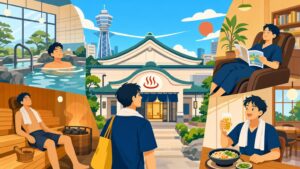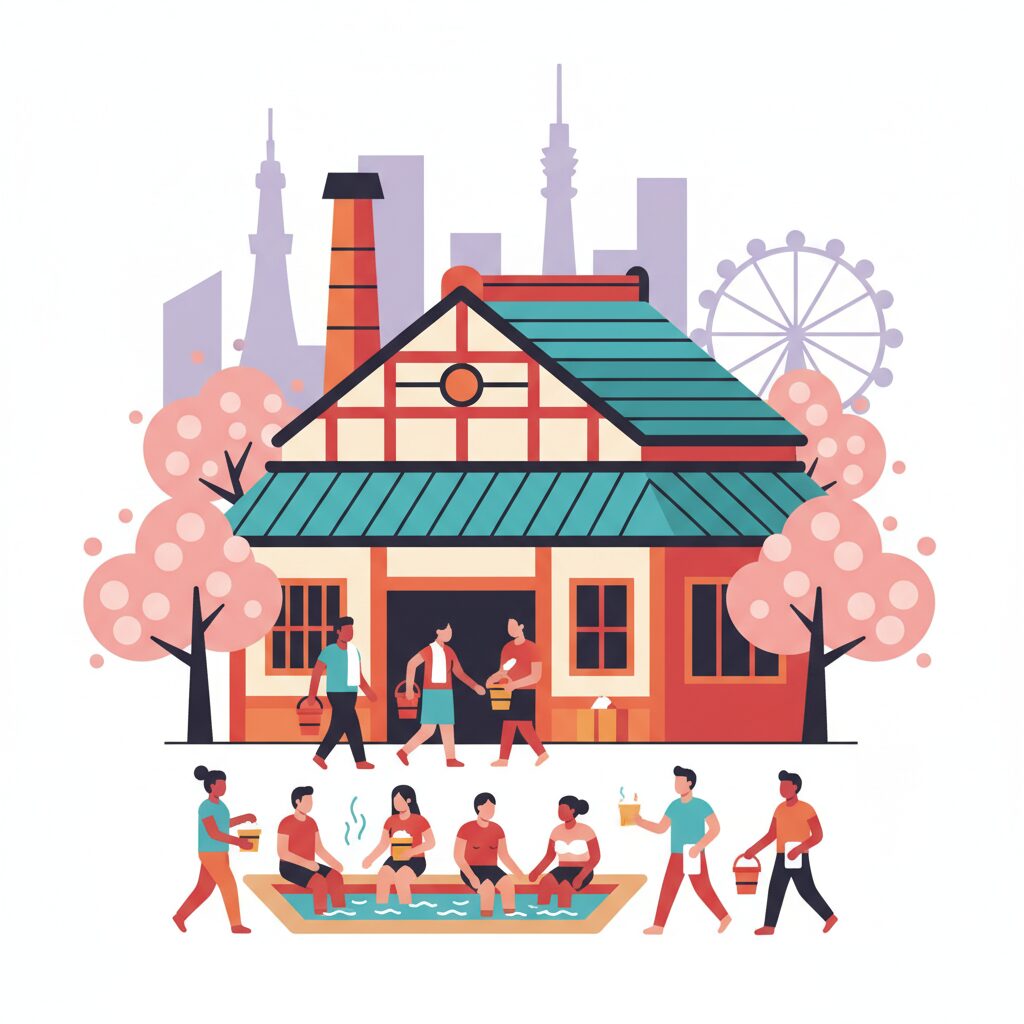
You see them every evening, just as the sun starts to dip and the city lights begin to flicker on. An old man in sandals, a worn-out yukata, walking with a determined shuffle. A young student, hair still wet, pedaling a rusty bicycle. A mother herding her kids down a narrow side street. They all carry the same thing: a small, plastic basket holding a neatly folded towel, a bar of soap, and a bottle of shampoo. They’re not heading to a gym or a fancy spa. They’re heading to the neighborhood sento, the public bathhouse. And if you really want to understand the rhythm of this city, to get under its skin and feel its pulse, you need to follow them. Forget the guidebooks and the glowing recommendations for Dotonbori’s neon chaos. The real, unfiltered soul of Osaka isn’t found under a giant mechanical crab; it’s found in the steam, noise, and shared intimacy of a local bathhouse. This isn’t the serene, meditative experience of a mountain onsen. This is the sento, a place born of necessity that evolved into the city’s communal living room, a place where social status melts away with the sweat of the day. It’s where Osaka washes, gossips, argues, and ultimately, connects. It’s a loud, unpretentious, and deeply human ritual that tells you more about the people here than any museum or landmark ever could. Before we dive in, let’s get our bearings. Here’s a look at a classic Osaka sento, a place that stands as a proud testament to this enduring culture.
To truly integrate this communal bathing experience into your life, consider how a visit to a local sento can become part of your daily routine in Osaka.
More Than a Bath: The Sento as the Neighborhood’s Living Room
To understand why the sento is so deeply ingrained in Osaka’s identity, you need to examine the city’s very foundations. This goes beyond a simple love of hot water. It’s a tale of urban growth, practicality, and a social system shaped by close living conditions. The sento represents a solution, a community hub, and a cultural landmark all combined into one steamy experience. It’s a place where the physical act of bathing is almost secondary to its social role, serving as a stage for the everyday drama of neighborhood life.
The Vanishing Bathtub and the Emergence of the Sento
Stroll through Osaka’s older residential districts—such as Nishinari, Taisho, or the alleys of Tennoji—and you’ll find tightly packed, low-rise wooden houses and small apartment buildings, known as nagaya. Many were built during the rapid post-war reconstruction era, designed with maximum efficiency in mind. Space was limited, and luxuries rare. Having a private bathroom with a proper tub was a far-off dream for many. For generations of Osakans, the reality was a tiny, often cold washing area, sometimes shared among tenants. The sento wasn’t a luxury; it was essential public infrastructure, as crucial as the neighborhood store or post office. This historical background is key because it shapes how people view the sento today. It’s not for special occasions but a routine part of daily life. The cost reflects this—usually about 500 yen, around the price of a coffee. Visiting the sento is like going to the laundromat: a necessary chore. Yet in Osaka, even chores offer chances for social interaction. Inside, you see a vivid cross-section of the community. An elderly woman, bent from years of labor, methodically washing herself on a low stool. A group of factory workers, covered in grease and dust, laughing as they scrub off the day’s grime. A young mother skillfully bathing her restless toddlers. A university student, away from home, seeking warmth and a sense of belonging. This is no place of silent, solitary reflection—it’s a lively, living social ecosystem.
“Hadaka no Tsukiai”: The Great Equalizer
There’s a Japanese phrase that perfectly sums up the sento’s social dynamic: hadaka no tsukiai, meaning “naked communion” or “naked friendship.” Osaka embodies this concept with particular enthusiasm. The moment you shed your clothes and enter the bathing area, your external identity—your job title, wealth, or social status—is left behind in the locker. The CEO of a small tech company and a man who collects cardboard for recycling suddenly stand on equal ground, two naked bodies sharing the same hot water. This fosters a uniquely open and candid atmosphere. Typical Japanese social conventions of politeness and subtlety dissolve along with the clothing. In a Tokyo sento, you might find hushed reverence and quiet contemplation; in Osaka, you’re more likely to get involved in a lively debate about the Hanshin Tigers’ poor defense or receive unsolicited yet good-natured advice on your washing technique. This isn’t rudeness—it’s straightforward, unfiltered acceptance. People are genuinely curious. They’ll ask where you’re from without hesitation and comment on the weather, the news, or the rising price of daikon radish. This conversational style can seem abrupt to outsiders but is rooted in a strong sense of community. In the sento, you’re not a stranger; you’re simply another member of the neighborhood, with your presence noticed, engaged with, and woven into the fabric of the evening’s conversation. This directness is characteristic of Osaka’s spirit, a pragmatism that values honesty over formal etiquette and trusts that true communication occurs when pretenses are dropped.
The Unspoken Rules and Rhythms of the Sento
Despite its casual and lively atmosphere, the sento operates under a strict, though mostly unspoken, set of rules. This isn’t a contradiction; rather, it’s the structure that enables the communal experience to function. These rules aren’t arbitrary traps for newcomers but a code of conduct developed over generations of shared use, all based on one core principle: mutual respect for the shared space and water. Mastering this etiquette is essential to fully experiencing the sento and being accepted into its flow.
Before You Dip: The Art of the Kakeyu
The most important sento rule takes place before you enter the main bath. Without exception, you must wash your body thoroughly first. Locate an open washing station—a low plastic stool before a faucet and showerhead—and sit down. The small, often yellow, plastic basin you’ll find there is the iconic kerorin oke, a piece of sento heritage named after an old pain reliever brand. Use it to scoop water and pour it over your body. Then, lather up and scrub—everything. This is no quick rinse. The aim is to be completely clean before entering the communal tubs. The bathwater is for soaking and healing, not cleaning. Entering the tub with soap still on your skin or without proper washing is the ultimate breach of sento etiquette. It is seen as selfish and disrespectful, as if contaminating a shared resource. Expect disapproving looks, and an elderly regular will likely call you out. After you’re clean, use your kerorin oke to splash hot water over your feet and lower body one last time—a practice called kakeyu—to acclimate yourself to the temperature and as a final cleansing gesture. This ritual serves as the sento’s silent contract: I respect this space, and I respect my fellow bathers. Only then are you prepared for the tubs.
Navigating the Tubs: A Temperature Tour
An Osaka sento rarely features just one large pool. Instead, it is typically a collection of tubs, each with a distinct purpose and often varying, fiercely hot temperatures. The main tub, the shuhin, is usually the largest and hottest, often reaching a scorching 42-44°C (107-111°F). This is the Osaka standard: strong and straightforward. Entering it requires some grit. You’ll hear old men ease in with deep, guttural groans of simultaneous pain and pleasure—the sound of a day’s aches melting away. Specialty baths include the jet bath, or jetto basu, with powerful water streams designed to beat your back and legs into submission. It’s less a gentle massage and more hydro-percussive therapy. Then there’s the notorious denki buro, or electric bath. Yes, really. Two electrified plates are installed in the walls of a small tub, passing a low-voltage current through the water and you. The sensation is a strange tingling with involuntary muscle contractions. The reason? Chronic pain relief, they say. But it also feels like a very Osaka solution—no-nonsense, somewhat odd, and surprisingly effective. The experience is rounded off by the cold plunge pool, the mizuburo. The stark contrast between the intense heat of the main tubs and the icy shock of the cold plunge is key to the ritual, believed to stimulate circulation and revitalize the body. Moving among these stations is a personal journey, a silent dance perfected by every regular over years of practice.
The Tattoo Question in Osaka
Here we reach a vital point of distinction that reveals much about Osaka’s character. Across much of Japan, “No Tattoos” signs are standard at pools, gyms, and onsen, due to tattoos’ historical association with the yakuza, Japan’s organized crime groups, creating a strong and enduring taboo. While this is gradually evolving, the ban remains widely enforced. In Osaka, particularly in traditional neighborhood sento, attitudes differ significantly. Many sento explicitly welcome tattoos or simply have no rules against them. This isn’t because Osaka is a refuge for gangsters; rather, it reflects the city’s practical, working-class roots. Sento owners run businesses for their local communities. In areas where manual laborers, construction workers, and tradespeople predominate, tattoos are often personal expression rather than criminal affiliation. To exclude a large portion of regular customers over aesthetic preferences would, in Osaka’s mindset, be bad business. It’s a live-and-let-live approach. As long as you abide by the bathing rules and don’t cause trouble, what’s on your skin is your own concern. This pragmatic, non-judgmental stance is refreshing and marks a key difference from the more image-conscious and rule-bound culture often found in Tokyo.
The Sento Ecosystem: Beyond the Bath
The sento experience doesn’t end once you step out of the water. In fact, some of the most meaningful community interactions occur in the space between the bath and the outside world. The changing room, or datsuijo, along with the small lobby area, serve as extensions of the bath itself—a place to cool off, rehydrate, and socialize in a relaxed, post-soak state of contentment. This is where the sento firmly establishes its role as the neighborhood’s central hub.
The Post-Bath Ritual: Milk and Conversation
After thoroughly drying off (another important rule: don’t drip water all over the changing room floor!), the post-bath ritual begins. The datsuijo buzzes with activity. Older patrons meticulously comb their hair in front of large, steamy mirrors. Men weigh themselves on enormous, vintage, coin-operated scales that look like they belong in a 1950s doctor’s office. People lounge in rattan chairs, fanning themselves with an uchiwa fan, and reading the evening sports paper. Central to this scene is the refrigerator, stocked with the revered post-sento drink: milk. Not just plain milk, necessarily. The classics are coffee milk (kōhī gyūnyū) and fruit milk (furūtsu gyūnyū), served in iconic small glass bottles sealed with a paper cap. The universally accepted way to drink it is standing, with one hand on your hip, downing the entire bottle in one go. It’s a tradition that’s both nostalgic and deeply satisfying, the cool, sweet liquid a perfect remedy for the heat of the baths. This is the moment to linger. Conversations started in the tub continue here. Those who were quiet in the water begin to open up. Neighborhood news is exchanged, advice is shared, and plans are made. It’s a low-pressure, comfortable social space, lubricated by inexpensive milk and a shared sense of well-being.
The Bandai: The Neighborhood’s Gatekeeper
Overseeing the whole operation is the bandai-san, the person seated at the elevated desk near the entrance, who collects the money and acts as the sento’s heart and soul. In older sento, this was traditionally a high platform with views into both the men’s and women’s changing rooms—a design born of efficiency, not voyeurism. Nowadays, it’s more commonly a modern front desk. But the role remains unchanged. The bandai-san, often the owner, is much more than a cashier. They are the neighborhood’s unofficial concierge, historian, and social worker. They know every regular by name. They know Mrs. Tanaka’s grandson just passed his university exams. They know Mr. Sato has been struggling with his back again. They notice when an elderly customer hasn’t appeared for their daily bath in several days and may ask another regular to check in on them. They keep spare apartment keys for trusted patrons prone to locking themselves out. This business model is entirely built on human relationships—a concept that feels increasingly rare today. The trust and familiarity nurtured by the bandai-san elevate the sento from a simple public utility to a true community institution. It’s a prime example of how Osaka values personal connections and mutual support, especially at the neighborhood level.
Osaka vs. Tokyo: A Tale of Two Baths
Comparing the sento culture in Osaka and Tokyo is like contrasting two distinct philosophies of urban living. Both cities have public baths, but the experiences they offer, the atmospheres they foster, and their roles in daily life can be vastly different. These differences highlight the fundamental cultural divide between Japan’s two largest metropolises—one defined by style, order, and personal space, and the other by pragmatism, boisterousness, and communal energy.
Design and Atmosphere
In recent years, Tokyo has witnessed a rise in what could be called “designer sento.” These are often older bathhouses renovated by young architects into stylish, minimalist spaces. They may feature modern art installations, sleek concrete walls, and soft ambient lighting. The lobby might serve craft beer or organic juice, and the background music is more likely curated indie pop than the loud broadcast of a baseball game. The vibe is cool, clean, and controlled, appealing to a younger generation seeking a refined, almost meditative bathing experience. It’s a place to retreat from the city and be alone with one’s thoughts. Conversely, the classic Osaka sento is a celebration of function over form. It is often a bit worn—tiles cracked, paint peeling—but immaculately clean and exuding a strong, unpretentious charm. The centerpiece is frequently a grand tiled mural of Mount Fuji, a national icon, or a local scene featuring carp or other symbols of good fortune. The lighting is bright, almost harsh. The atmosphere is anything but meditative; it invites engagement with the city rather than escape from it. It prioritizes providing a dependable, comfortable, and lively space for the community to gather. It is a living museum, not a gallery.
The Sound of the Sento
The most notable difference is the soundscape. A Tokyo sento is often a place of quiet reverence for water. The dominant sounds are the gentle lapping of the bath, the trickle of faucets, soft footsteps on wet tile, and occasional polite sighs of contentment. Conversation is rare and, when it occurs, conducted in subdued, respectful tones. It is an environment designed for introspection. In contrast, stepping into an Osaka sento is like entering a different sonic realm—a cacophony. There is the constant, loud chatter of overlapping conversations, the percussive clatter of plastic stools on the floor, children splashing and shouting with joy, and elderly men groaning, grunting, and clearing their throats with little self-consciousness. A television in the changing room is almost always on, volume turned high, broadcasting a variety show or a Hanshin Tigers game that provides a running commentary for everyone present. This noise is not seen as disruptive; it is the norm. Osakans embrace noise and thrive in it. The sound of the sento is the sound of life lived openly and unfiltered. It reflects a culture that values expressive communication and communal participation over quiet, solitary reflection.
How to Embrace the Sento Like a Local
For a foreigner living in Osaka, the neighborhood sento can feel like an intimidating place—a closed world filled with complex rules and customs. However, it’s also one of the most rewarding and authentic experiences you can enjoy. Overcoming that initial sense of uncertainty is easier than you might expect. Approaching it with the right attitude and a few practical tips will not only leave you clean but also provide a genuine connection to your new home.
Finding Your Spot
Your first instinct might be to seek out the “best” or “most famous” sento. Resist this urge. The true charm lies in your neighborhood sento—the one on the corner with the tall chimney, a faded noren curtain hanging above the entrance, and a cluster of old bicycles parked outside. That’s the place. Look for the sign ゆ (yu, meaning hot water), often glowing softly in a simple neon light. Head there on a Tuesday or Wednesday evening, around 7 p.m. This is the prime time when you’ll see the sento at its liveliest, bustling with regular visitors. Don’t worry about not speaking perfect Japanese; a smile and a nod go a long way.
The Essential Kit
Although most sento rent towels and sell single-use packets of soap and shampoo, the mark of a local is arriving prepared. Bring a small basket or waterproof bag. Inside, pack a small towel (a tenugui works perfectly) for washing your body, a larger towel for drying off, your preferred soap or body wash, shampoo, and conditioner. Some regulars carry elaborate kits with special razors, face creams, and combs, but start with the basics. Having your own kit signals that you’re not a tourist—you’re there for a proper bath.
Mind Your Manners, But Don’t Be Shy
First and foremost, master the basic etiquette. Wash thoroughly before entering the tubs. Keep your small washing towel out of the bathwater (most people place it on their head or on the side of the tub). Try to dry off as much as possible before returning to the changing room. These simple gestures show respect and will quickly earn you acceptance. Beyond the rules, the most important thing is to be open. Don’t hide in a corner. If an elderly man starts speaking to you rapidly in Osaka-ben, don’t panic. He’s probably just asking where you’re from or commenting that the water is especially hot today. A simple, friendly reply—even if your Japanese is limited—is all that’s needed. Osakans are naturally curious and generally delighted to see a foreigner embracing a local custom. Your awkwardness will come across as endearing, not incompetent. The directness that might feel harsh elsewhere is, in the sento, a warm welcome—an invitation to let your guard down and become part of the lively, steamy, wonderful mess.
The Future of a Fading Tradition
It would be misleading to describe the sento without recognizing the truth: it is a fading tradition. Throughout Japan, hundreds of sento close each year. Modern apartments all include private bathrooms. Younger generations, with busier lives and different social habits, lack the same bond with public bathing. Many aging owners have no successors for their family businesses. Osaka is not exempt from these patterns. Yet, the sento here appears to persist with a unique resilience. In numerous older, close-knit neighborhoods of the city, they remain stubbornly indispensable. They are more than just a bathing spot for the elderly who may live alone; they serve as a crucial daily checkpoint, a social safety net, and a strong defense against the isolation common in modern urban life. They stand as a barrier to anonymity. In an increasingly digital and disconnected world, the sento provides something refreshingly simple: a physical place for genuine, face-to-face human interaction. So, the next time you see that old man with his plastic basket, you’ll understand. He’s not just coming to wash. He’s going to his other home. He’s stopping by to connect with his community. He’s soaking in waters that hold the stories and secrets of his neighborhood. He’s taking part in a ritual that captures the very spirit of Osaka—a city that, despite its concrete and commerce, still recognizes the deep value of sharing a hot bath.