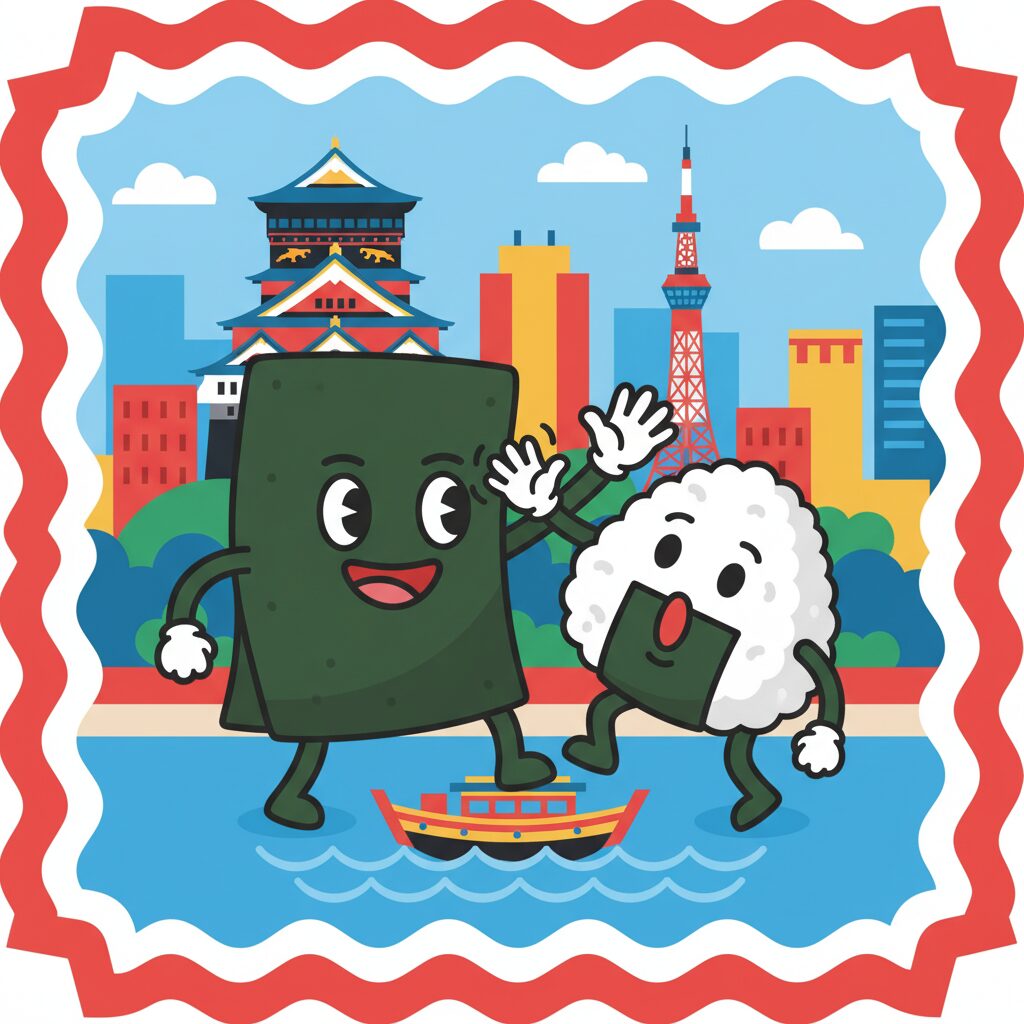
The first time it happened, I was utterly lost. I was in a small, cramped electronics shop in Nipponbashi, looking for a specific type of camera battery. The shop owner, a wiry man in his sixties with eyes that twinkled with mischief, picked up the battery, looked me dead in the eye, and said with a completely straight face, “Three million yen.” I froze. My Japanese was decent, but not that good. Had I misheard? Did he say sanzen (three thousand) and I heard sanbyakuman (three million)? I started to stammer, trying to clarify, my mind racing through currency conversions and the sudden, horrifying possibility that this was some kind of rare, plutonium-powered battery for spies. He just stared at me, his straight face unwavering. A local customer next to me, a young guy in a band t-shirt, didn’t miss a beat. He turned to the owner and said, “So cheap! I’ll take two! Can I pay for them over the next 80 years?” The owner finally broke, letting out a wheezing laugh. He slapped the counter. “Nande ya nen!” he roared, a phrase I’d later learn was the lifeblood of this city. “It’s 3,000 yen, you fool!” The two of them shared a laugh, and I just stood there, a bewildered Canadian holding a very normal, non-nuclear battery, feeling like I’d walked into the middle of a comedy routine without a script. That was my baptism by fire into the world of Osaka’s conversational dance, the art of Nori-Tsukkomi. This isn’t just a quirk; it’s the city’s operating system. In Tokyo, a conversation is a straight line, an efficient transfer of information. In Osaka, it’s a looping, soaring, diving roller coaster, and your price of admission is a willingness to play along. Understanding this rhythm isn’t just a fun cultural tidbit; it’s essential for anyone who wants to actually live here, to connect with its people, and to understand why a simple trip to buy batteries can become a moment of unexpected, collaborative performance art.
To fully immerse yourself in this unique culture, consider staying in the heart of the action by exploring the upcoming luxury hotels in Osaka set to redefine the city’s skyline.
The Anatomy of a Joke: Breaking Down the Boke, Nori, and Tsukkomi
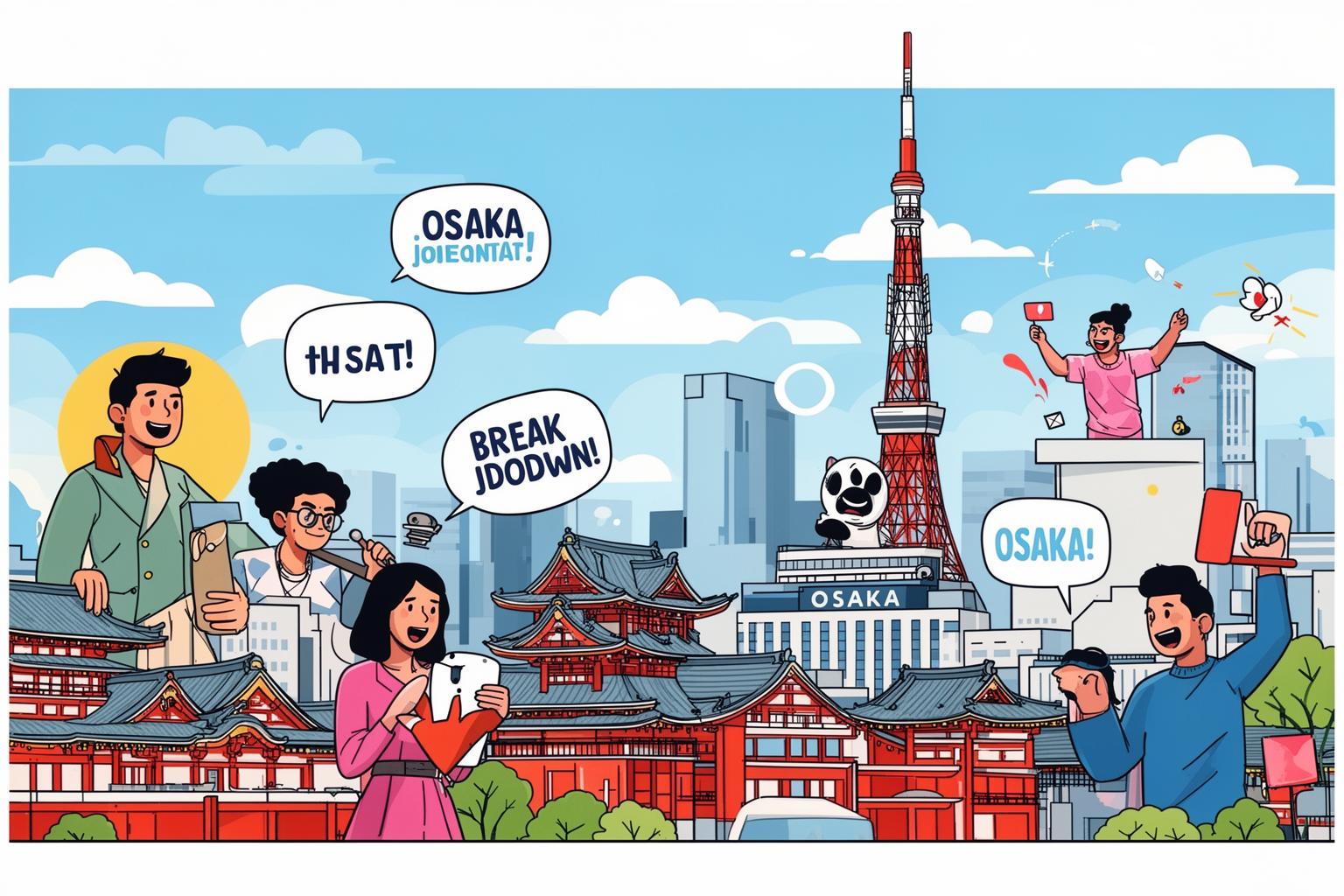
To navigate Osaka’s social landscape, you must grasp the three essential elements of its comedic world: the boke, the nori, and the tsukkomi. This isn’t some obscure theatrical idea; it’s the very fabric of everyday conversation, from the fish market to corporate boardrooms. It’s a quick three-act play that can unfold in under ten seconds, and mastering its rhythm is the gateway to the city’s soul. This structure stems from Manzai, the traditional Japanese stand-up comedy style that to Osaka is what deep-dish pizza is to Chicago—an iconic and defining cultural export. In Manzai, a pair performs: one plays the boke (the fool, the comic), and the other, the tsukkomi (the straight man, the rebuker). But in Osaka’s streets, these roles are fluid, passed around friends, shopkeepers, and strangers like a lively conversational hot potato.
The ‘Boke’ – The Seed of Humor
Everything begins with the boke. This is the first act of absurdity: a deliberate mistake, a playful fib, or an exaggerated claim. The shopkeeper telling me my battery cost three million yen was classic boke. It’s a verbal curveball thrown into an otherwise plain exchange. It’s an invitation. A true Osakan sees straightforward, logical talk as a missed opportunity. Why state the obvious when you can create a moment of shared fantasy? The boke isn’t about genuine ignorance; it’s a clever, deliberate move to bring fun to the everyday. It’s a test to see if you’re tuned in.
You’ll encounter it everywhere. Compliment someone’s new haircut, and they might respond deadpan, “Thanks, I’m trying to look like a pineapple.” Visit a friend’s tiny apartment, and they might grandly say, “Welcome to my castle! The ballroom’s on the left.” An elderly lady at the checkout might fumble for change and joke, “Put it on my tab; the Prime Minister will pay you back later.” Each is the seed of a joke, a setup waiting for a reply. The biggest mistake outsiders make is taking the boke literally. Correcting it—“No, that doesn’t look like a pineapple,” or “This isn’t a castle”—is like stopping a dance mid-step. You’ve broken the rhythm. You’ve failed the test.
The ‘Nori’ – Surfing the Absurdity
This is where most outsiders falter. The nori means playing along. The word itself means “to get on” or “to ride,” and that’s what you’re doing: you’re hopping on the wave of nonsense the boke creates and riding it as far as you can. It’s a shared act of world-building. The young man at the electronics shop was a master of nori. He didn’t correct the shopkeeper; he escalated the joke. A three-million-yen battery? Not only did he accept it, he asked for two and proposed an absurd payment plan. He validated and amplified the joke.
This shows that you understand. It signals you’re not a rigid, joyless outsider. You’re part of the in-group, someone who realizes the conversation has shifted from information to entertainment. If your friend says their haircut looks like a pineapple, a nori reply might be, “It’s amazing! I’m craving a piña colada just looking at you.” To the friend with the “castle,” you say, “My apologies, Your Majesty. I should have brought a gift for the throne room.” You accept the fiction and add your own twist. This is where real bonds form. It’s pure play—two or more adults agreeing to be silly together—and in Osaka, this is a deep expression of social trust. It can feel odd at first, like lying, but you’re not lying. You’re improvising, showing that you value connection over dull, literal reality.
The ‘Tsukkomi’ – The Punchline That Brings It Home
But the wave of absurdity can’t last forever. It needs to crash onshore with a satisfying laugh. That’s the tsukkomi. The tsukkomi is the sharp, witty correction that pops the bubble of fantasy and brings everyone back to reality. It’s the punchline. The shopkeeper’s shout of “Nande ya nen! It’s 3,000 yen, you fool!” was the tsukkomi. It releases the comedic tension built by the boke and nori. Usually quick, a bit loud, and delivered with mock exasperation, it punctuates the joke.
The word tsukkomi comes from tsukkomu, meaning “to thrust into.” That’s what it feels like—a sharp jab that resets the conversation. Importantly, the tsukkomi isn’t mean-spirited. It’s the final act of the shared joke. The person giving the tsukkomi is often the same one who delivered the boke, as the shopkeeper was, or a third party chiming in on the absurdity. Timing is key. A well-timed tsukkomi garners the biggest laugh. It acknowledges that, yes, this was all a game—and a fun one at that. It’s often accompanied by a light tap on the shoulder or arm, mimicking the swat Manzai comedians deliver with paper fans. Learning to deliver a simple “Nande ya nen!” (Why the heck?!) or “Akan ya ro!” (No way!) at the right moment is like mastering Osaka’s secret handshake. It declares that you’re not just a resident—you’re engaged in the game.
Nori-Tsukkomi in the Wild: A Field Guide to Osaka’s Social Arenas
Grasping the concept of Nori-Tsukkomi is one thing; identifying and engaging with it amidst the chaotic backdrop of everyday life in Osaka is quite another. This isn’t merely a stage act. It’s the default communication style in the city’s most iconic environments—a social lubricant that eases interactions, forges relationships, and transforms the ordinary into something memorable. From the lively covered shopping arcades to the unexpectedly cheerful office settings, the rhythm of the joke resonates everywhere. Here’s where it thrives and how it unfolds.
At the Shotengai (Shopping Arcade)
The shotengai, a covered shopping street, is the natural stage for Osakan banter—a blend of commerce and comedy. Visit Tenjinbashisuji, Japan’s longest shotengai, and you’re not simply shopping; you’re entering a playful gauntlet. The vegetable seller, a stout woman with a voice that could cut through steel, might hold up a misshapen daikon radish and declare, “Look at this! A perfect leg! You could be a model with a leg like this!” That’s your cue. Don’t ask the price—play along instead. “You think so? Maybe I should put a sock on it. Does it come in a pair?” She’ll laugh heartily, then deliver the tsukkomi: “Don’t be stupid, it’s 150 yen! Are you buying or not?” In that brief exchange, you shift from a faceless customer to a temporary comedy partner, sharing a moment.
Step into a clothing shop run by a typical Osaka obachan (auntie), and the interaction intensifies. Try on a jacket with a bold pattern. She won’t say, “That looks nice on you.” Instead, she’ll say, “Wow! A movie star! The paparazzi will follow you right out of here!” This is a test. If you flush and say, “No, no, it’s too much for me,” the game ends. But if you embrace the nori and reply, “I know, it’s terrible. I can’t go anywhere without signing autographs. Do you have sunglasses to match this?” you win her over. The transaction becomes less about the jacket and more about a shared moment of ridiculousness. That’s why shopping in Osaka feels so unique. It’s not an anonymous, efficient process; it’s loud, personal, and often hilarious.
In the Office: The Risky Business of Workplace Banter
Here, the dynamic gets subtler and potentially tricky for newcomers. The playful spirit of Osaka often infiltrates the workplace, but it follows a different set of rules. A Tokyo office usually hums quietly with formal professionalism. Many Osaka offices, especially smaller local firms, are instead punctuated by laughter. Your boss might pass by, see you focused on your screen, and toss out a boke: “Oi, stop watching cat videos and get back to work!” They know you’re working—it’s a playful jab, an invitation to banter.
A safe nori comeback might be, “I can’t, this one’s about to catch the laser pointer! Very important research!” The boss fires back the tsukkomi: “Aho ka! (Are you an idiot!) Finish that report before I swap your monitor for an abacus!” The mood lightens, building camaraderie—a contrast to the more hierarchical style some might expect. However, caution is advised. This style isn’t universal. Larger multinational firms or traditional industries may retain a more Tokyo-like formality. For outsiders, the advice is to observe first. Notice how colleagues interact with each other and management. Avoid being the first to initiate Nori-Tsukkomi with your boss. But when invited, recognizing it and responding—even with a simple laugh—goes a long way in showing you’re a team player in Osaka’s truest sense.
With Friends at an Izakaya
At the izakaya, a Japanese-style pub, Nori-Tsukkomi training reaches its peak. With friends, fueled by beer and sake, filters drop and comedic instincts run wild. This banter is fastest, most personal, and most revealing—a sign of deep friendship and trust. If you clumsily spill some drink, a Tokyo friend might politely hand you a napkin to minimize embarrassment. An Osaka friend will seize the moment. The boke: “Oh, marking your territory like a dog? Good boy!” The nori erupts from the table: “Quick, fetch him a newspaper!” You, the spiller, are expected to join in. Getting defensive is the worst move. Instead, self-deprecating nori wins: “Sorry, I get wild when I’m off the leash.” The tsukkomi follows from anyone: “Just clean it up, you mess!” ending in laughter all around, including you. This teasing is never malicious; it’s the opposite. It transforms a minor embarrassment into a shared laugh, a way of saying, “We’re such good friends we can tease each other like this, all in affection.” To be teased in Osaka is to be loved.
The Tokyo-Osaka Comedy Divide: Why the Jokes Don’t Always Land
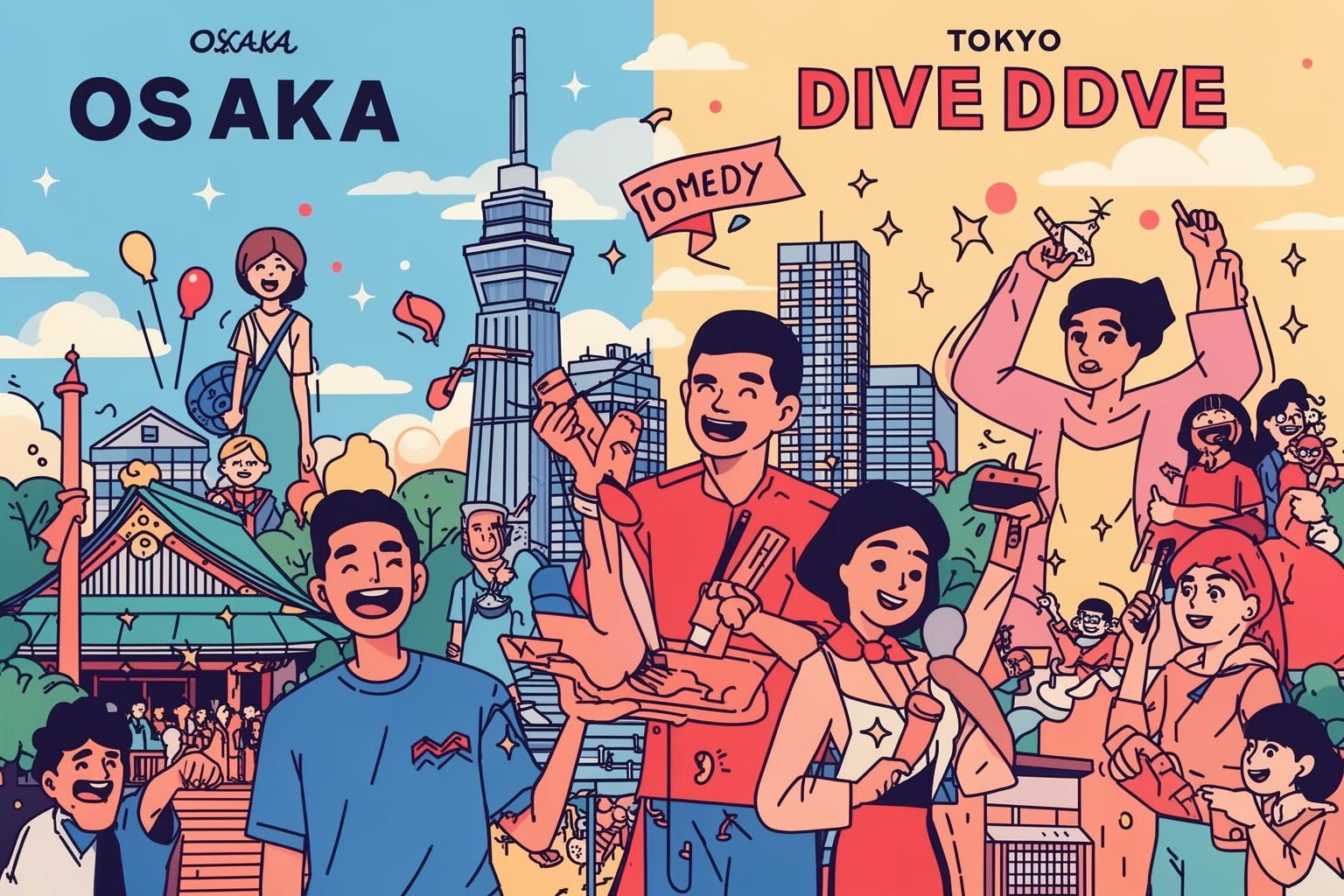
To truly understand the core of Osaka’s social fabric, you must view it in contrast to its great rival, Tokyo. The difference in communication styles between these two megacities is as pronounced as the contrast between a raucous street festival and a quiet meditation retreat. For foreigners living in Japan, moving between the two can feel like entering a different country, where the basic rules of social interaction have been completely rewritten. What is considered polite in Tokyo may come across as cold in Osaka, while what is seen as friendly in Osaka can be perceived as abrasive in Tokyo. This isn’t about one being better than the other; it reflects a deep-rooted cultural divergence in the very purpose of conversation.
Tokyo’s Subtle Wit vs. Osaka’s Bold Performance
Humor in Tokyo is often a private, internal experience. It’s subtle, dry, and often relies on clever wordplay (dajare) or quiet, ironic observations. A Tokyoite might notice something funny and respond with a small, knowing smile or a witty remark to a close friend. The aim is usually to avoid disrupting group harmony (wa) or causing a scene. The emphasis is on being considerate, reading the air (kuuki wo yomu), and maintaining polished, public decorum. Conversations primarily serve to exchange information or sentiments efficiently and respectfully, with minimal performance.
Osaka, on the other hand, rejects this philosophy entirely. Conversation is a performance—external, collaborative, and loud. The goal extends beyond exchanging information to creating an entertaining experience for everyone involved. The concept of kuuki wo yomu still exists but is interpreted differently. In Osaka, “reading the air” often means spotting the perfect moment to throw in a boke and prompt a laugh. Silence is not golden; it’s a void waiting to be filled with a punchline. Take a common example: a man on the train platform wearing a t-shirt with a strange English phrase like “Happy Goat Explosion.” In Tokyo, people might notice it, exchange a subtle glance with a friend, and silently think about how odd it is. In Osaka, a stranger might lean over to their friend, loud enough for the man to hear, and say, “I wonder what the goat did to deserve that.” It’s not an insult but an open invitation—a social icebreaker disguised as a joke. The expectation is that the interaction will dissolve into shared laughter, breaking the monotony of the commute.
The Misunderstanding: Is Osaka Rude? Is Tokyo Cold?
These contrasting styles pose a minefield of potential misunderstandings for both foreigners and Japanese. An Osakan moving to Tokyo may feel stifled, interpreting the capital’s reserve as coldness or unfriendliness. “Why is everyone so quiet? Don’t they like to talk? Are they upset?” The absence of constant banter can feel like social rejection. Attempts at playful teasing may be met with confused looks or polite, conversation-ending smiles, leading to the perception that Tokyoites are uptight and humorless.
Conversely, a Tokyoite moving to Osaka—or a foreigner accustomed to Tokyo’s ways—may feel socially overwhelmed. The rapid-fire questions, playful insults from shopkeepers, and the expectation to always be “on” can feel intrusive, loud, and even rude. “Why is that stranger talking to me? Why did that lady comment on my clothes? Why must everything be a joke?” Osaka’s style of bonding through teasing can be mistaken for genuine criticism or aggression without an understanding of its comedic intent. What an Osakan regards as a warm, friendly gesture—such as a restaurant owner saying, “You’re eating a lot! Are you planning to hibernate?”—might be perceived as a humiliating insult by someone unfamiliar with the local tone. The truth is, neither city is inherently rude or cold; they simply speak different social languages. Tokyo demonstrates respect through polite distance and non-interference, while Osaka shows warmth through playful interaction and shared laughter.
Your Survival Guide: How to Participate (or at Least Not Get Confused)
Alright, so you’re living in Osaka, surrounded by this chaotic, never-ending comedy show. The pressure to perform can feel overwhelming, and the fear of saying the wrong thing is real. But here’s the secret: nobody expects you to become a Manzai expert overnight. The goal isn’t to be the funniest person in the room, but simply to show you understand the game. Navigating this world relies less on wit and more on attitude. With a few key strategies, you can go from a puzzled spectator to an engaged, appreciated participant in Osaka’s daily theatrical life.
Rule #1: Don’t Take Anything Literally
This is the golden rule, the prime directive, the absolute foundation of your survival. If you remember nothing else, remember this. The moment you take the banter at face value, you’ve already lost. The shopkeeper saying your purchase will cost a fortune isn’t trying to rip you off. The coworker joking that your idea will bankrupt the company isn’t truly criticizing you. The friend calling you a tired old ghost isn’t insulting your looks. These are all boke — playful setups. They’re invitations, the first pitch in a game of conversational catch. Reacting seriously, defensively, or with offense is like dropping the ball and leaving the field. It kills the fun instantly and marks you as someone who doesn’t understand. The right first move is always to assume it’s a joke. Smile, laugh, and recognize the invitation for what it is.
The Beginner’s Move: The ‘Nori’ Smile and Laugh
You don’t have the perfect comeback. Your Japanese isn’t quick enough to craft a witty reply. That’s okay. The easiest, safest, and most effective way to join in is simply to laugh. A warm, genuine laugh is a universal signal that you get the humor and appreciate the intent. It’s a passive form of nori. You’re acknowledging the boke and enjoying the act without needing to step up yourself. When the obachan says you look like a Hollywood star, a big smile and a chuckle are far better than a puzzled stare. It says, “I’m with you. That was funny.” This simple response keeps the positive energy flowing and shows you’re a good sport. You’ve played your part perfectly without saying a word.
Leveling Up: The Universal Key, ‘Nande Ya Nen!’
Ready to take it up a notch? There’s one phrase that serves as a master key to the heart of Osaka talk: 「なんでやねん!」(Nande ya nen!). It’s the city’s unofficial motto. It literally means “Why?” or “What the heck?” in the lively Osaka dialect, but it’s so much more than that. It’s the quintessential tsukkomi — the perfect reply to nearly any boke you’ll meet. When the bartender says the glass of water costs 10,000 yen, you can laugh and say, “Nande ya nen!” When your friend points at a pigeon and calls it a majestic eagle, just grin and say, “Nande ya nen!” The key is in the delivery — say it with a smile, a tone of playful disbelief, never genuine anger or confusion. Using this phrase well is a big step forward. It shows you’ve shifted from passive appreciation to active involvement. It will almost always be met with delighted laughter and immediately mark you as someone truly embracing the local culture.
The Advanced Technique: Crafting Your Own Banter
Once you’re comfortable recognizing the rhythm and throwing out a timely Nande ya nen!, you can start trying your own nori. The easiest way is simple agreement and exaggeration — basically saying “Yes, and…” to the ridiculous setup. If a colleague complains, “Ah, this work is killing me,” instead of sympathy, try a nori response: “You’re right, you look awful. Should I call an ambulance or a priest?” This escalates the joke and invites a tsukkomi from them or someone else. Pay attention to how locals do it — the rhythm, timing, and way they build on each other’s silliness. Don’t be afraid to try and fail. A clumsy attempt at banter can be just as endearing as a perfect one because it shows you’re making an effort to connect on their terms. The goal is participation, not perfection.
Beyond the Laughs: What Nori-Tsukkomi Reveals About the Osaka Soul
It might be easy to write off this ongoing banter as mere frivolity, a regional trait that simply adds a bit of liveliness to daily life. However, doing so would completely overlook its true significance. The culture of Nori-Tsukkomi is more than just a way of communicating; it offers a glimpse into Osaka’s history, economy, and core values. It is a social tool refined over centuries to facilitate commerce, foster community, and humanize life in a crowded, competitive city. Grasping the why behind the humor unveils the very essence of this distinctive metropolis and explains why its residents think, behave, and connect as they do.
A History of Merchants and Entertainment
Unlike Kyoto, the seat of imperial power, or Tokyo, the governmental center, Osaka’s identity was shaped in its commercial marketplace. For generations, it was known as tenka no daidokoro, or the “nation’s kitchen,” the vibrant trading hub for rice and goods from across Japan. In this commerce-driven city, quickly building rapport, negotiating with a smile, and turning strangers into loyal customers were crucial survival skills. Humor became an essential tool—a well-timed joke could break the ice, ease tensions during deals, and forge memorable, personal bonds that encouraged repeat business. This mercantile spirit remains embedded in every shopkeeper in every shotengai. The banter serves not merely as amusement but as a long-established business strategy.
Moreover, Osaka stands as the undisputed capital of Japanese comedy. It is home to Yoshimoto Kogyo, the entertainment powerhouse that has shaped modern Japanese stand-up for over a century. Children grow up watching Manzai comedians on television daily, absorbing the rhythm of boke and tsukkomi from an early age. Humor is woven into the cultural fabric they breathe. Being funny, or at least appreciating and participating in humor, is a highly prized social skill—it is not an obscure pastime but a mainstream cultural norm.
Valuing “Oishii” (Delicious) Moments
Across most of Japan, oishii simply means “delicious” and is used predominantly for food. In Osaka, its meaning broadens. A conversation can be oishii. A situation can be oishii. Here, it signifies something “juicy,” “perfect,” or “rich with opportunity.” When someone delivers a great boke, they create an oishii moment for another to unleash a sharp tsukkomi. Awkward silences or missed punchlines are the opposite—they represent squandered chances. This reflects a profound cultural value: Osakans believe social exchanges should be flavorful and satisfying, like a delicious serving of takoyaki or okonomiyaki. They are constantly attuned to spotting these oishii moments, eager to transform ordinary interactions into something memorable and entertaining. Life is too brief for bland conversations. This drive to make every moment oishii fuels the city’s unrelenting energy.
The Essence of Connection
At its core, Nori-Tsukkomi is a potent method for creating instant intimacy. In a society that often feels formal and hierarchical, this comedic exchange cuts through layers of polite distance. By participating in this playful structure, two people—even strangers—send a clear message: “There’s no need for ceremony; we can drop formalities and simply be people together. We are on the same side.” It provides a quick, effective way to form a temporary community, whether with the person next to you at a ramen counter or the ticket agent at a train station. This is the real reason Osaka is often described as “friendly” and “warm.” That warmth isn’t a passive trait but an active, performative, and continuous process of reaching out, inviting others to join in, and turning the shared city space into a stage for collective enjoyment. Kindness here is expressed not through quiet respect but through shared laughter.
Conclusion: Embracing the Chaos
Living in Osaka is like hearing a piece of free-form jazz for the first time. At the start, it may come across as chaotic noise. The rhythms are unpredictable, the rules ambiguous, and the continuous improvisation confusing. You search for the simple, steady beat you’re accustomed to, but it’s nowhere to be found. However, if you stop resisting and begin to listen, the patterns emerge. You sense the call and response. You feel the shared energy flowing between the performers, and you realize this isn’t chaos at all; it’s a richer, more vibrant form of communication. The boke is the opening riff, the nori is the improvisation building on it, and the tsukkomi is the cymbal crash that brings everything to a satisfying close.
For any foreigner living here, the aim isn’t to become a star soloist overnight. It’s simply learning to tap your foot along with the music. It’s recognizing the performance around you and showing appreciation, even if only with a smile. It’s understanding that when the world feels momentarily crazy—when prices soar, when poodles turn into bears, when a basic haircut becomes a celebrity event—it’s a sign you’re being welcomed into the fold. Once you stop taking things literally and begin to see it as a game, the city changes. Annoying encounters turn into amusing stories. Routine errands become chances for connection. The daily grind becomes a steady source of surprise and laughter. You’ve cracked the code, unlocking a deeper, warmer, and infinitely more entertaining side of life in Japan. You’ll know you’ve truly arrived the day a shopkeeper dishes out a ridiculous boke, and without missing a beat, you fire back with a perfect, heartfelt “Nande ya nen!”