Walk through the gleaming halls of Tokyo Station, and you feel the hum of the nation’s engine. It’s a symphony of crisp suits, silent efficiency, and unspoken rules, where every individual seems to be a polished cog in a vast, intricate machine. The ambition is palpable, directed upward, toward the headquarters of global corporations and the ministries that steer the country. Now, step off the Shinkansen at Shin-Osaka and descend into the vibrant chaos of the Midosuji Line. The air itself feels different. The suits are a little more relaxed, the voices are louder, carrying the distinctive, melodic cadence of the Kansai dialect, and the energy isn’t directed upward as much as it is outward—a kinetic, entrepreneurial buzz that ricochets through the subway tunnels and spills into the streets. This isn’t just a different city; it’s a different state of mind. For many foreigners, the initial understanding of Japan is filtered entirely through the lens of Tokyo. It’s the political, financial, and cultural epicenter, the image projected to the world. But to live in Osaka is to discover the nation’s roaring, beating heart, a place that defines itself not as a part of Tokyo’s Japan, but often in direct, proud opposition to it. This is the ‘Anti-Tokyo’ mindset. It’s not born of simple jealousy or rivalry; it’s a deeply ingrained philosophy forged over centuries of history, trade, and a relentless pragmatism. It’s a worldview that profoundly shapes how people in Osaka approach their careers, build their businesses, and interact in the workplace. It dictates who they hire, how they negotiate, and what they value as ‘success.’ For anyone looking to build a life or a career here, understanding this mindset isn’t just helpful—it’s essential. It’s the key to deciphering the unwritten rules of the city’s professional landscape and finding your place within its dynamic, human-centric rhythm.
This ‘Anti-Tokyo’ mindset, fueled by a relentless pragmatism, is also a key driver behind the region’s booming tourism and the resulting Kansai hotel boom spreading to neighboring cities.
The Roots of the Divide: Merchants vs. Samurai
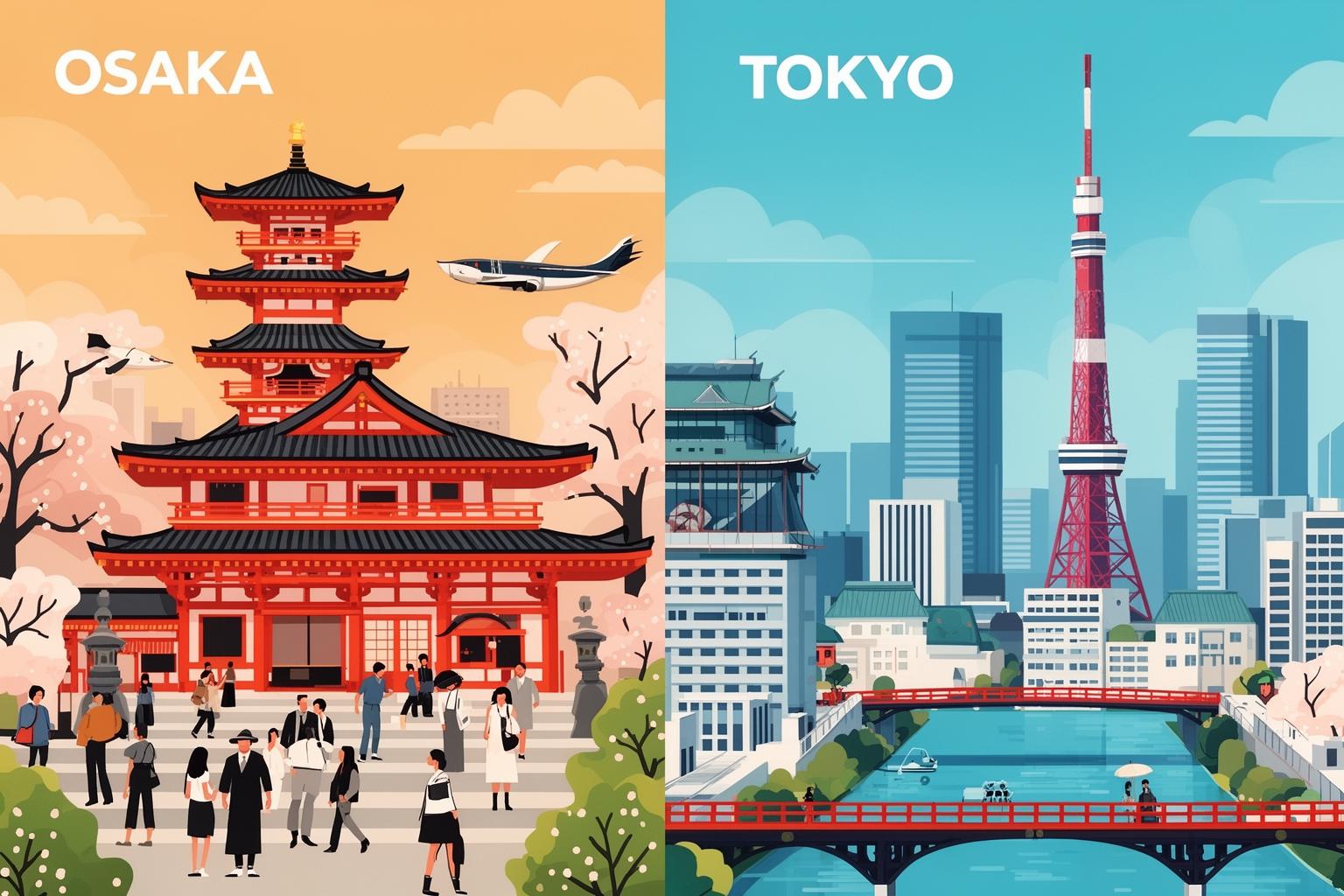
To understand the ‘Anti-Tokyo’ spirit, you need to look back centuries. While Tokyo, then known as Edo, was being established as the political and military center of the shogunate—a city dominated by samurai, bureaucrats, and strict social hierarchies—Osaka thrived as the `tenka no daidokoro`, or the ‘nation’s kitchen.’ It served as the main commercial hub, a busy port where rice, sake, and goods from across Japan were exchanged. This fundamental difference in origins shaped two distinct cultural DNAs that continue to exist today.
The Way of the `Akindo` (Merchant)
Osaka’s culture is rooted in the `akindo`, the merchant. For an Osakan merchant, success was not based on birth or loyalty to a feudal lord, but on wit, negotiation skills, and the ability to generate profit. Core values included pragmatism, efficiency, and a sharp sense of value. Being quick-witted, building strong personal ties with suppliers and customers, and avoiding wastefulness were essential. This cultivated a mindset where results trumped process. A deal was good if it made money, regardless of its formal structure. This spirit remains alive today, evident in the covered shopping arcades of Shinsaibashi and Tenjinbashisuji, where shopkeepers engage in lively, direct exchanges with customers. It’s not just selling; it’s a performance, negotiation, and human connection. This history fostered deep respect for entrepreneurship and a healthy skepticism of centralized authority. Although the government in distant Edo set the rules, it was the merchants of Osaka who made the money and kept the nation functioning. This bred an independent, self-reliant attitude that viewed Tokyo’s bureaucratic methods as slow, inefficient, and out of touch with the market’s realities.
The Code of the `Bushi` (Samurai)
Tokyo’s culture, by contrast, was shaped by the `bushi`, the samurai class. Here, loyalty, honor, and strict adherence to protocol were paramount values. Life was regulated by a rigid hierarchy and a complex system of formal relationships. Communication was indirect, focused on harmony and avoiding open conflict. `Tatemae` (public facade) and `honne` (true feelings) became essential arts for navigating the intricate power dynamics of the shogunate. Success came from following rules, showing deference to superiors, and operating within the system. This cultivated a corporate culture that values consensus-building, careful planning, and risk aversion. Individual ambition is often subordinated for the group’s or corporation’s benefit. In Tokyo today, this legacy is still felt in meetings—often formalities to confirm decisions painstakingly negotiated behind the scenes. There’s an accepted way to do everything, from exchanging business cards to phrasing emails, and deviation is often viewed as unprofessional. The contrast is clear: Osaka’s history honors the clever individual who bends rules to earn profit, whereas Tokyo’s honors the loyal subordinate who upholds the system.
Career Paths and the ‘Kansai Gravity’
This historical divergence significantly influences modern career decisions. In much of Japan, securing a position at a prestigious Tokyo-based company is regarded as the pinnacle of a successful career—it serves as the ultimate validation. However, for many young people in Osaka and the surrounding Kansai region, the pull is different.
The Appeal of Staying Local
A notable phenomenon called ‘Kansai gravity’ draws many talented graduates from top local universities, such as Kyoto University and Osaka University, to deliberately pursue their careers in Kansai rather than relocating to Tokyo. This choice isn’t viewed as settling for less; it’s a conscious lifestyle and career decision. Why is that? The reasons combine practical and philosophical factors. Practically, the cost of living is much lower, and the work-life balance is often perceived as more humane. Commutes are shorter, housing more spacious, and while busy, the pace of life lacks the relentless, soul-draining intensity of Tokyo. Philosophically, success holds a different meaning. In Osaka, it’s often defined by quality of life, strong community ties, and being a ‘big fish in a smaller pond.’ There is great pride in working for leading Kansai-based companies. Telling someone you work for Panasonic (Kadoma), Nintendo (Kyoto), or Suntory (Osaka) carries a distinct local prestige that may not be fully recognized in Tokyo. It signifies contributing to the regional economy, belonging to ‘us,’ and succeeding on your home turf.
The ‘U-Turn’ Phenomenon: Returning to Osaka
The ‘U-turn’ trend is equally revealing. This refers to individuals who, after graduating, initially move to Tokyo for work but return to Osaka in their late twenties or thirties. Having experienced the Tokyo grind—the long hours, crowded trains, high living costs, and social isolation—they decide it’s not the life they want. Conversations with friends who’ve made this U-turn reveal a common sentiment: in Tokyo, they felt like an anonymous cog in a vast corporate machine. Social interactions were often confined to colleagues, and forming deep, meaningful friendships was challenging. Returning to Osaka, they describe ‘breathing again.’ They reconnect with family and old friends, enjoy increased disposable income even if their salary drops slightly, and find their work more meaningful. Some join smaller local companies where their Tokyo experience is highly valued; others start their own businesses, benefiting from the city’s supportive entrepreneurial environment. This return is not seen as a career setback but as a strategic choice for a more sustainable and fulfilling life.
The Startup Scene: Forged in the `Akindo` Spirit

Nowhere is the ‘Anti-Tokyo’ mindset more pronounced than in Osaka’s startup and small business culture. While Tokyo’s startup ecosystem often mirrors Silicon Valley—centered on disruptive technology, massive venture capital inflows, and chasing ‘unicorn’ status—Osaka’s scene is an entirely different creature. It is grounded, pragmatic, and deeply infused with the spirit of the `akindo`.
Practicality Over Hype
The key question for an Osaka startup tends to be less “Can this change the world?” and more “Can this make money, and can it do so quickly?” There is a healthy skepticism towards business models dependent on burning through investor funds for years in pursuit of market dominance. Profitability is not a distant aspiration; it is a fundamental necessity. This creates a startup environment that excels in specific areas. You’ll find a high concentration of B2B firms producing tangible goods or software for manufacturing, logistics, and other industries that form the backbone of the Kansai economy. A vibrant small-scale e-commerce scene thrives, often initiated by individuals who discover clever niches. And naturally, the food and beverage sector is a hub of innovation, with new restaurants and bars opening frequently, each presenting a unique approach to attract Osaka’s discerning and cost-conscious diners.
The Art of the `Neuchi`: Value and Negotiation
At the heart of the Osaka business mindset lies the concept of `neuchi`. This term lacks a perfect English equivalent, blending ideas of ‘value,’ ‘worth,’ and the ‘art of negotiation.’ It captures the excitement of securing a good deal alongside the pride in offering excellent value for money. This ethos permeates everything. Osaka entrepreneurs spend countless hours sourcing cheaper materials without compromising quality. They haggle persistently with suppliers. When pitching their products, they don’t just highlight features; they emphasize tangible returns on investment for their customers. This approach can be a culture shock for those used to Tokyo’s more fixed-price, formal transactions. In Osaka, the price tag is often just the starting point for negotiation. This knack for negotiation is a key business asset. From my experience in the fashion industry, a Tokyo brand might lean on its story and prestige to justify a high price, whereas an Osaka brand is more apt to highlight the quality of stitching, the durability of the fabric, and proudly proclaim the product an incredible bargain. The value proposition is straightforward and concrete.
Networking: It’s All About Who You Know
Networking in Osaka relies less on formal industry events with name tags and business card swaps and more on `ningen kankei`—human relationships. Business is built on trust, which develops gradually and often outside the workplace. An introduction from a mutual contact carries more weight than any cold call or polished presentation. Deals are frequently discussed and finalized in informal settings like an `izakaya` or on the golf course. This relationship-driven system can be highly efficient, allowing decisions to be made swiftly on the basis of a handshake and mutual understanding, bypassing layers of corporate red tape. However, it can also pose a major obstacle for outsiders, including foreigners. Without a trusted intermediary to vouch for you, gaining entry is difficult. The key is to invest time in nurturing genuine connections. Attend local chamber of commerce events, become a regular at neighborhood bars frequented by other business owners, and focus on building rapport before attempting to sell anything. In Osaka, business happens between people who like and trust each other, not faceless corporations.
Corporate Culture: Human, Direct, and `Omoroi`
The differences run deep into the culture of established companies. While the core principles of Japanese corporate life—long hours, group harmony, respect for seniority—are present in Osaka, they are expressed through a distinctly local lens.
Communication: Say What You Mean
The most noticeable difference to a newcomer is the communication style. Tokyo corporate culture is known for its indirectness. Disagreements might be expressed as “We should consider other possibilities,” and rejections as “We will take it under advisement.” In Osaka, you’re far more likely to hear, “I don’t think that will work,” or “Why would we do it that way? The other way is cheaper.” This directness can be surprising at first and is often misunderstood by outsiders as rude or aggressive. However, it’s not; it reflects the merchant’s focus on efficiency. Why waste time with ambiguity when there’s work to be done and money to be made? The aim is to get to the heart of the matter as quickly as possible. This bluntness is often softened with humor. A tense negotiation might be eased with a self-deprecating joke. A manager could deliver critical feedback with a playful tease. Humor acts as the social glue that makes this directness work. It signals that the critique isn’t personal, but about finding the best solution for the business.
A Meeting in Tokyo vs. a Meeting in Osaka
Picture a project proposal meeting. In a Tokyo office, the setting would likely be formal. The presenter would go through a detailed slide deck. Questions from senior management would be polite and cautiously phrased. The main goal is to share information and confirm consensus. The real debate has probably already taken place in a series of smaller, informal `nemawashi` (root-binding) meetings.
Now, imagine the same meeting in an Osaka office. The atmosphere is livelier. The presenter might be interrupted with questions and challenges from the start. People will talk over each other. Someone might crack a joke about the budget. The boss could lean back in their chair and ask, “So what’s the bottom line? How much is this gonna make us?” The focus isn’t on following a formal process but on stress-testing the idea in real-time. This can feel chaotic, but it’s an incredibly efficient way to uncover potential issues and reach a practical decision.
The `Omoroi` Standard: Is It Interesting?
Perhaps the most unique and vital concept in Osaka business culture is `omoroi`. Literally meaning ‘interesting’ or ‘fun,’ its significance runs deeper. `Omoroi` serves as a standard of judgment applied to everything from a new product idea to a marketing slogan to a potential business partner. A proposal might be logical, profitable, and thoroughly researched, but if it’s not `omoroi`, it could still be rejected. `Omoroi` implies a spark of cleverness, a witty twist, a human element that makes something memorable and engaging. It’s the opposite of the bland, safe, committee-approved corporate aesthetic. You see this `omoroi` spirit all over the city. It’s in the wildly theatrical moving billboards of Dotonbori, like the Glico Running Man or the giant mechanical crab. It’s in the naming of local shops, often featuring clever puns. It’s in the way a CEO might tell a joke at a press conference. In business, an `omoroi` idea is not just effective but full of personality. It shows that creative, thinking humans are behind the brand. This is a powerful advantage. In a crowded market, a product or service with that `omoroi` factor stands out. It connects with customers emotionally, not just rationally.
Work-Life Integration: Blurring the Lines
While work-life balance is a challenge throughout Japan, the approach in Osaka feels distinct. There is a strong ‘work hard, play hard’ ethos. The lines between colleagues and friends are often more blurred than in Tokyo. After-work drinking sessions, or `nomikai`, are not just a formal obligation but frequently a genuinely lively and enjoyable social event. This is where much of the real communication and team bonding happens. Loyalty in an Osaka company often feels directed more toward individuals—your immediate boss, your team—than the abstract corporate entity. A manager may take a personal interest in your life beyond work, and team successes are celebrated with genuine enthusiasm. This creates a more familial, though sometimes more intrusive, work environment. The trade-off for this personal touch is that the boundary between personal and professional life can be weaker. Your boss might call you on a weekend with a sudden idea, presenting it as an exciting opportunity instead of an imposition. The expectation is that you are part of a team, and together you share both the work and the rewards.
Navigating the Professional Landscape as a Foreigner
For a non-Japanese individual aiming to build a career in Osaka, grasping these cultural subtleties is essential for success. Relying solely on Western or even Tokyo-based business practices can result in frustration and misunderstandings.
Excelling in an Osaka Job Interview
When interviewing for a position in Osaka, your approach should differ from the typical Tokyo interview. While maintaining professionalism is important, showcasing your personality is key. Employers are not only seeking skills but also someone who will seamlessly fit into their team culture.
- Be Direct and Confident: When discussing your abilities, be straightforward and confident. Avoid downplaying your strengths with excessive modesty. Provide specific examples of your achievements.
- Highlight Practicality and Value: Present your experience in terms of how you can help reduce costs or increase profits. Demonstrate your understanding of the business’s bottom line. Describing how you streamlined a process to save money often resonates more than discussing abstract strategic ideas.
- Display a Sense of Humor: Don’t hesitate to smile, laugh, and engage in light conversation if the interviewer initiates it. This shows you are personable and comfortable with the local communication style.
- Ask Insightful Questions: Pose questions that reveal you have considered practical aspects of their business. For example, “I noticed your competitor does X. Have you considered approach Y to enhance value?” is a savvy, Osaka-style question.
Addressing Common Misconceptions
Foreigners often fall prey to stereotypes. It’s important to look beyond clichés.
- Misconception: “Osaka people are rude and aggressive.”
- Reality: They are direct and efficient. They prioritize honesty over politeness and prefer confronting issues immediately rather than letting them linger. Appreciating their candor without taking it personally is key.
- Misconception: “It’s all about money.”
- Reality: It’s about value and sustainability. The emphasis on cost and profit comes from a pragmatic belief that businesses must be healthy to thrive. They are equally committed to quality and customer satisfaction as the foundation for long-term value.
- Misconception: “The work environment is unprofessional and chaotic.”
- Reality: Professionalism in Osaka is based on relationships, not rigid processes. What may appear chaotic is often a rapid, collaborative approach to problem-solving. Trust the method, even if it differs from what you’re used to.
Living and working in Osaka requires cultural adaptation. The ‘Anti-Tokyo’ mindset is not a rejection of Japan but an acceptance of a different, equally valid version of it. This culture values individual wit, prioritizes tangible results over formal appearances, and believes business, like life, should be a bit `omoroi` (fun and interesting). For those constrained by the strict hierarchies and unspoken norms of conventional corporate settings, Osaka offers a place to be more direct, creative, and authentic. It is a city shaped by merchants rather than bureaucrats, and that pragmatic, personable commercial spirit remains its driving force. To succeed here means learning the city’s unique rhythm—the quick-witted banter, sharp negotiations, and hearty laughter that seal a deal. It’s a challenging yet deeply rewarding dance, and mastering it opens the door to a professional life as vibrant and full of character as the city itself.