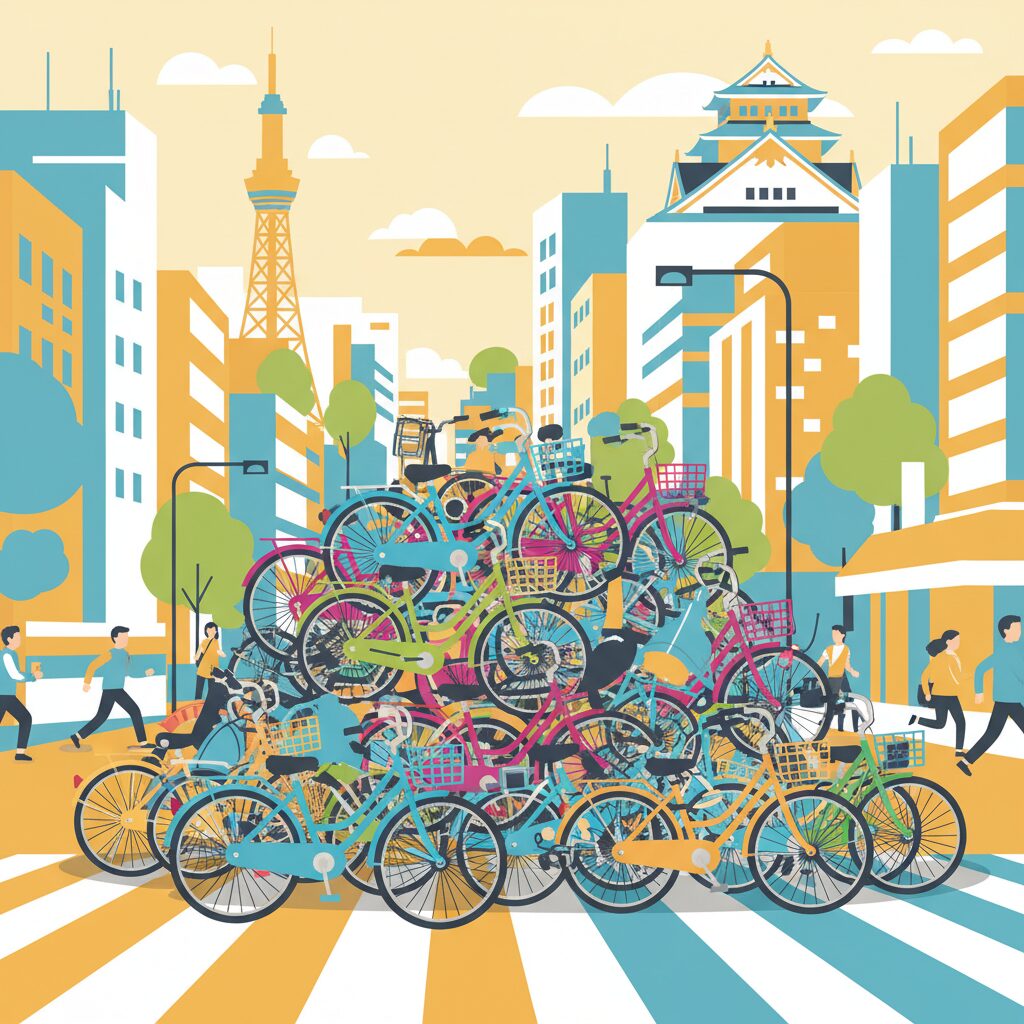
Your first few weeks in Osaka are a sensory overload, a whirlwind of neon, sizzling takoyaki, and a dialect that feels like it’s running at double speed. You start to find the rhythm in the delightful chaos. You learn which train car to stand in for the quickest exit. You master the subtle art of the head-nod apology. But then, you encounter the true ruling class of the city’s streets, a silent, two-wheeled army that operates by its own inscrutable laws. I’m talking about the mamachari. The “mom’s chariot.” Step out of any train station, walk down any residential alley, and you’ll see them: a steel herd of bicycles, laden with groceries, school bags, and often, one to three actual children. You’ll see them gliding down sidewalks with the serene confidence of a battleship, their little bells a polite but firm announcement of their unstoppable trajectory. At first, you see them as a curiosity, a quirky feature of Japanese urban life. But soon, you realize they are not just part of the scenery. They are the scenery. They are the circulatory system of Osaka, the lifeblood of the neighborhoods, the unsung, often terrifying, and absolutely essential tool that makes this city work. Forget the sleek bullet trains and the immaculate subway system; if you want to understand the real, unvarnished, pragmatic soul of Osaka, you need to understand the mamachari.
To truly grasp the city’s pragmatic soul, you must also explore its vibrant social hubs, like the standing bars that serve as Osaka’s social glue.
The Unspoken Rules of the Road: Mamachari Mayhem
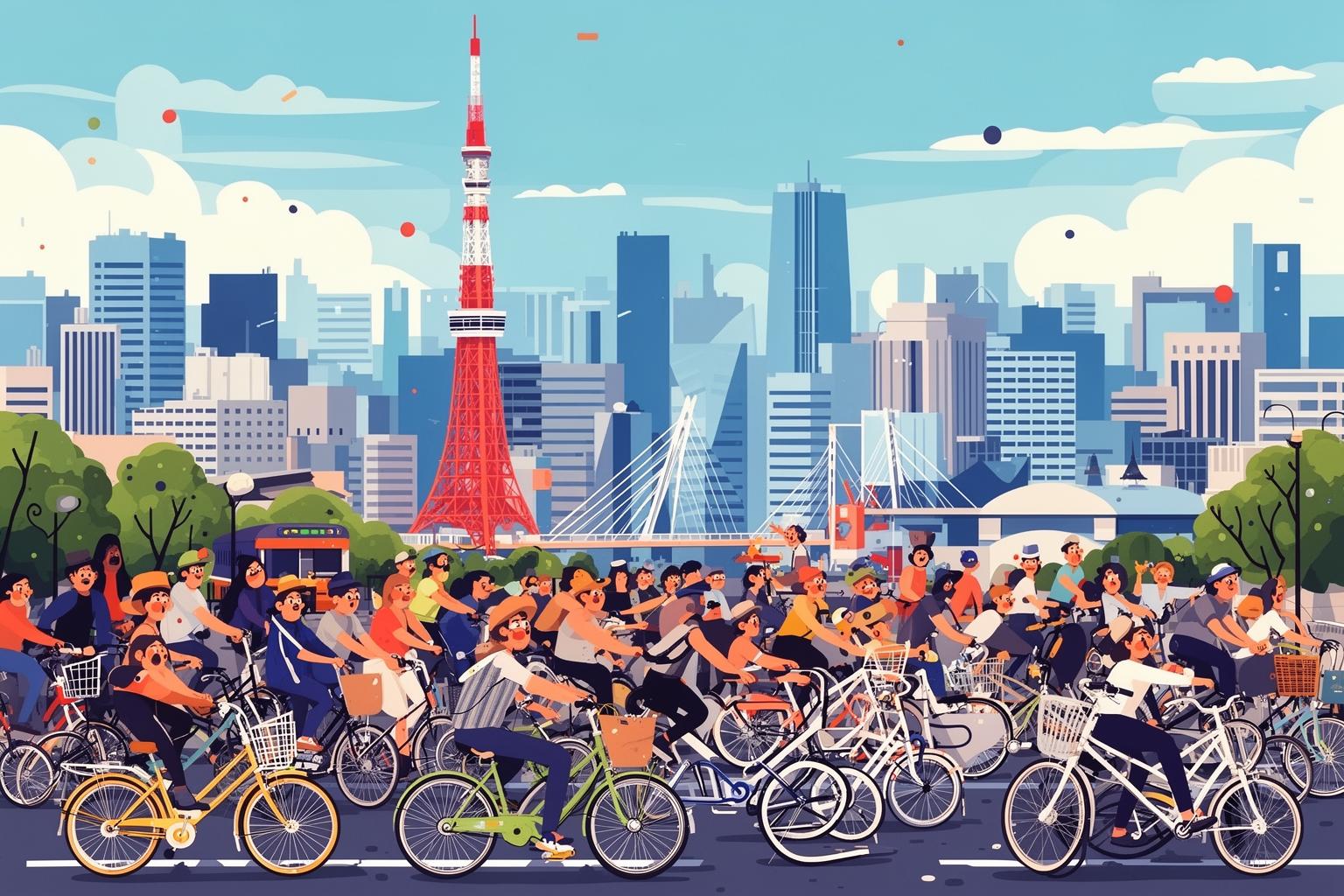
Your first lesson in Osaka life isn’t about chopsticks or bowing; it’s about mastering how to walk on a sidewalk. In many cities, sidewalks serve as a pedestrian sanctuary, but in Osaka, they transform into a shared battleground where the mamachari acts as the cavalry. You quickly develop an urban sonar, constantly tuned to the subtle whir of tires and the gentle tiring-tiring of a bell closing in from behind. This sound isn’t a polite request to move aside; it’s a clear signal that a bicycle is approaching, and your safety depends on a quick and decisive sidestep. Unlike Tokyo, where cyclists generally adhere strictly to designated lanes or roads, Osaka operates on pragmatic terms. With streets clogged by cars and bike lanes sporadic at best, sidewalks become the path of least resistance. This unwritten social contract embodies a city-wide understanding that getting things done outweighs rigid adherence to official traffic laws.
Sidewalks are Fair Game (Apparently)
Navigating the sidewalk is a delicate dance. You see a mother pedaling with Olympic-like focus, a toddler in front and a five-year-old in back. She can’t afford delays caused by traffic lights or aggressive taxis; she must get from daycare to the supermarket before a meltdown ensues. So, she takes the sidewalk. No one stares or complains; pedestrians part like the Red Sea. This is the essence of the Osaka mindset. It’s not about rudeness or disregard but a shared understanding of the daily hustle. Everyone is busy, everyone has places to be. The mamachari rider isn’t trying to inconvenience you personally but executing the most efficient logistical maneuver possible. Foreigners often mistake this for aggressiveness or a dismissal of rules. Yet, what’s really at play is an overlay of practical, unwritten rules atop the official ones: avoid major accidents, be predictable in your movements, and everyone reaches their destination. It’s a raw, unfiltered form of urban cooperation—rough around the edges but surprisingly effective.
The Art of Parking: Anywhere and Everywhere
If riding a mamachari on the sidewalk is an art, parking it is a grand, chaotic masterpiece. Outside supermarkets, train stations, or apartments lies a sprawling metallic reef of tightly crammed bicycles—handlebars tangled, pedals interlocked, kickstands defiantly planted against gravity and municipal order. Though designated bicycle parking lots exist, they fill by 7 AM, after which it’s a free-for-all. Lampposts, guardrails, random patches of concrete next to vending machines all become acceptable parking spots. The contrast with Tokyo is stark: there, illegally parked bikes are swiftly tagged and towed to impound lots as a bureaucratic fix. In Osaka, the solution is more organic, chaotic, and human—a collective shrug: “Where else are we supposed to put them?” The result is a daily puzzle: finding your bike among countless identical models and extracting it without toppling a dozen others requires skilled effort. This tolerance for public messiness reflects the city’s “figure it out” spirit—no perfect system is offered, so people create their own: messy, imperfect, but functional.
The All-Weather Warriors
A little rain doesn’t stop Tokyo, which simply fills with a sea of identical clear umbrellas. Heavy rain or even a typhoon doesn’t halt Osaka either; instead, mamachari riders deploy their advanced armory. Most notable is the sasube, a strange yet ingenious clamp that attaches to handlebars to hold an umbrella, creating a hands-free, mobile rain shield. Though technically illegal in many places and considered a safety hazard, they are everywhere. On rainy days, sidewalks turn into jousting fields of umbrella-wielding cyclists, testifying to the sheer stubborn refusal to be inconvenienced. Whether it’s grocery shopping, the school run, or a trip to the post office, the mission remains: be completed. Riders become all-weather warriors, cloaked in full-length ponchos, their children encased in transparent cocoons on the back seats, their faces set with grim determination that the weather will not win. This is more than staying dry—it’s a show of resilience and ingenuity. It embodies the spirit of shikata ga nai—“it can’t be helped.” The weather is bad? Shikata ga nai. You adapt, you innovate, strap an umbrella to your handlebars, and pedal on. This grit and refusal to let circumstances dictate the day is quintessential Osaka.
The Mamachari as a Social and Economic Engine
Take a closer look at these bicycles, and you’ll see they aren’t recreational vehicles. They’re workhorses—the urban equivalent of a pickup truck. Designed for function over aesthetics, they feature heavy steel frames, wide, comfortable seats, and sturdy kickstands capable of supporting the weight of a small family and a week’s worth of groceries. The mamachari is an essential piece of economic infrastructure, a tool that enables city households to operate without the expense and hassle of owning a car. In the narrow, winding streets of Osaka’s residential areas, a car often proves more of a burden than a benefit. The mamachari fits this environment perfectly, adept at navigating tight corners and fitting into tiny parking spaces. It is key to local mobility and, by extension, to the local economy.
More Than a Bike, It’s a Family SUV
The mamachari’s carrying capacity is truly impressive—a masterful blend of physics and optimism. It’s common to see setups that defy belief: a child seat in front, another in the back. The front basket overflows with groceries—a giant daikon radish sticking out, bags of rice, cartons of milk. Hanging from the handlebars are the kids’ school bags and sometimes a bag from the dry cleaners. And somehow, the rider—usually a mother—maneuvers this rolling monument of domestic logistics with steady hands. This choice isn’t driven by an “eco-friendly lifestyle”; it stems from hard economic reality. Owning and parking a car in Osaka is prohibitively expensive for many families. The mamachari, often purchased second-hand at a fraction of the cost, becomes the family’s primary vehicle. It handles the daily, repetitive, essential tasks that keep a household running: the school bus, the grocery-getter, the ride to the doctor’s office. It embodies a brand of thriftiness and practicality deeply rooted in Osaka’s merchant heritage. Why spend a fortune on a car when this reliable, endlessly adaptable machine can accomplish 90% of the work? It’s a rejection of vanity in favor of sheer, unadulterated function.
The Great Equalizer
One of the most revealing aspects of the mamachari is its diverse riders. The answer to “who rides it?” is: everyone. It’s Osaka transportation’s great equalizer. Naturally, there are young mothers, the demographic from which the bike takes its name. But you also see elderly grandmothers, or obachan, pedaling steadily to the market with economical, practiced movements. University students use them to get to part-time jobs, while salarymen in suits pedal the last kilometer from the train station to their homes, briefcases precariously strapped to the front basket. Weekend dads take their kids to the park on them. The mamachari transcends age, gender, and social class. In a country sometimes perceived as rigidly hierarchical, the shared experience of navigating the city on this humble vehicle fosters a sense of common ground. The road—or rather, the sidewalk—becomes a level playing field. This helps explain Osaka’s reputation for being less formal and more down-to-earth than Tokyo. There’s less pretense when everyone, regardless of social status, confronts the same daily challenge of balancing groceries and dodging pedestrians. It cultivates a shared reality and a collective acknowledgment of everyday life’s demands.
The Ecosystem of Accessories and Repairs
Behind this vast fleet of two-wheeled vehicles lies an entire ecosystem of small, local enterprises. Every neighborhood has its jitenshaya-san, the local bicycle shop. These aren’t the sleek, minimalist boutiques selling high-end road bikes. Instead, they’re charmingly cluttered workshops, thick with the smell of rubber and grease. The walls are lined with tires, inner tubes, bells, baskets, and an astonishing variety of mamachari-specific accessories: brightly colored rain covers for child seats, fluffy handlebar warmers for winter, and, of course, the infamous sasube umbrella holders. The elderly proprietor has likely been fixing bikes on that same corner for decades. He can patch a tire in five minutes flat, his hands moving with the efficiency that comes from endless repetition. These shops are more than retail outlets; they are vital community hubs. You visit when your brakes feel loose, your tire is flat, or you need to upgrade to a bigger child seat. The jitenshaya-san is a neighborhood institution, where local knowledge is passed down and the essential machinery of daily life stays in working order. This network of small, independent businesses is integral to the distinct character and resilience of Osaka’s neighborhoods, standing in stark contrast to the more corporate-dominated landscapes of other large cities.
The Osaka Mindset on Two Wheels
Ultimately, the mamachari is more than simply a convenient mode of transportation. It represents a particular worldview. Riding one, or even just weaving around them, compels you to engage with the city on its own terms. It reveals local priorities, etiquette, and definitions of common sense. It’s an intensive introduction to the Osaka mindset, a life philosophy expressed on two wheels. The longer you live here, the more the chaotic flow of mamacharis begins to make an unusual kind of sense. It physically embodies a culture that values outcomes over process, efficiency over elegance, and a resilient, self-reliant spirit over strict rule-following.
Shoganai and Getting it Done
The dominance of the mamachari as a primary mode of transport is a practical example of the Japanese concept of shoganai or shikata ga nai—the belief that some things are beyond control and must simply be accepted. The city isn’t perfectly designed for your convenience. The train station is a twenty-minute walk away. You have two small children and a mountain of laundry to carry to the laundromat. You don’t own a car. Shoganai. You don’t waste energy writing to the city council demanding better public transit. Instead, you load the kids onto the mamachari, strap the laundry bag to the rear rack, and start pedaling. This is a philosophy of radical acceptance fused with proactive problem-solving. It means facing a set of constraints and, rather than seeing limits, viewing them as challenges to overcome using available tools. The mamachari is the perfect instrument for this mindset. It’s endlessly adaptable, incredibly durable, and enables its rider to tackle everyday logistical puzzles with a strong sense of independence. This attitude lies at the core of Osaka’s entrepreneurial and resourceful character.
A Different Kind of Politeness
A frequent misconception among foreigners is to confuse Osaka’s directness with rudeness. The mamachari rider who dings their bell quickly as they pass you on the sidewalk isn’t trying to offend. They operate under a different code of politeness—one founded on efficiency and mutual awareness rather than formal courtesy. In Tokyo, politeness often means strictly following the rules to maintain harmony and predictability. In Osaka, politeness means not wasting anyone’s time. The bell isn’t an apology for being on the sidewalk; it’s a practical signal. “Heads up, I’m coming through; let’s both adjust slightly so we can continue without disruption.” It presumes a certain street-smart competence from everyone involved. It assumes you’re busy too and that you understand the unspoken rules of this urban dance. It’s a message that says, “I see you, you see me, we’re both in a hurry, let’s make this work.” It may seem abrupt initially, but once you grasp its logic, it feels like a more straightforward and honest form of social interaction. It’s the politeness of a bustling workshop, not a formal tea ceremony.
The Power of the Osaka Obachan
If there is a top predator in the mamachari ecosystem, it’s the Osaka obachan—the middle-aged or elderly woman who has reached a zen-like mastery of her bike. Watch her in action. She pedals at a deceptively steady pace, yet navigates busy shopping arcades with surgical precision. Her basket is always perfectly arranged for maximum balance. She can make a tight turn with a full load of groceries effortlessly. She seems to have an almost psychic ability to anticipate the movements of pedestrians and cyclists alike. She embodies the city’s spirit: tough, pragmatic, no-nonsense, and utterly in control. She has probably been riding these same streets for decades, raising children, managing a household, and handling daily tasks, all from the seat of her trusted mamachari. The bike is not just her means of transport; it’s an extension of her will. It’s her chariot, her throne, her symbol of independence and authority in her neighborhood. Watching an Osaka obachan in motion is witnessing a quiet but formidable power that forms the true backbone of the city.
Navigating the Chaos: A Foreigner’s Guide to Mamachari Culture
So, you’ve chosen to start a life in Osaka. You’ve secured an apartment, you’re getting a handle on the train system, and now you’re face-to-face with the reality of the mamachari. Do you resist it, or do you embrace it? If you genuinely want to experience life in this city, the answer is to go with it. Understanding and adapting to mamachari culture is an essential step in shifting from visitor to resident. It’s about grasping the true rhythm of the city, beyond the schedules printed on train timetables. It calls for a change in mindset—accepting a little chaos as a necessary ingredient of a vibrant, functional urban life.
To Ride or Not to Ride?
My advice is clear: get a mamachari. It will change how you connect with the city. Suddenly, your neighborhood will become far more accessible than you imagined. That ramen shop that seemed too far to walk to becomes your regular lunch stop. The large supermarket with better prices is now just a ten-minute ride away. You’re no longer confined to train routes. You’re free. You can buy a new one from a major retailer like Don Quijote, or embrace the true Osaka spirit and pick up a used one at a local second-hand shop or recycling center for a bargain. The one non-negotiable step is the bouhan touroku, or crime prevention registration. It’s a simple, mandatory procedure at the bike shop that registers the bike to you, verifying it’s not stolen. Once registered, you’re officially part of the club. You’ll feel a strange sense of belonging the first time you expertly weave through crowds or park your bike in a ridiculously tight spot. You have assimilated.
The Pedestrian’s Survival Guide
Even if you choose not to ride, learning to coexist is essential. The key is to let go of any preconceived ideas that sidewalks are exclusively for pedestrians. They’re not. The first rule is to develop situational awareness. Don’t walk while staring at your phone. Stay alert for the distinctive whir of tires or the ding of a bell. The second rule is to be predictable. Avoid sudden, erratic movements. If you need to stop, step aside. When a bike approaches from behind, a subtle shift to the left or right is all that’s needed. Don’t take it personally; treat it as a normal traffic adjustment. Over time, this dance becomes second nature. You’ll find yourself naturally clearing a path without conscious thought. You’ll have internalized the unwritten rules and found your place in the organized chaos. It’s a small but meaningful milestone on your journey to understanding Osaka.
What it All Means
It would be easy to view the mamachari phenomenon solely as a problem: a disregard for traffic laws, a safety risk, a sign of poor urban planning. While there is some truth to these concerns, that’s a superficial reading that misses the bigger picture. The mamachari is not a problem to fix; it’s a solution that has organically developed to meet the real needs of the people living here. It reflects their ingenuity, resilience, and practical nature. It symbolizes a city that values family, community, and daily logistics over abstract rules and aesthetic perfection. It represents a culture willing to embrace a bit of messiness in exchange for a life that is efficient, affordable, and human-scaled.
So, next time you’re in Osaka, take a moment away from the famous landmarks and bustling tourist sites. Find a bench in a quiet residential neighborhood and simply watch. Observe the endless stream of mamacharis passing by. Watch mothers ferrying their children, grandfathers heading to the community center, students rushing to their jobs. Notice the incredible loads they carry, the determination on their faces, and the effortless skill with which they navigate their world. In that constant, chaotic, yet quiet procession, you will witness the true heart of Osaka. It’s not loud or flashy. It’s practical. It’s powerful. And it gets the job done.