
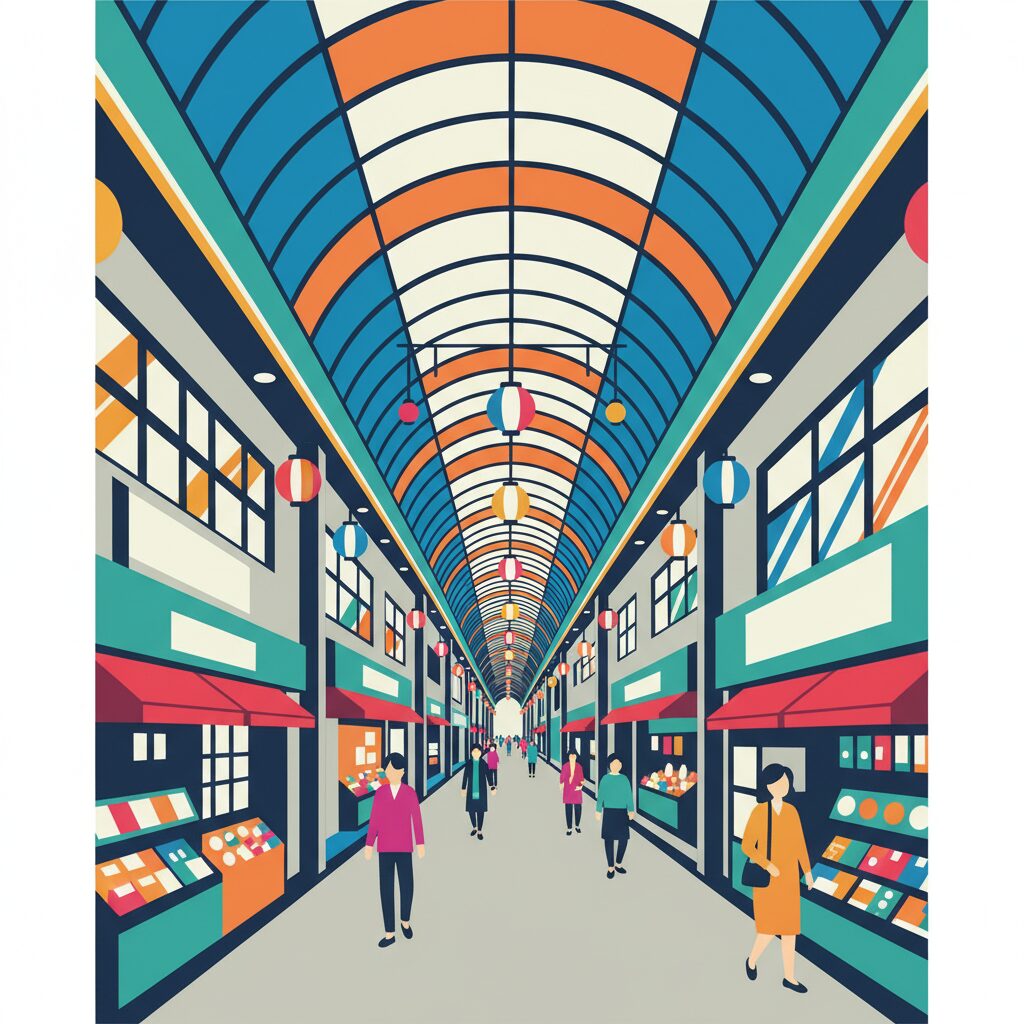
When you first land in Osaka, your senses get hijacked by the big-ticket items. The neon canyons of Namba, the electric current of Dotonbori’s Glico Man, the sheer scale of Umeda’s underground city—it’s a metropolis that knows how to put on a show. It feels loud, bold, and maybe even a little expensive. You see the tourists, the department stores, the high-end restaurants, and you think you understand the city’s pulse. But you don’t. Not really. The true rhythm of Osaka, the beat that its residents live and breathe by, isn’t found under the glare of a thousand billboards. It’s found under a much more modest roof: the long, covered expanse of the local shotengai, the neighborhood shopping arcade.
For many foreigners, especially those coming from Tokyo’s sleek, polished urbanism, the shotengai can seem like a relic. It might look a bit cluttered, a little worn around the edges, a chaotic jumble of mom-and-pop shops shouting for your attention with hand-scrawled signs. It’s easy to dismiss it as a charming but ultimately outdated slice of Old Japan. That’s the first, and biggest, mistake you can make in trying to understand this city. The shotengai isn’t a museum piece. It’s the engine room. It’s the intensely practical, fiercely independent, and budget-conscious heart of Osaka itself. This is where the city’s famous obsession with being yasukute umai—cheap and good—is forged every single day. It’s where you learn that in Osaka, saving money isn’t about deprivation; it’s a competitive sport, a sign of intelligence, and a way of life. Forget what you think you know. To grasp Osaka, you have to walk the arcade.
This local, budget-conscious spirit stands in fascinating contrast to the city’s parallel ambitions to attract global luxury brands and affluent visitors, as seen with the upcoming Grand Hyatt opening in Osaka.
The Shotengai Ecosystem: More Than Just a Shopping Street
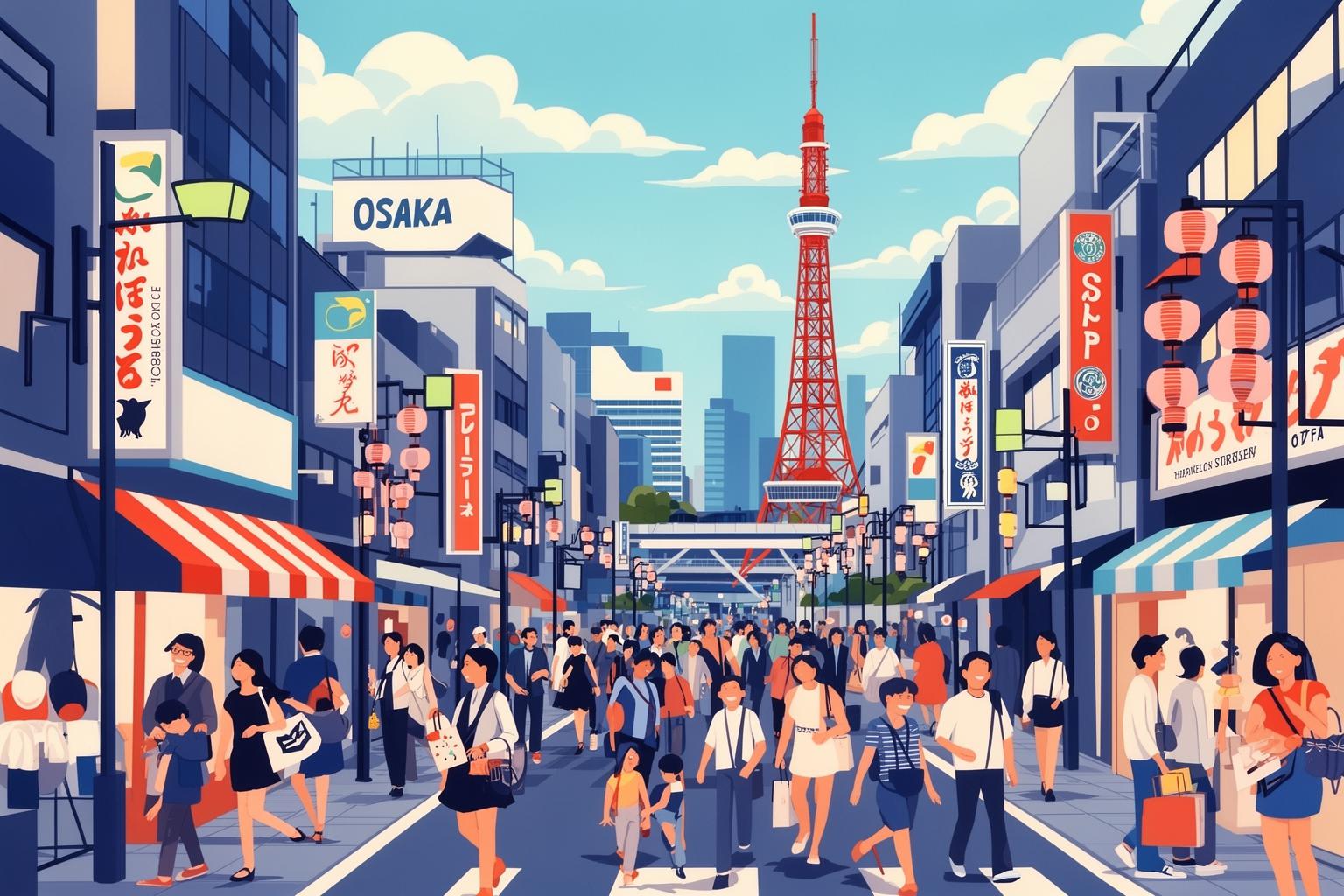
A shotengai is not a mall—let’s be clear about that. A mall is a curated, centrally managed commercial space built for leisurely shopping. It’s climate-controlled, predictable, and dominated by national or global chains. A shotengai, on the other hand, is something completely different. It’s a living entity, a chaotic, competitive, yet deeply collaborative ecosystem of independent businesses that have evolved together over decades. It’s a river of commerce, a flow of humanity beneath a canopy of plastic or glass, protected from the harsh summer sun and sudden winter rain. This is not just a street; it’s a civic artery, the neighborhood’s lifeblood, pumping bargains and lively conversation into the heart of the community.
A Symphony of the Senses
Entering a lively shotengai is an immersive experience for all the senses. The first thing you notice is the sound—a layered composition of human activity. You hear the rhythmic clatter of metal shutters rolling up in the morning, the cheerful, repetitive jingle of the local butcher’s catchy theme song lodged in your mind for days. You hear the vendors’ voices, key instruments in this urban orchestra: the energetic cries of “Irasshai, irasshai!” (Welcome, welcome!), the persuasive pitch of “Kyō no o-susume ya de!” (Today’s recommendation!), and the booming announcement of a flash sale: “Ima dake hyaku-en!” (Just 100 yen, only right now!). Bicycles, a favored mode of transport for local shoppers, glide by with the gentle ring-ring of their bells, alerting wandering pedestrians. It’s a soundscape of pure, unfiltered commerce—worlds apart from the hushed atmosphere of a department store.
Next comes the smell—a complex bouquet narrating daily life. The rich, savory aroma of freshly fried korokke (croquettes) and tonkatsu cutlets drifts from the butcher’s deli, blending with the sweet scent of roasting tea leaves from the specialty shop next door. You catch the fresh, briny tang of the sea from the fishmonger’s stall, where glistening fish lie on beds of ice. The earthy fragrance of daikon radishes and soil-dusted potatoes lingers at the greengrocer’s, alongside the comforting, yeasty smell of baking bread from a tiny family bakery. It’s the scent of dinner being planned, meals being prepared, and a community sustaining itself.
The Anatomy of an Arcade
To outsiders, a shotengai might seem like a random collection of shops. Yet there’s a clear logic to the seeming chaos—a collection of essential players forming the backbone of daily life for countless Osaka residents. These aren’t niche boutiques; they are the fundamental pillars of a household economy.
The Staples: The Holy Trinity of Freshness
At the heart of any genuine shotengai are its specialists: the yaoya (greengrocer), the sakanaya (fishmonger), and the nikuya (butcher). These are no sterile, pre-packaged supermarket counters. The yaoya bursts with color, seasonal fruits and vegetables heaped high in boxes, often sold in small, convenient bundles for just a hundred or two hundred yen. The owner, whose hands bear a permanent trace of earth, can tell you precisely which tomatoes are sweetest today and the best way to cook that unfamiliar gourd. The sakanaya is a master of the sea, expertly filleting whole fish to order, recommending the freshest catch from the morning auction, and offering to gut and scale your purchase on the spot. The nikuya not only sells cuts of pork, beef, and chicken, but often has a fryer sizzling, selling golden menchi-katsu and crispy chicken karaage as immediate, delicious rewards for finishing your shopping. This is the opposite of anonymous consumption: you buy from a person, not just a place.
The Daily Grind: Fueling the Household Machine
Beyond the fresh food specialists, the shotengai is filled with shops catering to everyday, essential needs. You’ll always find one or more drugstores locked in fierce price wars, their storefronts a chaotic collage of neon signs screaming discounts on everything from laundry detergent to headache medicine. Here, the Osaka spirit shines at its purest: shoppers carefully comparing toilet paper prices between stores fifty feet apart just to save twenty yen. You’ll find a 100-yen shop, a treasure trove of affordable solutions for every household problem imaginable. Small hardware stores sell lightbulbs and picture hooks, futon shops offer bedding re-stuffing and renewal, and tiny stationery shops seem to have been there since time immemorial. These businesses provide the nuts and bolts of daily life, without frills or inflated prices.
The Ready-Made Life: The Secret to Low-Cost Convenience
One of the shotengai’s most vital, often overlooked roles is offering an alternative to both pricey restaurant dining and time-consuming home cooking. This is the world of sōzai, pre-cooked side dishes. Nestled between the butcher and the tofu maker, you’ll find a sōzai-ya, a delicatessen brimming with trays of simmered pumpkin, hijiki seaweed salad, kinpira gobo (braised burdock root and carrot), and a dozen other home-style dishes. For a few hundred yen, you can pick up two or three items to complement a simple bowl of rice at home. It’s the ultimate life hack for busy people, singles, and the elderly, providing a nutritious, varied meal at a fraction of restaurant cost. Alongside this are countless bento shops selling complete lunch boxes for 400 or 500 yen, and ubiquitous stands serving takoyaki, okonomiyaki, or croquettes, showing how the shotengai makes convenient living affordable.
The Social Hubs: Weaving the Community Fabric
The shotengai isn’t only about transactions; it’s about connections. It’s a place where the community sees itself and strengthens its bonds. Scattered along the arcade are essential social institutions: the old-school kissaten, a coffee shop with worn velvet chairs where elderly residents gather to read newspapers and converse for hours over a single cup of coffee; small private clinics—a dentist here, an internal medicine doctor there—where the doctor knows your family history; barbershops and beauty parlors that have cut the same heads of hair for generations. In some older arcades, you might even find a sentō, a public bath acting as a neighborhood gathering spot. These places transform a commercial street into a true village center, where people are not anonymous consumers but familiar neighbors.
The Osaka Mindset: “Yasukute Umai” in Action
The shotengai embodies a fundamental philosophy of Osaka. In Tokyo, status is often linked to brand names, luxury experiences, and living in trendy neighborhoods. In Osaka, status is about being savvy—knowing where to find the best deals, hunting for bargains, and living well without overspending. This is not about being cheap in a negative way; it’s about being a smart, rational economic actor. The phrase you’ll hear repeatedly is “yasukute umai,” meaning “cheap and delicious,” but its significance goes much deeper. It’s a point of pride, a proclamation that you’ve found the ideal balance of quality and price. The shotengai is the grand stage where this principle is practiced daily.
Price as a Sport
For many Osaka shoppers, especially the famous obachan (middle-aged and older women, revered here for their economic savvy), bargain hunting is a competitive sport. They possess detailed knowledge of the regular prices for daikon radishes, eggs, and tofu at every store within a one-kilometer radius. They study the flyers dropped in the mail with the intensity of stockbrokers reading the Wall Street Journal. They master the “time sale,” swooping in at 4 PM when the butcher marks down the day’s leftover meat. Watching an obachan navigate a shotengai is a microeconomics lesson. She might buy vegetables from the vendor at the arcade’s south end because his cabbage is 10 yen cheaper, then walk all the way to the north end for fish because that seller is known for fresher mackerel. It’s a constant, calculated optimization of resources. This behavior stems not from poverty but from a deeply ingrained cultural belief that wasting money is, simply put, foolish.
The Power of the Hand-Written Sign
Compare the commercial visuals of Tokyo and Osaka. Tokyo features sleek, minimalist designs, professionally printed posters, and a curated aesthetic. The Osaka shotengai, by contrast, bursts with chaotic, hand-crafted signs. These are often written by hand with thick markers on brightly colored paper, using explosive, emotional language like “Gekiyasu!” (Super Cheap!), “Bikkuri Kakaku!” (Shocking Price!), or “Uretemasu!” (Selling Like Crazy!). The pricing itself is a form of communication. You won’t find prices rounded to neat 100 yen; instead, they might be 98 yen or 88 yen to create a psychological sense of a bargain. This isn’t polished corporate marketing—it’s raw, direct, and highly effective. A hand-written sign feels immediate and personal, suggesting the owner personally decided on that price this morning just for you, thanks to a special deal from their supplier. It builds a sense of transparency and trust that no perfectly designed corporate poster could match.
Why Supermarkets Can’t Compete (On Everything)
Of course, Osaka has supermarkets: large, clean, efficient stores that people certainly use. But the dynamic here is different than in other cities. Osaka shoppers recognize that supermarkets provide convenience, but shotengai offer value and expertise. You might buy milk, soy sauce, and toilet paper at the supermarket, but you visit the shotengai for the essentials: the fish served to guests, the vegetables that will be the centerpiece of your meal, the special cut of meat for a celebration. Shotengai vendors have lower overhead—no fancy headquarters or massive marketing teams. They often maintain deep, decades-long relationships with suppliers at the central market. Most importantly, they offer knowledge. The fishmonger might advise, “Don’t buy that one today; it’s not the best. Get this instead—it just arrived and is perfect for grilling.” Try getting that level of service from a teenager stocking shelves at a corporate supermarket. The savvy Osakan doesn’t choose sides; they blend both approaches, leveraging each’s strengths to build the most efficient and highest-quality household possible.
Shotengai vs. Tokyo: A Tale of Two Cities’ Commerce
The contrasting destinies of the shotengai in Osaka and Tokyo highlight a fundamental difference in the cultures of Japan’s two largest cities. While Tokyo still hosts some well-known shopping arcades, many have disappeared, been hollowed out by chain stores, or gentrified into tourist-friendly promenades offering artisanal coffee and pricey souvenirs. They now feel less like essential lifelines and more like lifestyle destinations. In Osaka, however, the shotengai remains a vibrant and steadfast presence in the daily lives of everyday people. This durability is no coincidence; it directly stems from Osaka’s distinctive economic history, urban layout, and cultural identity.
The Decline in Tokyo vs. The Resilience in Osaka
Tokyo’s economy is largely focused on white-collar office work, finance, and technology. Its urban growth has revolved around enormous, multi-level train stations that function as commercial centers themselves, filled with department stores and underground malls. Coupled with a stronger focus on brand awareness and the convenience of one-stop shopping, this has drained the vitality from many smaller, local shopping streets. The economics simply do not favor small, independent greengrocers when pristine, air-conditioned supermarkets with extensive parking are nearby.
Osaka, by contrast, has long been known as the city of merchants—home to small and medium-sized enterprises and people who produce and sell goods. There’s a practical, grassroots commercial spirit deeply rooted over centuries. The city’s residential areas are often densely packed and closely integrated with these commercial veins. People don’t just drive to the shotengai; they live on top of it, behind it, or just a two-minute walk away. It forms an essential part of the neighborhood’s physical and social fabric. Consequently, the shotengai has been able to resist the pressure from big-box retail and e-commerce far more effectively than Tokyo’s.
Why Osaka’s Arcades Thrive
The endurance of Osaka’s shotengai reflects its perfect harmony with the city’s character. First, there’s the economic necessity. Osaka is reputedly more affordable than Tokyo, with the shotengai playing a major role in that equation. It actively helps keep living costs down by providing a competitive marketplace for everyday goods. People depend on it not just out of nostalgia but for practical financial reasons.
Second, there is the cultural compatibility. The shotengai’s communication style—direct, loud, informal, and peppered with humor—mirrors the Osakan way of interaction. The lively exchanges between shopkeepers and customers showcase Osakan identity. The norm isn’t polite, deferential service but energetic, personal engagement. A vendor might tease a regular buyer, or an obachan might good-naturedly haggle over the price of a few slightly bruised apples. Such interaction would feel out of place in a fashionable Tokyo boutique but is the lifeblood of an Osaka arcade.
Finally, the shotengai engenders civic pride. Japan’s longest shotengai, the Tenjinbashisuji, stretches an impressive 2.6 kilometers and is a renowned symbol of Osaka. Even the small, unnamed arcade in a quiet residential area serves as a source of local identity. It’s uchi no shotengai—“our shopping street.” It’s a space that belongs to the community, not a distant corporation. This sense of ownership breeds strong loyalty that has helped these arcades persist.
The Unspoken Rules and Social Fabric
To truly immerse yourself in life in Osaka, you need to grasp the unseen etiquette and social dynamics of the shotengai. It functions according to a set of unwritten rules that emphasize community, relationships, and a kind of organized chaos. Understanding these is essential to fully appreciating the arcade’s value, both economically and socially.
The Art of “Maido!” and Building Connections
When you frequent the same shops, you cease to be just an anonymous customer. Vendors will begin to recognize you. The typical Tokyo greeting of “Irasshaimase” often gives way to the warmer, merchant-specific “Maido!,” which roughly translates to “Every time!” or “Thanks for your continued patronage.” Though a subtle shift in wording, it represents a significant change in tone. It acknowledges a relationship. Soon, the tofu maker will know you prefer firm cotton tofu over the soft silk variety. The butcher will inquire if you enjoyed the steaks you bought last week. The fruit seller might spot you coming and say, “Ah, the good strawberries arrived today, just for you!” This can lead to the delightful experience of receiving omake—a small, free extra item. It might be a handful of green onions tossed in with your vegetables, an extra croquette in your bag, or a piece of fruit for your child. This isn’t a discount, but a gift; it’s the shopkeeper’s way of saying, “I see you. I appreciate your business. We’re in this together.” Such a simple gesture turns a commercial exchange into a social bond.
Navigating the Crowds: The Bicycle Challenge
A busy shotengai is a whirlwind of activity. Elderly people amble at a slow pace, mothers push strollers, children run around, and shoppers stop abruptly to examine a display of pickled plums. Winding through this is a steady flow of bicycles. There are no designated bike lanes here. Instead, an elegant, unspoken dance of mutual awareness prevails. Cyclists are expected to ride slowly and carefully, ringing their bells as a polite alert. Pedestrians, in turn, are expected to stay aware of their surroundings and avoid sudden, unpredictable moves. For newcomers, this can be intimidating, but you quickly learn the rhythm. It’s a system grounded in trust and a shared understanding that everyone is just trying to complete their errands. Yelling or showing frustration is a serious violation of this implicit social contract. The key is to stay calm, go with the flow, and trust that the system, chaotic as it appears, functions well.
Cash is Still King
Although Japan is gradually adopting digital payments, the shotengai remains one of the last strongholds of the cash economy. Credit cards are often useless at family-run fish stalls or tiny pickle shops. Many of these businesses are managed by older owners who have followed the same practices for fifty years. They operate on slim margins, and credit card processing fees are costs they prefer to avoid. Moreover, cash transactions are quick, straightforward, and require no technology. For newcomers, this is a vital practical tip: always carry enough cash when visiting the shotengai. It’s more than just a convenience; it’s a sign of respect for how these businesses operate. It shows you understand their world and are willing to meet them on their terms.
A Case Study in Frugality: Building a Life Around the Arcade
The true brilliance of the shotengai lies in how it facilitates a high-quality, low-cost lifestyle. It’s not about compromising on food or denying yourself; it’s about gaining access to fresh, delicious food and essential items at a fraction of the cost you’d pay elsewhere. By centering your daily routines around the arcade, you can significantly improve your household budget.
The 1,000 Yen Challenge: Meals for a Day
Consider a concrete example: you have a 1,000 yen coin (roughly $7-8 USD) to spend on food for one day. In a department store food hall, that might only buy you a single, fancy bento box. In a shotengai, however, you can feed yourself throughout the entire day. For breakfast, you pick up two fresh bread rolls from the local bakery for 150 yen. For lunch, you find a small bento shop offering a hearty meal of rice, grilled fish, and simmered vegetables for 400 yen. Now you have 450 yen left for dinner. You stop by the tofu-ya for a block of fresh tofu at 100 yen. At the yaoya, you buy a bundle of spinach and a small bag of bean sprouts for 150 yen. Finally, you visit the nikuya and purchase 100 grams of thinly sliced pork for 200 yen. Back home, you prepare a simple, delicious, and nutritious meal of stir-fried pork and vegetables, served with cold tofu. You’ve enjoyed three satisfying meals—all for 1,000 yen. This is not just theoretical; it’s the daily reality for millions in Osaka.
Beyond Food: Embracing the Shotengai Lifestyle
The savings extend far beyond groceries. The shotengai encourages a culture of repair and reuse. You’ll find cobblers who can restore your favorite shoes for a fraction of the cost of buying new ones. Small shops fix broken zippers or mend household appliances. This contrasts sharply with the throwaway mentality typical of modern consumerism. You can get a quick, no-frills haircut for 1,000 yen, and discover second-hand clothing and household goods in small, cluttered shops that are treasure troves for bargain hunters. The arcade offers an ecosystem of services that make frugal living not only feasible but dignified and convenient.
The Social Safety Net
Perhaps the most profound and intangible benefit of the shotengai is the social infrastructure it provides free of charge. In an increasingly anonymous and isolating urban environment, the shotengai serves as a powerful antidote to loneliness. It’s a place where you are recognized. Vendors and fellow shoppers become part of your extended community. They notice if you’ve been absent for a few days. The elderly have a safe and accessible space to walk and socialize, crucial in combating social isolation. Parents feel comfortable letting their children run small errands in the arcade, knowing many familiar eyes are watching out for them. News and gossip circulate naturally, fostering a shared local identity. This informal social safety net is a priceless asset that enhances quality of life in ways money can’t buy.
The Future of the Shotengai: Challenges and Evolution
Despite its resilience, the shotengai is not exempt from the challenges of the 21st century. It stands at a crossroads, confronting demographic changes and evolving consumer habits. Its continued survival depends on its ability to adapt without losing the essential character that makes it so vital to Osaka.
The Aging Population
The most urgent challenge is demographic. Stroll through any shotengai on a weekday afternoon, and you’ll observe that both shoppers and shopkeepers are predominantly elderly. The man who has sold fish for fifty years has children who have become office workers in the city and have no intention of taking over the family business. As this generation retires, there is a genuine risk that their specialized skills and strong community connections will retire with them, leaving a gap that is hard to fill.
The Rise of Online and Big Box
The convenience of online shopping and the appeal of large suburban malls are undeniable threats. The next generation of shoppers, raised on smartphones and one-click buying, may lack the ingrained loyalty toward local, independent merchants. The ability to purchase everything from groceries to electronics from a single website and have it delivered to the door is a powerful challenge to the traditional model of walking from shop to shop with a basket.
New Blood and Reinvention
Yet, there are also hopeful signs of change and growth. In many arcades, a new wave of entrepreneurs is revitalizing old spaces. They are not attempting to replicate the past but to build upon it. A young couple might take over a vacant storefront and open a trendy standing bar serving craft beer and natural wine. A passionate baker could open an artisanal sourdough bakery next to the traditional pickle shop. A designer might launch a small boutique selling locally made goods. This creates a new, hybrid shotengai where the old and the new coexist. Elderly residents can still buy their tofu and daikon, while younger people are attracted by the modern offerings. This fusion is perhaps the most promising way forward, ensuring the shotengai remains a relevant, dynamic, and essential part of Osaka’s future—not just its past.








