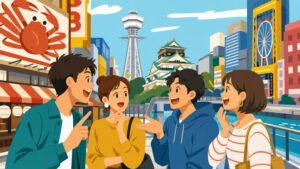
Moving to a new city is a paradox. You’re surrounded by millions of people, yet the feeling of profound isolation can be deafening. This is doubly true in Japan, a country where social circles are often forged in the crucibles of school and work, leaving outsiders with a steep climb to find their footing. You’ve probably heard the cliché, the one that gets repeated in every travel blog and well-meaning guidebook: “Osaka people are friendly.” And while it’s not untrue, it’s a dangerously simplistic map for a complex social landscape. Friendliness in Osaka isn’t a passive, gentle warmth; it’s an active, engaging, and sometimes chaotic contact sport. It’s less of a polite smile and more of a playful jab in the ribs, followed by an invitation to get ramen. For a foreigner trying to navigate this, the gap between “friendly” and “friend” can feel like a chasm.
This is where the humble language exchange cafe comes in. In cities like Tokyo, these spaces can often feel transactional, like a sterile classroom where you trade your native English for an hour of Japanese practice. But in Osaka, they are something else entirely. They are social laboratories. They are microcosms of the city itself—boisterous, a little messy, and teeming with opportunities for genuine connection, provided you understand the unwritten rules of engagement. This guide isn’t just a list of places to go. It’s a field manual for decoding the Osakan social psyche, using the language exchange cafe as your training ground. It’s about learning to ride the city’s unique conversational rhythm, understanding why a joke is more valuable than a business card, and ultimately, transforming yourself from a temporary resident into a true member of a community. It’s about finding your tribe.
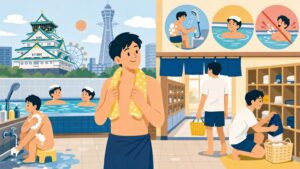
For a deeper look at how Osakans build community in their daily lives, consider exploring the unique social role of the local sento.
The Osaka Social Contract: More Than Just “Friendly”
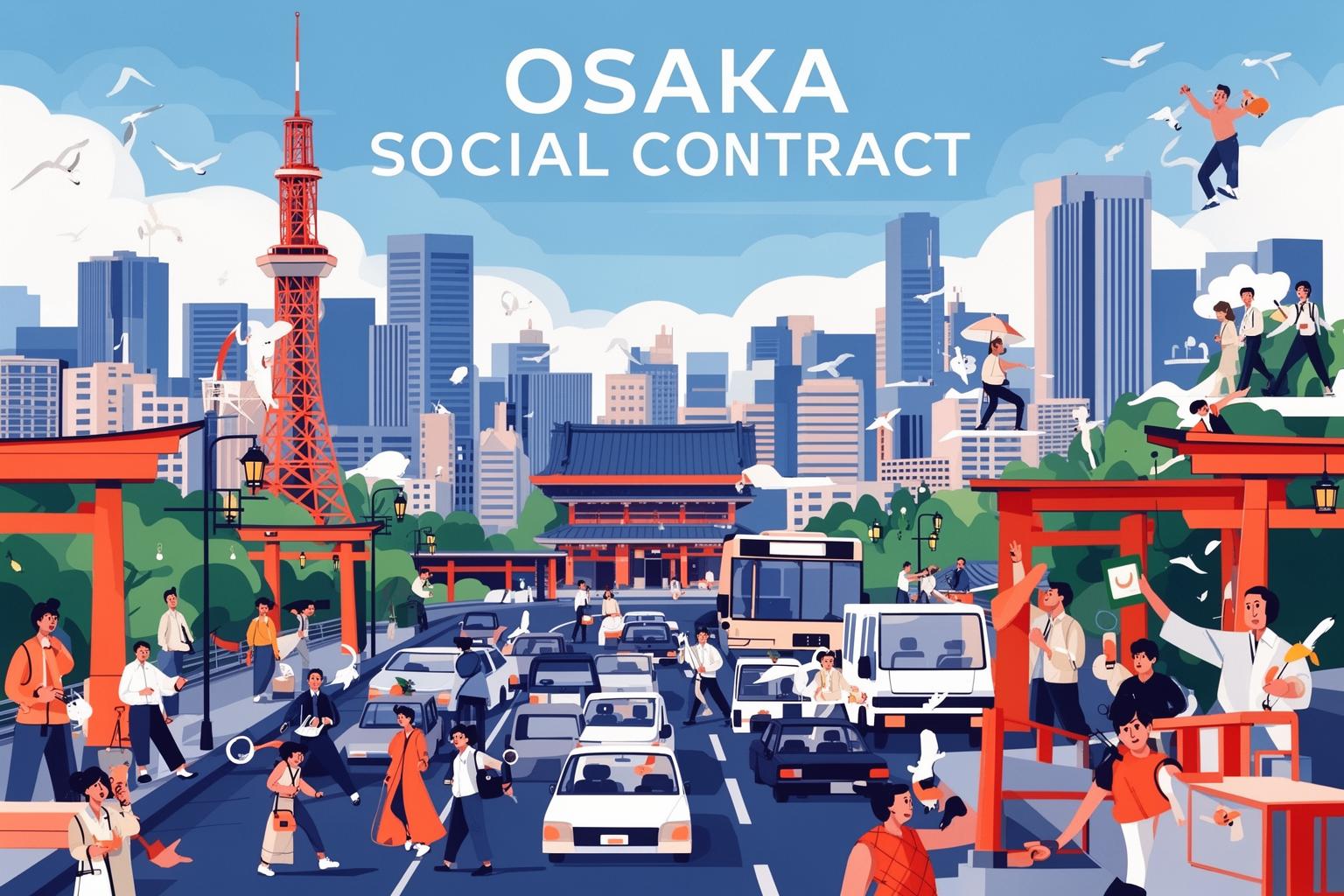
The first thing you need to do is unlearn the general definition of “Japanese politeness.” In Tokyo, social interactions often resemble a carefully choreographed ballet. There are fixed steps, a clear distance is kept, and the ultimate aim is smooth, frictionless harmony. You exchange meishi (business cards), bow at the proper angle, and engage in conversations that safely revolve around topics like work, weather, and neutral hobbies. It’s efficient and respectful, but to a newcomer, it can feel like interacting with a series of beautifully polished, impenetrable walls.
Osaka, however, throws that script out the window. If Tokyo is a ballet, Osaka is an improvisational comedy show. The essence of communication in Osaka isn’t harmony; it’s engagement. It’s about closing the distance, not preserving it. The “friendliness” you experience is a direct invitation to join in. When an obachan (older lady) on the street offers you a free candy, her famous ame-chan, she’s not merely being kind. She’s opening a channel. Your response is expected to go beyond a simple “arigatou.” It should be warm, slightly exaggerated, perhaps even with a touch of humor: “Wow, thank you! You saved my life, I was starving!” This readiness to play along, to dive into the scene, is a fundamental pillar of social life here.
This dynamic is rooted in Osaka’s history as a merchant city. Unlike the samurai and bureaucrats of Edo (now Tokyo), Osaka’s strength was built on commerce. Merchants had to be shrewd, direct, and excellent at reading people. They needed to establish rapport quickly, haggle with a smile, and use humor to smooth the wheels of a deal. This legacy persists today. People value directness, authenticity, and a good sense of humor over strict formality. They want to know who you really are, not just your job title. This is where the concept of nori (ノリ) becomes crucial. Nori is hard to translate directly; it blends vibe, mood, and shared energy. To “have good nori” or “match the nori” means you can sync with a group’s conversational rhythm, add to the rising energy, and follow the flow of jokes. A language exchange café is the perfect, low-pressure place to practice reading and matching nori before trying it out in the real world.
Why Language Exchange Cafes? The Unspoken Rules of Engagement
In a society marked by many rigid social structures, the language exchange cafe acts as an essential “third space.” It is neither home nor work, but rather a neutral setting where typical rules of hierarchy and social obligation are relaxed. This is especially appealing in Japan, where interactions are often influenced by one’s status as a senpai (senior) or kohai (junior). At the cafe, everyone is simply people trying to communicate, which greatly levels the playing field. For many Japanese participants, it offers a refreshing change—a place to practice a skill, yes, but also a chance to meet individuals from diverse backgrounds, both foreign and Japanese, without the usual social pressures.
However, it’s important to recognize the variety of motivations involved. Not everyone is there to become your closest friend. Successfully navigating these spaces means learning to read subtle signals that differentiate a brief, transactional exchange from the beginnings of a genuine connection. This is a valuable skill that will benefit you in all areas of life in Osaka.
The Transactional vs. The Genuine Connection
You will undoubtedly encounter the “language leech.” This is the person who views you not as an individual but as a living, breathing English textbook. Their questions will relentlessly focus on grammar, vocabulary, and pronunciation. They’ll correct your Japanese mistakes with surgical precision yet show no interest in your life, thoughts, or experiences. They may be perfectly polite, but the interaction will feel hollow, like a business transaction. Don’t be discouraged by this; it’s a common type.
The key is to recognize them early and politely move on. The people you want to connect with are those who use language as a tool for building relationships, not as the ultimate goal. They’ll ask follow-up questions. They won’t just ask “Where are you from?” but also “What’s it like there? What foods do you miss?” They’ll share stories about their own lives, their work struggles, or their favorite local band. The conversation will drift away from language study into real life. A strong sign of genuine interest is lingering after the session ends. Those who stay behind chatting in the hallway or planning the next gathering—those are your people. They came for the language but stayed for the community.
Navigating the “Gaijin Hunter” Phenomenon
Let’s be straightforward about a sensitive issue. Some attendees, regardless of gender, come primarily hoping to find a foreign partner. This phenomenon, often called “gaijin hunting,” may initially feel flattering but can quickly become tiring or uncomfortable. It’s best to approach this awareness without cynicism. Often, it arises from a sincere curiosity about other cultures or a wish to break free from traditional Japanese dating norms. However, it can also lead to shallow interactions where you are appreciated more for your foreignness than your personality.
Identifying this involves paying attention to the nature of compliments and questions you receive. Are they centered on your appearance, your “cool” foreign status, or your exotic background? Or do they focus on your ideas, humor, and shared interests? Trust your instincts. If a conversation feels more like an interview for a romantic partner than a casual chat, it probably is. The best approach is to set polite but clear boundaries. You can steer the discussion back to neutral topics or, if needed, excuse yourself and join another group. Recognizing this dynamic helps you handle it without letting it spoil your overall experience. Genuine people are the majority; you just need to learn to filter accordingly.
The Money Question: Pay-per-hour vs. Community Hubs
Language exchange venues in Osaka generally fall into two groups, and their business models often shape the atmosphere you’ll find inside. Understanding this distinction is crucial for choosing a place that fits your social goals.
Type 1: The Corporate Chains
These are the sleek, well-promoted cafes, usually located in prime spots near major stations like Umeda or Namba. You generally pay by the hour, which may include unlimited soft drinks. They are clean, bright, and highly organized, with staff helping to facilitate introductions and rotating partners so everyone gets a chance to speak. The advantage is predictability and structure, making it ideal for beginners who may be nervous about starting conversations. You are guaranteed speaking time. The downside is that this structure can limit spontaneity. The hourly fee encourages clock-watching, making interactions feel rushed and transactional. It can feel more like a networking event than a cozy cafe. These spots are excellent for focused language practice but less effective for forming deep, lasting friendships.
Type 2: The Independent, Community-Run Spots
These hidden gems are often tucked away in less central neighborhoods and run by passionate owners who genuinely aim to build a community. The business model is simpler: just purchase a drink or snack. There’s no ticking clock and no forced partner rotations. The atmosphere is usually more relaxed, sometimes chaotic and organic. You might find a well-worn couch, a bookshelf full of manga, and a group of regulars who have been coming for years. The initial barrier to entry can feel higher, with cliquish vibes, and you’ll need to be more proactive in starting conversations. However, the potential reward is much greater. These are the places where friendships form. People linger for hours, conversations flow naturally, and evenings often extend to spontaneous dinners or trips to nearby bars. If you’re willing to make the initial effort to break the ice, these community hubs are where you’ll find your tribe.
A Tour of Osaka’s Language Exchange Scene (Without Being a Tourist Guide)
The essence of a language exchange cafe is deeply connected to its surrounding neighborhood. The people you encounter and the conversations you engage in will mirror the local atmosphere. Selecting a cafe involves more than just choosing a location; it’s about choosing the social environment you want to be part of.
Umeda & Kita: The Polished Professional
Umeda serves as the shining northern gateway to Osaka—a maze of department stores, corporate offices, and busy train stations. The ambiance here is sophisticated, fast-moving, and career-focused. Language exchange cafes in this district naturally attract the after-work crowd: salarymen loosening their ties, stylish office ladies, and driven university students from nearby campuses. These venues typically have a more reserved and professional tone at first, featuring structured seating, set start and end times, and conversations that often begin with the familiar Tokyo-style icebreaker: “What do you do for work?”
Yet, this is still Osaka. Don’t confuse the professional exterior with a lack of warmth. Once initial formalities dissolve, the renowned Osakan directness and humor will emerge. Discussions might revolve around navigating workplace culture, grumbling about the long commute on the Midosuji line, or planning weekend escapes from the city. This is a great spot to meet individuals serious about their careers who also know how to relax. The initial challenge lies in breaking through their reserve, but the payoff is connecting with motivated, intelligent people who offer unique insights into Kansai’s professional life.
Shinsaibashi & Minami: The Creative & International Hub
If Umeda represents Osaka’s brain, Minami is its vibrant, neon-lit heart. This area, including Shinsaibashi, Namba, and the eclectic Amerikamura, pulses with youth culture, fashion, and international exchange. It’s loud, crowded, and unapologetically lively. Language exchange cafes here match this vibe perfectly—often informal, a bit edgy, and bustling with a wildly diverse crowd. You might find yourself sharing a table with fashion students sporting brightly colored hair, aspiring musicians carrying guitar cases, international students from around the world, and backpackers passing through.
The energy is electric, and starting conversations is effortless. No formal introductions are needed; a remark about someone’s band t-shirt or a question about their distinctive piercings is enough to spark dialogue. Here, the Osakan nori (spirit) shines brightest. Conversations are rapid, jokes flow nonstop, and topics can shift swiftly from deep philosophy to the latest street fashion trends. This is the ideal environment for creatives or anyone who thrives in a dynamic, spontaneous setting. While the connections here may be more fleeting due to the international crowd, they tend to be among the most exciting and vibrant.
Tennoji & The ‘Deep Osaka’ Vibe
Tennoji is a district full of striking contrasts. It hosts Abeno Harukas, Japan’s tallest skyscraper, yet borders Shinsekai, a neighborhood nostalgically preserved from the Showa era. It’s a major transportation hub but gives off a more local, less hectic feel than Umeda. This fusion of old and new, polished and gritty, shapes the language exchange scene. Cafes tend to be smaller, owner-run spots with devoted regulars.
Here, you encounter what’s known as “Deep Osaka.” The crowd leans less toward high-flying professionals or transient creatives and more toward long-term residents—both Japanese and foreign. You’ll meet people who have lived in the area for decades, English teachers settled permanently in Osaka, and locals curious about the foreign newcomers in their community. Conversations tend to focus less on abstract interests and more on everyday life: the best places to shop for groceries, upcoming local festivals, or the ongoing saga of the Hanshin Tigers baseball team. Gaining entry into these social circles takes time. These are established communities where your presence needs to be consistent to be seen as more than just a visitor. But with persistence, you’ll find something truly special here: a sense of belonging that feels like family. These are the people who’ll help you with your apartment lease, invite you to New Year’s mochi-pounding gatherings, and genuinely make Osaka feel like home.
The Art of the Osakan Conversation: A Practical Field Guide
Grasping the cultural context is one thing; applying it in practice is quite another. Entering a room full of strangers and initiating a conversation can be intimidating no matter the language. However, in Osaka, a few particular strategies can significantly reduce this challenge and boost your chances of forming genuine connections.
Lead with a Joke, Not a Resume
In many cultures, the typical self-introduction involves stating facts: your name, your country, your profession. This is the jiko shoukai. While necessary in formal situations, it kills the vibe during casual encounters in Osaka. It feels dry, boring, and creates distance. Instead, Osakans prefer to start with personality. Self-deprecating humor is highly valued, signaling that you don’t take yourself too seriously—an admired quality here.
Rather than giving a formal intro, try beginning with a humorous observation or a light complaint. For example: “I just tried to order coffee and I think I accidentally asked for a giraffe. My Japanese is a disaster today!” This immediately breaks the ice, invites laughter, and makes you relatable. People aren’t interested in your resume; they want your story, your quirks, and your ability to laugh at yourself. In Osaka, humor often impresses more than status. Master a few simple, self-deprecating lines, and you’ll find doors opening all around you.
Master the Aizuchi (Interjections) – Osaka Style
Aizuchi are the verbal nods in Japanese conversation—the “uh-huhs,” “I sees,” and “reallys” that show you’re paying attention. In standard Japanese, you hear hai, ee, sou desu ne. These are fine, but to genuinely connect in Osaka, you need to sprinkle your talk with local flavor. The dialect, Osaka-ben, is the heart of the city’s communication style.
Learning just a few key phrases will transform your interactions. When someone shares a surprising story, instead of a flat hontou desu ka? (is that true?), try the more enthusiastic honma ni!? (really!?). For something funny, don’t just say 面白い (omoshiroi); go for めっちゃおもろい (meccha omoroi – super funny). And the crown jewel of Osaka phrases, the versatile なんでやねん (nande ya nen – roughly, “what the heck!” or “no way!”), perfectly responds to jokes or absurd comments. Using these phrases, even with a foreign accent, shows you’re making an effort to engage with local culture on its own terms. It signals respect and speeds up building rapport. People will light up and instantly see you as someone who truly “gets” Osaka.
The Follow-up: Turning a Cafe Chat into a Friendship
This is the most crucial part. You’ve had a great chat, laughed, exchanged stories. How do you keep that positive vibe from fading as soon as you leave? In Tokyo, the next step might be a formal exchange of contacts followed by a carefully planned coffee outing next week. In Osaka, the process is much more immediate and spontaneous.
The magic word is nijikai, the second party. Osakan social life flows naturally. The language exchange is just the first stop. As the official session wraps up, listen for the golden question: “So, what’s next?” or “Anyone hungry?” This is your cue. The group might decide to grab takoyaki, hit a standing bar, or do karaoke. Saying “yes” to these spontaneous invitations is the most important factor in building friendships here. Hesitating or making excuses can be seen as disinterest. If you say you’re “busy,” make sure you have a very good, specific reason. True bonding doesn’t happen at the cafe table; it happens over shared plates of gyoza or while shouting your heart out to cheesy ’90s pop songs at karaoke. Embrace spontaneity. Your social life—and your integration into the city—depends on it.
Beyond the Cafe: Where the Real Connections Happen
The language exchange cafe is an excellent starting point, serving as a social incubator. However, it should not be your final stop. The ultimate aim is to graduate from the cafe and create a life full of activities and friends that don’t rely on a structured, two-hour meeting. The connections you make over coffee and broken Japanese serve as your gateway to the rest of the city.
Consider the people you meet as curators of their own distinct Osaka experiences. The musician you bonded with in Shinsaibashi? Invite him to take you to a live house in Amerikamura. The office worker from Umeda? See if she’d be interested in attending a Bunraku puppet theater performance. That passionate baseball fan from Tennoji? Ask him for a ticket to a Hanshin Tigers game at Koshien Stadium—an essential part of Osaka’s culture.
By using these initial connections to explore common interests, you transform the relationship from a context-dependent one (“my language exchange friend”) into a genuine friendship (“my friend I go to concerts with”). This is how you truly build a life here. Join the futsal team that one of your cafe acquaintances plays on. Attend the monthly art market in Nakazakicho with the creative person you met. Take a cooking class to master making authentic okonomiyaki. Each new activity broadens your circle and strengthens your ties to the city. The cafe opens the door, but it’s up to you to confidently step through it and explore the vibrant, expansive, and endlessly captivating home that is Osaka.
Final Thoughts: It’s a Marathon, Not a Sprint
Let’s be honest: building a meaningful social life in a foreign country is challenging. It requires time, resilience, and a willingness to be vulnerable. Some days, you’ll feel drained from the effort of communicating in another language. Conversations may fall flat, cultural misunderstandings might leave you perplexed, and moments of loneliness can feel overwhelming. This is all part of the journey. The important thing is to keep going.
Osaka, more than any other city in Japan, rewards effort. It favors those brave enough to crack a joke, stumble through their Osaka-ben, or accept a spontaneous invitation. The city’s social barriers are lower, but you have to actively push against them. You can’t wait for invitations to come your way; you need to put yourself out there, week after week. The language exchange café is your gym—it’s where you strengthen your social skills, practice conversation, and learn the city’s rhythms.
Embrace the chaos. Laugh at your own mistakes. Be curious about the people you meet. And when someone asks if you want to go for takoyaki afterward, always, always say yes. Do that, and you won’t just be living in Osaka—you’ll become a part of it. You’ll have found your tribe.