
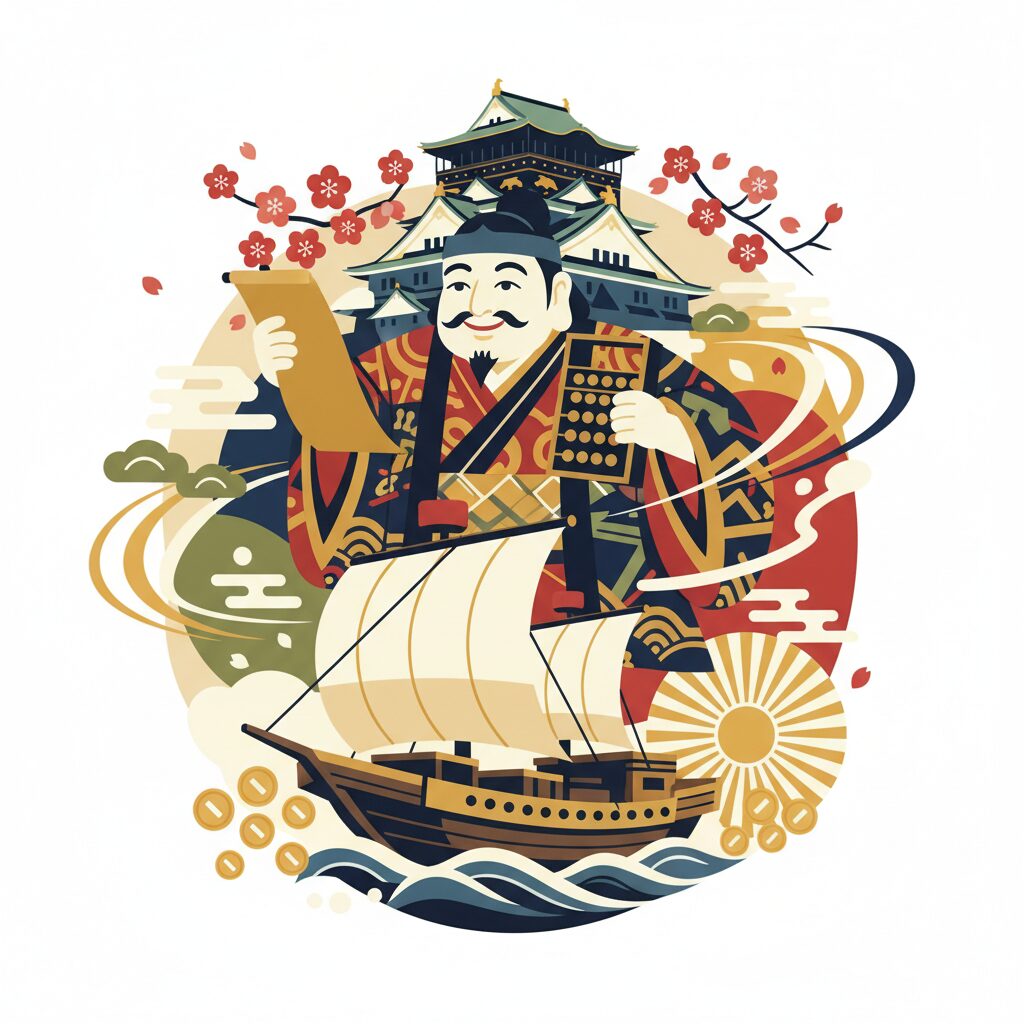
Hey there, I’m Megumi. As an event planner based in Tokyo, my world is a whirlwind of logistics, schedules, and… well, very Tokyo-style efficiency. We live by the calendar, the detailed email, the perfectly formatted proposal. Business is a clean, well-lit room. But a huge part of my job involves working with vendors, artists, and partners in Osaka, and let me tell you, stepping into that world is like switching from a symphony orchestra to a live jazz session. The energy is different. The rhythm is unpredictable. The rules are unwritten, felt in the gut rather than read in a manual. For years, my Osaka trips were a masterclass in this very specific, very human way of doing business. It was all about the long lunch meetings in Umeda, the after-work drinks in Namba that sealed the deal, the way a negotiation could feel more like a friendly argument between old pals. It was about shaking a real hand, looking someone in the eye, and feeling the energy in the room. This, I learned, was the legendary Akindo Seishin—the Osaka Merchant Spirit.
Then, the world changed. Suddenly, those essential face-to-face meetings evaporated. My bullet train tickets gathered dust. Our interactions were flattened into the cold, two-dimensional plane of a laptop screen. In Tokyo, the transition felt… almost natural. We traded meeting rooms for Zoom links, and the relentless hum of business barely missed a beat. But for Osaka, it felt like a fundamental challenge to its very identity. How can a culture built on the warmth of a handshake, the nuance of a shared laugh, and the art of reading the air possibly thrive through a webcam? This question became the core of my recent experiences. The shift to remote work hasn’t just been a logistical hurdle for Osaka; it’s been an existential test for its centuries-old business soul. This is the story of how the city’s merchants, famous for their street smarts and adaptability, are navigating a world where the personal touch has gone digital, and how the vibrant, chaotic, and deeply human spirit of Osaka business is fighting to find its voice in the silence of a muted microphone.
This digital adaptation of the Akindo Seishin is as much about preserving the city’s unique social fabric, seen in everything from its business dealings to its cherished konamon family meals, as it is about closing deals.
The Heartbeat of Commerce: Understanding Akindo Seishin
Before discussing the digital clash, it’s essential to understand what’s truly at stake. What exactly is Akindo Seishin? Foreigners often translate it as “merchant spirit” and imagine quaint, old-fashioned shopkeepers. While that’s not inaccurate, it’s like calling a hurricane “a bit of wind.” It’s a profound, intricate philosophy deeply embedded in the city’s essence, shaped by centuries as Japan’s commercial powerhouse, the tenka no daidokoro or “the nation’s kitchen.” Unlike Tokyo, where samurai and bureaucratic culture prevail, Osaka was built by people who lived by buying, selling, and trading. Their status and survival depended on their sharpness, relationships, and knack for turning a profit. This history forged a business culture that feels distinctly different from the rest of Japan.
Business as a Human Sport
In Tokyo, business meetings often resemble formal ceremonies, with strict agendas, polished presentations, and a focus on conveying information clearly and efficiently. In Osaka, business operates more like a friendly contact sport known as shobai. The aim isn’t simply to win but to enjoy the interaction. Osaka businesspeople want to truly know you. Who are you? What drives you? Can I trust you? These questions aren’t answered by PowerPoint slides but through the casual banter before the meeting begins, shared meals, and spontaneous jokes. The actual deal is almost secondary to the relationship you build. If they like you, they’ll find a way to collaborate. If not, even the best product at the best price might not be enough. That’s why, before the pandemic, many deals were sealed not in boardrooms but over takoyaki and highballs in tight Shinsaibashi izakayas. The formal meeting was just the first round; the real business unfolded when the ties were loosened.
The Philosophy of the Price Tag
A prominent, often misunderstood element of Akindo Seishin is its approach to money. There’s a stereotype that Osaka people are overly stingy (kechi). This is a vast oversimplification. It’s not about stinginess but about being smart and maximizing value. This stems from the concept of soroban kanjo, or “abacus sense.” Every merchant carried an abacus, not only for calculations but as a symbol of a sharp, practical mind that constantly balanced cost against benefit. This is evident in the famous practice of nebiki—haggling. In Tokyo, questioning a price may be seen as impolite. In Osaka, it’s a form of dialogue—a dance. When you haggle with a shop owner at Sennichimae Doguyasuji Shopping Street, you’re not offending them; you’re engaging, showing you’re a savvy customer who understands value. It’s a conversation that fosters connection. The seller demonstrates flexibility and generosity, while the buyer feels they’ve earned a fair deal. This same principle applies to B2B dealings. A submitted quote isn’t final but an opening offer. The ensuing back-and-forth is where true negotiation takes place, and it’s an essential part of building the relationship. It shows both parties are actively participating in the shobai game.
“Maido!” is More Than a Greeting
Step into any Osaka shop, and you’ll be welcomed by a cheerful, booming “Maido!” or “Maido, ookini!” which roughly means “Always, thank you for your business!” Yet it’s far more than a polite phrase. It’s a verbal contract of loyalty, acknowledging an ongoing relationship. It says, “I remember you, you’re a regular, and I appreciate you.” The concept of the regular customer is the lifeblood of Osaka commerce. An akindo (merchant) prefers a loyal customer who buys steadily over many years, even at slimmer margins, over a one-time large sale. Why? Because loyalty breeds trust, and trust is the most valuable currency. This is why Osaka businesspeople dedicate so much time to ningen kankei (human relationships). They remember your children’s names, inquire about your last trip, and send small gifts during the Obon festival. It’s a holistic approach to business where the transaction is only a small part of a broader, ongoing human connection.
The Digital Shockwave: When Remote Work Hit Naniwa
The declaration of the first state of emergency was a seismic event throughout Japan, but in Osaka, it felt as if it struck the very core of its social and economic life. Tokyo, with its tech-centric industries and more impersonal business culture, adapted surprisingly quickly. Zoom, Slack, and Teams became the new norm almost overnight. However, in Osaka, the response was a blend of confusion, resistance, and a profound sense of loss. Remote work tools weren’t merely new; they were fundamentally alien to the Akindo Seishin.
The Awkward Silence of the Video Call
For a culture so reliant on kuuki wo yomu—literally “reading the air”—a video call is like sensory deprivation. All the subtle cues an Osaka merchant uses to assess a situation suddenly disappeared. You couldn’t see the slight finger tap signaling impatience. You couldn’t sense the energy shift when proposing a tough number. You couldn’t deliver the perfectly timed, self-deprecating joke to ease tension and witness the genuine, unguarded smile it sparked. A video call reduces everyone to a small, pixelated box. The lively, overlapping chatter of an in-person meeting, where interruptions signal engagement, became a chaotic jumble of audio glitches. Comfortable silences that allow for reflection turned into awkward voids where you wondered if the connection had frozen. Early remote meetings were agonizing. People talked over each other and then lapsed into long, painful silences. The natural rhythm of Osaka dialogue—a dynamic exchange—was replaced by a sterile, turn-taking monologue. It felt unnatural, inefficient, and deeply unsatisfying.
“But I Can’t See Their Real Face!”
A frequent complaint from my Osaka partners was the inability to see someone’s “real face.” They didn’t mean this literally; they meant they couldn’t truly sense the person. Was their smile genuine or forced? Were their eyes engaged or secretly checking emails on another screen? Trust, usually built through shared physical presence, was impossible to replicate. An Osaka sales manager once said, “On Zoom, everyone wears their ‘presentation face.’ I don’t know what they’re really thinking. Before, I could tell in five minutes over coffee if we could do business together. Now, after three one-hour calls, I still have no idea.” This uncertainty was paralyzing. Deals slowed not due to logistics, but because of a crisis of trust. The human element—the merchant’s gut feeling—was removed, leaving only a sterile exchange of data.
The Death of the “Genba”
Osaka business holds deep respect for the genba—the actual place where work happens. Whether a factory floor, a shop, or a construction site, being there in person is essential. Problems are solved by going to the source, talking to people on the ground, and seeing the situation firsthand. Remote work was a direct assault on the genba. Managers felt disconnected from their teams. Salespeople couldn’t visit client offices to understand their needs. The entire hands-on problem-solving philosophy was thrown into turmoil. This was especially acute in the many small and medium-sized enterprises (SMEs) that are the backbone of Osaka’s economy. These often multi-generational family businesses rely on tradition and face-to-face interaction. The sudden push to digitize and manage projects through software instead of morning check-ins was a monumental challenge. It wasn’t just about buying laptops; it was about rewriting a century of business culture on the fly.
The Hybrid Shuffle: How Osaka Merchants are Bending, Not Breaking
For a time, it appeared that Osaka’s distinctive business culture might be threatened by the new world order. But to assume that is to underestimate the fundamental principle of Akindo Seishin: adaptability. A true merchant doesn’t break when the rules shift; they learn the new game and figure out how to win. Osaka isn’t abandoning its spirit; it’s transforming it. The process is messy, awkward, and ongoing, but a new hybrid model is taking shape—one that combines digital tools with the city’s enduring emphasis on human connection. It’s a fascinating evolution to observe.
Redefining “Maido”: From Izakaya to Zoom
The cherished venue for relationship-building, the izakaya, suddenly became off-limits. So how do you sustain that vital personal connection? The answer, it seems, is a multi-faceted digital approach to combat impersonality. Instead of one long lunch meeting a month, savvy account managers began scheduling frequent, short, informal video check-ins. A fifteen-minute “virtual coffee break” with no agenda other than to ask, “How are you doing? How’s the family?” These brief, regular touchpoints started to recreate the feeling of casually stopping by a client’s office. The objective shifted from closing a deal on every call to simply nurturing the relationship and keeping the connection warm. The zatsudan, or idle chit-chat that used to serve as a five-minute warm-up for meetings, has now become the entire focus of many calls. It’s a deliberate, scheduled effort to mimic the spontaneous interactions that once built trust. Some have even organized online nomikai (drinking parties), which, though imperfect substitutes, demonstrate the powerful desire to connect on a human level beyond the strict confines of formal meetings.
The Art of the Digital Haggle
How do you haggle when you can’t read the room? The dynamic, in-person nebiki dance has been among the hardest elements to translate online. The spontaneity is gone. You can’t lean in conspiratorially and say, “Just between us, what’s the best you can do?” Yet new tactics have emerged. The negotiation process has become longer and more deliberate. Instead of one decisive meeting, it’s now a series of exchanges across various platforms. A formal quote is sent by email. Then, a follow-up video call is scheduled to discuss it—not to finalize it. During this call, the Osaka side probes for flexibility, using humor and personal appeals. Afterward, a message might arrive via chat apps like LINE or Slack: “That was a good chat! But regarding that price… my boss is a real stickler, you know how it is! Any chance we can get a bit closer to X?” This multi-channel approach allows them to infuse personality and the sense of personal negotiation back into the otherwise sterile process. It separates the formal discussion from the informal, relationship-based haggling. It’s less efficient but refocuses on the human element.
Reading the Virtual Room: The New Non-Verbal Cues
Osaka merchants are learning a new language of digital body language. They might not be able to read the entire room, but they’ve become experts at interpreting the small box on their screen. They pay close attention to tone of voice. Is there hesitation? Is the laugh genuine? They watch the eyes. Are they fixed on the screen or darting away? The chat box has also become a crucial tool for real-time feedback. While one person is presenting, others might drop reactions or comments in the chat. A series of clapping emojis or a “great point!” message is the modern equivalent of an encouraging nod. Conversely, a complete lack of chat activity signals disengagement.
The Rise of the “Chat Comedian”
Importantly, humor—the great lubricant of Osaka business—has found a new outlet in chat applications. Slack and Teams channels have become stages for classic Osaka banter. The strategic use of exaggerated emojis, funny GIFs, and self-deprecating jokes serves a vital role. It breaks the monotony of remote work and continuously reinforces the team’s identity and personal connections. In a Tokyo-based company’s Slack, you might find formal announcements and project updates. In an Osaka company’s channel, you’ll see someone posting a picture of an outrageously large lunch, followed by a flood of witty responses (tsukkomi). This isn’t mere time-wasting—it’s the digital counterpart to office banter that fosters camaraderie and smooths collaboration. It’s a way of saying, “We’re not just colleagues; we’re a team that can laugh together.”
The Unspoken Rules of Osaka’s New Business Etiquette
For any foreigner working with or in Osaka, navigating this new hybrid world means understanding a fresh set of unwritten rules. What might be considered standard remote work practice elsewhere can be interpreted quite differently here. Overlooking these nuances may cause misunderstandings and harm the relationships you’re striving to build. This represents the new etiquette for the digital akindo.
The Pre-Meeting Banter Has Become Essential
In many business cultures, it’s regarded as efficient to start a video call precisely on time and dive straight into the agenda. In Osaka, this is a significant faux pas. The first five to ten minutes of any video call are precious zatsudan time. It’s not optional. You need to inquire about the weather, their weekend, the local Hanshin Tigers baseball team—anything personal and lighthearted. Jumping immediately into the main topic is viewed as cold, impersonal, and transactional. It implies that you care only about the deal, not the person. This initial small talk serves as your new handshake. It’s how you warm up the atmosphere, build rapport, and demonstrate that the human connection matters before business. Come ready with a simple, personal question to break the ice.
The Follow-Up “Zatsudan” Call
This crucial new step often bewilders outsiders. After a formal, multi-person video conference where a decision was discussed, don’t be surprised if your primary counterpart calls you informally a few hours later. This is not a sign of disorder. This is the real meeting. The video call serves as an official record and a way to share information with the group. The follow-up call is to hear the honne—the true, honest feelings. This is when they might say, “Okay, that presentation was good, but between you and me, Tanaka-bucho still has some concerns about the delivery timeline. Can you reassure me on that?” This is your opportunity for a candid, trust-building conversation akin to what used to happen over drinks. Always take this call. It’s frequently more important than the preceding meeting.
Camera On, Always (and Your Background Can Work in Your Favor)
In some remote work cultures, turning your camera off is acceptable. In Osaka, it can be a deal-breaker. A black screen showing only your name acts as a barrier. It makes reading cues, building trust, or forming a personal connection impossible. Keeping your camera on signals respect, transparency, and engagement. Don’t worry too much about having a perfectly curated, professional background. Unlike in more formal Tokyo, a somewhat untidy room, a pet strolling by, or a child popping in is often welcomed. It’s a conversation starter. It humanizes you and makes you relatable. It encourages more zatsudan and helps reduce the digital divide. A sterile virtual background can feel cold and distant, while a peek into your real life can unexpectedly strengthen relationships.
When Unsure, Over-Communicate
The greatest risk in this new environment is misinterpretation. A brief, direct email that might be seen as efficient in Tokyo could come across as blunt or harsh in Osaka. A joke that misses the mark in chat might cause confusion. The answer is to over-communicate, especially regarding relationships. Add warm openings and closings to your emails. Use emojis in chat to clarify your intentions. If you notice any confusion or a sudden mood shift, don’t hesitate. Pick up the phone. A quick five-minute call saying, “Hey, just wanted to make sure my last message was clear!” can resolve an issue that might otherwise linger for days over email. Proactively clarifying and showing you care about the other person’s feelings is a fundamental part of the new digital Akindo Seishin.
Looking Ahead: The Future of Akindo Seishin in a Digital World
Is the soul of Osaka business being undermined by the cold logic of remote technology? It’s a question I’ve often reflected on while observing my partners and colleagues adjust. My conclusion is no. It’s not being eroded; it’s transforming. The Akindo Seishin has never been about a fixed set of customs—it wasn’t merely about drinking parties or face-to-face bargaining. It’s a philosophy, a conviction that business is fundamentally human. It embodies being sharp, adaptable, resilient, and deeply committed to the people you work with.
While the tools have evolved, the philosophy endures. Osaka’s younger business generation, who are digital natives, are naturally merging these two realms. They are discovering new ways to be personable on Slack, to cultivate trust over Zoom, and to sustain relationships through a smart combination of digital and (now resurgent) in-person meetings. The hybrid model seems here to stay, and in many respects, it may even be strengthening Osaka business. It demands a more intentional and mindful approach to relationship building. You can no longer rely on chance encounters; you must actively create opportunities for connection.
Living and working here, or with people from here, means embracing this ongoing translation. It means recognizing that behind every scheduled Zoom meeting lies a wish for an impromptu chat, and behind every formal email, the hope for a follow-up call to truly engage. The city’s merchant spirit, forged in the bustling markets of feudal Japan, proves just as tenacious and resourceful in the virtual marketplace of the 21st century. The handshake may now be digital, but the warmth, wit, and steadfast belief in human connection remain unmistakably and resiliently Osaka.








