
It happened to me on the Hankyu line, somewhere between Umeda and Juso. I was staring out the window, lost in the blur of residential rooftops and tangled power lines, when a gentle poke on my arm jolted me back. An older woman, probably in her late seventies, with a magnificent perm of silver hair and a dazzlingly bright purple jacket, was holding out her hand. Nestled in her palm, gleaming in its crinkly wrapper, was a single lemon-flavored hard candy. She smiled, a constellation of wrinkles forming around her eyes, and said something in a rapid-fire dialect that my textbook Japanese couldn’t quite catch. But the gesture was universal. She was offering me candy. A complete stranger. On a crowded train.
My first reaction, as a Brit conditioned to a certain level of public reserve, was a cocktail of confusion and mild suspicion. Why? What did she want? Was this a trick? In London, accepting anything from a stranger on public transport is a behavior you’re taught to avoid. But here, in the heart of Osaka, her expression was so open, so genuinely warm, that my apprehension melted away. I stammered out a clumsy “Arigato gozaimasu,” took the candy, and bowed my head slightly. She gave a satisfied nod, popped a candy of her own into her mouth, and turned back to her friend, resuming their animated conversation as if nothing unusual had happened. For her, it was entirely usual. For me, it was a profound cultural puzzle.
This wasn’t a one-off event. It happened again in a long queue for a bank teller. And then at a local vegetable stand in a sleepy shotengai, or shopping arcade. It was almost always an older woman, an ‘obachan,’ who would, after a moment of shared silence or a brief exchange of smiles, dive into a cavernous handbag and produce a small, sweet offering. I soon learned this wasn’t just random kindness. This was a ritual. This was ‘Ame-chan’ culture, and it’s one of the most potent, revealing, and utterly charming keys to understanding the soul of Osaka. It’s a social currency that Tokyo, with its polished efficiency and polite distance, simply doesn’t trade in. It’s a tiny gesture that speaks volumes about how this city connects, communicates, and cares. Forget everything you think you know about Japanese formality; in Osaka, the rules are written in sugar.
This unique form of connection, much like the city’s famed merchant soul, thrives on personal interaction and a distinct local character.
What Exactly is ‘Ame-chan’? More Than Just a Piece of Candy
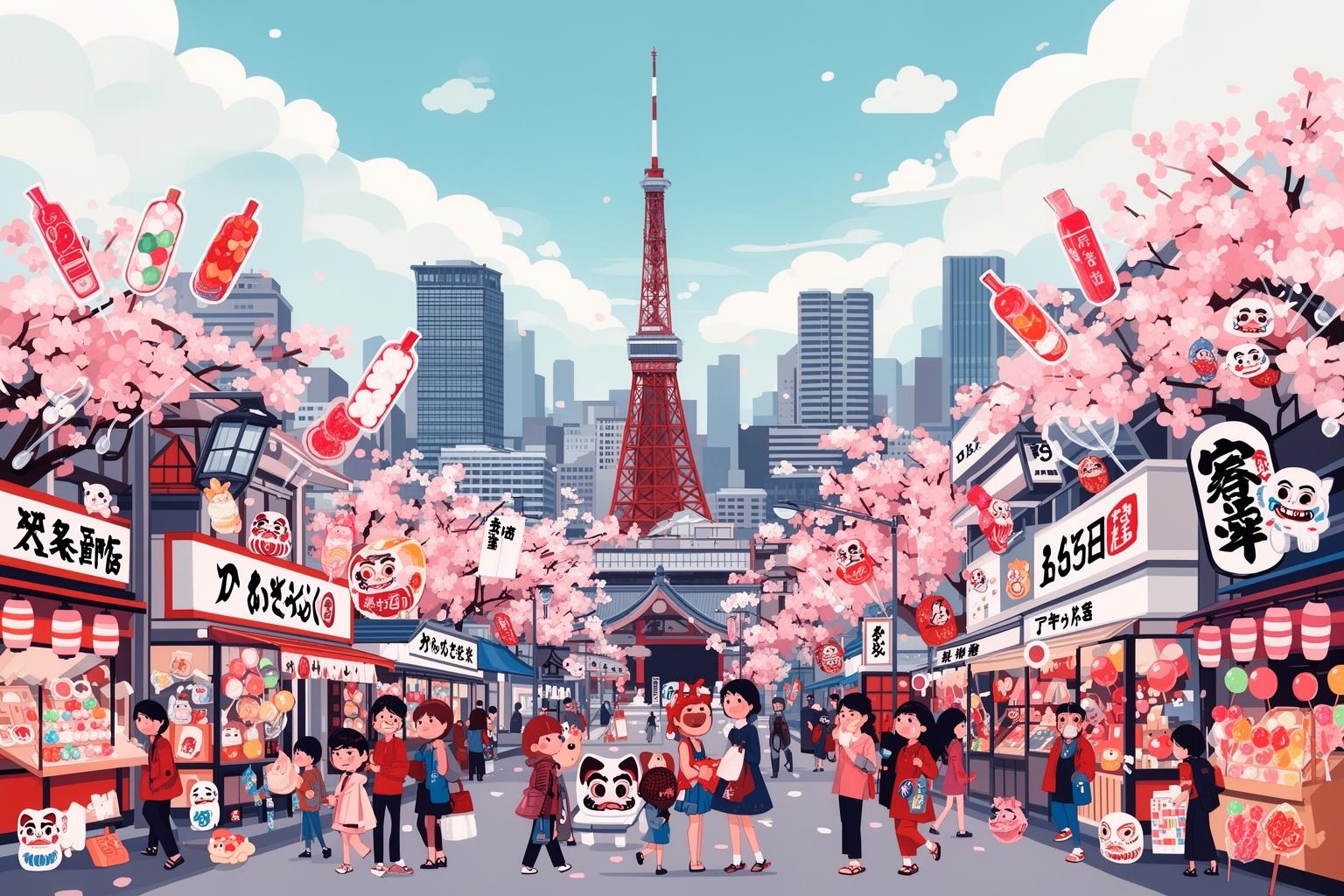
To truly understand what’s happening when a stranger offers you a fruit drop, you first need to grasp both the language and the object itself. It’s not merely about the candy; it’s about the culture wrapped up in that tiny package. The whole exchange is a performance, a piece of social theater, and knowing your part is crucial for anyone wanting to feel at home here.
The Language of ‘Ame’
The word itself is your initial hint. In standard Japanese, candy is called ‘ame’ (飴). But in Osaka, it’s almost always ‘ame-chan’ (飴ちゃん). That ‘-chan’ suffix makes all the difference. It’s a diminutive, a term of affection typically reserved for children, close friends, or pets. You might have a friend named Yuki whom you call Yuki-chan. By adding ‘-chan’ to ‘ame,’ the candy turns from a simple item into something familiar, endearing, and friendly. It’s no longer just ‘a candy’; it’s ‘a dear little candy.’
This linguistic nuance is deeply local. Head to Tokyo and mention ‘ame-chan,’ and you might be met with a blank stare or a polite, puzzled smile. It’s a core part of Osaka-ben, the city’s famously straightforward and expressive dialect. The phrase often accompanying the offer, “Ame-chan taberu?” (“Wanna have a little candy?”) or “Ame-chan iru?” (“Want a little candy?”), isn’t posed as a formal question but as a casual, almost familial invitation. It instantly breaks down barriers between strangers. It’s a verbal shortcut to closeness, framing the encounter as one among equals, among friends, even if you’ve only just met.
The Unspoken Transaction
Here’s what many foreigners, and even numerous Japanese from other regions, often misunderstand: the ‘ame-chan’ is not a gift in the conventional sense. In Japan, the culture of gift-giving is famously intricate, often involving elaborate rules of reciprocity known as ‘okaeshi,’ the custom of returning a gift of equal value. When given a formal present, you are socially expected to reciprocate with something comparable.
The ‘ame-chan’ operates entirely outside this framework. It is a gift without conditions. It functions as a social lubricant, not a commercial or social contract. Its worth is symbolic, not monetary. The aim is not to place you in debt; the aim is to connect with you. The act of offering and accepting is the essence of the exchange. It’s a tiny interaction meant to acknowledge a shared moment, to say, “I see you. You’re here, I’m here. Let’s make this moment a bit warmer.” Refusing the candy means more than declining a sweet; it means rejecting the connection, which can feel surprisingly cold in Osaka’s warm social environment.
The Anatomy of an Obachan’s Purse
To grasp the origins of this cultural practice, you must peer inside an Osaka obachan’s handbag. These bags are legendary. While the stereotype may include a heavy dose of leopard print (a pattern cherished in Osaka for its boldness and authenticity), the real magic lies within. It’s a Mary Poppins-like portal from which anything might appear, but one thing is certain: an endless supply of ‘ame-chan’.
This isn’t just a single pack of mints. Far from it. It’s a carefully stocked, multipurpose arsenal of sweets. There will be ‘kuro-ame’ (rich black sugar candy), a beloved classic. There will be ‘nodo-ame’ (medicated throat lozenges), ready for anyone nearby developing a tickly cough. There will be creamy milk candies, comforting and nostalgic. And, naturally, a colorful variety of fruit-flavored hard candies, bright and joyful. Each candy is individually wrapped, hygienic, and ready to be shared at a moment’s notice.
This portable candy stash is a form of social readiness. The obachan isn’t carrying candy just for herself. She carries it for the community, for the city. She is prepared for a fussy child, a weary commuter, a lost tourist, or someone simply sharing her bench. The purse acts as a public utility, a mobile station of goodwill, with the obachan as its cheerful and vigilant operator.
The Cultural Roots: Why Does This Happen in Osaka?
This tradition is no accident. It’s more than just a quirky habit. The ‘ame-chan’ culture is a direct, living expression of Osaka’s unique history and its core identity as a city. To understand why a stranger offers you candy, you need to look back centuries to how Osaka was founded and what its people have always cherished above all else: human connection as the foundation of everything.
The Merchant City DNA
For centuries, Osaka was known as ‘Tenka no Daidokoro’ – ‘The Nation’s Kitchen.’ It served as Japan’s commercial hub, a lively port city where rice, goods, and money flowed from across the country. Unlike Tokyo (then Edo), the center of samurai government defined by strict social hierarchies, Osaka was a city of merchants, artisans, and entrepreneurs. Here, family name or rank mattered far less than business skill, reliability, and the ability to cultivate strong relationships.
In a merchant culture, communication is key. Quick assessment of people, building trust, and maintaining a strong reputation were essential. Business wasn’t only about transactions; it was about long-term relationships. This fostered a mindset of pragmatism, directness, and a kind of social generosity. Offering a little extra, known as ‘omake’ (a freebie added to a purchase), was a common way to thank customers and encourage their return. It was a small investment in future goodwill.
‘Ame-chan’ is the modern, personal evolution of this merchant spirit. It’s a micro version of ‘omake’ applied to social interactions. It costs almost nothing, but the return on investment is immense. It immediately creates a smile, a word of thanks, and a brief but genuine human connection. It’s a business strategy for building a better society, one candy at a time. It smooths the daily grind, making interactions friendlier, easier, and more human.
Breaking Down Barriers: Osaka vs. Tokyo
To fully appreciate Osaka’s approach, you must contrast it with Tokyo’s. Tokyo’s culture largely descends from the samurai class that governed from Edo. This heritage prioritizes formality, discipline, order, and maintaining a clear divide between one’s public face (‘tatemae’) and private feelings (‘honne’). Public spaces are often quiet and orderly, and interactions with strangers tend to be minimal and highly polite. Privacy and personal space are paramount.
Osaka stands in stark contrast. The aim here isn’t to keep distance but to close it. The merchant’s instinct is to engage, find common ground, and get to honest conversation and genuine connection as quickly as possible. ‘Ame-chan’ is a powerful tool in this friendly mission. It’s impossible to stay formal and distant when an elderly woman cheerfully insists you take a pineapple-flavored candy. The act is informal, personal, and a bit playful. It breaks down the ‘tatemae’ and invites you into a shared moment of ‘honne.’
Imagine this scenario in Tokyo. If a stranger on the Yamanote Line offered you candy, your first reaction might be confusion or even alarm. Is this person alright? What’s their motive? In Osaka, the same act is understood as its complete opposite: a sign of welcome, normalcy, and community in action. It signals that you are not just an anonymous part of the urban machine but a fellow human being worthy of recognition.
The Role of the ‘Obachan’ – Guardians of Culture
At the heart of this tradition are the ‘obachan.’ In many societies, older women can become socially invisible. In Osaka, they are the social generals, the matriarchs who actively uphold the city’s cultural fabric. They are often assertive, witty, and utterly straightforward. They embody the city’s spirit: practical, caring, and a bit nosy in the best way.
Distributing ‘ame-chan’ is one of their main social roles. They see it as both their duty and joy to maintain social bonds. Giving candy to a child is a grandmotherly act; giving one to an adult creates a peer-to-peer connection. The candy acknowledges shared experiences: the frustration of a delayed train, the boredom of a long wait at the doctor’s office, the simple joy of a sunny afternoon on a park bench. It’s a gesture that says, “I see you. We’re in this together.” These women are the community’s glue, and their currency is kindness, wrapped in cellophane.
How to Navigate the ‘Ame-chan’ Exchange: A Foreigner’s Guide
For a non-Japanese resident, the ‘ame-chan’ exchange can feel like a pop quiz on cultural fluency. However, it’s a friendly one with simple rules. Mastering this interaction is an important step toward truly feeling integrated into the daily rhythm of life in Osaka. Here’s a practical guide for handling your first and subsequent encounters.
The Offer: How to Respond When an ‘Ame-chan’ Is Offered
When a hand extends toward you holding a small, colorful treat, there is really only one rule to remember. Think of it as the Prime Directive of Osaka social life.
Rule #1: Always, without fail, accept.
Refusing the ‘ame-chan’ is the biggest mistake you can make. You might believe you’re being polite by declining (“Oh, no, please, I couldn’t”), but in fact, you’re rejecting the entire social contract. You’re putting up a barrier where they are trying to build a bridge. It may be seen as standoffish, cold, or simply odd. Keep in mind, the candy itself is secondary; the gesture is what truly matters. Accepting is your part of the social handshake.
So, what should you do? Smile. A warm, genuine smile is the universal response. Reach out and take the candy. As you do, give a slight nod or a small bow of the head, and say thank you. A simple “Arigato gozaimasu” is perfectly fine and universally understood. But if you want to earn extra points and elicit an even bigger smile from the giver, try the local dialect: “Ookini!” (pronounced oh-key-knee). It means “thank you” in Osaka-ben and is a strong signal that you’re not just a tourist, but someone making an effort to connect with the local culture.
You are not obligated to eat the candy immediately. It’s perfectly fine to express thanks and tuck it into your pocket or bag for later. The exchange is complete the moment you accept it. The giver will be satisfied and likely turn their attention elsewhere, their social mission accomplished.
The Follow-Up Conversation
Often, the ‘ame-chan’ is just the opening act. It serves as an icebreaker paving the way for conversation. Don’t be surprised if the giver, having successfully made a connection, follows up with a few friendly questions. This is not an interrogation; rather, it’s a sign of genuine interest.
Common questions include:
- “Doko kara kitan?” (a casual Osaka-ben way of asking “Where are you from?”)
- “Nihon wa nagai no?” (“Have you been in Japan long?”)
- “Gakusei-san?” (“Are you a student?”)
This is your cue to engage. Your Japanese doesn’t need to be perfect. Often, doing your best with a few simple phrases is more endearing than flawless, formal speech. Share a little about yourself. Tell them where you’re from. Mention something you like about Osaka. This is a golden, low-pressure chance to practice your language skills with a native speaker who is already predisposed to be friendly and patient.
This follow-up talk is the real reward of the ‘ame-chan’ exchange. You’ve moved from an anonymous stranger to a person with a story. You’ve just experienced a real, unscripted interaction with a local. This is how you begin to build a sense of belonging in a new city. You’ve validated their gesture of outreach and, in return, have been welcomed into their world, even if only briefly.
Leveling Up: Becoming an ‘Ame-chan’ Giver
Once you’re comfortable receiving ‘ame-chan,’ you might consider advancing to the next level: becoming a giver yourself. This is a more advanced step, but it’s also one of the most effective ways to show your deep appreciation and understanding of Osaka’s unique social customs. Carrying a small supply of individually wrapped candies is a pro-level integration tactic.
When is it appropriate to offer one? Look for similar social cues. Are you sharing a long wait with someone? Did you just share a laugh over a funny sign or a misbehaving pigeon? Did an older person give up their seat for someone else on the bus? These moments are perfect for offering an ‘ame-chan.’ A simple “Ame-chan, douzo” (“Here’s a little candy, please”) with a smile is all it takes.
Offering an ‘ame-chan’ to an obachan who just gave you one is probably unnecessary, but giving one to another person in a shared social context shows impressive cultural fluency. The reaction will likely be surprise, followed by delight. You’re no longer just a foreigner; you’re someone who gets Osaka. As for what kind to carry, you can’t go wrong with the classics. A bag of assorted fruit drops from a brand like Kasugai or simple milk candies from Fujiya are excellent choices. They’re recognizable, beloved, and perfectly suited for the task.
‘Ame-chan’ in the Wild: Where and When to Expect It
While an ‘ame-chan’ offer can theoretically occur anywhere at any time, certain environments foster this culture most strongly. These are places where people naturally come together, and the hectic pace of the city slows just enough to allow small moments of human connection to flourish. Knowing these hotspots will help you recognize and appreciate the gesture when it happens.
Public Transportation: The Moving Community
Buses and trains, especially during off-peak hours, are prime territory for ‘ame-chan.’ The morning rush hour is too anonymous and goal-focused. But midday, when carriages are less crowded, a temporary community often forms among passengers. A shared journey, even a brief one, becomes a shared experience. Sitting beside the same person for a few minutes can be enough to spark an offer. A sudden jolt of the train that causes everyone to laugh, a child excitedly pointing out the window, or a collective sigh over a minor delay—these moments serve as catalysts. The ‘ame-chan’ acts as a small anchor in the transient world of commuting, a sweet acknowledgment of a moment shared.
‘Shotengai’ – The Shopping Arcade Lifeline
The traditional covered shopping arcade, or ‘shotengai,’ is the vibrant heart of community life in many Osaka neighborhoods. Places like the impressively long Tenjinbashisuji Shotengai or the lively Kuromon Ichiba Market are more than just shopping destinations; they function as public living rooms. This is where ‘ame-chan’ culture appears in its purest form. The pace is slower, and interactions are frequent.
Here, givers are not limited to fellow shoppers. Shopkeepers often participate enthusiastically. The woman running the tiny pickle stand might slip a candy into your bag along with your purchase. The butcher may hand one to your child while you wait for your order. An obachan browsing the same rack of discounted T-shirts might start a conversation that inevitably begins with offering a candy. In the ‘shotengai,’ ‘ame-chan’ is part of the ambient rhythm of commerce and community—a constant, sweet hum beneath the surface of daily errands.
Queues, Clinics, and Public Baths (‘Sento’)
Any situation involving waiting is fertile ground for ‘ame-chan’ culture. The shared experience of boredom or mild inconvenience acts as a strong social bond. Waiting in line at the post office, sitting in a doctor’s waiting room, or queuing for a popular takoyaki stand—all are ripe settings for a candy-fueled connection. The gesture breaks the monotony and fosters a sense of camaraderie: “We’re all in this together, so why not share a sweet?”
The local public bath, or ‘sento,’ is another classic setting. In the changing rooms after a relaxing soak, the atmosphere is communal and unguarded. It’s a space where neighborhood residents connect, and it’s common for an older regular to share candies or small snacks with others. It extends the hospitality of the shared bath—a final touch of warmth before stepping back out into the world.
Beyond the Sugar: What ‘Ame-chan’ Really Represents
To view the ‘ame-chan’ as merely a piece of candy is to completely miss its significance. While it is a tangible item, its deeper meaning runs much further. It symbolizes a fundamental principle of Osaka’s social philosophy, one that sharply contrasts with the reserved nature found in other regions of Japan and many Western societies. Grasping this philosophy is key to understanding what drives Osaka’s unique character.
A Symbol of ‘Osekkai’ – The Positive Side of Meddling
There is a Japanese term, ‘osekkai,’ that is challenging to translate directly into English. It can imply being a busybody, intrusive, or meddling in someone else’s matters. Often, it carries a negative implication. However, in Osaka, ‘osekkai’ is frequently seen as a virtue. It represents proactive kindness, a sense of community responsibility, or caring enough to get somewhat involved. It’s the spirit behind someone letting you know your bag is open, helping with your heavy luggage without being asked, or offering you an ‘ame-chan’ when you seem tired.
The ‘ame-chan’ perfectly exemplifies positive ‘osekkai.’ It is a small, low-risk interruption in someone’s day. It’s neither intrusive nor demanding, but an active expression of care. It comes from a perspective of assumed connection rather than distance. The underlying philosophy is that we are all part of a community, sharing a small duty to look out for one another. This ‘good meddling’ is what fosters the close-knit and supportive nature of Osaka’s communities.
The Antidote to Urban Isolation
Living in a large, sprawling city can often feel isolating. It’s easy to feel invisible, passing through an entire day surrounded by millions without forming a genuine human connection. Tokyo, despite its many attractions, can sometimes feel like a city of polite, efficient ghosts, each enclosed in their own bubble.
The culture of ‘ame-chan’ is Osaka’s grassroots defiance against this urban isolation. It is a simple yet powerful means of humanizing public spaces. It insists on recognizing the person beside you. It temporarily transforms a group of strangers on a bus into a connected community. Each candy given is a small rupture in the wall of isolation, a reminder that even in a city of millions, individual connection remains both possible and valued. This marks one of the most fundamental differences in the everyday atmosphere between Osaka and Tokyo. In Osaka, anonymity is seldom allowed for long, usually because someone wishes to share a laugh or a piece of candy with you.
Misunderstandings and Subtleties
It’s important to acknowledge the natural hesitations a foreigner might have. In many Western societies, the rule “don’t take candy from strangers” is instilled from childhood as a safety precaution. So, is it safe? Is there a hidden catch?
In this particular cultural context, the answer is overwhelmingly yes—it is safe. The person offering candy is almost always a local obachan (middle-aged woman), not a sinister figure. Her intention is simply to connect. This tradition is so deeply rooted and widely understood in Osaka that locals never question its purpose. It’s crucial for outsiders to view this gesture through the local perspective. Set aside the cultural prejudices that portray strangers as potential threats and embrace the local assumption that they are potential friends or at least friendly city companions.
It may feel awkward at first and might challenge your personal boundaries. But embracing this discomfort is part of adapting. Participating in this ritual signals trust, and that trust will be reciprocated many times over through the warmth you receive from the people of Osaka.
The Future of Ame-chan: A Fading Tradition?
As with any deeply rooted cultural tradition, it’s worthwhile to question its durability. Is ‘ame-chan’ culture a timeless hallmark of Osaka, or simply a charming relic of a past era, destined to vanish with the generation that currently upholds it? The answer, much like Osaka itself, is nuanced.
Generational Shifts
It’s clear that the main custodians of this tradition are the older, Showa-era (1926–1989) generation. They grew up when neighborhood ties were stronger and face-to-face interaction was the norm. Ask a young Osakan in their teens or twenties if they carry ‘ame-chan’ to offer strangers, and they’ll likely laugh and say no.
Younger generations relate differently. Their communities are often digital, with interactions happening through screens. They tend to be more reserved in public than their grandparents, shaped by a more globalized and standardized culture. The world is evolving, and the specific, physical gesture of handing out candy may indeed become rarer as the current generation of obachan ages.
The Enduring Spirit
Yet, it would be wrong to assume the spirit behind ‘ame-chan’ is fading away. While the form may evolve, the message remains a fundamental part of Osaka’s identity. The desire for genuine, humorous, and warm-hearted connection persists—it’s deeply ingrained in the city’s DNA.
That spirit now expresses itself in different ways. It’s in the taxi driver who jokes and inquires about your home country. It’s in the owner of a small restaurant who offers an extra portion, a classic example of ‘omake.’ It’s found in the casual banter between strangers waiting at a traffic light. The ‘ame-chan’ is the tangible symbol, but the ‘ame-chan mindset’—the belief in simple, meaningful gestures that break down social barriers—is the true inheritance.
The act itself might become a piece of living history, a charming tale about old Osaka. But the philosophy it embodies—of proactive kindness, community over anonymity, and delighting in the small, sweet moments of connection—will surely continue to influence the spirit of this remarkable city for generations to come.
So, the next time you’re wandering the bustling streets or quiet neighborhoods of Osaka and someone offers you a small, crinkly-wrapped candy, don’t hesitate. Don’t be puzzled. Recognize it for what it is: an invitation. It’s an opportunity to move beyond being a passive observer and become an active participant in the city’s daily rhythm. Smile, say “Ookini,” and accept the candy. You’re not just receiving a sugary treat; you’re being handed a key to the heart of Osaka.