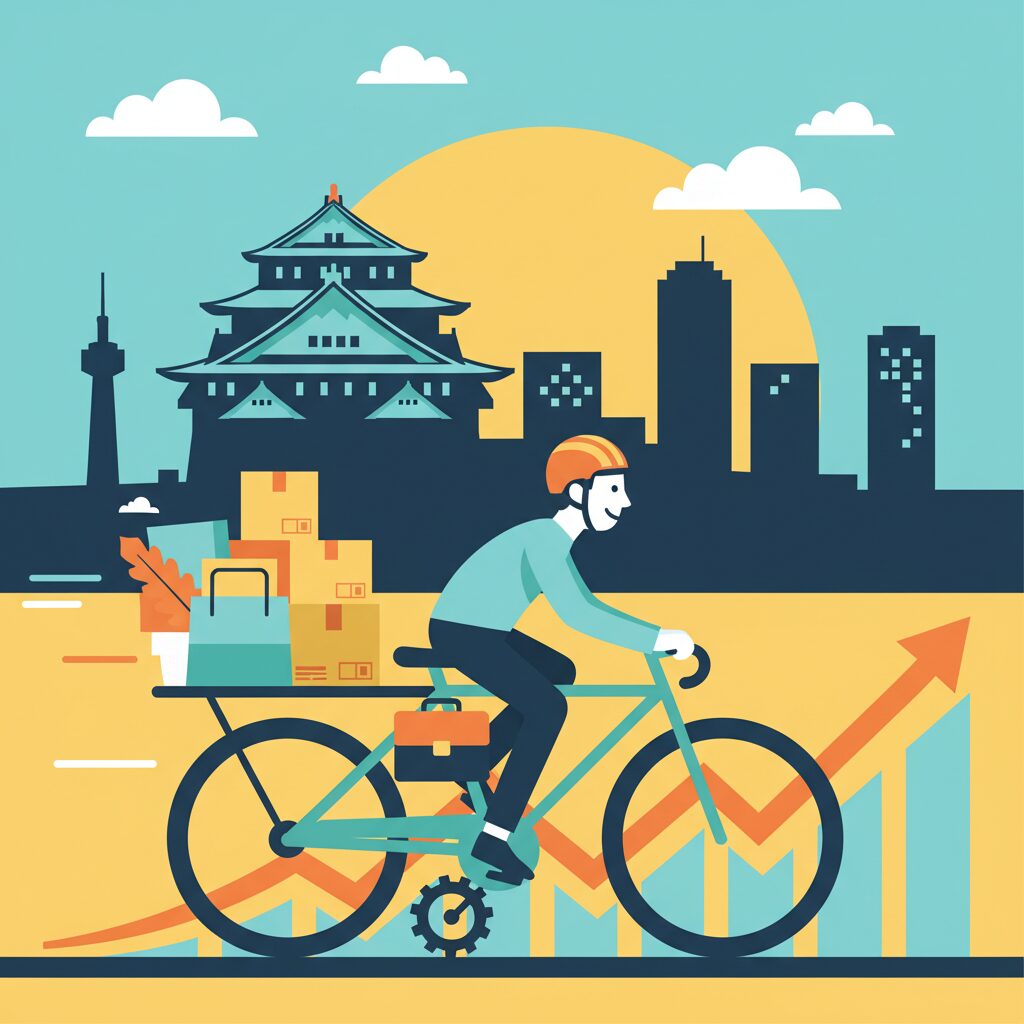
When you first arrive in Osaka, you feel the city’s rhythm in your feet. The rumble of the Midosuji line, the clatter of a train crossing the Yodo River, the endless shuffle of shoes on the polished floors of Umeda station. You naturally assume, like I did, that this city, Japan’s second great megalopolis, runs on rails. You think your life will be dictated by a train schedule, your budget carved up by a commuter pass, your mental map of the city a series of interconnected station dots. Tokyo has trained you, and the world’s great cities have trained you, to think this way. But you’d be wrong. Dead wrong. The true engine of Osaka isn’t the sleek silver trains, but the humble, often-creaky, sometimes-rusty bicycle. It’s the secret key that unlocks not just the city’s geography, but its entire economic philosophy. This isn’t about weekend leisure rides; this is about a city where the bicycle is a fundamental tool for economic survival and a richer, more efficient life. It’s the silent force that makes living in this vibrant, chaotic, and wonderful city surprisingly affordable. Understanding the bike is understanding Osaka’s soul. It’s the physical manifestation of a city that values shrewd practicality over polished appearances, a city that has mastered the art of living well, for less.
This practical, affordable lifestyle is perfectly exemplified in neighborhoods like Nakazakicho, where the bicycle-centric philosophy directly translates to a lower cost of living.
The Unspoken Math: Breaking Down the Bike Savings
Living in a major Japanese city typically entails a fixed, non-negotiable expense: the commuter pass, or teiki. In Tokyo, this single piece of plastic largely governs your daily life. Choosing an apartment often becomes a complex balancing act between rent and the cost and duration of your train commute. A six-month pass can easily cost between ¥50,000 and ¥100,000, depending on the distance traveled. It acts as a financial anchor, taking a significant portion of your salary before you even start earning. In Osaka, however, this anchor is often completely discarded, replaced by the freedom of two wheels and a bell.
The Commuter Pass Illusion
The most straightforward and impressive savings come from simply not purchasing a commuter pass. Osaka is a compact city, and its core area, roughly within the JR Loop Line, is remarkably flat. This geographical advantage means a large portion of the population lives within a 20-to-30-minute bike ride from work. Let’s break down the numbers. A typical commute, for example from the Tenma neighborhood to an office in Shinsaibashi, usually involves a short train ride. A one-month pass for this route might cost about ¥7,000. For six months, that adds up to ¥42,000, and annually, about ¥84,000 (approximately $550 USD). That amount could pay for a domestic flight, a new laptop, or dozens of exceptional meals. Now, multiply that by the hundreds of thousands of Osakans who have made the same choice. The collective savings are immense. This isn’t just a minor lifestyle hack; it’s an economic strategy on a city scale. The money saved on transportation doesn’t disappear—it circulates directly back into the local economy, benefiting ramen shops, corner bars, independent clothing stores, and the shotengai that form the city’s vibrant lifeblood.
The “Last Mile” Problem, Solved
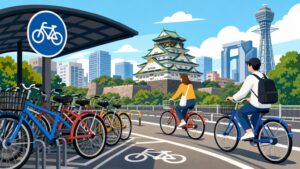
For those with longer commutes, the bicycle plays a vital economic role in addressing the “last mile” problem. In many cities, after getting off the train, there’s often a 15-minute walk to reach your office or home, which is unproductive time. When tired or caught in the rain, you may be tempted to take a bus or taxi, adding small but steady expenses. Osaka offers a different solution. Near nearly every major train station, there are massive, multi-story bicycle parking garages, some so advanced they resemble automated vehicle storage from a sci-fi film. People commute by train to a hub station, then finish the last leg of their trip on a second bike kept there. This hybrid method cuts commute times and removes the temptation of expensive alternatives. A monthly spot in these garages might cost between ¥2,000 and ¥3,000. Compared to the daily accumulation of bus fares, the savings are clear. It’s an elegantly efficient system, reflecting a city that thoughtfully considers the small-scale movements of its residents.
The Ripple Effect on Daily Spending
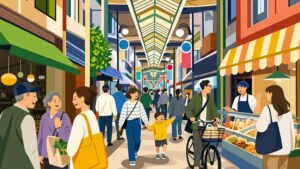
The economic impact of cycling extends far beyond just saving on train tickets. Using a bike frees you from the captured economy of train stations. In Tokyo, life can become a bubble connected by train hubs—you grab your morning coffee at the station, pick up lunch at a bento shop inside the station complex, and shop for groceries at an upscale supermarket in the station basement. Convenient, yes, but costly. You pay a premium for that ease. In Osaka, cycling breaks that bubble. Your lunch break isn’t confined to the few restaurants near your office; you can hop on your bike and reach a family-run eatery offering teishoku sets that are ¥200 cheaper within five minutes. Grocery shopping isn’t limited to expensive station markets—you can cycle to sprawling, chaotic, and remarkably affordable supermarkets like Super Tamade, famous for ¥1 specials and neon-lit pandemonium. These price differences are meaningful; your weekly grocery bill could be 20-30% lower if you can access such places easily. The bike opens access to the real Osaka—the Osaka of shotengai (covered shopping arcades) where longtime vendors sell fresh produce and local delis offer homemade croquettes. This mobility lets you live a more affordable, and arguably more authentic, lifestyle. You’re not just saving money; you’re actively supporting and participating in a richer, more diverse local economy.
More Than Money: The Bicycle as a Lifestyle Enabler
While the financial advantages are remarkable, they only reveal part of the picture. The bicycle’s deep-rooted presence in Osaka life goes beyond just savings; it represents a fundamental boost in freedom, flexibility, and overall quality of life. The city’s very design seems to encourage two-wheeled transportation as the default, sensible option.
The Geography of Freedom
Osaka is, for the most part, wonderfully flat. Unlike the deceptively hilly areas of Tokyo or the steep terrain near Kobe and Kyoto, central Osaka is an ideal environment for cyclists. From Umeda in the north to Namba and Tennoji in the south, the land rarely presents an incline. This flatness is transformative. It makes cycling accessible to all. You don’t need to be a lycra-clad cyclist with an expensive road bike to get around. Grandmothers in their seventies, mothers carrying children, and salarymen in crisp suits can all pedal effortlessly. This geographical feature cannot be overstated. It forms the foundation of the city’s bike culture. Cycling becomes a matter of common sense rather than physical endurance. The city unfolds as a continuous space rather than isolated pockets linked only by subway lines. Neighborhoods blend seamlessly, and your ability to explore them isn’t constrained by train routes or walking distances.
The “Mamachari” and Its Economic Power
If there’s one symbol of the practical strength of Osaka’s bicycles, it’s the mamachari – the “mom’s chariot.” This is not your average bike. It’s a sturdy, versatile utility vehicle designed for everyday needs. It features a robust frame, a low step-through for easy mounting, a wide comfortable seat, a large front basket for groceries, a heavy-duty rear rack often equipped with a child seat, a solid kickstand for stability when loaded, and a built-in wheel lock. The mamachari is a triumph of practical design. For many Osaka families, it eliminates the need for a second car, or even a first one. Consider the economic effects: a parent can deliver a child to kindergarten in the morning, stop by the post office, pick up groceries for the week, and visit the park—all in a single, seamless, cost-free trip. There’s no car loan, no fuel expenses, no insurance, no pricey parking fees (a major cost in Japanese cities), and no repairs beyond an occasional tire inflation. The mamachari saves tens of thousands of yen each month for families. It acts as an engine of household efficiency, providing more disposable income and freedom in a country where raising children can be financially demanding.
Social Life on Two Wheels
The bicycle’s impact extends deeply into the city’s social life. In Tokyo, social gatherings often involve complex logistics: coordinating train routes, calculating travel times, and always worrying about the dreaded shuden—the last train. The fear of missing it and facing a ¥10,000 taxi ride home frequently shortens evenings. In Osaka, this stress mostly vanishes. Heading out for dinner across town? Just bike. The trip from Nishi-ku to Tennoji is a pleasant 20-minute ride, not a complicated subway journey with multiple transfers. This fosters a more spontaneous and easygoing social environment. Plans can be made last-minute. You can stay out later, savoring one more drink, confident that your free, ready transportation is waiting outside. It makes the city feel smaller, friendlier, and much more accessible. The barrier of distance disappears, replaced by the simple, freeing experience of cycling beneath the city lights. This subtle change profoundly transforms how you experience the city, turning what might be a logistical hurdle into a moment of personal liberation.
The Infrastructure and Mindset of a Bike City
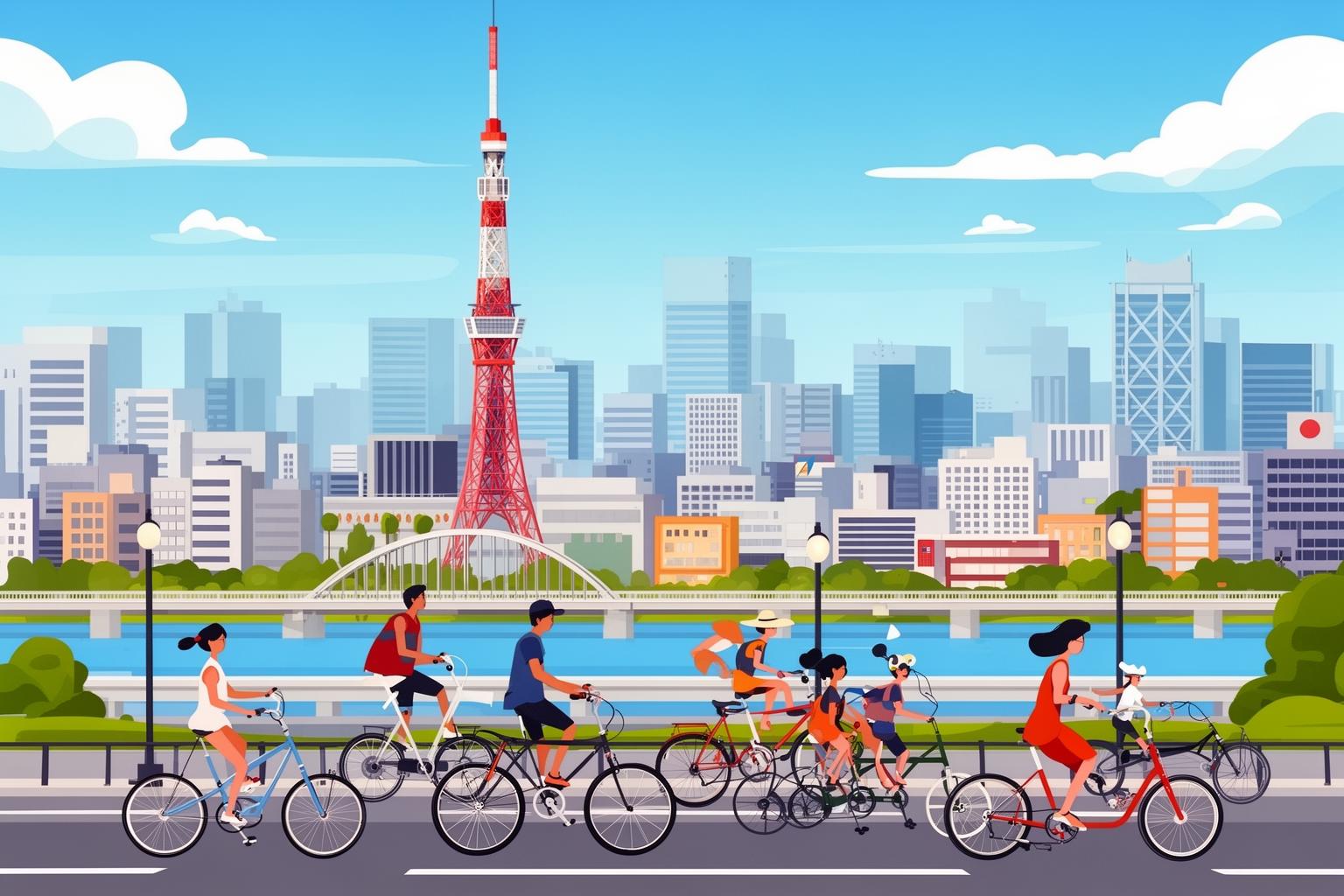
The bicycle’s prominence in Osaka is no coincidence. It stems from a symbiotic relationship among citizen behavior, infrastructure, and a distinctive urban mindset. The city and its inhabitants have evolved together to foster an environment where biking is not merely an option but the easiest way to get around.
A Tale of Two Sidewalks: Riding Styles in Osaka vs. Tokyo
This highlights one of the most notable cultural contrasts between Osaka and Tokyo. In Tokyo, there is a stronger emphasis on strictly adhering to rules. Cyclists are, in principle, expected to ride on the road, and although this is not always followed, there is generally an orderly separation. Osaka, however, follows a different, more fluid approach. The sidewalk is often treated as a shared-use expressway, where pedestrians, mamachari, and high school students on bikes weave around each other in a continuous, chaotic, yet surprisingly functional dance. Bells ring frequently, not as aggression, but as a gentle signal: “Coming through, excuse me.” To outsiders, it may seem like utter chaos and a disaster waiting to happen. Yet, within this disorder lies an unspoken system of mutual awareness and subtle, quick adjustments—a dance of practiced improvisation. This reflects a key element of Osaka’s character: valuing the end result over rigid procedure. The aim is to get from A to B efficiently, and if the sidewalk offers the most direct route, then that is where they ride. This pragmatism, which sometimes borders on recklessness, arises from a collective understanding that this is simply how the city functions, prioritizing flow and personal efficiency over strict, top-down regulation.
The Support System: Bike Shops and Parking
For a bike-centric culture to flourish, a strong support network is essential, and Osaka boasts this abundantly. Every few blocks, in every neighborhood, there’s a small, cluttered, indispensable jitenshaya-san—a local bike shop. These are not fashionable stores selling pricey gear but practical repair hubs. The elderly shop owners have likely been repairing bikes at the same spot for decades. Bring in a flat tire, and for about ¥1,000, they’ll have it fixed and you’ll be back on the road in ten minutes. This widespread, affordable, and quick maintenance network forms the invisible framework that keeps the city’s massive bike fleet operational, turning minor mechanical issues into trivial inconveniences rather than costly or day-ruining problems. Complementing this is the city’s significant investment in bike parking. The automated garages and large lots near stations clearly indicate official recognition and support of the bicycle’s role in urban transport. Providing secure, affordable parking is understood as crucial to encouraging this cost-effective, low-emission mode of travel.
Challenges: Theft, Registration, and Rain
Of course, life in this bike paradise isn’t without challenges. Osaka’s practicality has a gritty side. Bike theft is common—almost a rite of passage. This reality has influenced the market and local attitudes. Many opt for cheap, secondhand “beater bikes” because they are less appealing to thieves. No one wants to leave a ¥100,000 road bike unattended outside a supermarket. This situation has led to mandatory bouhan touroku, or crime prevention registration. When purchasing a bike, a small fee (around ¥600) is paid to register it with the police under the owner’s name and address. The sticker is essential; police conduct random checks, and riding an unregistered bike, or one registered to someone else, often results in a lengthy, awkward conversation. It’s a bureaucratic but vital safeguard against theft. Then there’s the rain. When typhoons hit or the heavy summer rainy season sets in, the city’s biking commitment is truly challenged. Yet Osakans remain undeterred. The streets fill with figures cloaked in full-body ponchos, cycling with determined faces barely visible through clear plastic visors. The sight is both amusing and inspiring—a testament to the bike’s role here not just as a sunny-day option but as the default, all-weather mode of transport.
The Financial DNA of Osaka: How the Bike Reflects the City’s Soul
The bicycle is more than just a convenient and inexpensive means of getting around Osaka. It serves as a lens through which one can grasp the city’s deeply rooted economic and cultural identity. Choosing to cycle is a daily affirmation of a set of values that sets Osaka apart from the rest of Japan, especially its eastern rival, Tokyo.
“Meccha Kechi” or “Meccha Kashikoi”? (Super Stingy or Super Smart?)
People from other regions of Japan often stereotype Osakans as kechi, meaning stingy or cheap. This label is worn with a peculiar blend of annoyance and pride in Osaka. Locally, however, this trait is reframed as kashikoi — smart, clever, or shrewd. Osakans despise waste. They have an innate talent for seeking value and making the most of every yen. Why pay for something when a perfectly good free alternative is available? Why spend ¥200 on a 3-minute train ride when you can pedal the same distance in 5 minutes for free? This fundamental question fuels the city’s love for bicycles. The bike stands as the ultimate expression of this kashikoi mindset, embodying self-sufficiency, efficiency, and a refusal to pay for something one can provide oneself. This philosophy permeates all aspects of life in Osaka. It’s evident in the food culture of konamon (flour-based dishes like takoyaki and okonomiyaki), created as cheap, filling, and tasty nourishment. It’s present in the haggling culture still alive in some markets, the quest for bargains, and the celebration of good deals. The bicycle isn’t just transportation; it is a moving monument to the city’s core value of practical financial savvy.
A Contrast with Tokyo’s Status-Driven Transport
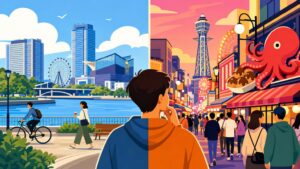
In Tokyo, transportation often ties closely to status and identity. The train line one lives on can act as a social marker. The daily commute on crowded, silent trains is a corporate ritual, a shared experience uniting the city’s white-collar workforce. A sense of performance and public image permeates everyday life. By contrast, Osaka cares far less about such formalities. The bicycle is the great equalizer. Along a riverside bike path, a company president in a suit might cycle past a university student and a grandmother carrying a basket full of daikon radishes. There is no class distinction in cycling. The focus is purely functional. This highlights a broader cultural divide. Tokyo is often viewed as the city of tatemae (public facade), where appearance and form are paramount. Osaka is the city of honne (true feelings), valuing substance, results, and straightforward authenticity. An Osakan doesn’t mind if their bike is slightly rusty, as long as it gets them where they need to go efficiently. It’s a city that prizes what works over what looks good. The widespread use of simple, unassuming bicycles stands as perhaps the strongest and most visible symbol of this essential aspect of Osaka’s character.
The Bike Lane to a Richer Life
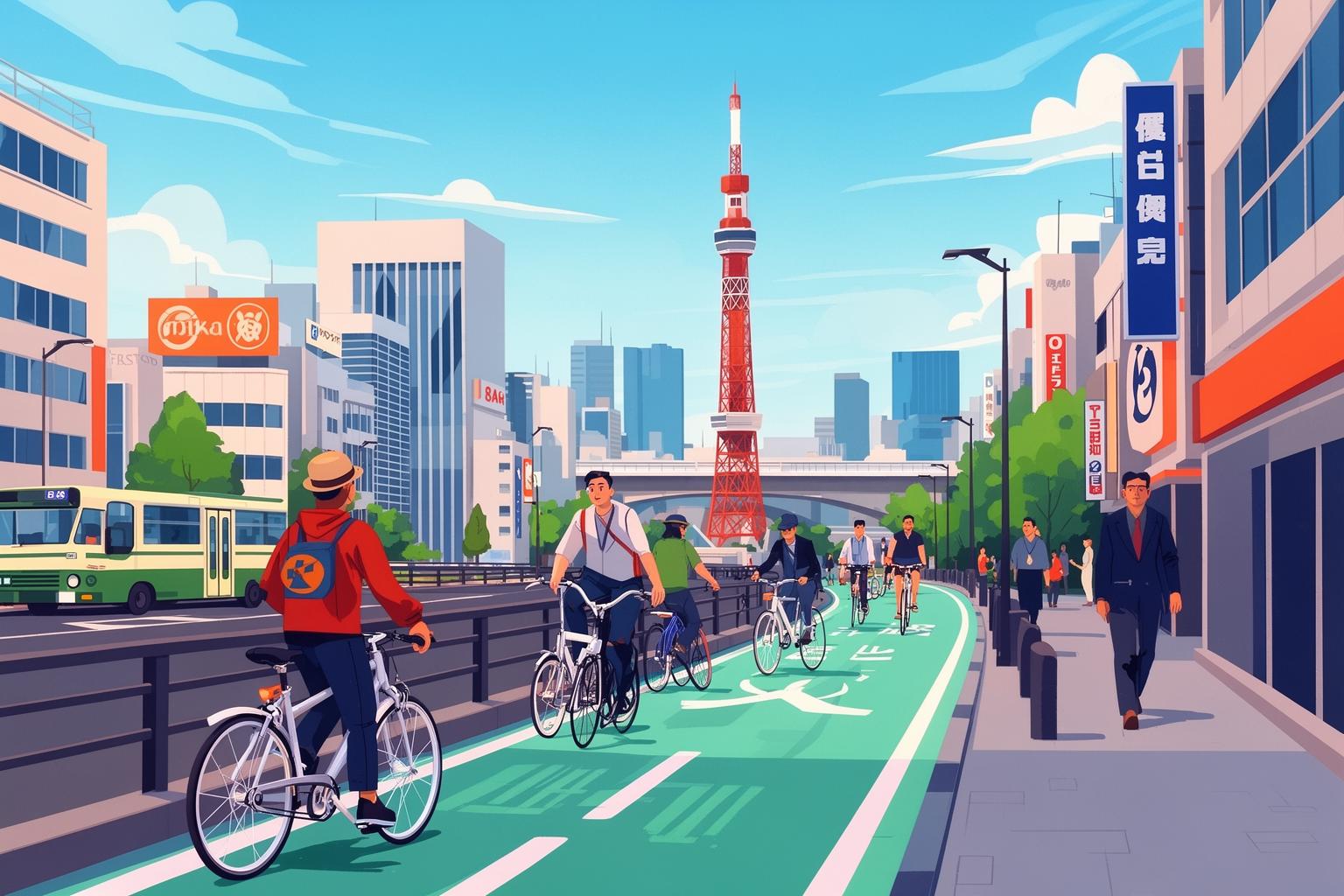
Viewing Osaka solely from a train window means missing the essence of the city entirely. It leads to a misunderstanding of the economic and social forces that keep the city moving. The bicycle isn’t just an accessory here; it’s a fundamental part of the city’s infrastructure. It serves as a tool that significantly lowers the barriers to living comfortably, actively, and financially securely in a major global city. The cumulative impact of these everyday transportation savings is substantial. It translates into extra disposable income, offering more chances to enjoy the city’s famous culinary delights, explore its lively arts and music scenes, and live with less financial stress. It also nurtures a culture that supports small, local businesses tucked away off the beaten path, enriching the unique character of Osaka’s diverse neighborhoods. For anyone considering settling down in Osaka, my most practical advice is this: get a bicycle as soon as you arrive. Learn its rhythms, its unspoken rules, and its shortcuts through quiet residential areas. It will do more than just take you from point A to point B. It will unlock the city’s economic realities for you, grant you a more affordable lifestyle, and help you understand the genuine, unfiltered, and wonderfully practical core of Osaka. Riding home on a warm evening, gliding over a bridge above the Dotonbori canal as neon signs start to shine, you’ll feel a sense of freedom and belonging. In that moment, this city is yours. And your journey cost you nothing at all.