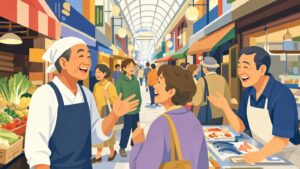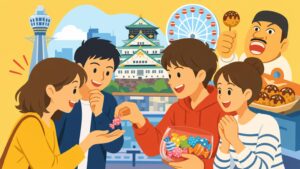
It’s Saturday afternoon in Namba, and the city is roaring. A tidal wave of humanity floods the Shinsaibashi-suji shopping arcade, a cacophony of cheerful greetings, clattering pachinko machines, and the rolling thunder of a thousand conversations. The air, thick with the scent of grilled takoyaki and the sweet promise of bubble tea, vibrates with a relentless, infectious energy. This is Osaka in its prime, a city that never just talks but shouts, never just walks but hustles, a place where the collective pulse beats at a dizzying tempo. It’s a fantastic, maddening, and utterly intoxicating spectacle. But it begs a question, one that every resident, foreign or native, eventually asks themselves while pressed against a stranger on the Midosuji Line: Where do the people who generate this energy go when their own batteries run low? Where does Osaka go to escape itself?
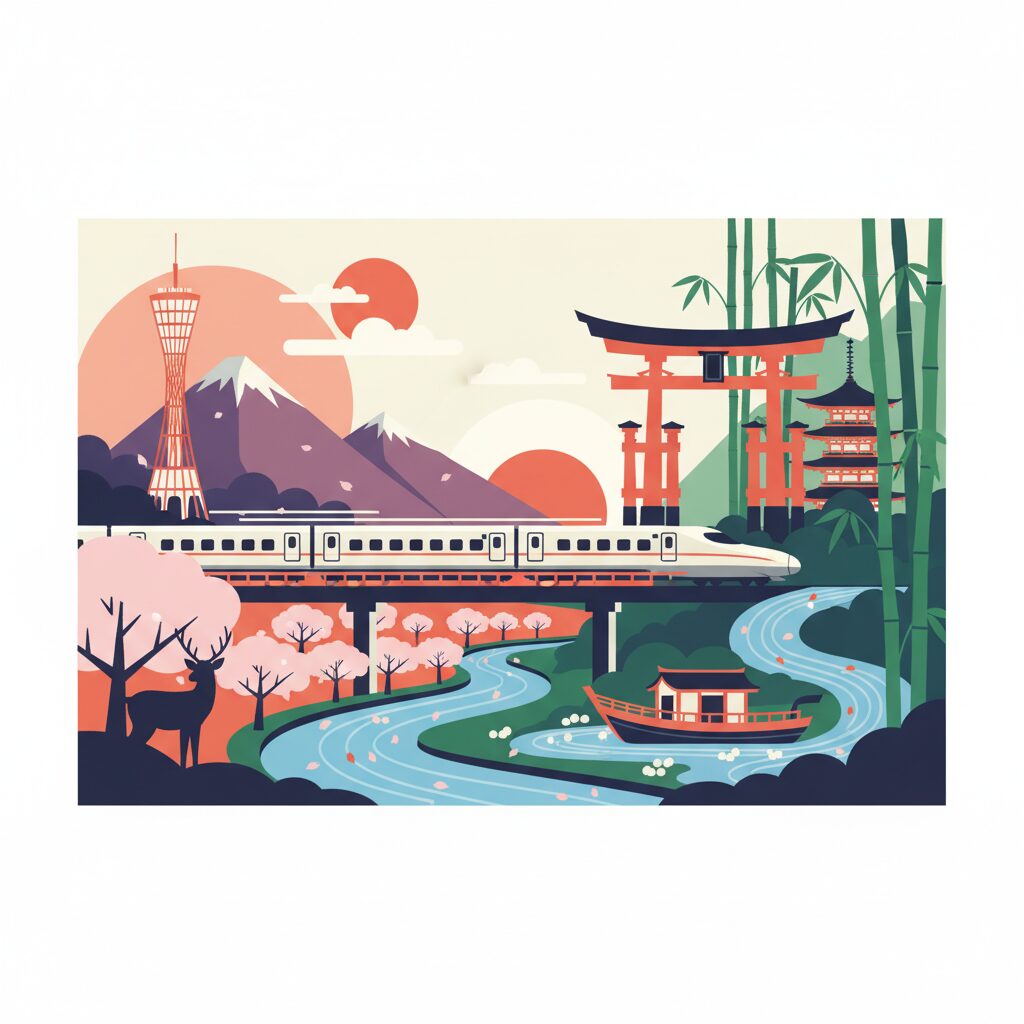
The answer isn’t a single destination, but a strategic, almost unconscious choice between two nearby, yet worlds-apart, sanctuaries: Kobe and Kyoto. To the outsider, they might just be boxes to tick on a Kansai travel itinerary. To the Osakan, they represent two fundamentally different modes of decompression, two distinct solutions for the soul-fatigue induced by city life. Kobe, to the west, is the deep, cleansing exhale. It’s where you go to trade the concrete canyons for an open sea-sky, to loosen your tie, and to simply be. Kyoto, to the east, is the cultural reset button. It’s where you go to recalibrate your senses, to find quiet in ancient forms, and to remember a rhythm of life that predates neon and stock tickers. This weekly exodus isn’t just about a change of scenery. It’s a profound ritual that reveals the dualistic heart of the Osakan psyche—a deep appreciation for modern, cosmopolitan leisure, and an equally deep, if sometimes hidden, need for the quiet formalism of tradition. Understanding this choice is understanding the secret to surviving, and thriving, in the glorious, high-octane chaos of Osaka.
To truly understand the city’s unique rhythm, one must learn to appreciate the subtle art of Osaka’s manzai comedy that permeates its daily interactions.
The Kobe Exhale: Trading Neon for Sea Breeze
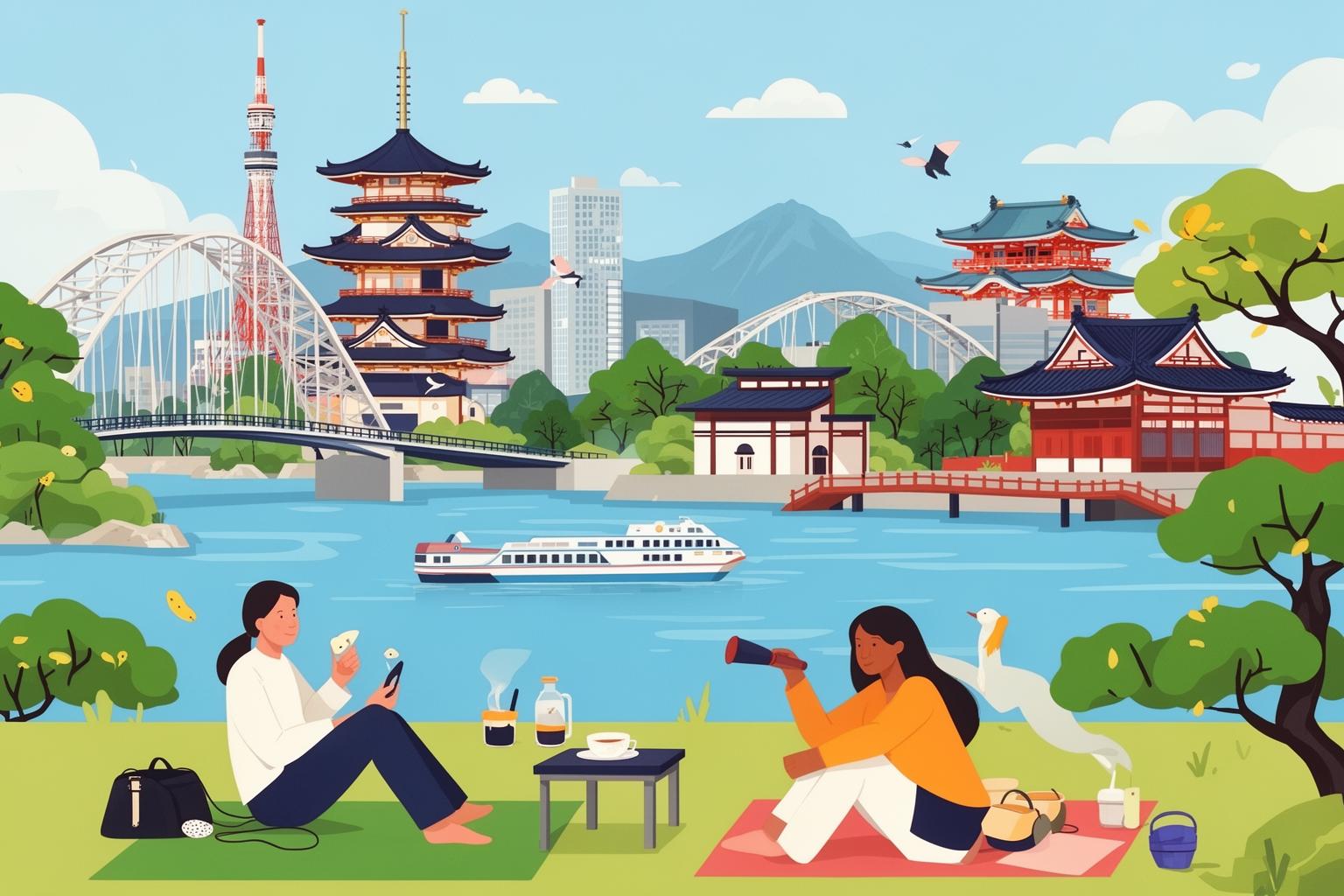
To truly understand why an Osakan longs for Kobe, you first need to break down the distinctive kind of exhaustion that Osaka produces. It’s a city founded on the spirit of the merchant, where the daily hustle is less about the stoic, corporate routine of Tokyo and more about a relentless, streetwise drive. The air vibrates with commerce, from the grand department stores of Umeda to the small, family-run stalls at Kuromon Ichiba Market. The classic Osakan greeting, “Mokari makka?”—“Making money?”—is more than a folksy catchphrase; it’s a sincere reflection of a culture where business, social life, and personal identity are deeply intertwined. This generates a particular kind of mental burden. You’re always, in some way, performing. You’re expected to be sharp, witty, quick with a comeback, constantly negotiating your social and economic space. It’s an exhilarating way to live, but also exhausting. The city demands your full attention, your voice, your energy, at all times.
Deconstructing the Osaka Hustle
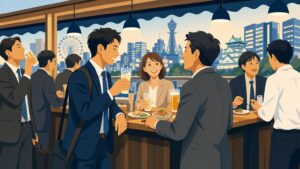
Imagine the sensory overload. Your day might begin in the Umeda underground, a vast, multi-level maze where thousands of commuters move in disciplined yet forceful waves. There’s no idle wandering here; it’s a place of purpose, marked by determined strides toward the appropriate Hankyu, Hanshin, or JR gate. The soundscape is a continuous hum of rolling suitcases, echoing announcements, and the rhythmic beeping of ticket gates. Stepping into the city itself, the sensory intensity only grows. In business districts like Honmachi or Yodoyabashi, the vibe is one of brisk efficiency, salarymen grabbing quick bowls of udon between meetings. But in commercial hubs like Namba or Shinsaibashi, it becomes a full sensory assault. Music blasts from storefronts, video billboards flash hypnotic patterns, and the dense crowds create a tangible human electricity. Even leisure is intense. A night in the crowded, lantern-lit alleys of Ura Namba means shouting your order over the roar of a packed izakaya, sharing stories at a volume that would seem rude elsewhere, and weaving through tight spaces with practiced agility. Osakans flourish in this environment. They excel at quick jokes, friendly haggling, and instant bonds forged over shared plates of takoyaki. Yet, this constant state of being “on” slowly drains you. It’s a social and mental marathon, and by week’s end, you’re not merely tired; you’re saturated.
Why Kobe is the Antidote
This is where Kobe comes in, not just as a destination, but as a cure. Its healing power starts with its geography. While Osaka sprawls over a vast, flat plain—seemingly endless and inward-focused—Kobe is elegantly enclosed between the Rokko mountain range and the shimmering Seto Inland Sea. This simple reality has a profound psychological effect. From nearly anywhere in the city, you can look up to see green mountains or southward toward the endless horizon of the sea. This physical openness instantly creates a sense of mental space. The sea breeze that sweeps through Sannomiya and Motomachi isn’t just weather; it’s a mental cleanser, sweeping away the heavy, recycled air of the Osaka metropolis. Simply strolling along the Meriken Park waterfront, with its iconic red Port Tower and the gentle lapping of waves, can release a jaw you didn’t realize was clenched.
Kobe’s charm also lies in its unique kind of sophistication, distinct from both Kyoto’s ancient elegance and Tokyo’s trend-driven mania. As one of Japan’s first ports opened to international trade in the 19th century, Kobe developed a cosmopolitan, Western-influenced character locals call haikara (literally “high collar,” referencing the fashionable Western shirts of the Meiji era). This heritage is evident in the colonial-style homes of Kitano-cho and felt throughout the city’s relaxed, international ambiance. For an Osakan, visiting Kobe is a chance to adopt a different persona. The fashion here is subtler than the bold, eye-catching styles of Osaka’s Amerikamura—think crisp linen, fine leather shoes, and classic marine stripes. It’s a look that says, “I have refined taste, but I’m effortless.” An Osakan goes to Kobe to feel sophisticated without the pressure to perform, to browse stylish boutiques in the old foreign settlement, or to relax at a European-style bakery while watching life unfold. It’s about inhabiting an air of calm elegance.
The pace of consumption is distinct as well. Osaka is the realm of kui-daore—“eat yourself into ruin”—a mindset often favoring speed, volume, and value. You stand at a counter to quickly devour kushikatsu, grab takoyaki on the run, or slurp ramen in five minutes flat. It’s delicious, efficient, and part of the city’s hustle. Kobe, on the other hand, invites you to slow down. Here, the experience itself is the main course. You linger over a pour-over coffee in a quiet, wood-paneled kissaten that has endured decades. You savor a leisurely lunch in a Chinese restaurant in Nankinmachi (Kobe’s Chinatown), appreciating each dish. You might even indulge in the city’s renowned beef, a meal that unfolds as a ritual—a slow, elegant performance between chef and ingredients. In Kobe, you’re not just refueling; you’re restoring. You spend time and money not merely on food but on the calm, pleasant, unhurried experience of enjoying it.
What Kobe Isn’t
It’s equally important to recognize what Osakans are not seeking in Kobe. Most are not visiting for a deep dive into Japanese history. While the city has a poignant story—especially regarding the Great Hanshin Earthquake of 1995—it is not typically a place for quiet reflection on the past, unlike the temples of Kyoto. The energy is forward-looking, modern, and light. Kobe offers a deliberate escape from the weight of history and the pressure of the present. Similarly, it’s not a hotspot for wild nightlife. Though there are many excellent bars and restaurants, the atmosphere is more mature and subdued. Think sophisticated jazz clubs in Kitano or quiet wine bars where conversation flows easily. It’s the ideal contrast to the raucous, high-energy nights of Osaka. An Osakan doesn’t head to Kobe to get loud; they go there to finally hear themselves think.
The Kyoto Reset: Finding Formality in a World of Chaos
If Kobe represents the physical exhale, Kyoto embodies the mental and spiritual reset. This need for reset arises from a compelling paradox at the heart of the Osakan identity. Osakans are famously and proudly informal. They are the kind of people who will strike up a conversation with a stranger at a bus stop, playfully tease their boss with nicknames, and view rigid rules and stuffy etiquette as barriers to getting things done. Their world is one of pragmatism, direct communication, and prioritizing human connection—and the deal—over procedural formality. This fosters an open and accessible social atmosphere, one that foreigners often find easier to navigate than Tokyo’s more reserved culture. However, living without strict formality comes with a psychic cost. It demands constant social navigation, high emotional intelligence, and the energy to improvise with every interaction. It can be, in a word, messy. Deep down, this ongoing cheerful chaos stirs a hidden longing for its opposite: a world of order, clear rules, and calming structure.
The Osakan Paradox: Embracing and Resisting Formality
This paradox is key to understanding the Osakan psyche. Outwardly, there is a playful disdain for the perceived aloofness and indirectness of their Kyoto neighbors. Kyoto communication is famously layered—where a compliment on your beautiful garden might actually be a subtle way to hint that your child is being noisy. To a direct Osakan, this can appear tedious and inefficient. Why not just say what you mean? Yet, the very presence of this highly codified, ancient mode of interaction is quietly alluring. It represents a different social logic, one grounded not in improvisation but in time-honored tradition. Living in Osaka means constantly creating the social framework on the fly. It’s like jazz—creative and thrilling, but demanding constant attention. Visiting Kyoto is like listening to a perfectly composed classical piece. The structure is already established, honed over centuries. You don’t have to build it; you just surrender to it. And for a mind exhausted by ceaseless ad-libbing, that surrender brings profound relief.
Why Kyoto Fulfills This Need
Kyoto offers this relief through what could be called “prescribed beauty.” Everything in the former imperial capital seems guided by deliberate form and ritual. It’s in the meticulous raking of gravel at Ryoan-ji, where every line serves as meditation. It’s in the precise, graceful movements of the tea ceremony. It’s in the very design of a traditional machiya townhouse, arranged to create a flow of air and light based on ancient principles. For an Osakan visitor, this isn’t confining; it’s liberating. You are freed from the burden of choice and the pressure to perform. You follow the stone path through the moss garden, sit on the tatami mat appreciating the painted screen, and listen to the bamboo shishi-odoshi fountain marking time. The experience is curated for tranquility. You don’t have to generate the atmosphere; you simply step into a pre-existing current of quiet contemplation.
This nurtures an appreciation for a different kind of “high-class.” Kobe’s sophistication is modern, Western, and linked to consumer items—fashion, cars, coffee. Kyoto’s refinement is timeless, Japanese, and tied to craftsmanship and heritage. An Osakan in Kobe might admire a stylish trench coat in a shop window. That same Osakan in Kyoto may find themselves drawn to the delicate grain of a hand-carved wooden comb, the vivid hues of a Kyo-yuzen silk scarf, or the imperfect perfection of Raku ware pottery. These are not items of fleeting fashion but enduring tradition. They symbolize a value system that measures worth in generations rather than seasons. Engaging with this world, even briefly, serves as a powerful anchor—a reminder of a deeper, slower cultural identity beyond the frantic pace of modern commerce.
Perhaps the most immediate and striking aspect of the Kyoto reset is the shift in the soundscape. Osaka is a city of loud, purposeful noises: the clatter of trains, the energetic calls of shopkeepers, the roar of the crowd at a Hanshin Tigers game. It’s a symphony of human activity. Kyoto, by contrast, is a city of subtle, natural sounds. In the Arashiyama Bamboo Grove, the primary sounds are the surreal creaks of stalks and the rustling leaves. In a temple garden, you might hear a bee buzzing, a bird chirping, or the shuffle of a monk’s sandals on worn wooden floors. This dramatic auditory change prompts an internal shift. You instinctively lower your voice. Your thoughts slow. You begin to notice the small details—the way light filters through a maple leaf, the scent of incense lingering in the air. This sensory recalibration is the essence of the Kyoto reset: a palate cleanser for a mind overstimulated by the noise of modern life.
The Osakan in Kyoto: An Awkward but Essential Dance
Watching an Osakan in Kyoto is fascinating. There is often a slight, almost humorous self-consciousness. They might catch themselves speaking too loudly and quickly adjust, keenly aware they are in a different cultural realm. They navigate the unspoken rules of a city operating on a different wavelength. This subtle sense of being an outsider, even just 40 minutes from home, is a crucial part of the experience. It’s a humbling reminder that their way is not the only way. It prompts a moment of reflection. They don’t visit Kyoto to masquerade as Kyotoites, famed for their elegance and nuanced social cues, but to reconnect with the vast and varied tapestry of Japanese culture. It is a way of touching the traditional pole of their own identity, often overshadowed by the merchant’s hustle in everyday life. This necessary pilgrimage back to the source ensures they don’t lose their cultural bearings amid Osaka’s chaotic currents.
The Tale of Two Commutes: How Proximity Shapes Psychology
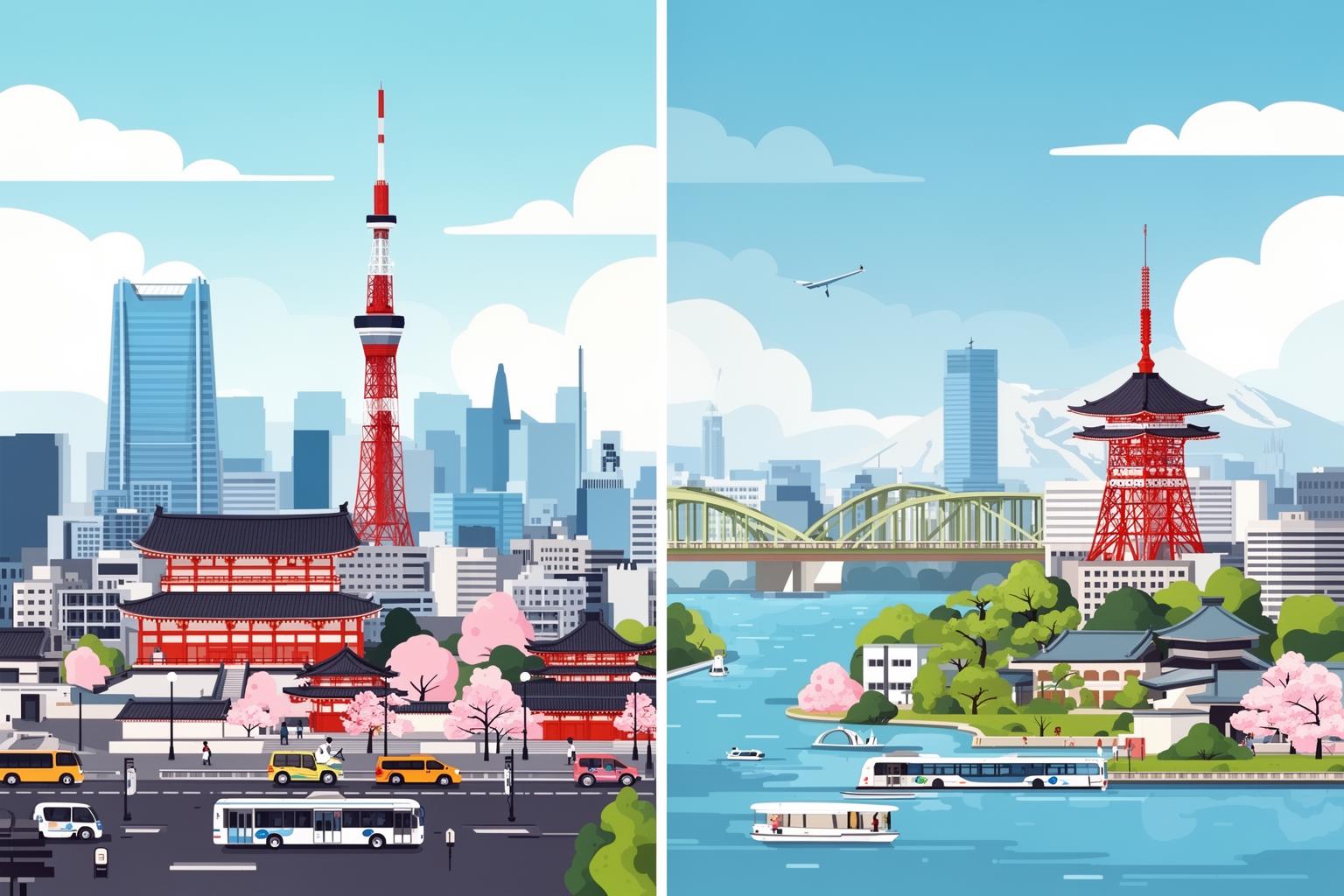
What makes this dual-escape system truly exceptional is its remarkable accessibility. The secret asset in an Osakan’s toolkit for mental health management isn’t a spa or retreat, but a train line: the Hankyu Railway. This privately-owned railway is more than just transportation; it serves as a cultural corridor linking the three major Kansai cities—Osaka, Kobe, and Kyoto—with a level of efficiency and comfort that influences the region’s collective mindset.
The Hankyu Line: A Cultural Corridor
Step onto a Hankyu train at the grand, cathedral-like terminal in Umeda, and you are instantly wrapped in a sense of tranquility. The trains are easily identified by their classic, elegant maroon color—a hue unchanged for generations. Inside, polished wood-grain paneling and plush, olive-green wool seats create an atmosphere more akin to a vintage parlor car than a typical commuter train. This careful attention to detail is intentional; it establishes a mood. This is not a journey driven by urgency, but one filled with pleasant possibility.
The magic lies in how rapidly your surroundings can transform. A limited express train can carry you from central Osaka to Kobe-Sannomiya in less than 30 minutes, or to Kyoto-Kawaramachi in about 40. This isn’t a grand expedition; it’s a simple choice. You might wake up on a Saturday morning feeling weighed down by the city, and spontaneously decide to be at the seaside or in a temple garden within an hour. This spontaneity is intrinsic to the Osakan way of life. The low barrier to escape means Kobe and Kyoto feel less like distant cities and more like distinct neighborhoods within a larger, interconnected Kansai metropolis. The journey itself becomes part of the healing process. As the train leaves Osaka, the dense urban sprawl gradually softens into suburban calm, shifting your mindset along with the scenery. The train heading west to Kobe often carries a lighter mood, full of passengers dressed for shopping trips and seaside walks, while the one heading east to Kyoto tends to feel more introspective, carrying those seeking immersion in quiet beauty.
Why Not Tokyo?
This prompts an important question for outsiders: why isn’t Tokyo considered the ultimate escape? For many globally, a weekend in the nation’s capital would be the perfect getaway. But for an Osakan, this notion borders on absurd. Tokyo isn’t an escape; it’s the competitor. It’s seen as a larger, more impersonal, and even more stressful version of the very hustle they want to leave behind. It’s the city of rigid corporate hierarchies, silent packed trains where no one meets eyes, sky-high costs, and an obsessive drive to be the center of everything. Osakans travel to Tokyo for work, major events, or specific purpose-driven visits. They don’t go there to unwind.
Moreover, the logistics are fundamentally different. A trip to Tokyo demands a significant investment of time and money, requiring a Shinkansen ticket, several hours of travel, and likely an overnight stay. It’s an event necessitating planning and commitment. The charm of the Kobe/Kyoto dynamic is its effortless nature. It’s an everyday part of life, a pressure valve ready to be released whenever needed. This easy access to vastly different environments is arguably one of the greatest benefits of living in Osaka compared to Tokyo. While Tokyoites might see their city as all-encompassing, Osakans appreciate the power of a strategic retreat. They understand that sometimes the best thing about your city is how simply you can leave it for a little while.
What This Says About Osaka
The habitual, almost ritualistic, journey of Osakans to Kobe and Kyoto represents more than a mere travel routine. It offers a glimpse into the city’s soul and its people, revealing a pragmatic self-awareness and a distinctive approach to urban living that distinguishes Osaka from any other city in Japan.
The City That Understands It’s Not Everything
Perhaps the deepest insight is this: Osaka is a city secure in its identity, which includes a clear understanding of what it is not. There’s a confidence in Osaka that doesn’t demand it be everything to everyone. Unlike Tokyo, which often bears the responsibility of embodying modern Japan as a whole, Osaka is proud to be the nation’s energetic, commercial, and culinary core. Osakans hold a fierce affection for their city’s warmth, humor, exceptional food, and unpretentious, grounded vibe. Yet, they are fully aware of its limitations. They recognize it lacks Kobe’s breezy, cosmopolitan charm and cannot provide the profound, spiritual peace found in Kyoto. Crucially, this awareness is not seen as a flaw. Instead, the proximity of these neighboring cities is regarded as one of Osaka’s greatest strengths. Osaka’s livability is inseparably connected to the presence of its neighbors. Residents enjoy living in a dynamic, affordable, and exciting center, knowing that two perfect retreats are just a short, comfortable train ride away. It’s not a compromise; it’s the ideal package. This regional perspective fundamentally differs from Tokyo’s city-state mindset.
A Practical Relationship with Culture
This fosters a uniquely Osakan, deeply practical connection with the surrounding culture. Choosing to visit Kobe or Kyoto is often less about romantic exploration and more about deliberate psychological care. It’s a form of self-prescription for the soul. The diagnosis is straightforward: if feeling stressed, overworked, and confined, Kobe is the remedy. If feeling disconnected, spiritually lost, or overwhelmed by modern life’s chaos, Kyoto is the cure. These cities are tools in a toolkit for maintaining balance. Osakans use their neighboring cities to support their own well-being. This functional approach can sometimes be mistaken for a lack of genuine appreciation, but it is quite the opposite. It reflects an appreciation so deep and integrated that it becomes an essential, unspoken part of everyday rhythms. It’s culture as a utility, tradition as therapy.
The Foreigner’s Misunderstanding
For foreigners living in Osaka, grasping this dynamic is crucial for transitioning from tourist to resident. It’s easy to fall into the trap of viewing Kansai as one large, undifferentiated region, treating Osaka as just a convenient base for checklist-style day trips: “Did Kyoto today, doing Nara tomorrow.” But this misses the point entirely. True local understanding involves knowing the why and when. It’s about recognizing the specific kind of weariness that only a stroll along Kobe’s waterfront can relieve. It’s sensing the overload that can only be calmed by the silence of a Kyoto temple. When you stop asking, “What should I see in Kobe?” and start asking, “Do I need a Kobe day or a Kyoto day?” you begin to think like an Osakan. You learn to use the Kansai region’s incredible resources not just to sightsee, but to navigate the rhythms of your own life.
So next time you find yourself amid the vibrant, overwhelming, wonderful chaos of an Osaka weekend, pause for a moment. The people bustling past, laughing, shouting, and shopping with infectious enthusiasm, are not trapped. They are masters of their environment. They know how to extract every bit of life from their city because they also understand the secret of escape. The genius of living in Osaka lies not only in embracing the glorious noise of its streets but in knowing, with absolute certainty, that a stylish sea breeze and sacred silence are always just a few stations away, ready to bring you back to yourself. It is the ultimate urban balancing act—a life rhythm perfected in the heart of Japan.