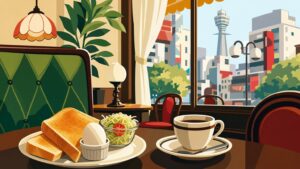
Life in Osaka moves at its own rhythm, a frantic, syncopated beat that pulses through the subway tunnels and echoes down the covered shotengai arcades. It’s a city of constant motion, a place where the air itself seems to hum with an electric charge. You feel it in the brisk, weaving walk of the crowds in Umeda, you hear it in the boisterous laughter spilling from izakayas in Tenma, and you taste it in the sizzling, savory explosion of takoyaki snatched from a street stall in Namba. This energy is magnetic, it’s intoxicating, it’s what makes Osaka undeniably, irrevocably alive. But let’s be honest. Sometimes, that relentless beat can wear you down. Sometimes, you need a moment of silence, a breath of air that doesn’t taste of grilled meat and opportunity. Sometimes, you just need to escape. And for the weary Osakan soul, there is no escape more perfect, more profound, or more conveniently located than the ancient capital of Nara. This isn’t just about trading skyscrapers for temples or traffic noise for the gentle rustle of leaves. A weekend trip to Nara does more than just recharge your batteries; it acts as a mirror, reflecting the beautiful, chaotic reality of your adopted Osaka home in ways you can only appreciate from a distance. By slowing down, you start to understand the incredible speed you’ve grown accustomed to. By stepping into tranquility, you begin to grasp the complex, vibrant noise that defines daily life in Osaka. This journey, a mere forty minutes by train, is a journey into the heart of what it means to live in Kansai, showing you not just what you’re escaping from, but what you’re so eager to return to.
To truly appreciate the complex, vibrant noise that defines daily life in Osaka, it helps to understand the local culture of spontaneous sidewalk chats, known as Tachibanashi.
The Kintetsu Line: An Arterial Vein of Kansai Life
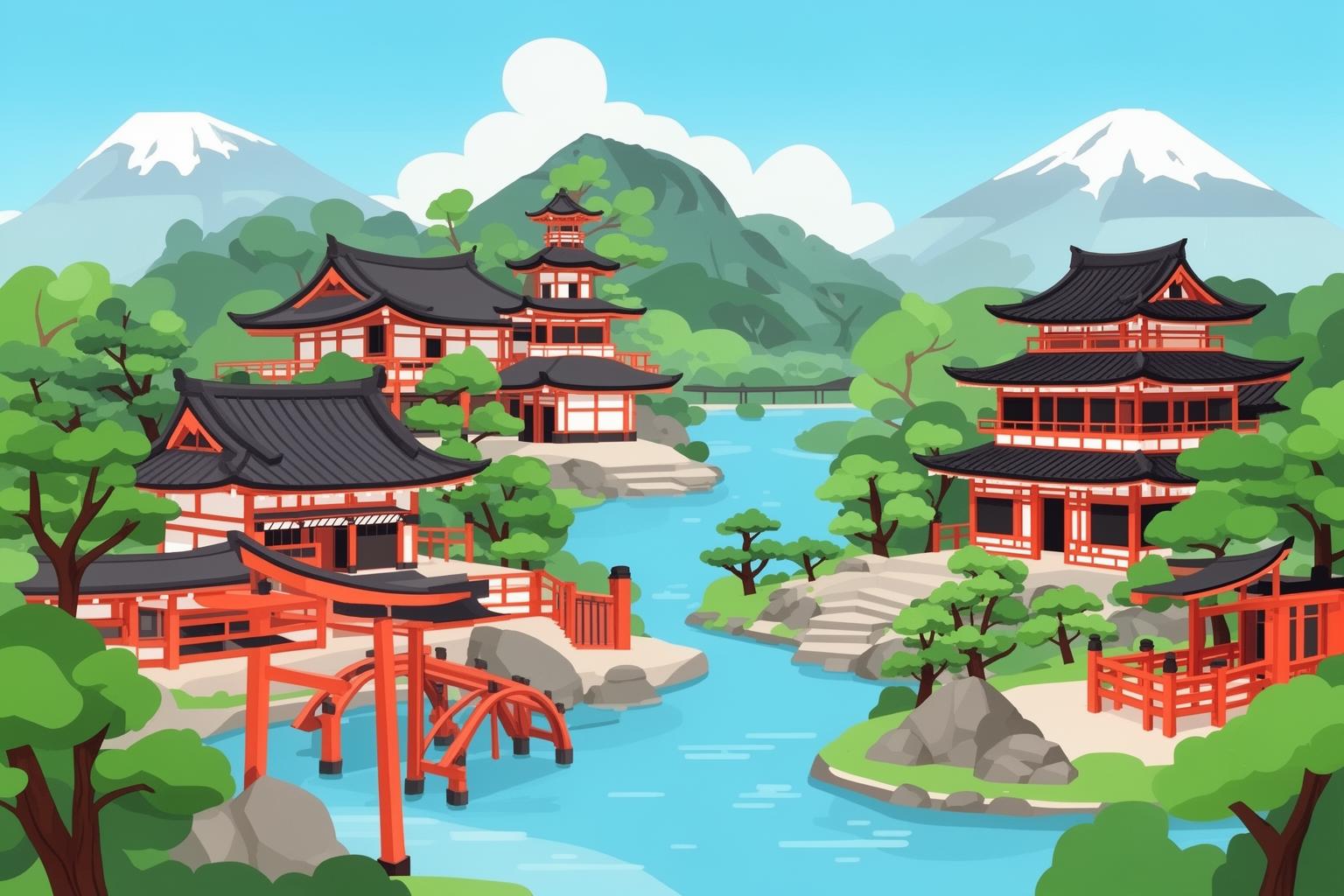
The escape from Osaka doesn’t start upon arriving in Nara; it begins the moment you descend into the vast, subterranean maze of a Kintetsu station. For most, this means Osaka Namba, a place that feels like the city’s raw, pulsating heart, hidden away from the sunlight. The journey itself is an essential part of the experience—a transitional space where the Osaka mindset is revealed before gradually unwinding.
A Tale of Two Terminals: Namba vs. Umeda
To truly understand Osaka, you must grasp its geography of identity, often defined by its train stations. The city is divided into two main centers: Kita, the northern downtown focused around the gleaming, corporate towers of Umeda and JR Osaka Station, and Minami, the southern downtown, a vibrant playground of entertainment and cuisine spreading out from Namba. Umeda feels polished, refined, and somewhat like Tokyo. Its stations are expansive, modern, and serve as gateways to the business hubs of Kobe and the culturally rich Kyoto. It’s the face Osaka presents to the world.
Kintetsu Namba, by contrast, is pure, undiluted Osaka. It’s a bit gritty, permanently crowded, and its underground passageways form a confusing maze of shops selling everything from inexpensive socks to mouthwatering pork buns. Yet, there’s an unmistakable logic in its chaos—a raw efficiency that locals deeply value. The Kintetsu line weaves not toward corporate power centers, but east and south, connecting residential Osaka neighborhoods with the ancient history of Nara and the spiritual sites of Ise-Shima in Mie Prefecture. It’s less a business route and more a cultural lifeline. Opting for the Kintetsu from Namba on a trip to Nara is more than a practical decision; it’s a way of aligning with the Minami spirit. It’s a subconscious choice to embrace the more relaxed, informal, and distinctly local flow of Kansai life.
Onboard Observations: Osaka Commuters in Relaxation Mode
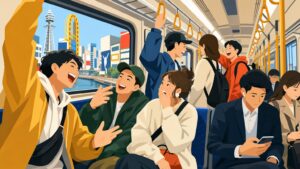
As the limited express train departs from Namba, a fascinating change takes place. The cabin, initially alive with loud, rapid-fire Kansai-ben filling every corner of Osaka, gradually quiets down. The groups of friends who were loudly debating dinner plans, the families corralling excited children—they all begin to settle. The city’s relentless energy seems to dissipate with every kilometer. This is the physical expression of the famed Osaka “off-switch.”
Foreigners often assume that Osaka residents are constantly “on”—loud, expressive, always ready with a joke or dramatic reaction. In many public settings, this is true. It’s a kind of social performance—a direct, open, and entertaining way to engage with the world. But no one can sustain that energy indefinitely. The train to Nara reveals the curtain falling. People slump in their seats, eyes closed, tension visibly melting away from their shoulders. City-chic outfits give way to practical sneakers and cozy jackets. It’s a sharp reminder that Osaka’s boisterous personality isn’t a constant state; it’s a role played on the urban stage, requiring substantial downtime to maintain. This journey is a collective exhale. Compare this to a Shinkansen bound for Tokyo, where the ride feels tight with ambition, filled with the soft tapping of laptops and serious expressions of salarymen. The Kintetsu train to Nara is different—it’s a train of leisure, family, and escape. It’s not about pushing forward; it’s about leaving it all behind.
The Nara Approach: Decompression and the Osaka Mindset
Arriving in Nara offers a study in contrasts, and how you adapt to this slower pace reveals much about the habits and instincts shaped by life in Osaka. From the moment you step off the train, you are confronted with the city’s most defining feature: its relentless, forward-moving tempo.
Kintetsu-Nara Station vs. JR Nara Station: Insights into Osakan Priorities
Nara is served by two primary stations, Kintetsu-Nara and JR Nara, and your choice between them is revealing. Kintetsu station sits right at the doorstep of Nara’s main attractions. Once you exit its underground passage, you immediately find yourself at the edge of Higashimuki Shotengai and just steps from the entrance to Nara Park. The route to relaxation is straightforward and immediate. The JR station, by contrast, is a solid fifteen to twenty-minute walk west of the park. While perfectly functional, it demands a less direct approach.
Most day-trippers from Osaka arrive via Kintetsu-Nara, and this is no coincidence. It reflects a core element of the Osaka mindset: a mix of impatience, known as sekkachi, and a strong regard for practicality. Why spend an extra fifteen minutes walking a dull main road when that time could be enjoyed amid deer and trees? This isn’t about laziness. An Osakan will readily stand in line for an hour under the scorching sun for ramen rumored to be the city’s best. Effort must match the reward. In this calculation, transit time is lost time. The goal is the experience, and the most efficient route to that experience is always preferred. This is the logic of kosupa (cost performance) applied beyond money to time and energy. It explains why an Osaka driver will honk the instant a traffic light turns green: time is a resource for enjoyment, not idling.
The Slow Walk: Resisting Osaka’s Pace
As you join the flow of people moving from Kintetsu-Nara station toward the park, the first thing you notice is the slower pace. The crowd meanders. People stroll. They stop abruptly to take photos. For someone whose body has been tuned to the Darwinian hustle of Osaka’s sidewalks, this is initially frustrating. Your muscles, trained to find the fastest path through a human maze, twitch with impatience. You automatically weave, sidestep, and seek gaps, treating the leisurely crowd like an obstacle course.
This is the “Osaka hustle,” a physical expression of the city’s tempo. It’s a walk that says, “I have places to be, things to do, and I won’t let slow-moving tourists slow me down.” But in Nara, this instinct works against you. The whole point is to slow down. The wide, open paths of Nara Park stand in direct physical and psychological contrast to Osaka’s narrow, crowded streets. Enjoying Nara means unlearning this urban reflex. It calls for a conscious choice to relax your shoulders, breathe deeply, and let yourself be carried by the gentle flow of the crowd. This deliberate deceleration reveals just how unconsciously fast you move daily. It’s a striking contrast to Tokyo’s almost choreographed, purposeful stride or Kyoto’s slow, reverent quiet. Struggling to slow down in Nara is a sign that the spirit of Osaka remains within you.
Interacting with Nature: Deer, Serenity, and the Urban Soul
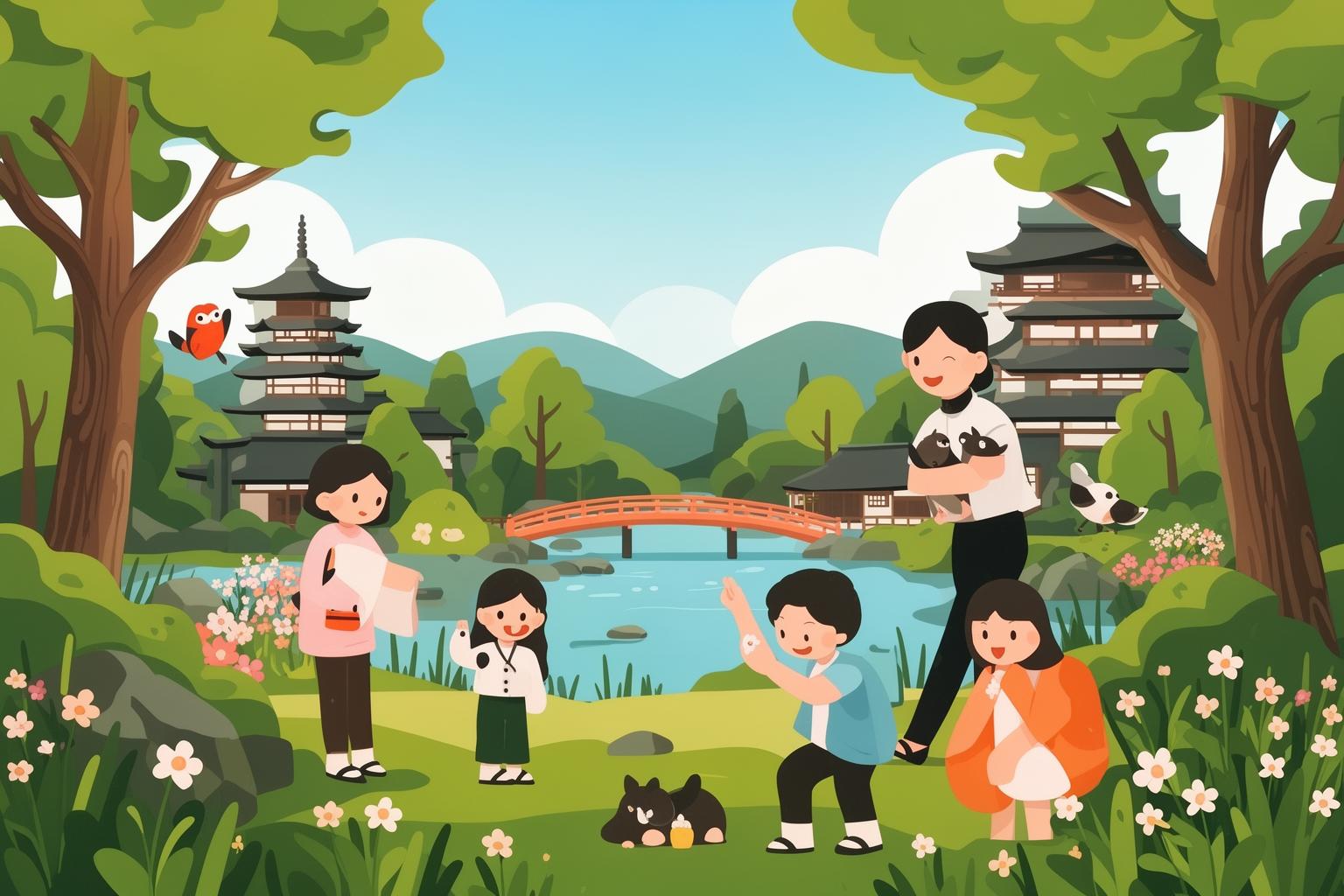
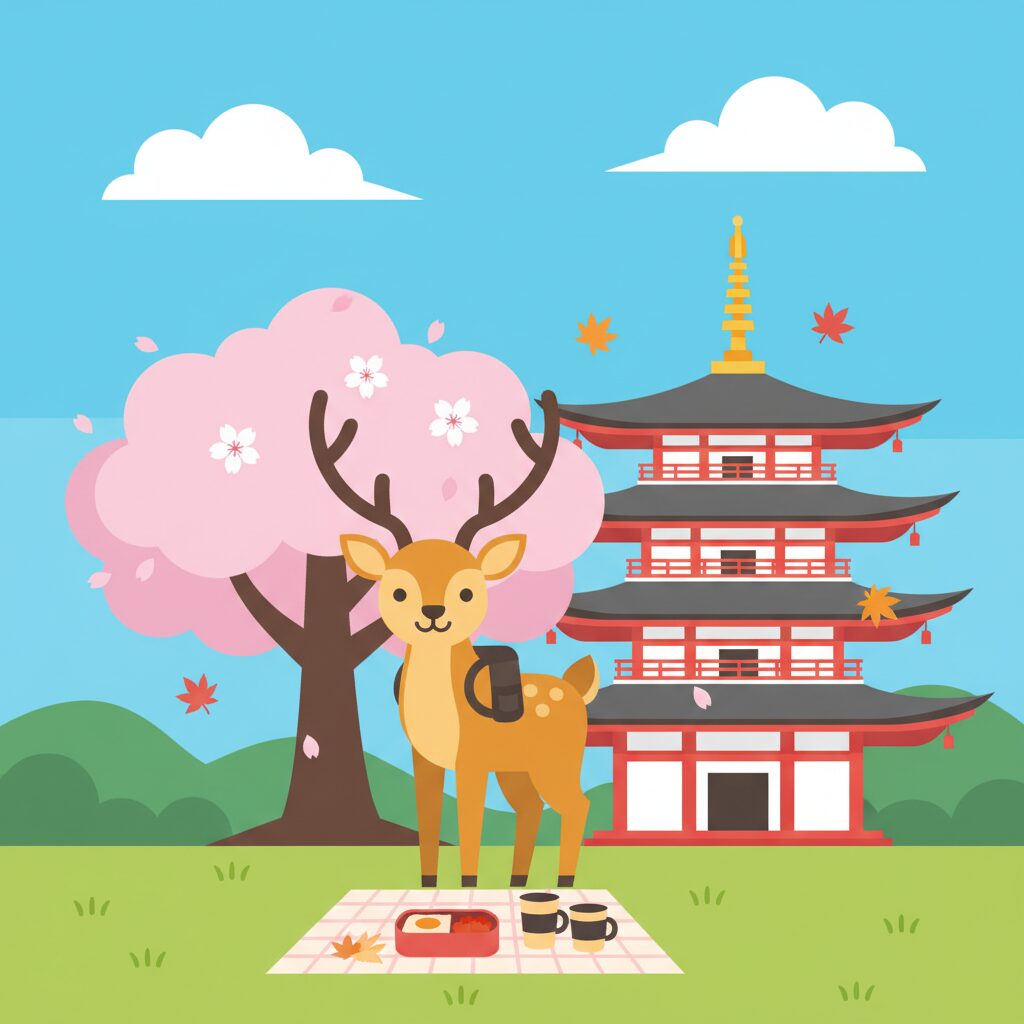
Central to the Nara experience is the interaction with its most famous inhabitants: the thousands of sika deer that roam freely across the park and city. Yet, how people engage with this distinctive mix of nature and urban life reveals much about their cultural backgrounds, especially for those coming from the concrete jungle of Osaka.
The Famous Deer and the “Akan!” Attitude
Tourist brochures and social media often portray the Nara deer as calm, gentle creatures, politely bowing for a cracker. The reality is far more nuanced and, honestly, more fascinating. These wild animals have mastered the art of tourist manipulation. They can be pushy, demanding, and won’t hesitate to nibble on your coat, bag, or map if they think you’re withholding the shika senbei (deer crackers). It’s in these moments that the Osaka personality truly emerges.
Where visitors from other regions might respond with surprise or a polite but firm “dame,” the Osakan reaction is usually more straightforward, familiar, and laced with humor. You might hear a frustrated grandmother fending off a persistent deer exclaim, “Akan! Mou agemasen!” (“No way! I’m not giving you any more!”) with the same tone she’d use toward a spoiled grandchild. Or a group of young men laughing as a deer aggressively nudges one of their friends, shouting, “Uwa, koitsu meccha guigui kuruやん!” (“Whoa, this one is really pushy!”). There’s a notable lack of ceremony here. The deer aren’t seen as sacred, untouchable symbols of nature; they’re treated like fellow Kansai residents, with their own quirks and personalities. This direct, unfiltered, often humorous interaction is pure Osaka. It’s a mindset that breaks down formalities and engages with the world on a personal, candid level. This same spirit allows a stranger to comment on your t-shirt on the subway or an older man to offer you candy while waiting in line.
Finding Quiet: Beyond the Todai-ji Crowds
Most tourists in Nara Park gather in a handful of popular spots: the path to Todai-ji Temple, the area around the Nandaimon Gate, and wherever shika senbei are sold. For many Osakans, these places are simply points to pass through quickly. The true purpose of their visit lies beyond the crowds, in the quieter, more expansive corners of the park. Their goal is not just sightseeing but finding space.
Space is a rare luxury for urbanites, especially those living in Osaka, a city famed for its vibrant, human-scale density. Neighborhoods are a tightly knit tapestry of narrow streets, small homes, and busy shops. Finding a place where the sky feels wide and the horizon is free of buildings is profoundly freeing. That’s why locals often bypass the main attractions to explore winding trails through Kasugayama Primeval Forest, climb the gentle slope to Nigatsu-do hall for panoramic city views, or simply sit quietly on a patch of grass near Ukimido Pavilion. This quest for ma—the Japanese concept of negative space or interval—is deeply ingrained. Life in Osaka is so full and saturated with sensory input that a trip to Nara becomes an intentional search for emptiness. It’s about discovering a space where thoughts can breathe, a stark contrast to the continuous mental stimuli of city life.
The Sound of Silence vs. The Sound of Osaka
This desire for space also includes seeking a different soundscape. Stand quietly in a secluded part of Nara Park, and you begin to notice subtle natural sounds: the wind rustling through ancient cedar trees, a deer’s distinctive call echoing in the distance, leaves crunching underfoot, a distant temple chant. These sounds are almost completely absent in Osaka.
In Osaka, “silence” rarely means complete quiet. Instead, it’s the constant, low hum of the city itself: the faint rumble of the Midosuji subway beneath you, the rhythmic clack of a train crossing the Yodo River bridge, the distant bass from pachinko parlors, murmurs drifting from numerous open doorways. Osaka residents don’t necessarily come to Nara seeking absolute silence—that can feel as unsettling as a power outage. They seek a replacement of the artificial rhythm with a natural one. It’s the quality of the sounds, not their absence, that brings relief. Appreciating this contrast is fundamental to the urban mindset. It’s what makes the city noise bearable, knowing a realm of natural quiet is only a short train ride away.
Food and Commerce: The Nara Version of Osaka’s Stomach
Osaka is famously called tenka no daidokoro, or “the nation’s kitchen,” a city where food serves not just as sustenance but as a primary form of entertainment, identity, and commerce. A visit to Nara provides a fascinating culinary contrast, where Osaka’s food-centric culture is both reflected and transformed through a more historical and tranquil perspective.
The Shopping Street (Higashimuki Shotengai): A Familiar Comfort
Exiting Kintetsu-Nara station, you’re welcomed by the Higashimuki Shotengai, a traditional covered shopping arcade. For any Osaka resident, this sight is instantly familiar and comforting. The shotengai is the heart of Osaka neighborhoods—from the vast, 2.6-kilometer-long Tenjinbashisuji to the numerous smaller local arcades scattered across the city. It functions as a semi-public space akin to a community’s living room.
However, the Nara version operates on a different wavelength. While Osaka’s arcades often buzz with the chaotic symphony of bicycle bells, hawking shopkeepers, and sizzling hotplates, Higashimuki is notably calmer. The pace is slower. The shops focus less on bargain hunting and more on local craftsmanship and regional specialties: fragrant pickles cured in sake lees (narazuke), delicate calligraphy brushes (fude), and most famously, the rapid pounding of glutinous rice into mochi by Nakatanidou. For an Osakan, walking through this arcade feels like visiting a distant, quieter cousin of their own neighborhood. It reinforces a shared Kansai culture—the importance of local commerce and the love of a good arcade—while underscoring different values. In Osaka, the shotengai thrives on the energy of daily hustle. In Nara, it celebrates the preservation of tradition.
What’s for Lunch? Pragmatism vs. Prestige
The choice of where to eat lunch in Nara reveals another fundamental regional difference. The local cuisine is subtle, historical, and deeply connected to the land. Restaurants often specialize in chagayu, a simple, comforting rice porridge made with roasted green tea, or kakinoha-zushi, pressed sushi wrapped in persimmon leaves that impart a subtle earthy aroma and natural antibacterial benefits. These dishes emerge from ancient wisdom and refined simplicity.
An Osakan, while perhaps intrigued by the novelty, experiences this through their own culinary lens, centered on the concept of kuidaore—to eat oneself into ruin. Osaka’s food culture relies on big, bold flavors and—most importantly—exceptional value for money. It’s a fiercely competitive market where restaurants thrive or fail based on their ability to deliver maximum satisfaction at a fair price. While enjoying their delicate Nara meal, the Osakan’s mind is never far from assessing the value. The unspoken question lingers: “Is this good kosupa?” They may admire the history and subtlety but instinctively compare it to what the same money could buy back home. “This is nice,” they might say, “but for 1,500 yen in Namba, you can get a huge okonomiyaki and a beer.” This isn’t a criticism of Nara’s cuisine; it’s simply the default mindset of the Osaka diner. Food must be delicious, yes, but it also has to be a great deal. Satisfaction must reach beyond the palate to the wallet as well. In Nara, food feels like a link to the past. In Osaka, it feels like a transaction in the vibrant, competitive present.
Heading Home: Re-entry and the Appreciation of Osaka
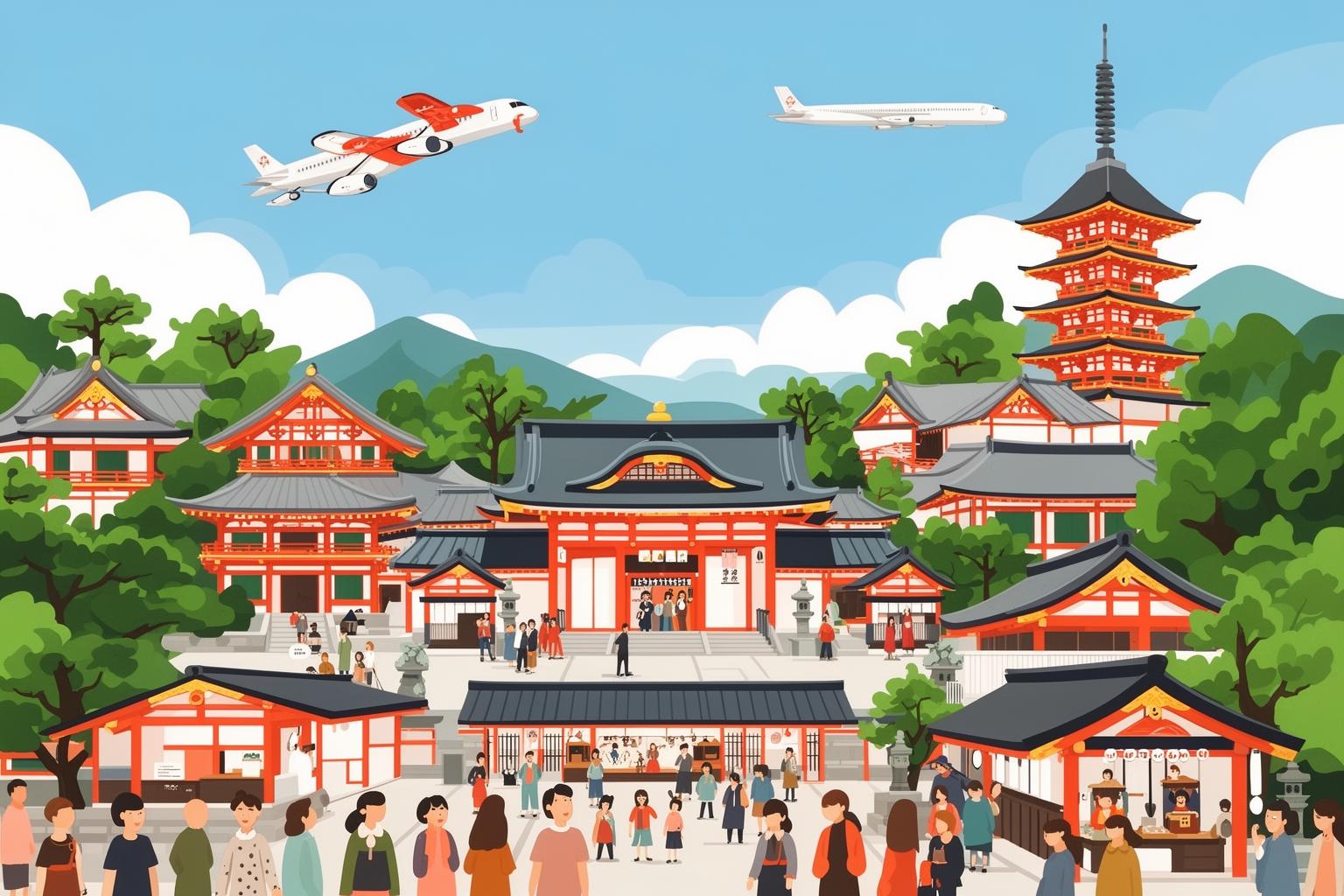
The return journey is just as integral to the weekend ritual as the getaway itself. It serves as a phase of re-compression, where the tranquility of Nara gradually fades, giving way to the imminent reality and vibrant energy of Osaka. The trip back home reinforces the entire meaning of the escape: it’s not about leaving Osaka behind, but about learning to appreciate it more deeply upon your return.
The Sunday Evening Train Back
The atmosphere on the Kintetsu express heading back to Namba on a Sunday evening feels distinctly different from the outbound trip. The initial buzz of conversation is toned down. Passengers carry souvenirs—boxes of mochi, small deer-themed keepsakes, bags of pickles. There’s a pleasant weariness, the kind born from a day spent walking outdoors. As the train departs the rolling hills of Nara and descends into the flat, dense plains of Osaka prefecture, the mood in the carriage gradually shifts. Quiet talks grow a little louder. Phones appear as people begin planning their upcoming week. The city’s magnetic pull reasserts itself, drawing everyone back into its orbit. Approaching Tsuruhashi station, with its unmistakable aroma of Korean barbecue drifting through the platform doors, signals the final transition. You’re no longer in the past. You’ve returned to the hungry, vibrant present.
Stepping Out into Namba’s Neon Glow
Emerging from the underground station into the nightscape of Namba is an overwhelming sensory experience. After a day beneath the wide sky of Nara, surrounded by muted greens and earthy tones, the explosion of color is dazzling. Giant neon crabs, dragons, and pufferfish hang from buildings, blinking and flashing. Massive video screens broadcast ads over a cacophony of J-pop, arcade game sounds, and the roar of countless simultaneous conversations. The sheer density of people is staggering, a river of humanity flowing in every direction.
For a moment, it’s overpowering. Your ears ring, your eyes struggle to adjust. But then, something remarkable happens. The shock fades, replaced by a sense of recognition and familiarity. This overwhelming, chaotic, electrifying spectacle—this is home. The trip to Nara wasn’t an escape from a place you dislike; it was a temporary refuge from a place you love, a place whose intensity demands occasional respite. You needed the silence of Nara to truly appreciate Osaka’s symphony. You needed the emptiness of the park to navigate the crowded streets. This duality is the heart of the Osaka experience. To thrive amid the city’s wonderful madness, you must have an accessible, convenient, and peaceful escape. Nara’s proximity is not just a geographical convenience; it’s a psychological necessity that sustains life in Osaka.
Conclusion: Nara as a Mirror for Osaka
A weekend in Nara is much more than a mere sightseeing excursion. It serves as a vital diagnostic lens for comprehending the city of Osaka and your role within it. By stepping away from the city’s intense gravitational pull, you gain a clarity about its traits that is unattainable from within. The hurried pace of your walk, the directness of your speech, your instinctive calculation of value for money—these are the qualities that Osaka has subtly ingrained in you.
Nara, with its serene, ancient wisdom, provides the perfect contrast. Its slow pace accentuates Osaka’s rapid tempo. Its quiet reverence for nature and tradition emphasizes Osaka’s boisterous passion for commerce and modernity. The gentle deer of Nara Park offer a charming counterpoint to the straightforward, no-nonsense attitude of the Osaka inhabitants who visit them. You come to realize that living in Osaka is a balancing act. You embrace the chaos because you know tranquility is only a short train ride away. You treasure the city’s relentless energy because you have a place to recharge. Ultimately, you don’t fully understand the city you live in until you see it reflected in the eyes of its neighbor. The brief journey to Nara provides one of the clearest mirrors, revealing the beautiful, complex, and entirely unique spirit of Osaka—a city you return to not just with rested feet, but with a renewed appreciation for the glorious, neon-lit chaos you are fortunate to call home.