So there I was, standing in the middle of the Tenjinbashisuji Shotengai, a sprawling, covered artery of commerce that feels less like a shopping street and more like the city’s circulatory system. I was looking at a pair of sturdy-looking canvas sneakers in a small, family-run shoe shop, the kind of place crammed floor-to-ceiling with boxes, smelling of rubber and old leather. The owner, a wiry man with a smile etched into his face, saw me looking. He didn’t ask if I needed help. He didn’t hover. He just shouted from behind his counter, “They’re good shoes! Last ya a long time. Better than that fancy brand stuff. And cheaper!” It wasn’t a question. It was a statement of fact, a challenge almost. I picked them up, felt the weight, and asked the price. He told me. I paused for a second, doing the mental calculation. And in that half-second of silence, he leaned forward and said, with a conspiratorial grin, “Honma ni? You think that’s too much?”
That question, Honma ni?—Really? Seriously?—is the key to unlocking Osaka. It wasn’t rude. It wasn’t aggressive. It was an invitation. An invitation to engage, to question, to think about what I was holding and what it was truly worth. In Tokyo, a similar pause would be met with polite silence, an awkward waiting game. In Osaka, silence is a vacuum that must be filled with negotiation, with banter, with life. This is a city built not by samurai decree or imperial grace, but by the calloused hands and quick wits of merchants. Here, the art of the deal—the ‘akinai’—isn’t just a business strategy; it’s the cultural DNA, the rhythm of daily life. It dictates how people talk, how they shop, how they eat, and how they connect with one another. To live in Osaka is to learn the language of value, a language spoken with a candor and humor that can feel jarring if you’ve only ever known the quiet, polished formality of Tokyo. This isn’t about being cheap. It’s about being smart. It’s about understanding that every yen has a story, and in Osaka, everyone wants to hear a good one.
This pragmatic, deal-focused mindset, known as the akindo spirit, continues to shape the city’s modern landscape, influencing everything from its vibrant startup scene and coworking spaces to daily social interactions.
The Akinai Spirit: More Than Just Business
To truly understand the soul of Osaka, you must recognize that the city’s roots lie in commerce rather than military or political power. While Tokyo—formerly Edo—was molded by the strict hierarchy of shoguns and samurai, Osaka emerged as the ‘tenka no daidokoro,’ or ‘Kitchen of the Nation.’ It became a vast, bustling port where the country’s rice, sake, and goods were collected, stored, and traded. This history isn’t just a dusty detail in textbooks; it’s a vibrant force that still energizes the streets today. In a samurai city, status depends on your name, rank, and adherence to protocol. In a merchant city, status comes from your savvy, your ability to make a profit, and your reputation as a fair yet sharp dealer. This fundamental difference in origins shaped two distinctly different urban cultures.
This merchant spirit is woven into the very way people greet one another. It’s a code, a shared wavelength everyone tunes into. Move to Osaka, and soon enough you’ll hear it, perhaps directed at you once a shopkeeper gets familiar, or between old friends passing on the street. It’s the quintessential Osaka greeting, a phrase that often confounds many Tokyoites.
“Mokkari Makka?” – The Greeting That Defines a City
The phrase is “Mokkari makka?” which literally means “Are you making a profit?” In most cultures, and certainly elsewhere in Japan, this would be considered a highly intrusive, even rude, question—like asking someone’s bank balance as a hello. But in Osaka, it’s stripped of this literal sense. It functions as a casual, friendly “How’s it going?” or “How’s life treating you?” It’s a greeting born of a shared understanding: life is a hustle, we’re all playing the game of ‘akinai’ together, and your success reflects the wellbeing of the community. It acknowledges the daily grind, the struggle, and the victories of making a living.
The reply is equally coded. You don’t say, “Yes, I’m doing great, business is booming!”—that would come off as boastful and impolite. The classic response is a slight shrug, a wry smile, and the words, “Bochi bochi denna.” This roughly translates as “So-so, bit by bit,” or “Can’t complain.” It’s a humble display, signaling that you’re working hard without getting ahead of yourself, that you’re grounded. The exchange isn’t about revealing financial details; it’s a ritual that reinforces a shared worldview. It says, “I see you. I see your hustle. I’m hustling too. Let’s keep at it.” Compare this to Tokyo’s standard greeting, which usually centers on the weather. It’s pleasant and safe but tells you nothing. The Osaka greeting, in its roundabout way, is deeply personal. It revolves around your work, your effort, your very role as a productive member of society.
The Kitchen of the Nation: A Legacy of Trade
The significance of being the ‘Kitchen of the Nation’ cannot be overstated. Feudal lords from across Japan set up warehouses along Nakanoshima’s canals to store and sell rice they collected as tax. This forged a powerful merchant class that developed sophisticated commodity trading systems, including the world’s first futures market at the Dōjima Rice Exchange. Money, credit, and contracts became the city’s lifeblood. While samurai in Edo often looked down on merchants as lower class, in Osaka, merchants were the innovators, risk-takers, and key influencers. They financed the city’s spectacular Bunraku puppet theater and Kabuki performances. Their patronage shaped much of the city’s culture.
This legacy still deeply influences the modern city’s mindset. There is great pride in commercial savvy. People admire clever businesspeople, savvy shoppers, and restaurateurs who serve fantastic food at a fair price. There is a strong respect for pragmatism and a healthy skepticism toward authority and empty ceremony. If something lacks practical sense or value, Osakans are quick to call it out. This isn’t cynicism; it’s critical thinking refined over centuries of trade. In Tokyo, a brand name and store location can justify a high price. In Osaka, the product inside the bag must prove its worth regardless of branding. The merchant’s eye always looks beyond the packaging to find the true value within.
Neuchi: The Unspoken Religion of Value
To grasp the single most important concept shaping daily economic life in Osaka, you need to understand the word ‘neuchi’ (値打ち). Often translated as ‘value’ or ‘worth,’ these English terms don’t fully convey its deep, almost spiritual meaning. ‘Neuchi’ isn’t about the price tag or being cheap; it’s a holistic appraisal of a product or service—an unspoken, complex calculation that balances quality, quantity, durability, price, and even the emotional satisfaction of the purchase. An item with high ‘neuchi’ excels across these factors, while one with low ‘neuchi’ fails this invisible standard, no matter how low its cost.
This concept underpins Osaka’s consumer culture. People willingly spend lavishly on items they believe have high ‘neuchi’—a perfectly marbled cut of beef for sukiyaki, a lifelong handmade kitchen knife, or sturdy shoes from a seasoned craftsman in the shotengai. Yet, they will complain loudly about paying a modest amount for a small, mediocre coffee in an unremarkable café. The first is seen as a quality investment; the second is perceived as wasteful, a losing deal. The feeling of ‘son shita’—having been shortchanged—is a deep cultural discomfort, while ‘toku shita’—getting a great deal—is a genuine joy and something to share with loved ones.
It’s Not About Being Cheap, It’s About Being Smart
The common stereotype that people from Osaka are ‘kechi’ (stingy or cheap) is a misconception, often spread by Tokyo residents. This label misses the real point entirely. The focus is not on saving money blindly but on maximizing its effectiveness. Osaka shoppers are smart, discerning consumers who won’t be fooled by flashy marketing or surface-level branding. They actively engage with the economy rather than passively accept it.
Take the simple act of buying lunch. In Tokyo, paying ¥1,500 for a meal in a trendy area like Daikanyama is normal—you’re also paying for the minimalistic decor, curated music, and fashionable atmosphere. The food might be secondary. In Osaka, however, a ¥1,500 lunch must be exceptional, with generous portions, quality ingredients, and delicious flavor. If it isn’t, that restaurant won’t last long. Word spreads fast that the ‘neuchi’ is low. I recall visiting a new Italian restaurant in Namba with a local friend. Although the pasta was decent, the portion was small for the price. Rather than just eating and leaving, my friend quietly muttered, “Kore wa akan”—This won’t do—for the whole meal. Not because it tasted bad, but because the value equation was off. He never returned and undoubtedly shared his view with others. This is how Osaka’s market operates—a self-regulating system efficiently eliminating low ‘neuchi’ businesses.
The Cost-Performance (Cospa) Obsession
The modern term for this age-old idea is ‘cospa,’ a Japanese abbreviation for “cost-performance.” Though it’s used across Japan now, it feels tailor-made for Osaka. The pursuit of high ‘cospa’ is a city-wide sport, influencing every aspect of daily life and turning even routine tasks into a strategic challenge.
This is especially evident in the city’s supermarkets. While standard nationwide chains exist, Osaka is famous for local, no-frills supermarkets known for their high cospa, the most iconic being Super Tamade. Visiting Tamade is an experience: neon lights blaze, vivid yellow and red signs overwhelm, and inside, loud music fills the chaotic aisles—all focused on one goal: rock-bottom prices. Known for their “¥1 Sales,” where select items are sold for a single yen (with minimum purchase), the quality can vary, and you need to shop shrewdly, but the potential for exceptional cospa is huge. This contrasts sharply with the elegant, calm, and costly gourmet supermarkets you might find in Tokyo’s Azabu-Juban. Tamade isn’t selling ambiance; it’s delivering pure, intense ‘cospa’.
This mindset extends to electronics. While Tokyo’s Akihabara is now as much about anime and otaku culture as electronics, Osaka’s Den Den Town in Nipponbashi retains a more traditional feel. Here, small shops overflow with raw components—capacitors, wires, odd adapters—run by knowledgeable older men ready to help you build or repair almost anything. There’s a gritty, practical vibe where haggling is common and the focus is on function and price. You visit Akihabara for the latest figurine or themed café, but Den Den Town is the place to find a specific part for fixing your amplifier at a fraction of the cost of a new one. For an Osakan, that’s peak ‘cospa’.
The Art of the Question: “Honma ni?”
This city-wide focus on value is governed by one powerful question: “Honma ni?” As the shoe-shop owner showed, this verbal tool is used to cut through any claim or assertion. It has countless applications. When a friend raves about a new restaurant, you might ask, “Honma ni oishii no?” (Is it really delicious?). When a shopkeeper quotes a price, a quiet stare or a muttered “Honma ni?” signals that negotiation is about to start. It’s the conversational instrument for testing ‘neuchi’.
Picture yourself at a stall in Kuromon Ichiba Market examining premium tuna cuts. The seller claims, “This is top quality! It melts in your mouth!” A polite Tokyo shopper might nod and accept the price. An Osaka shopper, even wanting to buy, might look the fish over, meet the seller’s eye, and say, “Honma ni? This one looks better over here, don’t you think?” This isn’t offensive. It’s the opening move in a ritual dance. It signals, “I’m no tourist. I know what I’m after. Convince me.” A skilled seller rises to the challenge, explaining the cut and perhaps offering a small taste. The exchange becomes more than a simple purchase—it’s a dialogue affirming both the product’s worth and the customer’s savvy.
The Transaction as Theater: Haggling, Humor, and Human Connection
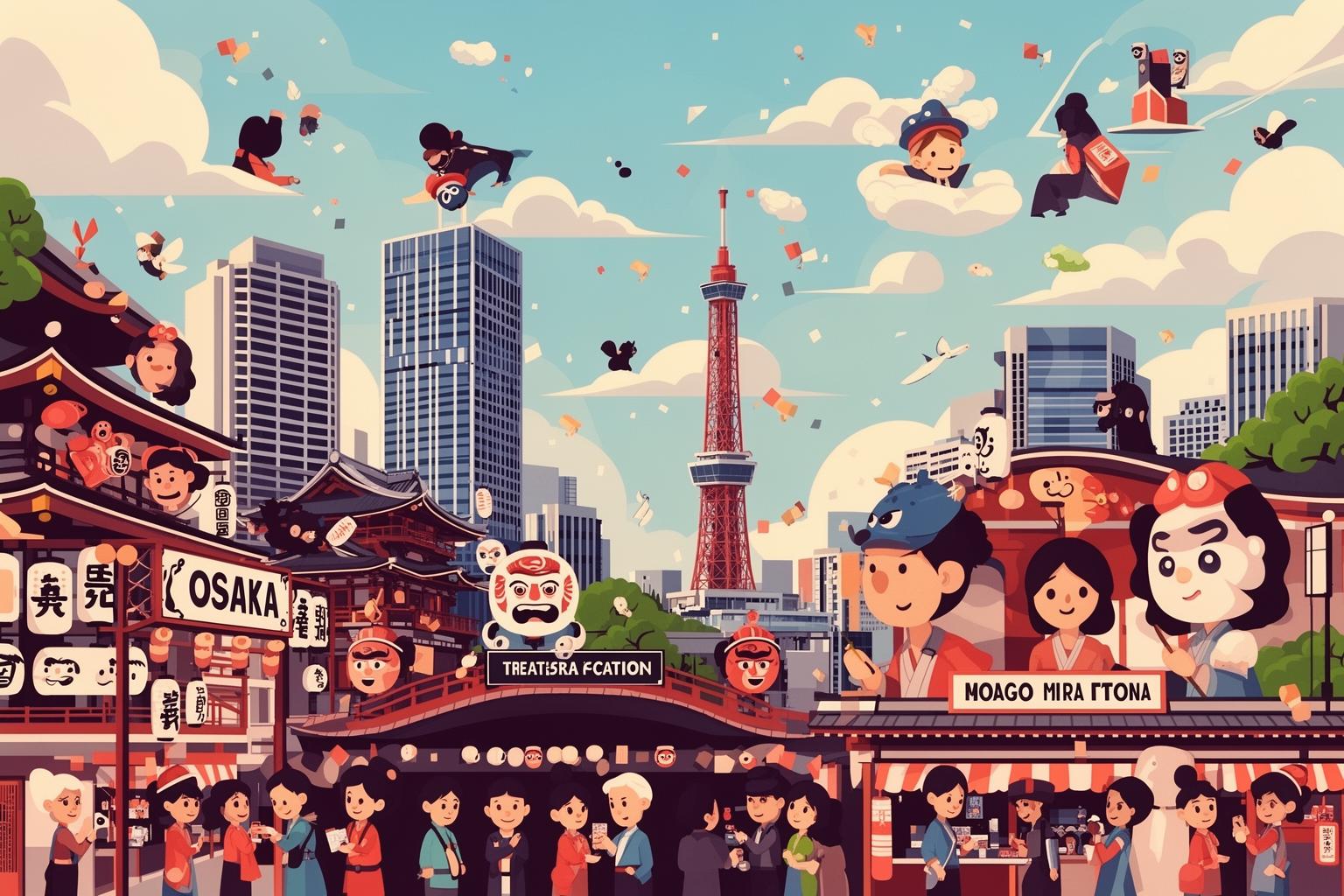
In much of the modern world, particularly in Tokyo, the ideal transaction is quick, quiet, and seamless. Tap your card, grab your bag, and go. Efficiency rules. In Osaka, however, this can be perceived as cold and impersonal. Here, a transaction often unfolds like a small theatrical performance with distinct stages: the opening, the negotiation, the climax, and the friendly conclusion. This process isn’t about causing friction; it’s about fostering connection, turning a routine exchange of money for goods into a memorable human interaction.
This is the most noticeable behavioral difference a newcomer will encounter. Shopping in Osaka, especially in traditional markets and shopping arcades, is an active rather than passive experience. You are expected to participate. Your role is to be a discerning, value-conscious, yet friendly customer. The seller acts as the expert, the entertainer, and the fair-minded merchant. When both roles are played well, the outcome is more than just a sale; it’s a relationship, however brief.
Ketaoshi (値切り) – The Art of Negotiation
‘Ketaoshi,’ or haggling, is perhaps the most famous and often misunderstood aspect of Osaka’s merchant culture. For many foreigners and even other Japanese, the idea of questioning a price is awkward and intimidating. But in the right context in Osaka, it’s not only acceptable—it’s expected. It’s a game, a sport, and an essential form of communication.
First, the rules. Haggling isn’t done at department stores, convenience stores, or large chains. Nor would you haggle over a bowl of ramen. Context is key. It takes place where the owner is present and has pricing authority: small electronics shops in Den Den Town, clothing boutiques in Amerikamura, flea market stalls, or that friendly shoe shop owner in the shotengai. You have to read the situation.
Technique matters too. It’s not a forceful demand for a discount, but a friendly, often humorous exchange. It might begin with a simple question like, “Chotto makete kureru?” (Can you give me a little discount?). This usually prompts a theatrical sigh from the owner, a complaint about tough business, and a counter-offer. The key is the banter. You might praise the product, tell the owner how much you love it, yet lament that it’s just a bit beyond your budget. They may share the story behind the product. Laughter lubricates the negotiation. A successful haggle leaves both parties feeling victorious—the customer gets a small discount, and the seller makes a sale while forming a bond with a customer more likely to return. This sharply contrasts with Tokyo’s fixed-price culture, where prices on the tag are absolute and non-negotiable. In Tokyo, haggling would be seen as disrespectful, implying the seller doesn’t know how to price their goods. In Osaka, it can signal respect, showing you take the purchase seriously.
The Power of Omake: The Little Extra
The final act in this transactional drama is often the ‘omake.’ ‘Omake’ refers to a bonus, a freebie, an extra little something added at the end of a purchase. It serves as the merchant’s closing gesture, a sign of goodwill sealing the relationship. It’s the seller’s way of saying, “Thank you for your business. Please come again.”
‘Omake’ comes in many forms. Buy a bag of apples, and the grocer might toss in an extra one. Buy a shirt, and the shop owner could add a pair of socks. At a takoyaki stand, regular customers may find an extra octopus ball in their container. It’s rarely of great monetary value, but that’s not the point. The gesture itself matters. It transforms the transaction from a cold, calculated exchange into a warm, reciprocal one. It is a powerful tool for cultivating customer loyalty in a city with fierce competition. Why choose a sterile chain supermarket when the old lady at the local yaoya (vegetable shop) always gives you a free spring onion and asks about your day?
The culture of ‘omake’ directly descends from the ‘neuchi’ mindset. It mentally inflates the purchase’s value in the customer’s eyes. You didn’t just buy six takoyaki; you got six plus one free. The ‘cospa’ (cost performance) just skyrocketed. This is a clever piece of business psychology practiced in Osaka’s markets for centuries.
Laughter as Currency
It’s no accident that Osaka is Japan’s undisputed comedy capital. The city houses Yoshimoto Kogyo, the giant entertainment company that dominates ‘manzai’ (stand-up comedy) and ‘owarai’ (general comedy). The typical Osakan is fast-talking, sharp-witted, and armed with a quick ‘tsukkomi’ (straight man) reply for any ‘boke’ (funny man) joke.
This comedic sensibility extends beyond the stage; it’s a type of currency in everyday interactions, especially in business. A humorous salesperson is considered a good salesperson. They use laughter to break down barriers, build rapport, and put customers at ease. Sales pitches are often delivered with self-deprecating humor. When trying on a jacket, the owner might say, “It looks great on you! Makes you look ten years younger! Or maybe five. Okay, two. But definitely younger!” This approach disarms customers, turning a high-pressure situation into an enjoyable interaction. It encourages you, the customer, to buy. This differs greatly from the formal, almost reverential service found in upscale Tokyo boutiques, where staff speak softly and follow a strict script. In Osaka, the script is thrown away in favor of improvisation, wit, and authentic human connection.
How the Akinai Mindset Shapes Daily Life
The merchant spirit isn’t something that flips on and off at the shop’s entrance. It’s an all-encompassing worldview that influences every facet of life in Osaka, from the city’s physical design to the way people conduct their social interactions. It nurtures a culture of pragmatism, directness, and a distinctive kind of communal, street-level energy unique to Osaka.
The Shotengai: The Beating Heart of the Merchant City
To witness the ‘akinai’ spirit in action, simply stroll through a ‘shotengai,’ a covered shopping arcade. Osaka is renowned for these, and they serve as the lifeblood of its neighborhoods. The longest in Japan, the Tenjinbashisuji Shotengai, extends an impressive 2.6 kilometers, a seemingly endless stream of small shops, eateries, and clinics. Walking through it offers a full sensory plunge into Osaka’s culture. It’s loud. Vendors shout out their daily specials, music blasts from pachinko parlors, and the air is infused with the aromas of grilled eel, fried croquettes, and fresh daikon radish.
It’s worlds apart from the polished, branded atmosphere of a Tokyo shopping street like Omotesando, with its sleek architectural icons housing global luxury brands. The shotengai is chaotic, organic, and deeply human. Shop displays overflow onto the sidewalks. Prices are hastily written on cardboard signs. Lighting tends to be harsh fluorescent. There’s no pretense. This is a place built for one goal: commerce. Yet it also acts as a community hub. Neighbors pause to chat, shopkeepers tease their regulars, and children run errands. The shotengai perfectly embodies Osaka’s priorities: community, commerce, and great-value takoyaki, all mixed together in a lively, vibrant, and thoroughly charming scene.
Socializing and Splitting the Bill
This practical attitude toward money extends into social settings. The custom of ‘warikan’—splitting the bill—is common across Japan, but in Osaka, it can be carried out with a particular strictness that sometimes surprises outsiders. When a group dines out, it’s not unusual for the bill to be divided down to the exact yen based on what each individual consumed. In Tokyo, especially in business circles, a senior person (‘senpai’) might cover the whole cost to reinforce social hierarchy. Or if the bill is split, it might be rounded to the nearest thousand yen for ease. This casual handling can feel unfair to Osakans. Why should someone who only had one drink pay the same as someone who had five?
This isn’t about stinginess. It reflects a deeply held belief in fairness and transparency. The principle is simple: everyone pays for what they consumed. No hidden social debts or obligations are created. The relationship remains balanced, a transaction among equals. It’s the merchant mindset applied to friendships: the accounts should be clear. This can sometimes sound blunt, but for Osakans, it’s the most honest and straightforward way to socialize without fostering future discomfort or resentment.
The Landlord-Tenant Relationship
Even within the notoriously rigid realm of Japanese real estate, Osaka’s flexibility sometimes shines through. While monthly rent is almost always fixed, other move-in expenses—especially in older buildings managed by smaller, independent landlords—can occasionally be negotiable. The infamous ‘reikin’ (key money), a non-refundable gift to the landlord, is often the main point of negotiation. A savvy renter, particularly when working with a local real estate agent, might manage to reduce this fee or have it waived entirely.
This is practically unheard of in Tokyo, where the real estate market operates like a well-oiled machine run by large corporations with rigid rules. The price is the price—take it or leave it. In Osaka, especially when dealing with individual landlords, the landlord-tenant relationship can resemble a business negotiation. The tenant is a long-term client. If you present yourself as reliable and low-risk, the landlord might offer concessions to secure your business. It’s a perfect example of how the ‘akinai’ spirit can permeate even the most bureaucratic processes, transforming a strict rule into a flexible guideline.
The Tokyo-Osaka Divide: Form vs. Function, Brand vs. Value
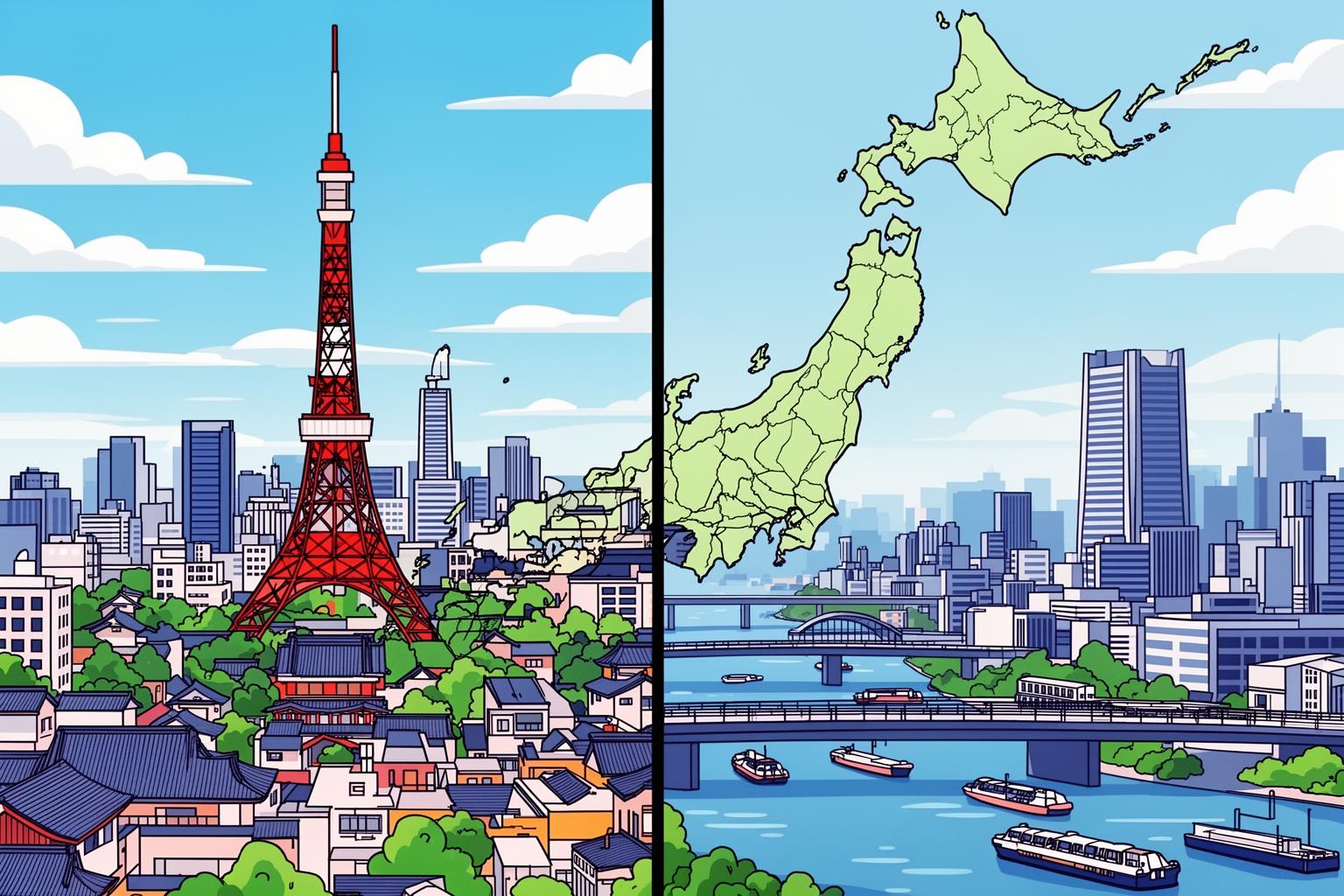
Ultimately, the difference between the two cities boils down to a fundamental clash of philosophies. Tokyo, as the seat of government and corporate Japan, prioritizes form, procedure, and brand prestige. Osaka, as the historic hub of commerce, emphasizes function, results, and intrinsic value. This is not a judgment on which is superior; rather, they represent two distinct operating systems, two unique worldviews. This difference is evident in business practices, consumer behavior, and the very character of their people.
The Suit and the Sales Pitch
Picture a business meeting in Tokyo. It’s likely held in a formal conference room, with polished, detailed presentations that follow a strict agenda. The hierarchy in the room is clear. The emphasis is on consensus-building, adhering to proper procedures, and maintaining the reputation of all companies involved. Decision-making tends to be slow and deliberate.
Now, imagine the same meeting in Osaka. It is often more direct and to the point. Osaka businesspeople are known for getting straight to the heart of the matter: “De,なんぼなん?” (So, how much is it?) and “Mokaru no?” (Is there profit?). They place less value on slick PowerPoint decks and more on tangible benefits. A good idea is valuable regardless of its presentation. They appreciate straightforwardness and can be impatient with the polite ambiguity (‘honne’ and ‘tatemae’) common in Tokyo’s business culture. In Osaka, a deal feels like a partnership between individuals aiming for mutual gain; in Tokyo, it often seems like a transaction between faceless corporations.
Consumer Choices: Ginza vs. Shinsaibashi
Nothing highlights the contrast in consumer culture better than comparing shopping in Tokyo’s Ginza with Osaka’s Shinsaibashi. Ginza represents the pinnacle of Japanese luxury. Its broad streets, stunning architecture, and flagship stores of global brands resemble temples of consumerism. The atmosphere is one of quiet reverence. Service is flawless and almost silent. Shoppers pay a premium for brand, location, elegant packaging, and a sense of exclusivity.
Shinsaibashi, on the other hand, is a chaotic, vibrant whirlwind. While it hosts some high-end brands, they are nestled alongside fast-fashion chains, drugstores blaring J-pop, and souvenir shops. The experience is loud, lively, and interactive. Staff call out to you, compliment your style, and invite you in. The excitement lies in the thrill of the hunt—the discovery of unique items or great bargains. You might buy the same luxury handbag in Ginza and Shinsaibashi, but the experience surrounding the purchase is entirely different. In Ginza, the purchase affirms your status; in Shinsaibashi, it showcases your skill as a shopper.
What Foreigners Misunderstand
This cultural divide often causes misunderstandings for foreigners living in Osaka. The direct, question-focused communication style may seem aggressive or rude—but it’s not. It’s a pursuit of clarity and efficiency. Osakans generally prefer a quick, honest “no” over a lengthy, polite “maybe.” They respect your time and expect the same in return.
The stereotype of being “cheap” is another common misconception. It’s more accurate to describe Osakans as “value-oriented.” They have no problem spending money—in fact, the city’s motto is ‘kuidaore,’ meaning to eat oneself into bankruptcy. People happily spend extravagantly on excellent food and drink. However, that spending is always backed by ‘neuchi’—value. They will pay for quality, craftsmanship, and memorable experiences but not for empty promises, flashy branding, or poor service. Essentially, they are some of the most demanding and discerning customers in Japan, and businesses succeed here because they meet those very high expectations.
Living the Akinai Life: Practical Advice for Newcomers
So how does a foreigner adapt to this unique culture? The key is to fully embrace it. Don’t remain a passive observer; become an active participant in the city’s daily commerce theater. Learning to navigate the world of ‘akinai’ means learning to live in Osaka on its own terms.
How to Shop Like a Local
When you find yourself in a market or a small shop, engage with the owner. Ask questions like, “Is this fish fresh today?” or “Which of these sakes do you recommend?” Show genuine interest. This helps build rapport and is the first step toward any potential negotiation. Don’t hesitate to try a playful, gentle haggle when appropriate. Even a small discount is worthwhile for the shared laughter and connection. Most importantly, train your eye for ‘neuchi.’ Compare prices, assess quality, and consider what you’re really getting for your money. Celebrating a great cospa purchase is a joy every Osakan understands.
Navigating Social Finances
When you go out with Japanese friends, expect a precise splitting of the bill. It reflects mutual respect and fairness. Feel comfortable discussing money or work—these are not taboo topics but central parts of life. If someone treats you, be sure to reciprocate later. The social ledger, like the business ledger, is meant to stay balanced. It’s about maintaining an equitable, horizontal relationship based on mutual give-and-take.
Embracing the Pragmatism
Above all, learn to appreciate the city’s deep pragmatism. Osaka is a city that works—down-to-earth, unpretentious, and relentlessly focused on what is real and useful. There’s an honesty here that can be incredibly refreshing. In Osaka, you are judged less on your background or title and more on your character, sense of humor, and ability to recognize a good deal. It’s a city that rewards those who engage, ask questions, and learn the rhythm of its merchant heart. Once you grasp the unwritten rules of ‘akinai,’ you don’t just live in Osaka—you become part of it.