It happens on your first day, or maybe your first week. You’re walking down a bustling street in Namba, or a quiet residential lane in Tennoji, and you see it. A mother glides past, a fortress of a bicycle beneath her. She has one child strapped to a seat in the front, another in the back, and the basket is overflowing with daikon radishes and a week’s worth of groceries. She’s on her phone, held expertly in one hand, steering with the other, and she navigates the crowded sidewalk with the casual grace of a fish swimming through a current it was born in. You, the newcomer, just barely manage to jump out of the way. There’s no malice, no anger. There’s just a silent, swift acknowledgment that you were in the way of a force of nature. In that moment, you don’t just see a person on a bike. You witness the fundamental truth of this city: Osaka doesn’t just have a bicycle culture; Osaka is a bicycle culture. It’s the city’s circulatory system, the lifeblood that connects its sprawling, distinct neighborhoods into a single, pulsating organism. Forget the subway map for a second. The real map of Osaka is an invisible network of bike paths, shortcuts through temples, and unspoken rules of the sidewalk. To live here, to truly understand the rhythm of this place, you need a bike. It’s not a suggestion; it’s a prerequisite. A bicycle here is your key to freedom, your ticket to the city’s hidden soul. But as you’ll soon discover, that key can also unlock a world of frustration, a labyrinth of unwritten rules, and a daily dance with a special brand of organized chaos that is uniquely, undeniably Osaka. This isn’t about leisurely rides in the park. This is about Bicycle-centric City Life, a full-contact sport played by millions every single day.
To truly understand the rhythm of this city, you need a bike, but to understand its soul, you might start with the daily ritual of Osaka’s kissaten morning service.
The Cast of Characters: Osaka’s Road Warriors
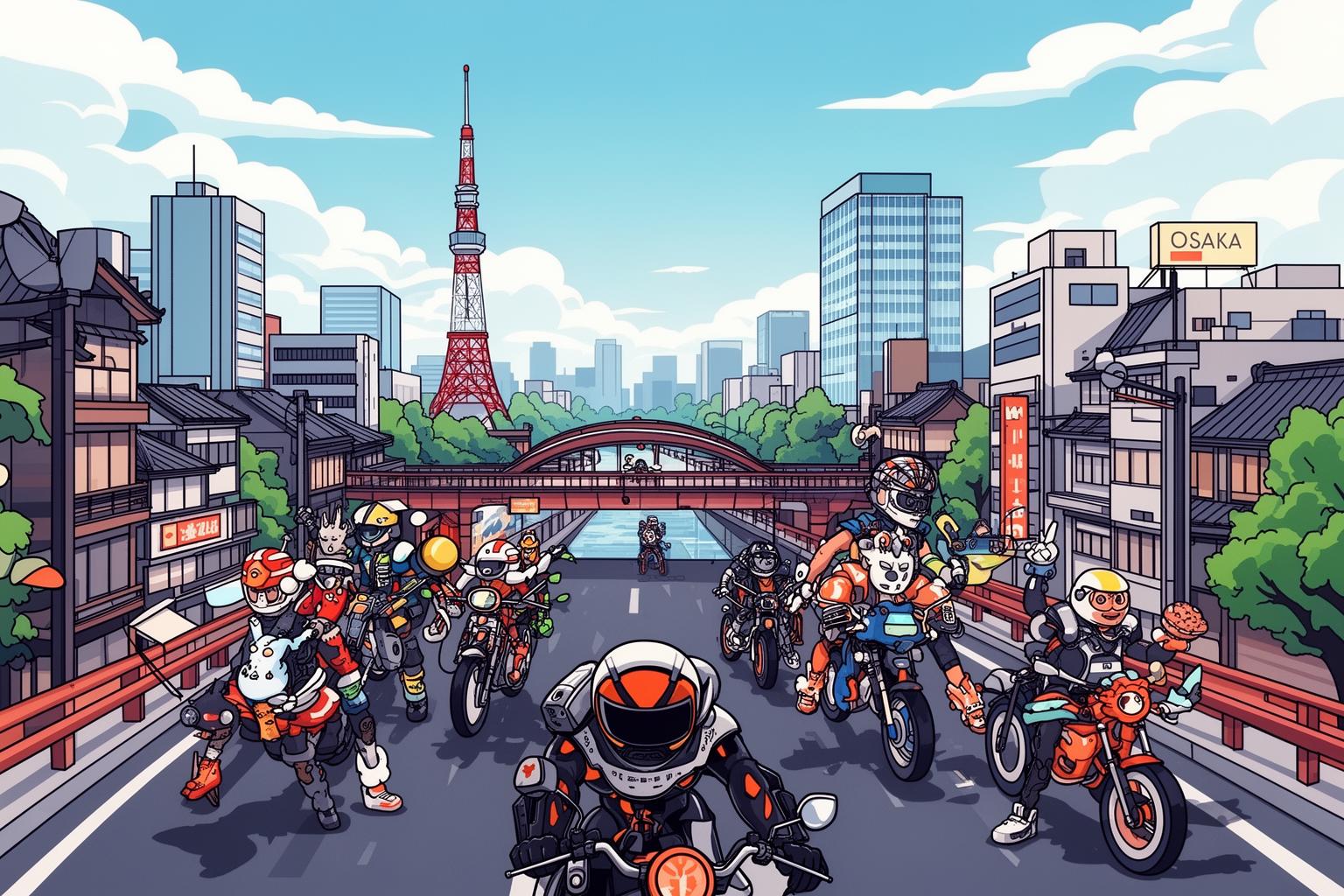
Before you can grasp the rules of the road, you must first understand the players. The bicycle scene in Osaka is not a uniform stream of commuters; it’s a complex ecosystem of distinct archetypes, each driven by their own motivations, destinations, and unwritten codes of conduct. Observing them is the essential first step to becoming one of them.
The Mamachari: Queen of the Urban Jungle
The undisputed ruler of Osaka’s streets is the mamachari, or “mom’s bike.” Calling it merely a bicycle is a significant understatement. It serves as a family vehicle, a cargo carrier, and a mobile command center. These bikes are far from lightweight or sleek; they are heavy, steel-framed workhorses built for stability over speed, prioritizing practicality over aesthetics. They almost always have a step-through frame for easy mounting, a wide and comfortable saddle, upright handlebars, and a built-in wheel lock that clicks shut with satisfying finality. But the standard model is merely a blank slate. The real artistry lies in the customizations. The most common feature is a double child seat setup—one in front, nestled between the handlebars, and one atop a sturdy rack over the rear wheel. These aren’t flimsy accessories; they are robust, high-sided thrones, often fitted with elaborate, dome-like rain covers that transform the bike into a miniature Popemobile. On rainy days, you’ll see these transparent bubbles gliding through the drizzle, small children’s faces peering out like little astronauts. The front basket is another essential element. It is never empty, serving as a repository for school bags, grocery sacks from the nearby Tamade supermarket, tote bags, and occasionally a small dog poking its head over the edge. The mamachari rider embodies Osaka’s pragmatic spirit. She is a logistics master, balancing hundreds of pounds of children and shopping with effortless composure. She has places to go, and the mamachari is the most efficient tool for the task. It’s faster than walking, cheaper than the train, and more flexible than a car. Watching a mother expertly navigate a fully loaded mamachari through the narrow, crowded aisles of a shotengai (covered shopping arcade) is witnessing a master at work. It’s a display of skill reflecting years of practice and a deep, intuitive understanding of the city’s unique dynamics.
The Fearless Obachan: The Unspoken Law
If the mamachari is the queen, the obachan (a familiar term for an older woman) on her bicycle is the city’s spirit animal. She exudes pure, distilled purpose. Often riding an older, single-speed bicycle that creaks with character, she exists in a realm where conventional traffic laws are mere suggestions. She will emerge from a blind alley without looking, pedal calmly through a red light if the way is clear, and weave through dense pedestrian crowds with unnerving confidence. A foreigner might see this as rude or reckless, but that is a fundamental misinterpretation. The Osaka obachan is not trying to be a menace but operates under a hyper-local, deeply ingrained set of rules shaped by decades of navigating these exact streets. Her mental map is so detailed that she anticipates the flow of people, light changes, and local drivers’ habits. She embodies the Osaka mindset of hori-nuki, or cutting out the unnecessary. Why wait for a green light if there are no cars? Why stay on the road if the sidewalk offers a more direct path? Her movements are a masterclass in efficiency, prioritizing outcome over process. She is the guardian of an older, unwritten street law that predates modern traffic regulations. Getting angry at her is like getting angry at the rain—she is simply part of the city’s atmosphere. In a way, she starkly contrasts with Tokyo, where conformity and strict rule-following dominate. Osaka allows more tolerance for this kind of pragmatic individualism, as long as it accomplishes the task without causing major trouble.
Students, Salarymen, and Everyone in Between
The bicycle is Osaka’s great equalizer, cutting across all demographics. Mornings bring waves of high school students in uniforms, riding in groups, their laughter echoing down residential streets. They often ride inexpensive, simple bikes, sometimes decorated with stickers, always moving with the urgent energy of youth. They are the city’s morning tide, flooding the streets en route to school. Then there are the salarymen. In Tokyo, the businessman is often imagined packed into a subway car; in Osaka, it’s just as common to see a man in a full suit, briefcase in the front basket, pedaling briskly toward the nearest train station or even to his office. This is viewed as practical, not undignified or unusual. It saves money on a train pass for short distances and is often faster than waiting for local buses. The bicycle is a tool, and Osaka’s people excel at using the right tool for the job. You’ll find university students on sleek road bikes, delivery workers on electric-assist cargo bikes, and elderly men heading to local parks for a game of Go. The shared experience of cycling creates a subtle, unspoken bond, connecting the city’s inhabitants in a way that the anonymous, isolating experience of crowded trains never can. Everyone has faced a flat tire in the rain, battled headwinds on one of the city’s many bridges, and enjoyed the simple pleasure of cruising along the Yodo River on a sunny afternoon. This shared reality quietly but powerfully weaves into Osaka’s social fabric.
The Unwritten Rules: A Sidewalk Symphony of Chaos
Now that you’re familiar with the key players, it’s time to grasp how the game is played. One of the most surprising experiences for many foreigners in Osaka is the city’s approach to traffic laws, particularly regarding bicycles. What may seem like utter chaos from the outside is actually a complex, nuanced system of informal rules and social agreements. Learning how to navigate this system is crucial for both survival and peace of mind.
The Great Sidewalk Debate: A Space for Coexistence
Legally, Japanese law classifies bicycles as vehicles that should, with certain exceptions, be ridden on the street. In Osaka, however, this law is regarded more as a gentle suggestion than a strict rule. The vast majority of daily cycling takes place on the sidewalks. This is the biggest source of confusion and frustration for newcomers. Why? The reasons lie in a combination of history, infrastructure, and mindset. Osaka’s roads, especially in older residential neighborhoods, are extremely narrow, often lacking even a shoulder. Traffic, including buses and large trucks, moves swiftly and aggressively. For the average rider on a basic single-speed mamachari, riding in the street feels like a death sentence. Consequently, decades ago a tacit decision was made to claim the sidewalks. This has created a unique shared space where pedestrians and cyclists engage in a constant, low-stakes dance. In Tokyo, you’ll see many more cyclists on the street and stricter enforcement of sidewalk bans. In Osaka, police generally overlook sidewalk cycling unless it’s truly reckless. This reflects Osaka’s more flexible, results-driven culture. The unspoken rule is this: the sidewalk belongs to everyone, but pedestrians have the right of way. Cyclists are expected to be the more agile party, weaving and adjusting their speed to accommodate foot traffic. It’s a system built on mutual, if sometimes reluctant, awareness.
The Language of Movement: Bells, Apologies, and Silent Signals
How does this sidewalk dance operate in practice? It’s a delicate ballet of non-verbal communication. The first thing you’ll notice is what’s missing: the ringing of bicycle bells. In Osaka, a bell is treated as an emergency signal, a last resort. Using it to urge a pedestrian to move is seen as aggressive and rude, equivalent to honking in a quiet library. It breeds conflict rather than cooperation. Instead, cyclists rely on subtler techniques. The most common is the soft, nearly whispered “sumimasen” (excuse me) when approaching someone from behind. Often, this isn’t even necessary. The primary tool is skillful maneuvering: reading pedestrian movements, predicting their paths, and finding gaps. Cyclists slow down, swerve gently, and master the flow of human currents. Pedestrians, for their part, are attuned to this dance, often shifting subtly to one side without glancing back. It is a learned, collective intuition. This dependence on silent communication and mutual adjustment is very Japanese, but its application in such a dense, chaotic setting is distinctly Osaka. It embodies the principle of wa (harmony) in high gear. You are expected to anticipate others’ needs and adapt, without explicit signals. The system falters when one party—usually a tourist or newcomer distracted by their phone—is unaware of this silent dialogue. That’s when you might hear a sharper “abunai!” (danger!), the final warning before a potential collision.
The Art of the Intersection: The Osaka Pause
Intersections offer another glimpse into Osaka’s mindset. While major crossings with heavy car traffic are typically observed, smaller neighborhood intersections follow a different practice. The concept of a full stop at a stop sign is, for many cyclists, theoretical. Instead, they adopt what could be called the “Osaka Pause.” This involves rolling to a slow speed, quickly scanning left and right, and if clear, smoothly accelerating through without ever putting a foot down. This isn’t reckless disregard for safety but a matter of efficiency. Why lose momentum when there’s no danger? This behavior relies on heightened situational awareness and trust that others—whether cyclists, pedestrians, or local drivers—operate with the same alertness. Drivers familiar with these streets anticipate cyclists emerging from side roads. This calculated risk-taking characterizes the Osaka spirit. There’s a strong belief in one’s ability to evaluate a situation and make a swift, practical decision rather than blindly obeying a rule that may not fit the immediate context. It’s a mindset that can be both thrilling and unnerving. It feels like being part of a fluid, self-regulating system, but it also means that safety is ultimately your own responsibility. You cannot assume a stop sign will protect you automatically. You must watch, listen, and think. It’s a demanding yet oddly empowering way to navigate a city.
The Infrastructure Paradox: A City of Bikes, Not for Bikes
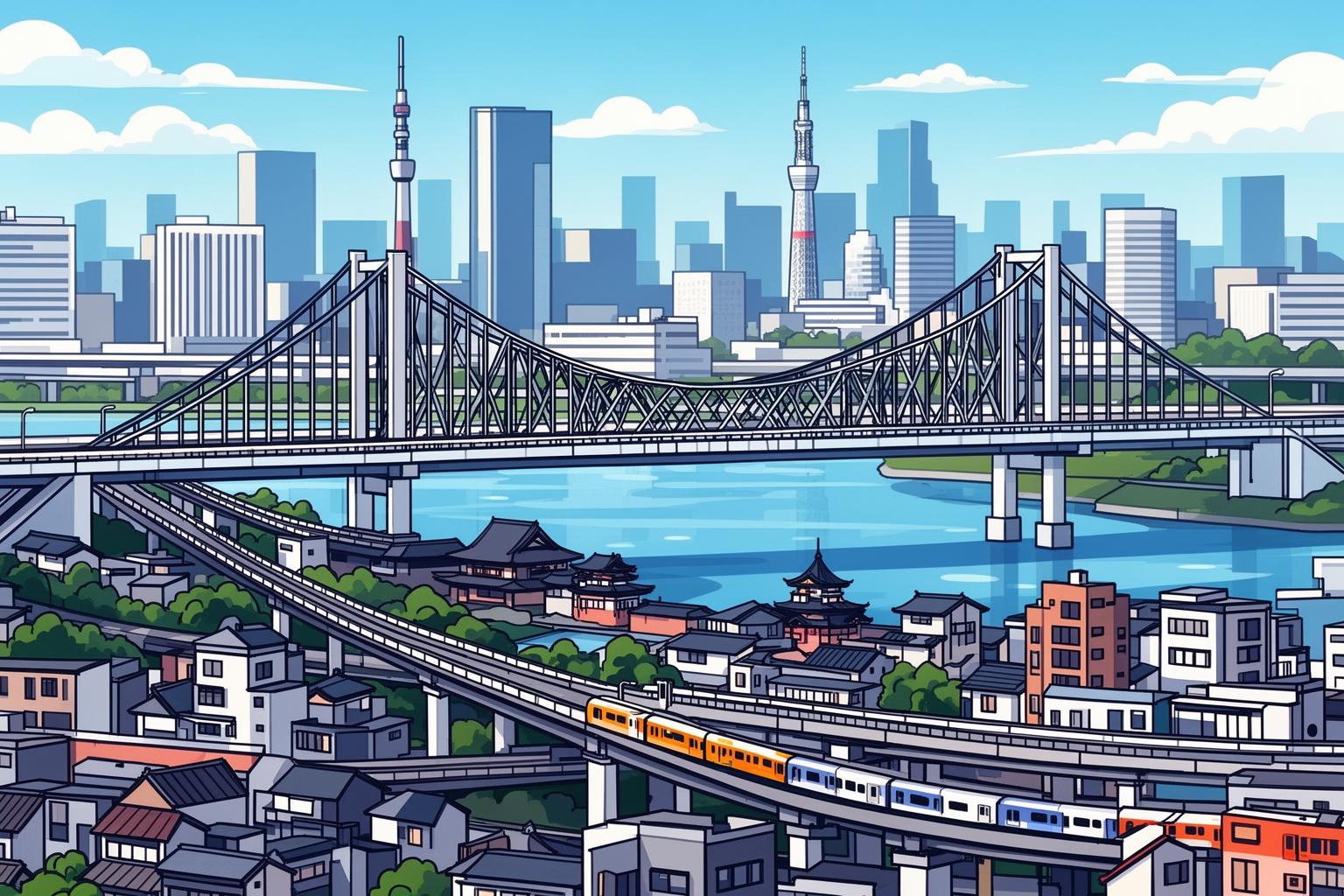
For a city so utterly reliant on bicycles, Osaka’s infrastructure can surprisingly feel quite hostile to them. This is the central paradox of cycling here. Although it is the most popular mode of transport, the city often appears unprepared for the sheer volume of two-wheeled traffic. This is where the daily freedom of cycling clashes with a world of frustrating restrictions.
The Parking Apocalypse: A Sea of Steel
The biggest source of frustration for any Osaka cyclist is parking. Every train station, supermarket, and department store is surrounded by a vast and disorderly sea of parked bicycles. Finding a legal, available spot can feel like a competitive challenge. The city provides designated parking areas called churinjo, but these often fill up, especially near major commuter hubs like Umeda or Namba. This inevitably causes spillover onto sidewalks, where bikes are chained to railings, signposts, and any other fixed objects. However, this is a risky move. The city employs teams that patrol the streets, tagging illegally parked bicycles with bright yellow warning notices (tessoku keikoku). The notice grants a grace period, usually just a few hours, to move your bike. Failure to comply results in removal and transfer to a distant impound lot. Retrieving your bicycle is a hassle, requiring a trip to an inconvenient location, paperwork, and a fine of several thousand yen. The whole system is designed to be just annoying enough to prevent repeat offenses. The parking struggle highlights the tension at the core of Osaka’s urban planning. The city inherently encourages cycling thanks to its flat terrain and compact layout, but it struggles to effectively manage the consequences. Residents must develop a strategic eye for parking—knowing which stations hide available spots, which times are less crowded, and which areas are most heavily patrolled by removal crews. This becomes another layer of local knowledge that separates veterans from novices.
The Shotengai Gauntlet: To Ride or Not to Ride
The covered shopping arcades, or shotengai, are the heart and soul of many Osaka neighborhoods—vibrant, bustling corridors of commerce and community. Yet they are a major source of confusion for cyclists. Are you allowed to ride through them? The answer is a frustrating “it depends.” Some, like the extensive Tenjinbashisuji, serve as major thoroughfares where cycling is generally allowed, though you’re expected to ride slowly. Others are strictly pedestrian-only zones, marked by clear signs showing a bicycle crossed out. Many fall into a gray area, where cycling is officially discouraged but tacitly tolerated, especially among locals just passing through. Occasionally, time-based restrictions apply—for example, no cycling between 10 AM and 8 PM. Navigating this patchwork of rules requires constant vigilance. For foreigners, the easiest way to learn is by observing the locals. If you see streams of mamachari and obachan gliding through, it’s probably acceptable to follow—provided you proceed with great caution. The shotengai exemplifies the sidewalk dilemma: a shared space where official rules often yield to informal, community-enforced etiquette. Riding through a crowded arcade demands skill and deep respect for pedestrians who are browsing, chatting, and living their lives. One wrong move risks upsetting the delicate social balance.
The River City’s Challenge: Conquering the Bridges
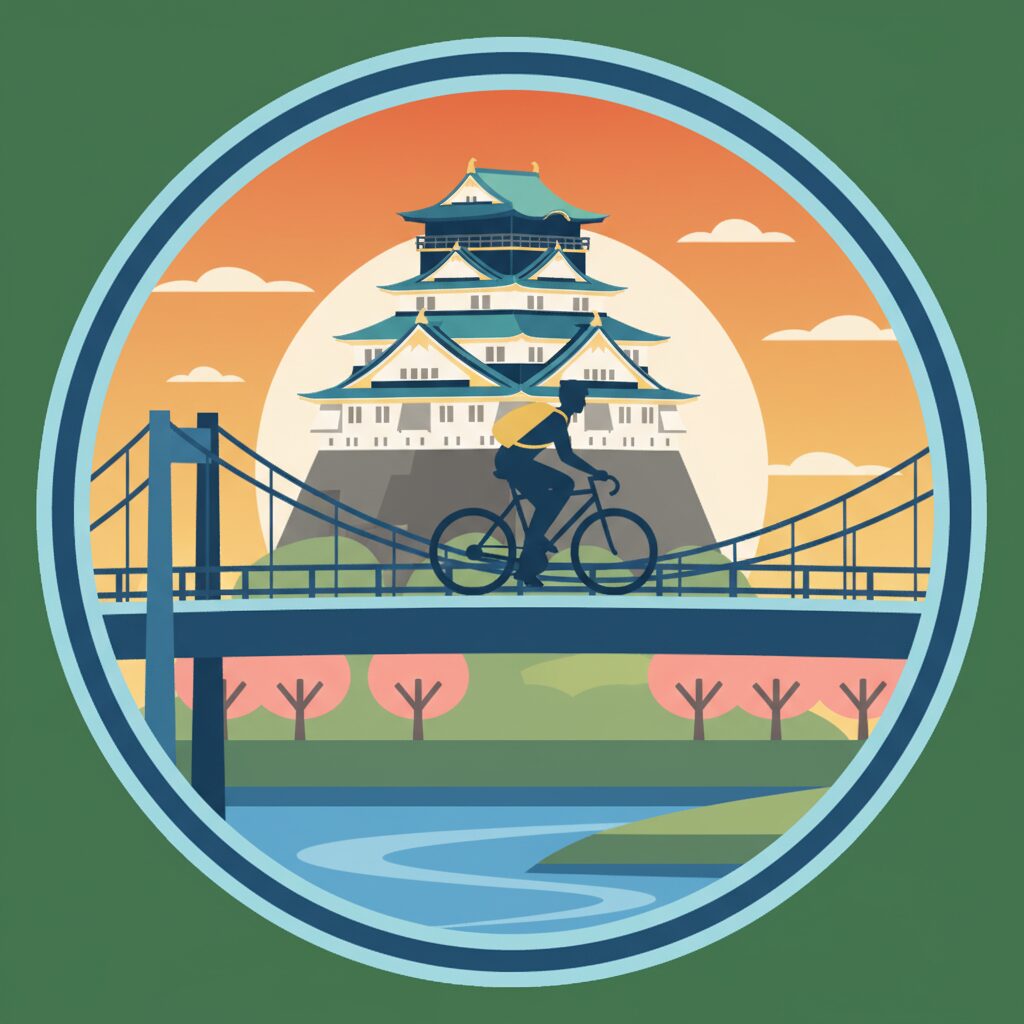
Osaka is a city built on water, a delta interlaced with rivers and canals. This geography adds much charm, but for cyclists, it presents a daily physical obstacle: the bridges. The city is remarkably flat, making cycling easy, but any significant trip will inevitably include crossing at least one bridge. These are not gentle inclines; the approaches are often steep and relentless, requiring you to shift down to your lowest gear, rise from the saddle, and grind your way to the top. It’s a brief but intense effort that can leave you breathless. The reward is the view from the summit. Gazing out over the Yodo or Yamato rivers, with the city skyline sprawling before you, you get a tangible sense of Osaka’s scale and its deep link to water. The descent is your prize—a thrilling, high-speed coast back down to street level. The bridges are more than mere infrastructure; they are landmarks in your daily commute. They break the monotony of the flat landscape, punctuating your journey with moments of struggle and release. They also serve as natural boundaries between neighborhoods, and crossing one can feel like entering a different part of the city. Battling a fierce headwind on the Naniwa Bridge on a cold winter’s day is a uniquely Osakan hardship, just as gliding across it on a warm spring evening offers simple, profound pleasure.
The Fine Print: Law, Order, and Social Responsibility
Although cycling daily in Osaka can feel delightfully chaotic, it’s vital for foreign residents to realize that beneath this apparent disorder lies a formal system of rules and consequences. The relaxed atmosphere can be deceptive. When problems arise, the system can be unexpectedly strict and unforgiving.
The Gradual Crackdown: When Rules Become Enforced
In recent years, police enforcement of bicycle regulations has visibly increased. While sidewalk riding is often overlooked, authorities are clamping down on particular dangerous behaviors. The main targets are riding with headphones and using smartphones while cycling, both now punishable by substantial fines. Officers frequently station themselves near busy intersections to stop offenders. It can be quite a shock: one moment you blend into the city’s flow, and the next, you are singled out for a violation. The police are usually polite but firm. Claiming ignorance as a foreigner won’t exempt you from a ticket. Cycling under the influence, or inshu unten, is taken extremely seriously. Although biking home after drinking at an izakaya may seem tempting, the penalties are harsh, including hefty fines or even imprisonment. In cases like this, Osaka’s casual vibe completely vanishes—the law is absolute. This increased enforcement reflects a broader societal effort to improve bicycle safety, signaling the city’s attempt to balance its chaotic cycling culture with public order. For residents, it means complacency is not an option; you must know which rules are flexible and which are rigid.
Official Registration: The Role of Bouhan Touroku
When purchasing a bicycle in Japan, new or used, you are legally required to register it with the police through the bouhan touroku (crime prevention registration). This process involves submitting your name, address, and phone number and receiving a small, bright orange sticker to attach to your bike’s frame. The cost is minimal, about 500 yen. Many foreigners skip this step, considering it needless bureaucracy, but this is a mistake. The registration sticker serves as your proof of ownership. Bicycle theft is common in Osaka, and if your bike is stolen and recovered, the sticker is the only way for police to identify it as yours. Moreover, police conduct random bicycle inspections and may ask to see your registration. If you cannot prove ownership, they may suspect theft, resulting in a troubling and time-consuming visit to the local police box. The bouhan touroku system, though small, is a crucial part of the social contract—it embodies accountability. Registering your bike shows you are a responsible community member, a simple step that integrates you into the local system and can save major trouble later.
Insurance and Liability: The Serious Side of Cycling
Perhaps the most important practical advice for cyclists in Osaka is that you must carry bicycle liability insurance. Since 2016, Osaka Prefecture requires all cyclists to be insured. Many foreigners are unaware of this law. The rationale is clear: accidents occur and can lead to enormous costs. If you injure a pedestrian seriously, you could owe millions of yen in damages. The image of a bicycle as a harmless toy disappears in the courtroom. Mandatory insurance protects both victims and riders from financial disaster. Policies are affordable and often available bundled with other insurance or sold at convenience stores. Riding without insurance is not only illegal but also reckless. This legal mandate highlights a key aspect of Japanese culture that can be overlooked amidst Osaka’s casual atmosphere. While daily life often runs on informal trust and flexibility, when that trust is broken by an accident, society insists on a formal, strict system of accountability and redress. The freedom of cycling carries a significant responsibility.
A Lifestyle, Not Just a Commute
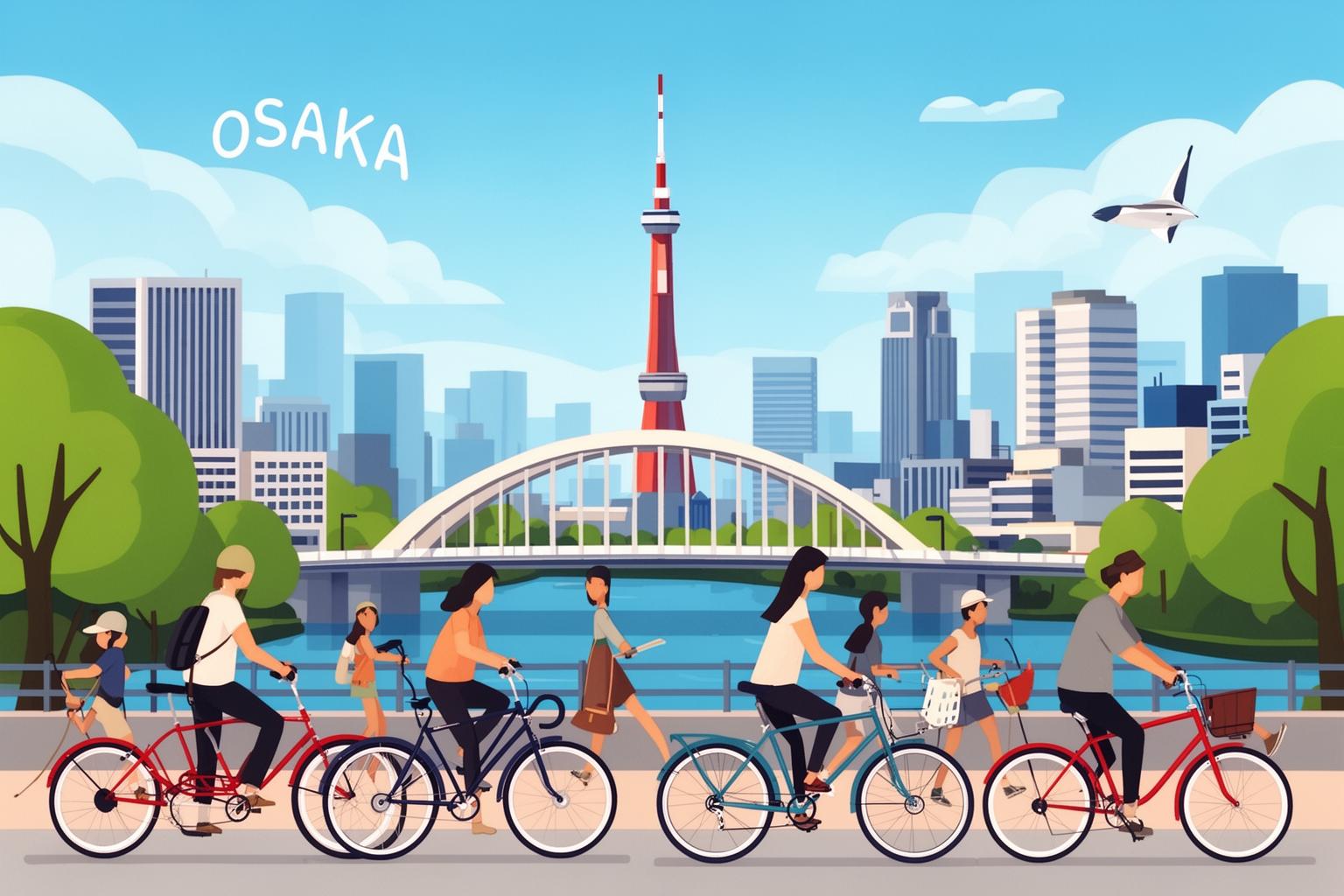
Ultimately, the bicycle in Osaka is more than merely a means of getting from point A to point B. It serves as a tool for living, shaping your connection to the city by defining the boundaries of your neighborhood and setting the rhythm of your daily routine. It acts as the key that reveals the city’s true character, guiding you beyond the train stations and into the quiet backstreets where the real Osaka comes alive.
The 15-Minute City, Perfected
The bicycle is what makes Osaka an almost perfect embodiment of the “15-minute city” concept. With a bike, nearly everything essential to daily life is just a short, pleasant ride away. Your local supermarket, doctor, ward office, favorite ramen shop, park, and friends’ homes all fall within your accessible world. This fosters a strong sense of place and community. You become not just a resident of the sprawling metropolis of Osaka, but a member of your bicycle-defined neighborhood. You gain intimate, street-level knowledge of your surroundings—discovering hidden family-run coffee shops tucked away in side alleys, shrines with stunning cherry trees in spring, and the best routes to avoid traffic lights on your way to the grocery store. The city transforms from disconnected subway map stops into a continuous, explorable landscape. This fundamentally changes the way you experience urban life compared to one dictated by train schedules. It’s slower, more intentional, and infinitely richer in detail. Your world feels simultaneously smaller and fuller.
A Tale of Two Cities: Why Osaka’s Bike Culture is Different
Comparing Osaka’s bicycle culture to Tokyo’s highlights the contrasting philosophies of the two cities. Tokyo, with its hills and vast distances, has a more fragmented cycling culture. There are serious road cyclists in spandex training on weekends, commuters using bikes for the “last mile” from station to home, and a strict emphasis on riding on the road. In Tokyo, the bicycle is an accessory to a train-centered lifestyle. In contrast, Osaka is predominantly flat and densely compact. Here, the bike is not an accessory but the main form of transportation—the most logical, efficient, and democratic way to navigate the urban core. The culture is practical rather than recreational; it’s about accomplishing daily tasks. The sheer volume of cyclists in Osaka creates a critical mass that reshapes public spaces—sidewalks become shared thoroughfares, and a unique, self-regulating system of etiquette develops. This would be unimaginable in Tokyo’s more orderly, top-down environment. Osaka’s bike culture is a grassroots phenomenon, a solution created by the people themselves. It stands as a testament to the city’s independent, pragmatic, and slightly rebellious character.
An East Asian Echo
Having spent time in China, the rhythm of Osaka’s streets feels oddly familiar. The seemingly chaotic yet ultimately functional flow of bicycles, their coexistence with pedestrians, and their sheer utility all remind me of the bicycle-centered cities of my parents’ generation. In many ways, Osaka’s urban texture resembles Taipei or a pre-car-boom Shanghai more than Tokyo or many Western cities. Tokyo modernized by adopting a Western model focused on orderly, car- and train-centric urban planning. Osaka, perhaps due to its geography, economy, and merchant-class spirit, preserved and refined a different model of urban mobility—one deeply rooted in East Asia. It’s a dense, human-scaled, and highly efficient system that values flexibility and improvisation. This vision of modernity doesn’t require strict separation of traffic types but depends on a shared, intuitive understanding of public space.
Choosing to ride a bike in Osaka means consciously deciding to engage with the city on its own terms. It involves accepting the challenges of hunting for parking and sudden rain showers in exchange for total freedom of movement. It means learning to read the subtle body language of the obachan in front of you, finding your rhythm within the sidewalk symphony, and savoring the simple, profound joy of gliding over a bridge as the city lights begin to glow at dusk. The bicycle is more than just a vehicle—it is your entry ticket into the messy, frustrating, vibrant, and deeply human heart of Osaka. Mastering its unwritten rules marks the moment when you stop merely living in the city and start becoming part of its relentless, beautiful flow.