I’m from Tokyo. We have public baths, of course. We call them sento. But in Tokyo, a sento is often a transaction. It’s a clean, efficient, sometimes stylish place to perform the function of washing. You pay your fee, you find your locker, you wash, you soak, you leave. It’s quiet. It’s private, even in its publicness. People keep to themselves, heads down, lost in thought. It’s an extension of the city itself: anonymous, orderly, and deeply individualistic. So when I first started spending serious time in Osaka, I thought I understood the concept. A bathhouse is a bathhouse. It’s a place for hot water. I was wrong. So profoundly, fundamentally wrong.
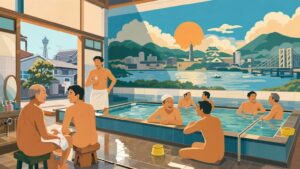
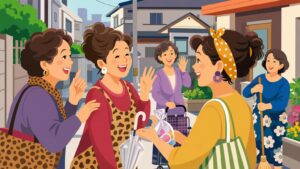
My first real Osaka sento experience wasn’t in a renovated, Instagram-friendly spot in a trendy neighborhood. It was on a humid Tuesday evening in a part of town you won’t find in any guidebooks. A place with a tall, slender chimney poking up between a tangle of low-rise apartment buildings and weather-beaten single-family homes. The entrance was old, the tile work was chipped, and the fluorescent lights in the changing room hummed with a weary buzz. And it was loud. Not just with the sound of splashing water, but with the boisterous, unfiltered chatter of life. Old men were arguing about the Hanshin Tigers baseball team. A group of women were dissecting a neighborhood rumor with surgical precision. Kids were getting gently scolded by people who weren’t their parents. It felt less like a spa and more like a family reunion I had accidentally stumbled into naked. This, I realized, wasn’t a place to get clean. That was just a convenient byproduct. This was the neighborhood’s living room, its social switchboard, its daily therapy session. It’s where the city’s tough, warm, and unapologetically human heart beats loudest. To understand Osaka, you don’t go to the castle or the flashy signs of Dotonbori. You grab a small towel, find a local sento with a creaky door, and you listen. This is your guide to not just visiting, but truly entering that world.
To truly understand how these communal bathhouses function as the city’s social heart, you should read more about how Osaka’s neighborhood sento reveals its true soul.
The Great Misunderstanding: It’s Not About Getting Clean
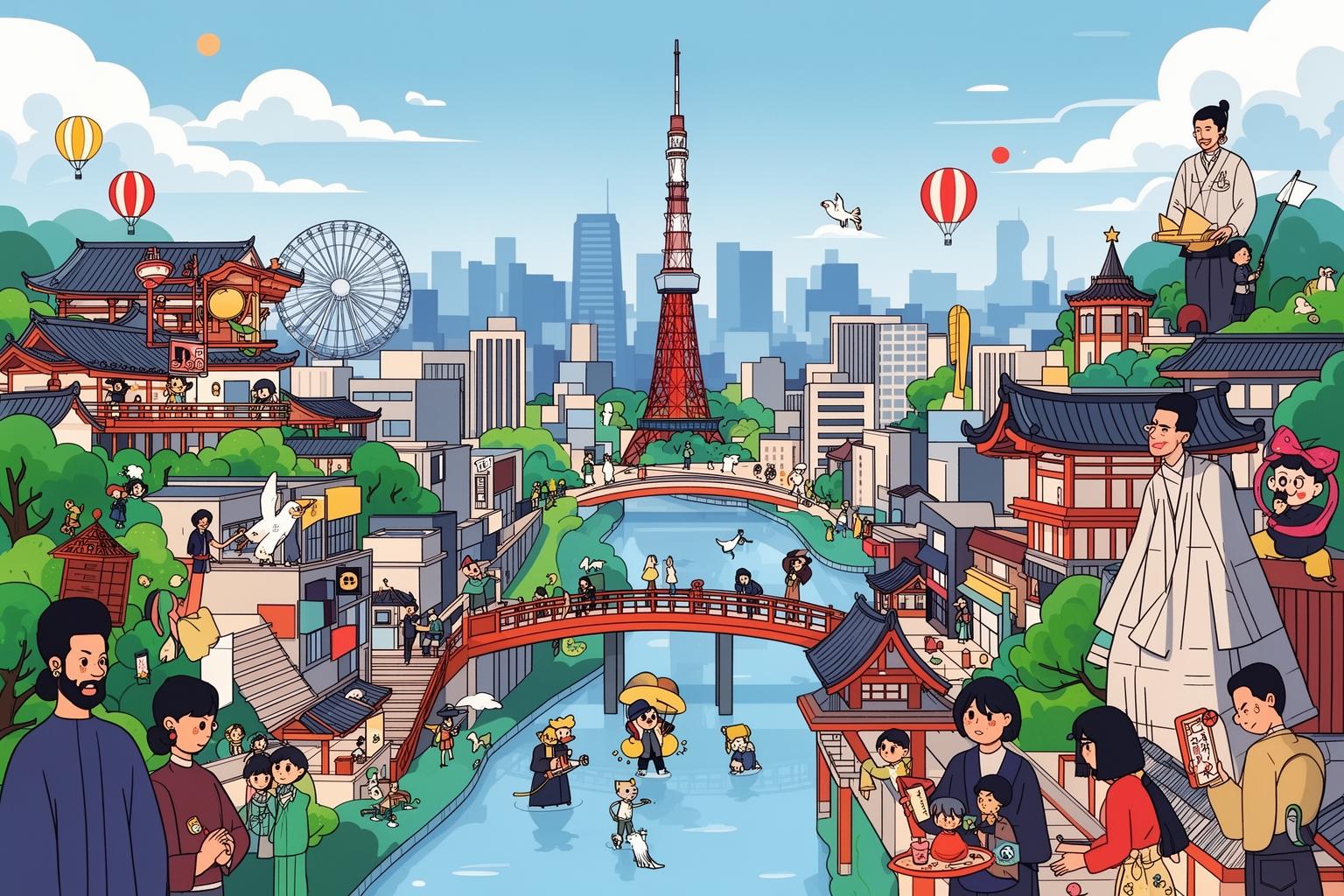
Foreigners—and, to be honest, most Tokyoites—harbor a fundamental misunderstanding about the true purpose of a neighborhood sento in Osaka. We see water, soap, and showers, and interpret them purely in terms of utility. We assume the goal is hygiene. However, for the regulars, the joren-san who have frequented the same spot for decades, cleanliness is secondary. The real purpose is connection. It serves as a social infrastructure as essential as the train lines or the local post office, yet far more intimate.
Tokyo’s Functionalism vs. Osaka’s Social Fabric
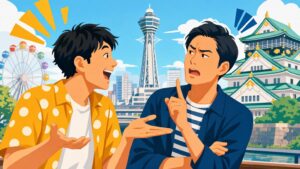
Let’s explore the contrast, as it’s crucial for understanding the two cities. In Tokyo, the modern bathhouse, often called a “super sento,” offers an escape. It’s designed to separate you from the city’s stresses. You receive a wristband with a barcode, pay electronically, and move through themed baths—carbonated, silky, outdoor—in quiet, meditative solitude. It’s a personal wellness experience. You might sit beside someone for an hour without ever making eye contact.
Osaka’s neighborhood sento stands in stark contrast. It’s not a retreat from the community; it’s an immersion into its very heart. The design isn’t about calmness; it’s about practicality and enforced closeness. The lockers are tightly packed. The washing stations are side-by-side. The tubs are communal melting pots where neighborhood news is steeped and served piping hot. This is the physical embodiment of the well-known Japanese idea hadaka no tsukiai, or “naked communion.” But in Osaka, it sheds any lofty, philosophical guise. It’s not about baring your soul; it’s about the down-to-earth truth that when you strip away suits, uniforms, and brand labels, you’re simply fellow neighbors. The CEO of a small local firm shares the same slightly-too-hot water as the guy who runs the nearby takoyaki stand. In that moment, status disappears. What remains are just people, and people in Osaka love to chat.
The Unspoken Membership Fee
Entering one of these sento for the first time can feel daunting. It’s like walking into a private club without knowing the handshake. You pay your 520 yen, but that’s merely the cover charge. The true membership fee is your attitude. The regulars can spot a tourist—or anyone treating the place like a museum—from a mile away. They won’t be unfriendly, but you’ll remain on the outside, a spectator behind an invisible barrier.
To earn your social dues, you need to understand the local currency: simple, direct human acknowledgment. It begins with a clear, friendly greeting to the person at the bandai—the raised platform where the attendant, often an elderly woman, sits like a lifeguard overseeing her territory. A simple “Konnichiwa” or “Kombanwa” is sufficient. In the changing room, a slight nod to others is customary. No one expects a full conversation, but silence and avoidance are perceived as coldness. A shared, simple observation breaks the ice immediately. A remark on the weather—”Kyo atsui desu ne” (It’s hot today, isn’t it?)—serves as a universal key. It signals, “I see you. I share this space with you. I’m not a threat.” In Osaka, this small gesture carries great weight. It’s a city fueled by casual interaction, and the sento functions as its main power source.
Decoding the Neighborhood Sento: A Practical Field Guide
Every Osaka sento boasts its own unique personality, quirks, and cast of characters. Yet, all are constructed on a common blueprint—an architectural layout and a set of unwritten rules refined over generations. Understanding this etiquette is your key to being recognized not as an outsider, but as someone who truly gets it.
The Anatomy of a Classic Osaka Sento
First, the entrance. Typically, you’ll find two doors beneath a single, elegantly curved temple-style roof, adorned with blue noren curtains for men (男) and red for women (女). Step inside, and you’ll encounter the bandai. This is not a modern, sterile front desk, but an elevated platform giving the attendant a clear view of both the men’s and women’s changing rooms. This design, which might feel intrusive to Western notions of privacy, is a holdover from a more communal era—intended for security and community oversight, not voyeurism.
The changing room, or datsuijo, resembles a museum of Showa-era life. Forget sleek digital lockers. Instead, you’ll find open wicker baskets or old wooden lockers with keys attached to fraying elastic bands worn on your wrist. A large, analog scale invites playful theatrics as people sigh or laugh at their weight. Antique massage chairs rumble to life for a 100-yen coin, while hair dryers charge 20 yen for three minutes of lukewarm air. Almost always, a television tuned to a baseball game or variety show serves as a communal focal point.
Push through the sliding door into the bathing area, and you’re greeted by a wall of steam and the echo of dripping water. The layout is standardized: rows of washing stations line the walls, each equipped with a plastic stool, a bucket, and a fixed showerhead. In the center, the tubs await. Usually, there’s a main tub filled with scalding hot water, a jet bath (jetto basu) with powerful streams to massage your back, and often, the infamous denki buro, or electric bath. This tub features low-voltage electric plates on either side, and immersing yourself between them sends a tingling buzz through your muscles. It’s an acquired taste, and watching a newcomer try it for the first time often provides quiet amusement for the regulars.
The Unwritten Rules of Engagement
To navigate this space gracefully, you must follow a few ironclad rules. They’re simple, but breaking them quickly brands you as an amateur.
First, the pre-rinse is sacred. You must never enter a tub without thoroughly washing your entire body at one of the shower stations. The tub water is for soaking, not cleaning. Entering with soap still on you is a cardinal sin. Use your small towel to scrub, rinse completely, then approach the tubs.
Second, towel etiquette is essential. You’ll have a small towel for washing and a large towel left in the changing room for drying off. That small towel should never, under any circumstances, enter the bathwater, as it’s regarded as unclean. People either place it on the side of the tub or—following a classic sento tradition—fold it neatly and balance it on their head. It’s also used for modesty when moving between washing stations and tubs.
Third, soaking is an art of stillness. These are not swimming pools. Don’t splash, kick, or attempt to swim. Find a spot, enter the water slowly and carefully (it’s often hotter than you expect), and let your body relax. Light conversation with your neighbor is fine, but be mindful: if someone sits with eyes closed, give them their tranquility.
Finally, and most importantly, comes the post-bath ritual. The experience doesn’t end when you leave the water. The thirty minutes after bathing are arguably the most vital part of the social experience. Dry off, dress, and then… linger. This is when the real community forms. Purchase a cold milk from the vintage-style fridge—coffee milk and fruit milk are the traditional favorites. Sit on a bench. Watch the TV. Join a conversation if you’re comfortable. This cool-down period solidifies the bonds. Leaving immediately after drying off is like departing a dinner party before dessert—it signals you were there only for the transaction, not the connection.
Why This Matters More in Osaka
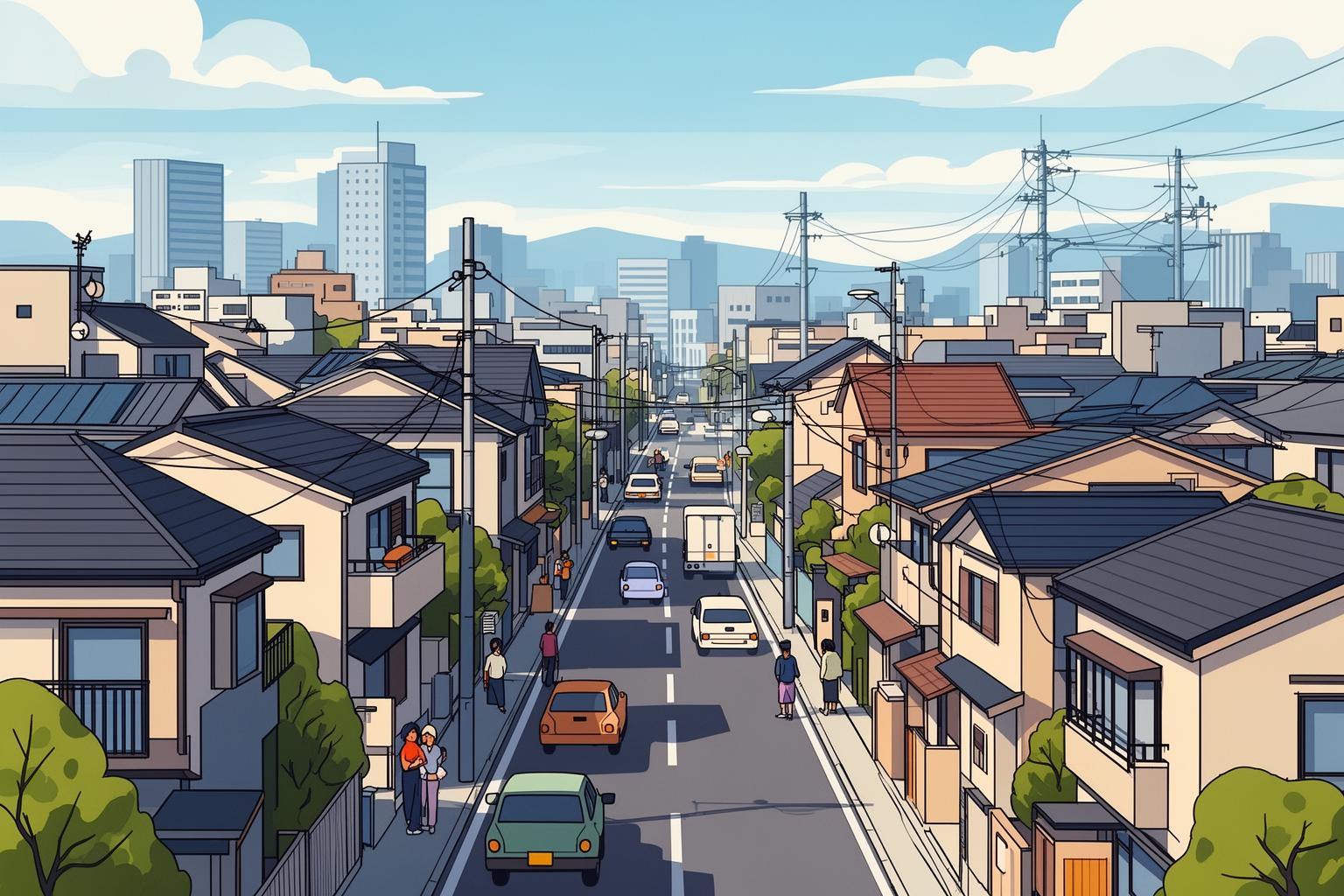
Sento exist throughout Japan, so why is this experience considered so distinctly Osakan? The answer lies within the city’s history, geography, and the very nature of its people. Unlike Edo, Osaka was never a city dominated by samurai lords and strict hierarchies. Instead, it was a city of merchants, artisans, and entertainers, shaped by commerce, pragmatism, and a spirited irreverence.
A City Founded on Merchant Culture and Close Living Quarters
For centuries, Osaka was known as Japan’s kitchen (tenka no daidokoro), a thriving port where goods from across the country were exchanged. People lived in densely packed neighborhoods filled with long wooden townhouses called nagaya. Houses were small and often served as both homes and workplaces or shops. Privacy was a rare luxury. In such a setting, shared spaces were not merely convenient but essential.
The local sento became an extension of the home, offering a rare chance to stretch out, relax, and soak in a large tub of hot water that few could afford in their own houses. It was a communal luxury that leveled social distinctions. This created a unique social contract unlike that of Tokyo. Community wasn’t an abstract concept; it was vital for survival. Residents had to depend on one another and adapt to living in close proximity. The sento served as a place to develop these skills—where people literally and figuratively learned to rub shoulders with everyone.
“Kamahen”: The Philosophy of Taking Things Easy
This background cultivated a particular mindset, captured by a classic Osaka phrase: kamahen, meaning “it doesn’t matter,” “no problem,” or “don’t worry about it.” It embodies a philosophy of casual acceptance and a refusal to get upset over minor troubles. The sento is the spiritual home of kamahen.
In a Tokyo bathhouse, an accidental splash might draw a sharp glare. In Osaka, it’s more likely to be met with laughter and a cheerful “Kamahen, kamahen!” Drop your soap? Someone will pick it up. Unfamiliar with the lockers? An elder will happily guide you, using animated gestures and friendly advice. There is an unspoken understanding that mistakes happen. Everyone is imperfect, sharing the steamy space, so there’s no need for pretense. This outlook contrasts with Tokyo’s tatemae (public face) culture, where maintaining a flawless, courteous exterior is often more important.
The kamahen spirit found in the sento is the same spirit seen throughout the city. It explains why people are more likely to strike up conversations at bars, why shopkeepers banter with customers, and why Osaka feels, to many, more approachable and less intimidating than Tokyo. The sento isn’t just a mirror of this culture; it is one of the key institutions that continually shapes and sustains it every day.
Your Sento-Hopping Weekend: A Mindset, Not an Itinerary
So, how can you experience this firsthand? The key is to approach it not as a tourist ticking off a checklist, but as an urban explorer immersing yourself in the culture. It’s about the journey, not just the destination. Dedicating a weekend to this experience can reveal more about Osaka than spending a month visiting temples.
Step One: Select Your Locale
First, resist the urge to visit the popular, well-known sento featured in blogs and magazines. While they may be beautiful, they tend to attract a different crowd—more tourists and young people seeking retro photo opportunities. The genuine experience lies in the unassuming neighborhood bathhouses.
Choose a residential area. Take a local train line like the Tanimachi subway or, even better, the slow, creaky Hankai Tramline connecting southern Osaka and Sakai. Get off at an unfamiliar stop. Wander around. Search for a chimney—this marks your destination. Alternatively, explore neighborhoods such as Higashinari, Ikuno, or Taisho. These are working-class districts, the city’s foundation, where the sento are truly authentic. The more modest the exterior, the more genuine the experience inside is likely to be.
Step Two: The Preparation Ritual
Preparation is simple but essential. Bring two towels: a small one for washing and a large one for drying. You will also need soap and shampoo. Feel free to bring your own in a small caddy, as many locals do, or purchase small packets at the front desk. Arriving “empty-handed” (tebura) is perfectly acceptable. The most crucial preparation, however, is mental.
Before entering the sento, spend about an hour strolling through the neighborhood. Absorb its rhythm. Notice the small factories, family-run eateries, and the shotengai (shopping arcades) where locals shop for groceries. The sento is the center of this ecosystem. Understanding the surrounding streets provides context for the conversations you’ll overhear and the people you’ll meet inside. It ties the bath to the life happening all around it.
Step Three: The Experience and Its Afterglow
To fully appreciate the spectrum of life, vary the times you visit. Try a Friday evening around 7 or 8 PM when people come to wash off the workweek. The atmosphere is lively, marking the shift from work to weekend. Then return on a Sunday afternoon for a completely different vibe. It’s slower and more relaxed, with families present, fathers teaching their sons sento etiquette, and elderly men settled in for the long haul, moving between tubs and taking breaks in the changing room, treating it like a social club.
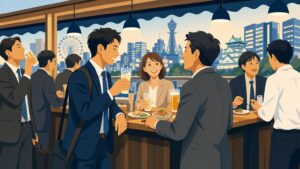
After your soak, when you feel warm, clean, and utterly relaxed—a state the Japanese call poka poka—the final, essential step awaits. Don’t head straight back to the train station. The post-sento experience completes the cultural circle. Find a nearby tachinomi (standing bar) or an affordable, lively izakaya. You will likely see some of the same people from the sento there. This is where the magic unfolds.
Order a draft beer and some simple food. You’re no longer just a visitor in the bathhouse; you’re now part of the neighborhood’s evening ritual. A nod to someone you recognized from the tub can open the door to conversation. This is how you bridge the gap. The shared vulnerability of the bathhouse transforms into a shared moment of camaraderie over a drink. You’ve completed the circle: from the street to the bath, and back to the street again. You’ve experienced the neighborhood’s daily rhythm from within.
The Fading Echo: Why Now is the Time
It’s important to acknowledge a hard truth: this world is fading away. Every year, dozens of sento across Japan, especially in Osaka, close their doors permanently. The reasons are all too familiar. The owners are aging and have no successors to carry on the family business. Rising fuel costs for heating the enormous boilers are becoming prohibitive. Most importantly, modern apartments now come with private bathrooms, making the original, practical need for public baths nearly obsolete.
This is not a plea to treat these places like endangered relics in a museum. It is a reminder that what you are experiencing is not a permanent, unchanging aspect of Japanese culture. It is a living tradition in its final days. Visiting a sento is not about clinging to nostalgia or preserving history. It’s about engaging with the present, engaging in a vibrant subculture that is, for now, still surviving.
By passing through those noren curtains, you are doing more than just cleansing yourself. You are witnessing a form of community that is growing increasingly rare in our isolated, modern world. You are gaining direct insight into Osaka’s spirit—a spirit that values lively, imperfect, human connection over quiet, polished perfection. It is an experience that will linger long after the warm poka poka sensation fades, offering a fleeting glimpse into the heart of a city that bathes, talks, and laughs together, for as long as it can.