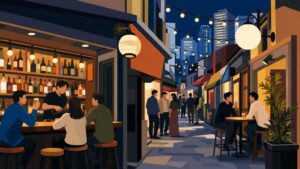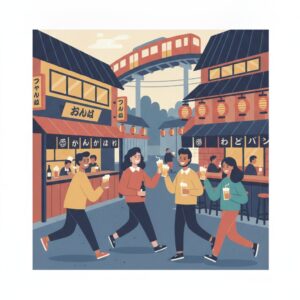
Tenma. The name itself conjures a specific image for anyone who’s spent time in Osaka. It’s a labyrinth of covered shopping arcades, the famed Tenjimbashisuji Shotengai, stretching on for what feels like an eternity. It’s the clatter of mahjong tiles from a second-story parlor. It’s the sizzle and smoke pouring out of a thousand tiny doorways, promising cheap beer, grilled skewers, and the kind of boisterous, shoulder-to-shoulder revelry that defines Osaka nightlife. Tenma is a district that comes alive when the sun goes down, a kingdom of tachinomi stand-up bars and bustling izakayas where the laughter is loud and the pours are generous. So, the question that hangs in the humid afternoon air for a freelancer, a writer, a remote worker like myself is this: where do we fit in? In a landscape built for nocturnal communion, where does one find the daytime sanctuary needed to string sentences together, to conquer an inbox, to simply get things done?
This isn’t just a quest for Wi-Fi and power outlets. It’s a deeper question about navigating Osaka’s social fabric. In Tokyo, the solution is often simple. The city is peppered with sleek, minimalist cafes, temples of quiet concentration practically designed for the solo worker, where silence is the shared commodity. But Osaka, and especially a neighborhood as defiantly unpretentious as Tenma, operates on a different frequency. The culture here is more communal, the spaces more chaotic, the lines between public and private more wonderfully blurred. Finding a work-friendly cafe isn’t about locating a space designed for work. It’s about learning to read the rhythm of the neighborhood, understanding the unwritten rules of commerce and community, and finding your own productive niche within the glorious, energetic mess. It’s an exercise in the Osakan art of “reading the air,” which is less about silent, harmonious conformity and more about a savvy, street-smart awareness of the flow of business, the mood of the shop owner, and your role as a paying guest in their domain. This is the real work: learning to find the calm in the chaos, the focus within the festival.
To truly understand this distinct Osaka attitude, you can explore how the city’s urban design fosters a unique sense of community, as detailed in this article on Umeda’s open-air spaces.
The Tenma Mindset: Daytime Calm in a Nightlife Kingdom
To find a workspace in Tenma, you first need to grasp the fundamental psychology of the area. It’s a district grounded in commerce, centered around small, family-run businesses where the owner’s personality colors the atmosphere. This isn’t a corporate, top-down culture; rather, it’s a grassroots ecosystem of merchants, artisans, and publicans. This deeply embedded commercial spirit governs even the simplest interactions, such as buying a cup of coffee.
Understanding the “Akinaichuu” Mentality
Walk along any street in Tenma, and you’ll notice the sign: `商い中` (akinaichuu), meaning “open for business.” In Osaka, a city shaped by mercantile ambition, this phrase is more than a mere fact—it’s a declaration of intent. A café, especially an independent one, is not a lifestyle showroom or a co-working space disguised as a coffee shop. It is a business, primarily focused on turning tables and making a living. This might sound bluntly transactional, but it embodies the honest heartbeat of the city.
This contrasts sharply with the vibe in many trendy Tokyo cafés, where a curated coolness can make you feel like you’re paying as much for the aesthetic as for the product. In Tenma, the owner’s presence is almost always palpable. You sense their watchful eye—not in a surveillance sense, but with the sharp awareness of a captain steering their ship. You’re not an anonymous customer; you’re a guest in their commercial home. This often leads to misunderstandings among foreigners. If you’ve lingered over the same coffee for three hours during a busy lunch rush and the owner gives you a pointed look asking if you need anything else, it’s not personal. It’s not Osaka’s famed brusqueness—it’s business. You’re occupying valuable space, and the merchant mindset, never far beneath the surface here, is subtly—or sometimes not so subtly—reminding you of that fact.
The Disappearing Act of the “Morning Set”
The “Morning Set,” or `モーニングセット`, is a cherished Japanese tradition and a vital community ritual in a working-class neighborhood like Tenma. For a few hundred yen, you receive a thick slice of toast, a hard-boiled egg, perhaps a small salad, and a cup of coffee. But you’re purchasing more than breakfast; you’re buying passage into the neighborhood’s morning social club. The kissaten becomes a temporary parliament for local retirees, grizzled men in work jackets reading sports pages, and office workers grabbing a quick bite before clocking in. The air buzzes with the rustle of newspapers and quiet, familiar conversation.
This scene follows its own unspoken rhythm. The morning set crowd is transient: they arrive, eat, greet the owner (the “Master”), and leave. They are the opening act. A remote worker arriving at 8 a.m., pulling out a laptop, and settling in for the day disrupts this delicate flow. You become a stationary obstacle in a river that needs to keep moving. The unspoken rule, then, is to honor the morning ritual. Let it run its course. The best time for a long work session is around 10:30 a.m. The breakfast crowd has dispersed, and the lunch rush has yet to begin. Arriving at this quiet time signals to the owner that you respect the rhythm of their business. You’re not there to interrupt peak hours; you’re filling a seat that might otherwise stay empty. This simple timing is a form of silent communication that carries significant weight in Osaka.
The Echo of Laughter: Why Silence Isn’t Always Golden
If you imagine a work-friendly café as a hushed library where the loudest sound is the tapping of keys, you will be disappointed in Tenma. Osaka cafés tend to be louder than their Tokyo counterparts. The ambient soundscape blends the owner’s gravelly “Irasshaimase!” from behind the counter, the tinny noise of daytime TV game shows, the hiss of espresso machines, and the lively, uninhibited chatter of patrons. The Kansai dialect, with its expressive intonations, is simply louder than standard Japanese.
This isn’t a sign of disrespect; it’s the sound of a healthy, thriving community. In Osaka, a silent, empty café can feel eerie, cold, or on the brink of closure. The energy, the `genki`, is a feature, not a flaw. It signals that the place is cherished and a community hub. For remote workers, this means a good pair of noise-canceling headphones is not a luxury, but essential gear. Yet there’s a silver lining: you’re much less likely to receive disapproving looks for taking a brief, quiet Zoom call than in a silent Tokyo café. The social contract here is different. So long as you’re not louder than everyone else, you become part of the orchestra. You’re expected to blend with the noise, not demand its absence.
Navigating the Cafe Landscape: From Kissaten to Modern Hybrids
Tenma’s café scene serves as a living museum of Japanese coffee culture. To find the ideal spot for your work, you need to interpret the signals each type of establishment sends. From the smoky remnants of the Showa era to sleek, minimalist newcomers, each offers a unique experience along with its own unwritten rules for laptop-wielding patrons.
The Showa Era Relic: The Enduring Kissaten
Before global coffee chains took root, there was the kissaten. These traditional coffee houses are the heart of neighborhoods like Tenma, preserving a bygone era like time capsules. They function as institutions, social hubs, and, for the discerning worker, potential daytime offices—if you understand their distinct culture.
What is a Kissaten?
You recognize a kissaten the moment you see one. The aesthetic is unmistakable. The entrance often features faded plastic food models displayed in a glass case. Inside, you find dark, polished wood, plush velvet or vinyl seats molded by thousands of patrons, ornate siphon coffee makers bubbling like alchemical experiments, and the lingering scent of decades-old cigarette smoke—even in spots that have long banned it. The lighting is dim, the mood contemplative, and the air dense with history. These spaces aren’t bright, airy locales designed to be photographed; they’re dark, comfortable wombs meant to be inhabited. Their primary purpose has always been to serve as a third place—a living room for the neighborhood, neutral ground for business dealings, and a quiet retreat from the city’s hustle.
The Kissaten Work Ethic (Yours, Not Theirs)
Can you work in one? The answer is yes, but with caveats. You must approach it with the right mindset. In a kissaten, you aren’t merely a customer in a sterile transaction; you’re a guest, and the owner—known as the “Master,” often a permanent fixture behind the counter—is your host. Building this relationship is essential. It’s possible to camp out, but only with respect for the café’s true purpose.
The unwritten rules are straightforward and grounded in common sense. If you plan to stay longer than an hour or two, a single 500-yen cup of “blend coffee” won’t cover your use of the space. Mastering the art of reordering is key: after a couple of hours, order another coffee or, better yet, a slice of thick-cut toast, coffee jelly, or a plate of Napolitan spaghetti. This small gesture shows the Master you’re not just freeloading. Spatial awareness is important too—never occupy a four-person booth alone if the café is moderately busy. Choose the counter or a small two-top table instead. Lastly, acknowledge the Master. You don’t have to engage in long conversation, but a simple greeting, a nod when your coffee arrives, and a sincere “Gochisousama deshita” (Thank you for the meal) upon leaving make a big difference. If the Master strikes up a conversation, join in. This is how you move from being a faceless customer to a familiar presence.
The Chain Gang: Doutor, Tully’s, and the Predictable Perch
Sometimes you don’t want cultural nuance—you just need dependable Wi-Fi, guaranteed power outlets, and a place where you can work for three hours with zero social pressure. That’s where chain coffee shops come in, and Tenma has plenty, often clustered near the main station.
The Allure of Anonymity
Chains like Doutor, Tully’s Coffee, or Starbucks offer predictability as their greatest strength. Their coffee tastes the same in Osaka as it does in Sapporo; the Wi-Fi login is familiar; and their business model relies on high customer volume and brief visits. Staff are trained to be efficient and impersonal—they’re not the owners, so they don’t mind if you’ve been sitting quietly in a corner for hours, provided the café isn’t packed with people searching for seats. This anonymity is a blessing when deadlines loom and you need to vanish into your screen without engaging socially. You trade character for convenience—a compromise sometimes worth making.
The Osakan Twist on Chains
Even within standardized global or national chains, the Osakan spirit seeps through. A Starbucks in Tenma feels distinct from one in Tokyo’s Marunouchi district. It’s louder, busier, and more chaotic. Patrons represent a full slice of the neighborhood’s lively character: high schoolers in uniforms cramming for exams over a shared Frappuccino, salespeople in ill-fitting suits furiously typing between appointments, and groups of animated `obachan` (older ladies) gossiping over elaborate seasonal cake sets. It’s the entire messy, vibrant pageant of Osaka life compressed into a corporate box. So while you may lose the unique charm of an independent shop, you gain a concentrated dose of the city’s human energy.
The New Wave Roasters and Third-Wave Cafes
A newer addition to Tenma’s coffee landscape is the third-wave café. These spots showcase single-origin beans from Ethiopia, minimalist interiors, and baristas who can lecture at length on flavor profiles and brewing methods, embodying a more globalized, contemporary coffee culture.
Designed for Display, Tolerant of Laptops
Their aesthetic is the polar opposite of the kissaten: poured concrete floors, light wood, exposed ductwork, and abundant natural light. These cafés are often run by younger, digitally savvy owners sympathetic to remote workers. Power outlets abound, and Wi-Fi is standard. They acknowledge laptop users as a target demographic. Yet the unspoken rules differ; the social contract centers less on turning tables and more on preserving a carefully curated atmosphere. The cardinal sin is disrupting the aesthetic—don’t be the person setting up a full mobile office with a second monitor, tangled extension cords, and a noisy mechanical keyboard. Your presence should blend cleanly and minimally, respecting the vibe.
The Conversation Conundrum
These modern cafés attract a younger, sometimes more international crowd. You might expect quieter, more work-focused spaces, but this is still Osaka. Even the trendiest, most Instagrammable spots can quickly transform into lively neighborhood hangouts. Young owners may still prioritize chatty regulars over silent, screen-focused newcomers, following old Osaka traditions. The key is to read the room. If the café buzzes with conversation and groups catching up, it’s not the best day for a long deep-work session. But on a quiet weekday afternoon with several others typing away, you’re good to go. These spaces demand active social intelligence; you must constantly gauge the mood and adjust your behavior accordingly.
Case Studies: A Freelancer’s Field Guide to Tenma’s Lanes

To truly grasp the theory, you need to witness it in action. Let’s explore the side streets and covered arcades of Tenma and visit a few archetypal cafes. Though their names are fictional, their spirit is genuine. They embody the various work environments you’ll encounter and the lessons each offers about life in Osaka.
The Cafe by the Shotengai Entrance: “The Observation Post”
Picture a classic kissaten, strategically located at a bustling intersection just inside the expansive Tenjimbashisuji Shotengai. Its large, slightly grimy picture windows provide a panoramic view of the endless flow of people. Inside, seats are upholstered in worn, burgundy-red vinyl, and the air carries a rich blend of dark-roast coffee and the faint, savory scent of the takoyaki stand next door. The cafe is run by an elderly couple. The husband, a man of few words, carefully brews coffee using a syphon system that resembles a science experiment. His wife, busy and efficient, manages the toast, the simple curry rice, and the cash register. A television in the corner is always on, tuned to a lively daytime variety show.
The work experience here is a lesson in managing expectations. Wi-Fi is a myth. You’ll rely on your phone’s hotspot, hoping for a stable connection. Power outlets are extremely rare, and finding one feels like hitting the jackpot. But the coffee is dark, strong, and affordable, always served with a complimentary `o-tsumami`—a small packet of rice crackers or peanuts. This is not a spot for high-pressure, deadline-driven tasks. You don’t come here to build complicated spreadsheets. You come to write, to think, to brainstorm. You come to people-watch, paying for a front-row seat to the grand theater of Osaka life. You observe mothers haggling over daikon radishes, schoolchildren racing home, salarymen seeking a quick caffeine fix. This cafe teaches the Osakan virtues of observation and patience. It’s about becoming part of the scenery, a quiet node within the neighborhood’s network. Sitting here, you learn the shotengai’s daily rhythm—the morning grocery rush, the sleepy afternoon lull, the electric buzz as evening nears. It’s urban sociology disguised as a coffee break.
The Second-Floor Hybrid: “The Lofted Sanctuary”
Now, imagine ducking through a narrow doorway and climbing a steep, slightly shaky flight of stairs. You enter a space that surprisingly blends old and new. The ceiling features exposed wooden beams from the original structure, while the furniture is modern and practical. It’s a hybrid cafe, run by a woman in her late 30s who, you discover, was once an office worker in Umeda before cashing in her savings to open this place. She serves excellent specialty coffee, but her real draw is the `higawari teishoku`, the daily lunch set, which attracts a loyal group of local office workers.
Work here follows one crucial, non-negotiable rule: respect the lunch rush. The Wi-Fi is fast and reliable, and power outlets are discreetly placed along the walls. It seems like the perfect place to settle in. And it is—as long as you understand the unspoken agreement. Between 12:00 PM and 1:30 PM is sacred. This is when the owner earns most of her daily income. If you occupy a table during this time, you must order the lunch set. Sitting there with only a coffee while potential lunch customers are turned away is the ultimate cafe faux pas. It’s a serious breach of etiquette. But if you arrive before the rush, order lunch, and continue working afterward, you’ve earned your keep. The owner will see you as a valued customer, not an obstacle. This cafe teaches the fundamental Osakan principle of `give and take`, reciprocity. If you want to use her space, Wi-Fi, and electricity, you need to support her business when it matters most. It’s not about vague notions of being “nice”; it’s a fair, straightforward commercial exchange—a mindset at the core of Osaka’s identity.
The Stand-Up Turned Sit-Down: “The Converted Corner”
Finally, let’s stroll down a narrow side alley—a `yokocho`—where the bars are so small you can touch both walls at once. Here, in a space that was clearly once a tiny takoyaki stand or one-person bar, sits a new-wave coffee spot. Inside, there’s a counter with three stools, and outside, a couple of overturned beer crates serve as makeshift tables. The owner is a young man with intricate tattoos, passionate about his single-origin beans, and a playlist of indie rock that’s just a bit too loud.
The vibe is intensely casual, almost like hanging out in a friend’s garage that just happens to have a high-end espresso machine. This is not a place for deep, focused work. The constant flow of customers grabbing coffee to go, the owner’s friendly questioning of every new face—it’s distracting. This spot is for quick, targeted bursts of productivity: clearing urgent emails, filing an invoice, making one important call. You’ll inevitably be drawn into conversation. The owner will want to know where you’re from, what you do, and your thoughts on his coffee. This isn’t an intrusion; it’s the whole point. It’s commerce as a social activity. Trying to stay aloof and buried in your screen feels more awkward and conspicuous than engaging. This cafe teaches you about the beautifully blurred lines between customer and acquaintance in Osaka. Being a patron here is an active role, not a passive one. It’s better to work for 20 minutes and chat for 10 than to try working silently for 30. This is the antithesis of the anonymous, efficient Tokyo experience and a vital piece of the Osaka puzzle.
The Unspoken Rules of Cafe Camping in Osaka
Having explored the landscape and examined the archetypes, we can now distill the unspoken rules that govern the art of working in an Osaka cafe. Mastering these will make your experience easier and more productive, while earning you the quiet respect of those serving your coffee.
The Art of the Re-Order
Think of your table as a rental property. Your first order is the deposit and the first hour’s rent. After that, you need to keep paying. There isn’t a strict, universal rule, but a good guideline is the two-hour mark. If you’ve been sitting for two hours, it’s time to order something else. It doesn’t have to be a full meal. A second coffee, a glass of juice, a scoop of ice cream—anything will suffice. This gesture signals two things: first, that you’re aware you’re occupying commercial space, and second, that you appreciate the service enough to continue supporting it. This is especially important in a small, independent `kissaten` compared to a large chain. In a place run by an elderly couple where every seat is precious, stretching a single 500-yen coffee over four hours is a serious offense. Don’t be that person.
“Sumimasen”: The Magic Word
In many places worldwide, and even in more formal Tokyo establishments, shouting across a room to catch a server’s attention is considered rude. Many venues provide call buttons for this reason. In Osaka, however, a clear, confident “Sumimasen!” (Excuse me!) is not only acceptable—it’s expected. It’s a tool of efficiency in a fast-paced environment. That said, there is a nuance to how it’s used. You don’t just shout it randomly. First, assess the situation. Wait until the staff isn’t visibly overwhelmed. Try to make eye contact first. Then, speak your “Sumimasen” clearly and politely. Being overly timid, mumbling, or waving your hand weakly can be more frustrating for busy staff who don’t have the time to guess your needs. A well-timed, well-articulated “Sumimasen” shows that you’re an experienced and thoughtful customer who understands local customs.
The Outlet Etiquette
In the era of remote work, a power outlet is a precious commodity. At Osaka cafes, it is not a given. In older kissaten, outlets are often scarce—a relic from a time before everyone carried power-hungry devices. If you find one, consider yourself lucky. The etiquette is simple: never unplug anything—whether a decorative lamp, a water boiler, or the shop’s background music system—to charge your device without explicit permission. This should be common sense, but it does happen. In newer cafes where outlets are more plentiful, the rule is to be tidy. Don’t create tripping hazards with your cables. Keep your setup contained and be mindful of the space you occupy. In the often-cramped confines of Osaka cafes, being aware of your spatial footprint is a fundamental sign of respect toward the establishment and other customers.
Becoming a “Jouren”: The Path to Regular Status
The ultimate goal for anyone aiming to truly integrate into a neighborhood like Tenma is to become a `常連` (jouren), a regular customer. This status is earned over time and comes with a variety of unofficial perks. The path to becoming a jouren is consistency. Visit the same cafe, ideally around the same time each day, on a regular basis. Order similar items. Be a low-maintenance, respectful patron. Engage in polite small talk with the owner, but don’t push it. Offer sincere compliments on the coffee or food. Over weeks and months, you’ll move from being just another face to a recognized part of the cafe’s ecosystem. The rewards are significant. The owner might start saving your favorite seat. They may bring you a small complimentary snack. They might engage you in more personal conversation, asking about your work or family. You will no longer be merely a customer—you will become part of the community. Achieving jouren status at a local Tenma cafe means you’ve found more than a place to work; you’ve found a little piece of home in Osaka.
Why Tenma’s Cafe Culture is Quintessentially Osaka
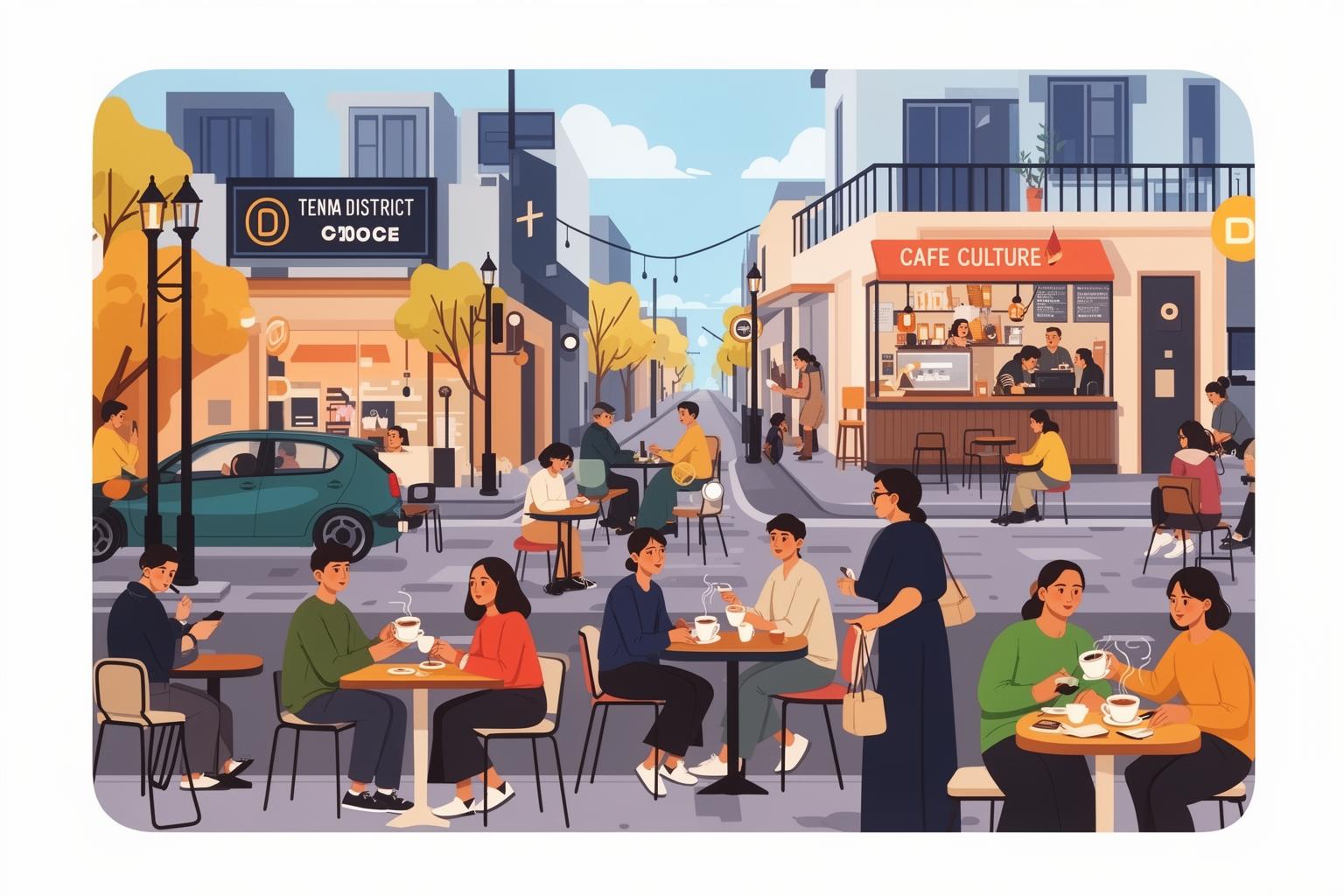
Ultimately, searching for a work-friendly cafe in Tenma is an exploration into the essence of what sets Osaka apart from Tokyo and many other major cities. It’s an experience that unveils the city’s core character, one table and one cup of coffee at a time.
A City of Merchants, Not Monks
Osaka’s public spaces are inherently commercial and social rather than quiet and meditative. The role of a cafe is not to offer a silent refuge for work but to provide a cozy, lively spot within the vibrant marketplace of everyday life. The straightforwardness you might encounter, the unspoken expectations about re-ordering, and the steady murmur of conversation all arise from Osaka’s steadfast identity as a city of merchants. Here, business and pleasure, transactions and relationships, are deeply intertwined rather than separate realms. Recognizing this helps you see the cafe owner not merely as a service provider but as a fellow professional whose livelihood you support. This nurtures a relationship based on mutual respect and a shared grasp of practical realities.
Resisting the Tokyo Homogenization
While Tokyo’s cafe scene often appears dominated by impeccably designed yet somewhat soullessly uniform spaces, Tenma’s cafes boldly and proudly embrace individuality. Each kissaten, each small roastery, reflects its owner’s personality, history, and quirks. The decor isn’t curated by a design agency; it’s accumulated over many years. The menu isn’t shaped by market trends; it’s what the owner enjoys making. This embodies the Osakan spirit in miniature: a deep-rooted resistance to blandness and conformity, a celebration of the personal, the idiosyncratic, and the charmingly imperfect. Choosing your work cafe in Tenma becomes more than a simple matter of Wi-Fi speed and outlet availability; it’s a personal decision about which story, community, and unique character you want to spend a few hours with.
Finding Your Place in the Performance
There’s an unmistakable theatricality to daily life in Osaka, and a dense, historic neighborhood like Tenma serves as its grandest stage. The loud calls of shopkeepers in the shotengai, the ritualized exchanges between bar owners and regulars, and the sizzle and steam of street food stalls create a constant, vibrant performance. When you settle with your laptop in a Tenma cafe, you are not merely a passive observer; you are a background actor in this play. Your quiet, focused presence adds a new layer to the symphony. Your friendly interaction with the owner becomes a small, improvised scene. Embracing your role in this performance is the final key to unlocking the city. It’s about finding a productive harmony between your own needs and the relentless, energetic, and profoundly human rhythm of Osaka. The best work happens not by shutting the city out but by welcoming just the right measure of its magnificent, chaotic soul.