
So, you’re in Osaka. Maybe you’re standing on a rattling Hankyu train bound for Umeda, clutching a handrail as the city flashes by in a blur of concrete and neon. Or perhaps you’re navigating the glorious, chaotic energy of the Tenjinbashisuji Shotengai, a covered shopping arcade that feels less like a market and more like a river of humanity. You’re minding your own business, trying to decipher a sign or just soaking in the scene. Suddenly, you feel a gentle but firm tap on your shoulder. You turn, and an older woman—an ‘obachan’—is looking at you with a curious, expectant glint in her eye. Her hair is perfectly coiffed, maybe a shade of purple you’ve only ever seen in a sunset. She might be wearing a touch of leopard print, a proud badge of Osakan identity. Before you can formulate a polite ‘nanika goyou desu ka?’ (can I help you?), her hand, wrinkled with the stories of decades, extends towards you. In her palm sits a small, brightly wrapped candy. She says just one word, a soft but assertive invitation: “Douzo.” Go ahead. Or maybe, “Ame-chan,いる?” Want a candy?
Your mind races. What is this? Who is this woman? Is this a trick? In many parts of the world, and certainly in the crisp, polite bubble of Tokyo, accepting candy from a stranger is rule number one in the handbook of what not to do. Your internal threat-detection system, conditioned by years of urban anonymity, is likely screaming. You might hesitate, offer a tight, confused smile, and politely decline. You might take it, bewildered, and stuff it in your pocket for later analysis. What you probably don’t realize is that you’re in the middle of a test. It’s not a formal examination, and there’s no grade. But your response to this tiny piece of candy will say more about your ability to integrate into Osaka than any language proficiency score. This is the ‘Ame-chan Test,’ and it’s your first, and perhaps most important, lesson in the unwritten social contract of Japan’s most boisterous, warm-hearted, and wonderfully perplexing city. This small, sugary offering is a key. It’s an icebreaker, a social lubricant, and a gesture that unlocks the entire operating system of Osaka. To understand the ame-chan is to begin to understand the city itself.
While this warm, direct communication style is key to daily life, it also extends to business, where understanding local nuances can be crucial for services like streamlining global OTA payments for hotels in the region.
More Than Just Sugar: Deconstructing the ‘Ame-chan’
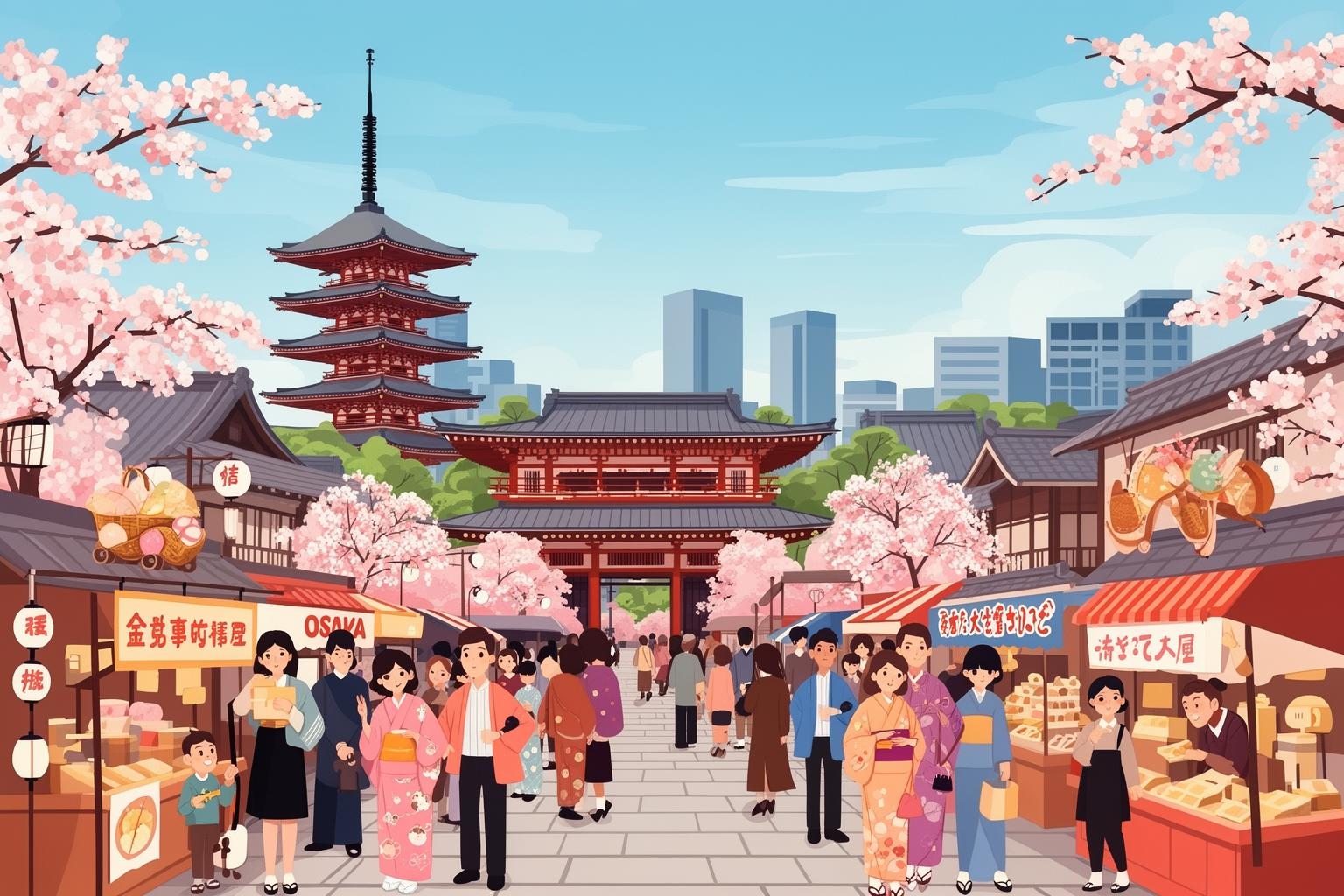
To someone unfamiliar, it might look like just a piece of hard candy—a trivial item. But in Osaka, this object carries rich cultural meaning, starting with its very name. It’s seldom called simply ‘ame.’ Instead, it’s ‘ame-chan.’ The ‘-chan’ suffix is a diminutive, an affectionate term often used for children, close friends, or beloved pets. Adding it to the word for candy instantly changes the object. It ceases to be a mere commodity; it becomes personified, softened, and inviting. It turns into a small, friendly presence. This linguistic nuance is your first hint. In Osaka, even inanimate things are drawn into the realm of human relationships. This isn’t just candy; it’s a little candy companion, here to brighten your day.
The Anatomy of a Gift
The types of candy given are also revealing. Rarely will you receive a fancy, imported chocolate or gourmet truffle. The typical ame-chan offerings are humble, practical, and deeply embedded in daily Japanese life. You might find ‘kuro-ame,’ a black sugar candy with a rich, molasses-like taste that evokes tradition. There’s ‘nodo-ame,’ a mentholated throat lozenge, given with the understanding that the air is dry or you might be nursing a cough—a gesture of care. Then there are milk candies, simple and soothing, evoking childhood memories for many Japanese. The wrapper rustles with a familiar sound. These are not status symbols; they are tokens of practical kindness, items kept in a purse for moments of low blood sugar, a scratchy throat, or, as it turns out, to bridge the gap between two strangers.
The Giver: Meet the Osaka Obachan
The principal dispenser of ame-chan is the Osaka ‘obachan,’ a figure as emblematic to the city as Osaka Castle or the Glico running man. The stereotype involves loud leopard-print tops, a perm, and a bicycle deftly maneuvering through crowded shopping streets. While the fashion is somewhat exaggerated, it reflects a deeper reality: the Osaka obachan is bold, visible, and utterly unapologetic. She is the matriarch of public space. In a culture that often prizes quiet humility, she commands her territory, wherever she stands.
She is more than just an ‘elderly woman.’ She is the social glue of her community. She knows which shop has the freshest daikon today, the life story of the tofu vendor, and notices when a new foreign family down the block looks uncertain. Her purse is a mobile command center, holding not only wallet and keys but a small pharmacy’s worth of throat lozenges, tissues, and, of course, an apparently endless supply of ame-chan. When she offers you one, she is not merely being a sweet old lady; she is fulfilling her role as a community caretaker. She gauges the social atmosphere, and if she senses a need for warmth or connection, she hands out the ame-chan. It’s her way of turning a group of strangers into a temporary, friendly community.
The Unspoken Rules of the Candy Exchange
Like many aspects of life in Japan, the ame-chan exchange follows a set of unspoken rules. It’s a subtle dance where your moves determine whether you remain an observer or join the city’s rhythm. This interaction is a miniature performance, a complete social story compressed into just a few seconds.
The Initial Offer: Not a Question, But a Statement
The way candy is offered is distinctly Osakan. There’s little hesitation or apologetic body language typical elsewhere in Japan. A Tokyoite, if they ever did this, might offer candy with a slight bow and a series of ‘sumimasen’ (excuse me) to soften the imposition. In contrast, the Osaka obachan’s offer is much more direct. Her hand shoots out, her gaze steady. The phrase “Ame-chan, taberu?” (Gonna eat a candy?) isn’t really a question. It’s a gentle command, an expectation to engage. She’s not asking for permission to interact; she’s declaring that interaction is now happening.
This directness can be surprising for foreigners and Japanese from other regions. It breaks the invisible personal space bubble that people in most modern cities guard carefully. But in Osaka, this bubble is seen as porous. The risk of a minor imposition is outweighed by the potential reward of a positive human connection. The underlying belief is that everyone is in this together—on this crowded train, in this long line, in this city. So why not talk? Why not share a piece of candy?
Your Response: How to Pass the Test
How you respond is crucial. This is where you either pass or fail the Ame-chan Test. Let’s explore possible reactions.
The ‘Failing’ Grade: A quick shake of the head, avoiding eye contact. A polite but distant “Iie, kekkou desu” (No, thank you). Turning away and putting headphones back in. While normal in other situations, in this context these actions clearly say: “I do not want to engage. Please respect my boundary.” For the obachan, this can feel like rejection not only of the candy but of the connection itself. It comes across as cold, distant, or ‘tsumetai,’ as Osaka people might say. You haven’t been rude in the usual sense, but you have failed to close the social loop. The bridge she tried to build remains incomplete.
The ‘Passing’ Grade: The right response is simple: smile, make eye contact, and accept the candy with a clear “Arigatou gozaimasu!” (Thank you!). You don’t have to eat it right away. You can say you’ll save it for later. But you must accept the offering. This act shows that you recognize the gesture, acknowledge her kindness, and respond with warmth. You agree to join in the community, even if only briefly.
The ‘Honors’ Grade: To truly stand out, you follow acceptance with a bit of conversation. This is where the magic begins. You look at the candy and say, “Ah, kuro-ame! Natsukashii!” (Ah, black sugar candy! How nostalgic!). Or you might ask, “Kore wa, o-kasan no o-kiniiri desu ka?” (Is this your favorite?). This opens the door wider. You’ve not only accepted her gift but offered one of your own: your attention and curiosity. At this point, the interaction moves beyond a simple exchange into a genuine human moment. This is how conversations start, tips on the best takoyaki stand are shared, and a lonely afternoon in a foreign city suddenly feels less so. You’ve passed the test with flying colors and shown that you’re tuned into the Osaka vibe.
The Tokyo-Osaka Divide: Why Candy Doesn’t Cross Borders
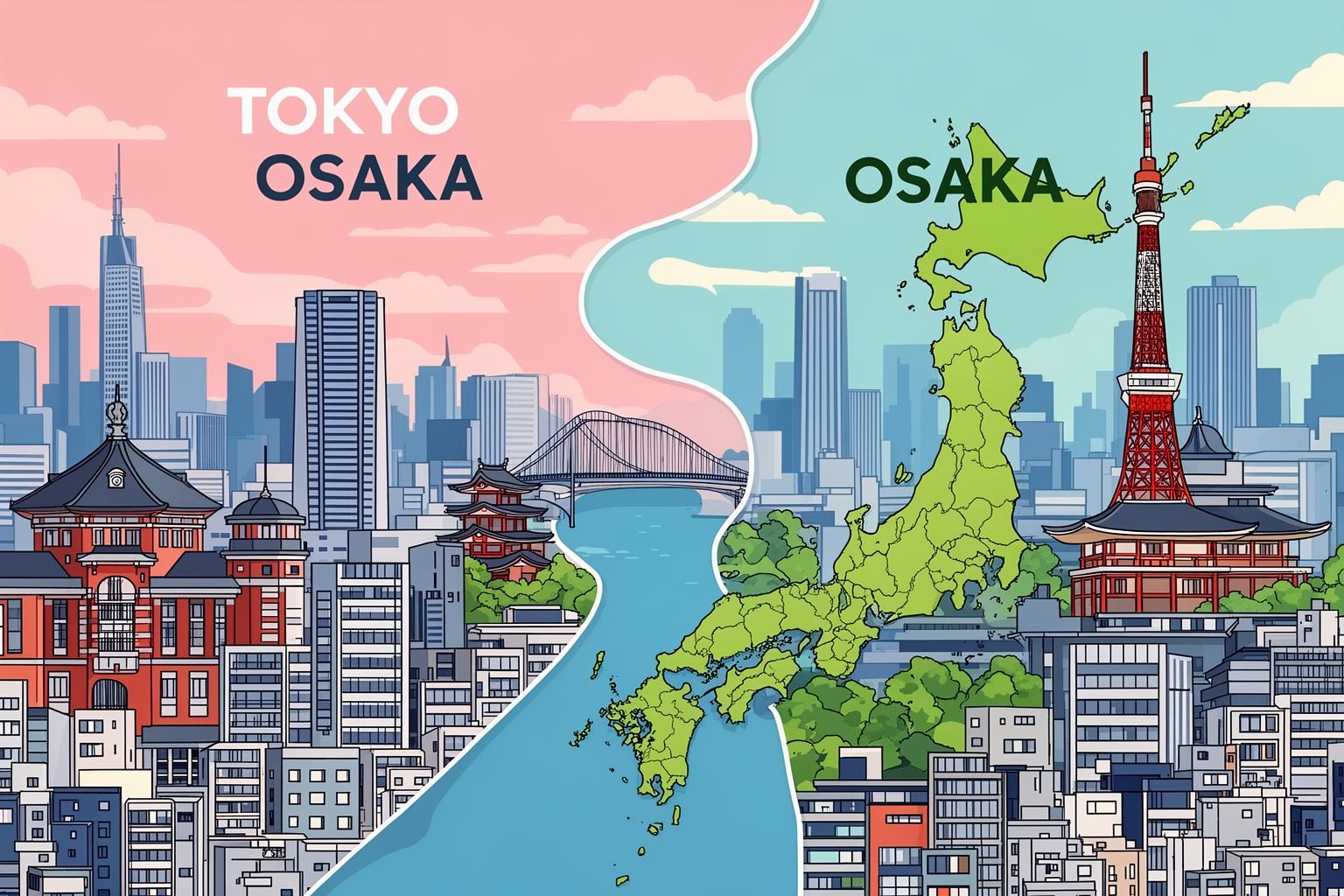
To truly comprehend the significance of the ame-chan, you need to recognize its absence in Tokyo. If Osaka is a city characterized by lively, overlapping conversations, Tokyo resembles a symphony of harmonious silence. These two cities embody distinct approaches to social organization, with the ame-chan positioned right at the fault line.
Tokyo’s ‘Wa’ (Harmony) vs. Osaka’s ‘Nori’ (Vibe)
In Tokyo, the core social principle is ‘wa’ (和), or group harmony, often maintained by minimizing friction and avoiding imposition. Everyone is expected to ‘read the air’ (‘kuuki wo yomu’) and behave in a way that doesn’t disrupt others. Respecting personal bubbles and preserving others’ space is essential for navigating the metropolis. In this context, a stranger suddenly breaking your bubble to offer you candy is a social anomaly that threatens the ‘wa.’ It introduces an unpredictable element into an otherwise highly predictable system. The default attitude is non-interference.
Osaka, on the other hand, operates on a different principle: ‘nori’ (ノリ). ‘Nori’ is a complex term roughly meaning vibe, rhythm, or being on the same wavelength. It represents a more active, participatory kind of social harmony. You don’t just avoid disturbing others passively; you actively foster a shared, positive atmosphere. It’s about jumping into conversations, matching the room’s energy, and contributing to a collective good time. The ame-chan serves as a classic tool for stirring ‘nori.’ It’s a playful nudge that says, “Hey, let’s create a moment together.” It’s an effort to synchronize your rhythm with a stranger’s. While a Tokyoite might worry about being a nuisance, an Osakan worries about being dull.
Public Space as Private vs. Public Space as Communal
This distinction is evident in how public spaces are perceived. Consider the train, for example. In Tokyo, a train car is seen as a cluster of private, mobile capsules. People focus on their phones, read, or nap, avoiding eye contact. The unspoken rule is to behave as if you are alone, yet together. The space is public, but the experience remains private.
In Osaka, the same train carriage resembles a communal porch. It’s a shared environment where interactions are not only possible but sometimes expected. Conversations blossom between strangers over a cute baby or large luggage. The obachan offering ame-chan acts as the host of this temporary, moving living room. She isn’t intruding on your private space because, in her view, that space isn’t entirely private to begin with. It belongs to all of us. This communal perspective on public space stems from Osaka’s history as a merchant city, where business and life were conducted openly on streets and in markets. Trust and rapid rapport-building were key skills, and that legacy endures today in the form of a simple piece of candy.
Beyond the Obachan: The ‘Ame-chan’ Mindset in Everyday Osaka
The ame-chan is not merely an isolated gesture performed by older women; it represents the most visible expression of a much wider cultural mindset. The ‘Ame-chan Principle’—the proactive, unsolicited act of small kindness—is ingrained in the everyday life of Osaka. Once you begin to notice it, you’ll see it everywhere.
The Ripple Effect: From Candy to Conversation
The reasoning behind ame-chan is the same force behind countless other interactions. It’s the butcher at Kuromon Ichiba market who, after weighing your pork, makes a joke about your Japanese accent and then shares the best way to cook it. It’s the taxi driver who, en route to the station, enthusiastically offers an unsolicited lecture on the Hanshin Tigers baseball team and why they embody the city’s spirit. It’s the elderly man sitting next to you at a ‘tachinomi’ (standing bar) who notices you’re a foreigner, insists on buying you a glass of sake, and explains the menu.
These are all variations of ame-chan. They are offerings—not of sugar, but of information, humor, stories, or shared moments of camaraderie. The aim is to break down the barrier of anonymity and create a human connection, however brief. In Osaka, silence is often viewed as an empty space that should be filled. People readily initiate interactions, seeing engagement as the norm rather than the exception.
The Principle of the Small, Unsolicited Gift
Consider the Ame-chan Principle as a form of grassroots generosity. It’s not about grand or formal gift-giving, but about the ongoing exchange of small, informal tokens of goodwill. You’ll notice it when a fruit vendor tosses an extra ‘mikan’ (mandarin orange) into your bag with a wink and the word “service.” You’ll experience it when a neighbor knocks on your door to share a plate of homemade ‘tsukemono’ (pickles), not for any special occasion, but simply because they made too much. You’ll feel it when you ask for directions and, instead of just pointing, someone offers to walk with you for half a block to ensure you don’t get lost.
This culture of casual sharing and mutual support is a hallmark of life in Osaka. It nurtures a sense of community often harder to find in larger, more impersonal cities. Osaka looks out for you, in its own loud, curious, and sometimes meddlesome way. This social safety net is not built on policy but on millions of everyday acts of giving.
A Foreigner’s Guide to Navigating the Sweet Exchange
For many non-Japanese residents, the ame-chan culture can be confusing and even cause slight anxiety. It contrasts sharply with many Western norms regarding personal space and stranger danger. Understanding the context is crucial not only to navigate these encounters but also to come to appreciate them.
Overcoming Suspicion
Let’s be straightforward. Your mother probably warned you not to take candy from strangers. In most situations, that’s sound advice. But in this particular context—accepting a commercially wrapped piece of candy from an obachan on a public street in Osaka—it’s safe to set that rule aside. This isn’t a scam. There’s no hidden agenda. No one is trying to poison you or recruit you into a cult. The motivation is nearly always exactly what it seems: a simple desire to be kind.
The reasons can vary. Sometimes, it’s a way to calm a crying child on the bus, a form of communal parenting extended to a struggling mother. Sometimes, it’s an expression of sympathy, as if to say, “You look a bit down; maybe this will cheer you up.” Other times, it’s simply a habit—a nervous gesture that happens to involve sharing. And often, especially with foreigners, it’s a gesture of welcome—a way of saying, “Hello! Welcome to my city. Please accept this small token of hospitality.” Viewing it this way—as a welcome gift—can transform the experience from suspicious to heartwarming.
Turning a Piece of Candy into Friendship
The ame-chan is an opportunity. It’s a social door left open for you. What happens next is your choice. Let’s explore that moment’s potential. You accept the candy. You give an appreciative response, which sparks a brief conversation. The obachan asks where you’re from. You say, for example, America. Her eyes brighten. She shares that her daughter spent a year studying in California. She asks what you’re doing in Japan. You mention that you’re studying art. She tells you about a small, charming ceramics museum in Nakanoshima that isn’t listed in guidebooks.
Suddenly, you’re no longer an anonymous foreigner. You have a story, a connection. She is no longer just a random older woman; she’s a mother of a daughter who studied in California and an enthusiast of local museums. You’ve just added a new thread to your personal tapestry of the city. The next time you see her in the neighborhood, she’ll greet you with a cheerful “Ah! Amerika-san!” You will have made an acquaintance, a familiar face among the crowd. This is how you establish roots. It’s not through formal introductions or networking events but through thousands of small, spontaneous interactions—and the ame-chan is the most common spark.
The ‘Ame-chan’ as a Symbol of Osaka’s Soul
Ultimately, the small piece of candy in your hand serves as a perfect metaphor for the city of Osaka itself. It’s not sophisticated, not subtle, and not meant for everyone. Yet, it is sincere, warm, and deeply human. It captures the core values of this distinctive urban culture.
Practicality, Generosity, and Humor
The ame-chan symbolizes three essential Osakan traits. First, practicality. Osaka, a city built by merchants, embraces a practical, straightforward approach to life. A piece of candy is an inexpensive, effective, and portable solution to various minor issues, from a dry throat to social discomfort. It simply works. Second, generosity. It’s a culture that values sharing what you have, even if it’s modest. The mindset is one of abundance rather than scarcity. There’s always enough to offer a neighbor or a stranger. Third, humor. There’s a playful, theatrical flair to the entire exchange. It’s a small piece of everyday performance art that adds a touch of fun and lightheartedness to the routine aspects of daily life.
A Resilient Culture of Connection
In a world growing increasingly digital, impersonal, and socially distant, the ame-chan culture feels like a gentle act of rebellion. It’s a powerful reminder that the space between two people can be bridged with nothing more than a kind word and a small gift. While younger generations may be less likely to carry a purse full of candy, the underlying spirit—the ‘Ame-chan Principle’ of warm, proactive, and direct communication—remains the foundation of Osaka’s identity. It’s what energizes the city in a unique way. It’s what makes living here feel less like residing in a bustling metropolis and more like belonging to a vast, sprawling, and somewhat quirky family. So the next time a hand offers you a crinkly, colorful treat, don’t hesitate. Smile, express gratitude, and accept the candy. You’re not just taking a sweet; you’re accepting an invitation to appreciate one of Japan’s most intriguing and rewarding cities.