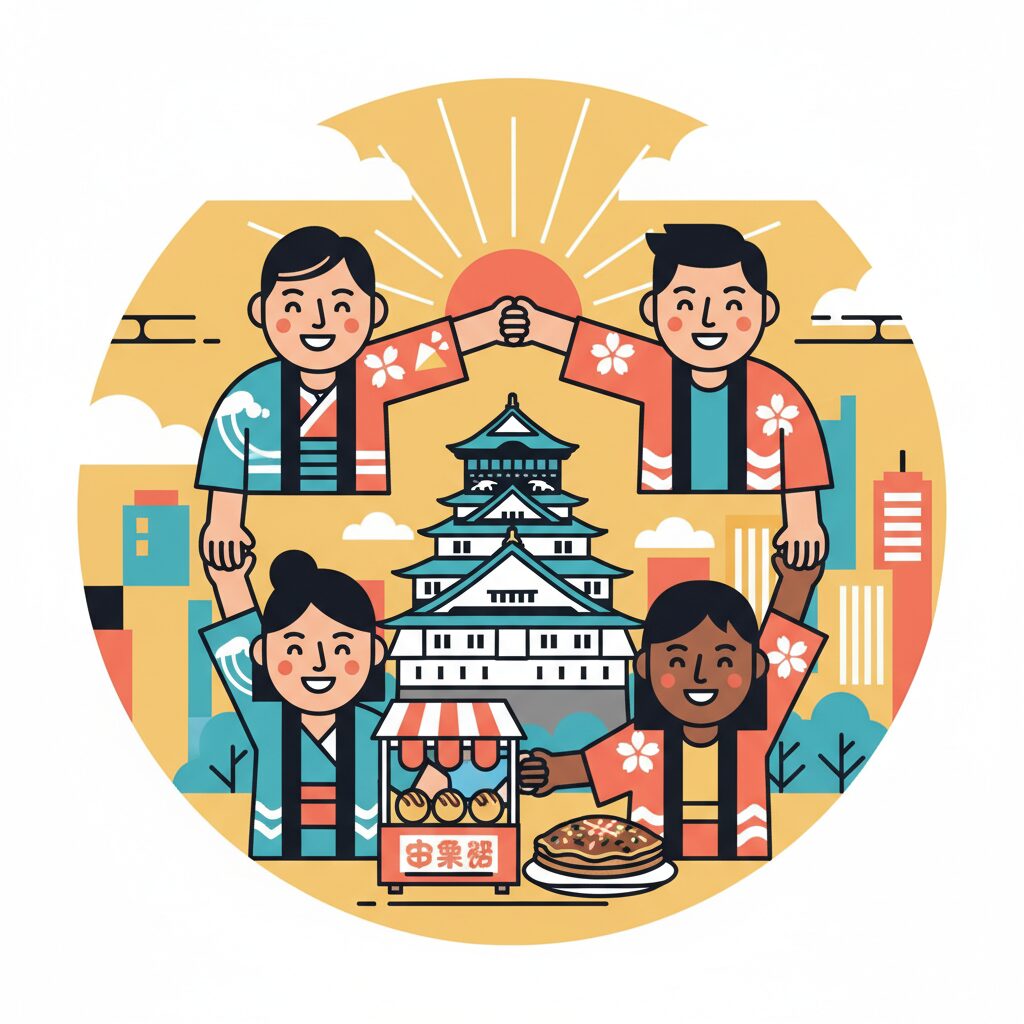
You’ve done it. You found the perfect apartment in a quiet Osaka neighborhood, a sweet little spot tucked away from the neon chaos of Namba. You’ve unpacked your boxes, mastered the Byzantine train map, and even figured out which day to put out the burnable trash. You’re feeling settled, integrated, a true resident. Then comes the knock on the door. It’s not a delivery person. It’s an elderly woman, maybe your neighbor from downstairs, holding a clipboard and a small cash box. She smiles, bows, and says a string of rapid-fire Japanese you don’t quite catch, but you hear the words “chonaikai” and “gohyakuen.” Five hundred yen. She’s asking you for money. Every month. Welcome, my friend, to the intricate, invisible, and inescapable web of the Japanese neighborhood association, the Chonaikai. This isn’t just about paying a fee; it’s your informal initiation into the social fabric of the city. This is the moment you transition from being a person who simply lives in Osaka to being a person who is part of a neighborhood. In Tokyo, you might live in a high-rise for ten years and never know your neighbor’s name. Anonymity is a currency there. But here in Osaka, community isn’t an abstract concept; it’s a series of small, reciprocal duties. It’s the clipboard, the cleaning roster, and the shared responsibility for the little patch of city you call home. This system, this unspoken contract, reveals the true heart of Osaka—a city built not on grand pronouncements but on the durable, time-tested bonds of the block.
Understanding these community dynamics is as essential as knowing the unspoken rules of Osaka’s local sentō culture.
What Exactly Is a Chonaikai? The Official vs. The Reality
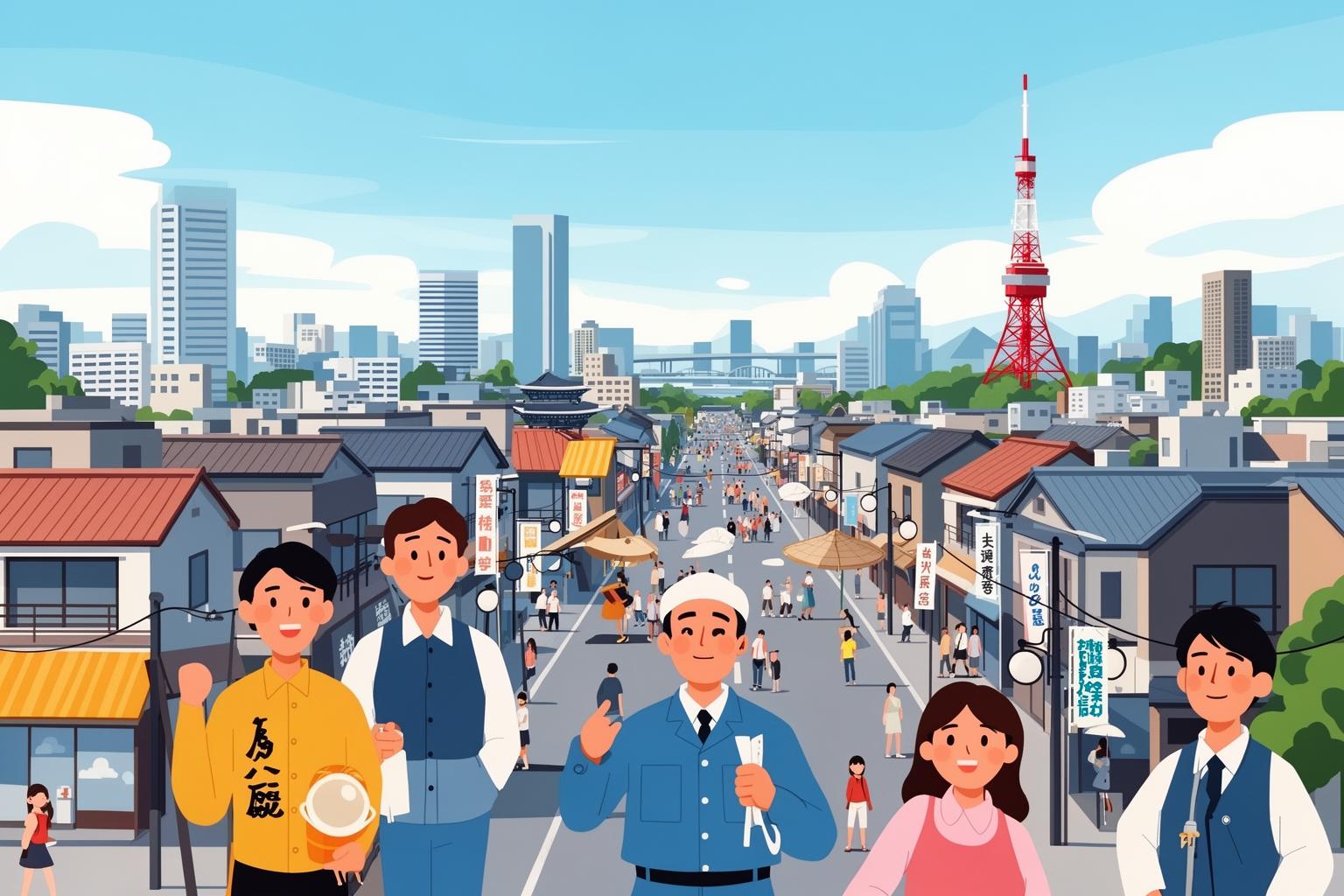
On the surface, the Chonaikai, or neighborhood association, appears quite straightforward. It’s a volunteer-run, hyper-local organization that manages tasks too minor for the city government yet too important to overlook. It serves as the essential connective tissue that keeps the neighborhood running day-to-day. However, truly understanding the Chonaikai means looking beyond its official role and into the cultural mindset that animates it, particularly the uniquely pragmatic and community-focused version found in Osaka.
The Official Explanation
Ask any city hall official, and they’ll provide a neat, bureaucratic description. The Chonaikai is a partner in civic life with clear, practical duties. They oversee local garbage collection spots, those caged or netted areas where residents carefully separate plastics from papers. They organize yearly disaster preparedness drills to ensure everyone knows the location of the local shelter and how to use a fire extinguisher. They maintain streetlights along small residential alleys, replacing bulbs and reporting outages. They relay information from the ward office, acting as the final link in the communication chain. They may also arrange local festivals, or matsuri, decorating with lanterns and coordinating food stalls to foster community spirit. Often, they lead neighborhood watch programs, putting up signs and encouraging residents to watch out for one another. Essentially, they are the unpaid, unrecognized administrators of the block, managing the everyday details of life. This official narrative is accurate, but it only tells half the story — the “what” without the “why.”
The Osaka Reality
In Osaka, the Chonaikai is less about civic partnership and more about a deeply ingrained system of social obligation and mutual dependence. The key ideas here are tsukiai and giri. Tsukiai means social relationships or networking, the effort to maintain good ties within a group. Giri is a weightier notion, a social duty or obligation owed to others in the community. In Tokyo, these concepts may be more abstract or primarily corporate; in Osaka, they live vibrantly at the street level. The Chonaikai is the main stage where these social obligations unfold. It forms a network of subtle mutual surveillance that also acts as a safety net. Neighbors know your routine — when you leave for work, receive deliveries, or go on vacation. In a vast, impersonal city, this might seem intrusive; in an Osaka neighborhood, it’s a feature, not a flaw. It serves as the neighborhood’s immune system. If a stranger lingers near your door, someone notices. If your newspapers pile up, someone might check in to ensure you’re all right. This system is a direct inheritance from Osaka’s history as a merchant city. For centuries, neighborhoods weren’t just clusters of homes but interconnected economic ecosystems. The soy sauce maker lived next door to the sandal maker, who lived beside the rice seller. Your reputation in the neighborhood was your credit score. Your reliability was your currency. Trust wasn’t freely given; it was earned through participation and consistency. Being anonymous was a luxury you couldn’t afford because your livelihood depended on the tightly knit community around you. Although businesses have evolved, that fundamental mindset remains. In many parts of Tokyo, especially in the newer high-rise residential towers, the Chonaikai is a hollow shell of what it once was, if it exists at all. Residents pay a management fee to corporations handling cleaning and security. Community happens as a planned event in sterile common areas. In Osaka, even in dense urban neighborhoods like Tenma or Fukushima, the traditional block-level Chonaikai still wields considerable social influence. It stands as proof that in this city, relationships are built horizontally among neighbors, not vertically through distant authorities.
The Knock on the Door: Your First Encounter and What It Means
That initial interaction at your doorstep is a crucial moment. It serves as your first test, and how you navigate it will shape your experience living in that neighborhood. It’s not merely about money exchanging hands or signing a document; it’s about grasping the unspoken messages being conveyed and understood. For many foreigners, this is where the early confusion and frustration with the system arise, as the encounter is laden with cultural assumptions that aren’t immediately clear.
The Membership Fee
The situation is almost always the same. The clipboard-carrying representative, likely a retiree who has lived on that street for decades, will politely explain they are collecting the monthly Chonaikai fee. It’s typically a small amount, ranging from 300 to 1,000 yen. Your Western mindset, trained to think in terms of contracts and services, naturally begins to ask questions: What am I paying for? Is this mandatory? Can I see the budget details? These questions make sense logically, but in this context, they miss the essence entirely. The money isn’t a service fee; it’s a contribution to the community. It’s your buy-in. The 500 yen coin you drop in the box isn’t just covering a new net for the garbage cage or ink for the community newsletter. It symbolizes, “I am a member of this group. I recognize my role. I am participating.” A common foreigner misunderstanding is to see this as a transaction or, worse, a possible scam. Is this even official? Technically and legally, it’s voluntary. No one can compel you to pay. But refusing to pay fundamentally misunderstands the social dynamics involved. Opting out isn’t viewed as a smart consumer decision; it’s seen as a social rejection. You signal that you don’t want to be part of the community. You declare yourself an outsider, someone who enjoys the clean streets and local events without contributing. This can earn you labels like tsumetai (cold) or hikyouryokuteki (uncooperative), and though no one may say it directly, that reputation can carry subtle, lasting effects.
The Kairanban (The Circling Clipboard)
Soon after your financial contribution, you’ll likely be introduced to one of Japan’s ingeniously low-tech information systems: the kairanban. It’s a simple plastic clipboard, often weathered and a bit worn, holding a stack of papers. This is the neighborhood’s analog internet. It’s passed from house to house in a set order, like a paper-based chain letter of local news. Inside, you’ll find a treasure trove of hyper-local updates. Official announcements from the ward office about recycling schedule changes; police alerts about recent bicycle thefts; notices of upcoming neighborhood cleanup days. And, in true Osaka style, there are often handwritten notes giving a glimpse of the community’s character. “The crows have been aggressive near the park again, watch your snacks!” or “Congratulations to the Tanakas on the birth of their grandchild!” The unspoken rule of the kairanban is straightforward but strict: you handle it immediately. You read the messages, stamp your hanko (personal seal) or sign your name in the designated spot on the circulation sheet to confirm you’ve seen it, then promptly pass it on to the next house on the list. Letting the kairanban sit in your entryway for a day is a minor social faux pas. Forgetting it for a week is a disaster. It interrupts the flow of information for the entire block. The Osaka flavor of the kairanban often lies in its endearing informality. It feels less like an official government notice and more like a series of friendly notes stuck to the community fridge. It reinforces the idea that information here is shared, communal, and moves at the pace of a neighbor walking next door.
The Unexpected Job Offer: Your Role in the System
Paying your dues and passing the clipboard are just the passive aspects of Chonaikai membership. Eventually, you’ll be asked to take on a more active role. These roles, or toban, rotate among households, usually on an annual basis. For a foreigner, this can feel like an unexpected and burdensome job offer for a position you never applied for. However, participating in these duties is the quickest way to become a recognized and trusted member of your community. It’s where you truly cross the line from observer to participant.
Gomi Toban (Garbage Duty)
This is the most common, fundamental, and often most dreaded of all Chonaikai responsibilities. The gomi toban oversees the neighborhood garbage collection point. While the role sounds simple, it carries significant social meaning. On designated collection days, your duty starts early. You’ll be the one to unlock the metal cage or unfold the large weighted net that protects the trash from crows and stray cats. As your neighbors bring out their carefully sorted bags, your job is to enforce the rules. If someone places a plastic bottle in the burnable bag, it’s technically your responsibility to notice. If a bag is put out too early, you’re the one who must deal with it. After the truck arrives, your work isn’t done. You are responsible for cleaning the area, sweeping up any stray litter, and sometimes even hosing down the pavement to prevent odors, especially during Osaka’s brutally humid summers. Why is this so important? In Osaka, a city known for being a bit rough around the edges compared to pristine Tokyo, maintaining a clean garbage spot is a tremendous source of neighborhood pride. It sends a collective message: “We may be loud and direct, but we are not dirty. We take care of our own space.” Performing your gomi toban duty thoroughly is a public demonstration of your competence and civic-mindedness. You’ll earn appreciative nods from other early risers, but you’ll be judged harshly if done sloppily. It’s a small, recurring ritual that reinforces the notion that public space is a shared responsibility.
Festival Preparations (Matsuri)
One of the most enjoyable facets of the Chonaikai is the local matsuri. But these festivals don’t just appear out of nowhere—they are literally built by the hands of the residents. As a member, you’re expected to pitch in. The call for volunteers will come a few weeks in advance via a notice on the kairanban. The tasks vary: you might spend a Saturday morning stringing endless rows of red and white paper lanterns, be part of the crew assembling metal frames for food stalls, or help with heavy lifting—carrying tables, coolers, or even the revered mikoshi (portable shrine). A busy foreigner’s initial reaction might be, “I don’t have time for this, and I don’t know any of these people.” But that’s exactly the point. Festival preparations serve as the community’s main team-building exercise. During these hours of shared manual labor, social barriers break down. You’ll work alongside the gruff old man from the corner tobacco shop and the young mother of three from down the street. You’ll learn their names and stories. In Osaka, where a spirit of collective effort runs deep, working together on a tangible project forms a powerful bond. It’s how you earn your place. When you’re all sitting down later, sweating, drinking cheap canned beer provided by the Chonaikai chief, and admiring the lanterns you hung, you’re no longer just “the foreigner.” You’re Tanaka-san, the person who helped get the stubborn generator started. This is how you build genuine social capital, one lantern at a time.
Emergency Drills and Cleaning Days
Periodically, usually on a Sunday morning, you’ll be called to other group activities. There’s the bosai kunren, or disaster drill, where everyone gathers in a local park or schoolyard to practice earthquake response procedures and learn how to use the emergency equipment stored in the neighborhood shed. Then there’s the seiso katsudo, or community cleaning day. Everyone comes out with brooms, dustpans, and garbage bags to sweep the streets, pull weeds from pavement cracks, and clean drainage gutters. The unspoken rule of these events is that your presence matters more than your productivity. You have to show up. It’s a physical roll call demonstrating your commitment to the group. Missing one of these events without a valid excuse (and notifying in advance) is a significant social faux pas. It will be noticed. The Osaka twist in these gatherings is often the casual socializing that happens afterward. The Chonaikai chief might bring out a big cooler of cold tea and coffee. People will stand around chatting, complaining about the local baseball team, the Hanshin Tigers, and sharing neighborhood gossip. The social aspect is just as important as the work itself. It’s an informal town hall meeting, your chance to be seen, interact, and reinforce your status as a contributing member of the community.
To Join or Not to Join? The Costs of Opting Out
Considering the network of obligations, it’s natural to question whether you can simply opt out of the entire system. The short answer is yes, you can. The Chonaikai is not an official government entity with legal enforcement authority. However, the longer answer is much more complex, as the consequences of refusal are social rather than legal, and in Japan, social repercussions can be both strong and far-reaching.
The “Voluntary but Not Really” Dilemma
Choosing not to join the Chonaikai is a decision, but it comes with a cost. One of the most immediate and practical consequences concerns your garbage disposal. The collection point is private land managed by the association for its members. In more strict Chonaikai, they might inform you politely that, because you are not a member, you are not permitted to use that collection site. This can lead to a logistical challenge, often forcing you to find an alternative, which is frequently impossible. Although this is an extreme measure, it does occur. More frequently, the consequences are subtler and more insidious. You will essentially isolate yourself socially. Friendly greetings from neighbors may become less frequent and more formal. Small acts of kindness—a neighbor accepting a package on your behalf when you are not home, or an elderly woman sharing vegetables from her garden—are likely to stop. You become a stranger, an outsider who has consciously chosen that role. In emergencies like a typhoon or earthquake, neighbors look out for one another, checking on the elderly and vulnerable; you may find yourself excluded from that circle of care. Additionally, you will live in an information vacuum. Without the kairanban, you won’t be informed about planned water outages, roadworks blocking your street, or community-wide pest control measures. You remain perpetually out of the loop, and these small inconveniences accumulate, deepening your isolation.
When It’s Okay to Say No
There are, however, situations where opting out is more acceptable. If you reside in a large, modern high-rise apartment building, the building’s management company often takes care of the duties traditionally handled by a Chonaikai. These buildings have professional cleaners, a concierge service for packages, and formal channels for communicating information. In such settings, the traditional Chonaikai may have little influence, making membership genuinely optional with minimal repercussions. Similarly, if you are a short-term resident—such as a student on a one-year exchange—expectations are usually low. You can politely explain your situation, and most neighbors will understand that it doesn’t make sense for you to be deeply involved. The key when declining or limiting your participation is how you do it. A blunt “No, I’m not interested” is socially damaging. The Osaka approach is to respond with humility and respect for the system itself. You might say, “Thank you very much for the invitation. My work schedule is quite demanding and unpredictable, so I worry I can’t fulfill the important duties of a full member. However, I would be happy to make a donation to support the festival and help with the cleaning day when I am available.” This response demonstrates that you value the community and are willing to contribute in your own way, even if you can’t officially join. It frames your refusal not as a rejection of the community, but as a result of your personal circumstances. This nuance is essential.
Harnessing the Chonaikai: The Upside of Playing Along
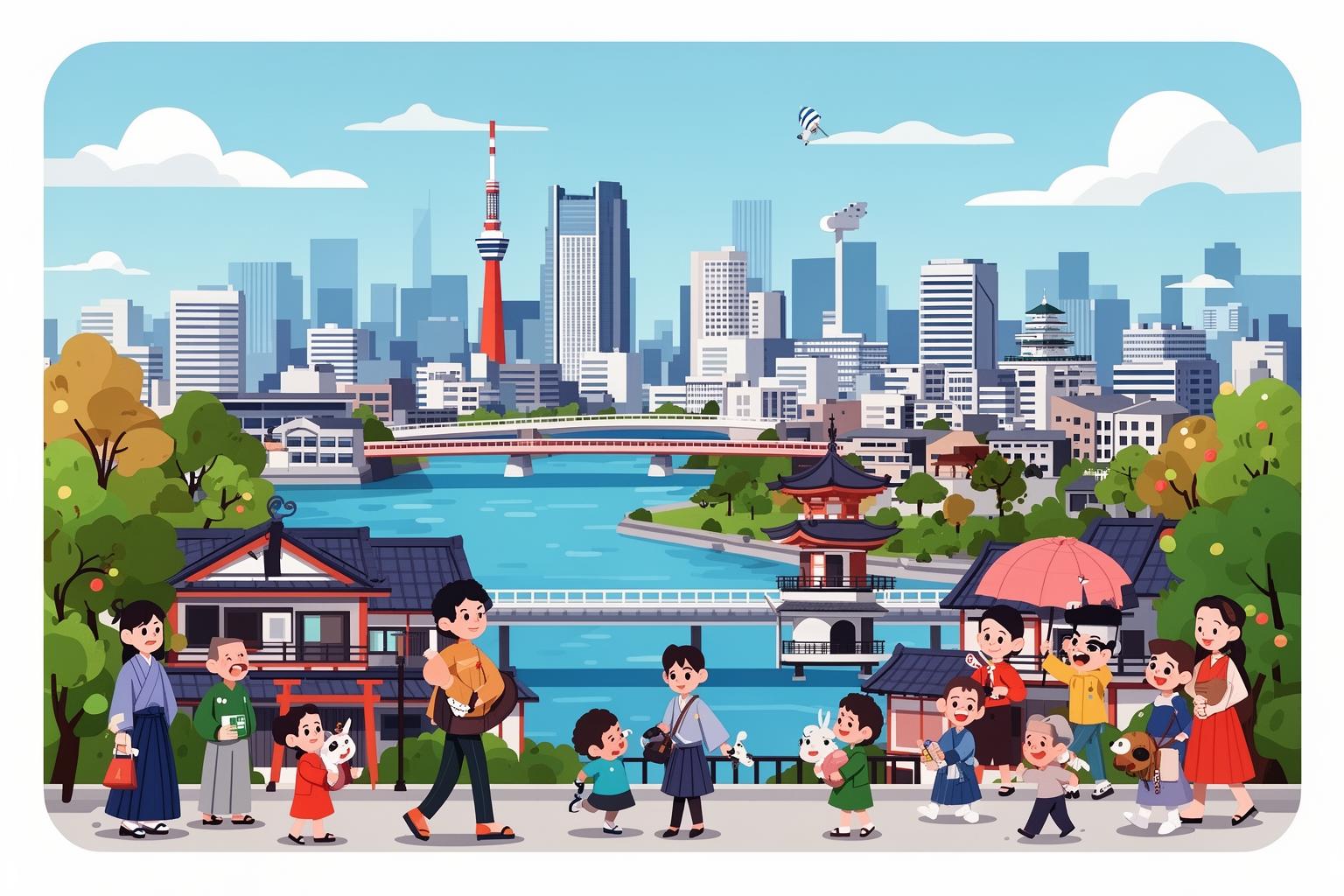
Although the duties might feel burdensome, embracing the Chonaikai system and actively engaging can reveal an aspect of life in Osaka that most foreigners never encounter. It’s the difference between merely living in a city and truly belonging to a community. The benefits aren’t financial but are significant, providing a sense of security, connection, and integration that’s impossible to attain alone.
Your Built-In Support Network
This is the greatest advantage. Once you become an active member of the community, you are never truly alone. You gain a network. It’s the elderly neighbor who watches over your apartment while you’re away and collects your mail if it rains. It’s the man across the street who runs a small hardware store and will lend you a ladder or tell you the exact obscure screw needed to fix your leaking faucet. It’s the Chonaikai leader who’s lived in the area for 60 years and can guide you through the complicated process of disposing of an old air conditioner. This informal support system is invaluable, especially for a foreigner adjusting to a new culture. In emergencies—a sudden illness, a lost wallet, or a frightening spider on your wall—these are the people who’ll be your first responders. This is especially true in Osaka’s older neighborhoods, where tightly packed houses and shops create a close-knit environment. The city’s merchant roots have fostered a culture of looking out for one another. It’s a practical, reciprocal system of support refined over centuries.
The Key to True Local Integration
Joining the Chonaikai is your ticket out of the foreigner bubble. Attending meetings, assisting with festivals, and fulfilling your gomi toban duties will push you to genuinely interact with your neighbors. Your Japanese will improve dramatically—not by practicing textbook phrases, but by learning how to really communicate: how to complain about the humidity, praise someone’s grandchildren, and understand the fast, vibrant slang of Osaka-ben. You’ll discover insider information about the neighborhood: which butcher has the best korokke, which doctor is most patient, and which bar the local elders frequent. You’ll receive invitations to events that aren’t in any travel guide—a New Year’s mochi-pounding ceremony or a local shrine festival attended only by residents. This is how you shift from being a temporary outsider to becoming a recognized neighbor, part of the local fabric.
A Different Kind of “Friendly”
The saying that “Osaka people are friendly” can be deceptive. It’s not the cheerful, superficial friendliness typical of tourist areas. Instead, it’s more practical, down-to-earth, and conditional. This friendliness stems from tsukiai and giri. The friendliness in an Osaka neighborhood is earned through participation. It’s transactional, but in a positive sense. The underlying principle is, “You’re part of this, you contribute your share, so you’re one of us. If you need help, we’ll assist you. And if we need help, you better be there.” It’s a relationship built on shared responsibilities, small favors, and mutual trust. While it might be less outwardly affectionate than what you’re accustomed to, it is often far more enduring. When an Osaka neighbor calls you a friend, it truly means something because you’ve likely worked together, shared a drink, and shown you can be relied upon.
The Chonaikai as a Microcosm of Osaka
Ultimately, that simple clipboard delivered to your doorstep is a perfect reflection of Osaka itself. At first glance, the Chonaikai might seem inefficient, demanding, and outdated. Why circulate a piece of paper when you could send an email? Why require residents to clean a garbage area when you could hire a service? But asking these questions misses the point. The system isn’t designed for maximum efficiency; it’s created to maximize community cohesion. The Chonaikai is the living, breathing embodiment of Osaka’s core cultural values. It is deeply pragmatic, focusing on what works for the group rather than abstract ideals. It is relentlessly community-oriented, founded on the belief that a neighborhood is a shared responsibility, not just a collection of individuals. It operates under unspoken rules of mutual obligation, a social contract felt more than read. It values direct, face-to-face human relationships—the messy, complicated, and ultimately rewarding effort of getting along with the people right next door. To truly understand Osaka, you need to look beyond the dazzling lights of Dotonbori and the imposing walls of Osaka Castle. You must grasp the invisible, powerful ties that hold a single city block together. Your journey into the heart of this extraordinary city doesn’t begin at a famous landmark; it begins with a knock on the door, a 500-yen coin, and the quiet acceptance of your role within the life of the neighborhood.