So, you’ve arrived in Osaka. You’ve navigated the whirlwind of Namba, marveled at the sheer scale of Umeda, and maybe even tried to count all the octopus-adorned signs dotting the city. You’re starting to get the rhythm of the trains, the taste of the dashi, the feeling of the city’s unyielding energy. But then, it happens. You’re telling a story to a new acquaintance, a simple anecdote about your day, and when you finish, they look at you with a slight tilt of their head and ask, “…de, ochi wa?” (…and, what’s the punchline?). Or perhaps you’re at a local izakaya, and the shop owner, after taking your order, points at your perfectly normal t-shirt and exclaims, “That shirt’s so loud, the cicadas are getting jealous!” Everyone laughs, and you’re left wondering if you’ve just been complimented or insulted. Welcome to Osaka, where the lines between conversation and comedy, affection and absurdity, are beautifully, wonderfully blurred. This isn’t rudeness; it’s a handshake. It’s an invitation. In Osaka, humor isn’t just a way to pass the time; it’s the very foundation upon which relationships are built. It’s the city’s love language, and learning to speak it is the key to unlocking the true, beating heart of this incredible place. Forget what you know about Japanese politeness, that reserved, elegant dance of social harmony you might have encountered in Tokyo or Kyoto. Here, the rules are different. The goal isn’t just to be understood; it’s to be entertaining. And the quickest way to someone’s heart is through a shared laugh, often at your own, or each other’s, expense. This guide is your Rosetta Stone for Osakan humor, a deep dive into the world of ‘owarai’ (comedy) not as a performance on a stage, but as a daily practice of connection.
To truly grasp this unique social fabric, it helps to understand the influential role of Osaka’s “okan” figures.
The Sacred Dance: Unpacking Boke and Tsukkomi
Before you can grasp any conversation in Osaka, you first need to understand the two essential roles in Japanese comedy: the ‘boke’ and the ‘tsukkomi’. Think of them as the fundamental building blocks of every comedic exchange. These terms don’t just apply to comedians on television; they represent social roles that people constantly adopt and shift between in all kinds of situations.
The Boke: The Master of the Absurd
The ‘boke’ is the humorous one, the fool, the person who says something silly, absurd, or plainly wrong. The term derives from ‘bokeru’, meaning to become senile or absent-minded. The boke’s role is to create an opening by tossing out a conversational softball—whether a deliberate mistake or a ridiculous remark—waiting for someone to respond. This isn’t about genuine stupidity; it’s a clever, often subtle act of social generosity. The boke sets the stage for laughter.
Picture yourself at a takoyaki stand. The vendor hands you your steaming plate of octopus balls. A classic boke move would be to gaze at them seriously and say, “Wow, these are the biggest gyoza I’ve ever seen!” Obviously, this is incorrect. It’s a gentle absurdity. The boke isn’t trying to fool anyone; they’re inviting others to join the joke and connect through humor.
In everyday life, the boke can be anyone. It might be your friend tripping on a perfectly flat pavement and striking a dramatic pose, your boss in a serious meeting describing quarterly profits as “as high as the price of eels in summer,” or a grandmother at the supermarket asking if the eggplants are ripe enough to be used as telephones. The boke introduces a charming crack in the smooth surface of predictable reality.
The Tsukkomi: The Voice of Reason (and Affection)
If the boke sets things up, the ‘tsukkomi’ brings them back down. The tsukkomi is the straight man, the one who points out the absurdity in the boke’s words or actions. The word ‘tsukkomi’ literally means “to thrust into” or “to poke at.” Their role is to anchor the conversation in reality with a sharp, witty, and often exasperated retort. The tsukkomi’s response is the punchline, releasing the tension created by the boke and provoking laughter.
Returning to the takoyaki stand, the vendor, hearing the “giant gyoza” remark, would act as the tsukkomi. They might reply quickly with “Nande ya nen!” (a classic Osaka phrase roughly meaning “What the heck!” or “Why?!”), perhaps playfully smacking the customer’s shoulder with a towel and saying, “These are takoyaki! Were you born yesterday?”
This is the key point for foreigners to understand: the tsukkomi is not an insult or an attack. Rather, it’s a sign of participation. The tsukkomi says, “I heard you. I get your joke. I’m playing along.” A quick tsukkomi is a form of affection, a verbal pat on the back. Ignoring a boke’s silly remark, leaving it hanging unanswered, is actually the cold and distant move. It’s socially like failing to return a high-five.
The beauty of this interaction lies in its rhythm—a rapid-fire exchange, a conversational tennis match. Boke. Tsukkomi. Laugh. Repeat. This is the beat of friendship in Osaka, present in banter between shopkeepers and customers, teasing among friends, and playful arguments between couples. It’s everywhere.
More Than a Joke: Tsukkomi as a Form of Intimacy
In many cultures, pointing out someone’s mistake or teasing them about their clothing can be a social misstep, often leading to awkward silence. In Osaka, however, it’s frequently the first step toward genuine friendship. The tsukkomi, which might feel like criticism to outsiders, is actually a sign of closeness. It’s a way of saying, “I know you well enough to notice these little things, and our relationship is strong enough for me to point them out playfully.”
Reading Between the Lines of a “Polite Insult”
Let’s examine a common situation. You arrive to meet your Osakan friend wearing a new, brightly colored jacket you’re proud of. In Tokyo, a friend might say, “That’s a nice jacket. It’s very… colorful.” Such politeness acts as a barrier, maintaining respectful distance. In Osaka, your friend is more likely to gasp loudly and exclaim, “Whoa! I need sunglasses to look at you! Are you a traffic light?”
An uninitiated foreigner might feel a pang of self-consciousness. Did I make a fashion error? Are they mocking me? The answer is yes, they are teasing you, but in the most affectionate way possible. This tsukkomi is an invitation with multiple layers:
- Acknowledgement: “I see your new jacket. It stands out, and I’ve noticed it.”
- Engagement: “I’m not going to let this moment slide with a dull, polite comment. I want to interact with it, and with you, in a playful manner.”
- Testing the Waters: “Can you take a joke? Can we build a friendship based on this kind of lighthearted banter?”
The right response isn’t defensiveness. It’s to take on the boke role. You might say, “Of course! I’m here to direct traffic and keep everyone safe.” Or, “What are you talking about? This is my camouflage for hiding in a tulip field.” By returning the jest, you’ve just passed an important social test. You’ve shown you understand the game. You’ve had your first true Osakan conversation.
The Absence of a Tsukkomi is the Real Insult
On the other hand, if you make a clear boke—say something silly or an obvious mistake—and your Osakan companion only smiles politely without responding, that’s far more concerning than a sharp “Nande ya nen!” A polite, silent reaction often indicates discomfort and social distance. It means they don’t feel close enough to engage in tsukkomi. They treat you like a delicate outsider, a ‘yosomon’ (someone from elsewhere), who might not grasp the local customs. They’re putting up a wall of politeness.
When an Osakan starts making tsukkomi at you, celebrate. It means you’re no longer a fragile guest. You’re one of them. You’re inside the circle of trust where genuine, honest, and hilarious communication can begin.
Every Story Needs a Landing: The Art of the ‘Ochi’
In Osaka, conversation is more than just exchanging information; it’s a performance. And every performance demands a satisfying ending. This is the idea behind the ‘ochi’, which literally means ‘the fall’ or ‘the drop’, but in conversation refers to the punchline, the point, or the amusing twist at the conclusion of a story.
There’s an unspoken social agreement in Osaka that if you take someone’s time with a story, you owe them a payoff at the end. It doesn’t have to be a laugh-out-loud joke, but it must have a point. A story that simply fizzles out is considered a conversational offense. That’s why you’ll often hear “de, ochi wa?” (so, what’s the punchline?). It’s a slightly impatient yet fair request to get to the best part.
The Anatomy of an Osakan Anecdote
Compare storytelling in Tokyo with that in Osaka. A Tokyo story tends to be descriptive, focusing on conveying a mood or a clear sequence of events. It’s often elegant, subtle, and follows a logical flow. An Osakan story is quite different—a rollercoaster ride.
- The Setup (Furi): The tale starts with a relatable, everyday scene. “So, I was on the Midosuji line this morning, and it was packed as usual…”
- The Escalation (Boke): Something absurd or unexpected happens, bringing in the boke element. “…and this old lady next to me pulls out a single, raw green onion from her purse and just stares at it intently.”
- The Punchline (Ochi): The story ends in a funny, surprising, or clever way. “…Finally, she turns to me, dead serious, and says, ‘I bet this would be cheaper at the supermarket in my neighborhood.’ Then she puts it back in her purse. What was I supposed to say to that?”
The point of the story isn’t the train or the price of green onions. It’s the shared moment of absurdity, the humorous image, the punchline that gives the whole tale its value. Osakans are always gathering these little stories, or ‘neta’, from daily life, ready to refine and perform them in their next social exchange.
For a foreigner, this can feel intimidating. You might feel the pressure to be a world-class comedian. But it’s not about professionalism; it’s about changing your perspective. When you tell a story, focus on the most amusing or ironic part and build toward it. Even a story about getting lost can be entertaining if you highlight the ridiculous landmark you used for directions or the bizarrely unhelpful advice you received. Find the ‘ochi’ in your own experiences, and you’ll discover yourself speaking the language of Osaka.
The Social Solvent: Owarai for Breaking Down Walls
One of the most common clichés you’ll hear is that “Osaka people are friendly.” While this is true, it’s a rather lazy explanation. Why are they friendly? Much of the answer lies in their use of humor as a tool to quickly break down social barriers, especially with strangers. In the more rigid social environment of other Japanese cities, approaching a stranger can be a complicated matter, laden with considerations of status and formality. In Osaka, a well-timed joke serves as a universal passport.
The ‘Ame-chan’ Philosophy
This is most evident in the quintessential Osaka ‘obachan’ (middle-aged or older woman). You’ll see them everywhere, recognizable by their brightly patterned clothing and an air of unstoppable confidence. Many carry a pouch full of candies called ‘ame-chan.’ It’s quite common to be sitting on a train or park bench when an obachan turns to you, slips a candy into your hand, and says, “Here, you look like you need some sugar.”
This gesture isn’t just about candy. The ame-chan acts as an icebreaker, a reason to start a conversation. The exchange almost always includes humor. She might follow up with a tsukkomi about your face: “You look so serious! Did you lose a race with a turtle?” or a boke about herself: “My doctor says I have to stop eating these, so you have to eat them for me.”
Before long, you’re no longer strangers. You’re two people sharing a laugh and a piece of candy. This philosophy—starting with a small, humorous gift or comment—is deeply woven into the fabric of the city. The takoyaki vendor who throws in an extra piece for free, calling it a “service for your handsome face.” The cashier who jokes about you buying so many instant noodles. These aren’t merely commercial transactions; they are tiny doses of human connection, facilitated by owarai.
Laughter in a Crowded Room
This approach makes socializing in Osaka a wonderfully chaotic and spontaneous experience. In a crowded standing bar tucked away in the backstreets of Tenma, you won’t find quiet, isolated groups. Conversations flow into one another. Someone at one end of the bar delivers a loud boke, and a stranger at the other end shouts the tsukkomi. Suddenly, the entire bar is in on the joke. Laughter becomes the shared property of the room.
This contrasts sharply with the more segmented social scenes found elsewhere. The Osakan assumption is that everyone could be a friend, and the quickest way to find out is to throw a joke into the crowd and see who throws one back. It’s a disarming, efficient, and incredibly enjoyable way to live.
The Osakan Lexicon of Laughter: More Than Just ‘Nande Ya Nen’
To truly grasp the texture of Osakan humor, it helps to familiarize yourself with some key phrases from the local dialect, Osaka-ben. These words act as the musical notes in the symphony of everyday banter. Using them correctly requires a good ear for rhythm and context, but simply recognizing them will enhance your understanding of the interactions around you.
Key Phrases in the Owarai Toolkit
Nande ya nen! (なんでやねん!): The quintessential tsukkomi phrase. It’s a flexible exclamation that can mean “Why?!”, “What the heck?!”, “You’ve got to be kidding me!”, or “That makes no sense!” Its impact lies in its sharp, percussive sound. It’s the verbal equivalent of a playful smack on the head. You’ll hear it countless times each day, from a friend’s unbelievable story to a vending machine swallowing someone’s money.
Honma ka? (ほんまか?): “Really?” or “Are you serious?” While standard Japanese uses ‘hontou ni?’, ‘honma’ conveys a warmer, more down-to-earth tone. It can express genuine surprise, but in a comedic setting, it’s often delivered with exaggerated disbelief to highlight a friend’s boke. “I ran five kilometers this morning.” “Honma ka?! You usually can’t even run for the train!”
Akan! (あかん!): An incredibly versatile word meaning “No good,” “Don’t,” or “It’s impossible.” It’s used to reject a silly suggestion or to bemoan failure. Its comedic strength comes from its finality and slightly whiny tone. “Let’s try to fit one more person in the elevator.” “Akan, akan, akan! We’ll be stuck in here for a week!”
Meccha (めっちゃ): Although now widely used across Japan, ‘meccha’ (very, super) originates from the Kansai region. In Osaka, it emphasizes both boke and tsukkomi lines. “This ramen is meccha umai!” (This ramen is super delicious!). Or, as a tsukkomi: “Your story is meccha nagai!” (Your story is super long!).
Shiran kedo (知らんけど): A more recent but hugely popular addition to the Osaka lexicon. It means “…but I don’t really know” or “…or so I’ve heard.” It’s often attached to the end of a statement—usually advice or a bold claim—to absolve the speaker of responsibility. It’s a get-out-of-jail-free phrase that adds a layer of humorous uncertainty. “If you mix soy sauce with vanilla ice cream, it tastes like caramel! Shiran kedo.” It’s both a boke and a disclaimer in one.
Spotting these phrases in everyday conversation is like suddenly understanding the lyrics to a song you’ve heard for weeks. You begin to notice the structure, the call-and-response, and the playful dance that lies beneath almost every casual exchange.
The Foreigner’s Tightrope: Navigating Your Role in the Comedy Duet
So, you grasp the theory. You notice the boke and tsukkomi happening all around you. The inevitable question emerges: how do I join in? This can be a delicate challenge. Jumping in with an awkward tsukkomi might fall flat, while trying to be a boke can simply seem genuinely confusing if your language skills aren’t quite there yet. But don’t lose hope. There are safe and effective ways to get involved.
Begin by Being a Great Audience
Before attempting to perform, be an excellent audience member. The most important thing you can do is laugh. Laugh loudly and genuinely. In Osaka, a good laugh is a form of reward. It shows you understand the joke, appreciate the effort, and are part of the shared experience. A sincere, hearty laugh is a greater contribution than an ill-timed tsukkomi.
Also, learn how to be a good recipient of a tsukkomi. When someone teases you, smile, nod, and maybe even embrace your boke role. If they say your Japanese sounds funny, you might reply, “Thank you! I practice my funny Japanese every day!” By accepting and welcoming the tsukkomi, you demonstrate you’re a good sport who understands the affectionate nature of the tease. You become a dependable boke, which is a very valuable role.
The Beginner Boke: A Safer Starting Point
For most non-native speakers, being the boke is easier and safer than being the tsukkomi. A tsukkomi requires sharp wit, perfect timing, and linguistic precision. In contrast, a boke can be done through simple, obvious mistakes or exaggerations. You can lean into your foreigner status.
- Mime trying to eat ramen with a fork and knife. Someone will definitely deliver a tsukkomi.
- When asked where you’re from, point confidently to a map of Japan and indicate Hokkaido.
- Exaggerate your surprise at everyday things. “Wow! An automatic ticket gate! What is this futuristic technology?!”
These are gentle, self-deprecating ways to invite a tsukkomi. You’re providing a clear, easy target. It’s a low-risk, high-reward method to enter the comedic exchange and show you want to participate.
A Cautionary Note: The Unearned Tsukkomi
Resist the temptation to throw out “Nande ya nen!” at everyone. A tsukkomi is a tool of intimacy. When coming from a stranger or new acquaintance, it can sound aggressive or rude because the groundwork of affection hasn’t been established. The right to make a tsukkomi must be earned. Once you have a comfortable, established friendship and have shared many laughs, you can begin testing the waters with gentle tsukkomi of your own. Until then, it’s usually best to let your Osakan friends handle the punchlines.
The Merchant’s Soul: Historical Roots of Osaka’s Wit
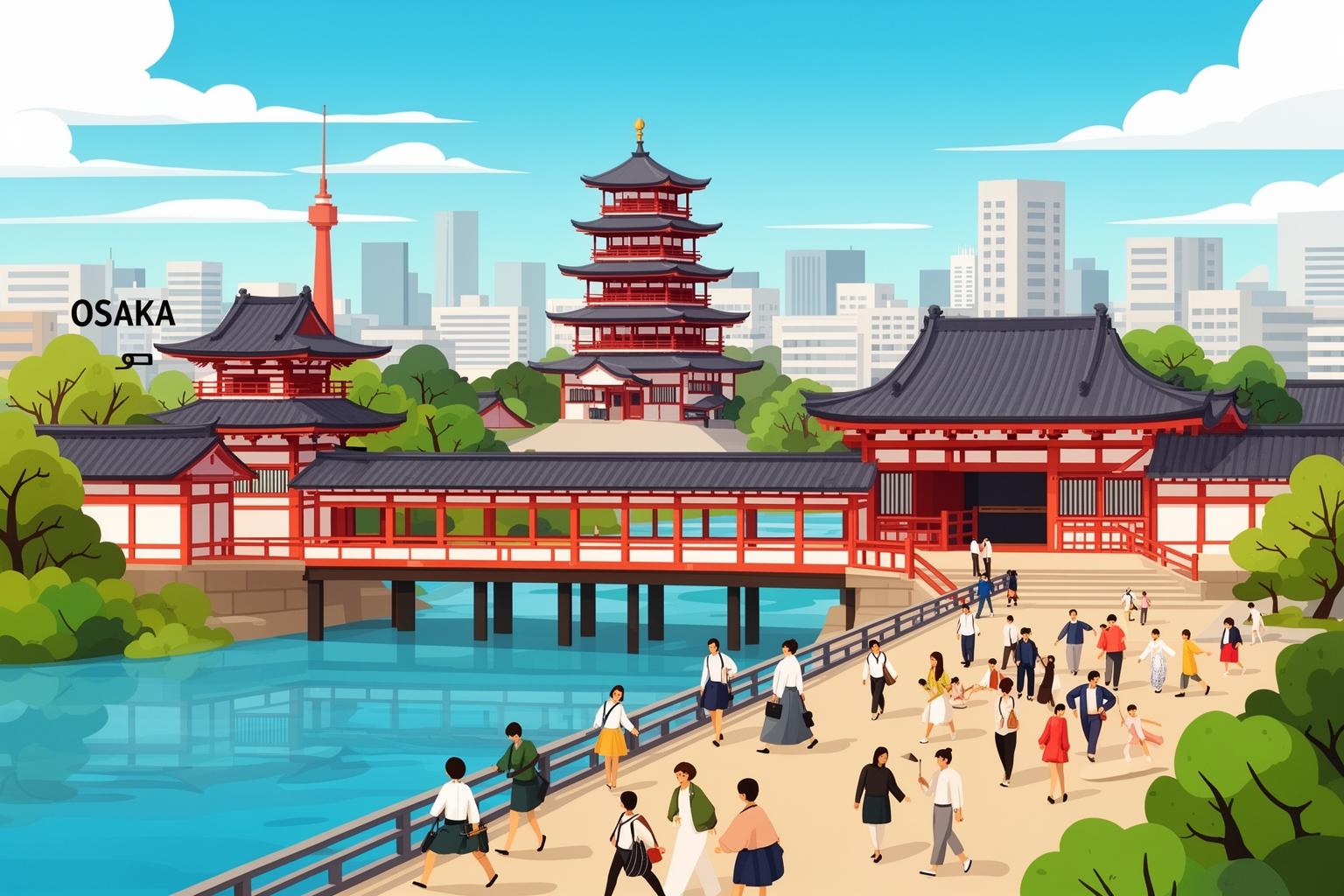
This distinctive communication style didn’t emerge spontaneously; it is deeply rooted in Osaka’s history as Japan’s commercial hub. While Tokyo (formerly Edo) was the city of samurai and bureaucrats, governed by strict hierarchy and formal etiquette, Osaka was home to merchants, artisans, and entertainers. In the world of commerce, quickly and effectively building rapport was essential. A shared laugh often sealed a deal faster than a formal bow.
A Culture of Pragmatism and Speed
Osakan merchants needed to quickly size each other up, establish trust, and negotiate with agility and wit. Humor served as the ideal tool, cutting through formality, revealing character, and fostering a sense of shared humanity. This practical, straightforward style of communication favored directness and cleverness rather than the elaborate, indirect speech of the court or samurai class. Why waste ten minutes on polite formalities when a good joke could create a connection in ten seconds?
This spirit remains alive today, visible in the lively bargaining within the shopping arcades of Shinsaibashi. It’s heard in the quick, witty exchanges among local shopkeepers. The city was founded on the principle that strong relationships are the basis of any successful transaction, whether for money or friendship. Humor is the ultimate tool for building those relationships.
The Rivalry with Tokyo
Osaka’s identity has also been shaped by its longstanding rivalry with Tokyo. As Tokyo emerged as the political center with a standardized culture, Osaka proudly developed its own unique character. If Tokyo was formal, Osaka embraced casualness. If Tokyo was reserved, Osaka was expressive. Owarai culture became a point of pride, a symbol of Osakan identity. Being funny, quick-witted, and proficient in the fast-paced exchange of boke and tsukkomi was to be truly Osakan.
This friendly rivalry continues to energize the city’s comedic spirit. Osakans often take pride in making Tokyoites laugh, viewing it as a small victory in their ongoing cultural contest. Understanding this historical background reveals that the city’s humor is not just a personality trait; it is a vital part of its heritage and its bold, independent spirit.
Embracing the Laughter
Living in Osaka is a fully immersive experience. It’s a city that stimulates all your senses, but especially your sense of humor. At first, the constant banter, teasing, and the expectation of punchlines can feel tiring or even bewildering. It might seem like you’re always on stage, expected to perform. Yet, as you spend more time here, you begin to understand it for what it really is: a continuous, open-ended invitation to connect.
That tsukkomi from a stranger isn’t criticism; it’s an opening door. That seemingly pointless, silly story from a friend isn’t a waste of time; it’s a thoughtfully crafted gift of laughter. To respond to these invitations with polite silence or defensive explanations is to completely miss the essence of being here.
So, here’s my advice: lean in. Let your guard down. Be willing to be the boke. Be willing to laugh at yourself. Find humor in the everyday, the ochi in your daily challenges. Don’t stress about being the cleverest person in the room. Just be present, be open, and be ready to laugh. Because in Osaka, laughter is more than medicine. It’s the air you breathe. It’s the city’s rhythm. It’s the genuine, heartfelt, and wonderfully absurd way people say, “I’m glad you’re here.”